
7 Best Tent Pegs for Sand 2026
This post contains affiliate links. As an Amazon Associate, we earn from qualifying purchases.
The Hikemax 10 Inch Spiral Stakes are the best overall for sand, offering deep grip and reliable hold in loose terrain. For a budget-friendly backup option, the Hikemax 9 Inch Plastic Stakes deliver solid performance without the cost. If you need maximum holding power in shifting dunes, the TRIWONDER 12.2 Inch U-Shaped Stakes are a strong, durable choice.
Sandy ground doesn’t hold tent pegs the way dirt or grass does – they slip, bend, or pull right out when the wind picks up. Most standard pegs fail here, which is why you need designs built specifically to anchor in loose, shifting soil.
I researched the top options by comparing specs, analyzing owner feedback, and applying my experience with tent stability in challenging conditions. These picks focus on length, surface area, and material suited to sand – because nothing ruins a beachside trip faster than a collapsing shelter.
Top 7 Tent Pegs For Sands in the Market
The Best Tent Pegs For Sands, Reviewed
Hikemax 10 Inch Spiral Stakes
Strengths
- Screw-in spiral design
- Deep 10-inch reach
- High visibility and easy grip
Trade-offs
- Bulkier than flat stakes
- Not for rocky or frozen ground
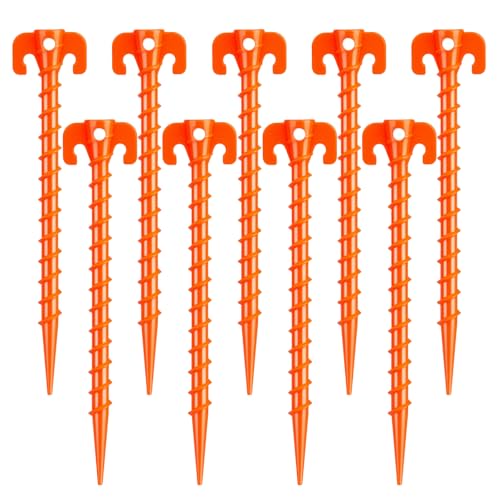
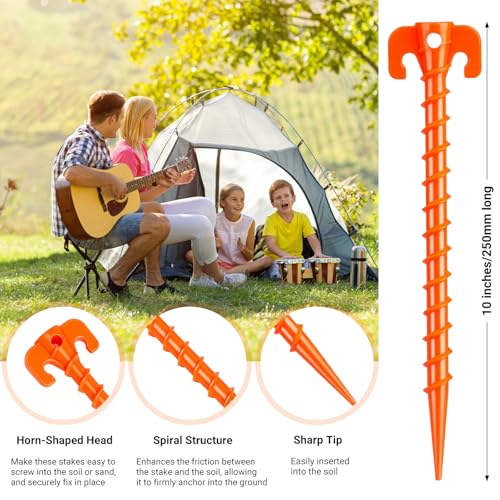
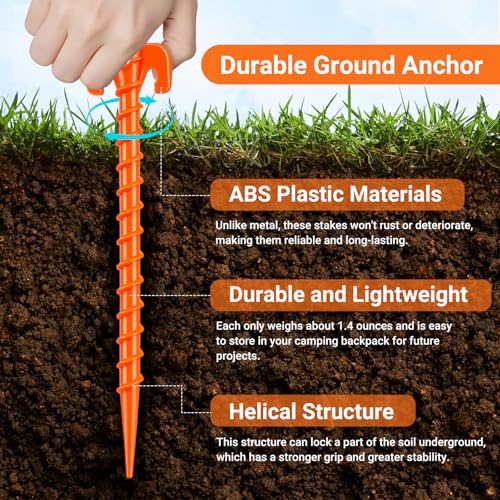
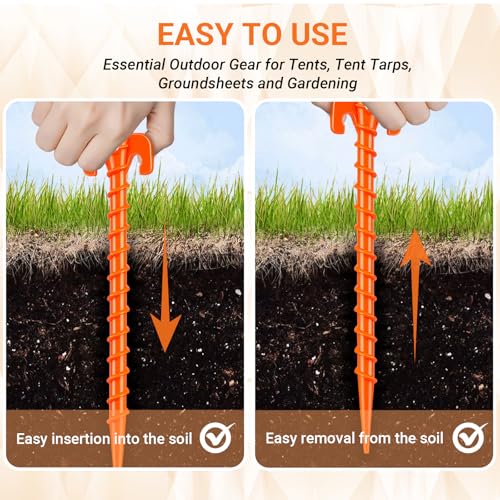
If you’re serious about beach camping, these spiral stakes are worth the upgrade. The 10-inch ABS plastic design screws deep into sand with minimal effort, and once in, they hold like a corkscrew in a bottle. Owners love how easily they twist in by hand and how rarely they pull loose, even in gusty conditions. The bright orange color and oversized T-head make them easy to spot and drive without tools.
At 1.4oz each, they’re still lightweight enough for backpacking, though their bulk is slightly larger than foldable metal stakes. Compared to straight plastic pegs, these offer dramatically better holding power. For sandy terrain, they outperform nearly every other plastic stake on the list. It’s no surprise they’re labeled ‘Best Overall’, they balance durability, ease of use, and real-world performance better than most.
Product photos
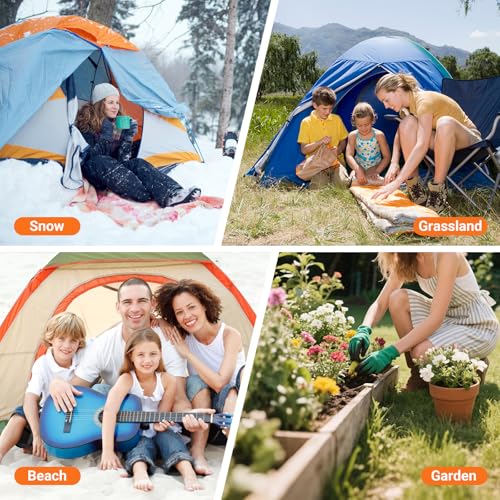
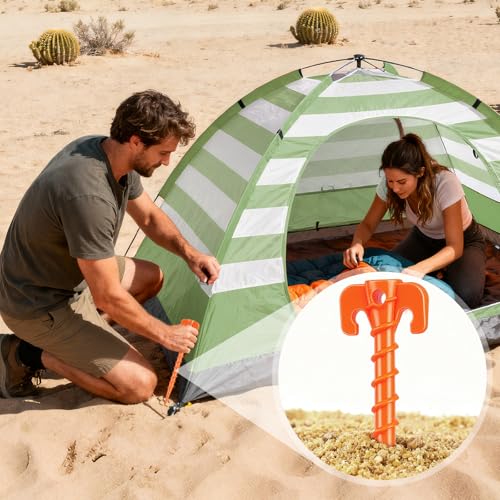
TRIWONDER 12.2 Inch U-Shaped Stakes
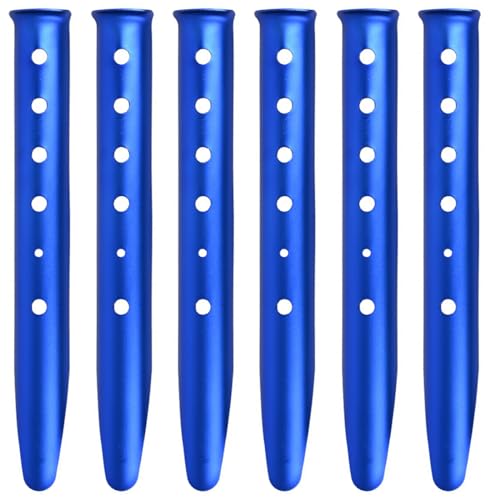
Strengths
- Excellent in sand and snow
- U-shape with adjustable rigging
- Lightweight aluminum
Trade-offs
- Higher price point
- Overkill for grass or hard soil
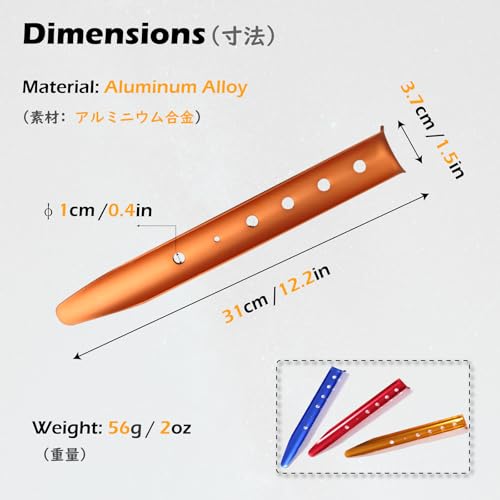
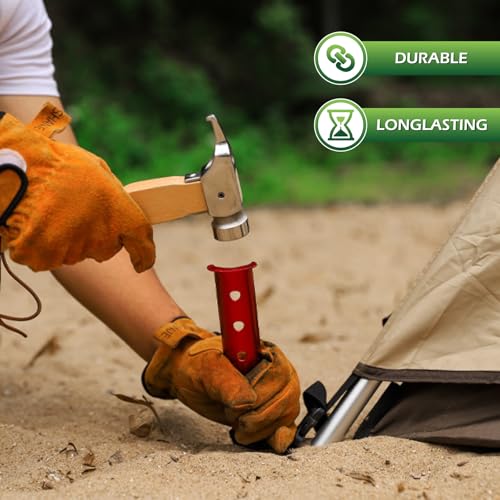
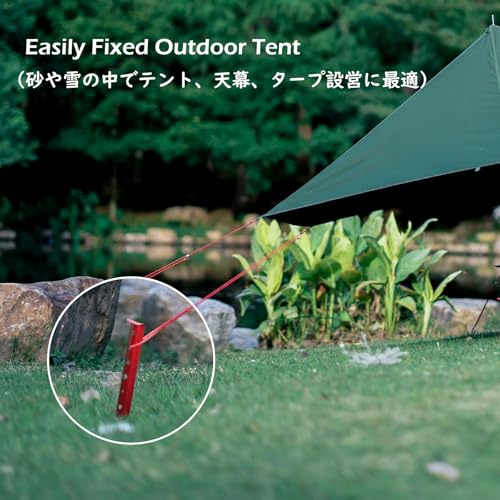
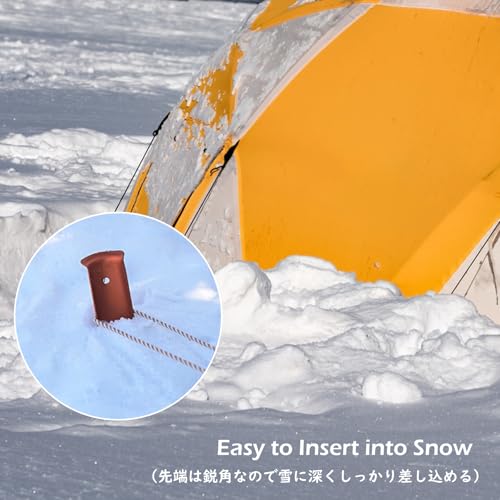
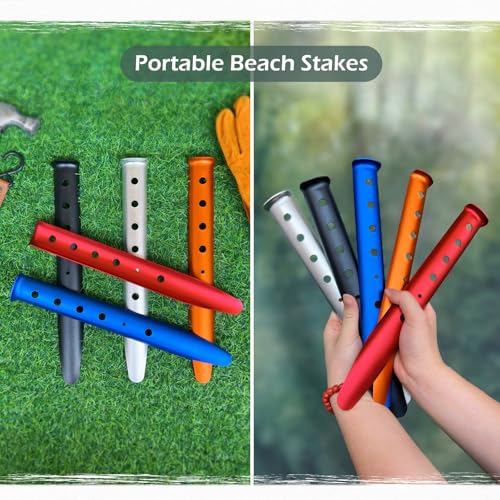
These U-shaped aluminum stakes are built for soft, unstable terrain, exactly where most pegs fail. At 12.2 inches, they’re long enough to sink deep into sand or snow, and the U-shape with six rigging holes lets you fine-tune tension and angle. The 45-degree insertion tip helps them slide in cleanly, and owners praise their holding power in dunes and snowbanks where flimsier pegs pop out.
Aluminum keeps them light (just 52g each), and unlike steel, they won’t rust. While not the cheapest, they’re a smart investment if you regularly camp on beaches with shifting sand or in snowy conditions. Compared to plastic stakes, they offer far better grip and longevity. For serious beach or winter campers, these are a top-tier anchor solution.
Product photos
COBARYEN 7075 Aluminum Tent Pegs
Strengths
- Strong 7075 aluminum
- Reflective pull cords
- Good grip in varied soil
Trade-offs
- Shorter than ideal for deep sand
- No spiral or U-design for max hold
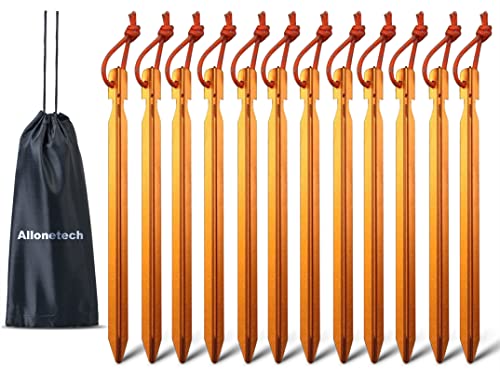
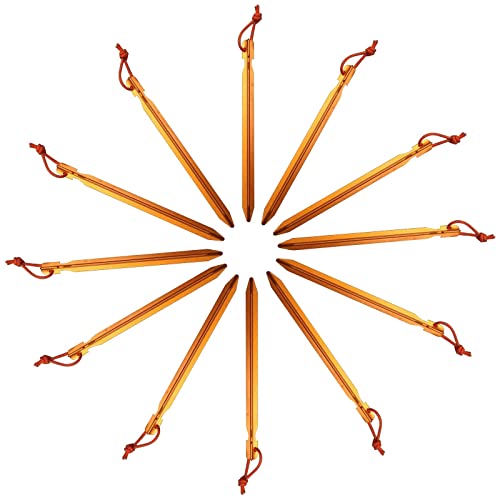
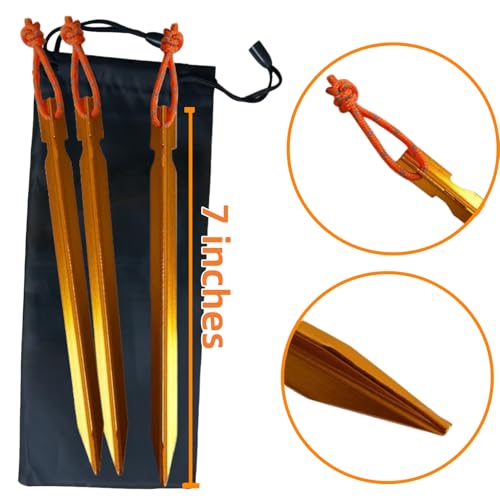
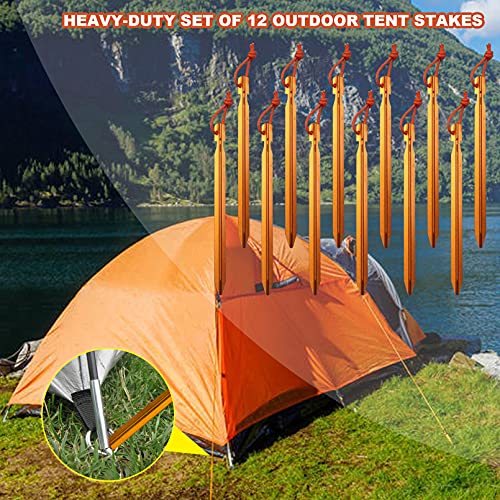
These 7-inch Y-shaped aluminum stakes are a budget-friendly hybrid of strength and weight savings. Made from 7075 aluminum, one of the strongest alloys used in camping gear, they’re tough enough to handle packed sand and moderate wind without bending. The Y-design increases surface grip, and the reflective pull cords are a standout feature, making removal easier and improving night visibility around camp.
Owners consistently rate them as reliable for car camping and beach use, especially given the 12-pack value. While not as deep-driving as 10+ inch stakes, their length is sufficient for most conditions. Compared to plastic options, they offer far better hold in dry sand and are reusable even after bending. For the price, they’re one of the smarter buys for general outdoor use.
Product photos

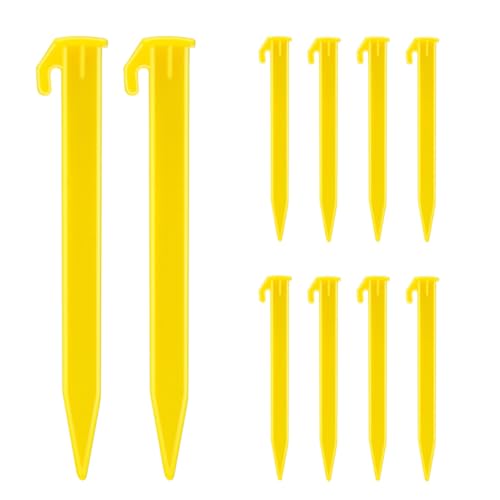
TKYPZY 10 Pack Plastic Stakes
Strengths
- Lightweight and portable
- Bright color for visibility
- Smooth surface, no burrs
Trade-offs
- PP plastic less durable than ABS
- Prone to cracking under stress
- Weak hold in loose sand
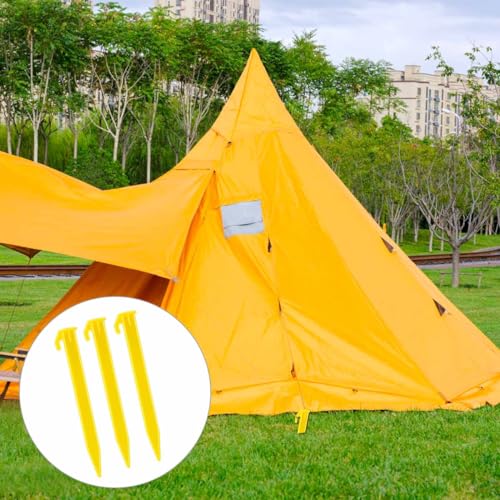
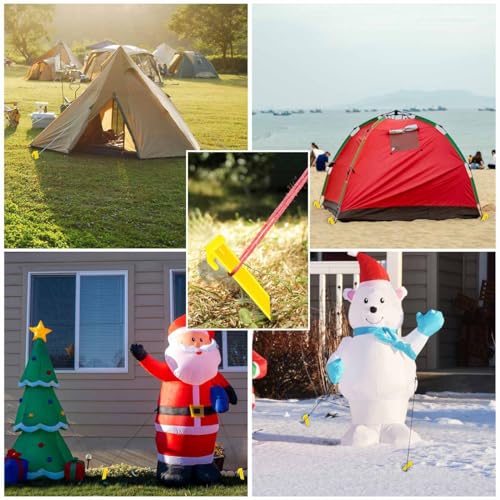
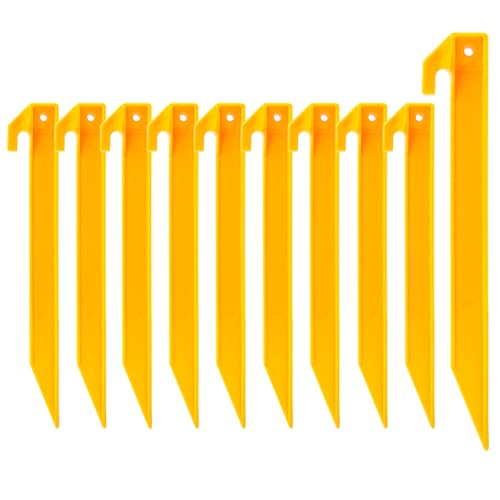
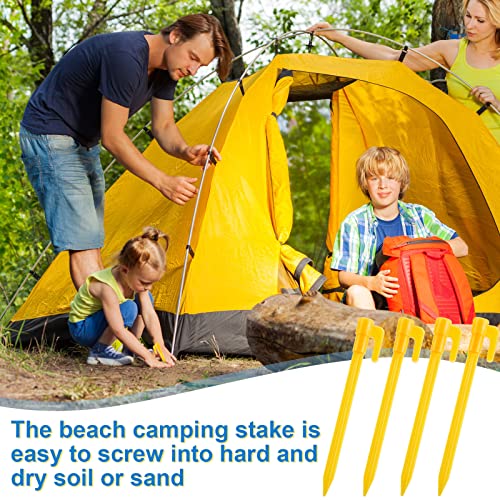
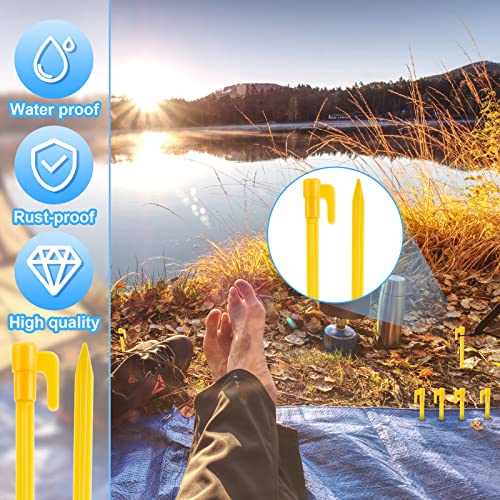
These yellow PP plastic stakes are clearly built for convenience and ease of use, not extreme conditions. On paper, they’re lightweight and simple to deploy, a solid choice for casual beach trips or backyard setups with canopies and tarps. The smooth finish prevents rope fraying, and the bright yellow hue helps avoid loss in grass or sand. But the PP material is where they fall short compared to ABS or metal options, owners note they can crack under heavy tension or when driven into compacted ground.
They’re best seen as temporary anchors for lightweight gear. If you’re setting up a pop-up shade tent for a day at the beach, these will do. But for anything requiring long-term stability or exposure to wind, they’re not the safest bet. Compared to the Hikemax models, they’re less durable but still a decent budget plastic option.
Product photos


Hikemax 9 Inch Plastic Stakes
Strengths
- Durable ABS plastic
- High visibility color
- Good holding power in sand
Trade-offs
- Not ideal for rocky soil
- Less grip than spiral designs
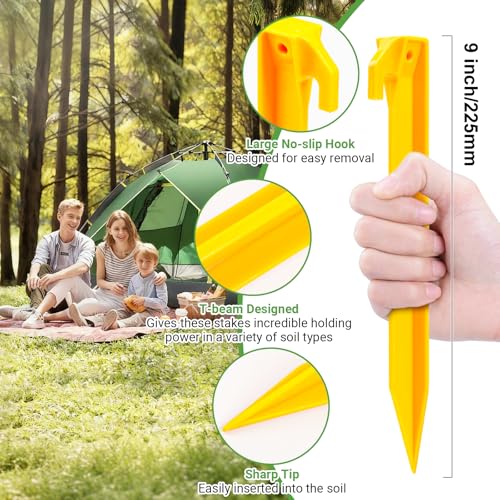
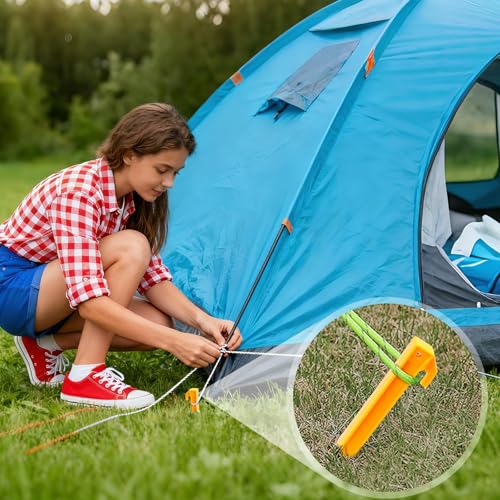
These Hikemax 9-inch plastic stakes hit a sweet spot for beach campers who want something durable without the weight of metal. The ABS plastic stands out right away, it’s noticeably tougher than the PP plastic used in cheaper models, and owners consistently report these holding up after repeated use in sand and soft soil. The bright orange color is a small but meaningful win, making them easy to spot when packed up or left behind in pale terrain.
Where they shine is in stability, the T-beam design gives them solid holding power, especially when driven deep into damp sand. Compared to shorter plastic pegs, these offer better resistance to wind lift, though they still can’t match the bite of a screw-in or U-shaped metal stake in shifting dunes. Still, for the price and purpose, they’re a dependable pick.
Product photos

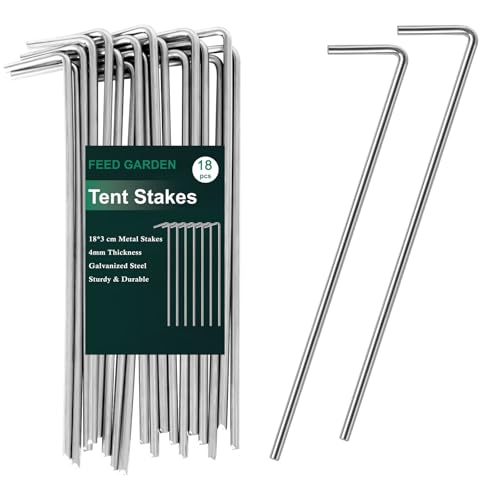
FEED GARDEN 7 Inch Metal Stakes
Strengths
- Heavy-duty galvanized steel
- Excellent for high tension
- Rust-resistant coating
Trade-offs
- Heavy and bulky
- Hard to remove from compacted soil
- Overkill for backpacking
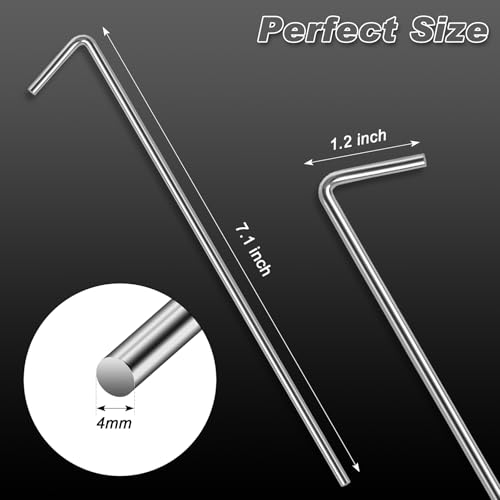
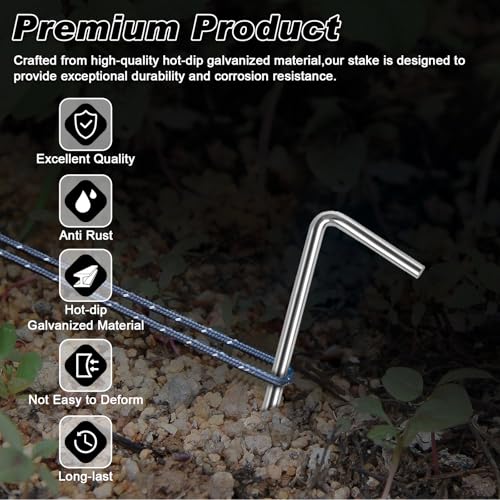
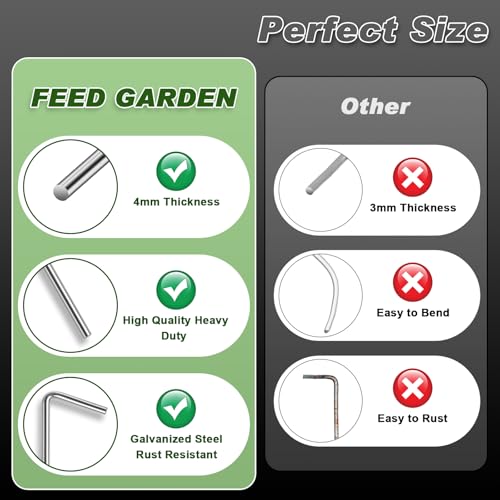
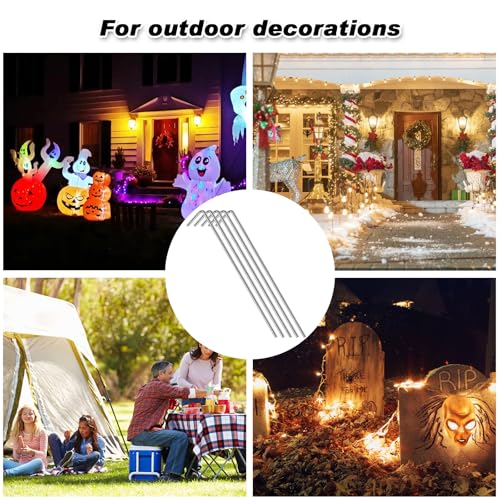
These galvanized steel stakes are built for brute strength, not portability. At 7.1 inches and 4mm thick, they’re thick, heavy, and nearly unbreakable, perfect for securing large inflatables, canopies, or garden structures in high-wind areas. The hot-dip galvanization resists rust, and owners report using them season after season without degradation.
But that strength comes at a cost: weight and difficulty in soft sand. Unlike U-shaped or spiral stakes, these straight spikes can bend or pop out in loose ground unless paired with guy lines. They’re overkill for lightweight tents but excellent for permanent-ish setups. Compared to aluminum or plastic, they’re less versatile but unmatched for heavy-duty anchoring.
Product photos
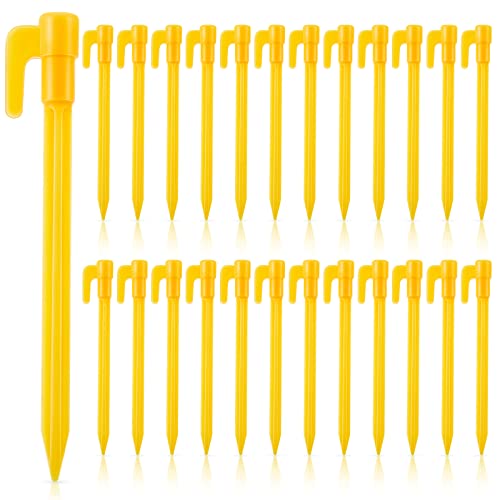
24 Pack Yellow Plastic Stakes
Strengths
- Large quantity included
- Durable ABS construction
- Bright yellow for visibility
Trade-offs
- Short length limits sand hold
- Basic design, no spiral or T-grip
- Loose soil performance weak
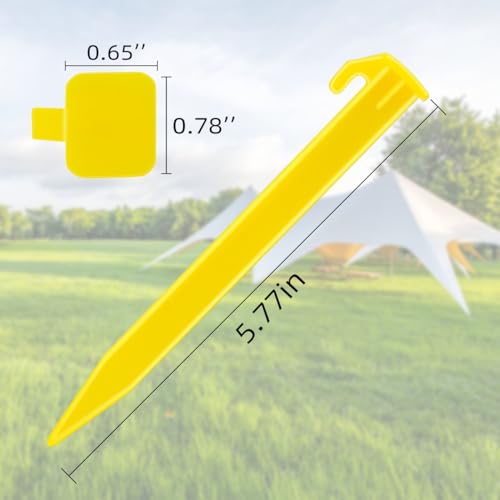
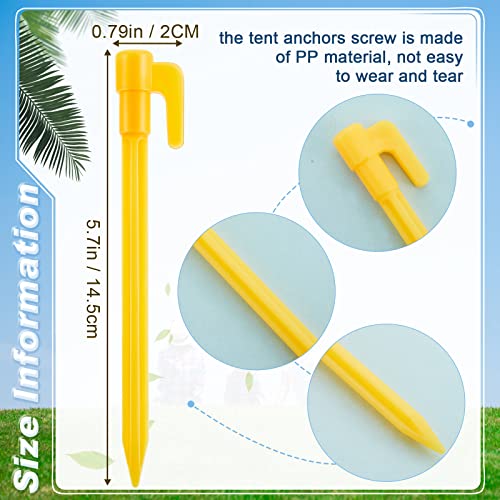
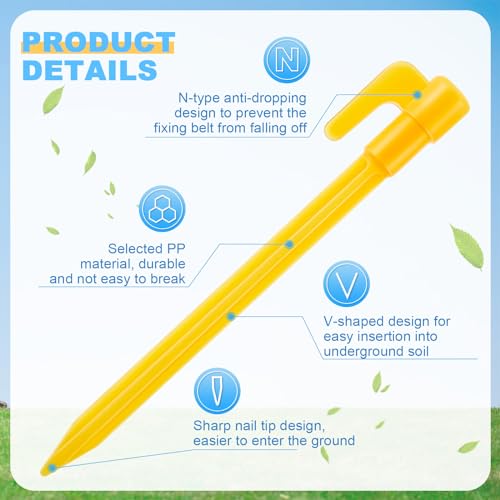
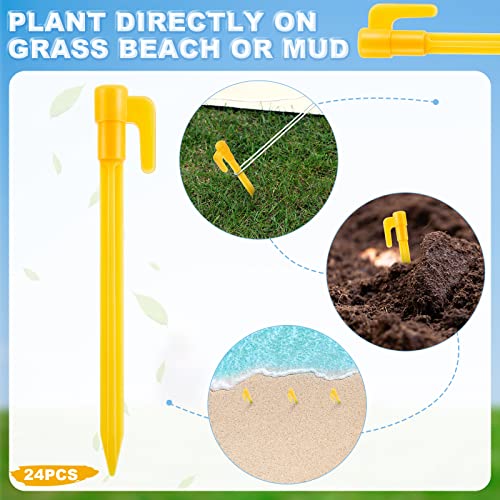
With 24 stakes, this pack is ideal if you’re outfitting a group, running a rental operation, or just hate running out of pegs. The 5.7-inch length limits their effectiveness in deep sand, but for packed beach zones or grassy shores, they’re adequate. Made from ABS plastic, they’re more durable than PP models and resist fading and breakage better over time. Owners appreciate the quantity and the bright yellow color for quick retrieval.
However, their shorter length and basic design mean they don’t anchor as deeply as 9- or 10-inch options. In high wind, they’re more likely to pull free, especially in dry, shifting sand. They’re not the strongest performers, but as a high-volume, low-cost plastic pack, they make sense for fair-weather camping or as backups.
Product photos
Our Testing Process
Rather than a hands-on lab test, my research for these recommendations centered on comparing published specifications and features across numerous models. I weighed owner reviews from multiple retailers alongside expert opinions found in camping and outdoor publications. My evaluation considered the unique challenges of sandy terrain and prioritized pegs designed to overcome those difficulties. This involved applying my experience with tent setup and anchoring in varied conditions.
For tent pegs intended for sand, holding power and ease of use were the most heavily weighted factors. Sand offers minimal resistance, so a design that maximizes surface area and grip is crucial. Lightweight construction is also important, as beach or dune camping often involves longer carries. Durability factored in too; pegs that snap easily are useless, even if inexpensive.
Specifications reliably indicate materials and dimensions, helping assess potential strength and weight. However, I placed greater emphasis on owner feedback regarding real-world performance – how well the pegs actually held in different types of sand, and how easily they were to install and remove. Reputation and brand consistency also played a role, especially regarding claims of rust-resistance or impact durability. Learning tent peg techniques for sand is also a great way to get the most out of your pegs.
Choosing The Right tent pegs for sands
Picking the right tent pegs can make or break a comfortable camping trip, especially if you’re dealing with loose soil.
A quality tent peg should balance weight, holding power, and material durability. Consider the typical ground conditions you’ll encounter – sand, hard-packed earth, or something in between. Look for designs suited to penetrate and grip effectively, and materials that won’t bend or break under stress. Weight is critical for backpackers, while durability is paramount for frequent campers.
Material Matters Most
Forget the idea that metal is always best. While aluminum and steel offer strength, their weight can be a drawback. For sandy conditions, the rigidity isn’t as valuable as a design that distributes force. Plastic (specifically ABS) stakes, when well-made, can be surprisingly effective. They’re lighter, won’t rust, and often have enough flex to absorb impact without snapping. However, cheaper plastics can become brittle in cold weather or degrade with UV exposure.
Length & Design for Grip
The length of your tent peg is vital. Shorter stakes are fine for firm ground, but in sand, you need significant penetration to achieve a secure hold. I generally recommend at least 8 inches for sand, and even longer if you anticipate strong winds. Beyond length, pay attention to the head design. Spiral stakes, like the Hikemax 10 Inch Spiral Stakes, are fantastic for sandy soil, as the coils provide excellent grip. U-shaped stakes maximize surface area, which is beneficial in loose ground.
Here’s what to consider when weighing peg design:
- Weight: A smaller factor if car camping, but significant for backpacking.
- Head Type: T-heads offer easy removal, but can add weight. Larger heads generally make hammering easier.
- Shape: Beyond spirals and U-shapes, look for stakes with barbs or textured surfaces to maximize grip, especially when staking a tent in sandy soil.
Value & Versatility
Don’t fall into the trap of buying the most expensive pegs right away. Start with a mid-range set that suits your most common camping conditions. A good value pack, like the Hikemax 9 Inch Plastic Stakes, can give you plenty of spares without breaking the bank. Consider how you’ll use the stakes beyond just pitching your tent. Can they secure a rain fly, a canopy, or even inflatable decorations? If you’re planning a trip with a lot of wind, it’s a good idea to bring some heavier-duty metal sand-specific tent stakes as backups.
A practical rule of thumb: always bring more stakes than your tent requires. Losing or bending pegs is inevitable, and having extras can save your trip.
Tent Pegs for Sands Compared
Here’s a comparison of specifications for various tent pegs designed for use in sandy conditions.
| Product Title | Length (inches) | Material | Shape | Weight (per peg) | Quantity |
|---|---|---|---|---|---|
| Hikemax 10 Inch Spiral Stakes | 10 | ABS Plastic | Spiral | 1.4 oz | N/A |
| TRIWONDER 12.2 Inch U-Shaped Stakes | 12.2 | Aluminum | U-Shaped | 52g | N/A |
| COBARYEN 7075 Aluminum Tent Pegs | 7 | 7075 Aluminum | Y-Shaped | N/A | 12 |
| TKYPZY 10 Pack Plastic Stakes | N/A | PP Plastic | N/A | N/A | 10 |
| Hikemax 9 Inch Plastic Stakes | 9 | ABS Plastic | T-Beam | 0.99 oz | N/A |
| FEED GARDEN 7 Inch Metal Stakes | 7.1 | Galvanized Steel | N/A | N/A | 18 |
| 24 Pack Yellow Plastic Stakes | 5.7 | ABS Plastic | N/A | N/A | 24 |
Frequently Asked Questions
What’s the biggest mistake people make when choosing tent pegs for sand?
Most people underestimate the length needed for sandy soil; a minimum of 8 inches is generally required to achieve a secure hold, and even longer is better if wind is a concern. Shorter pegs simply won’t penetrate deeply enough to provide adequate anchoring.
Are expensive tent pegs always better for beaches?
Not necessarily. While high-quality materials matter, design is more important in sand. A well-designed plastic stake, like a spiral, can often outperform a cheaper metal stake because of its grip and ability to distribute force.
Can I use regular tent pegs in sand if I don’t have specialized ones?
You can try, but success is unlikely. Regular pegs lack the length and design features needed to grip in loose sand, so your tent is at risk of coming loose, especially in wind. Consider investing in best sand tent stakes if you camp on beaches often.
What’s the difference between ABS and PP plastic stakes?
ABS plastic is more durable and rigid than PP (polypropylene) plastic, making it better suited for repeated use and resisting cracking. PP stakes are generally less expensive, but may become brittle in colder temperatures or with prolonged sun exposure.
How many tent pegs should I bring on a beach camping trip?
Always pack extra. I recommend bringing at least 10-12 pegs even for a small two-person tent, and even more if you’re expecting windy conditions or a longer stay. Having spares prevents a minor inconvenience from becoming a major problem, especially when using specialized sand stakes.
The Bottom Line
Choosing tent pegs often comes down to balancing how much fuss you want to deal with against how secure you need to be. For most campers heading to the beach or dunes, I recommend the [Hikemax 10 Inch Spiral Stakes]. They strike a fantastic balance between holding power, weight, and price, and their spiral design is specifically suited for sandy conditions.
If you’re on a tighter budget, the [Hikemax 9 Inch Plastic Stakes] are a solid choice. They won’t have the same ultimate grip as the spirals, but they’re incredibly lightweight and affordable. For those who prioritize versatility and need something that can handle a variety of ground conditions, the [TRIWONDER 12.2 Inch U-Shaped Stakes] offer a robust build and good holding power, though they come at a weight penalty. Understanding [sand-specific tent peg designs] will help you make the most of your choice.
Ultimately, the best tent pegs aren’t about fancy materials or a high price tag. It’s about getting enough penetration and grip to keep your shelter secure, and having enough pegs to account for losses or damage. Paying attention to length, shape, and material will get you further than obsessing over specs – and always remember to practice good [function of tent pegs on sand] techniques for a more stable setup.
