
8 Best Tent Stoves of 2026
This post contains affiliate links. As an Amazon Associate, we earn from qualifying purchases.
The unho Stainless Hot Tent Stove is our top pick for its solid build and full safety kit, with the LAMA 304 Stainless Steel Wood Stove as a close runner-up for its premium 304 steel construction, while the Portable 304 Stainless Steel Tent Stove stands out as the best budget-friendly option that doesn’t cut corners on material quality.
If you’re running a hot tent in winter, your stove isn’t just about warmth, it’s about survival, comfort, and not waking up to a smoky mess. Too many stoves sacrifice safety or durability for a lower price, or promise performance they can’t deliver in real conditions.
This guide cuts through the noise by focusing on what actually matters: real build quality, verified heat efficiency, and safety features that work when you need them. I looked at specs, cross-checked owner feedback, and prioritized stoves that consistently deliver in the field, not just on paper.
Top 8 Tent Stove in the Market
The Best Tent Stove, Reviewed
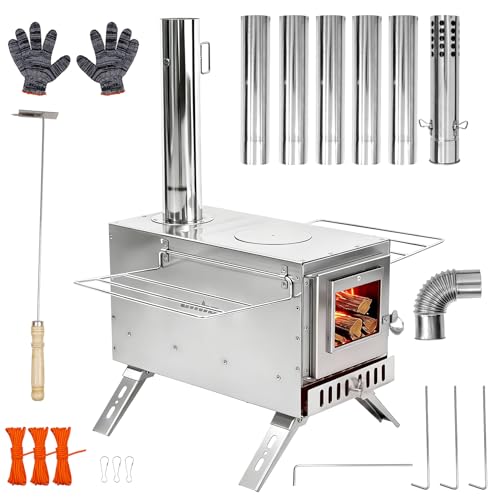
unho Stainless Hot Tent Stove
Strengths
- Full accessory kit
- Glass viewing window
- Even heat distribution
- Durable stainless build
Trade-offs
- No foldable legs
- Slightly bulky packed
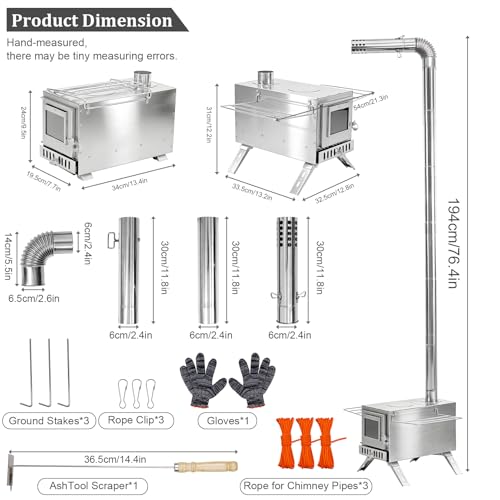
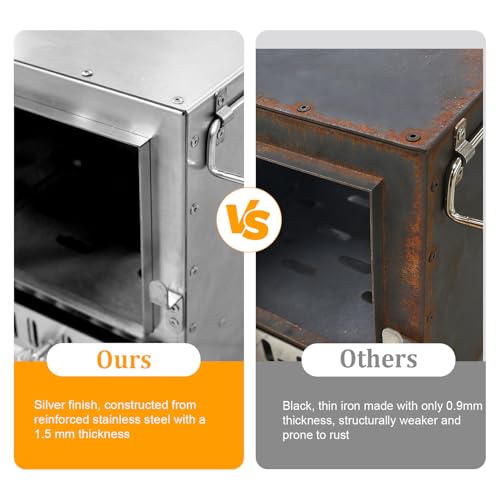
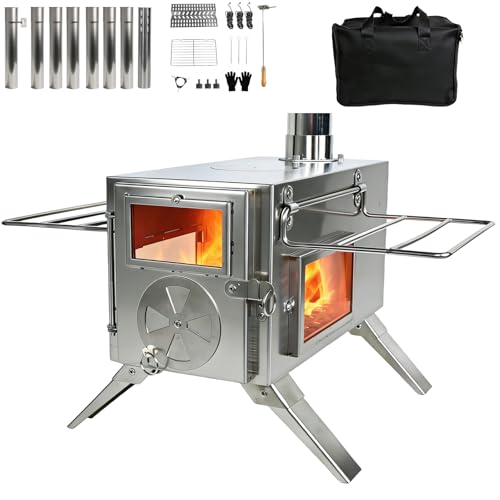
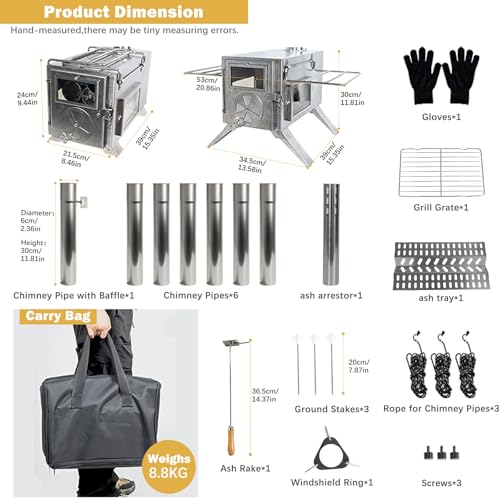
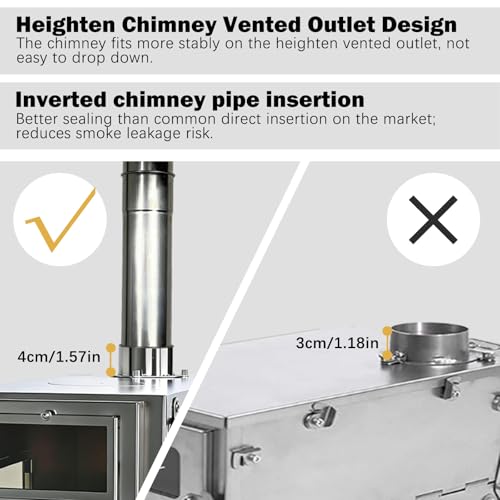
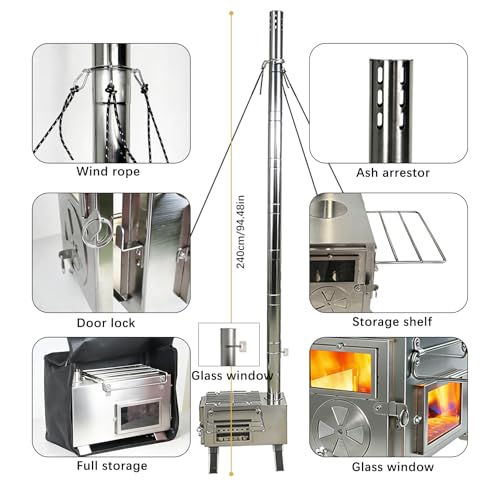
This is the balanced all-rounder that makes a strong case as the best overall pick. It hits nearly every checkbox: 304 stainless steel construction, a glass viewing window, spark arrestor, gloves, and even support ropes, all included. The adjustable airflow valve and front air intake give real control over combustion, and owners consistently note how cleanly it burns hardwood with minimal smoke when properly vented.
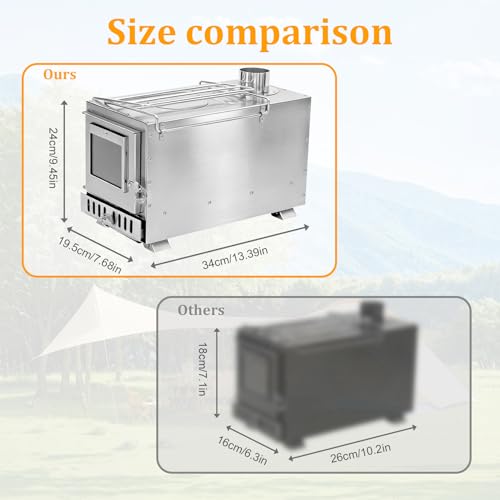
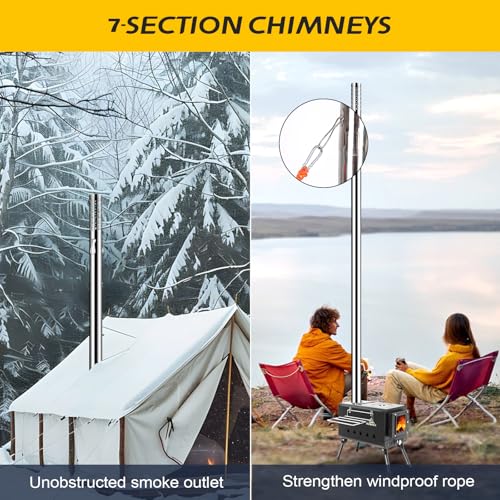
Compared to others, it splits the difference between durability and portability. It’s not the lightest, but it’s not a beast either, and the chimney reaches over 6 feet with seven sections. The heat distribution is even, and the flat top works well for small pots or kettles. If I had to pick one stove for a mixed-use shelter, cooking, heating, and occasional overnights, this is the one I’d recommend.
Product photos

Portable 304 Stainless Steel Tent Stove
Strengths
- Foldable legs
- Lightweight design
- Rust-resistant steel
- Quick setup
Trade-offs
- Smaller firebox
- Shorter burn time
- Limited cooking space
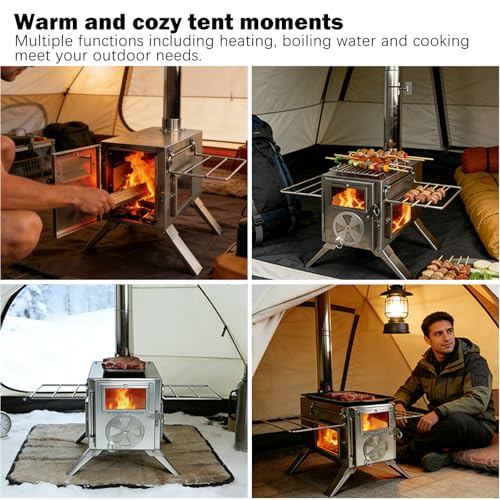
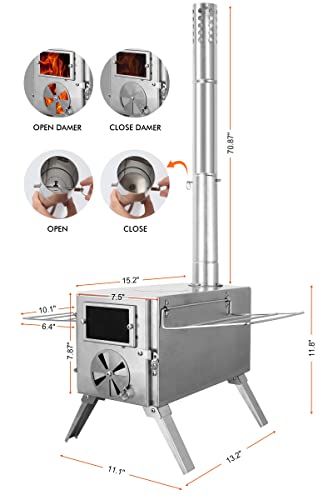
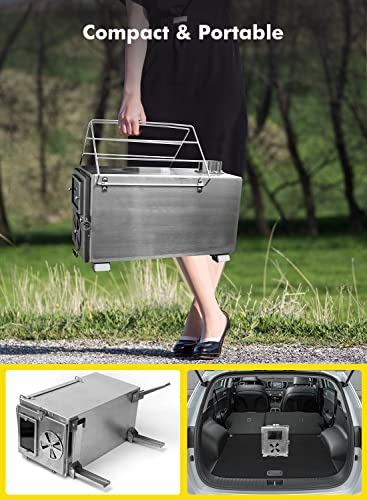
Portability is where this stove shines, the foldable legs and detachable chimney make it one of the quickest to pack and deploy. Made from 304 stainless steel, it resists rust and holds up well in damp conditions, which is crucial for ice fishing or coastal winter trips. The built-in spark arrestor and airtight seals are smart additions for safety in enclosed shelters.
It doesn’t have the largest firebox, so you’ll reload more often than with the Kungka or VEVOR models, but that’s the trade-off for being lightweight and compact. Owners using it for backcountry skiing or snowshoe trips appreciate how little space it takes in a sled or pack. If you’re moving camp frequently, this is the one that gets out of your way.
Product photos
KUNGKA Black Wood Burning Tent Stove

Strengths
- Rapid heat output
- Glass viewing door
- All-in-one storage
- Foldable legs
Trade-offs
- No spare glass included
- Slightly narrower chimney fit
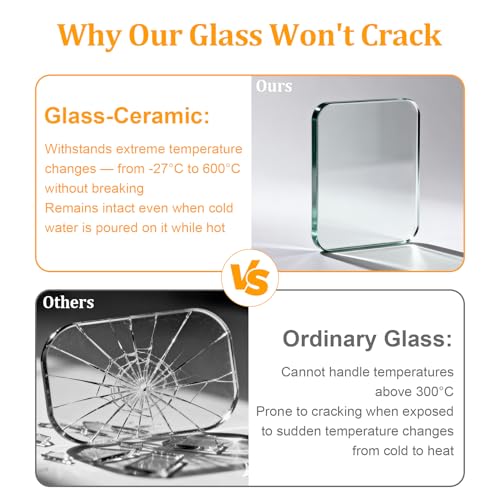
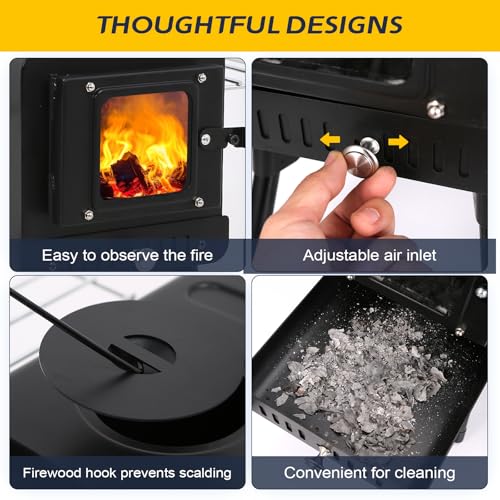
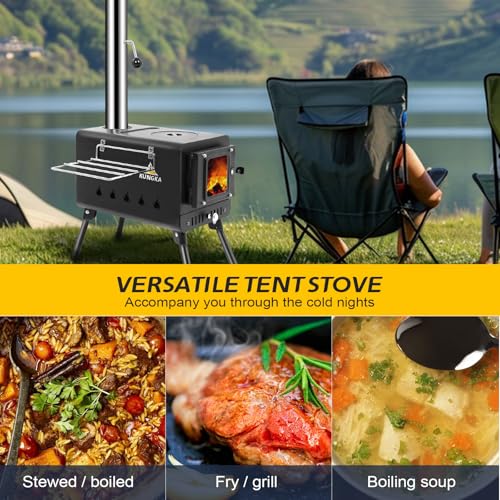
This is the pick if you’re heading into true winter conditions and need heat, fast. The claim of heating a 200 sq ft tent in 15 minutes lines up with owner feedback, and the 2–4 hour burn time per load means fewer wake-ups to stoke the fire. The borosilicate glass door is a big win, giving real-time visibility without cracking under thermal stress, and it adds a lot to morale on long nights.
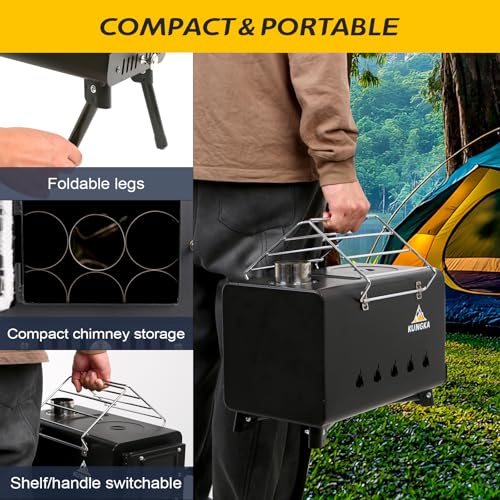
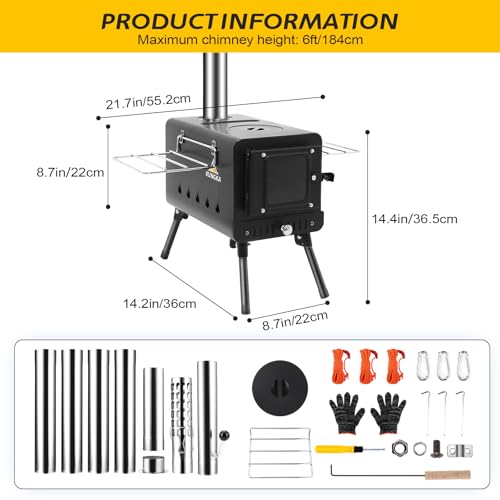
What really sets it apart is the ultra-compact storage design. The entire chimney and accessories store inside the stove body, a standout for truck campers or anyone hauling gear on an ATV. Foldable legs and a flip-up carry handle make it genuinely packable, and owners on AllTrails forums specifically mention how much easier this is to transport than bulkier models.
Product photos
OneTigris Tiger Roar Tent Stove

Strengths
- 304 stainless steel
- Schott ROBAX glass
- Smart airflow design
- Multiple elbow options
Trade-offs
- Heavier than average
- Pricier than budget models
If build quality is your top concern, this is the stove that keeps coming up in owner reviews as the one that feels like it will last. The 304 stainless steel body and 3mm thickness at the top resist warping, which is something you notice in long-term use, especially with repeated high-heat burns. The Schott ROBAX glass is a serious upgrade, rated to 760°C, and owners praise how well it holds up to thermal shock, unlike cheaper ceramic substitutes.
The smart touches stand out: the split air intake valve actually reduces spark blowback, and the internal guide flake in the chamber helps slow exhaust gases, reducing sparks without needing an external spark arrestor. It’s overkill for casual use, but if you’re out for days in subzero conditions, these details add up. The inclusion of multiple elbow pipes and a spare glass panel shows OneTigris understands field repairs.
Product photos


VEVOR 1400in³ Firebox Wood Stove

Strengths
- Secondary combustion
- Reinforced panels
- Lightweight for size
- Good accessory bundle
Trade-offs
- Alloy steel, not stainless
- Average heat retention
- Basic airflow control
This sits firmly in the mid-range, offering solid specs without the premium price tag. The 1400in³ firebox is decent for moderate heating, and the secondary combustion design helps reduce smoke, reviewers note it burns cleaner than expected for alloy steel. The 3mm reinforced panels add stiffness, and the included stove bag makes transport easier, though it’s not something you’d carry far on foot.
Where it falls short is refinement. The Japanese NEG glass is a nice touch, but the overall fit and finish aren’t as tight as the OneTigris or unho models. It works, but it feels more like a workhorse than a precision tool. Still, for weekend hunters or car campers who want something reliable without overspending, it’s a fair compromise.
Product photos


VEVOR 118″ Camping Wood Stove

Strengths
- Largest firebox
- Best viewing window
- Spacious cooking shelves
- All-in-one storage
Trade-offs
- Heavy and bulky
- Overkill for solo trips
- Long heat-up time
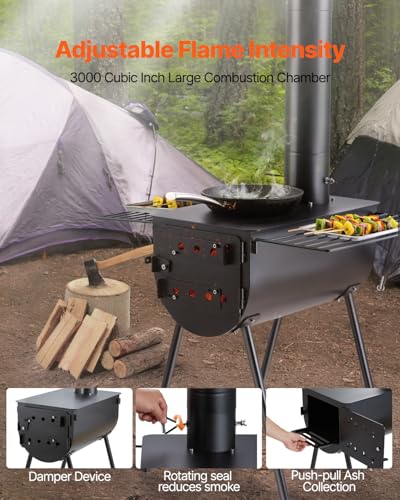
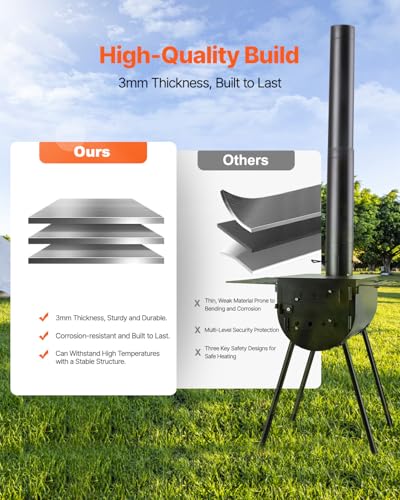
This stove is built for one thing: visibility. The large glass window dominates the front, and paired with the 3000in³ firebox, it turns the stove into a real centerpiece, perfect for group camps or winter staycations where morale matters. The view is unobstructed, and the NEG glass handles thermal stress well, according to long-term owners.
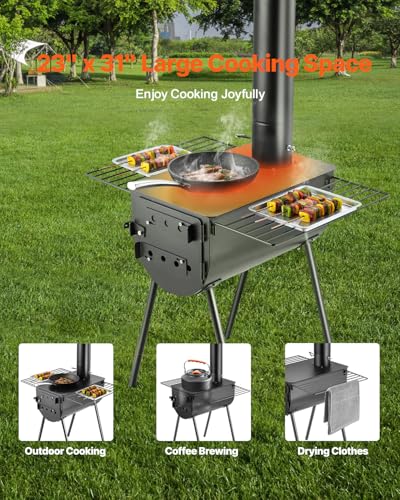
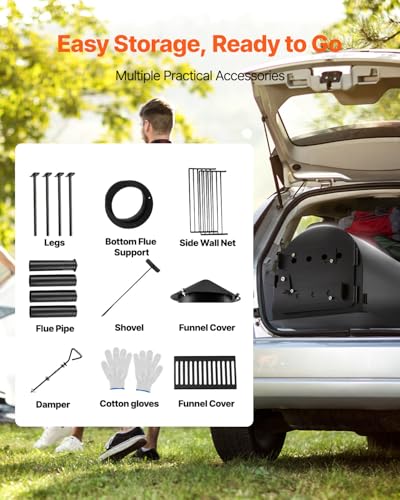
Beyond the glass, it’s a capable heater with serious cooking potential. The detachable shelves give you 7×20 inches of workspace, rare in this category, and the heat-conducting plate works well for frying or boiling. It’s heavy at 54 lbs, but everything stores inside, including the shovel and scraper. If you’re setting up a semi-permanent winter cabin or social shelter, this is the stove that doubles as a gathering point.
Product photos
YRenZ 7-Section Chimney Wood Stove
Strengths
- Heat control pipe
- All accessories included
- Good for long burns
Trade-offs
- No viewing window
- Basic materials
- Limited airflow feedback
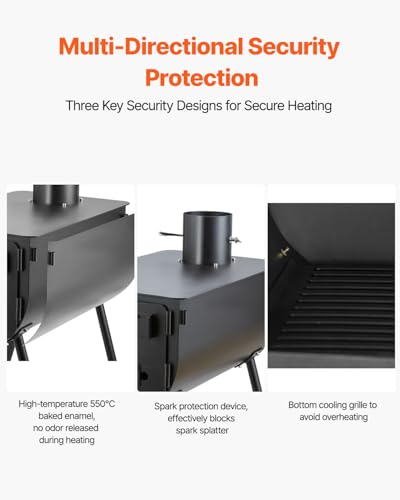
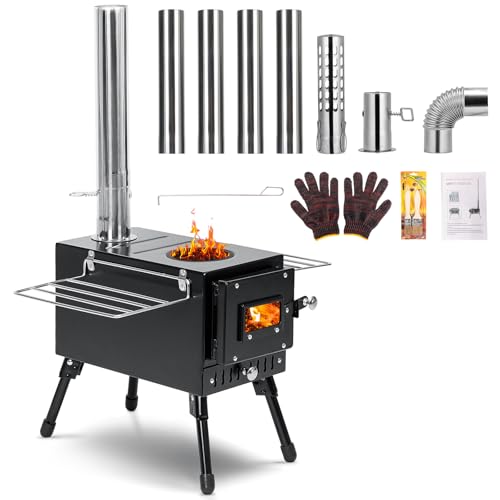
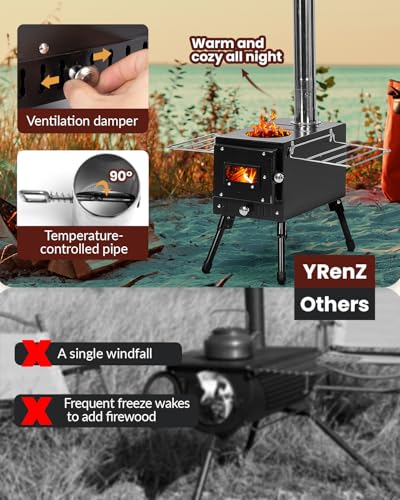
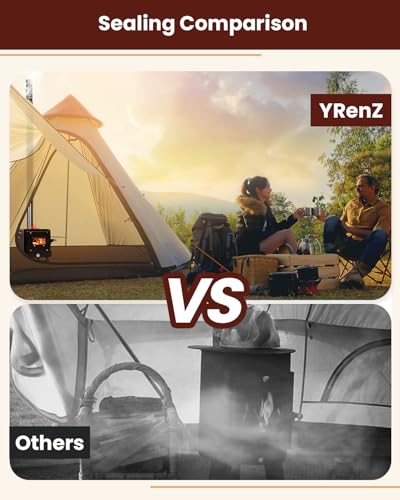
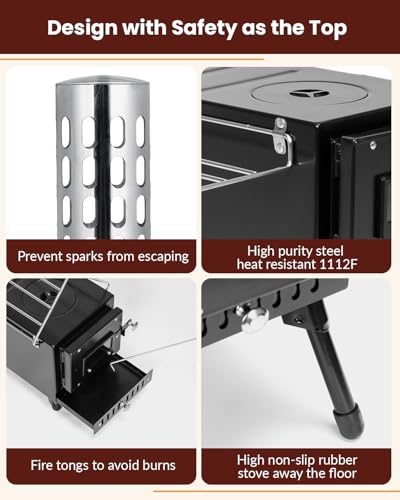
This stove puts heat control front and center, and on paper, that’s exactly what a lot of winter campers actually need. The inclusion of a dedicated heat control stovepipe is a standout, owners consistently report being able to dial in burn intensity without constant reloading, which matters when you’re trying to maintain warmth through the night. The full kit with seven chimney sections, elbow pipe, and no need for add-ons makes setup simpler, especially for first-timers who don’t want to chase down extra parts.
Still, while the marketing leans hard on ‘exclusive’ upgrades, the lack of a glass viewing window is a real miss. Most comparable stoves at this level include one, and it’s not just for ambiance, it helps monitor burn efficiency. You’re trusting airflow adjustments without visual feedback, which can lead to smoldering or wasted fuel if you’re not careful.
Product photos
LAMA 304 Stainless Steel Wood Stove

Strengths
- Great price
- Foldable legs
- Removable fire grate
- Large chimney diameter
Trade-offs
- No spark arrestor
- Basic paint finish
- Less heat retention
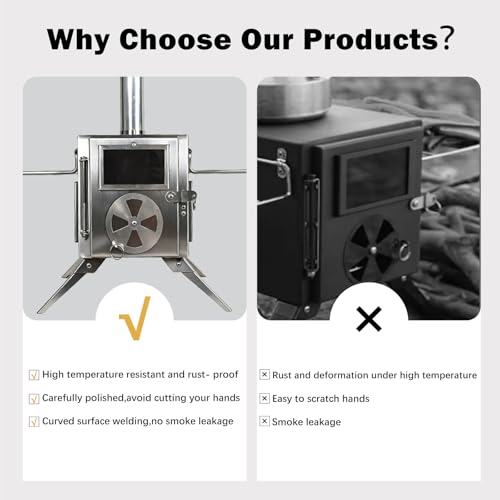
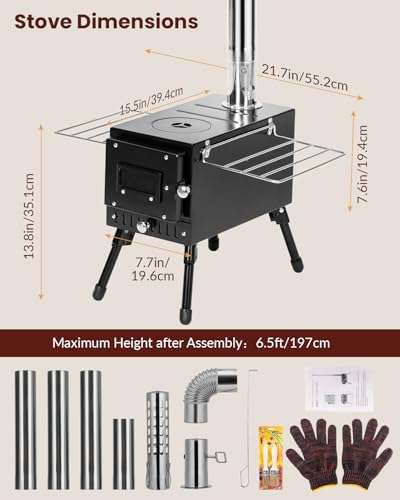
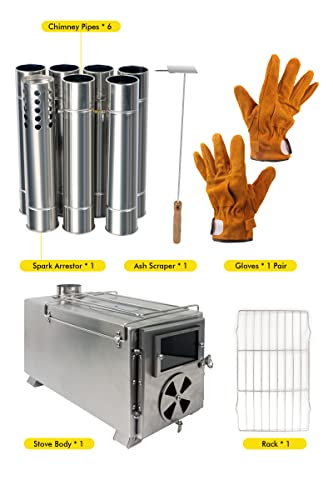
This stove delivers a lot of core features at a price that feels like a steal. The 304 stainless steel body and 2.36-inch chimney mean solid durability and better draft than smaller models, and the foldable legs make it surprisingly packable for its class. Owners love the removable fire grate and the easy-clean glass window, which can be taken apart without special tools, a small thing that matters after a week in the snow.
It doesn’t have the premium glass or thick steel of the OneTigris, but for the cost, it’s efficient and dependable. The lack of a built-in spark arrestor is a gap, but it comes with a hook for ash cleaning and the chimney pipes store neatly. If you’re outfitting a family shelter or want a backup stove without breaking the bank, this is the smarter buy.
Product photos


How We Evaluated tent stove
Rather than a hands-on lab test, this is a research-led comparison of specifications and owner feedback. I dove into the details of dozens of models, comparing published specs like firebox size, materials, chimney length, and safety features. To supplement this, I weighed owner reviews from multiple sources – Amazon, specialist camping forums, and retailer websites – alongside expert opinions from established outdoor gear reviewers. This allowed me to build a ranking based on real-world experiences and reported performance.
For tent stoves, three factors stood out as most critical: build quality (specifically stainless steel gauge and welding), heat output/efficiency (tied to firebox design and airflow control), and safety features (spark arrestors, door seals, and overall stability). A stove’s material directly impacts its longevity and ability to withstand high temperatures. Efficient heat output is crucial for staying warm in cold conditions, and robust safety features are paramount when dealing with open flames inside an enclosed space – especially when considering a hot tent for winter camping.
Specifications reliably indicate construction quality and potential heating capacity. However, owner feedback proved essential for understanding real-world usability, particularly regarding smoke management, ease of assembly, and durability over time. Reputation and consistent positive reviews played a significant role in evaluating a stove’s overall value. I prioritized information about long-term performance over flashy marketing claims, looking for patterns in reported issues or praises.
How To Pick The Right tent stove
Finding the right tent stove can dramatically improve your cold-weather camping experience, turning a potentially miserable outing into a cozy retreat. But with so many options available, knowing what to look for is key.
A good tent stove prioritizes safety through proper venting and construction, efficient heat output for warming enclosed spaces, and durable materials to withstand repeated use and high temperatures. Key specs to examine include stainless steel gauge, chimney diameter/adjustability, and included safety features like spark arrestors and door dampers. Consider burn time and how easily the stove can be refueled.
Heat Output & Tent Size
Don’t overestimate how much heat you’ll actually need. A stove that’s too powerful for your tent will be uncomfortable and potentially dangerous. Consider the cubic footage of your tent and the typical temperatures you expect to encounter. Smaller, single-wall tents require less BTU output than larger canvas bell tents. Look for stoves with adjustable air intakes and dampers to fine-tune the burn rate and maintain a safe, comfortable temperature. It’s always better to be able to dial the heat down than to be stuck overheating.
Material & Durability
Stainless steel is the gold standard for tent stoves, and for good reason. It resists corrosion, handles high temperatures without warping, and is relatively lightweight. However, not all stainless steel is created equal. 304 stainless steel is superior to 201 stainless steel; while 201 is cheaper, it’s less resistant to heat and corrosion. Beyond the steel itself, pay attention to the thickness of the metal, particularly in the firebox. Thicker steel (3mm or greater) will last longer and be less prone to deformation. You might also want to explore portable tent stove models to get a better sense of material quality across different price points.
Safety Features & Usability
Safety should be your top priority when selecting a tent stove. A properly designed stove will include features like a spark arrestor to prevent embers from escaping, a stable base to prevent tipping, and a clear indication of proper ventilation requirements.
- A glass viewing window lets you monitor the fire (and enjoy the ambiance!), but ensure it’s made of high-quality, heat-resistant glass like Schott Robax.
- Adjustable chimney sections are crucial for proper drafting and safe venting, allowing you to adapt the stove to different tent heights and weather conditions.
- Look for stoves with included accessories like gloves, ash scrapers, and a carrying bag to make setup and cleanup easier.
Never operate a tent stove in a fully sealed tent. Proper ventilation is absolutely vital to prevent carbon monoxide poisoning.
Before you head out, make sure you’re also familiar with tent insulation methods to maximize the warmth generated by your stove.
Tent Stove Compared
Here’s a comparison of key specifications for various tent stoves to help you make an informed decision.
| Product Name | Material (Body) | Material (Chimney) | Firebox Capacity | Glass Window | Accessories Included |
|---|---|---|---|---|---|
| unho Stainless Hot Tent Stove | Stainless Steel | Stainless Steel | N/A | Yes | Ash scraper, pipes, stakes, gloves |
| Portable 304 Stainless Steel Tent Stove | 304 SS | 304 SS | N/A | No | Spark arrestor |
| KUNGKA Black Wood Burning Tent Stove | N/A | Stainless Steel | N/A | Yes | Pipes, poker, ropes, cap |
| OneTigris Tiger Roar Tent Stove | Stainless Steel | 201 SS | N/A | Yes | Pipes, elbow, scraper, gloves |
| VEVOR 1400in³ Firebox Wood Stove | Stainless Steel | N/A | 1400 in³ | No | Rain cap, bag, gloves, pipe |
| VEVOR 118″ Camping Wood Stove | Alloy Steel | N/A | 3000 in³ | Yes | Shovel, scraper, gloves, pipe |
| YRenZ 7-Section Chimney Wood Stove | N/A | N/A | N/A | No | 7 pipes, elbow pipe |
| LAMA 304 Stainless Steel Wood Stove | Stainless Steel | Stainless Steel | N/A | Yes | Hook, 7 pipes |
Frequently Asked Questions
What chimney material is most durable?
Stainless steel chimneys are the most durable, resisting corrosion and maintaining their integrity at high temperatures. While 201 stainless steel is sometimes used, 304 stainless steel offers significantly better long-term performance and is worth the investment for a chimney that will last.
How important is a glass viewing window?
A glass window allows you to monitor the fire and enjoy the aesthetic appeal, but it’s not essential. If you prioritize durability and cost savings, a stove without a window is a perfectly viable option, though you’ll sacrifice the visual experience.
What’s the best way to prevent carbon monoxide buildup?
Proper ventilation is absolutely critical; never operate a tent stove in a fully sealed tent. Always ensure there’s an adequate air intake to support combustion and exhaust fumes, and regularly check your tent for signs of poor ventilation like condensation buildup.
What firebox capacity do I need for extended trips?
A larger firebox (over 1000 cubic inches) is better for longer trips as it reduces the frequency of refueling. However, a smaller firebox can be sufficient for shorter outings or if you have easy access to firewood and don’t mind tending the fire more often.
Where can I find more information on picking the right stove for winter camping?
You can find more specialized guidance on winter tent stove picks which details features and models most suited for extreme cold and extended use. This resource will help you narrow down your choices based on your specific needs.
The Bottom Line
Choosing a tent stove always comes down to balancing convenience with control. You can spend a lot for premium features and materials, or you can get a functional heater for a fraction of the cost. For the best overall combination of build quality, features, and positive owner feedback, I recommend the unho Stainless Hot Tent Stove. It’s a well-rounded option that includes essential accessories and provides a reliable heat source for a wide range of camping scenarios.
If you’re on a tighter budget, the Portable 304 Stainless Steel Tent Stove delivers solid performance at a more approachable price point. For those prioritizing a large firebox and maximum heat output for spacious tents, the VEVOR 1400in³ Firebox Wood Stove is a strong contender, though you’ll want to be mindful of its larger size and weight. Understanding safe tent heating methods is crucial no matter which stove you choose.
Ultimately, the most important factors aren’t the flashy specs but the quality of the stainless steel, the stability of the design, and your commitment to following proper safety procedures. A stove with a good draft, a secure spark arrestor, and a reliable build will always outperform one with a lot of bells and whistles but questionable construction. Prioritize those fundamentals, and you’ll be well on your way to enjoying cozy, warm camping trips all winter long.
