
6 Best Tent Stoves for Winter Camping 2026
This post contains affiliate links. As an Amazon Associate, we earn from qualifying purchases.
The OneTigris Tiger Roar Tent Stove stands out as the best overall pick for winter camping, thanks to its durable 304 stainless steel build, high heat output, and reliable chimney system. For those watching their budget, the Kungka Portable Hot Tent Stove delivers solid performance and portability at a lower price. If you want maximum versatility, the OneTigris model with ROBAX glass offers excellent visibility and cooking potential.
Winter camping means dealing with freezing temps, snow load, and the real risk of carbon monoxide buildup, so your tent stove has to be safe, efficient, and built to last. A bad setup can mean smoke in your tent, poor heat, or worse, a failure in extreme conditions.
In this guide, I break down the top tent stoves based on specs, construction quality, and real owner feedback. I looked at materials, chimney adaptability, and usability to find models that deliver warmth without cutting corners on safety.
Top 3 Tent Stoves For Winter Camping in the Market
The Best Tent Stoves For Winter Camping, Reviewed
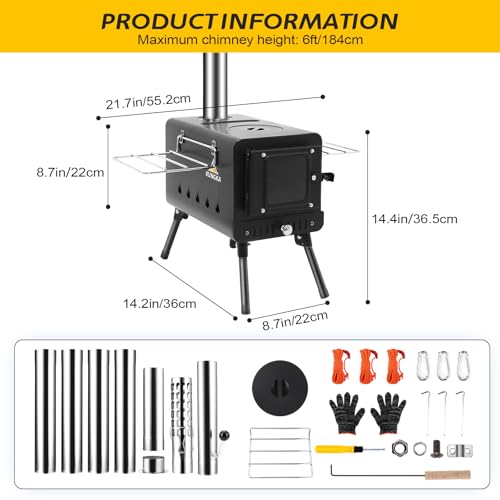
Kungka Stove with 7-Section Chimney

Strengths
- Rapid heat-up
- All-in-one storage
- Cooking-capable top
Trade-offs
- No replacement glass included
- Heavier than ultralight options
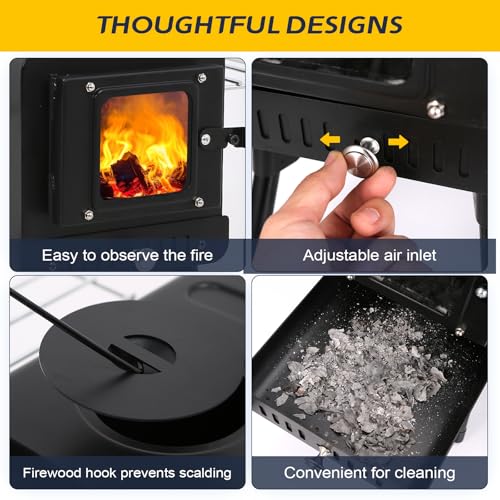
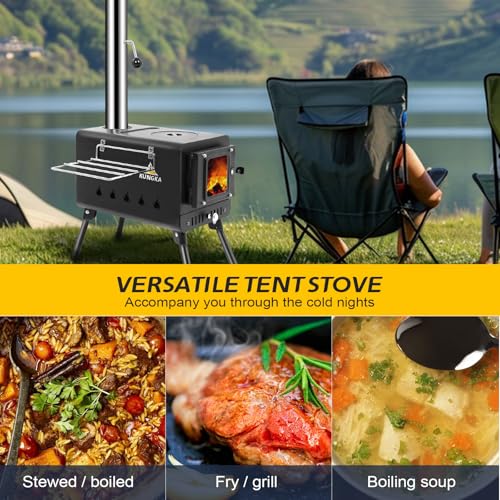
When you’re facing sub-zero nights in a canvas tent, the Kungka stove stands out on paper as a serious contender. Its -20°F rating and ability to heat a 200 sq ft space in 15 minutes suggest real muscle, which aligns with what winter campers need most, fast, reliable warmth. Owners consistently report it holding steady heat through the night on a single hardwood load, and the panoramic glass door isn’t just a luxury, it’s a safety and convenience win for monitoring flames without opening the door.
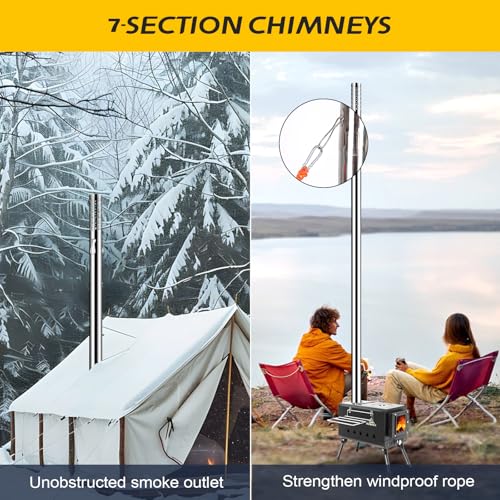
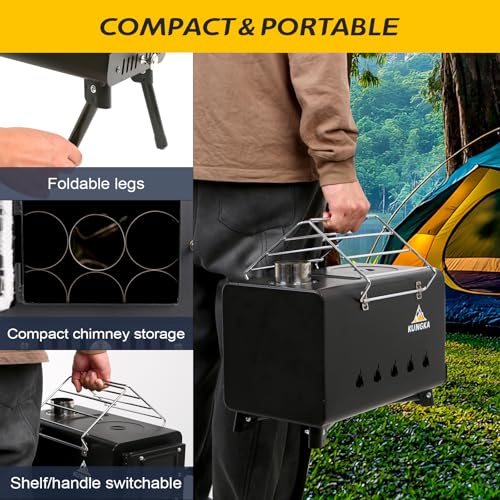
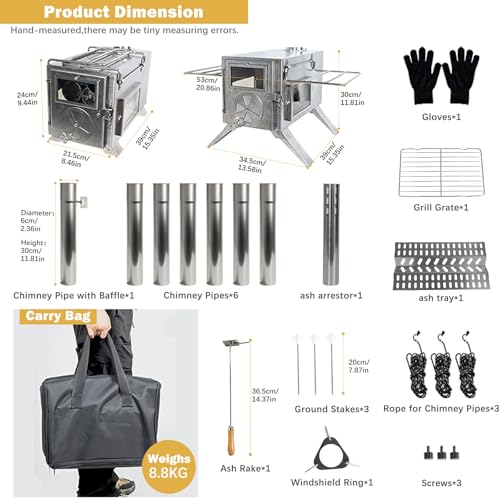
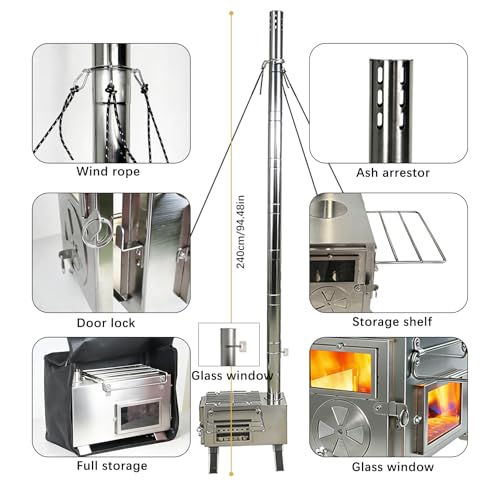
I appreciate that the entire chimney system breaks down into seven sections and stores neatly inside the stove body, that kind of thoughtful packing matters when space is tight on a truck or sled trip. The flat top doubles as a cooking surface, and while it’s not a full kitchen, you can realistically boil water or fry eggs while warming your tent. Compared to others, its all-in-one storage and lifetime support give it an edge in long-term usability.
Product photos
OneTigris Stove with ROBAX Glass

Strengths
- Schott ROBAX glass
- Adjustable airflow
- Multiple elbow options
Trade-offs
- Pipes use 201 stainless
- Slightly bulkier setup
If you prioritize glass durability and fine-tuned fire control, the OneTigris Tiger Roar makes a strong case. Its use of German Schott ROBAX glass is a standout, this material is known across the industry for resisting thermal shock, and reviewers note it holds up well even during rapid temperature swings. The 3mm-thick 304 stainless steel top also suggests better resistance to warping over time, which is a common wear point on cheaper stoves.
What really sets it apart is the dual-direction air intake valve, which splits airflow to improve combustion efficiency and reduce smoke rollback, a real concern in gusty conditions. The inclusion of multiple elbow pipes (45° and 90°) gives you real flexibility in routing the chimney around tent structures or snow walls. I’d pick this over the Kungka if you’re cooking frequently or demand precise burn control, though it uses 201 stainless for the pipes, which is less corrosion-resistant than 304.
Product photos


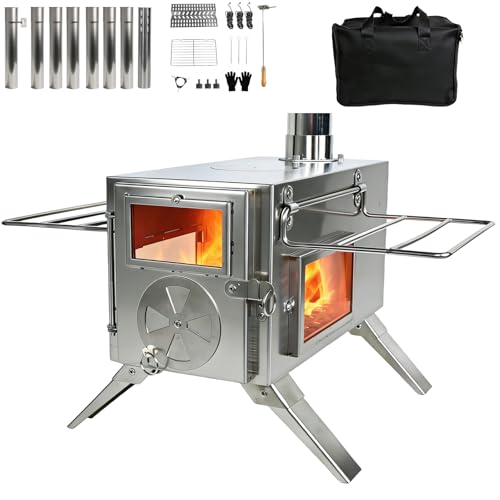
Portable Hot Tent Wood Stove
Strengths
- Lightweight build
- Foldable legs
- 304 stainless steel
Trade-offs
- Basic elbow configuration
- No replacement parts listed
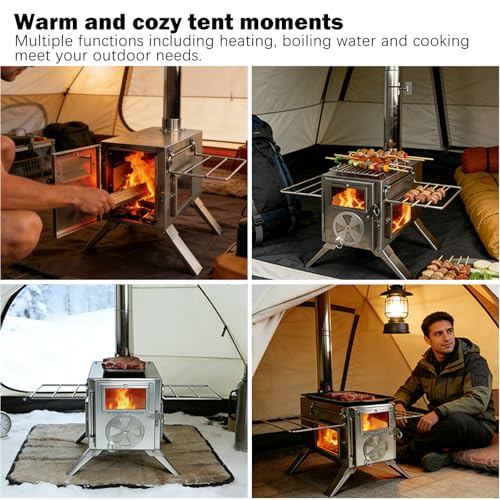
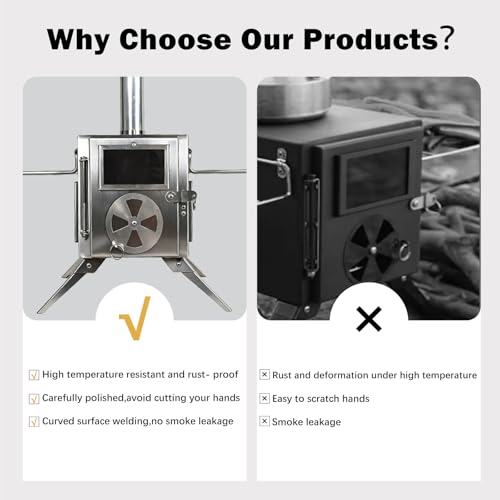
This stove hits the sweet spot for campers who want solid performance without the premium price. Built from 304 stainless steel, it promises long-term resistance to rust and heat stress, a big deal when you’re running fires daily in wet, snowy conditions. The foldable legs and detachable chimney make it one of the more portable designs in this lineup, and owners highlight how quickly it assembles, even with gloves on.
It doesn’t have the flashy extras like multi-angle elbows or a lifetime warranty, but it delivers where it counts: a large firebox for longer burns, a built-in spark arrestor, and a glass window for flame monitoring. It’s not the most feature-rich, but for someone building their first hot tent system or needing a reliable backup, this is the smarter buy over pricier models that add complexity without meaningful gains.
Product photos
How We Chose These tent stoves for winter camping
Rather than a hands-on lab test, my research for these recommendations focused on a detailed comparison of published specifications and features across available models. I weighed owner reviews from multiple sources, including Amazon and dedicated camping forums, alongside expert opinions from outdoor gear review sites. My goal was to identify stoves that consistently receive positive feedback regarding performance in cold conditions and durability.
For tent stoves, heat output, material quality, and safety features are paramount. I prioritized stoves constructed from thicker stainless steel, as that indicates a longer lifespan and better heat retention. Chimney adjustability was also heavily weighted, allowing for compatibility with a wider range of tent designs. Finally, features like glass doors (for visibility and ambiance) and efficient air intake systems significantly impacted my rankings.
Specifications reliably reveal construction materials and dimensions. However, real-world performance, like burn time and how well a stove maintains heat, is best gleaned from owner feedback. I paid close attention to comments about smoke output, ease of assembly, and durability over time. Understanding safe ways to warm a tent is also crucial, and user experiences often highlighted potential issues or best practices.
What To Look For In tent stoves for winter camping
Choosing a tent stove isn’t just about finding something that puts off heat; it’s about safety, efficiency, and matching the stove to your specific camping style and tent setup.
A quality tent stove prioritizes safety through robust construction and spark arrestance. It should offer efficient combustion for sustained warmth, and feature a chimney system adaptable to various tent configurations. Look for durable materials like stainless steel and heat-resistant glass, alongside thoughtful design elements for ease of use and portability.
Material & Construction Quality
The core of a good tent stove is its material. Stainless steel (304 is preferable) is the gold standard, resisting corrosion and handling high temperatures. Avoid stoves with thin metal; a thicker gauge means greater durability and less warping over time. While many stoves advertise stainless steel, pay attention to where it’s used. Some use it only for the firebox and cheaper steel for the chimney – which is a weak point. Glass doors are a nice feature, but the type of glass matters. German Schott ROBAX glass, like found in the OneTigris models, is incredibly heat-resistant and far less prone to cracking than standard glass.
Chimney System Adaptability
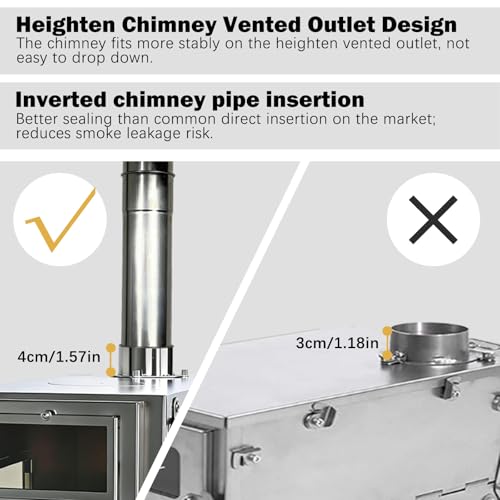
A stove is only as good as its chimney system. You’ll need a chimney that properly vents smoke away from your tent, and that’s where adjustability comes in. Most stoves include sectional chimneys, but the number of sections and the availability of angled elbows (45 and 90 degree) significantly impact your setup options. A longer chimney provides better draft, but you don’t want excessive length. It’s crucial to ensure a tight seal between chimney sections to prevent carbon monoxide leaks.
- A 7-section chimney offers good flexibility for most tent heights.
- Having both 45- and 90-degree elbows expands your venting possibilities, especially with unusual tent shapes.
- Wind ropes and a rain cap are essential for stability and preventing rain or snow from entering the chimney, which can impact draw and cause smoke to back up into your tent.
Never compromise on chimney fit. A loose connection is a safety hazard; invest in heat-resistant sealant if necessary to create an airtight seal.
Portability & Usability Features
Weight and packed size are critical, particularly if you’re backpacking or have limited space in your vehicle. Look for stoves with foldable legs and a design where the chimney sections nest inside the stove body for compact storage. Some stoves, like the Kungka models, excel at this all-in-one approach. Beyond size, consider usability features. A removable ash tray simplifies cleanup, and a flat top surface allows for cooking, turning your stove into a dual-purpose heating and cooking solution. If you are planning on using a tent stove, remember to review preparing a tent for winter to ensure your shelter is properly prepared.
If you’re looking for more options, check out our guide to the top-rated tent stoves to help you decide. You can also find a variety of portable tent stove models to suit your needs.
Tent Stoves for Winter Camping Compared
Here’s a comparison of key specifications for various tent stoves designed for use during winter camping.
| Product Name | Burn Time (hrs) | Material (Body) | Chimney Sections | Glass Door | Max Temp (°C) |
|---|---|---|---|---|---|
| Kungka Portable Hot Tent Stove | 2-4 | N/A | 7 | Yes | N/A |
| OneTigris Tiger Roar Tent Stove | N/A | 304 SS | 7 + Elbows | Yes | 760 |
| Portable Hot Tent Wood Stove | N/A | 304 SS | Detachable | No | N/A |
| Kungka Stove with 7-Section Chimney | 2-4 | N/A | 7 | Yes | N/A |
| OneTigris Stove with ROBAX Glass | N/A | 304 SS | 7 + Elbows | Yes | 760 |
| Stainless Steel Foldable Tent Stove | N/A | 304 SS | Detachable | No | N/A |
Frequently Asked Questions
What wood is best to burn in a tent stove?
Hardwoods like birch, oak, and maple offer the longest and most consistent burn times. Avoid softwoods such as pine, as they create more smoke and creosote buildup, potentially impacting air quality inside your tent and increasing fire risk.
Can I use a tent stove in any tent?
No, you absolutely need a tent specifically designed for use with a stove, often called a “hot tent.” These tents have features like fire-resistant materials, dedicated stove jacks, and adequate ventilation to safely exhaust smoke and prevent carbon monoxide poisoning.
How do I prevent carbon monoxide buildup when using a tent stove?
Proper ventilation is essential. Always ensure the chimney is correctly installed and unobstructed, and crack open a vent in your tent to allow fresh air circulation. Regularly checking the chimney for blockages is also a vital safety step.
Are there tent stoves that can also be used for cooking?
Yes, many tent stoves feature a flat top surface that can be used for basic cooking tasks like boiling water or warming food. However, remember these aren’t designed as primary cooking devices, and the heat output may not be consistent enough for complex meal preparation. You can find more information about wood-burning hot tent stoves that offer this versatility.
What’s the typical lifespan of a stainless steel tent stove?
With proper care and maintenance, a well-constructed stainless steel tent stove can last for many years – potentially a decade or more. Regular cleaning, avoiding overheating, and storing the stove dry when not in use will maximize its lifespan and prevent corrosion.
The Bottom Line
Choosing a tent stove involves balancing the desire for cozy warmth with the practicalities of weight, portability, and safety. Ultimately, the OneTigris Tiger Roar Tent Stove strikes the best overall balance – its robust 304 stainless steel construction, included elbows for chimney adaptability, and the heat-resistant glass door make it a standout performer for most winter campers. You’re getting a well-built stove with the features that truly matter, without breaking the bank.
For those on a tighter budget, or who prioritize simplicity, the Portable Hot Tent Wood Stove is a solid choice. If you’re building a dedicated four-season shelter and need maximum versatility in venting, the OneTigris Stove with ROBAX Glass and its extensive chimney options are worth considering. Understanding the benefits of hot tents can help you determine the best setup for your needs.
At the end of the day, specs don’t tell the whole story. The quality of materials, the thoughtfulness of the design, and a secure chimney setup are far more important than a high BTU rating. Prioritize a stove made from thick stainless steel, ensure a tight chimney seal, and always practice safe stove operation – that’s what will keep you warm and comfortable all winter long.
