
7 Best Tents for 1 Kid 2026
This post contains affiliate links. As an Amazon Associate, we earn from qualifying purchases.
The KidzAdventure 2 in 1 Kids Camping Tent is our top pick for its sturdy build and dual indoor-outdoor versatility, while the Kaivee Rocket Ship Pop Up Play Tent stands out for imaginative play and quick setup. If you’re after something more budget-friendly but still fun, the Tiny Land Starry Sky Play Tent delivers solid value.
Every parent knows the struggle, you want a tent that’s fun enough to spark your child’s imagination but tough enough to survive backyard sleepovers, living room forts, and the occasional clumsy tumble. Too many kids’ tents fall apart after a few uses or are so fiddly to set up that they end up in the closet.
This guide cuts through the hype. I looked at specs, real owner experiences, and design details to find tents that actually work for real kids and real families. These picks balance space, durability, and ease of use, whether you’re camping or playing indoors.
Top 7 Tents For 1 Kid in the Market
The Best Tents For 1 Kid, Reviewed
KidzAdventure 2 in 1 Kids Camping Tent

Strengths
- Adventure-themed design
- Water-resistant fabric
- Fits two kids
- Easy 5-minute setup
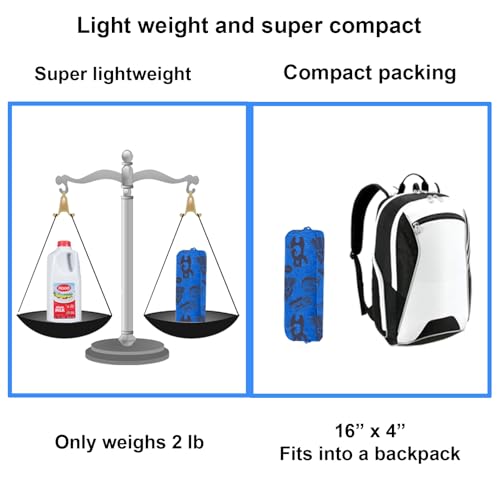
- Compact carry size
Trade-offs
- Not stormproof
- Poles not reinforced
- Limited ventilation
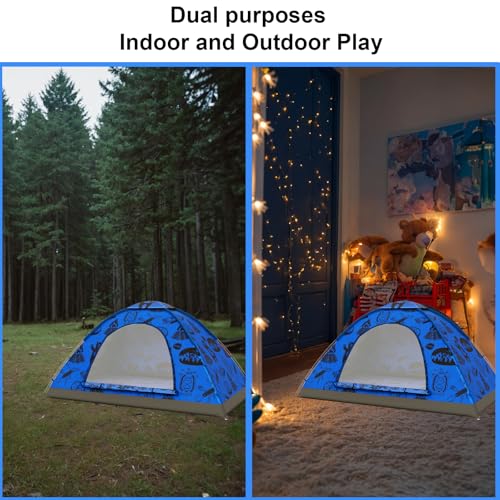
This tent walks a solid line between play and practicality. On paper, it’s one of the few kids’ tents that could actually survive a night outside, the 210D waterproof Oxford floor and silver-coated 190T polyester body give it real weather resistance, even if it’s not storm-rated. The 6’7” length is generous for one kid, and owners consistently report it fits two younger children comfortably, which makes it a smart pick for siblings or parent-and-child camping.
The adventure-themed print, bears, compasses, lanterns, adds charm, and the EZ pole system means setup is genuinely fast. But don’t expect it to hold up in heavy rain; reviewers note it’s best for light showers or dry camping. Still, for a tent that works as both a backyard shelter and a lightweight carry-along for junior scouts, it does more than most.
Product photos



Night Cat Backpacking Tent for One

Strengths
- True waterproof rating
- Lightweight and compact
- Fast 2-minute setup
- Good ventilation
- Safe pole design
Trade-offs
- Minimal headroom
- Single layer in cold weather
- Bare-bones extras
This is the only tent on this list that I’d actually trust in real backcountry conditions. The PU 3000mm waterproofing and taped seams mean it can handle downpours, and the double-layer pole protection is a thoughtful touch, no one wants fiberglass splinters. At just 4.4 lbs, it’s light enough for a kid to carry on a short hike, and the 2-minute setup is no exaggeration.
It’s not flashy, but it’s functional. The mesh door and roof vent provide real airflow, which matters when two bodies are inside. Owners report using it for scout trips and family car camping with one adult and a child. While the interior is snug for an adult, it’s ideal for a solo kid or parent-child pairing. If you want a real camping tent that grows with your child, this is the one.
Product photos


Kaivee Rocket Ship Pop Up Play Tent

Strengths
- Immersive space design
- Fits 2–3 toddlers
- Ultra-portable folded
- Stable pole structure
- Great for pretend play
Trade-offs
- No weather protection
- Shallow floor space
- Not for older kids
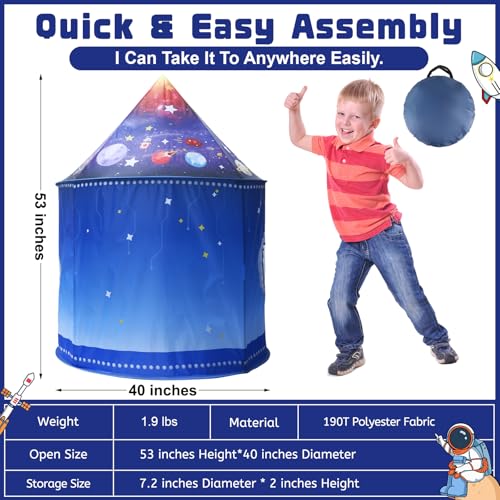
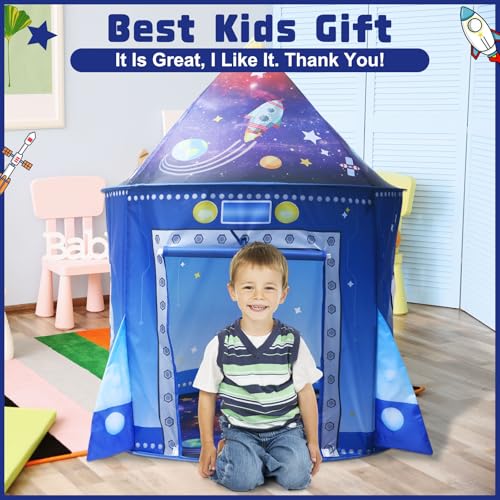
This is the tent that turns bedtime into blastoff. The space theme is bold and immersive, planets, astronauts, rockets, and kids clearly treat it like a command module. At 53” tall, it gives enough headroom for a 4-year-old to sit up, and the two porthole windows and roll-up cabin door add to the pretend-play fun. Owners love how compact it folds, just 7” wide, and how light it is for little hands to carry.
The fiberglass poles are flexible and stable, and the reinforced roof stitching helps it survive repeated use. It’s not meant for rain, but a few parents have used it under a canopy for short backyard stays. As a gift, it’s a slam dunk, imaginative, durable, and easy to store.
Product photos

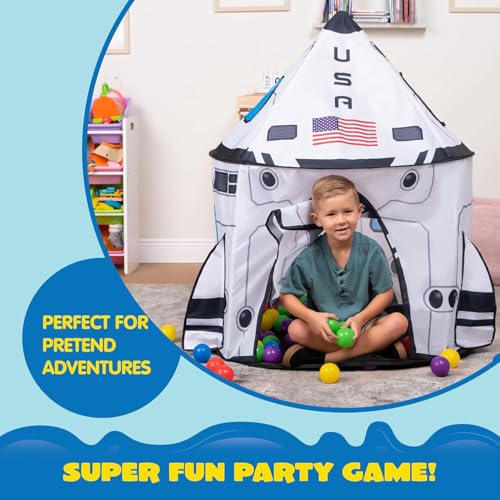
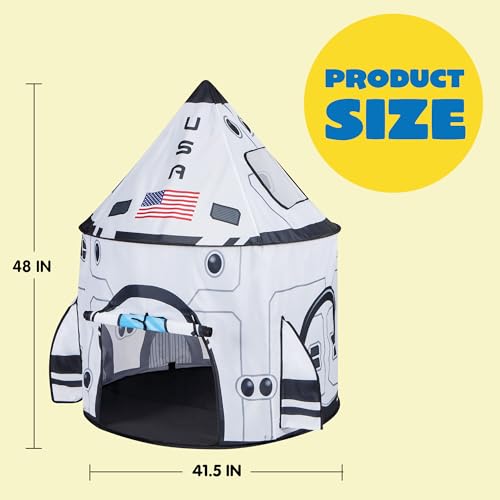
JOYIN Rocket Ship Play Tent

Strengths
- Complete with tote and stakes
- Simple pole assembly
- Bright engaging design
- Lightweight and portable
- Easy to clean
Trade-offs
- Fabric fades in sun
- Not waterproof
- Poles less durable
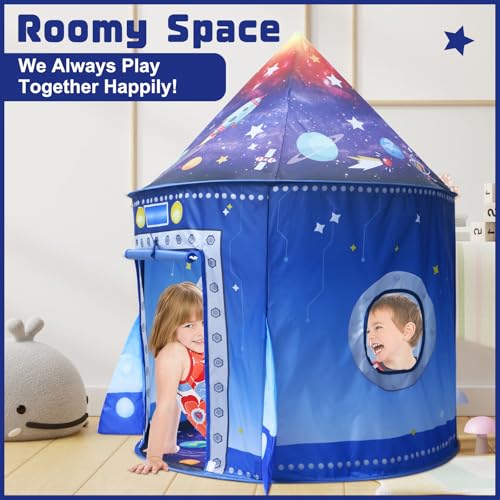
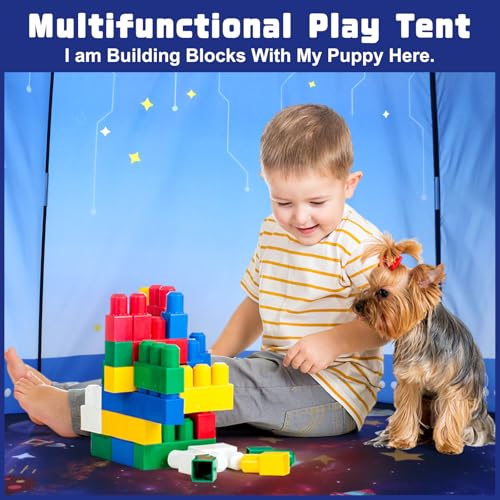
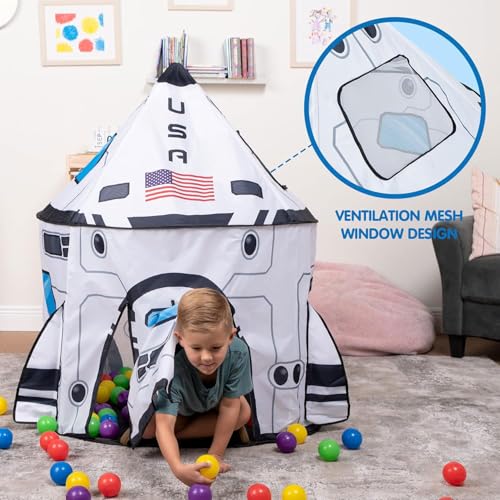
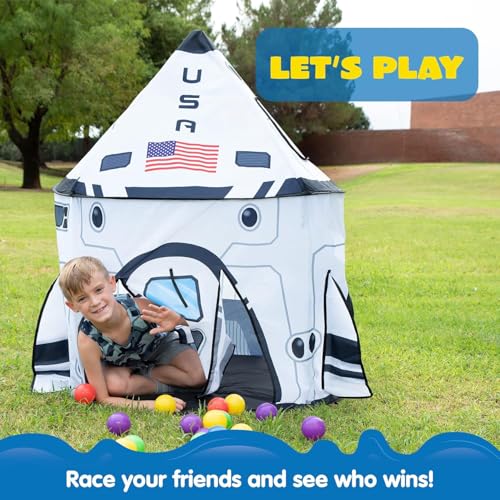
This rocket ship tent is all about simplicity and play value. The included tote and floor anchors make it more complete than some competitors, and the white-on-blue space graphics give it a clean, toy-like look that stands out. Setup is straightforward with foldable poles, and the included manual helps avoid frustration, a small thing, but one parents appreciate.
It’s not the most durable in direct sun or rough handling, and the fabric isn’t coated for water resistance beyond light spills. But as an indoor play zone or occasional backyard pop-up, it holds up. Owners say it’s especially good for group playdates or daycare use, where easy assembly and visual appeal matter most.
Product photos

Besrey 2 in 1 Kids Play Tent

Strengths
- Includes padded mat
- Adds string lights
- Two-door access
- Spacious for 3–4 kids
- Reinforced poles
Trade-offs
- Not weather-resistant
- Bulky when packed
- Mat not machine washable
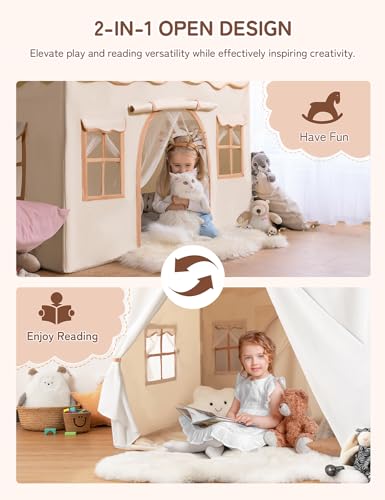
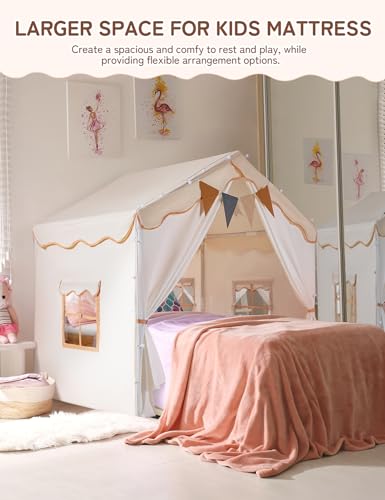
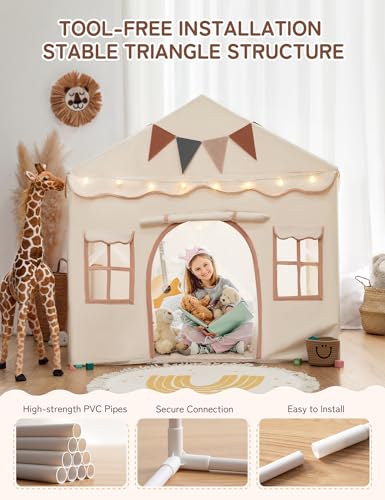
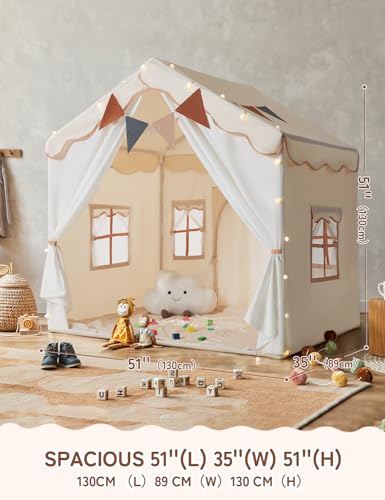
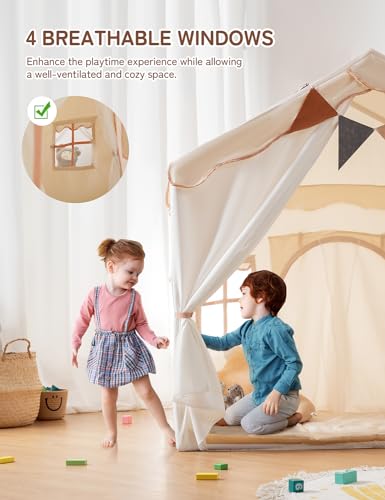
This tent wins on comfort and completeness. The included padded mat is a standout, no more cold floors or sliding blankets, and the string lights add a warm, magical glow that parents and kids both love. With two doors and four windows, it feels open and social, perfect for group play or parent-child reading time. The PVC poles are sturdier than most, and the lace curtains give it a boutique feel.
It’s one of the few play tents that actually feels like a cozy room. But it’s not made for rain, the fabric isn’t coated, and it lacks a rainfly. Owners use it indoors or under cover, and some have added a tarp when using it in the yard. Still, as a full-package indoor retreat, it’s hard to beat.
Product photos
SweHouse Kids Clubhouse Play Tent
Strengths
- Roll-up door and windows
- Water-resistant roof
- Safe non-toxic materials
- Easy to relocate
- Great for parties
Trade-offs
- Low ceiling height
- Thin floor fabric
- No storage mat
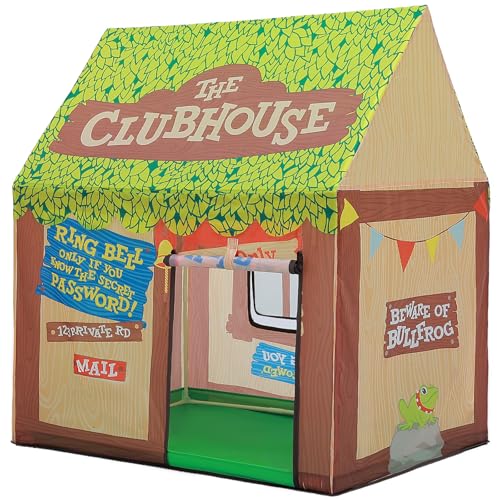
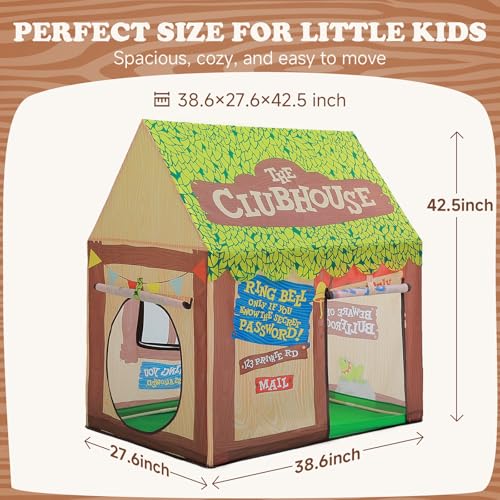
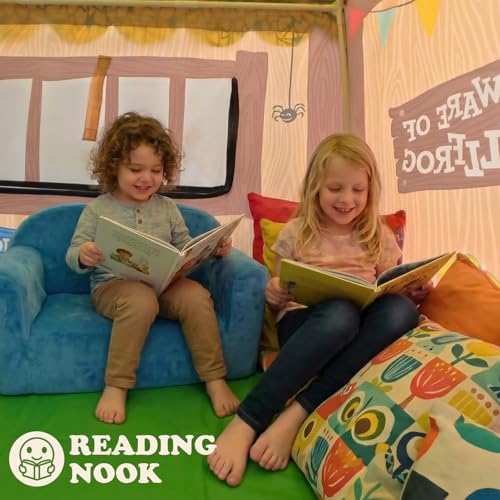
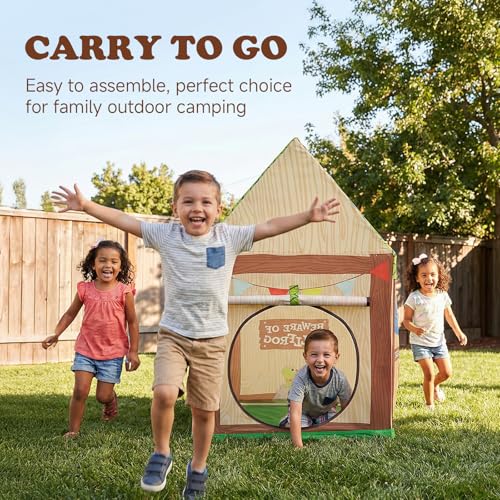
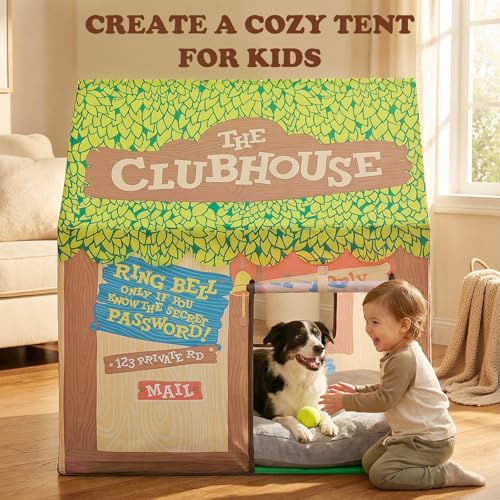
This tent nails the balance between indoor charm and outdoor flexibility. The roll-up door and windows make it airy and parent-friendly, you can peek in without disturbing the secret club. At 42.5” tall, it’s not the tallest, but it’s roomy enough for a couple of toddlers to sit and play. The non-toxic materials and waterproof roof coating mean it can handle light outdoor use, and the compact size makes it easy to move from room to yard.
Owners say it’s a favorite for birthday parties and quiet time, and the neutral design blends into most decor. It’s not built for wind or rain, but under a porch or in dappled shade, it holds up. As a bridge between play and portability, it stands out.
Product photos

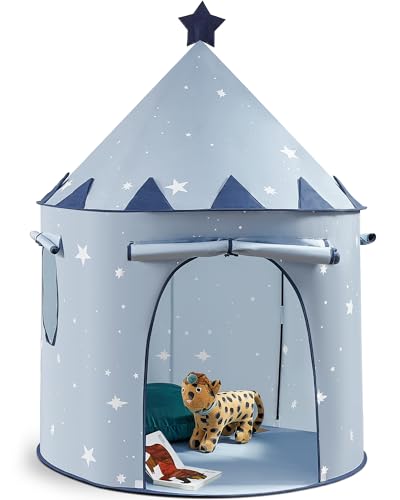
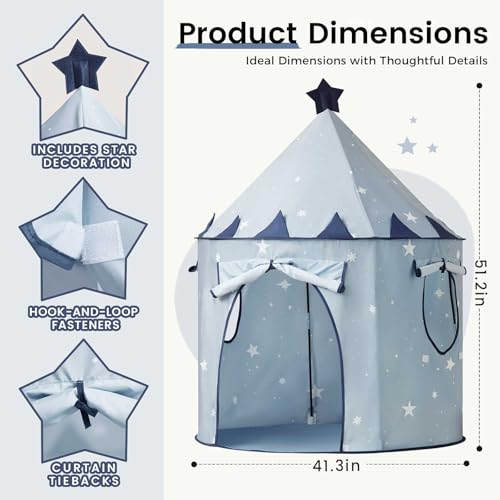
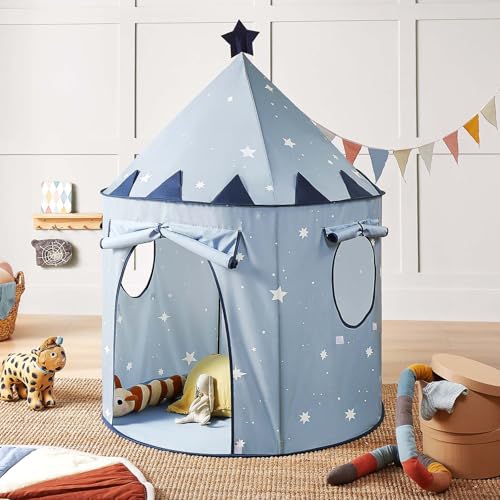
Tiny Land Starry Sky Play Tent
Strengths
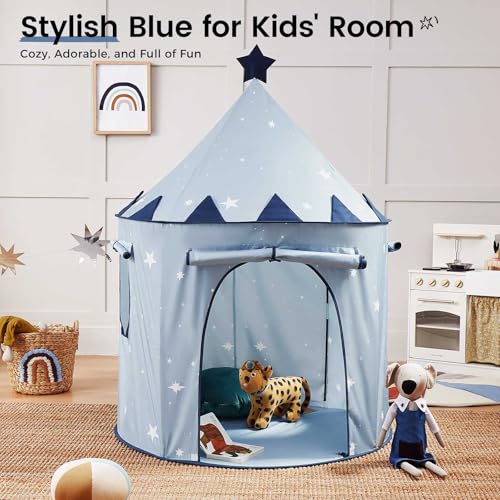
- Enchanting starry design
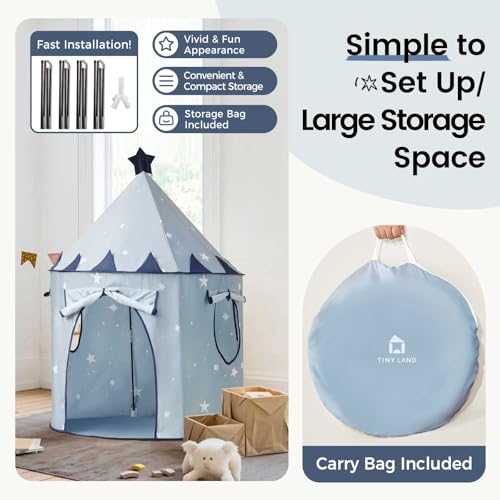
- Quick pop-up setup
- Durable easy-clean fabric
- Lightweight and portable
- Safe rounded edges
Trade-offs
- Not waterproof
- Too small for older kids
- No groundsheet
If you’re after pure indoor magic, this one delivers. The starry sky theme is a hit, owners say their kids light up when they crawl into what feels like a mini planetarium. It’s not built for the trail, but that’s not the point. The polyester is durable enough for daily play, and the 3-minute pop-up design means you can unfold it during story hour or fold it away before naptime without hassle.
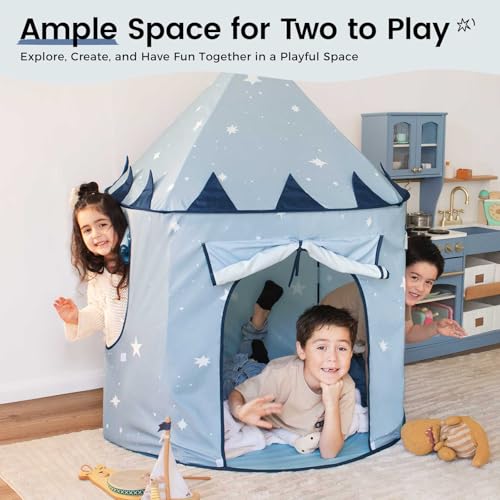
It’s smaller than some, so taller kids might feel cramped. But for toddlers and preschoolers, the cozy size feels safe and immersive. Reviewers praise how it holds up to rough play and how easy it is to wipe clean. It’s not a camping tent, but as a dedicated imaginative space, it outshines many.
Product photos
How We Chose These tents for 1 kid
I approached this guide by researching the specifications and features of numerous tents marketed for single children, then carefully weighing those details against owner reviews and assessments from respected outdoor gear reviewers. Rather than a hands-on lab test, this is a research-led comparison designed to highlight the strengths and weaknesses of each option based on real-world feedback. My goal was to identify tents that balance fun design with practical functionality for young campers and indoor play.
For this category, the most important factors were size and durability. A tent for one child needs to be roomy enough for comfortable play, but not so large that it dominates a room or is difficult to transport. Durability is also key; these tents will likely endure rough-and-tumble play, so robust materials and construction are essential. Beyond those, ease of setup was a significant consideration for parents seeking a quick and convenient play space – understanding how pop-up tents work was very helpful here.
Specifications reliably tell you about dimensions, materials used in construction (like polyester denier and pole material), and included accessories. However, owner feedback proved critical for gauging real-world durability, ease of assembly, and whether the tent truly lives up to its marketing claims. I prioritized reviews that mentioned frequent use over several months, as these offer the most valuable insight into long-term performance. Reputation and brand perception also played a role, highlighting manufacturers known for quality construction.
Choosing The Right tents for 1 kid
Finding the right shelter for your little explorer doesn’t have to feel overwhelming. We’ll break down what truly matters when selecting a tent designed for one child, whether for backyard adventures or camping trips.
A good tent for one child prioritizes safety with non-toxic materials and stable construction. It should be easy to set up and take down, ideally by one adult, and offer enough space for comfortable play or sleep. Consider the intended use – indoor play tents benefit from breathability, while camping tents require basic weather protection and durability. Look for features like easy access, good ventilation, and a compact packed size.
Size and Space
Don’t underestimate the importance of getting the dimensions right. While a tent marketed “for one kid” might seem straightforward, kids grow, and playdates happen. I always recommend sizing up slightly. Consider not just floor space, but also height – can your child comfortably sit up and move around inside? A tent that’s too cramped will quickly lose its appeal. For indoor use, you might prioritize a roomy play space, while camping tents can get away with being more streamlined.
Material and Durability
The materials used in a tent’s construction drastically impact its lifespan and suitability for different environments. Polyester is common for its affordability and water resistance, but quality varies. Look for thicker denier fabrics (measured in ‘D’) for better durability. For camping, a PU coating on the polyester will provide a basic level of waterproofing. Pay attention to the poles, too. Fiberglass is standard in many budget options, but it can be prone to breakage. More robust tents will use fiberglass with added protection, or even flexible plastic poles. If you are looking for something more robust for repeated use, you might also want to check out lightweight 1-person tents as they are built for more wear and tear.
Ease of Setup and Portability
Let’s be honest: if a tent is a pain to set up, it won’t get used. Pop-up tents are the easiest, unfolding in seconds, but learning how to pack play tents can be tricky. Tents with simple pole systems are a good compromise. Weight is a factor, especially if you plan to transport the tent frequently.
A quick setup means more playtime and less frustration. Prioritize tents that can be assembled in under ten minutes, ideally without any tools. Practice setting it up once or twice before you need it!
Tents for 1 Kid Compared
Here’s a comparison of specifications for tents designed for one child.
| Product Title | Capacity | Dimensions (L x W x H) | Material | Waterproof | Setup Time | Special Features |
|---|---|---|---|---|---|---|
| KidzAdventure 2 in 1 Kids Camping Tent | 1-2 | 6’7″x4’x40″ | 190T Polyester | Basic | 5 minutes | Backpacking, 2-Pole EZ |
| Night Cat Backpacking Tent for One | 1 | 7.0’x3.8’x3.6′ | Polyester | Heavy | 1-2 minutes | Fiberglass Poles |
| Kaivee Rocket Ship Pop Up Play Tent | 2-3 | 53″H x 40″D | Polyester Fabric | N/A | 5 minutes | Space Theme |
| JOYIN Rocket Ship Play Tent | 1 | N/A | Polyester | Yes | Quick | Tote Carry Bag |
| Besrey 2 in 1 Kids Play Tent | 3-4 | 51″x35″x51″ | Polyester/PVC | N/A | Quick | Mat & Lights |
| SweHouse Kids Clubhouse Play Tent | 1-2 | 38.6″x27.6″x42.5″ | N/A | Yes | N/A | Portable |
| Tiny Land Starry Sky Play Tent | 1 | N/A | Polyester | N/A | 3 minutes | Starry Sky Theme |
Frequently Asked Questions
What level of water resistance should I expect from these tents?
Most tents in this category offer basic water resistance, typically a PU coating on the polyester fabric. However, don’t expect heavy rain protection – these are better suited for light drizzles or indoor use. If you anticipate serious weather, consider looking at best backpacking tents for one which are built with more robust waterproofing.
Are any of these tents truly easy to pack up, especially the pop-up styles?
Pop-up tents excel at quick setup but can be frustrating to collapse. The key is following the specific folding instructions (often printed on the carry bag) and twisting the tent to disengage the flexible poles. Practice a few times indoors to get the hang of it.
What’s the typical lifespan of a play tent used primarily indoors?
With gentle use, an indoor play tent can last a year or two. However, factors like the frequency of use, the roughness of play, and the quality of materials significantly impact longevity. Look for reinforced seams and thicker polyester for increased durability.
How do the materials compare between the camping and play tents on this list?
Play tents often use lighter-weight polyester and may incorporate PVC for structure, prioritizing affordability and fun designs. Camping tents feature more durable polyester denier and fiberglass or flexible plastic poles to withstand outdoor elements and repeated use.
What size tent should I choose if my child likes to have a friend over to play?
While these are marketed for one child, I recommend sizing up. A tent with dimensions around 6’x4’ or larger will comfortably accommodate two smaller children for playdates. Consider the Kaivee Rocket Ship Pop Up Play Tent which can fit 2-3 kids, or the Besrey 2 in 1 Kids Play Tent designed for 3-4 children.
The Bottom Line
Choosing a tent for one child often comes down to balancing how much you want to spend with how often, and where, it will be used. While many options exist, the KidzAdventure 2 in 1 Kids Camping Tent strikes the best overall balance of features, durability, and price, making it a solid choice for both backyard fun and light camping. It’s a practical pick that won’t leave you disappointed.
For specific needs, the JOYIN Rocket Ship Play Tent is fantastic for indoor imaginative play, offering a themed experience at a very affordable price. If you’re after something a bit more substantial for outdoor adventures, the Night Cat Backpacking Tent for One provides serious weather protection and a more robust build. And for parents struggling with storage, learning how to fold kids pop-up tent folding will be a lifesaver.
Ultimately, remember that a tent is just a tool for sparking imagination and creating memories. Focus on finding one that’s safe, sturdy, and encourages your child to explore their world, whether that world is the backyard or a campsite under the stars. Don’t get too hung up on fancy features; a simple, well-made tent will always be more valuable than a complicated one.
