
How to Fold a Pop Up Play Tent | The 3-Try Trick to Master
This post contains affiliate links. As an Amazon Associate, we earn from qualifying purchases.
To fold a pop-up play tent, collapse it flat, fold it into a figure-eight, bring the loops together, and secure it with the strap. The entire process should take under 30 seconds once you’ve practiced the motion three to five times.
Most people yank, twist, and force the flexible frame. That’s how you get a permanent twist in the high tensile spring steel or tear the fabric where it meets the frame. The tent isn’t fighting you. You’re fighting its design.
This guide walks through the correct collapse sequence, how to fix a frame that’s already bent, what surfaces will wreck your tent, and the one storage mistake that voids warranties. We’ll use specific instructions from the Battat Happy Camper BT1820, Playlearn PLLE38, and The Pop-Up Company manuals.
Key Takeaways
- Practice the fold 3–5 times on a soft surface like grass before trying it on concrete or indoors.
- Never twist the frame. The correct motion is a push-down collapse followed by a smooth figure-eight fold.
- Store the tent completely dry. A damp tent folded and bagged will mildew within 48 hours.
- The GigaTent Pop Up Pod warranty only covers material defects for 14 days after purchase — inspect it fast.
- If the frame is bent, trace it from the top to the twist and use both hands to snap it back into alignment.
Why This Seems Hard (It’s Not)
You bought a tent that promises one-second setup. The packaging shows a smiling child. Then you try to put it away. Suddenly, you’re wrestling an octopus made of fiberglass rods and polyester.
The frame isn’t a rigid pole tent. It’s a continuous loop of spring steel or fiberglass sewn into the seams. Force it the wrong way, and you’re loading stress points that aren’t designed to take it. The Battat Happy Camper manual explicitly says to lift the top and bring both sides together to correct a bent frame — a clear sign that improper folding is the number one cause of damage.
Before you start: Pop-up tents have under 1mm of fabric protecting the frame at stress points. Folding on concrete, asphalt, or any jagged surface can tear this material on the first attempt, exposing the sharp wire ends. Always use a soft surface like grass, carpet, or a blanket.
The 4-Step Collapse for a Perfect Flat Fold
This sequence matches the method shown in multiple OEM manuals and YouTube tutorials. The goal is to let the frame’s natural spring tension work for you, not against you.
Step 1: Collapse It Completely Flat
Push down firmly on the center of the dome until the entire structure is pancake-flat on the ground. Don’t just push one side. Get all four sides evenly flat. If one corner pops back up, press it down and hold for a second. The frame needs to settle.
Skip this, and you’ll be fighting a partially sprung tent during the next step. The figure-eight fold only works from a fully flat start.
Step 2: Create the Figure-Eight
Stand at the tent’s edge. Grab two opposite sides. Fold one side over onto itself, then bring the other side over to create an overlapping figure-eight shape. Your hands are now holding two loops.
The YouTube transcript from the folding demo is clear: “Fold it into a figure of eight, and as you get to the middle, fold it in on itself.” That “middle” is the next step.
Step 3: Bring the Loops Together
Push the two loops of the figure-eight toward each other. They will naturally want to stack. Don’t twist them. Just guide them together until they form a tight, neat package about the size of the original carry bag.
Step 4: Secure and Bag It
Most tents have a Velcro or elastic strap sewn into the fabric. Wrap it around the folded bundle. If your tent came with a carry bag, slide the bundle in. Do not force it. If it doesn’t fit, you missed step 3 — the loops aren’t stacked tightly enough.
TL;DR: Flat, figure-eight, stack, strap. The entire motion takes less time than reading this sentence.
When Your Tent Resists (Fixing Bent Frames and Twists)
Even following the steps, a pre-existing bend or twist from previous misuse can make folding feel impossible. Here’s how to diagnose and fix the two most common problems, straight from the manufacturer’s troubleshooting guides.
The Frame is Bent (It Won’t Lay Flat)
If the tent has a noticeable lean or one side refuses to collapse, the wire frame is likely bent. The Battat Happy Camper BT1820 manual has a specific fix: “Lift the top, bring both sides together, and then release to correct the shape. Repeat if necessary.”
Lift the tent by its center dome. Bring the two problematic sides together gently, then release. The spring action of the metal often snaps it back into a rounder shape. You might need to do this two or three times. Forcing it over your knee or hitting it will permanently kink the metal.
The Frame is Twisted (A Messy Spiral)
A twist happens when someone tries to fold the tent by rotating it like a beach towel. The Pop-Up Company manual addresses this: “If the high tensile spring steel frame twists due to incorrect folding… trace the frame from the top to the twist, and twisting it back with both hands until it snaps into alignment.”
Find where the continuous loop of frame is twisted. Follow it with your hands from the top of the tent down to the problem spot. Grip the frame on either side of the twist and gently rotate your hands in opposite directions until you feel it click back into its original plane. It will snap.
Common mistake: Storing a twisted tent — the twist sets within a week under tension, and the frame will never fully recover, leading to a lopsided setup every time.
Surfaces and Conditions That Will Ruin Your Tent
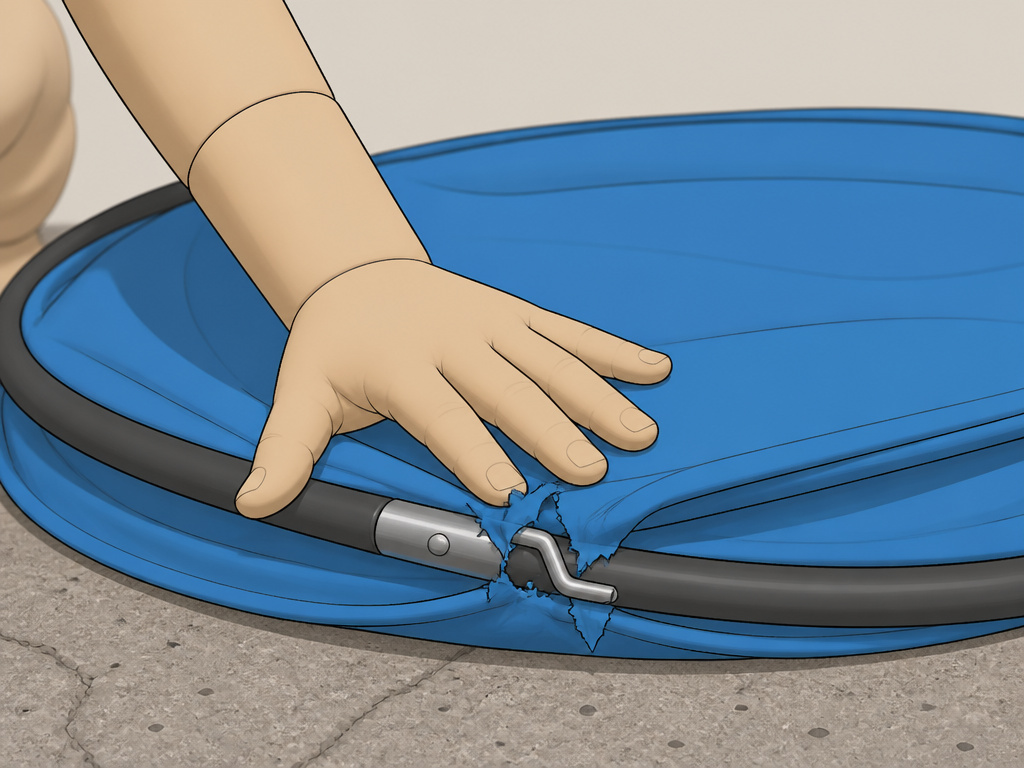
Where you fold is as important as how you fold. The manuals are not subtle about this.
| Surface/Condition | Risk | Timeline to Damage |
|---|---|---|
| Concrete, Asphalt, Pavement | Tears fabric at frame joints, exposes sharp wire. | Immediate on first fold. |
| Wet Grass / Damp Ground | Mold/mildew sets into folded fabric. | 48 hours in a sealed bag. |
| Prolonged Direct Sunlight | UV degrades fabric and weakens frame coating. | One full summer season. |
| Near Heat Sources (Fire pit, heater) | Melts synthetic fabric, deforms plastic hubs. | Within minutes. |
The Pop-Up Company warns against concrete or jagged surfaces because they abrade the thin material. The Battat manual says the tent is not suitable for wet or rainy environments and must be dried fully before storage. Ignoring these turns your quick-fold tent into a disposable one.
A clean, dry pop-up beach tent is a joy. A moldy one is a health hazard. Always shake off debris and use a damp cloth to clean stains before folding. The manual for The Pop-Up Company tent specifies that other cleaning substances might render the flame-retardant coating ineffective.
Storage vs. Stuffing (The Warranty Killer)
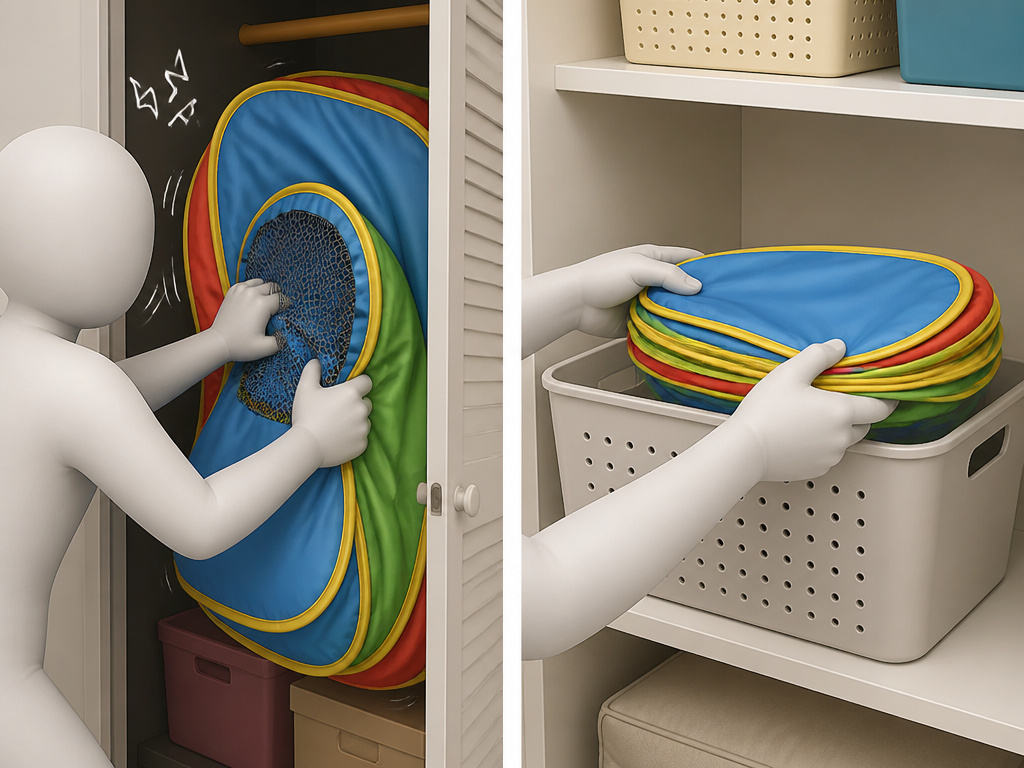
There’s a difference between folding your tent and stuffing it into a closet. Storage is a deliberate act that preserves the product. Stuffing is what you do when you’re frustrated and just want the thing out of sight.
The GigaTent Pop Up Pod warranty is a stark reminder: it covers defects in material and workmanship for 14 days after purchase. If you stuff the tent wet, fold it on asphalt, or otherwise mistreat it, any resultant tear or frame bend after that two-week window is on you. The warranty language is there because they know improper handling is the primary failure mode.
Correct Storage Protocol:
- Ensure the tent is completely dry. Air it out if it was used in dew or near water.
- Fold it using the method above and secure the strap.
- Place it in its carry bag or a large, breathable storage tub.
- Store it in a cool, dry place like a closet shelf or under a bed. Avoid attics, garages, or car trunks where temperature extremes are common.
This routine extends the life of your budget tents under $100 or your premium nine-person tents alike. The mechanism is the same.
Choosing the Right Tent for Easy Folding
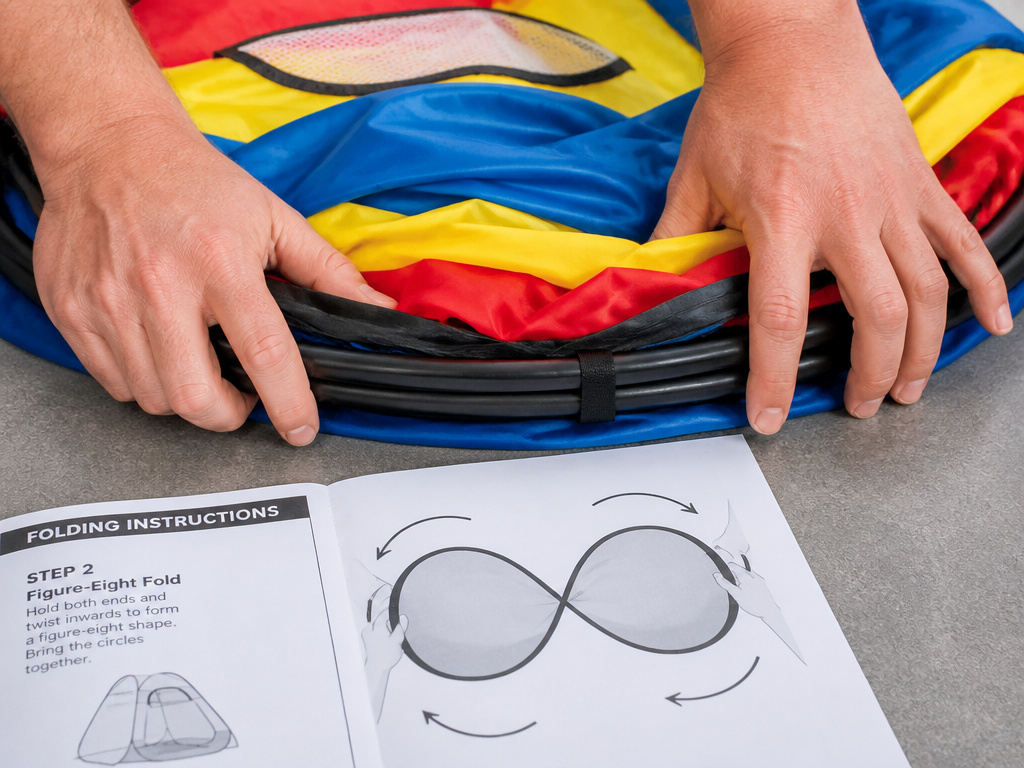
Not all pop-up play tents are created equal. Some are designed with slightly more robust frames or clearer folding guides. If you’re shopping and ease of collapse is a priority, look for these features drawn from the specific models we’ve cited.
| Feature | Why It Matters for Folding | Model Example |
|---|---|---|
| Continuous Loop Frame | Fewer joints mean fewer points to bend or twist. | The Pop-Up Company (Patents 0331029/4825892) |
| Reinforced Stress Points | Extra fabric at corners resists tearing during the figure-eight step. | bblüv Sunkitö (SPF 50+ mosquito net) |
| Clear Graphic Instructions | Diagrams reduce first-time user error. | Playlearn Pop Up Tent (PLLE38 manual) |
| Integrated Storage Strap | Prevents the folded bundle from springing open. | Battat Happy Camper (BT1820) |
| Larger Carry Bag | Allows for a less-perfect fold without forcing. | GigaTent Pop Up Pod |
A tent with a continuous loop frame, like those from The Pop-Up Company, is inherently more forgiving during the folding process. The frame wants to return to its original circle. Models with multiple segmented rods are more prone to getting hung up. When you’re evaluating tent camping equipment, the folding mechanism is a legitimate factor alongside size and sun protection.
For families, a tent for two kids that folds easily means less hassle at the end of playtime. The same principle applies to larger car camping tents where a smooth pack-up is part of the overall experience.
Frequently Asked Questions
Why won’t my pop-up tent stay folded?
You haven’t secured it. After creating the figure-eight and stacking the loops, you must use the integrated strap or a separate bungee cord to hold the bundle tight. Without this, the spring tension in the frame will slowly push the loops apart, and the tent will partially open in storage.
Can I wash my pop-up play tent?
Surface cleaning only. Use a damp cloth with mild soap. Do not submerge it, put it in a washing machine, or use harsh chemicals. The bblüv Sunkitö and Pop-Up Company manuals warn that improper cleaning can degrade sun-protection coatings and flame retardants. Rinse with a damp cloth and air dry completely before folding.
How do I know if the frame is broken?
broken frame has a sharp kink or a complete separation. A bent frame can often be corrected. A broken one cannot. If the wire is snapped, the tent is done. Inspect new tents closely within the first 14 days, as this is the typical defect warranty period for models like the GigaTent Pop Up Pod.
Are more expensive pop-up tents easier to fold?
Not necessarily. The folding mechanism is broadly the same across price points. A higher price often buys better fabric, sun protection (like the bblüv Sunkitö’s SPF 50+), or additional features like mosquito nets. The learning curve of 3-5 attempts, as noted by The Pop-Up Company, applies to most models.
The Bottom Line
Folding a pop-up tent is a skill, not a struggle. It requires you to work with the spring steel, not against it. The first few tries will feel awkward — the manufacturer’s own guidance admits it takes 3-5 attempts to perfect. That’s normal.
After that, it’s a five-second routine. Collapse it flat on grass, make a figure-eight, stack the loops, and strap it shut. Keep it dry, keep it clean, and store it properly. Do that, and a simple pop-up tent model will give seasons of play without becoming a tangled mess in the closet.
