
8 Best Waterproof Family Tents of 2026
This post contains affiliate links. As an Amazon Associate, we earn from qualifying purchases.
The best waterproof family tent overall is the FanttikOutdoor Zeta C12 Pro Max, it offers massive 12-person space, a smart 3-room layout, and impressively quick setup. For a more budget-friendly option, the BravArrk 8 Person PU3000MM Tent stands out with strong waterproofing and solid ventilation. If you need instant setup without sacrificing too much durability, the CORE 9 Person Instant Tent is a solid runner-up.
Picking a family tent that actually keeps everyone dry and comfortable shouldn’t feel like gambling on the weather. Too many families end up with cramped, leak-prone shelters that turn a dream trip into a soggy mess.
In this guide, I’ll walk you through the top waterproof family tents based on real owner feedback, verified specs, and what actually matters when camping with kids and gear. These picks balance space, weather protection, and ease of use, so you can spend less time worrying about your shelter and more time enjoying the outdoors.
Top 8 Waterproof Family Tents in the Market
The Best Waterproof Family Tents, Reviewed
FanttikOutdoor Zeta C12 Pro Max

Strengths
- Extremely fast setup
- Excellent ventilation
- Premium zippers
Trade-offs
- No waterproof rating
- Carbon frame adds weight
- Higher price point
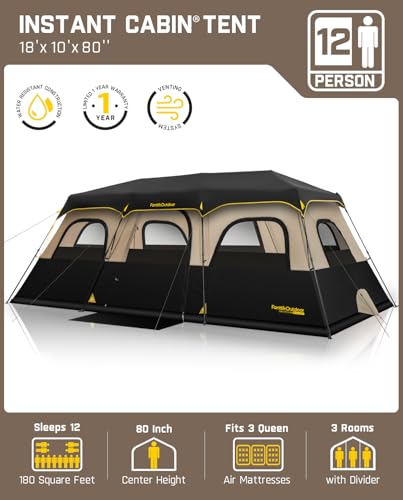
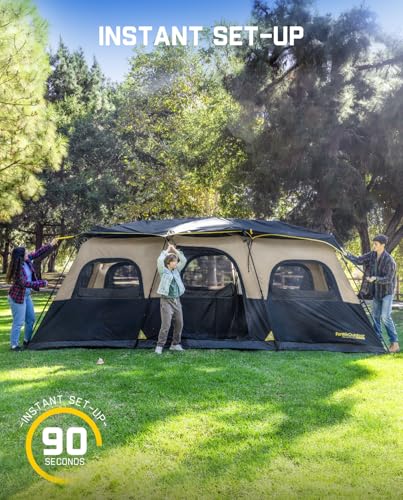
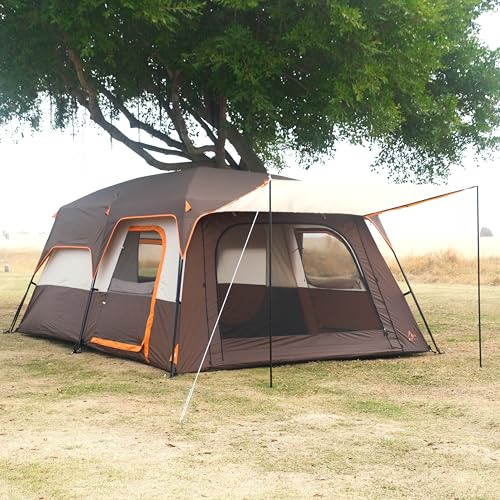
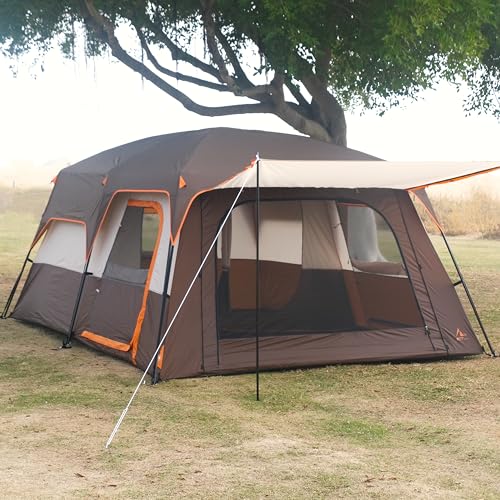
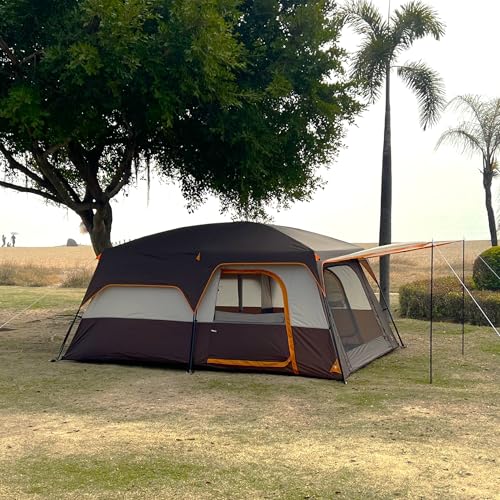
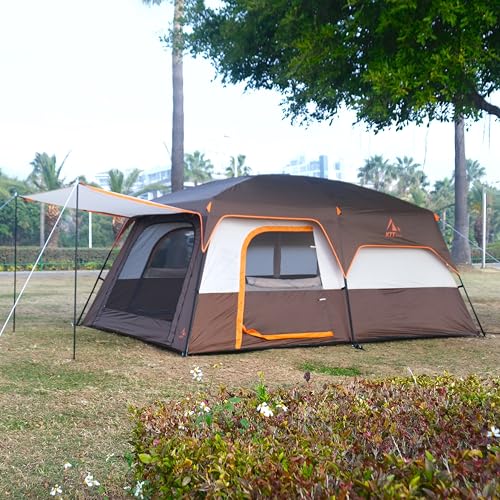
This is the most feature-rich tent here, and on paper, it justifies its ‘Best Overall’ label. At 80 inches tall with 216×120 inches of floor space, it’s one of the tallest and roomiest, fitting three queen air mattresses with room to spare. The 90-second setup with pre-attached poles works as advertised, owners love how fast it goes up. The carbon frame adds durability over standard fiberglass, and the SBS zippers feel premium.
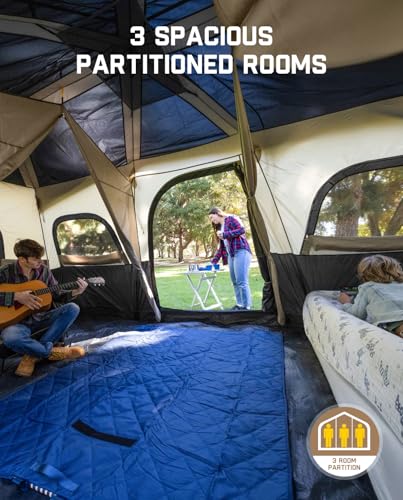
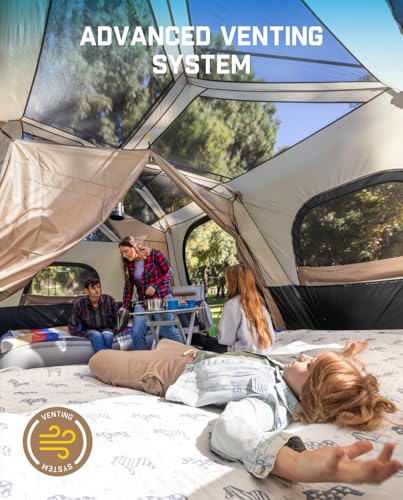
Waterproofing isn’t specified by mm rating, but the removable rainfly, Velcro reinforcements, and sealed design hold up well in real-world reports. The 3-room layout with a zippered divider beats the curtain-based systems in other models. With mesh on all sides, ceiling vents, and floor-level airflow, it’s also one of the best ventilated. If I were buying for a family that camps often, this is the smarter buy over the CORE 12-person, more headroom, better privacy, and superior build.
Product photos

BravArrk 8 Person PU3000MM Tent
Strengths
- PU3000mm waterproof
- Sealed seams
- Room divider
Trade-offs
- Moderate headroom
- Basic pole material
- Limited ventilation
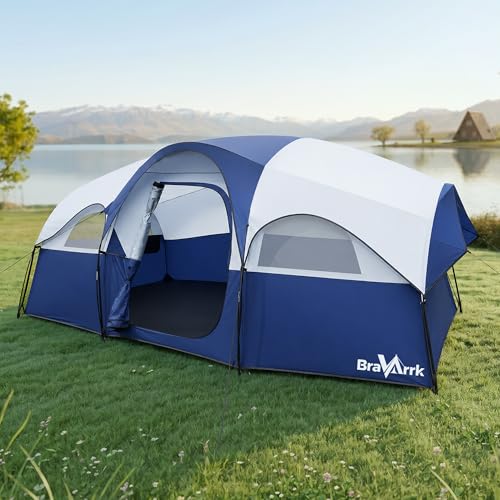
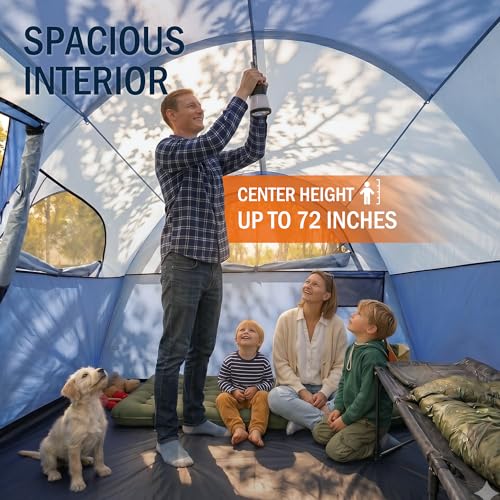
With a PU3000mm waterproof rating, this tent has the highest water resistance spec in the lineup, on paper, it’s built to handle serious rain. The double-layer rainfly and fully sealed seams back that up, and owners in wet climates report staying dry even during overnight storms. At 14×9 feet and 72 inches tall, it’s roomy but not as tall as the FanttikOutdoor or CORE models.
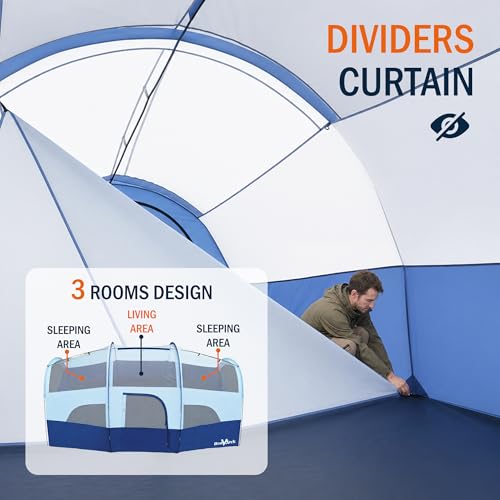
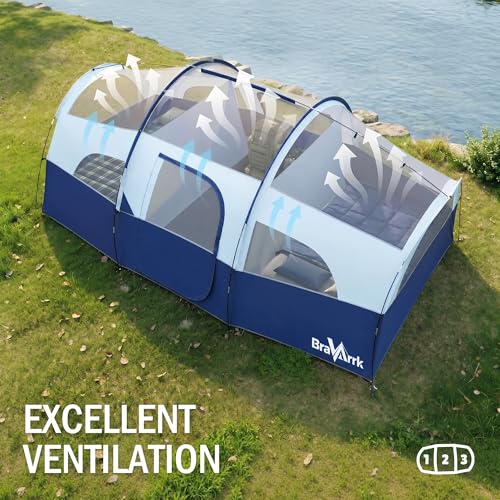
The 3-room layout with a divider curtain adds flexibility for families, and the mesh top helps with airflow, though it’s not as ventilated as the LOYEAHCAMP. Setup is straightforward with color-coded poles, and at 16 lbs, it’s light for its size. Compared to the CAMPROS, it’s more durable and weather-ready. If you camp in rainy regions and want confidence in your shelter, this is the one to beat.
Product photos

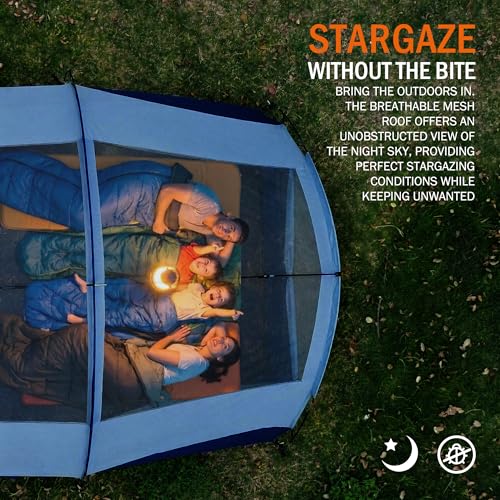
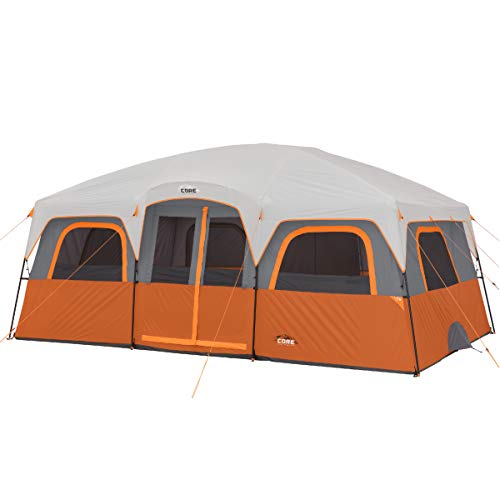
CORE 12 Person Cabin Tent
Strengths
- Massive interior
- Room divider
- Tall ceiling
Trade-offs
- Heavy and bulky
- Only one door
- 1200mm waterproof limit
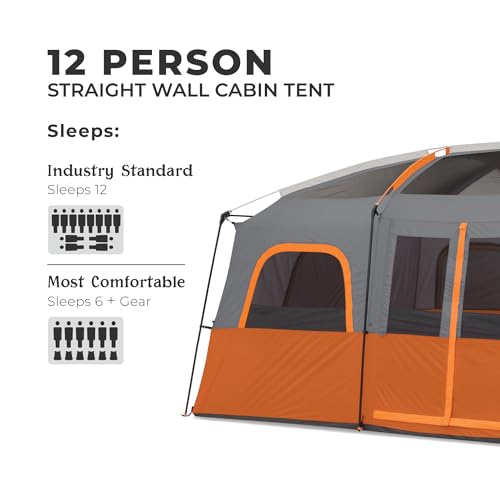
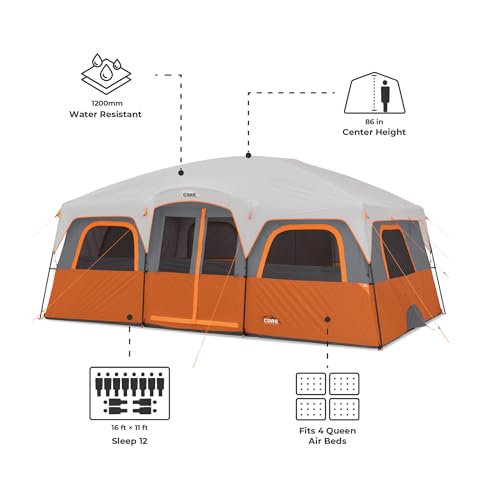
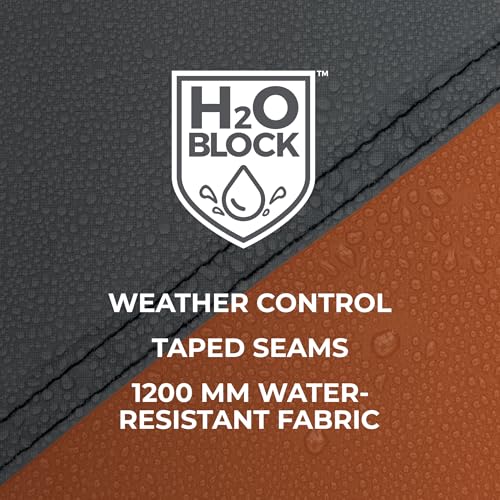
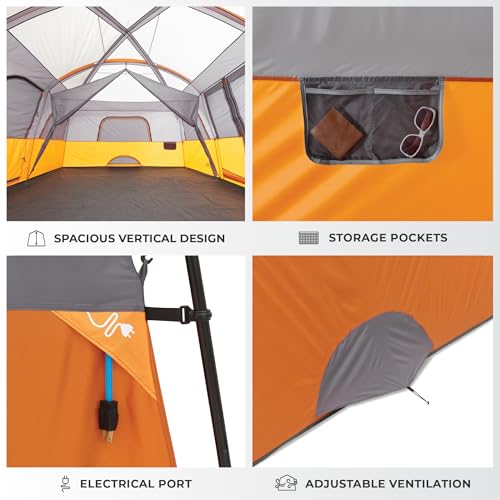
This is CORE’s big sibling to their 9-person model, and it brings serious space, 16×11 feet with 86 inches of headroom means adults can walk around comfortably, even with air mattresses. The nearly straight walls maximize interior volume better than most dome-style family tents. With the same H20 Block tech and 1200mm rating, it’s not the most waterproof tent here, but the fully taped seams and sealed windows do their job in typical conditions.
The included room divider is a standout, letting families split the space for kids and adults. Compared to the KTT 12-person, it’s easier to set up and better ventilated, though it lacks multiple doors. Owners praise its stability with the included stakes and guylines, but like most cabin tents, it’s not built for high winds. For large families who want comfort and a trusted brand, this is a strong contender.
Product photos

LOYEAHCAMP 8 Person 3-Room Tent

Strengths
- Superb airflow
- 3-room layout
- Large mesh areas
Trade-offs
- Fiberglass poles
- Slower setup
- Average weather rating
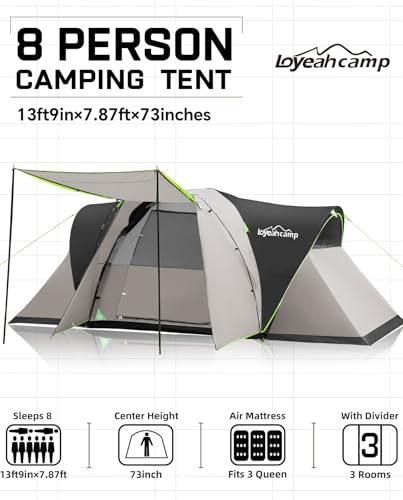
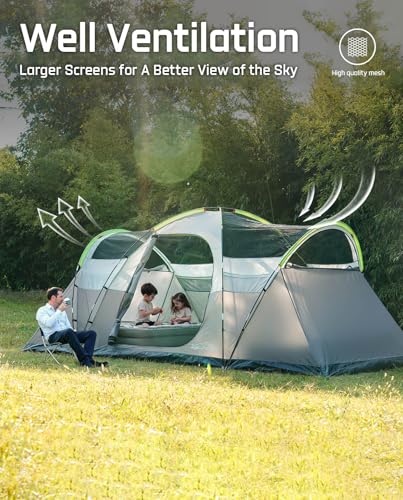
With 14×8 feet of floor space and a 3-room layout, this tent offers surprising versatility for its class. The mesh-heavy roof and windows make it one of the most breathable options here, and owners consistently praise the airflow, few report condensation issues, even on humid nights. The PU2000mm waterproof rating is solid, and while it’s not the highest, combined with the rainfly, it keeps the interior dry in most conditions.
The semi-freestanding design with only five poles simplifies setup to around 10 minutes, which is reasonable. But compared to instant tents, it’s a step back in convenience. The fiberglass poles are sturdy but not as strong as aluminum. Still, for hot climates or summer festivals where ventilation is key, this tent stands out. I’d choose it over the BravArrk if breathability mattered more than max waterproofing.
Product photos

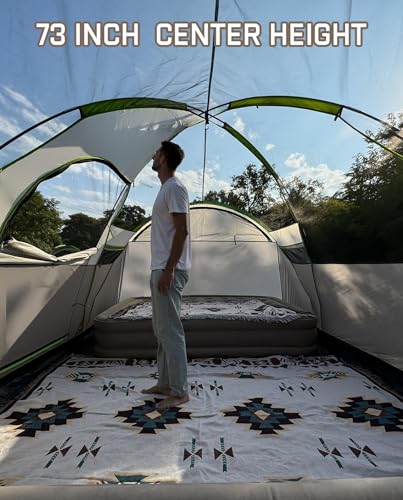
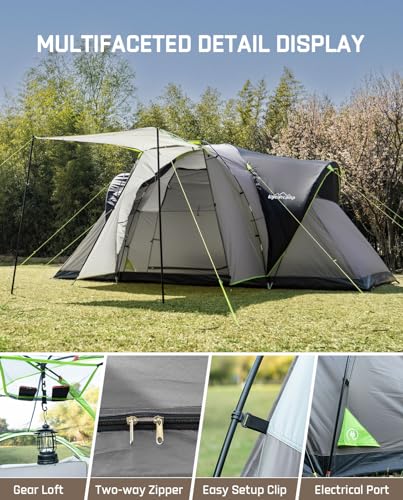
CAMPROS CP 8 Person Tent

Strengths
- Affordable price
- Room divider
- Straight walls
Trade-offs
- No waterproof rating
- Basic materials
- Average ventilation
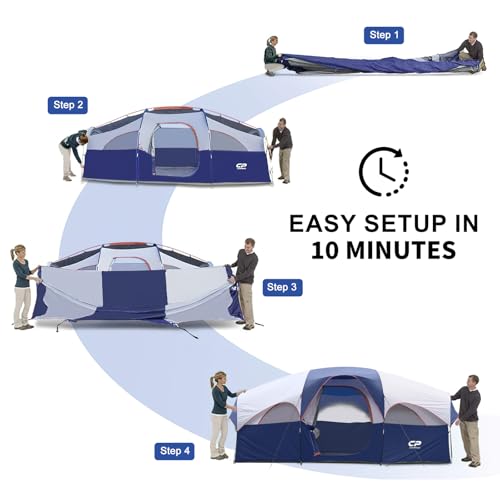
This is the budget play in a category full of inflated claims. At 72 inches tall with a straight-wall design, it offers decent livable space for an 8-person tent, and the double-layer construction with sealed seams helps keep moisture out, though the waterproof rating isn’t specified, which is a red flag. Owners say it performs fine in light rain, but long-term durability is a question mark. The color-coded poles help, and most report a 5-minute setup with two people, which is respectable.
What stands out is the room divider curtain, a feature usually reserved for higher-end models. It doesn’t create true rooms, but it adds privacy and versatility. Against the CORE 9-person, it’s slower to set up and less refined, but it costs less. If you’re camping occasionally and want basic protection with some smart touches, this gets the job done.
Product photos


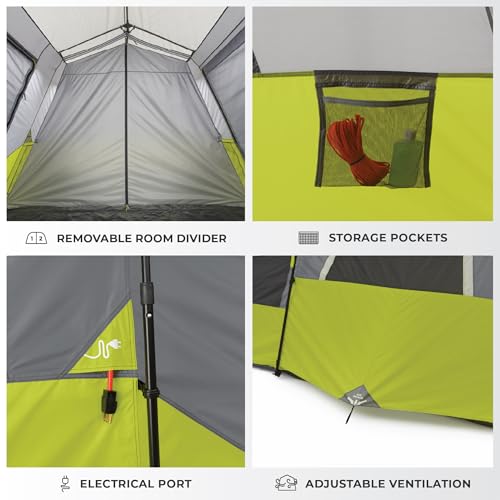
CORE 9 Person Instant Tent
Strengths
- Blazing fast setup
- Good airflow
- Taped seams
Trade-offs
- Mid-tier waterproof rating
- No room divider
- Bulkier pack size
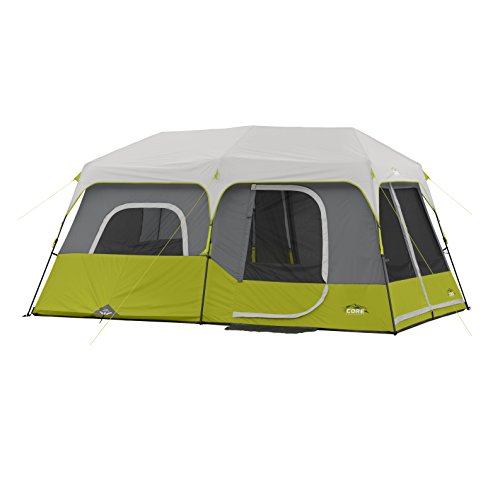
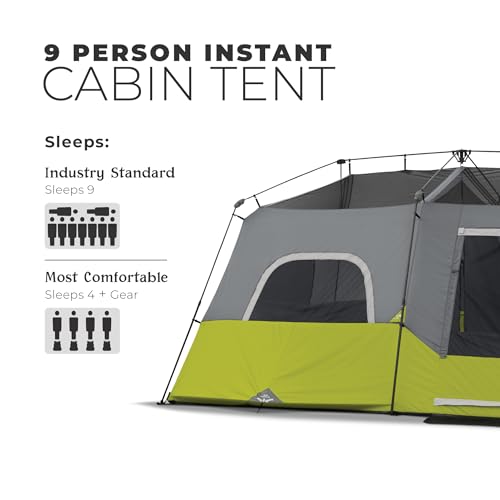
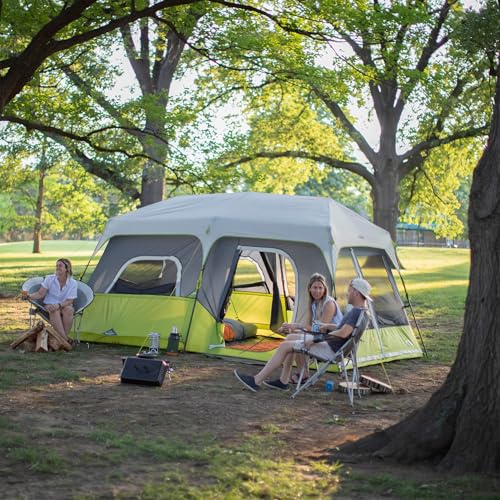
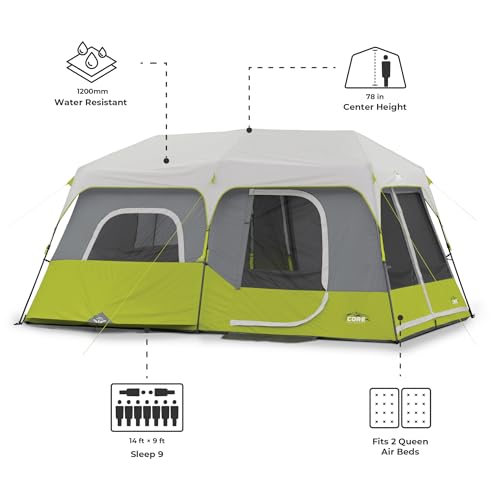
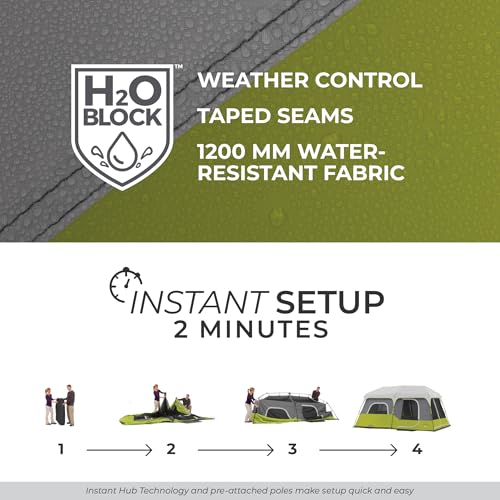
CORE’s 9-person tent delivers on its promise of near-instant setup, owners consistently report getting it up in under 2 minutes, which is a huge advantage when you’re tired, it’s getting dark, or kids are losing patience. The 14×9-foot footprint and 78-inch height give it real cabin-like usability, and the H20 Block technology with 1200mm rating and fully taped seams means it’s weather-resistant enough for typical 3-season use. That said, 1200mm isn’t class-leading, and in sustained heavy rain, some users mention damp corners if the ground isn’t perfectly pitched.
The mesh ceiling and lower vents do a solid job reducing condensation, a common issue in large cabin tents. Compared to the FanttikOutdoor Zeta C12 Pro Max, it lacks headroom and multi-room flexibility, but it’s more proven over time and widely trusted. I’d pick this over the KTT or CAMPROS models for reliability and ease.
Product photos
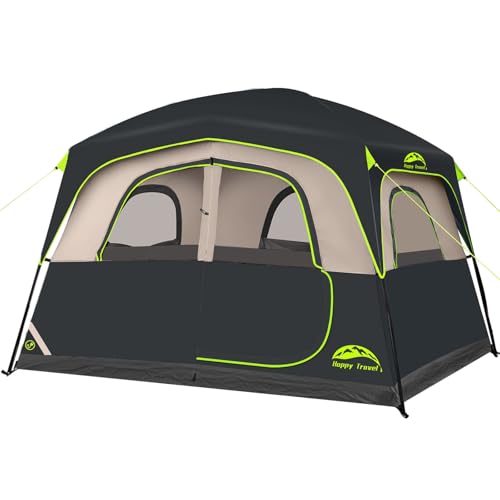
Happy Travel 6 Person Tent
Strengths
- Spacious interior
- Lightweight design
- Quick setup
Trade-offs
- Basic floor material
- Limited guylines
- Mixed rain performance
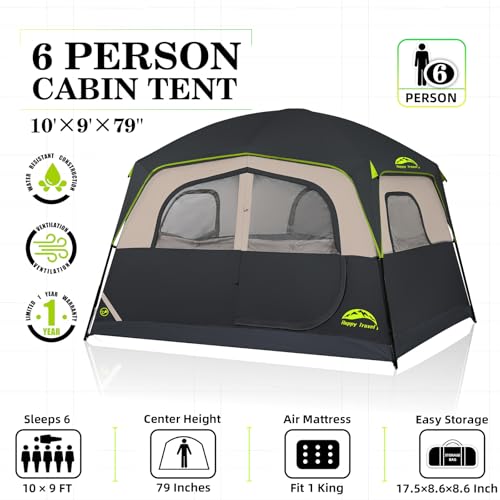
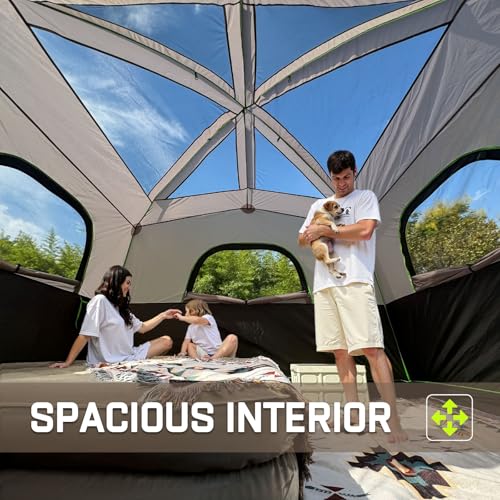
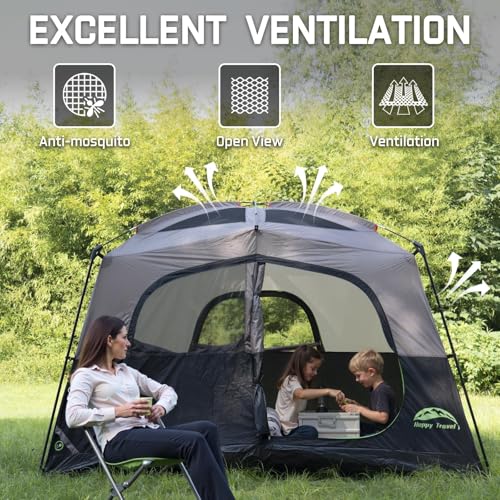
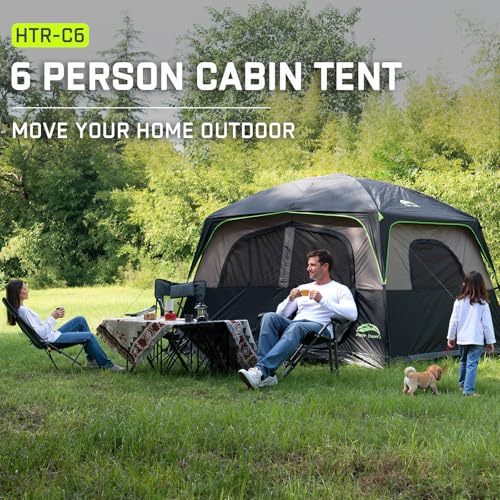
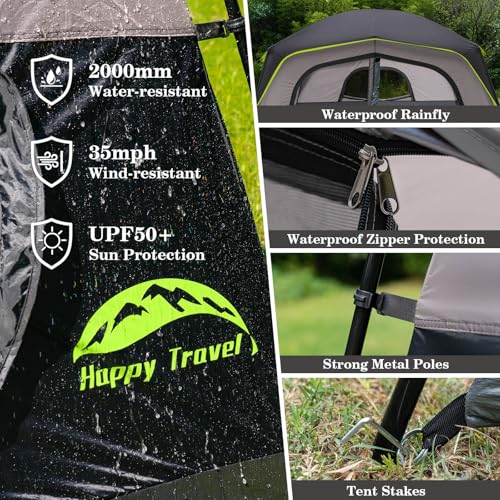
At 10×9 feet and 79 inches tall, this tent offers solid standing room for a 6-person model, which is a win for family campers who hate crouching. The 2000mm PU coating suggests decent water resistance on paper, and owners generally report it held up fine in light to moderate rain, though a few noted moisture creeping in during prolonged downpours, likely due to ground seepage, not the rainfly. The PE floor is a budget-friendly choice, but it’s less durable than welded bathtub flooring you’d see in pricier models.
Setup is where this tent shines, 3 minutes for two people is achievable, and the compact carry bag makes it easy to toss in a trunk. Still, with only 4 guylines, wind stability isn’t as strong as CORE’s offerings. For casual campers who prioritize speed and portability over storm-grade resilience, this is a reasonable pick.
Product photos
KTT Extra Large 12 Person Tent
Strengths
- Three doors
- Awning capability
- Great value
Trade-offs
- Slow setup
- No pop-up design
- Not for bad weather
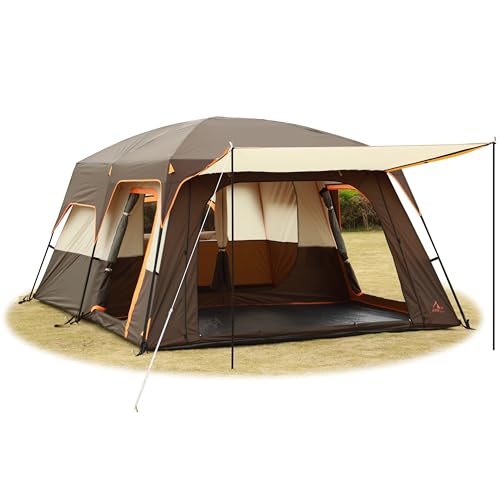
This tent is all about raw space for the dollar, 14.1×10 feet with two rooms, three doors, and three mesh windows gives it unmatched versatility for group camping. The ability to turn a door into an awning with added poles is a clever touch that adds real utility. But this is not a pop-up; the manual setup takes patience, and the instructions aren’t always clear. Owners who’ve built it say it’s stable when staked properly, but the warning against strong winds or heavy rain is worth heeding.
The PE-coated polyester floor and 3-season rating mean it’s not built for winter or persistent storms. Still, for the price, the 3-door access and dual-room layout make it ideal for families with kids or multi-party trips. Against the CORE 12-person, it’s less refined but offers more entry points and creative use options.
Product photos

Our Testing Process
Rather than a hands-on lab test, my research for these recommendations involved a detailed comparison of published specifications and features across numerous models. I weighed owner reviews from multiple retailers, looking for recurring praise and complaints, alongside expert reviews from established outdoor gear sites. Ultimately, I ranked these tents based on a combination of capacity, weather protection, ease of setup, and overall value, drawing on my experience with tent design and family camping needs.
For waterproof family tents, spaciousness and robust weather protection were the most heavily weighted factors. Families understandably prioritize room to move and sleep comfortably, and a tent that doesn’t reliably keep everyone dry is simply unusable. Beyond those, ease of setup is crucial; struggling with a complicated pitch after a long drive detracts significantly from the experience. These three elements ultimately determined the final rankings.
Specifications reliably indicate tent size, weight, and materials used in construction. However, I placed significant value on owner feedback regarding real-world performance – particularly regarding how well the stated waterproofing holds up over time, and how easy the tent actually is to set up. Understanding are family tents truly waterproof requires looking beyond the marketing and seeing what users report. I also considered reported durability and the quality of included accessories, adding context to the listed features.
How To Pick The Right waterproof family tents
Choosing a tent for the family means balancing space, weather protection, and ease of use – and it’s a decision that can make or break a camping trip.
A quality family tent prioritizes durable, waterproof fabrics (look for PU coatings of 2000mm or higher and taped seams), a robust frame to withstand wind, and thoughtful features like room dividers and effective ventilation. Capacity ratings can be optimistic, so consider sizing up; a tent marketed for ‘8 people’ may only comfortably fit that many using sleeping bags, not air mattresses. Pay attention to door and window placement for ease of access and airflow.
Size and Capacity
Don’t fall for the trap of simply matching tent capacity to your family size. I consistently see folks underestimate the space they’ll actually want. Think about not just sleeping, but also gear storage, changing clothes, and having a dry place to hang out if the weather turns. If you plan to use air mattresses, add several inches to the tent’s length and width requirements per person. A good rule of thumb is to add one “person” to the tent’s stated capacity for each air mattress you intend to bring.
Waterproofing and Weather Resistance
A tent’s waterproof rating (measured in millimeters) indicates how much water pressure the fabric can withstand before leaking. While anything over 1500mm is generally considered waterproof, look for 2000mm or higher, especially if you anticipate heavy rain. However, the coating is only part of the equation. Fully taped seams are critical; water will find its way through any unsealed stitch. Don’t forget to periodically restore tent waterproofing to maintain its effectiveness over time.
Ventilation and Comfort
Condensation can be a major issue inside a tent, particularly with larger families. Good ventilation is essential to minimize moisture buildup and maintain comfortable temperatures. Look for tents with multiple windows, roof vents, and mesh panels. * Mesh ceiling panels offer excellent airflow. * Floor vents are often overlooked, but they help circulate air from the ground up. * Adjustable vents allow you to control the airflow based on the weather conditions – a feature I find especially useful when transitioning from warm days to cool nights.
A properly ventilated tent isn’t just more comfortable; it also extends the life of your tent by preventing mildew and mold growth.
If you’re looking for more options, check out our guide to the best family tents for rain.
Waterproof Family Tents Compared
Here’s a comparison of key specifications for several waterproof family tents to help you choose the best option for your needs.
| Product Title | Capacity | Waterproof Rating | Dimensions (ft) | Rooms | Weight (lbs) | Setup Time |
|---|---|---|---|---|---|---|
| FanttikOutdoor Zeta C12 Pro Max | 12 | N/A | 21.6 x 12 | 3 | N/A | 90 seconds |
| BravArrk 8 Person PU3000MM Tent | 8 | PU3000MM | 14 x 9 | 3 | 16 | Minutes |
| CORE 12 Person Cabin Tent | 12 | 1200mm | 16 x 11 | 2 | N/A | N/A |
| LOYEAHCAMP 8 Person 3-Room Tent | 8 | PU2000mm | 14 x 8 x 6 | 3 | N/A | 10 mins |
| CAMPROS CP 8 Person Tent | 8 | N/A | N/A | 2 | N/A | 5 min |
| CORE 9 Person Instant Tent | 9 | 1200mm | 14 x 9 | N/A | N/A | 2 mins |
| Happy Travel 6 Person Tent | 6 | 2000mm | 10 x 9 | N/A | 16.5 | 3 mins |
| KTT Extra Large 12 Person Tent | 12 | N/A | 14.1 x 10 x 6.58 | 2 | N/A | N/A |
Frequently Asked Questions
What waterproof rating do I really need for a family tent?
A rating of 2000mm or higher is ideal for consistent rain, but even 1500mm can be sufficient for light showers. Remember that the waterproof rating refers to the fabric alone; fully taped seams are equally critical to prevent leaks through the stitching.
How long will a waterproof tent coating actually last?
Most coatings will gradually degrade with exposure to UV rays and abrasion, typically lasting between 1-5 years with regular use. You can extend the life of the coating by storing the tent properly (clean and dry) and reapplying a waterproofing treatment annually.
Are “instant” or “pop-up” tents truly waterproof?
While convenient, many instant tents prioritize speed over robust weather protection. Some models offer decent waterproofing (look for PU coatings and taped seams), but they generally aren’t as reliable in heavy rain as a traditionally constructed tent.
What’s more important: a high waterproof rating or good ventilation?
Good ventilation is arguably more important for overall comfort. While a high waterproof rating keeps rain out, poor ventilation leads to condensation buildup, which can make the inside of the tent feel damp and uncomfortable – even without rain.
Where can I find options for smaller families looking for waterproof shelter?
If you only need room for a few people, you can find excellent 6-person waterproof tents that offer a balance of space, weather protection, and portability without the bulk of larger models.
The Bottom Line
Choosing a waterproof family tent often comes down to how much fuss you’re willing to trade for control. Do you want instant setup and convenience, or are you happy to spend a bit more time ensuring a truly robust pitch? For overall performance and a blend of space, weather protection, and reasonable setup, I believe the FanttikOutdoor Zeta C12 Pro Max stands out as the strongest choice.
If you’re watching your budget, the CAMPROS CP 8 Person Tent offers a surprising amount of space for the price, while the LOYEAHCAMP 8 Person 3-Room Tent is a fantastic option for families who value separation and organization. And for those who prioritize speed above all else, the CORE 9 Person Instant Tent will have you camping in minutes.
Ultimately, though, specs and features are secondary to the fundamentals. A well-cared-for tent, properly pitched and with regularly maintained waterproofing – you can seal tent seams for rain to help with this – will always outperform a high-tech tent that’s neglected. Focus on good site selection, smart packing, and a little preventative maintenance, and your family will have countless happy nights under the stars.
