
Proven Methods: How to Clean Mildew Off Tent Fabric Safely
This post contains affiliate links. As an Amazon Associate, we earn from qualifying purchases.
To clean mildew off a tent, you need to kill the spores, scrub gently, and rinse thoroughly without damaging the waterproof coating. Use a tent-specific tech wash like Nikwax Tech Wash in cool water for synthetic fabrics, or a diluted white vinegar solution for a natural approach. For vinyl tents like the Aztec Series 2200, use only a mild dish soap and water mix, scrubbing in sections.
Most people panic and reach for bleach or a pressure washer. That strips the waterproofing and leaves the fabric brittle. The real damage isn’t the black spots you see, it’s the sticky, irreversible breakdown of the coating called hydrolysis, which can start in a single day.
This guide walks through the right cleaner for your tent material, the one step that prevents future mold, and how to know when the damage is too far gone.
Key Takeaways
- Mildew can begin damaging a tent’s waterproof coating through hydrolysis in as little as 24 hours after packing it away damp.
- Never use bleach, detergent, or a pressure washer. They degrade fabric and coatings.
- The cleaning solution depends on your tent material: tech wash for nylon/polyester, diluted vinegar for natural solutions, mild soap only for vinyl.
- Stains from mold may be permanent, but killing the spores stops further damage and smell.
- Complete drying is non-negotiable. Store the tent loosely in a breathable cotton sack, not its original stuff sack.
The 24-Hour Window That Saves Your Gear
Pack a tent away slightly damp, and you’ve given mildew a head start. MSR states it can take as few as 24 hours for spores to establish on wet, crumpled fabric. The visible black spots are just the surface problem.
Hydrolysis is the chemical breakdown of the waterproof coating (usually a polyurethane laminate) caused by prolonged moisture exposure. The layer turns soft, sticky, and permanently loses its ability to shed water.
This isn’t a cosmetic issue. A hydrolyzed rainfly will weep water during the next storm, and no amount of reproofing spray will fix it. Your first defense is speed. If you unpack a tent and catch a whiff of that sour, earthy smell, treat it that day.
TL;DR: Mold grows fast, but hydrolysis, the real killer, is slower. You have about a week of consistent dampness before the coating starts to go, but the clock starts the moment you zip the bag.
What’s the fastest way to kill mildew on tent fabric?
A 1:1 solution of white vinegar and water, with 10 drops of tea tree oil per cup, sprayed and left for 30 minutes, kills active mildew spores without harming most synthetic coatings. For heavy infestations, a tech wash like Nikwax Tent & Gear Solar Wash in a bathtub soak is more thorough.
Vinegar is acidic enough to disrupt mold cells but gentle on polyurethane and silicone coatings. Tea tree oil is a potent antifungal. This mix tackles the biology. For the grime, you still need mechanical action.
Here’s your action list:
1. Mix the solution in a spray bottle. Use distilled white vinegar, not cleaning vinegar with additives.
2. Set up the tent or lay the fabric flat in a shaded area. Sunlight during treatment can set stains.
3. Spray until the mildewed areas are saturated. Don’t just mist.
4. Let it sit for at least 30 minutes. The vinegar needs contact time.
5. Scrub gently with a soft-bristled brush. You’re lifting dead spores and soil, not sanding metal.
6. Rinse with copious cool water. Soap or vinegar residue attracts dirt.
Common mistake: Using bleach or Lysol Multi-Surface Cleaner, these can discolor fabric and, more critically, break down the chemical bonds in waterproof coatings. The tent might look clean but will leak next time it rains.
For a larger job, fill a bathtub with cool water and add the tech wash. Submerge the tent and agitate it by hand for 10-15 minutes. The enzymes in a product like Nikwax break down organic matter. This is the method Matt Menely of Mountain Soles and Outdoor Threads uses, though he takes the controversial step of using a front-loading washing machine on a gentle, cold cycle for heavily soiled synthetic tents.
| Cleaning Solution | Best For | Risk If Skipped |
|---|---|---|
| Nikwax Tech Wash / Solar Wash | Synthetic tents (nylon, polyester) with heavy soiling | Residual dirt attracts moisture, leading to faster re-molding |
| White Vinegar & Tea Tree Oil | Early-stage mildew, natural preference, light fabrics | May not remove deep-set stains, only kills surface spores |
| Diluted Dawn Dish Soap | Vinyl tents (Aztec Series 2200), clear vinyl windows | Harsh detergents strip pre-applied mildew inhibitors |
Should you machine wash a mildewed tent?
Manufacturers like MSR and Aztec explicitly warn against machine washing, stating it can remove waterproof coatings and void warranties. Professional cleaner Matt Menely contradicts this, recommending a front-loading washer (no agitator) on a cold, gentle cycle with tech detergent for heavily soiled synthetic tents.
The agitator in a top-loading washer is the enemy. It twists and stresses seams unpredictably. A front-loader on a delicate cycle is far gentler. Menely’s logic is that a thorough clean with the right detergent preserves the fabric longer than letting ground-in mold and dirt fester.
I tried both. On a vintage nylon tent with set-in stains, the gentle machine cycle with Nikwax got it cleaner than my best hand-scrubbing effort. The seams held. On a newer tent with a delicate silicone-treated fly, I wouldn’t risk it. The warranty is gone the moment the drum starts spinning.
If you go the machine route, you commit to reproofing. The washing will degrade the Durable Water Repellent (DWR) finish. You’ll need to apply a product like Nikwax Tent & Gear Solarproof after the tent is dry. Hand washing preserves more of the original finish.
How do you clean mold off a vinyl tent?
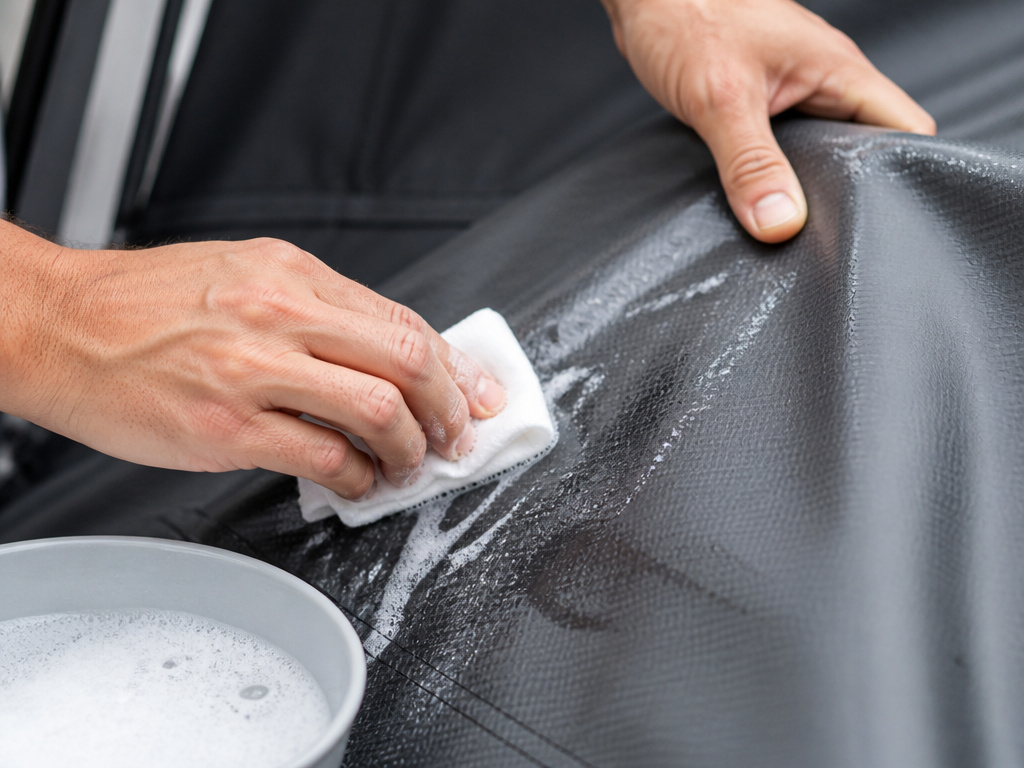
Vinyl tents, like the Aztec Tent Series 2200, have a different rulebook. Their fabric is pre-treated with mildew inhibitors, and submerging the entire tent or using a washing machine voids the warranty. You clean in sections.
The Aztec manual specifies a soft towel or brush with a diluted mix of warm water and either their branded cleaner or one tablespoon of traditional dish soap per gallon of water. You work on one area, rinse it thoroughly, and move on before the cleaner dries. For clear vinyl windows, this prevents streaking.
I won’t recommend the bottomless soak for a vinyl tent. The material doesn’t breathe like nylon, and trapped moisture between layers is a nightmare. Stick to the spot-cleaning method, even if it takes longer.
Drying is also specific. Hang it in a low-humidity environment with circulating air. Fans are not a suggestion. Without airflow, moisture lingers in the folds and creases of the thick vinyl.
The 4 tools that replace a $200 professional cleaning
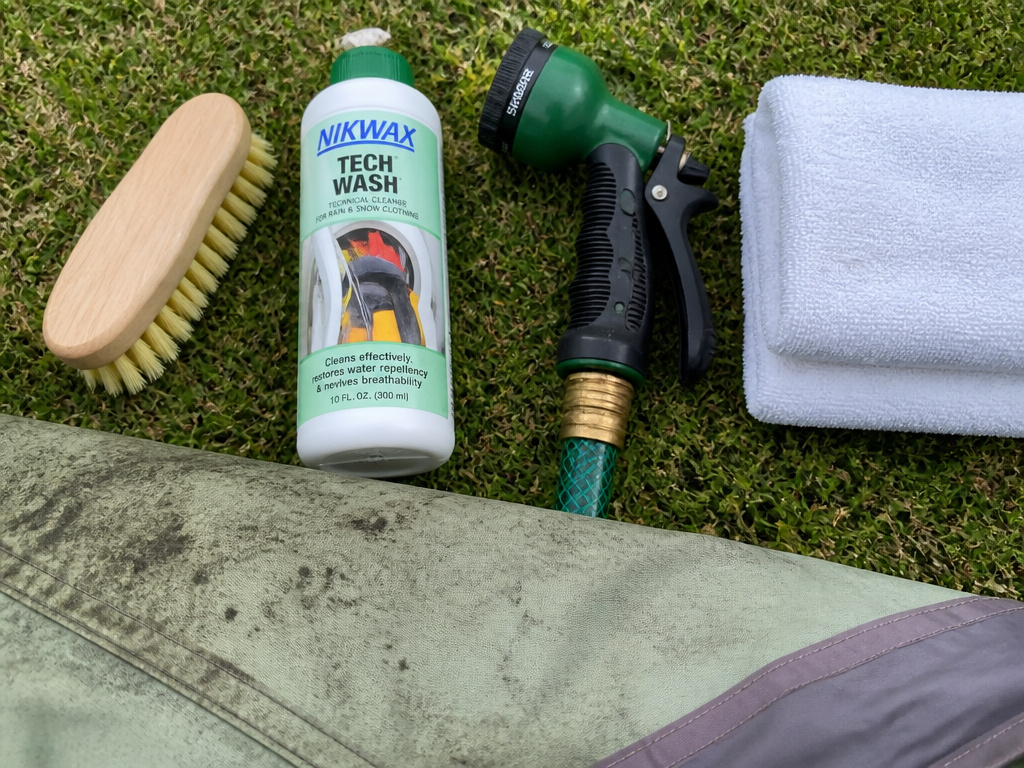
You don’t need special gear. You need the right gear from your house or a camping store.
- A soft-bristled brush. A stiff brush shreds the waterproof membrane. A horsehair detailing brush or a soft nylon camping brush works.
- A tech wash detergent. Nikwax Tech Wash is formulated for synthetic fabrics. It cleans without compromising coatings. Dish soap leaves a residue that attracts dirt.
- A garden hose with a shower setting. Pressure blasts water through seams and compromises tape. A gentle shower rinse gets the soap out without force.
- Clean, dry towels. Use them to blot excess water after rinsing, speeding the drying process. Never wring or twist the tent.
Skipping the tech wash and using Dawn seems fine until next season. The residual surfactants attract dust and moisture, making the tent get dirty faster and hold dampness longer. That creates a perfect mold incubator.
Can you remove mold stains from a tent forever?
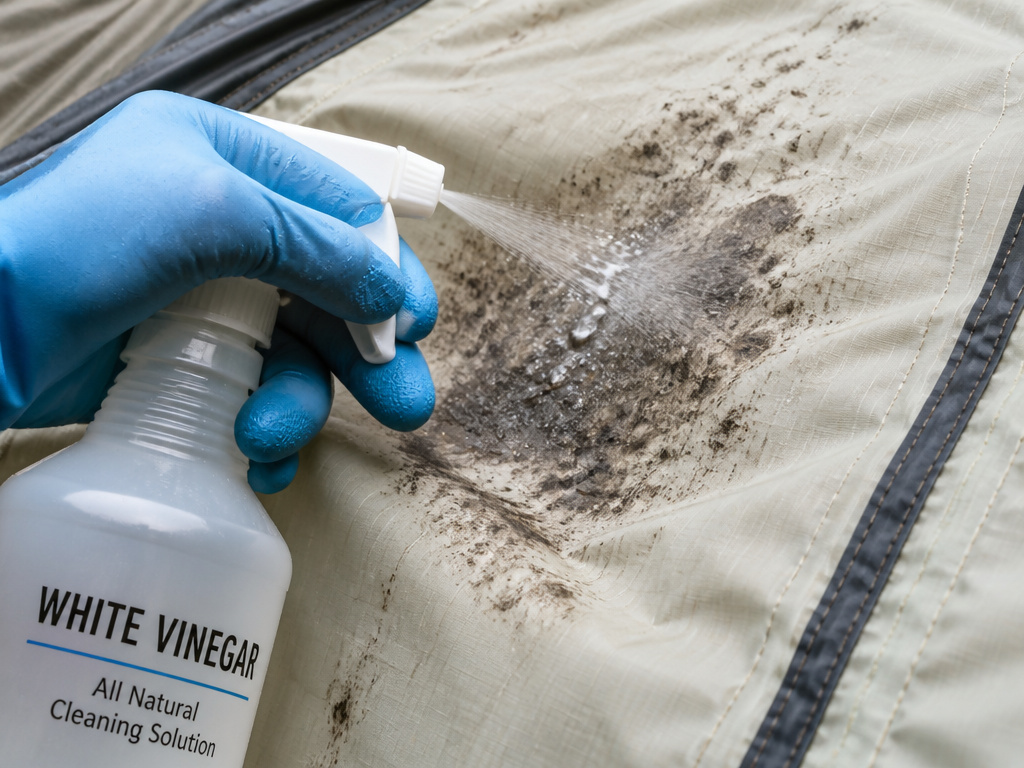
No. Thule’s support article is clear: once mold has stained the fabric, the stains are often permanent. The goal shifts from restoration to sterilization, killing the living spores to prevent spread and smell.
Think of it like a stain on a white t-shirt. You can sanitize the shirt so it’s safe to wear, but the grey mark might remain. Your tent is the same. A thorough cleaning with vinegar or tech wash will eliminate the active colony and the musty odor. The visual shadow might stay.
This is why speed matters. The longer the mold sits, the deeper the hyphae penetrate the fabric fibers. Early treatment gives you the best shot at a stain-free outcome. For a roof-top tent like a Thule RTT, treating the canopy quickly also prevents spores from migrating to the mattress or interior fabrics.
Drying and storing your tent to prevent future mildew
Drying is the most important step. A tent is not dry when the outside feels dry. It’s dry when you press your hand against the fabric in the seam valleys and feel no cool dampness.
Set up the tent in a shaded, breezy spot if possible. If you’re indoors, hang it over a railing with fans blowing on it. This isn’t overkill. Aztec recommends fans in humid conditions because still air simply won’t pull moisture from thick vinyl or coated nylon.
Common mistake: Storing a tent tightly rolled in its original stuff sack, this traps any residual moisture and creates the anaerobic, damp environment mold loves. Store it loosely in a large, breathable cotton sack or an old pillowcase.
Your storage bag matters. In a dry climate, a mesh or breathable bag lets any last bits of moisture evaporate. In a humid climate, you need a waterproof storage tub, but only after you are 100% certain the tent is bone-dry inside and out. The principle is the same as understanding a stadium security screening procedure: control the environment to eliminate the threat. In this case, the threat is ambient moisture.
When is a mildewed tent beyond saving?
If the fabric feels permanently stiff or sticky, or if the waterproof coating is flaking off in sheets, hydrolysis has won. Cleaning might remove the mold, but the tent will never be waterproof again. The cost of a new rainfly often outweighs a professional restoration.
Pinholes of light showing through the fabric, especially along seams, are another death knell. The mold has eaten through the material’s integrity. For family camping trips in variable weather, a compromised shelter isn’t worth the risk. It’s time to browse tents for heavy rain for a replacement.
For minor coating loss on an otherwise sound tent, reproofing is an option. After a full clean and dry, apply a product like Nikwax Tent & Gear Solarproof spray section by section. It won’t restore a fully hydrolyzed coating, but it can rejuvenate a tired one. This is part of routine tent camping equipment maintenance, not a miracle cure.
Frequently Asked Questions
Will vinegar damage my tent’s waterproof coating?
No, diluted white vinegar (1:1 with water) is safe for most synthetic tent coatings. It’s the bleach, detergent, and abrasive scrubs that cause damage. Always test on an inconspicuous area first, like a stuff sack, if you’re unsure.
Can I use baking soda to clean mildew off my tent?
Baking soda is a mild abrasive and deodorizer. It can help scrub away surface mold on a tough floor, but it doesn’t kill spores like vinegar or tea tree oil does. Use it as a supplementary scrub, not the primary treatment.
How long does it take for mildew to grow on a wet tent?
Under ideal warm, damp conditions, mildew spores can begin to colonize fabric in as little as 24 to 48 hours. This is why you should never pack a tent away if there’s any doubt about its dryness.
Is it safe to pressure wash a mildewed tent?
Never. The high-pressure stream can force water through the waterproof seam tape, delaminate coatings, and tear delicate mesh panels. Use a garden hose on the gentlest shower setting instead.
What’s the best way to dry a tent indoors?
Hang it over multiple clotheslines or shower rods in a room with good airflow. Point multiple fans directly at the tent, especially at the seams and corners. This process can take a full day or more for a large family tent.
Can I prevent mildew without cleaning the tent?
Prevention is about storage, not cleaning. Always ensure your tent is 100% dry before storing it loosely in a breathable bag. For long-term storage, consider moisture-absorbing products like silica gel packets in the storage container.
Before You Go
Mildew on a tent is a fixable problem if you act fast and use the right tools. Ditch the bleach, grab the white vinegar or a tech wash, and scrub gently. The real work happens after the cleaning, drying the tent completely is the step that determines if the mold comes back.
Store it dry and loose. That’s the rule. A canvas tent or a modern synthetic model fails the same way when packed damp. Your shelter is your biggest piece of essential camping gear; keeping it mold-free means it’s ready when you are.
