
How To Clean Mold Off Of A Tent | The 3-Step Kill & Rinse
This post contains affiliate links. As an Amazon Associate, we earn from qualifying purchases.
To clean mold off a tent, kill the spores with a vinegar or tent-specific cleaner, scrub gently with a soft brush, rinse thoroughly, and dry the tent completely in a shaded, breezy spot. The stain often remains, but the mold is dead and the tent is safe to use.
Most people get this wrong by scrubbing too hard with dish soap or leaving the tent wet in a stuff sack. Dish soap strips the waterproof coating, and a damp tent in a bag guarantees mold will return within a week.
Here’s how to clean mold from your tent without wrecking the fabric or its weatherproofing, broken down by tent type and infestation level.
Key Takeaways
- Discoloration is permanent. Once mold spores stain polyester or canvas, the color won’t come out. Cleaning kills the mold and stops the damage, but the tent will look spotted.
- Direct sunlight bakes stains in. Always clean and dry your tent in the shade. UV light sets organic stains and cleaner residue into the fabric.
- For canvas, use a wax-based re-treatment. Products like Canvak® restore the water-resistant coating after a deep clean. Using the wrong sealant can cause the original treatment to blister.
- Pinkish stains mean active mold. On treated canvas, a pink hue means the mold inhibitors are fighting spores. It’s a warning sign, not a cosmetic flaw.
- Electric motors hate mold. Storing a moldy tent near gear with small fans or electronics can spread spores into the mechanisms. Keep it isolated until clean.
Before You Start: Gear & Mindset
You need a soft-bristled brush, a large tub or bathtub, clean towels, and a shaded spot with good airflow. Don’t use a pressure washer, a scrub brush with stiff bristles, or laundry detergent. Pressure washers drive water through seams and delaminate fabric coatings. Stiff bristles fray thread loops. Detergent leaves a film that attracts dirt and degrades waterproofing.
Pick your cleaner based on tent material. For synthetic tents (polyester, nylon), a mix of one cup white vinegar, one cup warm water, and ten drops of tea tree oil works. Tea tree oil is a potent anti-fungal. For a canvas tent, you need a product like Iosso Mold and Mildew Stain Remover. Its oxalic acid formula breaks down organic stains without damaging the wax-based treatment.
Before you start: Mold spores are respiratory irritants. Work outside or in a well-ventilated garage, and wear a dust mask if you’re sensitive. Vinegar and tea tree oil can irritate skin and eyes, gloves are a good idea.
TL;DR: Gather a soft brush, vinegar/tea tree oil for synthetics or Iosso for canvas, and pick a shady spot. Never use dish soap, stiff brushes, or a pressure washer.
What Kills Mold on a Tent Without Ruining It?
White vinegar diluted 1:1 with water kills surface mold on synthetic fabrics. The acetic acid disrupts the mold’s cell structure. Tea tree oil boosts the anti-fungal power. For a canvas tent, a dedicated cleaner like Iosso Mold and Mildew Stain Remover is non-negotiable. Montana Canvas explicitly recommends against other coating products because they can react with their proprietary wax treatment and cause peeling.
Baking soda paste can lift surface stains on lighter-colored fabrics. Mix it with just enough water to form a spreadable paste, apply, let it sit for an hour, then rinse. It’s abrasive, so test on an inconspicuous seam first.
Hydrogen peroxide is a last resort. A 3% solution can lighten stains, but it also breaks down dyes and can weaken fabric over time. Never use bleach. It corrodes the thread, destroys waterproof coatings, and leaves a residue that actually attracts more moisture.
Once mold spores stain the fabric, the discoloration cannot be removed. Thule states this clearly for their Roof Top Tent fabric: cleaning will kill spores and improve hygiene, but the tent will stay spotted.
Common mistake: Using dish soap because it’s handy, the surfactants strip the durable water repellent (DWR) coating from the fabric’s surface. Your tent will wet out in the next rainstorm.
| Cleaner | Best For | Risk If Skipped |
|---|---|---|
| White vinegar + tea tree oil | Synthetic tents (polyester/nylon) | Vinegar smell lingers if not rinsed thoroughly; tea tree oil can stain if used undiluted. |
| Iosso Mold & Mildew Stain Remover | Canvas tents, heavy stains | Using a silicone-based sealant after can cause the original wax treatment to blister and peel. |
| Baking soda paste | Light surface stains on synthetic fabric | Abrasive paste can dull fabric sheen if scrubbed too hard on non-coated areas. |
| Nikwax Tech Wash | General cleaning & re-waterproofing prep | Doesn’t kill mold on its own; use after a vinegar soak to restore DWR. |
TL;DR: Vinegar and tea tree oil for synthetics; Iosso for canvas. Bleach and dish soap destroy fabric and coatings. The stain will remain, but the mold will be dead.
Spot Treatment vs. Deep Clean: Which Do You Need?
Look at the mold coverage. If it’s a few scattered spots smaller than a quarter, spot treat. If it’s patches larger than your hand or a fuzzy film, you need a full immersion clean.
Spot treatment steps:
1. Mix your cleaning solution in a spray bottle.
2. Spray the affected area until damp, not soaked.
3. Wait 10 minutes for the solution to work.
4. Gently dab (don’t scrub) with a soft cloth.
5. Rinse the area with a damp cloth and clean water.
6. Dry immediately with a towel.
Common mistake: Soaking a small spot, the moisture wicks outward, spreading spores into clean fabric. You create a bigger problem.
A deep clean is for when you open the stuff sack and smell that damp, earthy odor. The 7-step process below handles that. It also applies if you own a canvas tent, as their thicker material holds moisture longer and often needs a full bath.
TL;DR: Few spots? Spray and dab. Widespread fuzz or a musty smell? Full tub soak.
The 7-Step Deep Clean (For Bad Infestations)
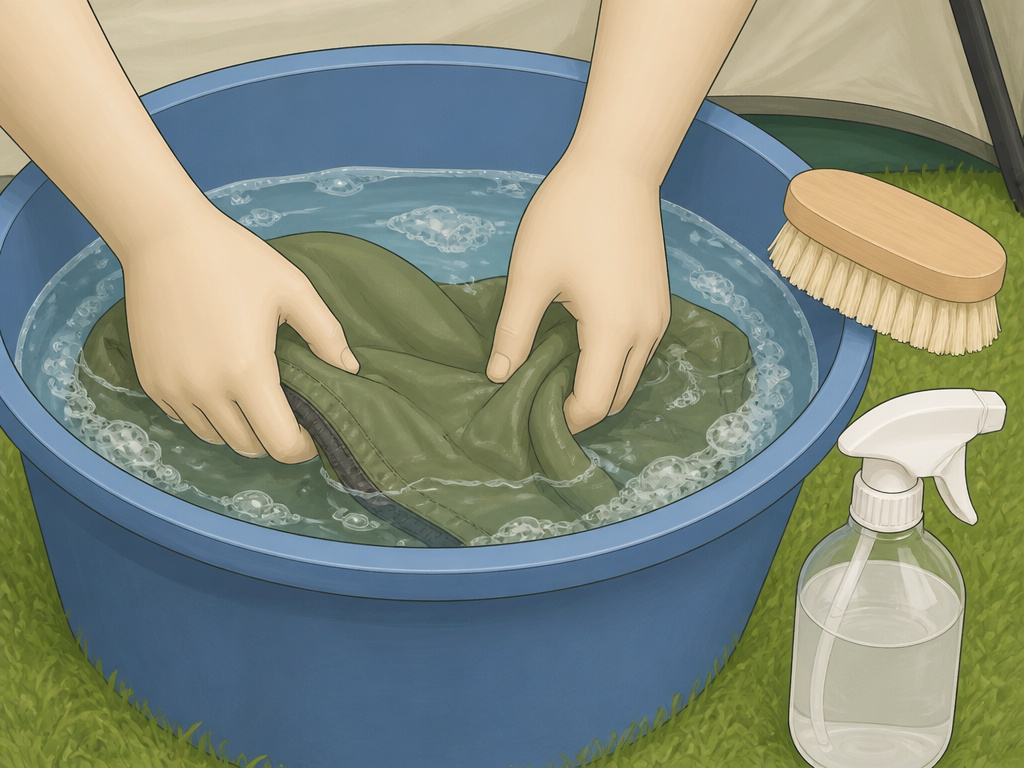
This works for both synthetic and canvas tents, though the cleaner differs. The goal is to kill all spores without letting them spread during the process.
- Set up a shaded cleaning area. Pitch the tent or lay it flat on a clean tarp or lawn. Direct sunlight dries cleaner into the fabric before you can rinse it.
- Mix your solution in a large tub. For synthetics, use a gallon of warm water with two cups of white vinegar. For canvas, follow the Iosso label directions precisely. Submerge the tent.
- Agitate gently. Swirl the tent in the tub for 5-10 minutes. Don’t wring or twist it, that stresses seams.
- Scrub problem areas. Lift the tent out, support its weight, and use a soft brush on stained spots. Use circular motions, not back-and-forth sawing.
- Rinse, rinse, rinse. Hose down the tent or refill the tub with clean water and swish again. Soap or vinegar residue feels slick; rinse until water runs clear.
- Press out water, don’t wring. Roll the tent in a clean towel and press to absorb bulk water. Wringing distorts the fabric’s weave.
- Dry completely. Hang the tent over a clothesline in the shade. Use fans if indoors. This takes 24-48 hours. Seams and corners dry last.
Miss step seven and you’re back to square one. A single damp seam pocket can regrow mold inside a day.
TL;DR: Soak, swirl, spot-scrub, rinse until slickness is gone, press water out with a towel, and dry for two days in shade with airflow.
Drying Is Everything: How to Do It Right
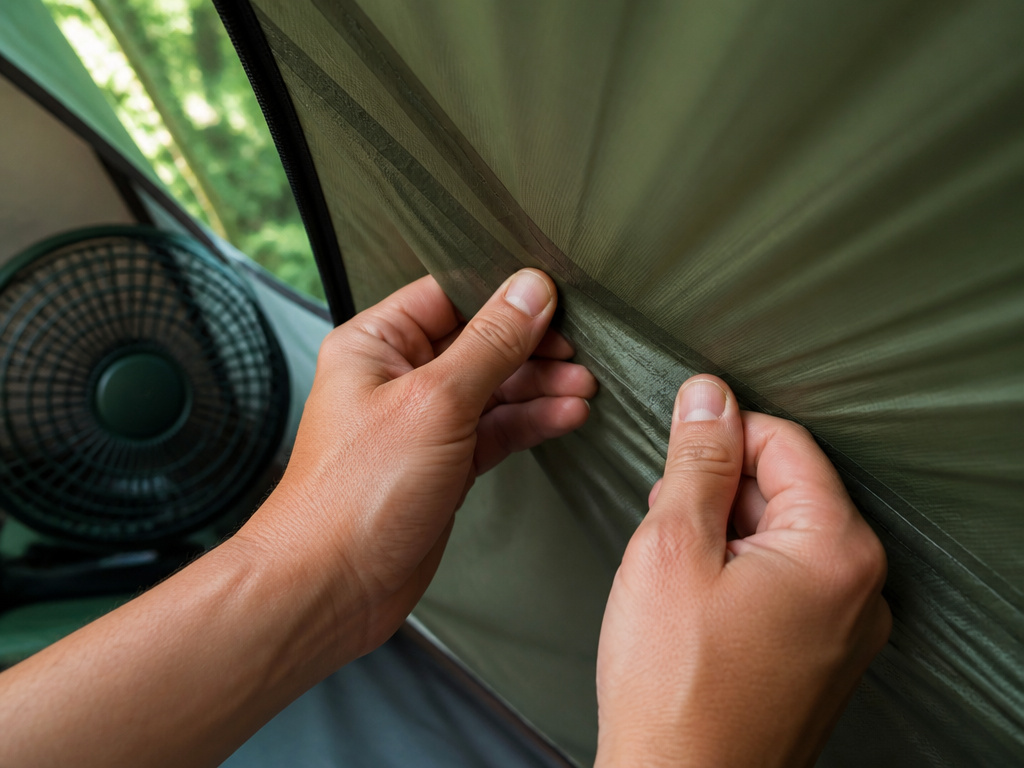
Drying is not an afterthought. It’s the step that determines if mold comes back. You need airflow more than heat.
Hang the tent on a line under a tree. Open all vents and doors. If you must dry inside, use multiple fans pointed at the tent’s interior. Check the seams and corners by feeling inside with your hand, they stay damp long after the main fabric feels dry.
Never dry a tent in direct sun. UV radiation degrades nylon and polyester over time, and heat can set any remaining stains. Shade with a breeze is the perfect combination.
For a canvas tent, drying can take three days in humid weather. The material is denser. If you see pinkish discolorations after drying, don’t panic. Montana Canvas notes this means the mold inhibitors in their treatment are active, it’s a sign the treatment is working, not failing. Trying to scrub that pink out damages the coating.
TL;DR: Dry in shade with maximum airflow. Feel the seams for dampness. Sun-drying damages fabric and sets stains.
Canvas vs. Synthetic: The Material Changes Everything
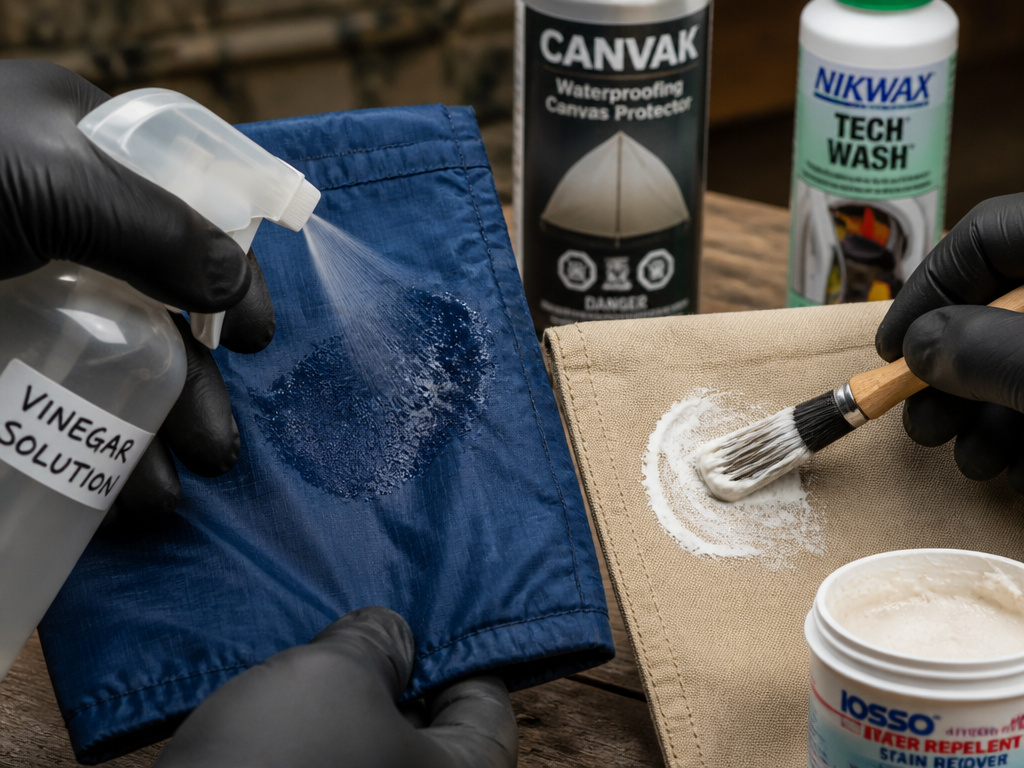
A polyester rainfly and a waxed canvas wall need different care. Getting this wrong ruins the tent’s weatherproofing.
Synthetic Tents (Polyester/Nylon)
- Coating: Usually a polyurethane (PU) or silicone coating on the underside.
- Cleaner: Vinegar/tea tree oil solution or a tent-specific wash like Nikwax Tech Wash.
- Post-Clean Care: After a deep clean, a DWR refresh spray might be needed on the rainfly.
- Biggest Risk: Dish soap strips the DWR. Bleach eats the PU coating.
Canvas Tents
- Coating: A wax or oil-based treatment (like Montana Canvas’s proprietary blend).
- Cleaner: Iosso Mold and Mildew Stain Remover or similar oxalic-acid-based product.
- Post-Clean Care: Re-treatment with a compatible product like Canvak® is often required.
- Biggest Risk: Using a silicone-based waterproofer, which can cause the original wax to separate and peel.
If your canvas tent lives in constant damp, the material itself might be wrong. Montana Canvas advises that in extreme wet and humid environments, a synthetic material might be a better long-term choice. For most family camping tents made of synthetic fabrics, proper drying is the universal fix.
| Aspect | Synthetic Tent | Canvas Tent |
|---|---|---|
| Primary Cleaner | White vinegar + tea tree oil mix | Iosso Mold & Mildew Stain Remover |
| Drying Time | 24-48 hours | 48-72+ hours |
| Post-Clean Action | Optional DWR spray on rainfly | Mandatory re-treatment with Canvak® |
| Stain Outcome | Discoloration permanent, mold dead | Discoloration permanent, pink hue indicates active inhibitors |
TL;DR: Synthetics hate soap; canvas needs specific wax-safe cleaner and a re-treatment. Mix them up and you destroy the waterproofing.
How to Store a Tent So Mold Never Comes Back
Storage is prevention. A perfectly cleaned tent stored wet will mold again.
- Ensure it’s bone-dry. Not “mostly dry.” Run your hand along every seam inside.
- Store loose in a breathable bag. A cotton pillowcase or mesh laundry bag is ideal. Never use the original stuff sack for long-term storage, it compresses the fabric and traps moisture.
- Pick a cool, dry place. A basement floor is bad. A closet shelf in a climate-controlled room is good.
- Check quarterly. Unfold it, give it a sniff, and let it air out for an hour.
This routine adds five minutes to your post-trip ritual and saves you the weekend-long deep clean. It’s the same logic behind storing sleeping pads and portable camping stoves, dry, loose, and accessible.
TL;DR: Store dry, loose, and in a breathable bag in a cool place. Check it every few months.
Frequently Asked Questions
Can I wash my tent in a washing machine?
No. The agitation tears seams and zippers, and detergent residues ruin waterproof coatings. Always hand-wash in a tub.
Will mold stains come out of my tent?
Probably not. As Thule’s guide states, once mold stains the fabric, the discoloration is permanent. Cleaning kills the spores and stops the growth, but the visual spots remain.
What does a pink stain on my canvas tent mean?
According to the RMEF tent mold cleaning guide, a pinkish color means the mold inhibitors in the canvas treatment are actively fighting spores. It’s a warning to clean the area, not a flaw to scrub away.
Can I use bleach to clean mold off a tent?
Never. Bleach breaks down the nylon or polyester fibers, destroys waterproof coatings, and its residue attracts more moisture. It makes the problem worse.
How often should I clean my tent?
Clean it at the end of each season, or immediately if you pack it away damp. A yearly wash with a product like Nikwax Tech Wash removes dirt and body oils that degrade fabric.
Does sunlight kill mold on a tent?
UV light can kill surface spores, but it also degrades tent fabric and sets stains. It’s not a reliable cleaning method. Always clean in the shade.
The Bottom Line
Mold on a tent means you packed it damp. Cleaning it requires the right mix for your fabric, vinegar for synthetics, Iosso for canvas, and a brutal commitment to drying. The stain will likely stay as a souvenir, but the tent will be sterile and ready for the next trip. Store it dry and loose, and you’ll never have to scrub black spots again. Your tent camping gear lasts longer when you respect the fabric.
