
How to Heat a Tent Safely: The 20cm Anti-Meltdown Rule
This post contains affiliate links. As an Amazon Associate, we earn from qualifying purchases.
To heat a tent safely, you need three things: a heater rated for indoor use, mandatory ventilation, and a strict 20cm (8-inch) clearance from all tent walls and gear. Electric heaters are the safest if you have power; CSA 4.98 certified propane heaters work but won’t run above 7,000 feet; wood stoves require a specialized hot tent with a stove jack. Skip any one of these, and you’re trading warmth for a real risk of fire, carbon monoxide poisoning, or melted nylon.
Most people think the main danger is carbon monoxide. It is, but that’s not the first mistake. The first mistake is placing the heater too close to the tent wall. You get a warm spot for five minutes, then you smell burning plastic. By the time you see the glow, the nylon is already melting into a hole. That 20cm rule isn’t a suggestion, it’s the distance between a cozy night and a slashed shelter.
This guide walks through electric, propane, and wood stove options, the non-negotiable safety steps for each, and the edge cases that break standard advice, like camping in a snowstorm or at high altitude.
Key Takeaways
- Place heaters at least 20cm (8 inches) from tent walls. Closer contact melts synthetic fabric in under a minute.
- Open two ventilation points minimum. A single cracked door isn’t enough, you need cross-flow to prevent carbon monoxide buildup.
- Propane heaters with oxygen sensors shut off above ~7,000 feet. They’re useless for high-altitude winter camping.
- Batteries die fast in the cold. Relying on a battery-powered fan heater below freezing gives you about an hour of runtime.
- Wood stoves need a proper stove jack. Running a pipe through a standard tent’s window or vent guarantees a fire within two hours.
The 20cm Rule (and Why It’s Not a Suggestion)
Headlamp light on a heater placed inches from a tent wall looks fine. The warmth feels targeted. The problem is radiant heat. Most tent fabrics, nylon, polyester, start to degrade around 120°C. A small portable heater’s exterior can hit 200°C. Hold it 5cm away, and the radiant heat on that spot of fabric climbs past 80°C in thirty seconds. At 80°C, the fabric weakens. At 100°C, it sags. By 120°C, it melts.
The 20cm clearance cited in safety standards isn’t arbitrary. It’s the tested distance where radiant heat drops to a safe level for common tent materials. Shorter distances don’t just risk a melt, they create a focused hot spot that can ignite dust, dried grass, or a synthetic sleeping bag brushed against the wall.
Common mistake: Placing a heater directly on the tent floor to save space, the floor is often the thinnest, least flame-retardant part of the material. A hot tip-over ignites it immediately.
Your heater needs a stable, non-flammable base. A flat rock, a metal baking sheet, or a dedicated heat-resistant mat works. Never use a folded towel or a piece of wood, both can smolder.
TL;DR: Keep every heater at least 20cm (8 inches) from any tent fabric, sleeping bag, or gear. That distance stops radiant heat from melting a hole in your shelter.
Electric Tent Heaters: The Safest Pick (If You Have Power)
Electric heaters win on safety because they produce zero carbon monoxide and no open flame. Plug-in ceramic fan heaters or oil-filled radiators are the usual picks. But “plug-in” is the catch. You need a reliable power source: a campsite hookup, a quiet generator, or a large-capacity power station.
Battery-powered electric heaters exist, but they’re a trap in freezing conditions. Chemical reactions inside batteries slow down in the cold. A lithium power bank rated for 500Wh at room temperature might deliver only 300Wh at -5°C. That translates to roughly one hour of heat from a 300W heater instead of the expected two. The heater dies just as you’re falling asleep.
A ceramic fan heater pulls 1500 watts on high. A standard 15-amp campsite outlet can handle that, but only if it’s the only major draw. Run a coffee maker on the same circuit, and you’ll trip the breaker.
If you go electric, treat the cord as a hazard. Run it so no one trips over it. Use a cord cover if it crosses a walkway. Never run an extension cord under a rug or sleeping pad where it can overheat.
| Heater Type | Best For | Power Realities |
|---|---|---|
| Ceramic Fan Heater | Car camping at powered sites | Needs 1500W; trips standard circuits if combined with other appliances. |
| Oil-Filled Radiator | Longer, silent heat; less dry air | Slower to warm up, but retains heat longer after turning off. |
| Battery-Powered Unit | Emergency boost only | Runtime halves below freezing; not a primary heat source for overnight. |
TL;DR: Electric heat is safest but demands reliable power. Battery heaters lose half their capacity in the cold.
Propane Heaters: The Portable Compromise
Propane heaters like the Mr. Heater Buddy are popular for their portability and dry heat. They are not indoor-safe by default. You must use a model specifically designed for indoor use, which means it has a low-oxygen sensor (ODS) and is CSA 4.98 certified. This certification means it’s built to North American safety standards for unvented gas appliances.
The ODS sensor is critical. If oxygen levels drop too low, a real risk in a sealed tent, the heater will shut off. This same sensor makes them useless above 7,000 feet in elevation. The air is too thin to support proper combustion, so the heater either won’t light or will shut off immediately. If you’re winter camping in the Rockies, a propane heater is a paperweight.
Ventilation is non-negotiable. You need at least two openings: a roof vent and a door or window cracked 2-3 inches. This creates a cross-flow. Propane combustion consumes oxygen and produces water vapor and carbon monoxide. Even a perfectly functioning heater produces trace CO. In a still tent, it accumulates.
I ran a Buddy Heater in a well-ventilated 4-person tent on a calm night. After twenty minutes, the CO monitor read 35 ppm. Not dangerous, but rising. In a sealed tent, that number climbs into the danger zone within an hour.
Always use a carbon monoxide detector with a 10-year sealed battery, like the First Alert CO710. Place it at sleeping-bag level, as CO is slightly lighter than air. Check it before every trip.
TL;DR: Use only CSA 4.98 certified propane heaters, ensure two-point ventilation, and know they won’t work above 7,000 feet.
Wood Stove in a Tent: The Expert-Only Option
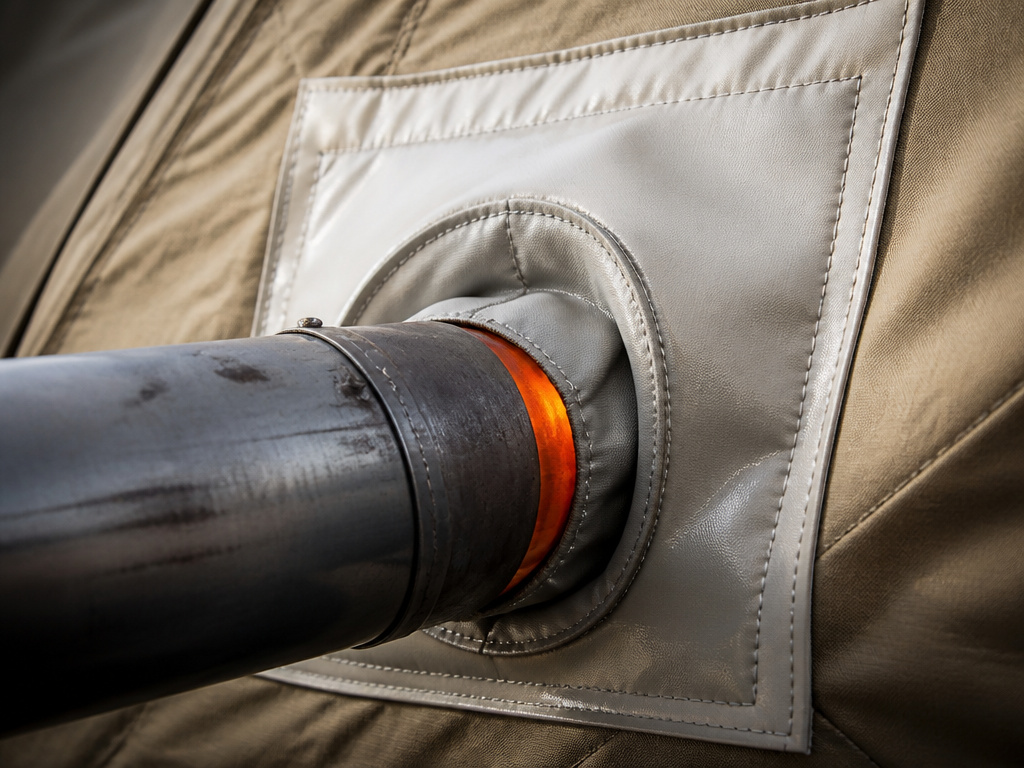
A wood-burning stove turns a tent into a proper hot tent. The warmth is dry, radiant, and unmatched. It’s also the most dangerous method. This isn’t about throwing a camp stove inside. It requires a specialized hot tent with a stove jack, a reinforced, heat-resistant sleeve sewn into the wall or roof for the stovepipe.
The stove jack is what separates a cozy night from a catastrophe. Running a stovepipe through a standard tent’s mesh window or zipped door guarantees a fire. The pipe temperature can exceed 400°C. Tent fabric touching it will ignite in seconds. A proper stove jack uses multiple layers of fiberglass or silicone-coated fabric rated for extreme heat.
Common mistake: Using a cheap, thin-walled stovepipe inside the tent, the exterior gets hot enough to burn skin on contact and can ignite any gear that brushes against it.
The stove itself must be stable, with short, sturdy legs that won’t sink into the tent floor. You place it on a non-combustible hearth pad that extends well beyond the stove’s footprint. Sparks will fly when you add wood.
Ventilation here is about managing smoke, not just CO. You must keep the roof vent wide open to create a draft that pulls smoke up and out. If the wind shifts and downdrafts smoke back into the tent, you’ll know within minutes, your eyes will sting.
TL;DR: Only use a wood stove in a tent designed for it, with a proper stove jack and a non-flammable hearth pad. This is not a modification for a standard tent.
Carbon Monoxide: The Silent Killer You Can Beat
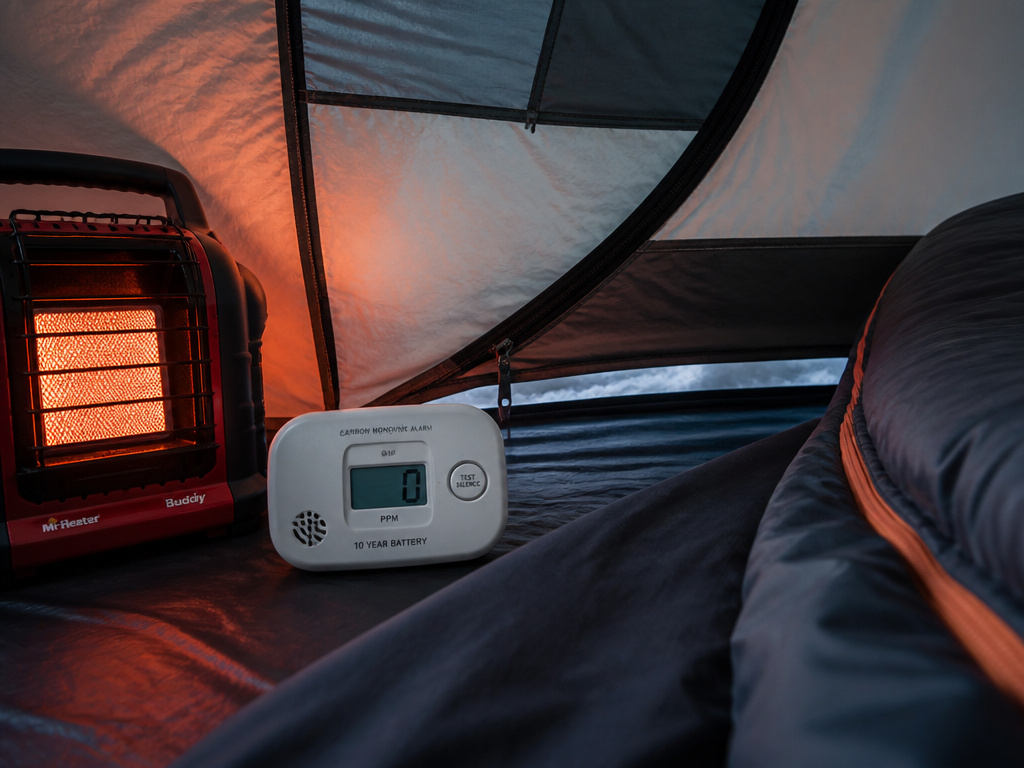
Carbon monoxide is odorless, colorless, and binds to your hemoglobin 200 times more readily than oxygen. In a tent, the sources are propane combustion, gasoline-powered generators placed too close, and even charcoal grills used outside near a tent’s air intake.
Symptoms are sneaky: headache, dizziness, nausea, confusion. By the time you feel them, your blood oxygen is already dropping. The only reliable defense is a digital CO monitor. The First Alert CO710 with its 10-year battery is a common pick because you don’t have to remember to change batteries yearly.
Place the monitor low. While CO is slightly lighter than air, it mixes readily, and placing it near the floor (where sleeping bags are) gives the earliest warning. Test the alarm button before each trip.
Ventilation is your second line of defense. The rule is two openings minimum. One high (a roof vent) and one low (a door cracked 2-3 inches). This setup uses the natural stack effect: warm, CO-laden air rises and escapes out the top, pulling fresh air in the bottom.
Never use a heater in a snowstorm without checking vents every hour. Snow can drift and block your lower vent, shutting off the airflow. You won’t notice until the CO alarm goes off, if you have one.
TL;DR: Use a 10-year battery CO monitor placed at sleeping level and maintain two-point ventilation, especially in snowy or windy conditions.
Low-Tech and No-Tech Heat Tricks
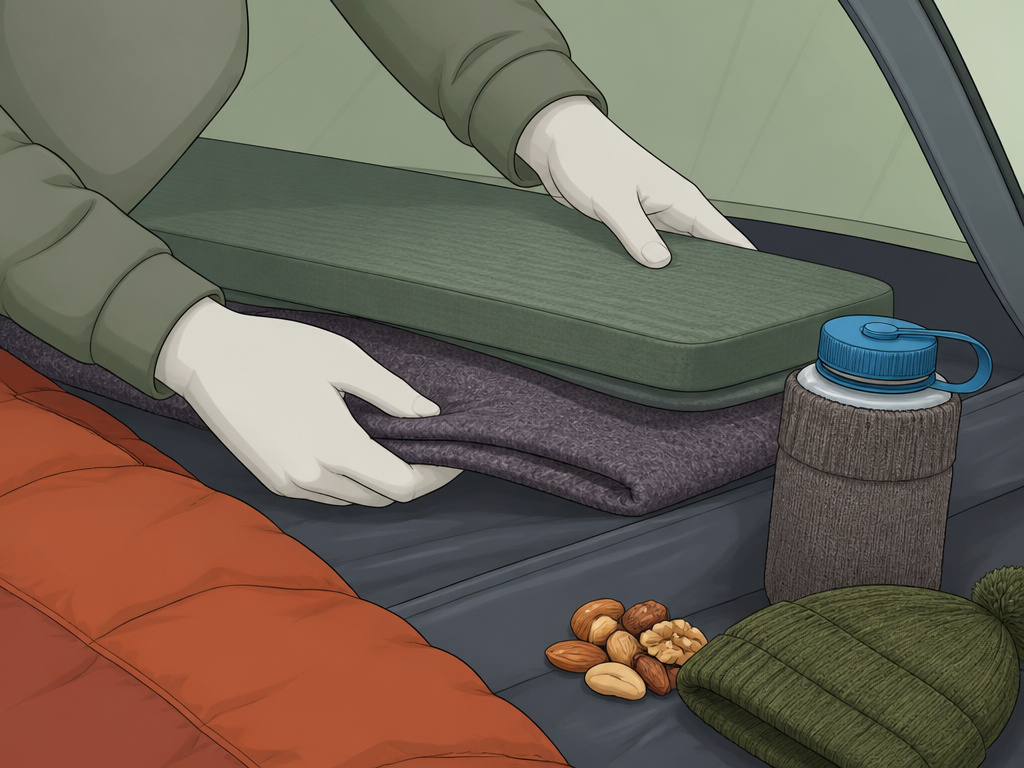
Sometimes you forget the heater, or the power fails, or you’re at 8,000 feet where propane won’t work. Your body is a furnace, and your goal is to trap its heat.
Start with the ground. The earth is a massive heat sink. A foam sleeping pad with a high R-value (5 or above) is more important than the thickest sleeping bag. It stops conductive heat loss. For extra warmth, lay a wool blanket underneath your pad. The air gap created by the blanket’s fibers provides additional insulation.
Boil water before bed, pour it into a Nalgene bottle, wrap it in a sock, and toss it in the foot of your sleeping bag. It provides focused heat for 6-8 hours. Just ensure the lid is screwed on tight.
Eat a high-fat snack right before bed. Digesting food generates metabolic heat, this is the “sugar rush” principle put to work. A handful of nuts or a square of chocolate can raise your core temperature.
Wear a hat and dry socks to bed. You lose a huge percentage of body heat through your head and feet.
TL;DR: Insulate from the ground first, use a hot water bottle, eat a fatty snack, and cover your head and feet.
Before You Go
Heating a tent is a trade-off between comfort and risk. Electric is safest but ties you to power. Propane is portable but demands constant ventilation and fails at altitude. Wood stoves offer glorious warmth but require specialized hot tents for backpacking and constant vigilance.
The rules are simple because the stakes are high: 20cm clearance, two open vents, a certified heater, and a CO monitor that works. Skip one, and you’re gambling with more than a cold night.
Frequently Asked Questions
Can you safely use a propane heater in a tent overnight?
No. Never run any heater while you are asleep. The risk of a malfunction, a knocked-over heater, or blocked ventilation is too high. Use the heater to warm the tent before bed, then turn it off and rely on your sleeping bag.
What is the safest heater for a tent?
An electric ceramic heater plugged into a properly rated outlet is the safest, as it produces no carbon monoxide. Second is a CSA 4.98 certified propane heater like the Mr. Heater Buddy, used with extreme ventilation and a CO monitor.
How do you vent a tent when using a heater?
Open at least two points: a roof vent and a door or window cracked 2-3 inches. This creates a cross-flow. In a snowstorm, check that snow hasn’t blocked the lower vent every hour.
Can you use a wood stove in any tent?
No. You need a specialized hot tent with a stove jack. The stove jack is a reinforced, heat-resistant port for the stovepipe. Running a pipe through a standard tent’s fabric or window will cause a fire.
Why won’t my propane heater work at high altitude?
Propane heaters with oxygen depletion sensors (ODS) are designed to shut off when oxygen levels fall below a safe threshold for combustion. At elevations above approximately 7,000 feet, the air is too thin, triggering the sensor.
