
How to Keep Bugs Out of Your Tent: A Camper’s Battle Plan
This post contains affiliate links. As an Amazon Associate, we earn from qualifying purchases.
To keep bugs out of your tent, treat the exterior with 0.4% permethrin spray, set up in a breezy spot 100+ feet from water, use a fan blowing outward at the door, and apply 20-30% DEET only to your skin. This layered system, validated by a nine-week field study, cuts mosquito bites by 44% and addresses every point of insect entry.
I learned the cost of a single gap the hard way on a spring trip to Florida’s Everglades. My trusty REI Half Dome 2, with its “fine” mesh, was useless against no-see-ums at the Flamingo campground. I woke up with over two dozen bites on my ankles that swelled into quarter-sized welts, forcing me to cut the hike short for a clinic visit. That miserable, itchy drive was the moment I became a student of bug-proofing. This guide is the system I’ve built since, not from showroom theory, but from nights spent in bug-filled swamps, breezy ridges, and everything in between.
Key Takeaways
- A single exterior treatment with 0.4% permethrin can reduce mosquito bites by 44% for a full season, as shown in a nine-week field study with over 500 campers.
- Standard mosquito mesh (1.2–1.5 mm) is an open gate for biting midges; true no-see-um mesh measures 0.6 mm or smaller.
- Mosquitoes cannot land in moving air above 1 meter per second; a small fan blowing outward at your tent door creates an impenetrable physical barrier.
- DEET degrades synthetic fabrics like nylon and spandex on contact; use 20–30% formulas only on skin, never on your tent.
- A bathtub floor that extends 15–20 cm up the tent walls is critical for blocking crawling insects from sneaking under the rainfly.
What’s the Most Effective Way to Treat a Tent Against Bugs?
The single most impactful action you can take is treating your tent’s exterior with permethrin. This isn’t a repellent; it’s an insecticide that binds to fabric fibers and kills insects on contact. The science behind it is solid.
A randomized controlled trial published in Wilderness & Environmental Medicine followed 545 campers over nine weeks. Tents treated once with 0.4% permethrin on their external surfaces resulted in a 44% reduction in mosquito bites compared to untreated tents. The treatment remained effective for the entire study and cost roughly 90 cents per tent at retail.
For this to work, you must use the right product and apply it correctly. Look for a spray specifically labeled as 0.4% permethrin for gear, like Sawyer’s Pump Spray. For larger tents or frequent use, buying a concentrate like Martin’s 10% Permethrin SFR and diluting it yourself is far more cost-effective.
Apply it at home, not at camp. Thoroughly spray the outer canopy, rainfly, and all mesh panels until they are damp. Pay special attention to the door and any vents. Let the tent dry completely in a well-ventilated area before packing it away. Once dry, the bond is safe for humans and durable through rain and wind.
Common mistake: Applying permethrin to the tent’s interior, this increases inhalation risk and is unnecessary. The treatment works from the outside-in. Always apply outdoors or in a garage with the door open.
Sunlight is its enemy. While the PMC study on permethrin-treated tents showed season-long efficacy in a camp setting, prolonged direct UV exposure can break down the chemical in as little as two months. If you’re a desert or beach camper, plan for a mid-season reapplication.
TL;DR: Treat your tent’s exterior with 0.4% permethrin spray before the season starts. It’s a one-time task that provides months of proven, chemical-free protection inside your shelter.
How Do You Choose and Set Up a Bug-Resistant Campsite?
Your campsite is your first line of defense. A perfect tent in the wrong location is a losing battle. Bugs originate from water and hide in vegetation; your goal is to put distance and moving air between them and your shelter.
First, get far from water. Set up at least 100 feet from any standing water, ponds, puddles, marshy ground, or slow streams. This simple distance drastically reduces the density of mosquitoes and midges that can reach you.
Second, seek the breeze. Even a light, consistent wind of 1 m/s (barely enough to feel on your skin) disrupts mosquito flight patterns. They can’t land to bite.
| Campsite Feature | Why It Helps | What to Look For |
|---|---|---|
| Distance from Water | Reduces insect population at source | ≥ 100 ft from ponds, marshes, slow streams |
| Elevation & Openness | Increases consistent wind exposure | Ridges, hilltops, clearings over sheltered groves |
| Ground Clarity | Eliminates habitats for ticks & spiders | Dirt, short grass, or sand; clear away leaf litter |
| Natural Wind Channel | Creates a constant airflow barrier | Gap between trees, along a lakeshore, or across a field |
Once you’ve found your spot, orientation is everything. Face your tent’s main door directly into the wind. Mosquitoes cluster on the downwind side of obstacles. By pointing the door windward, you ensure the bugs are pushed to the back of your tent, not waiting at the entrance.
I watched this play out on a still evening in the Blue Ridge Mountains. My door was downwind, and a cloud of mosquitoes formed a visible, humming curtain right over the zipper. My friend, whose door faced the slight breeze, had none. It was a silent, powerful lesson.
Which Gear Actually Works to Create a Physical Barrier?
Beyond chemicals and location, specific pieces of equipment form your physical bug-blocking system. These aren’t luxuries; they are functional tools that address specific weaknesses.
- The Fan: This is your most underrated tool. A small, battery-powered fan like the Opolar LC06, clipped inside the door and blowing outward, creates an air barrier mosquitoes cannot cross. Position it near the top of the door to disrupt flight paths.
- No-See-Um Mesh: If you camp near coasts or wetlands, verify your tent’s mesh size. Standard mosquito mesh (1.2–1.5mm) won’t stop biting midges. True no-see-um mesh is 0.6mm or finer. If your tent doesn’t have it, a separate mesh liner is a worthwhile investment.
- Red-Light Headlamp: White light at night is a bug beacon. A headlamp with a red-light mode allows you to see inside your tent or navigate at camp without attracting every moth in the county.
- Repair Kit: A single pinhole or unsealed seam is an insect highway. Carry Tenacious Tape and a small tube of seam sealer to patch breaches instantly.
This core set of tent camping accessories solves tangible problems. For a broader look at what to bring, our camping gear checklist covers all the essentials.
Expert tip: Skip the gimmicks. Citronella candles have a one-foot radius. Ultrasonic devices are ineffective outdoors. Your money and pack space are better spent on a good fan and a proper permethrin treatment.
What Should You Do If Bugs Get Inside Your Tent?
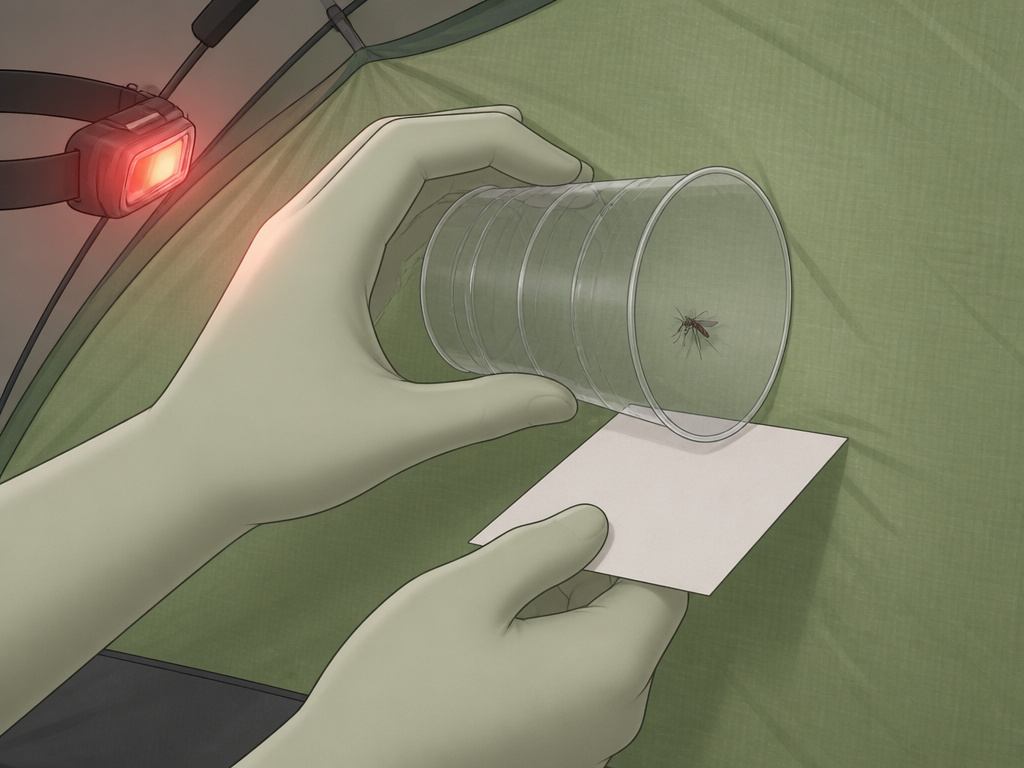
Despite your best efforts, an intruder will sometimes slip in. Don’t panic, follow a calm escalation protocol. First, switch your headlamp to red light to avoid attracting more insects from outside.
Locate the bug. Mosquitoes often rest in the top corners or on dark gear. Use the “cup and card” method: slowly trap it against the wall with a cup, slide a piece of paper underneath, and release it outside.
Then, find the entry point. In the dark, run your fingertips slowly along all zippers and seams from the inside. You’ll feel a tiny draft where air, and bugs, are getting in. Patch it immediately with a piece of tape from your repair kit.
Common mistake: Swatting a mosquito inside the tent, the blood smear on your wall or ceiling can attract other insects. Always trap and release if you can.
If you face a larger invasion, like a swarm of gnats that entered when you did, your only option is a controlled evacuation. Unzip the door fully, step out, and give the interior a few minutes to clear. Then re-enter carefully, sealing the door behind you immediately.
How Do You Use Skin Repellents Without Damaging Your Gear?
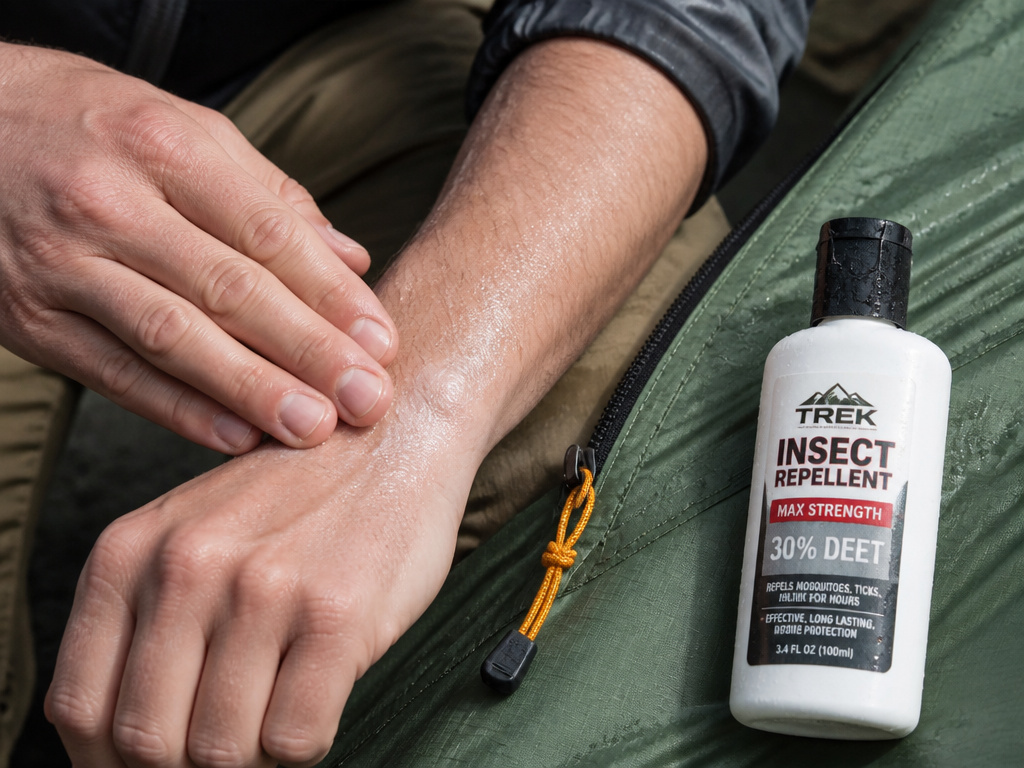
Your final personal layer is skin repellent, but misapplication is a prime cause of gear damage. DEET is highly effective at confusing insects’ scent receptors, but it’s also a potent solvent for plastics and synthetic fabrics.
Stick to a 20–30% DEET formula for all-night protection. Higher concentrations don’t work better; they just last longer and pose a greater risk to your tent’s nylon, spandex elastics, and waterproof coatings. Apply it only to exposed skin, ankles, wrists, neck, and ears. After applying, wash your hands before handling tent zippers or fabric.
| Repellent Type | Best Use Case | Gear Damage Risk | Reapplication Frequency |
|---|---|---|---|
| DEET (20-30%) | High mosquito areas, all-night trips | High – dissolves synthetics on contact | Every 4-6 hours |
| Picaridin (20%) | Good alternative to DEET, less odor | Low – generally safe for plastics | Every 4-6 hours |
| Oil of Lemon Eucalyptus | Low-pressure areas, shorter trips | Very Low | Every 2-3 hours |
If you’re concerned about gear degradation, picaridin is an excellent alternative with similar efficacy and a much lower risk of damaging materials. Remember, no skin repellent should ever be sprayed on your tent. That’s what the permethrin treatment is for.
For a complete approach to a pleasant campsite, integrating these practices with the Leave No Trace bug-free campsite guide ensures you’re protecting both your sleep and the environment.
Frequently Asked Questions
Does permethrin work on all types of tents?
Yes. The original study was on canvas, but EPA registrations and widespread use confirm it’s safe and effective on nylon, polyester, and mesh used in modern tents. It bonds to the fibers and does not damage them when applied as directed and allowed to dry fully.
How often do I need to re-treat my tent with permethrin?
For most campers who store their tent between trips, one treatment at the start of the season is sufficient. If your tent lives in direct sunlight for weeks on end, like on a long road trip or at a permanent campsite, reapply after two months due to UV degradation.
Can I use a Thermacell or mosquito coil inside my tent?
Never burn a mosquito coil inside an enclosed tent. The smoke can cause respiratory irritation and carbon monoxide buildup. Thermacell devices are designed for outdoor use. Place them outside your tent door, not inside, and ensure they are on stable, non-flammable ground.
What’s the difference between DEET and permethrin?
DEET is a skin repellent that makes you “invisible” to bugs’ senses. Permethrin is a fabric treatment that kills insects on contact. They work on completely different principles and should never be swapped. Permethrin goes on gear, DEET goes on skin.
Why am I still getting bites on my back and legs inside the tent?
This usually points to insects that entered with you (like ticks in your clothing) or are biting through the tent floor. Always do a quick tick check before entering, and ensure your sleeping pad or bag provides a full barrier. A true bathtub floor design is essential to stop crawling insects.
Before You Go
A bug-free night isn’t about one magic product. It’s about a layered system: permethrin on the tent, smart site selection, a fan at the door, and careful repellent use on your skin. Each layer covers a failure point the others can’t.
Start with the permethrin treatment, it’s the highest-impact, lowest-effort step. Then build your habits around site choice and diligent zipping. Finally, equip yourself with the few tools that truly matter, like a reliable fan and proper lighting. This system turns a defensive struggle into quiet confidence, letting you focus on the sounds you actually want to hear: the wind in the trees and your own peaceful breathing.
For more shelter-specific advice, whether you’re looking for spacious car camping tents or budget tents under $100, the principles of smart bug-proofing remain your foundation for restful nights under the stars.
