
How To Make Tent Camping More Comfortable | The R-Value Trick That Trumps Your Sleeping Bag
This post contains affiliate links. As an Amazon Associate, we earn from qualifying purchases.
You make tent camping more comfortable by attacking the ground first. Your sleeping pad’s R-value, the measure of its insulation, does more for warmth than your sleeping bag rating. Match that R-value to your season: R-2 for summer, R-3 to R-4 for three-season, R-5+ for winter. Then manage the air inside your tent: ditch the rainfly and add a fan when it’s hot, pre-warm your bag with a water bottle when it’s cold.
Most people pack the wrong gear for the wrong problem. They buy a heavy, expensive sleeping bag for a July weekend, then shiver on a thin pad because the cold ground sucks heat straight through it. Your bag only insulates the top half of you. The pad handles the bottom half, and a bad pad makes a great bag useless.
This guide skips the generic advice. We’ll cover the physics-backed ground rules, the climate hacks that actually work, and the gear swaps that turn a miserable night into real sleep.
Key Takeaways
- Your sleeping pad’s R-value is non-negotiable. An R-2 pad is for warm summer nights; three-season camping needs R-3 to R-4. Below freezing demands R-5 or higher.
- Layer pads for cheap warmth. Stacking a $20 closed-cell foam pad under your inflatable adds their R-values together and protects against punctures.
- Hot weather demands ventilation, not less clothing. Remove the rainfly completely above 75°F and clip a battery-powered fan at the tent door. Use a bag liner, not the bag.
- Pre-warm your sleep system. On cold nights, a hot water bottle in the bag 15 minutes before bed is worth three extra layers of clothing.
- Tent size is a trap. A tent slightly larger than your group prevents condensation buildup and gives you a dry gear corner.
The Ground Is Your Biggest Enemy (Fix It First)
The cold, hard ground will steal your warmth faster than any breeze. Your sleeping bag’s loft traps air above you, but it compresses underneath you. That compressed loft provides almost zero insulation. The pad is your only defense.
Common mistake: Buying a sleeping bag rated for 20°F and pairing it with an R-1.5 pad on a 35°F night, you’ll be cold by 2 a.m. The bag rating assumes you have a proper insulated pad beneath you.
The number you need is the R-value printed on the pad’s spec sheet. It measures thermal resistance. Higher is warmer. Forget thickness or price as your primary guide.
| Nighttime Low | Minimum Pad R-Value | What Happens If You Go Lower |
|---|---|---|
| Above 50°F (10°C) | R-2 | You’ll be fine, but any dip toward 40°F will feel chilly from below. |
| 32°F to 50°F (0°C to 10°C) | R-3 to R-4 | The sweet spot for three-season camping. Below R-3, the ground cold penetrates within an hour. |
| Below 32°F (0°C) | R-5 or higher | An R-4 pad might get you through, but you’ll feel the cold seeping in around 3 a.m. R-5 is the safe winter baseline. |
For car camping, this means you can choose a thick, luxurious air mattress. Just check its R-value, many are only R-1 or R-2, designed for indoor use. For backpacking, you’re hunting for the lightest pad that hits your R-value target. A mummy-shaped sleeping bag paired with an inflatable pad under 20 ounces is the standard weight-saving move.
TL;DR: Match your pad’s R-value to the coldest expected temperature, not your sleeping bag rating. For three-season car camping, aim for R-3 to R-4.
The Blanket Trick and the Double-Decker Pad Hack
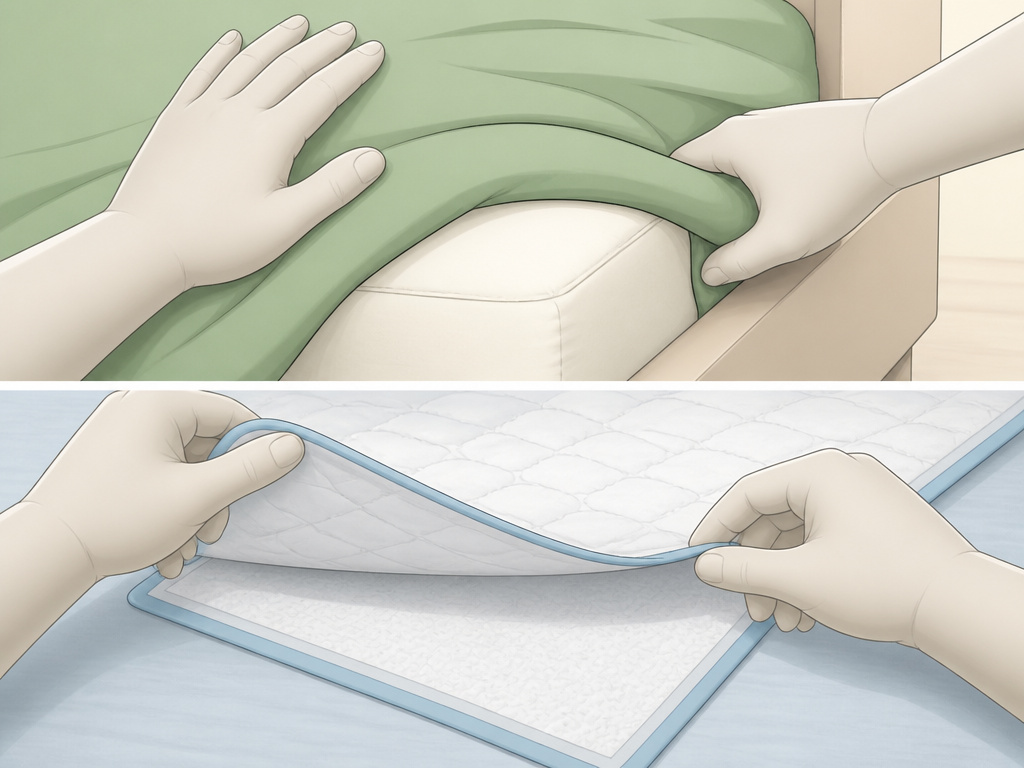
If your pad isn’t warm enough, you don’t always need a new one. You can add R-value.
The first method is almost too simple. Place a wool or fleece blanket directly on the tent floor, then put your sleeping pad on top. The blanket adds a dead-air space and a bit of insulation. It’s not a huge R-value boost, but on a chilly autumn night, it’s the difference between sleeping and shivering. I tested this on a recent trip with my kids, their side of the tent had the blanket, mine didn’t. Lying in both spots, the blanket side was noticeably warmer, with less dampness rising from the ground.
The second method is what winter campers and thru-hikers use: the double-decker. You stack a closed-cell foam pad (like a Therm-a-Rest Z-Lite) underneath your inflatable pad.
This does two things. First, the R-values add together. A foam pad with R-2 under an inflatable pad with R-3 gives you roughly R-5. Second, the foam pad is puncture-proof. It protects your expensive inflatable from pine needles, sharp gravel, or tent floor abrasion. I always pack a Z-Lite Sol for winter trips, it’s a seat, a backup sleeping surface, and a warmth multiplier.
Hot Weather? Ditch the Bag, Add a Fan
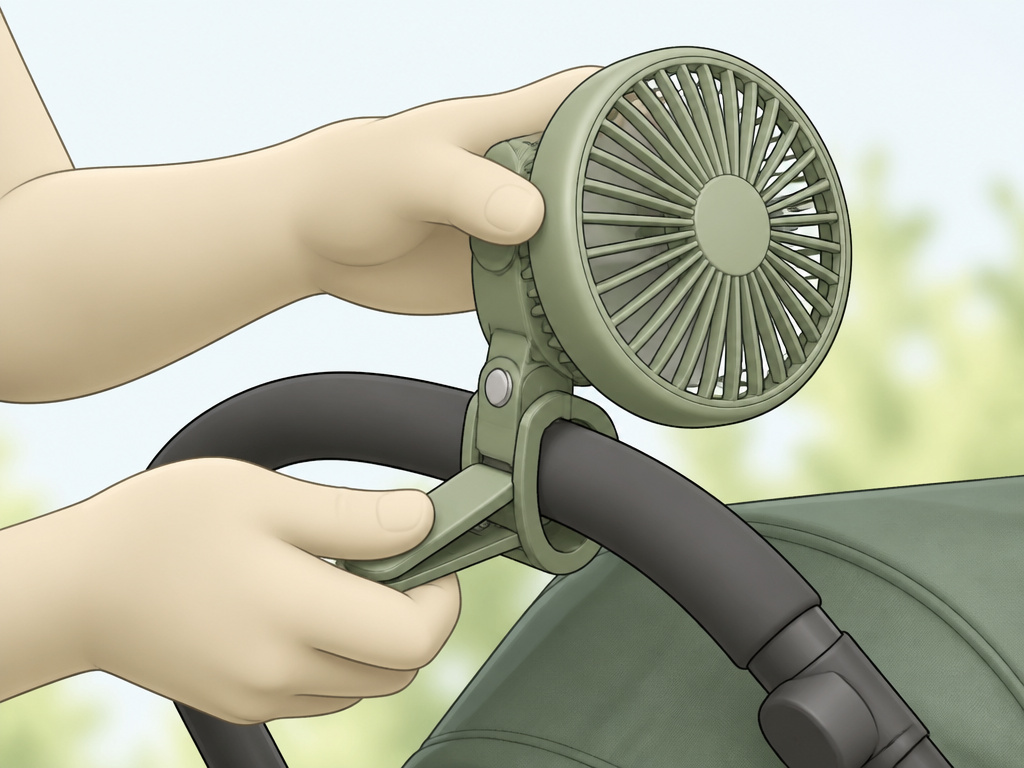
Comfort isn’t just about staying warm. Sticky, still heat inside a tent is miserable. The standard advice is to “camp in the shade” and “choose a breezy spot.” That’s not always an option.
When the forecast is above 75°F, your first move is to remove the rainfly completely. This turns your tent into a screened-in porch, maximizing airflow. If rain threatens, you can quickly clip it back on. Your second move is active ventilation. Hang a battery-powered fan from the tent’s ceiling loop or a gear loft, angled toward the door. The goal is to create a cross-breeze, pulling fresh air through.
I won’t car-camp in summer without my small USB fan. The difference between still, humid air and a slight breeze is the difference between sleeping and lying awake sweating.
Your sleeping bag is now a liability. Switch to a sleeping bag liner, a thin sheet of silk, cotton, or synthetic fabric. It provides a barrier against the tent floor and keeps you covered without trapping heat. If you run cold, keep your bag unzipped beside you as a blanket.
Cold Nights Demand a Pre-Heated Bed
Fighting the cold is a proactive game. You can’t just climb into a cold bag and expect to get warm. You have to heat the system before you enter it.
Start with a hot water bottle. Fill a durable Nalgene or a dedicated rubber bottle with water heated on your camp stove. Let it cool just enough that you can hold it without burning your hands. Toss it into the foot of your sleeping bag 10–15 minutes before you plan to sleep. It will radiate heat, taking the chill out of the insulation. Keep it at your feet or core all night.
Next, manage your own heat. Wear a clean, dry base layer and socks to bed, damp skin from the day’s hike will freeze you. Put on a hat. A huge amount of body heat escapes through your head. Stuff a down jacket or extra clothes into the bottom of your bag around your feet for extra loft.
Finally, eat a small, high-fat snack right before bed. Your body generates heat digesting food. A square of chocolate or a handful of nuts gives your internal furnace a little fuel.
Tent Size, Layout, and the Gear Dump Zone
A tent that’s too small is claustrophobic. A tent that’s too big is cold and prone to condensation. The sweet spot is a tent rated for one person more than your group. Two people use a three-person tent. This gives you a dedicated “gear dump” zone inside the vestibule or a tent corner, keeping wet boots and packs off your sleeping area.
Common mistake: Pitching your tent right against a tree or a rock face for wind protection, you’ll get dripped on all night from condensation runoff. Always leave at least a foot of airspace around the entire tent.
For car camping, stand-up tents or spacious car camp tents are worth the extra weight. The ability to stand up to change clothes or organize gear is a massive comfort upgrade. Look for models with a high-denier floor (at least 150D) if you’re not using a footprint. For backpackers, every ounce counts, so a mummy-shaped sleeping bag and a minimal shelter are the trade-offs.
Always use a tent footprint or a simple tarp underneath your tent. It protects the tent floor from abrasion and adds a slight moisture barrier. It also makes packing up cleaner and faster.
Sleeping Bag Ratings Are a Lie (Here’s the Truth)
Sleeping bag temperature ratings are based on a standard test with a mannequin on a pad with a specific R-value. If your pad is worse, the rating is meaningless. The rule of thumb is to choose a bag rated at least 10 to 15 degrees Fahrenheit lower than the coldest temperature you expect.
If you expect lows of 45°F, get a 30°F bag. This gives you a comfort buffer. A rectangular bag is great for car camping, it’s roomy and often cheaper. A mummy bag is tighter, lighter, and warmer for its weight, making it the go-to for backpacking.
Your bag also needs to stay dry. Never store it compressed in its stuff sack long-term. At home, keep it in a large cotton storage bag or hang it loose in a closet. On the trail, air it out at every lunch stop if there’s sun.
Frequently Asked Questions
What is the single most important piece of gear for comfortable sleep?
Your sleeping pad. Its R-value, its insulation rating, is more critical than your sleeping bag’s temperature rating. A poor pad makes a great bag feel cold because the ground pulls heat straight from you.
Can I just use an air mattress from home?
You can, but most indoor air mattresses have an R-value around 1. They are cold. For three-season camping, you need a pad with an R-value of 3 or higher. If you use a home mattress, place a closed-cell foam pad or several blankets underneath it.
How do I stay cool in a tent on a hot night?
Remove the rainfly entirely to maximize airflow. Hang a battery-powered fan from the ceiling to create a breeze. Use a sleeping bag liner instead of your full bag. Consider a portable air conditioner for extreme heat, though they require power.
What’s the best way to add warmth without buying a new sleeping bag?
Layer your sleeping pads. Place a closed-cell foam pad under your inflatable pad, their R-values add together. Also, pre-warm your bag with a hot water bottle and wear a dry hat to bed.
Is a bigger tent always more comfortable?
Not always. A tent slightly larger than needed prevents condensation and gives you a dry gear area. But a tent that’s too large will be harder to heat with your body warmth and can feel cavernous. For most groups, a tent rated for one more person than you have is ideal.
The Bottom Line
Comfortable tent camping isn’t about buying the most expensive sleeping bag. It’s about understanding where you lose heat, straight down into the ground, and stopping it with a pad that has the right R-value for the season. It’s about managing the tent’s microclimate: creating a breeze when it’s hot, trapping warmth when it’s cold. Start with a proper pad, layer it if you need to, and use a fan or a hot water bottle as your climate lever. Your back and your sleep will thank you by morning.
