
How To Tie A Tent Stake Knot
This post contains affiliate links. As an Amazon Associate, we earn from qualifying purchases.
To tie a secure tent stake knot, use the Bowline Knot to create a strong, non-sliding loop, and the Taut Line Hitch to maintain adjustable tension for stability. These knots are easy to tie, reliable, and simple to untie afterward. Further explanation and tips on knot tying techniques will be provided later in the article for those interested in a deeper understanding.
Essential Facts in 30 Seconds
- Use knots like Bowline or Half Hitch to secure tent stakes effectively.
- Tie knots tightly to avoid slippage and ensure stability.
- Apply a Taut Line Hitch for adjustable tension without untying.
- Test knots by tugging to confirm they are secure.
- Regularly check and adjust knots, especially in changing weather.
Importance of Tent Stake Knots
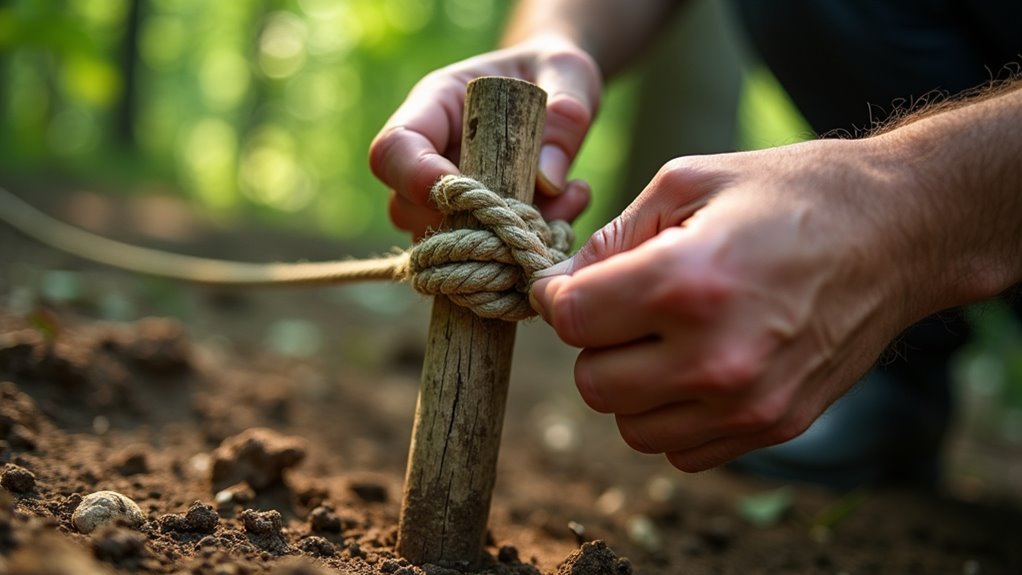
Tying tent stake knots correctly keeps your tent steady and safe. Strong knots stop the tent from falling during wind or rain. This protects you and your gear. Good knots hold well in different soils, making your camp secure. Knots spread force evenly on stakes. This helps stakes dig deeper and stay put. Stakes don’t pull out easily because of the extra grip. Tight guylines hold better, especially in tough weather. Use knots like the Trucker’s Hitch for fast, easy tightening. These knots keep your tent’s shape perfect. They also stop ropes from wearing out too fast. Learning strong knots makes camping safer and more fun. You’ll feel ready and safe outdoors. Additionally, secure stakes ensure that your tent remains anchored even in unpredictable weather. Properly tied knots also contribute to tent stability, enhancing the overall security of your camping setup.
Types of Tent Stake Knots
Tent stake knots keep your tent stable and safe. The Bowline Knot makes a strong loop that doesn’t slide. It holds tight and unties easily after pulling. This knot works great for guylines.
The Half Hitch is simple and holds well. You can add more hitches to make it stronger.
The Trucker’s Hitch helps tighten ropes like a pulley. It adjusts tension easily but watch out—it can slip if loose.
The Prusik Knot forms a loop that moves but tightens when pulled. Use it to change tension quickly.
Overhand Knot variations make quick loops. They secure stakes fast and well.
Use strong rope for the best knot safety. Good knots keep your tent steady all night long. Camping feels safer and more fun with the right knots.
How to Tie a Taut Line Hitch
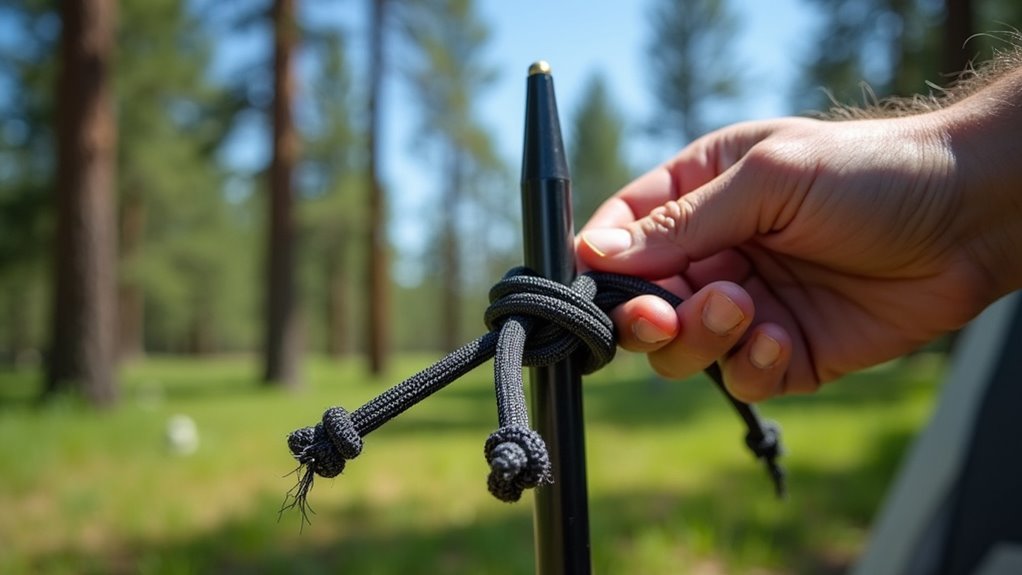
Tying a Taut Line Hitch keeps your guylines tight and secure.
This knot is simple but strong. It lets you adjust the line length without untying the knot. Properly tensioned guy lines contribute to tent stability, especially in windy conditions.
Follow the steps carefully, and your tent or tarp will stay steady in wind or rain.
Practice it a few times to get confident.
This knot works well on slippery or rough ropes. Tent pegs are essential for anchoring your setup securely.
Use it to make your camping setup safe and easy to fix.
Knot Structure Breakdown
The Taut Line Hitch knot holds tight and lets you adjust tension easily. It works great for tent ropes and tarps. Knowing how this knot works helps you camp better. Here is how it breaks down:
| Part | What It Does |
|---|---|
| Anchor Point | Wraps around a fixed object to hold firm. |
| Coiling Method | Wrap the rope around the main line twice. |
| Half Hitch | Make a third wrap on the other side. |
| Adjustable Loop | The last loop grips tight when pulled. |
This pattern, two wraps in and one loop out, keeps the knot strong. You can tighten or loosen it without untying. A good knot like this stops slipping and holds steady in wind or rain. Proper tension ensures that your camping adventure is both enjoyable and secure. Perfect for any outdoor adventure.
Step-by-Step Instructions
Start tying the Taut Line Hitch with these simple steps. First, wrap the working end around the anchor, like a tent stake. Keep the line tight.
Next, make two coils around the standing part of the rope, moving toward the anchor. For the third coil, wrap the working end outside the first two coils. This adds extra grip.
Then, pass the working end through the loop made by the coils to lock the knot. Pull the working end to tighten it. Adjust the tension until it feels secure.
This knot works great for camping and outdoor use. It holds tight but can still slide when you want to adjust it. The Taut Line Hitch has helped campers for years. It’s strong, simple, and very useful.
Practical Applications Explained
Tying a Taut Line Hitch knot can greatly improve your outdoor adventures. This knot adjusts tension easily, making tent guylines and tarp tie-outs tight and secure. You don’t need to untie it to change the tension. This keeps your rainfly tight, even if the weather changes. Additionally, it is essential to ensure proper tent setup preparation to maximize the effectiveness of the knot.
The knot also works well for hanging gear like pots or bags safely. Scouts and campers trust this knot for its strong hold and easy adjustability. Check your lines often to keep the perfect tension, especially when the weather shifts. Additionally, using this knot can enhance your tent’s stability in adverse weather conditions, ensuring a safer camping experience.
This simple knot helps you stay safe and prepared outdoors.
Practical Tips for Using Tent Stake Knots
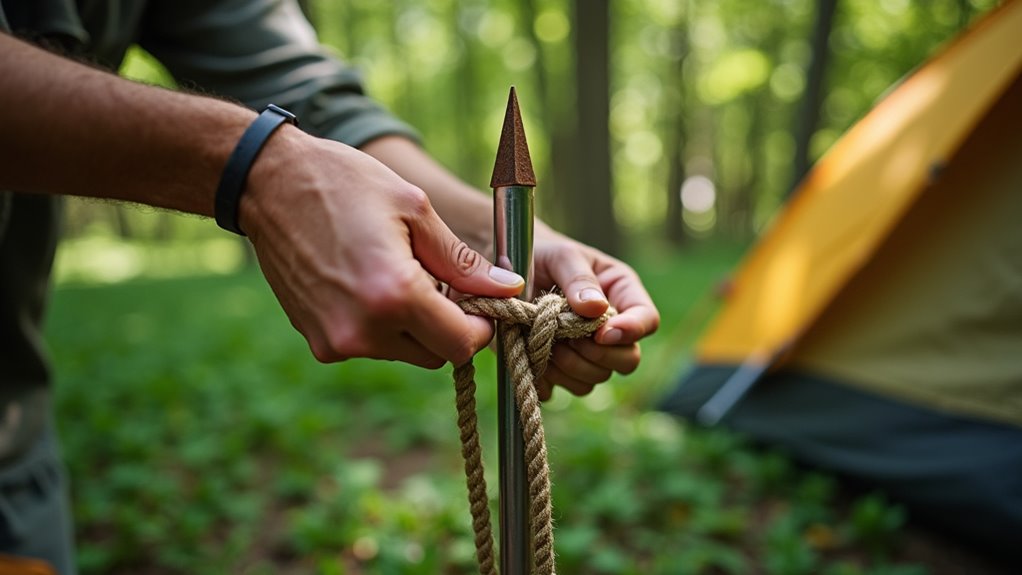
Setting up your tent with strong tent stake knots improves stability and ease. Use durable, weather-proof rope. A rope diameter of 4-6 mm works best. It stays strong and easy to handle.
The taut-line hitch or prusik knot lets you adjust tension quickly. These knots slide to tighten or loosen without untying. Tie the knot close to the stake for a firm hold. Leave enough rope to adjust tension as needed.
Check knots often, especially after wind or rain. Loose knots can cause your tent to collapse. The taut-line hitch fixes loose guy lines fast.
Plastic sliders help adjust tension even easier. These tips help you set up a stable, reliable tent every time.
Common Mistakes in Knot Tying for Tent Stakes
Many campers tie knots poorly for tent stakes. This causes weak, unstable setups. Using the wrong knot, like a Granny Knot instead of a Reef Knot, makes ropes slip. Tying knots too tight also causes problems. They become hard to untie when packing up.
Slip knots fail easily if not tight all the time. Keeping rope turns neat and parallel helps hold tension evenly. Uneven turns cause knots to slip. Use strong, thick rope suited for your stakes and ground. Thin or old rope breaks more often.
Always pull on your knots after tying. A quick tug shows if they hold well. Avoid these mistakes for a safe, strong tent setup.
Additional Uses and Variations of Tent Stake Knots
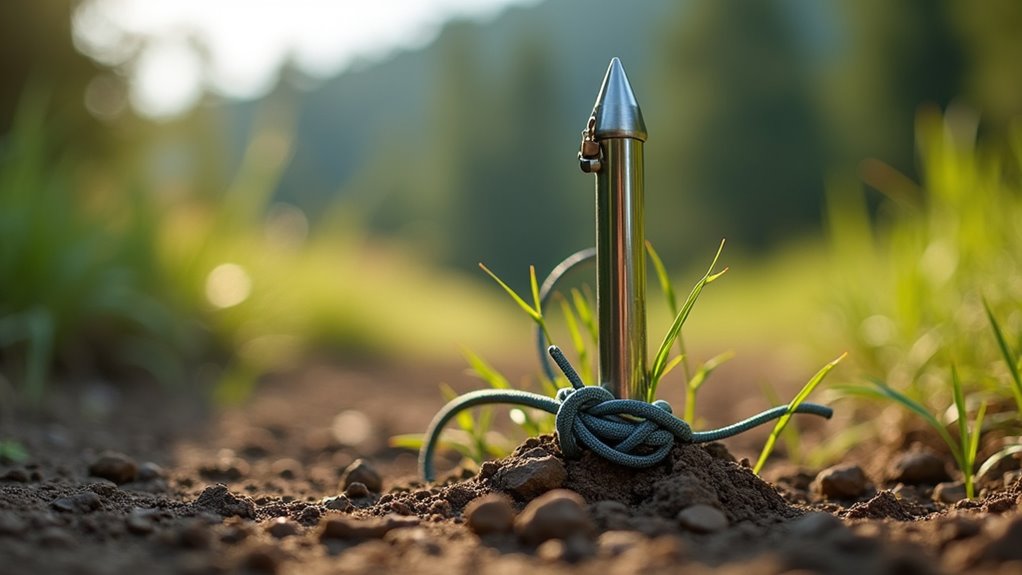
Tent stake knots do more than hold your tent. They help with many camping tasks.
Bowline and Trucker’s Hitch knots make strong attachment points for tarps. Use Prusik or Taut Line Hitch knots to adjust tension on guylines. This keeps your tent stable in wind.
Figure 8 knots create loops to hang gear or tie extra guylines. Mooring Hitch knots work well to anchor or hang items like bear bags.
Square knots bundle firewood quickly and easily. Knowing these knots saves time and keeps your campsite safe. Additionally, using properly secured tents ensures stability and safety during adverse weather conditions.
Master these knots for a better camping experience.
Frequently Asked Questions
What Materials Are Best for Tent Guylines?
UHMWPE is strong and very light, making it great for tent guylines. Paracord also works well. It holds up to 550 pounds and is made of tough nylon. Both keep your tent steady and safe during wind or rain. These materials last long and resist wear. Trust them to secure your tent firmly every time.
How Do I Choose the Right Tent Stakes?
Tent stakes must match your tent type and ground. Lightweight tents work best with aluminum or titanium stakes. These materials are light but strong. Heavy tents need steel stakes. Steel holds firm in hard or loose soil. Use longer stakes in soft or sandy ground. Short stakes suit rocky or hard surfaces. Good stakes keep your tent safe and steady in wind. Pick stakes that fit your camping spot and tent size.
Can I Use Tent Stake Knots for Other Outdoor Activities?
Tent stake knots work well beyond camping. They hold tarps tight against wind and rain. Hikers use them to secure backpacks or ropes. Climbers rely on these knots for quick, strong holds. Fishermen tie gear or nets with them. Campers set up clotheslines or traps easily. These knots make outdoor tasks safer and simpler. Try them in any adventure to keep gear steady.
What Are the Best Conditions for Camping With Tents?
The best weather for tent camping stays between 50°F and 70°F. Pick spots where water drains well. Avoid areas that get strong winds. Check the weather forecast often. Sudden storms can spoil your trip. Dry, calm days make camping fun and safe. Good air helps tents stay fresh. Nights should not be too cold or hot. Camping in these conditions keeps you comfortable and happy.
How Do I Store Tent Guylines and Knots?
Coil tent guylines neatly and tie them with rubber bands. Store each coil in small bags to keep them organized. Use simple knots like the figure-eight or bowline to stop tangles. These knots hold well and untie easily. This method saves time and keeps your gear ready for use. Clean and dry guylines last longer too. Keep everything tidy for your next outdoor trip.
Conclusion
Tying a tent stake knot secures your tent firmly to the ground. The taut line hitch works well; it tightens or loosens easily. Strong knots stop your tent from blowing away in wind or rain. Practice tying knots before camping trips. Check knots often to keep them tight and steady. Good knots show your camping skills and keep you safe outdoors. Enjoy a stable, cozy tent every night.
