
What Is A Vestibule On A Tent
This post contains affiliate links. As an Amazon Associate, we earn from qualifying purchases.
A vestibule on a tent is an extended entry area that provides extra space for storing gear and protects the main living area from weather elements like rain or snow. It typically has its own entrance and is made from waterproof materials to keep your belongings dry and enhance comfort. Further details on how vestibules improve your camping experience and considerations for size and configuration will be explained later in the article.
Essential Facts in 30 Seconds
- A vestibule is an entryway attached to a tent.
- It provides a buffer zone between outside and interior space.
- Vestibules offer extra storage for gear.
- They help keep the main tent organized and clean.
- Vestibules protect against rain, wind, and other weather.
- They improve camping comfort and privacy.
- Some have windows for ventilation.
- Vestibule size and shape vary by tent design.
Definition and Characteristics of Tent Vestibules
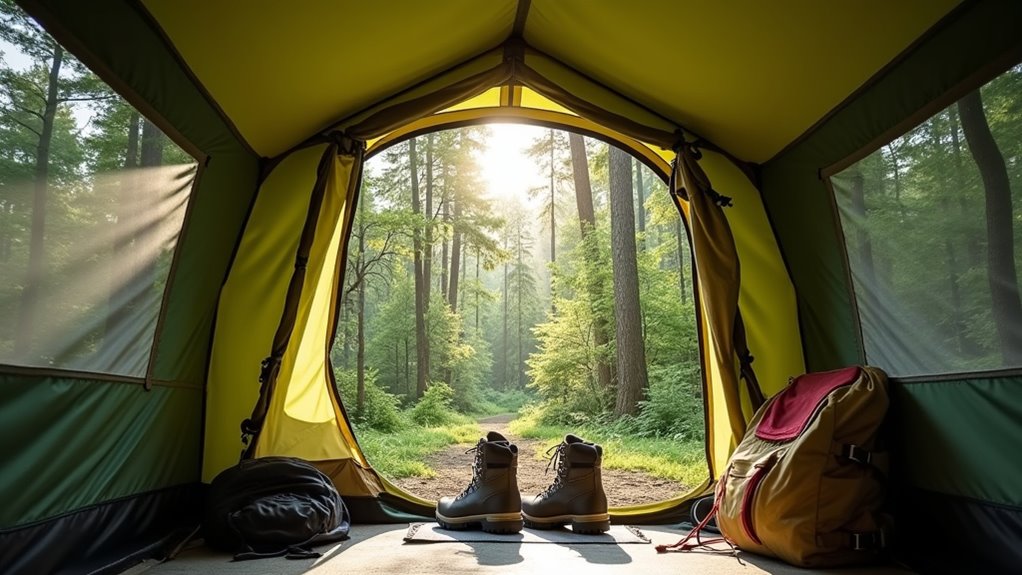
A tent vestibule adds important space and comfort to your camping.
It’s a covered area that extends from the main tent. Usually, it forms from an extended rainfly or extra fabric panels. This area often has its own entrance for easy access. It helps keep your gear organized and dry.
Vestibules use waterproof materials like the tent’s rainfly. This keeps the space strong against rain and wind. Think of it as a small porch or mudroom. It stops mud and wetness from reaching your sleeping area.
Sizes and shapes vary. Some vestibules are small, just for gear. Others are large enough to sit under. They stand firm with tent poles or extra stakes.
Whether built into the tent or added later, vestibules improve camping. They give you extra storage and protect you from bad weather.
Practical Uses and Benefits of Vestibules
A vestibule makes camping better. It adds space and helps keep gear neat. Here are three key benefits:
- Keeps Weather Out: A vestibule blocks rain and snow. Your tent stays dry and clean.
- Improves Airflow: It helps air move inside the tent. This lowers moisture and stops damp smells.
- Reduces Mess: Wet or muddy items go in the vestibule. This keeps your sleeping area cleaner.
These features boost comfort and make camping fun. Good airflow and gear space fit all trip types, solo or with family.
A vestibule helps you enjoy the outdoors with less hassle.
Types and Configurations of Tent Vestibules
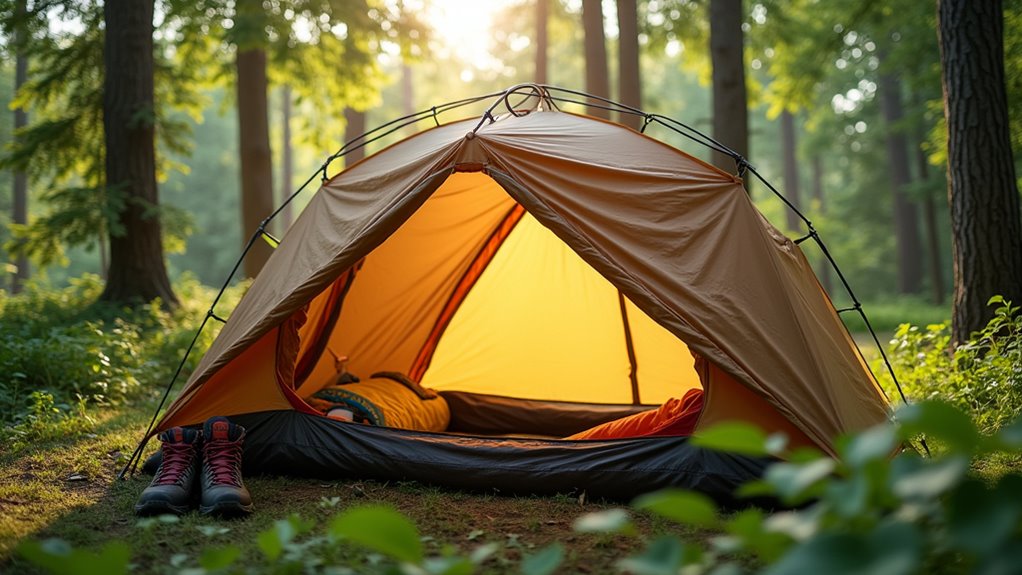
Tent vestibules come in different styles that help keep your camping gear dry and safe. The front vestibule sits right outside the tent door. It holds big items well but can block the entrance.
Side vestibules attach to the tent’s side. They give extra space without crowding the door and add privacy.
Some tents have vestibules built into their structure. These are strong and stable. Others use add-on vestibules. These can be attached or removed depending on the weather.
Vestibule fabric usually matches the tent’s rainfly. This keeps water out during rain. Some vestibules have poles or supports to stand firm in wind.
Shapes and sizes vary. Bigger vestibules give more storage but add weight. Smaller ones pack down easy but hold less gear.
Pick a vestibule that fits your gear and camping style. A good vestibule makes camping easier and more comfortable.
Environmental Protection and Advantages
A tent vestibule is more than just extra space. It protects your gear and keeps your tent dry. It also helps the environment during camping trips.
Here are three important benefits:
- Controls Dampness: Store wet clothes and boots in the vestibule. This keeps moisture away from your sleeping area and lowers mold risk.
- Supports Sustainability: Use vestibule mats made from recycled materials. This reduces waste and helps nature.
- Protects Campsites: The vestibule stops dirt and trash from entering your tent. It keeps the campsite clean and safe.
A good vestibule improves your camping comfort and cares for the planet. Enjoy nature while keeping it healthy for the future. Additionally, proper ground cover can enhance the effectiveness of your vestibule by providing insulation and comfort.
Space Optimization and Camping Comfort
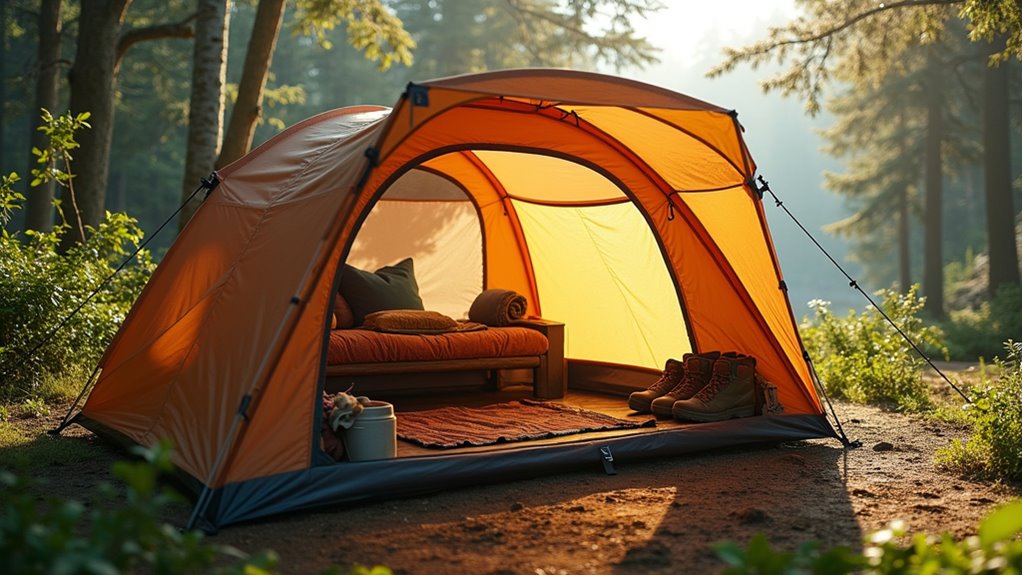
Setting up a tent with a vestibule increases your storage space. This extra room lets you keep wet clothes, boots, and cooking gear outside the sleeping area. Your tent stays clean and tidy.
The vestibule also provides privacy by blocking outside views. It allows fresh air to flow inside. This keeps your camping spot comfortable and enjoyable.
Many campers find tents with vestibules make trips easier and more pleasant.
Increased Storage Capacity
A vestibule on your tent adds extra storage space. It keeps your gear organized and your sleeping area neat. You can store backpacks and big items outside the main tent. This reduces clutter and makes camping easier.
Muddy shoes and wet clothes go in the vestibule too. This keeps the tent clean and dry. You can also use the vestibule for cooking or relaxing when the weather is bad. It makes your camping trip more comfortable and safe.
Enhanced Privacy Options
Camping brings you close to nature and offers peace. Privacy can be a challenge in tents. Vestibules help by blocking views from outside. These areas cover mesh doors and still let air flow.
They work as private changing rooms on busy campsites. Vestibules keep your personal space safe from eyes. They also store gear securely, lowering theft risk.
Wet clothes stay outside the main tent, keeping it clean. Vestibules make camping more private and organized. You relax better with these extra spaces around you.
Practical Considerations for Using a Vestibule
Use the vestibule to store your gear neatly. This keeps the main tent clean and spacious.
Keep fresh air flowing by opening vents or windows. This stops moisture and keeps you safe.
Cook only outside or in well-ventilated areas. Avoid fires and carbon monoxide risks.
The vestibule shields you from wind and rain. It helps keep your gear dry and secure.
Simple steps make camping safer and more comfortable.
Optimal Gear Storage
A vestibule is perfect for storing camping gear. It keeps your gear neat and your sleeping area clean. You find what you need quickly and avoid mess.
Follow these three simple tips for the best gear storage:
- Keep wet gear outside. This stops your sleeping space from getting damp.
- Hang items on hooks or stack them. It saves space and makes cleaning easy.
- Divide the area into zones. Personal gear stays separate from shared gear.
Additionally, ensure that your vestibule is used effectively to prevent water from pooling at the entrance, which can help maintain a dry and organized camping environment.
These tips help you stay organized and keep your camping spot tidy. A tidy vestibule makes your trip easier and more fun.
Ventilation and Weather Protection
A vestibule adds extra space to your tent. It helps keep the air fresh and stops dampness. Wet clothes and shoes stay outside your sleeping area. This keeps your tent dry and comfy. The vestibule blocks rain, snow, and strong wind. It acts like a shield for your tent’s inside. Good airflow lowers moisture and stops mold. Safe cooking is possible here, lowering carbon monoxide risks. Additionally, using reflective materials in the vestibule can help retain heat generated by body warmth. A vestibule also provides a designated spot for storing wet gear which helps maintain the overall comfort inside the tent.
See the benefits in the table:
| Feature | Benefits | Practical Use |
|---|---|---|
| Better Airflow | Cuts down condensation | Store wet gear outside |
| Weather Barrier | Keeps tent dry | Open for fresh air |
| Smoke Vent | Safer cooking area | Reduces gas risk |
A vestibule makes camping easier and more comfortable.
Safety and Cooking Tips
Cooking inside a tent vestibule works well in bad weather. It also has risks. Follow these safety rules to stay safe:
- Ventilation: Open two or more vents to stop carbon monoxide. Fresh air flows in. Moisture stays out.
- Distance: Keep your stove far from tent walls. Use a heat shield or platform to protect fabric.
- Watch Closely: Never leave cooking unattended. Check for gas leaks or sudden flames often.
Stay safe and enjoy your meal!
Frequently Asked Questions
Can I Use a Vestibule for Cooking?
Using a vestibule for cooking is possible but requires care. Always keep vents or windows open to let fresh air in. This stops dangerous gases like carbon monoxide from building up. Use safe cooking tools and keep flammable items away from flames. Stay alert and never leave cooking unattended. These steps help you enjoy cooking outdoors safely.
How Do I Clean My Tent Vestibule?
Cleaning your tent vestibule keeps it strong and ready for use. Use mild soap and warm water to clean dirt and spots. Rub gently to avoid damage. For tough stains, soak the fabric in water for 15-20 minutes. Rinse well to remove all soap. Let the vestibule dry completely before packing it away. A dry vestibule stops mold and bad smells. Regular cleaning helps your tent last longer and stay comfortable.
Are Vestibules Suitable for All Weather Conditions?
Vestibules protect well against rain and snow. They keep your gear dry and safe. In cold weather, they help block wind and cold air. But strong storms or heavy wind can still cause problems. Vestibules work best in mild to moderate weather. They improve comfort and make camping easier. Many campers find them useful for shelter and storage. Overall, vestibules add value but don’t handle every weather type.
Can I Attach a Vestibule to Any Tent?
Not every tent works with a vestibule. It depends on how the tent is made. Some tents have special places to attach a vestibule. Others do not. Check your tent carefully. You might need to change it a little to fit a vestibule. Make sure the vestibule fits well and stays tight. This keeps you dry and safe from wind.
What Materials Are Used for Vestibules?
Vestibules use materials like silnylon, polyurethane-coated nylon, and silpoly. These fabrics are light and keep water out. They help protect your gear from rain and wind. Plus, vestibules give you extra space to store things outside your tent. This makes camping more comfortable and organized.
Conclusion
A tent vestibule acts like a shield from rain, wind, and dirt. It offers extra space outside the main tent area. You can store backpacks, shoes, and wet clothes there. This keeps your sleeping area clean and dry. Vestibules help keep gear organized and easy to reach. They also provide a covered place to cook or change clothes in bad weather. Some tents, like the REI Co-op Half Dome and Big Agnes Copper Spur, have great vestibule designs. These models balance space, protection, and comfort well. Using a vestibule makes camping simpler and more comfortable. Try one for your next outdoor trip and feel the difference.
