
What Is a Glamping Tent? Luxury Camping Explained
This post contains affiliate links. As an Amazon Associate, we earn from qualifying purchases.
A glamping tent is a durable, semi-permanent shelter designed for luxury camping, featuring standing-height interiors (often over 10 feet), robust fabrics like poly-cotton canvas, and amenities such as real beds, furniture, and power systems. It transforms outdoor stays by replacing cramped nylon domes with spacious, comfortable living quarters under weatherproof fabric.
If you’ve ever spent a night shivering on a deflating air mattress, listening to nylon flap in the wind, you know the gap between camping and glamping isn’t just about thread count. It’s about intention. Camping gear is built to be carried. Glamping structures are built to be lived in.
I’m Chloé. I’ve pitched everything from ultralight backpacking tents to massive canvas shelters in a downpour. This isn’t about showroom specs, it’s about what actually works when the weather turns or you’re settling in for a week-long stay. Let’s walk through what makes a glamping tent different, what to look for, and how to avoid the expensive mistakes I’ve made so you don’t have to.
Key Takeaways
- Glamping tents prioritize durable, breathable materials like poly-cotton canvas over lightweight nylon, eliminating condensation and built for seasons of use.
- Standing room is non-negotiable. Peak heights often reach 10-13 feet, turning the interior into a livable space rather than just a sleeping pod.
- The structure is semi-permanent, with rigid steel frames and designs meant to stay pitched for weeks or months, not just a weekend.
- Real furnishings define the experience, think proper platform beds, rugs, side tables, and integrated lighting, not just gear you pack in.
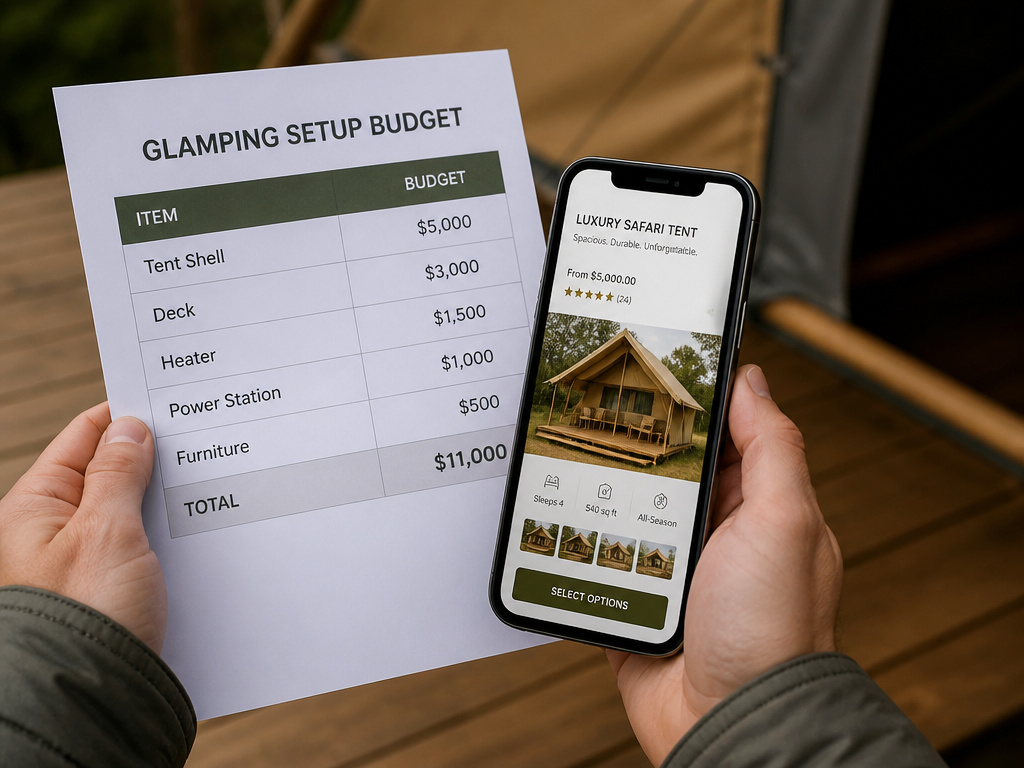
- Total cost is more than the tent shell. A $5,000 safari tent can easily become an $11,000 project when you factor in a deck, power, heating, and proper furniture.
How Does a Glamping Tent Differ From a Regular Camping Tent?
Camping tents are an exercise in compromise: weight versus shelter, packed size versus livable space. Every decision favors portability. A glamping tent flips that script entirely. The design starts with interior comfort and durability, then solves for transport, usually by trailer or truck bed.
The Oxford English Dictionary formally added “glamping” in 2016, defining it as “a form of camping that involves accommodation and facilities more luxurious than those associated with traditional camping.” This official recognition marked its move from niche trend to mainstream travel category.
The fabric tells the story immediately. Forget the rustle of thin nylon. Glamping tents use heavy-duty materials like poly-cotton canvas, prized for its breathability and natural water resistance, or synthetic fabrics with a PVDF membrane for extreme weather and UV protection. This is the difference between a shelter that lasts a few seasons and one that lasts for years.
The frame is another world. Instead of flexible fiberglass poles, you get rigid steel or aluminum tubing that bolts together into a solid structure. This supports those soaring 9- to 13-foot ceilings and creates straight walls, maximizing usable floor space for actual furniture placement.
Finally, the setup reflects its purpose. You can pitch a quality camping tent in 20 minutes. Erecting a glamping tent often takes a full day, a helper, and tools. You’re typically building it on a prepared platform, tensioning a complex guyline system, and sealing seams. It’s designed to stay up for a full season.
TL;DR: Glamping tents swap portable nylon for heavy, breathable canvas, replace bendy poles with rigid metal frames, and are engineered to stay standing for months, not days.
What Are the Most Common Glamping Tent Styles?
Your choice of structure dictates the vibe, stability, and how you’ll use the interior space. Each style has a distinct personality and best-use case.
| Tent Style | Best For | Key Limitation |
|---|---|---|
| Bell Tent | Romantic, classic aesthetics; backyards & festivals. | Limited headroom along the sloped edges. |
| Safari Tent | Spacious, hotel-like comfort; commercial glamping sites. | Heavy and complex setup; requires significant transport. |
| Yurt | Unique circular layout; superior four-season wind/snow resilience. | Round shape can challenge standard furniture placement. |
| Geodesic Dome | Extreme weather stability and vast, open interior space. | Can feel cavernous or echoey without ample soft furnishings. |
| Cabin Tent | Familiar rectangular layout; straightforward family glamping. | Often lacks the distinctive architectural charm of other styles. |
Bell Tents are the iconic entry point. The single central pole supports a circular canvas roof, creating a cozy, historic feel. Just remember, you only have full standing room in the dead center. These pair perfectly with simple wooden platform beds and are a fantastic first step into the world of heavy-duty canvas shelters.
Safari Tents are the luxury standard. With vertical walls and a high, peaked roof on a rigid A-frame, they create a near-rectangular room. You can push a king-sized bed against a wall, a simple luxury you miss in other shapes. This is why they dominate high-end commercial sites; they feel most like a proper room. They are, however, a project to move and set up.
Yurts offer legendary strength. The circular lattice wall and radial roof rafters distribute wind and snow loads incredibly well. The circular floor plan is efficient but demands round rugs and thoughtful furniture placement. For a truly immersive experience, look for models with a canvas tent with stove jack for winter heat.
Geodesic Domes are engineering marvels. The triangle-based frame handles heavy snow and high winds better than almost any other shape, offering a vast interior free of center poles. The trade-off is that the complex geometry can create odd corners and sound echoes, requiring rugs and tapestries to soften the space.
Cabin Tents provide familiar practicality. With straight walls and a simple pitched roof, they maximize usable square footage with a standard bedroom layout. They may lack the drama of a yurt but win for families who want to easily replicate a comfortable indoor setup outdoors, making them a solid choice among family cabin tents.
What Amenities Define a True Glamping Experience?
The shell is just the canvas, literally. The interior fit-out is what transforms a structure into a glamping experience. We’re far beyond a sleeping pad and a cooler.
Proper Bedding is the non-negotiable foundation. This means a real bed frame, often a low-profile wooden platform, with a quality mattress. My hard-learned lesson? Skip the big-box air mattress.
Common mistake: On my third night in a White Duck Outfitters Alpha Bell Tent, I trusted a generic air mattress. The temperature dropped to 40°F, and by 2 AM I was shivering on the cold groundsheet. It had lost half its pressure. I spent the next day with a stiff back and immediately ordered a proper Exped MegaMat 10. Its built-in foam and external pump solved the problem for good.
Furniture and Flooring create the room. You’re looking at wooden side tables, layered rugs for warmth, actual seating like camp chairs or a small sofa, and storage solutions like hanging organizers. This is where your budget for tent camping accessories really comes into play.
Climate Control is what separates a comfortable season-long stay from a miserable one. For heat, a safe, vented wood stove piped through a dedicated stove jack is the gold standard. For cooling in a heatwave, a small portable air conditioner for tents or a high-output battery fan can be a sanity-saver. My go-to power solution for running these items is comparing the Goal Zero Yeti 500X’s clean sine wave for electronics against the Bluetti AC200P’s raw capacity for longer trips.
Lighting and Power should be systemic, not an afterthought. I’m partial to the Luminoodle Color LED rope light, not for its RGB party tricks, but because its low USB power draw lets my EcoFlow River 2 power it for three nights straight. My first setup used dollar-store fairy lights that died in a drizzle. Lesson learned. Good tent lighting options are about reliability, not just ambiance.
How Do I Choose the Right Glamping Tent?
Your decision hinges on three practical things: location, duration, and a brutally honest total budget. Let’s make this concrete.
First, assess your site. Is this for your backyard, a seasonal spot on private land, or a commercial rental business? Backyards often suit canvas bell tents or smaller yurts, they’re visually appealing and manageable. For a commercial site, the durability and room-like feel of a safari tent justifies its higher cost.
Second, consider your timeline. Are you taking it down after each weekend? A lighter bell tent makes sense. Is it going up once for an entire summer? Invest in a heavier, semi-permanent structure. The sturdier build will weather storms without constant re-tensioning, a must for spacious nine-person tents meant for group stays.
Finally, budget with the full picture in mind. The tent shell is often just 30-50% of the total cost. Let’s use a real example.
For a $5,000 Tentsile Stingray Safari Tent, your real outlay will be closer to $11,000. The extras add up fast: a custom 12’x16′ pressure-treated deck kit ($1,800), a Mr. Heater Little Buddy propane heater and a Dyson fan for climate ($350), a Jackery Explorer 1000 power station ($1,000), and a basic furnishing kit from a retailer like Glamping Hub (bed, rug, side tables: $2,500). The shell is just the start.
History is nice, but you’re probably wondering how all this translates to a tent you can actually live in. Your decision, whether you’re listening to rain patter on canvas or feeling a cool breeze through a mesh screen, hinges on these practicalities. Start with a solid floor and frame, then add the luxury amenities over time.
Frequently Asked Questions
What’s the main difference between camping and glamping?
Camping prioritizes minimalism and portability, often using gear you carry. Glamping prioritizes comfort and space, bringing hotel-like amenities (real beds, furniture, electricity) into a durable, semi-permanent shelter. You camp to be outdoors; you glamp to be outdoors without sacrificing comfort.
How much does a glamping tent cost?
basic, high-quality 16-foot bell tent kit starts around $1,500. Mid-range safari tents or large yurts typically run from $5,000 to $12,000. Fully equipped, commercial-grade tents with decks and installed utilities can exceed $20,000. Remember to budget for the platform, power, furniture, and climate control on top of the tent shell.
Can you use a glamping tent in winter?
Yes, but it requires specific preparation. You need a four-season canvas tent with a certified stove jack for a safe, vented wood stove. The frame must be rated for snow load, and you should use insulating floor mats or a raised platform. Without a dedicated heating source, it’s strictly a three-season shelter.
Are glamping tents waterproof?
Quality glamping tents are made from inherently waterproof fabrics like poly-cotton canvas or PVDF-coated polyester. However, performance depends on maintaining proper fabric tension and sealing all seams. A loosely pitched tent can pool water; a tightly pitched one will shed it. Always re-tension the fabric after a heavy rain.
Do glamping tents have bathrooms?
Most do not have built-in plumbing. Bathrooms are typically separate, private structures nearby, or are shared facilities at a glamping resort. The Wikipedia entry on glamping notes that in some rustic backcountry setups, the toilet may be located outside the main shelter. Ultra-luxury models may include a partitioned section with a portable toilet, but full wet bathrooms are rare due to water and waste management complexity.
Before You Go
A glamping tent is an investment in outdoor comfort, not just a piece of gear. It’s a commitment to creating a space where you can stand up straight, sleep soundly in a real bed, and watch weather roll through without a drop of rain touching you. The payoff is a private retreat that feels like a second living room under the stars.
Start with the fundamentals: poly-cotton canvas for breathability, PVDF for weather armor, and a frame that matches your site’s demands. Choose a style that fits your vision, from the romantic slope of a bell tent to the practical space of a tall cabin tent. And please, budget for the whole system, platform, power, and proper furnishings, from the outset.
Done right, it transforms your relationship with the outdoors. It’s not about enduring nature; it’s about enjoying it, deeply and comfortably, for as long as you like. Now, go find your perfect shelter.
