
What Makes a Tent 4 Season? Specs, Myths & Real Use
This post contains affiliate links. As an Amazon Associate, we earn from qualifying purchases.
A true four-season tent is engineered to survive, not just endure. It’s defined by three measurable specs: a minimum 40–70D fabric denier for abrasion resistance, a pole system rated for sustained 30 m/s (67.5 mph) winds per the DAC Wind Lab standard, and 6–12+ reinforced guy-out points for secure anchoring. This shelter isn’t warmer; it’s structurally stronger to handle snow load, high wind, and abrasive conditions that would destroy a three-season tent.
I’ve pitched shelters in everything from a Scottish gale to a silent, snow-heavy forest. The biggest mistake I see? Someone hauling a 10-pound expedition dome on a trip that only needed a robust three-season tent and a better sleep system. That extra weight is misery for no reward.
This isn’t about gear elitism. It’s about matching your shelter to the actual conditions you’ll face, so you can pack smarter, hike happier, and sleep soundly. Let’s strip away the marketing and look at what actually makes a tent worthy of the “four-season” label.
Key Takeaways
- The DAC Wind Lab standard is the benchmark: a proper expedition tent must withstand sustained 30 m/s winds. Look for this spec.
- Fabric denier is non-negotiable. Four-season tents use 40–70D nylon; three-season tents often use 15–20D. The difference in durability is massive.
- Apply the “3-Condition Rule” before buying: you only need a four-season tent if your trip involves two or more of heavy snow, sustained high winds (>30 mph), or exposed above-treeline terrain.
- Single-wall designs like some from MSR or Black Diamond trade breathability for ultralight weight and a tiny footprint, ideal for alpine climbs or snow ledges.
- A four-season tent is not a warmer tent. It has less mesh, which can trap humid air and lead to more condensation. Real warmth comes from your sleep pad and bag.
What Actually Defines a Four-Season Tent?
Forget the calendar. The label “four-season” is a misnomer. You don’t buy this tent for a breezy autumn weekend. You buy it because the forecast includes conditions that would turn a standard shelter into a snapped-pole disaster. It’s a storm-season or expedition-season tent, built to a measurable engineering standard.
According to the DAC Wind Lab standard, a proper expedition dome tent must withstand sustained winds of 30 m/s (108 km/h or 67.5 mph). This benchmark dictates pole alloy, seam construction, and the number of reinforced guy-out points.
The strength comes from three integrated elements: thicker, abrasion-resistant fabrics; a robust pole frame designed to share stress; and enough secure anchor points to lash the shelter down like a ship in a hurricane. It’s the combination that counts. A thick fabric on a weak frame fails. A strong frame with inadequate guylines fails.
TL;DR: Ignore marketing claims. Look for the DAC Wind Lab 30 m/s rating, 40D+ fabric denier, and 6+ reinforced guy-out points. If the spec sheet is silent on these, it’s not a true four-season shelter.
Decoding the Specs: Where Marketing Meets Reality
You can’t trust a tag that says “four-season capable.” You must read the spec sheet. Here’s what to look for, and why it matters.
Fabric Denier: Your First Line of Defense
Denier (D) measures the thickness of the threads in the fabric. A higher number means thicker, heavier, and more durable material. This is your first clue.
| Tent Type | Typical Fly/Body Denier | Best Use Case | What Happens If It’s Too Thin |
|---|---|---|---|
| Ultralight 3-Season | 10D – 20D | Summer backpacking, fair weather | A stray branch or abrasive grit can puncture it. Fabric degrades quickly under intense UV. |
| Standard 3-Season | 20D – 30D | Most spring/fall camping | Fabric can stretch and flap violently in sustained 25+ mph winds, stressing seams and poles. |
| True Four-Season | 40D – 70D | Alpine, winter, high-wind environments | Performs as intended. In milder conditions, it’s simply overkill and a burden to carry. |
Run your thumb over a 70D fly, it feels like a stiff canvas. A 15D fabric whispers like a dress shirt. The North Face Summit Series Mountain 25 tent, for example, uses a 70D ripstop nylon with welded reinforcements. That fabric won’t flinch when spindrift-loaded ice crystals sandblast it for days.
Pole Architecture: The Skeleton of the Storm
Poles do more than hold shape; they distribute stress. Expedition tents use poles with a larger diameter (often 9.5mm+) and a stronger alloy. DAC Featherlite NSL poles, made from 7075 aluminum alloy, are a gold standard, they’re designed to bend under load rather than snap.
Common mistake: Assuming all “aluminum” poles are equal. Cheaper three-season tents often use 7001-T6 alloy, which can fatigue and fail under the repeated, multidirectional loading of a multiday storm. The alloy grade matters as much as the diameter.
Geometry is equally critical. A geodesic dome (like The North Face Summit Series 2-meter dome) or a tunnel design creates multiple crossing points, forming a tensegrity network that shares wind load across the entire frame. A simple two-pole dome concentrates stress on a few weak hinges.
Guy-Out Points: Your Leverage Against the Wind
This is the most overlooked yet critical spec. A three-season tent might have four guy points. A true four-season tent has 6 to 12, and they’re reinforced with heavier webbing and bar-tacked stitching.
Each point is a lever. The more you have, the more you can triangulate tension across the rainfly, stabilizing the entire structure. In a real storm, you’ll use every single one, anchoring to snow stakes, deadmen, or rocks. The Australian Antarctic Program notes that integrated snow flaps, another feature on proper expedition shelters, help tents withstand 100 km/h winds by preventing air from tunneling underneath.
I learned this lesson on a trip to the Cairngorms. Forecasted 20 mph winds turned into 40 mph gusts by midnight. My three-season tent’s fly slapped the poles with a sound like gunshots. I spent two sleepless hours building a snow wall while my friend in a properly guyed, four-season shelter slept through it. The right gear means a book in your hands, not a shovel.
Do You Even Need a Four-Season Tent? The 3-Condition Rule
Specs are great on paper. But when do you actually need to suffer the weight? I use a simple filter I call the 3-Condition Rule.
A four-season tent becomes a safety necessity only if your trip involves two or more of these three conditions:
- Heavy Snow Accumulation: More than a few inches forecast overnight, creating a real load.
- Sustained High Winds: Forecasts calling for consistent winds over 30 mph (48 kph).
- Exposed, Above-Treeline Terrain: No natural windbreak like trees or rock walls.
If only one condition applies, you can often adapt. Below treeline in light snow? A robust three-season tent with a steep pitch and snow stakes works. A calm, exposed ridge? Maybe. But combine heavy snow and high wind? That’s four-season territory. Combine exposed terrain and high wind? Same.
Buying a four-season tent for a single condition is a punishing mistake. You carry 2–3 extra pounds for no benefit and sleep in a condensation factory. I’ve watched people haul a beast like the Hilleberg Nammatj on a deep-woods trip where the snow was light. They were miserable under the weight. I was cozy in a fortified three-season shelter.
Single-Wall Tents: The Ultralight Alpine Compromise
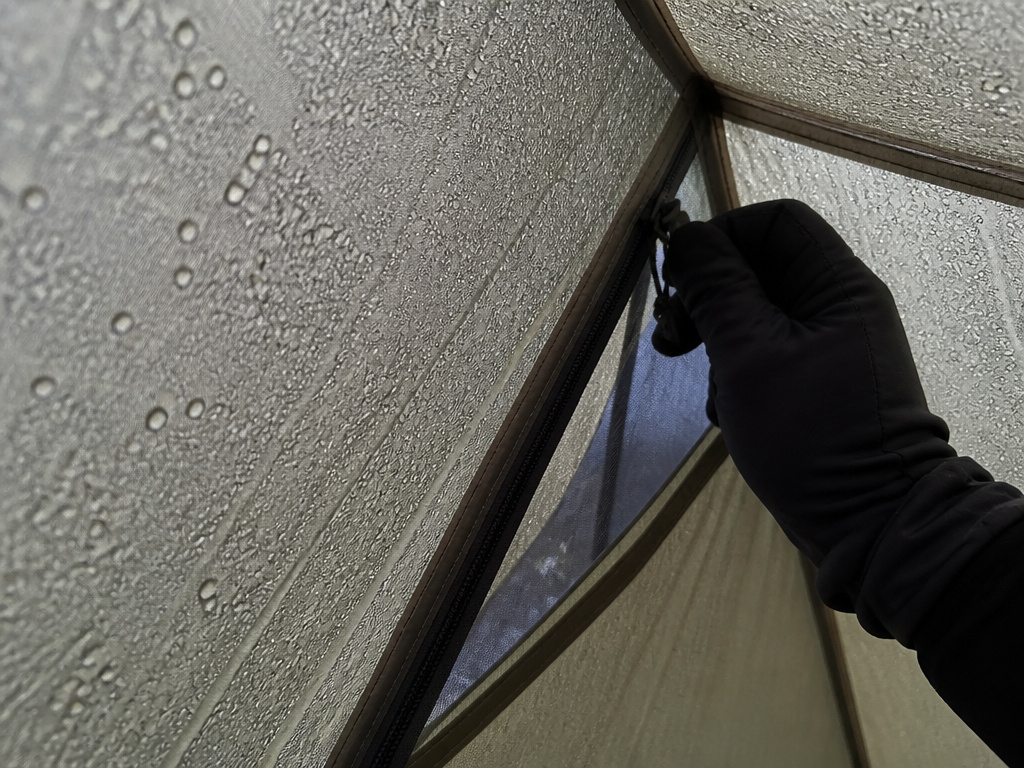
Condensation city. That’s the trade-off. Single-wall tents shed the inner mesh body, the rainfly is the tent. This saves crucial weight and pack size for alpine climbs or ski traverses where every ounce counts.
They’re built for extremes, like a hacked-out snow ledge on a mountain face. Brands like MSR design these specifically for expeditions where the penalty of a double-wall is measured in calories burned. They are the purest form of a storm-worthy shelter, sacrificing comfort for absolute, survival-grade performance.
The trade-off is immediate and constant. Without a separate mesh body, vapor from your breath condenses directly on the cold fly fabric. You’ll wake up to a light drizzle inside if you don’t crack every vent religiously. They also offer less livable space for their footprint.
Expert Tip: If you’re considering a single-wall for high-altitude efficiency, practice pitching it in your backyard in damp, cold conditions first. Managing its microclimate is a skill. A poorly vented single-wall in humid, near-freezing weather will rain on you by morning.
Busting the Biggest Myth: Four-Season Tents Are Not Warmer
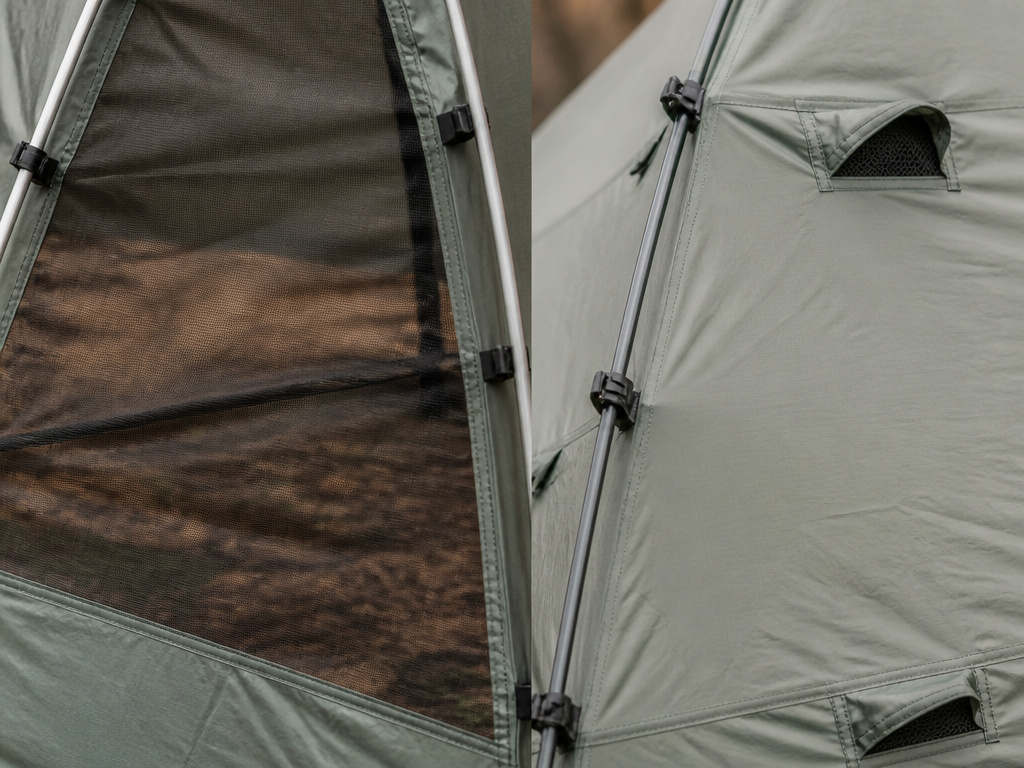
Let’s be clear: a four-season tent does not have a heater. It has less mesh. Less mesh means less airflow. Less airflow means the warm, moist air from your body stays inside longer.
That sounds warmer, but physics disagrees. That moisture condenses on the cold fly fabric and drips back down, or soaks into your down sleeping bag, destroying its loft and insulation. A damp bag in a cold tent is a dangerous situation.
Real warmth in winter camping comes from underneath you, a high R-value sleeping pad, and around you, a properly rated sleeping bag. The tent’s job is to block wind and shed snow, creating a stable, dry microclimate. A heated tent setup with a stove is a different category entirely, adding an active heat source.
I learned this the hard way on an early-season trip to the Lake District. I brought a burly expedition tent but skimped on my sleeping bag rating. I spent the night shivering, my breath frosting the inner walls, while a friend in a robust three-season tent with a better bag slept soundly. Never again.
Fortifying a Three-Season Tent for Winter
Most winter campers below treeline do not need a four-season tent. They need winter camping skills. Here’s how to make a three-season shelter storm-ready.
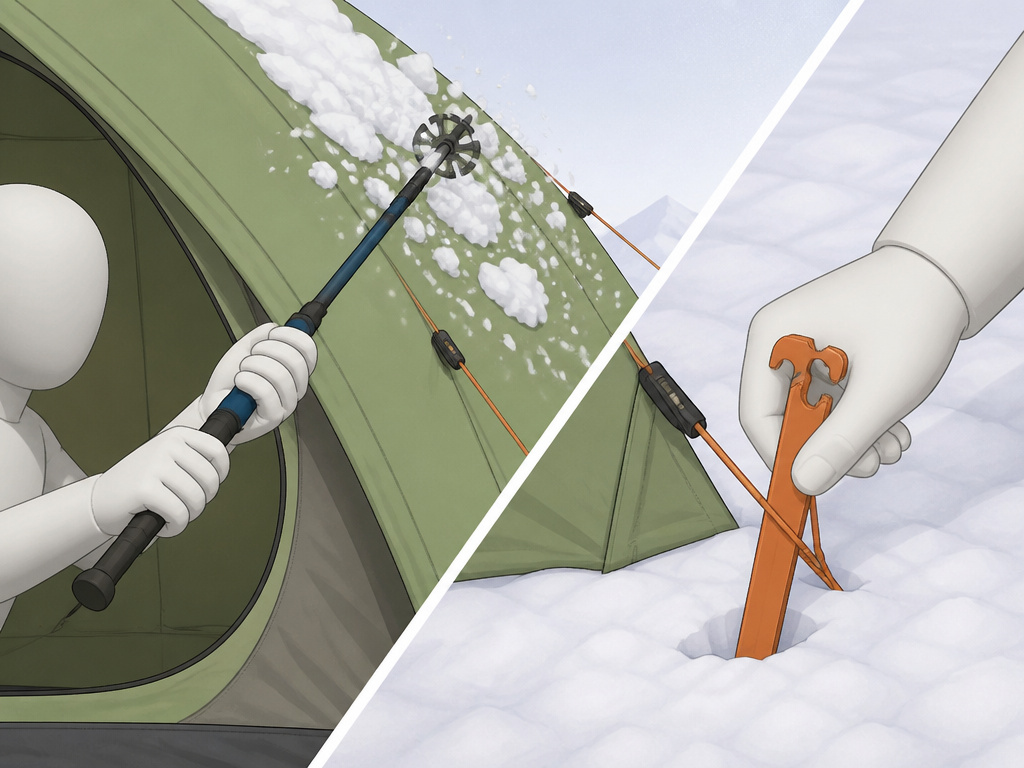
- Choose a Steep-Pitched Model. A sharply angled rainfly sheds snow. If accumulation happens, you can knock it off from the inside with a trekking pole. Simple and effective.
- Swap to Winter Anchors. Ditch the standard stakes. Use snow stakes (wide plates) or create deadman anchors using stuff sacks filled with snow and buried. Regular stakes pull out of frozen ground instantly.
- Build a Snow Wall. On the windward side, pile snow 2–3 feet high. This acts as a windbreak, dramatically reducing strain on the tent structure. It’s free, effective, and a good way to stay warm.
- Deploy Every Guy Line. Pitch as if a storm is coming, even if it’s calm. The consequence of skipping this? A sudden midnight gust can create a sail effect, causing the fly to violently slap the poles or, worse, generating enough leverage to snap a pole. I’ve seen it happen.
- Aggressively Manage Condensation. Crack the vents, even if it’s cold outside. A slightly cooler, dry tent is infinitely better than a warm, wet one where your gear gets damp.
A well-set-up three-season tent is far more versatile. It’s your go-to for three seasons and, with these skills, a solid fourth-season option. Investing in a true four-season tent is for the other kind of trip, where the weather is the main event and failure isn’t an option.
Frequently Asked Questions
Can you use a four-season tent in summer?
You can, but you’ll likely regret it. They are heavier, hotter, and poorly ventilated for calm summer nights. Condensation will be severe due to the minimal mesh, and the weight penalty is unnecessary. Save it for the storms it was built for.
What’s the lightest four-season tent?
True expedition-grade shelters start around 5 pounds for a one-person model. Some minimalist, single-wall alpine designs can dip under 4 pounds, but they sacrifice space and comfort. For a balance, look at ultralight 2-person tents marketed for four-season use, but always verify the denier (40D+) and pole specs first.
Are tunnel tents better than dome tents for winter?
Tunnel tents, when pitched correctly with the narrow end into the wind, are incredibly aerodynamic and strong. They shed snow well and often offer more livable space per pound. Domes are more freestanding and handle multidirectional wind shifts better. For extreme, predictable wind, a tunnel is often the pro’s choice.
Do I need a four-season tent for heavy rain?
Not necessarily. Heavy rain defense is about hydrostatic head (HH) rating, the water pressure the fabric can withstand. A high-quality three-season tent with a 3000mm+ HH rating and fully taped seams will handle torrential downpours. The four-season tent’s advantage in rain is its stronger structure to resist the wind that often accompanies the rain.
What about canvas tents?
Canvas is a different category, heavy, incredibly durable, and breathable, which reduces condensation. Traditional canvas tent options are for base camps or car camping. Modern canvas tents with stove jacks are popular for hot tenting. They are four-season by material, but their weight puts them in a separate class from backpacking shelters.
Before You Go
A four-season tent isn’t a warmer tent; it’s a stronger one. It’s defined by its ability to meet a measurable standard: 30 m/s winds, 40D+ fabric, and multiple reinforced anchor points. It’s a specialized tool for severe, combined conditions.
Before you invest, apply the 3-Condition Rule. If your typical trips don’t hit at least two of the three thresholds, put that money into a better sleeping pad and bag instead. Learn to fortify a three-season tent against the cold. Your back will thank you on the trail, and you’ll sleep warmer at camp.
But for those moments when you’re facing an exposed ridge, deep snow, and howling wind, when the weather is the main event, nothing else will do. Just know what you’re signing up for: more weight, less breathability, and the profound confidence that your shelter won’t be the reason your trip ends early.
