
Where to Find a Cheap Tent That Actually Works
This post contains affiliate links. As an Amazon Associate, we earn from qualifying purchases.
You can find a cheap tent at big-box retailers, online marketplaces, and outdoor store sales. The real skill is knowing which compromises, like fiberglass poles or low waterproof ratings, you can live with for your specific trip, be it a festival, car camp, or backpacking adventure.
I learned this the hard way. My first “bargain” was a no-name dome from a discount store. It lasted one windy night in the Peak District before a fiberglass pole snapped with a sound like a gunshot, and the 800mm fly wetted through by 3 AM. I spent the rest of that trip shivering in my car. That experience taught me that “cheap” isn’t a single price point, it’s a strategy.
This isn’t about finding the absolute lowest number. It’s about navigating the landscape of budget shelters to find one that won’t leave you stranded. Let’s talk about where to look and, more importantly, what to look for once you get there.
Key Takeaways
- “Cheap” is relative to use. A $30 single-skin pop-up is fine for a sunny festival but a disaster for a rainy hiking trip. Your trip type is the first filter.
- Fiberglass poles are the most common point of failure. They become brittle with UV exposure and can shatter in wind. Prioritizing aluminum poles, even in a used tent, is the single biggest upgrade for durability.
- The deepest discounts are secondhand, but you need a system. Filter for “local pickup” and “newly listed” on Facebook Marketplace. The best deals are from people who just want an unused tent out of their garage.
- Big-box specs hide the compromises. A tent labeled “weather-resistant” often lacks a published hydrostatic head (HH) rating, which means it’s likely under 1000mm, fine for a brief shower, not a night of rain.
- Sales at specialty retailers are your best bet for new, reliable budget gear. End-of-season clearances at stores like Go Outdoors or REI can slash prices on last year’s models from reputable brands like Vango or Coleman.
Where Should I Actually Look for a Cheap Tent?
Your location is your first filter. If you’re in a city, big-box retailers and online marketplaces are your quickest options. Near outdoor hubs, checking local gear swap Facebook groups or visiting an outlet can yield surprising finds. The trade-offs are real, and they’re summarized best in a quick table.
| Retailer Type | Best For | Typical Find & Example | The Real Trade-Off |
|---|---|---|---|
| Big-Box Stores (Walmart, Home Depot) | Immediate need, car camping, backyard use | New, in-stock instant tents. (e.g., the Instant Pop-up 7.7 ft. x 7.7 ft. Camping Tent with 210D Oxford fabric). | Convenience over longevity. Materials are often heavier (like powder-coated steel frames) and less technical. |
| Specialty Outdoor Retailers (Go Outdoors, REI, Decathlon) | Discounted quality from known brands | Past-season models from brands like Coleman or Alps Mountaineering on sale. You might find a budget 2-person tent with better features. | You pay a bit more than the absolute cheapest, but for a significant jump in reliable design and materials. |
| Online Marketplaces (Facebook Marketplace, eBay) | The deepest discounts on lightly used gear | Secondhand gems from upgraders. A used Kelty Late Start or Vango Banshee for 50-70% off retail. | Requires time, vetting skill, and willingness for local pickup. You’re buying “as seen,” with no warranty. |
| Discount/General Stores (Home Bargains, TJ Maxx) | Disposable festival shelters, kids’ play tents | Ultra-basic single-skin pop-ups. They are sun and privacy shelters, not weatherproof camping tents. | The price is low because weather protection and durability are virtually non-existent. |
| Online-Only Brands (Naturehike on Amazon) | New, value-focused technical gear | Direct-to-consumer affordable backpacking brands that often use lighter materials like silicone-coated nylon to compete on price. | You forfeit the ability to see and touch the product before buying, relying on reviews and return policies. |
For the budget-conscious buyer, the most reliable path to a quality shelter is the secondhand market for brand-name models or the sale rack at a dedicated outdoor retailer. Big-box options provide a physical product immediately, but often at the cost of long-term durability and weather readiness.
My best finds have always been secondhand. The trick is moving faster than everyone else. I set a saved search for “backpacking tent” on Facebook Marketplace with a 20-mile radius and checked it with my morning coffee. That’s how I snagged a barely-used Naturehike Cloud-Up 2 for £60. The seller had upgraded before their first trip and just wanted it gone.
TL;DR: For instant gratification, go to a big-box store. For reliable quality on a budget, watch for sales at outdoor shops. For the best value, master the secondhand hunt on local marketplaces.
What Am I Really Giving Up with a Budget Tent?
A cheap tent is a product of calculated engineering trade-offs, not magic. Manufacturers save money in specific, predictable areas. Knowing these lets you decide which compromises are acceptable for your needs.
The most critical compromise is the pole system. Tents under $100 almost universally use fiberglass poles. They’re heavier than aluminum and have a fatal flaw: they don’t bend, they shatter. The resin that binds the glass fibers degrades with UV exposure. After a season of sun, a moderate gust can cause a clean, brittle snap. Aluminum poles, found on slightly pricier or used brand-name tents, will bend under stress and can often be field-repaired.
The second major cut is in waterproofing. This is measured by Hydrostatic Head (HH), the millimeters of water pressure the fabric can withstand before leaking. Many budget tents either omit this spec or have a very low rating.
Common mistake: Assuming a tent labeled “waterproof” is ready for a storm. A tent with a 500-800mm HH rating (common in discount models) will wet through in steady rain within 30 minutes, leaving you and your gear damp for the rest of your trip.
To make an informed choice, you need to decode the materials. Use this quick reference to understand what you’re getting.
| Component | Budget Typical Spec | What It Means for You | Better Budget Find |
|---|---|---|---|
| Poles | Fiberglass | Heavier, prone to brittle failure in wind/cold. | 7001-series Aluminum (lighter, more resilient). |
| Rainfly Fabric | 68-75D Polyester, 800-1500mm HH | Adequate for light rain; may wet through in prolonged downpours. | 20D Silicone-coated Nylon, 2000mm+ HH (lighter, more waterproof). |
| Floor Fabric | 150D Polyester | Durable against abrasion but heavier. | 30D Silicone-coated Nylon (lighter, still strong). |
| Construction | Single-wall or basic double-wall | Single-wall traps condensation; basic double-wall is standard. | Full-coverage rainfly with generous vestibules for gear storage. |
Finally, consider space. Manufacturer “person” ratings are optimistic. A 4-person tent, like the Wakeman 4-Person Camping Tent, realistically fits two adults with gear or a family with two young children. Always look at the floor dimensions in square feet/meters, not the person count.
TL;DR: Cheap usually means heavier, less durable fiberglass poles and lower waterproof ratings. Your goal is to find a tent that compromises least on the elements that matter for your trip.
How Do I Safely Navigate the Secondhand Market?
This is where the real deals live, but it requires a shift from shopper to detective. The blurry photos and vague descriptions are a filter, they scare off the less determined, leaving the gems for you.
Your first rule is local pickup only. Shipping a tent is expensive and prevents you from inspecting it. When you message a seller, your script is simple: “Is it possible to see the tent pitched? Any issues with poles, zippers, or leaks?” A hesitant answer is a red flag.
On eBay, the “Completed Listings” filter is your secret weapon. It shows what items actually sold for, not just what sellers are asking. You’ll see a used North Face Stormbreak 2 go for $75 one day and $120 the next. The lower price is often an auction ending at an odd hour or a “Buy It Now” from a motivated seller.
I once drove an hour to see a “like-new” tent. The seller couldn’t find the pole bag. I walked away. That missing bag meant a $40 replacement cost, turning a $50 deal into a $90 problem before I’d even slept in it. Always verify all parts are present.
Follow this numbered checklist when you go to inspect. Skipping a step can cost you.
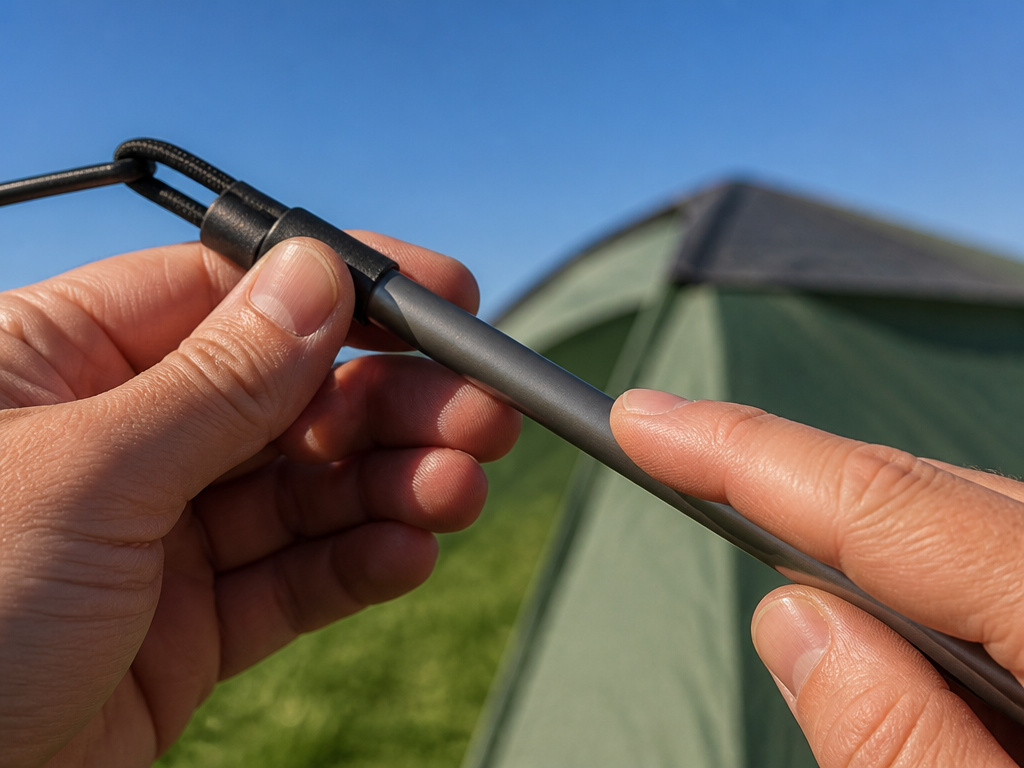
- Inspect the Poles. Extend each section fully. Run your fingers along them, especially near the elastic cord joints, feeling for hairline cracks or sharp bends. A cracked pole section means a costly replacement.
- Check the Seams & Fabric. Inside the rainfly, look for peeling seam tape. Hold the fly up to the light to spot pinholes or thin, worn patches. Check the tent floor for abrasion or ground-in dirt that weakens the fabric.
- Test the Zippers. Zip and unzip every door and vent. Sticky or misaligned zippers are a nightmare in the dark and often difficult to repair properly.
- Assemble the Full Kit. Ensure all stakes, guylines, and the pole bag are there. A missing stuff sack is annoying; missing critical tensioners makes the tent unusable in wind.
TL;DR: Filter for local pickup, use “completed listings” to gauge value, inspect meticulously with a physical checklist, and be prepared to walk away if anything feels off.
What Are the Best New Tents on a Tight Budget?
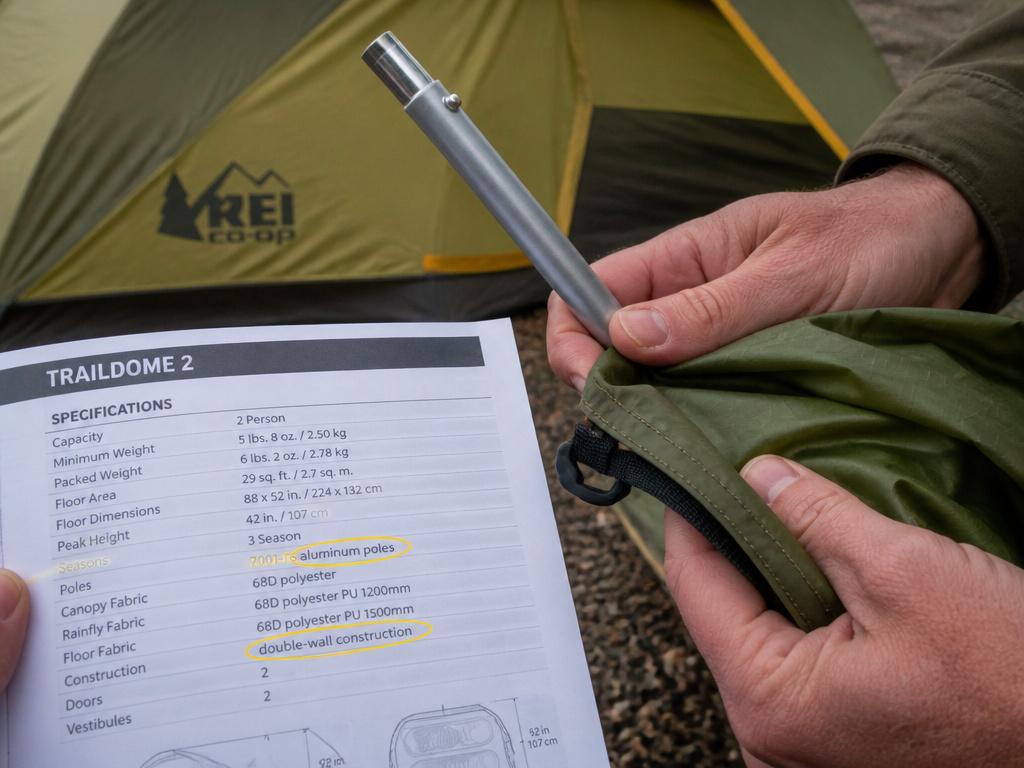
If buying used isn’t for you, you can still find decent new tents without breaking the bank. The game here is becoming a spec-sheet detective, because marketing copy will hide the weaknesses.
Start with the construction. Ignore “weather-resistant” and look for “double-wall” or “separate rainfly.” A model like the Costway 4/5/6-Person Pop-up Camping Tent mentions a rainfly and mesh windows, indicating a double-wall design that vastly reduces condensation compared to a single-skin tent.
Next, decode the materials. In the product details, “fiberglass poles” are standard. “Aluminum poles” are a sign of a better-built tent, even at a budget price. For fabric, a higher denier (D) like 210D (found on the Instant Pop-up 7.7 ft. x 7.7 ft. Camping Tent) is heavier but more durable for car camping, while a lower denier is lighter for backpacking.
Your timing matters immensely. Outdoor retailers run deep seasonal sales to clear inventory.
* REI’s Anniversary Sale (May)
* Go Outdoors’ January Clearance
* End-of-summer sales at Decathlon and other chains
This is when you can find previous-season colors of reputable tents under $200 that perform identically to the new, full-price models. It’s the most reliable way to get a quality tent like a Coleman Sundome or an Alps Mountaineering Lynx for a true budget price.
Common mistake: Buying a tent based solely on “person” capacity. A “6-person” tent like the Outsunny 5-Person to 6-Person Car Tent is designed for sleeping bags laid side-by-side. For actual comfort with air beds or gear, mentally subtract two people from the rating.
Don’t overlook online-only brands. Companies like Naturehike sell directly to consumers, cutting out the retail middleman. You can often find value-oriented tent models with features like silicone-coated nylon rainflies and aluminum poles at prices that compete with big-box fiberglass specials. You trade the ability to see it in person for these specs.
TL;DR: Scour spec sheets for “aluminum poles” and “double-wall” construction. Plan your purchase around major outdoor retailer sales, and consider online-only brands for higher-spec materials at a direct-to-consumer price.
How Do I Match the Tent to My Specific Trip?

The perfect cheap tent for a weekend at a dry festival is a terrible, possibly dangerous, choice for a backpacking trip. Your intended use is the ultimate decider.
For Festivals or Backyard Fun:
Priority is price and simplicity. A basic pop-up or single-skin tent is sufficient. Look for the cheapest option that provides privacy and shade. A pop-up beach tent from a discount store is literally designed for this. Weight and stormworthiness don’t matter here.
For Car Camping:
Weight is less critical, but space and weather protection are paramount. You want room to stand up, change, and store gear. Prioritize tents with a high peak height and multiple doors. Models like the Outsunny 5-6 person or larger affordable family tents are built for this. Here, a heavier fabric like 210D Oxford is a benefit, not a drawback.
For Backpacking:
Every ounce counts. This is where “cheap” is most challenging, as lightweight materials are expensive. Your best strategy is the secondhand market for a 2-3 year old model from a brand like Kelty, REI, or Alps Mountaineering. Focus relentlessly on finding cheap backpacking tents with aluminum poles. The used market is full of perfectly capable shelters that someone upgraded from.
Before you finalize any purchase, do a “gear sprawl” in your living room. Lay out your sleeping bag, pad, pack, and other budget camping gear. A tent is just one piece of the puzzle. Ensure the packed size of your chosen shelter fits in your car trunk or backpack alongside everything else you need.
TL;DR: Let the trip dictate the tent. Festivals need a simple shelter; car camping needs space; backpacking demands lightweight materials, best found secondhand.
Frequently Asked Questions
What is the absolute cheapest tent I can get?
You can find single-skin pop-up tents at stores like Walmart or Home Bargains for under $30. They are designed for fair-weather festivals or as a sun shelter at the beach. They offer almost no protection from wind or rain and are not suitable for actual camping.
How can I tell if a cheap tent is actually waterproof?
You must find the Hydrostatic Head (HH) rating in the product specifications. Anything under 1000mm is only water-resistant for a light drizzle. For reliable rain protection, look for a rating of 1500mm or higher. If no HH rating is listed, assume it’s very low and not suitable for wet weather.
Is a used brand-name tent better than a new cheap tent?
Almost always, yes. A $75 used tent from a reputable brand like Vango or Kelty will typically have better materials (like aluminum poles) and construction than a $75 new tent from an unknown brand. You trade the “new” smell for significantly better durability and weather performance, provided you inspect it carefully first.
What’s the one thing I should never compromise on?
Do not compromise on having a double-wall design (a separate inner tent and rainfly) if you plan to camp in cool or humid conditions. Single-wall tents trap condensation from your breath, guaranteeing a damp interior regardless of the weather outside.
Can I improve a cheap tent’s waterproofing?
You can use a spray-on product like Nikwax Tent & Gear Solarproof to rejuvenate the water-repellent coating on a rainfly. However, this is a maintenance step for a tent designed to be waterproof. It cannot fix fundamental flaws like poor seam sealing, inadequate fabric ratings, or single-wall construction.
The Bottom Line
Finding a reliable cheap tent is less about stumbling upon a sale and more about informed hunting. The big-box store offers immediate convenience, but the real value, where a modest budget secures a trustworthy shelter, lies in the secondhand listings of local marketplaces and the seasonal clearance racks of specialty outdoor shops.
Your compass in this hunt should be your specific needs. Let your trip type, festival, car camp, or trail, dictate where you can afford to compromise. Prioritize a double-wall design and aluminum poles wherever possible; these are the features that separate a shelter from a soggy disappointment. With a bit of patience and this roadmap, your perfect low-cost shelter is out there, waiting to be your home under the stars.
