
How To Stake A Tent
This post contains affiliate links. As an Amazon Associate, we earn from qualifying purchases.
To stake a tent effectively, choose a flat, dry site away from water and drive steel or aluminum stakes at a 45° angle, leaving some length above ground for grip. Secure your tent with strong guylines tied using reliable knots like the bowline. Further details on adjusting staking techniques for different soil types and maintaining tension for stability will be covered later in this article.
Essential Facts in 30 Seconds
- Choose a flat, dry site away from water pooling areas.
- Insert stakes straight down in hard soil; angle them steeply in soft soil.
- Place stakes perpendicular to the tent, leaving six inches above ground.
- Use strong, reflective guylines with secure knots like bowline or two half hitches.
- Regularly tighten guylines to maintain tension and prevent leaks.
Selecting the Right Site for Your Tent
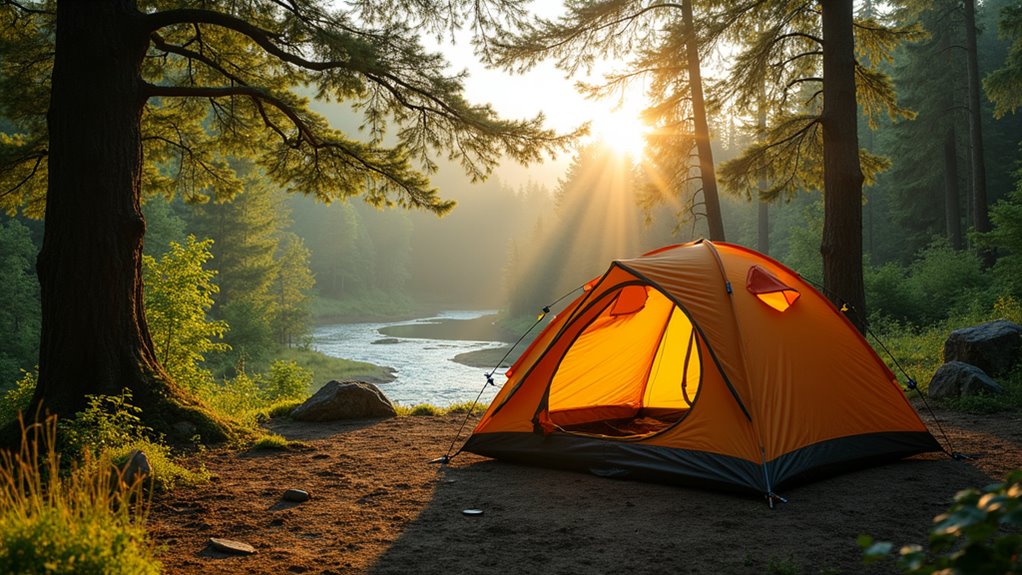
Picking the right spot for your tent makes camping better and safer.
Camp at places that already show signs of use. Stay at least 200 feet away from lakes, rivers, or streams. This keeps water clean and plants safe.
Find a place shielded by trees or hills to block strong winds. Avoid low areas where water pools after rain. These spots get cold and wet, which can spoil your gear. Additionally, look for flat, dry areas to ensure a comfortable sleeping surface.
Look for firm, dry soil. Soft or loose ground can cause your tent to shift or fall. Stick to areas without many plants to protect nature.
Always check local rules before setting up camp. Following these tips helps you enjoy nature and keep it beautiful. Additionally, it’s important to choose established campgrounds for improved safety and reduced risks.
Proper Stake Placement and Angling
Proper stake placement and angling keep your tent stable and safe. Place stakes at a right angle or slightly tilted toward the tent. This means about 75 to 90 degrees to the ground.
In soft soil, push stakes steeply into the ground. This helps hold the tent better. In hard soil, drive stakes straight down. This makes stakes stronger by pushing deeper. Using stronger pegs can also contribute to effective setup in challenging terrains.
Always leave six inches of stake above the ground. This gives a good grip for tent ropes. Add rocks or use two stakes if the soil is loose. Deep stakes hold better in wind and tension. Shallow stakes can pull out easily.
Correct angles and depth make your tent steady and safe. Additionally, using long, lightweight stakes is advisable for soft ground to enhance stability. Enjoy your camping without worry!
Setting Up and Tensioning Guylines
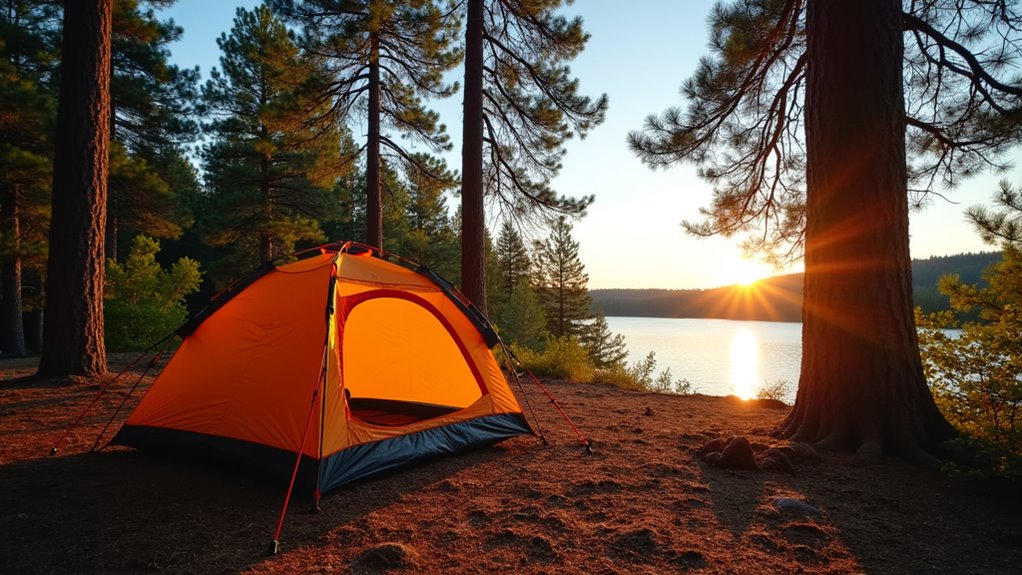
Setting up and tightening guylines keeps your tent stable and safe. Attach guylines to the loops on your tent. Use strong, light, reflective cord to see guylines in the dark. Replace short or weak guylines with better ones. Tensioning the guylines is crucial for tent stability during windy conditions. Tie knots like bowline for a fixed loop or two half hitches to adjust tension. Pull knots tight to hold under pressure. Place stakes at a right angle to the tent. Push stakes into the ground at a 45° angle.
Keep guylines straight and tight. Regularly check tension as needed. This stops your tent from moving and keeps rainfly away from the tent body. It helps prevent leaks during storms.
Tools and Techniques for Driving Stakes
Secure your tent with strong stakes to keep it safe from wind and rain. Use steel or aluminum stakes for the best strength. Push the stake straight down through the tent ring. Make sure the ratchet or loop points up. Keep the webbing flat and not twisted. Properly chosen tent pegs enhance your tent’s stability and performance.
Use a sledgehammer or a gas-powered driver to push stakes deep. Swing the hammer fully but carefully. Check often to keep the stake straight up and down. Stop when the stake head is even with the ground or tent bar. Wear safety gear like ear plugs and steel-toed boots to protect yourself. Hard ground? Use a stake extractor to pull stakes out easily later. Additionally, remember that tent tie downs are essential for stabilizing your setup against weather elements.
Right tools and steps keep your tent firm and safe on every trip.
Adapting to Various Ground Conditions
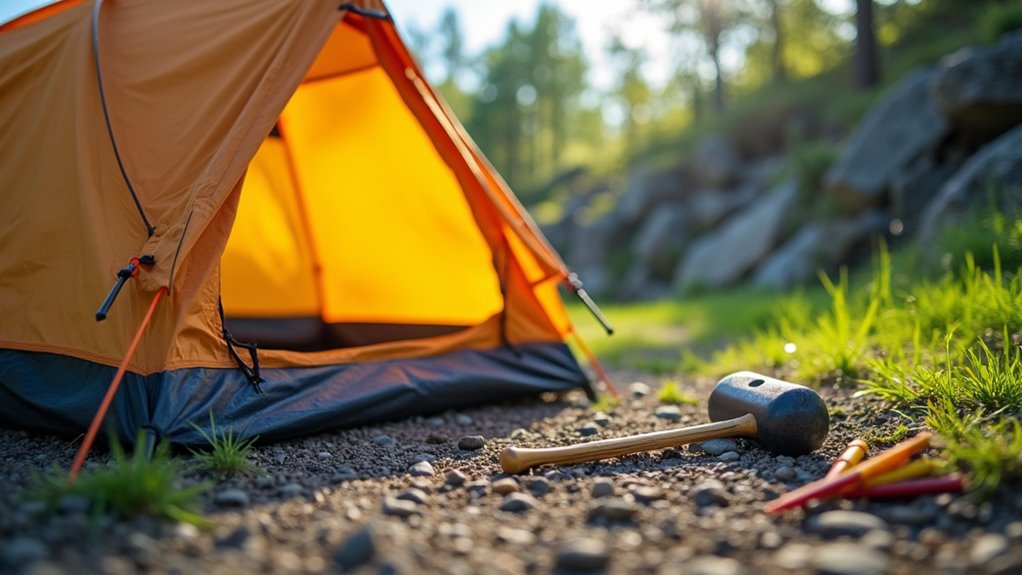
Staking a tent needs careful choice of stakes for different grounds.
Soft sand or loose soil needs longer, wider stakes. They hold better and stop the tent from moving.
Rocky ground requires narrow, hard stakes. They break through the hard rocks easily.
Snow or very hard ground calls for special snow stakes or V-shaped ones. These stakes spread out the force. This stops the tent from pulling out.
Using the right stakes keeps your tent safe and steady.
Sand and Loose Soil
Staking a tent in sand or loose soil needs the right tools and methods.
Use spiral stakes. Their corkscrew shape grips sand better. Choose longer and thicker stakes to hold firm. Bags filled with sand act as deadman anchors and hold well.
Push stakes into the ground at a 45-degree angle, pointing away from the tent. Check your guy lines often. Keep the tension even as the soil can shift.
Place several stakes in a row to stop loosening. These steps help your tent stay strong and safe in soft ground.
Rocky Terrain Solutions
Rocky terrain makes setting up a tent hard. Use large rocks to hold your guy lines tight when stakes don’t go into the ground. Loop the cord around the stake and wrap it around a big rock. Place the stake under the rock for extra hold.
Try using adjustable loops tied around small rocks. Put bigger rocks on top to keep the line strong. This works well on rock slabs or gravel.
Use strong stakes made for rocky ground to keep your tent steady. Always stake the corners first. This sets a strong frame that resists wind and keeps your tent safe.
Snow and Hard Ground
Setting up a tent on snow or hard ground takes special skills.
Use deadman anchors for snow. These are T-shaped stakes buried sideways. Push stakes in at a 45° to 60° angle. This helps them hold better.
Hard ground needs strong stakes. Use titanium wire stakes and hammer them in at an angle. This gives a firm grip.
Very hard ground calls for extra steps. Add logs or sticks to deadman anchors for support.
Always dig a small trench for guy lines. This stops damage and keeps the tent steady.
Tie guy lines halfway down the stake. Keep lines close to 90 degrees for strong tension.
Carry light stakes and tools like shovels or snow saws. These tools help you work well in tough conditions.
Maintenance and Safety Tips for Tent Stakes
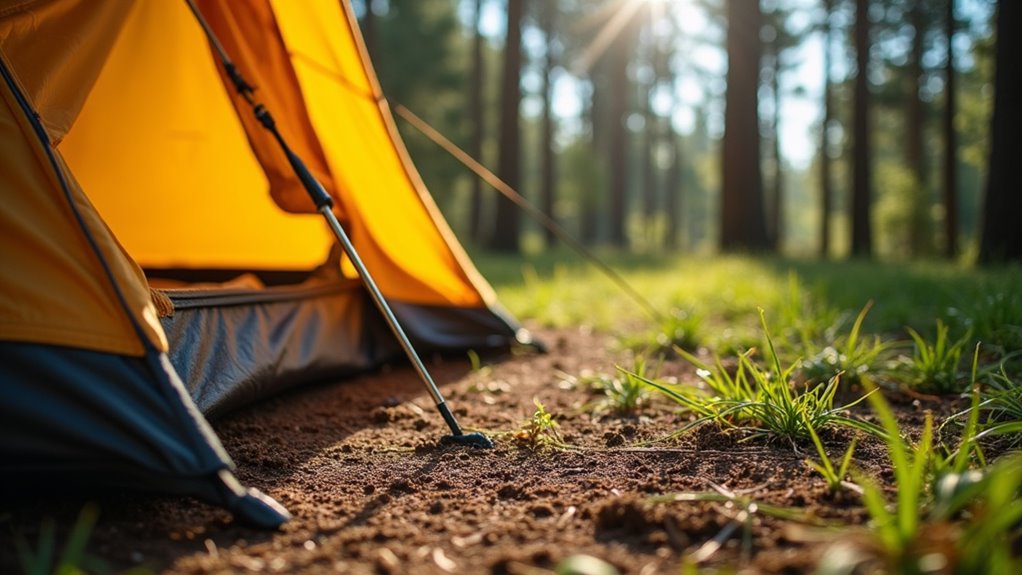
Outdoor trips can be fun and safe with well-kept tent stakes. Clean stakes after each use. Remove dirt and mud to stop rust. Proper maintenance is essential to ensure the longevity of your weight bags used for securing tents.
Dry steel stakes fully before storing. Wipe stakes with a dry cloth if wet for a long time.
Check stakes often for bends, cracks, or dull tips. These harm how well stakes hold in the ground. Small scratches are okay and don’t cause problems.
Replace stakes right away if damaged badly.
Keep stakes in a cool, dry place away from moisture. Use bags to keep them organized and easy to find. Properly secured tents enhance overall camping enjoyment and safety.
Taking these steps helps stakes last longer. Strong stakes mean your tent stays secure and your trip stays safe.
Frequently Asked Questions
What Type of Tent Stakes Should I Buy for My Tent?
Aluminum tent stakes offer a strong mix of light weight and toughness. They hold well in most soils and resist bending. Plastic stakes cost less and work in soft dirt but break easily. Steel stakes are very strong but heavy to carry. For sandy or rocky ground, longer stakes with sharp points grip better. Think about where you camp most to pick the best stakes for your tent. Durable stakes keep your tent secure and save money over time.
How Many Stakes Do I Need for My Tent?
A medium-sized tent needs about 8 to 12 stakes for good support. Large tents may require between 28 and 44 stakes. Check your tent size and ground type before deciding. Soft soil needs longer, stronger stakes. Hard or rocky ground might need special stakes. Using enough stakes keeps your tent steady and safe. Always carry a few extra stakes just in case.
Can I Use My Tent Without Stakes?
You can use your tent without stakes. Use rocks, logs, or deadman anchors to hold it down. Tie guylines tightly and check for wear or tears. Adjust your setup based on the ground type. These steps keep your tent steady and safe. Simple tricks work well for camping in tough spots.
What Should I Do if the Ground Is Too Hard?
Hard ground can stop tent stakes from digging in. Pour water on the spot to soften the soil first. Use heavy rocks to hold tent corners down. Try deadman anchors by burying sticks or bags filled with dirt. These methods keep your tent safe and steady without stakes. Stay prepared for tough ground anywhere you camp.
How Can I Prevent My Stakes From Bending?
Place stakes at a 45-degree angle for strong hold. Use tough materials like steel or titanium. Avoid hard or rocky ground that can bend stakes. Push stakes deep into soft soil for better grip. Check stakes regularly to keep them straight. Strong stakes last longer and hold better. Simple steps prevent bending and save money.
Conclusion
Follow these simple steps to stake your tent securely. Start by picking a flat, dry spot. Avoid rocky or soft ground. Push stakes into the ground at a 45-degree angle, pointing away from the tent. This holds the tent tight and stops it from moving. Use a hammer or mallet to drive stakes deep into the soil. Tie guylines firmly and pull them tight. This adds extra strength against wind. Check stakes often during your trip. Adjust them if the ground shifts or weather changes. Strong stakes keep your tent stable, safe, and ready for any outdoor adventure.
