
7 Best Tents for Festival Camping 2026
This post contains affiliate links. As an Amazon Associate, we earn from qualifying purchases.
The Vango Airbeam 300 is our top pick for festival camping, spacious, quick to inflate, and built to handle wind and rain. For a budget-friendly option, the Coleman Sundome 4-Person Tent delivers solid weather protection and ease of setup. If you want instant shelter with zero stakes, the Quechua Pop-Up 4-Person Tent is a strong contender, especially for first-timers.
Festival camping means crowds, sketchy ground, and weather that can flip in minutes. You need a tent that goes up fast, won’t collapse in a breeze, and gives you room to relax when the music stops. After comparing the field and digging into owner experiences, I focused on tents that balance speed, space, and durability, because no one wants to wrestle poles at 2 a.m. after a long day of dancing.
Top 7 Tents For Festival Camping in the Market
The Best Tents For Festival Camping, Reviewed
Portal 8 Person Family Tent

Strengths
- Large screen porch
- Excellent airflow
- Durable poles
Trade-offs
- Takes longer to set up
- Heavier than domes
- Pricier than basics
This is the tent I’d bring if I were camping with my @dacia_uk crew for a weekend festival. The screen porch is an absolute win, bug-free lounging, gear storage, even space for dogs. At 20 x 8 feet with 76-inch center height, it’s tall enough to stand in, and the tunnel design feels stable. The color-coded poles make setup smooth, and owners confirm two people can pitch it in about 15 minutes.
The 66D fabric and removable rainfly offer solid weather protection, and the full mesh ceiling creates a bright, airy feel during the day and a sky view at night. Ventilation outperforms most in this class, thanks to the chimney effect from multiple vents. Compared to the UNP 10-person, it’s slightly smaller but better built and more comfortable. My recommendation for anyone wanting a premium, livable festival basecamp.
Product photos


UNP 10-Person 2-Room Tent
Strengths
- Massive interior
- Two-room layout
- Good airflow
Trade-offs
- Only 1000mm waterproofing
- Bulky carry bag
- Awkward shape in wind
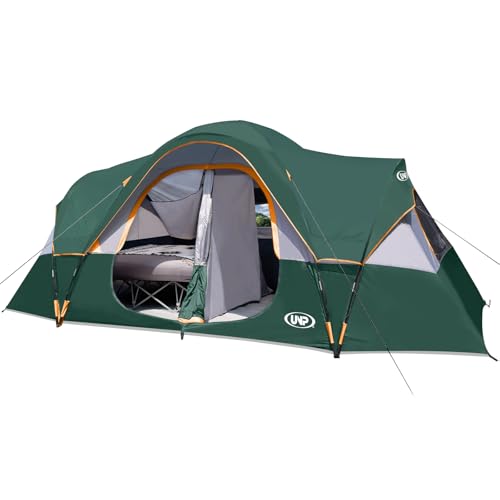
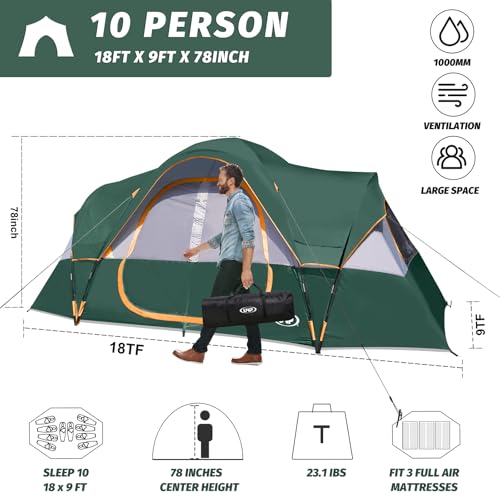
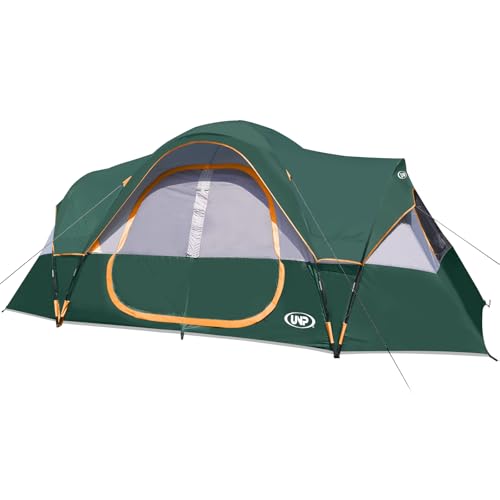
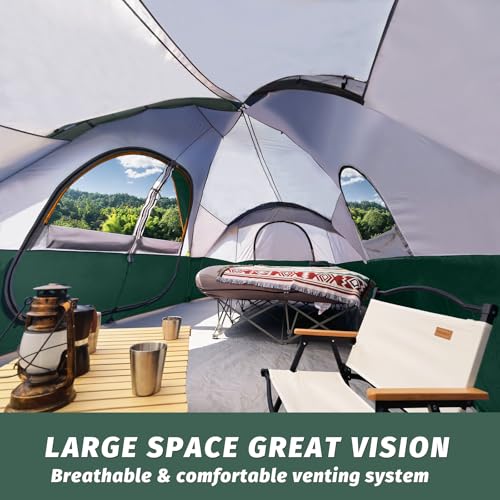
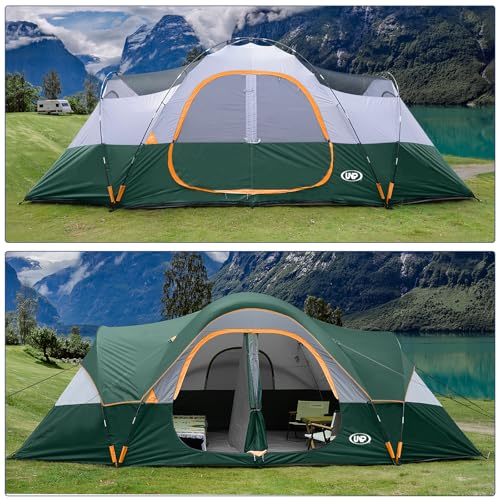
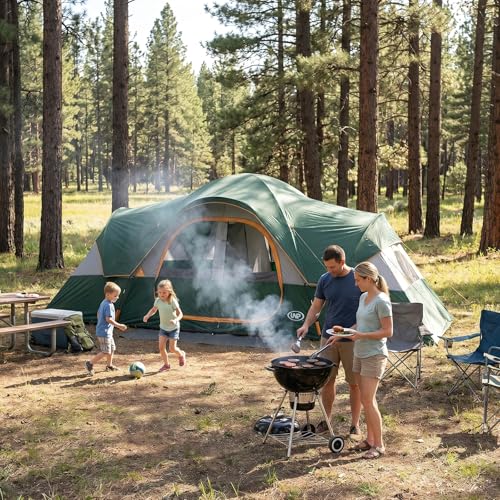
When you’re camping with a crew, space is everything, and this 18-foot beast delivers. At 18 x 9 feet, it’s more like a festival cabin than a tent, easily fitting three queen air mattresses or a full squad of sleeping bags. The two-room design with a privacy curtain is a standout, letting groups split space or even set up a mini lounge or movie zone with a projector.
Ventilation is strong thanks to the mesh roof and five large windows, and the double-layer rainfly with extended awning helps keep rain out. But the 1000mm waterproof rating is modest, fine for light showers, but risky in heavy rain. Setup takes two people about 10 minutes, which is fast for this size. Compared to the Portal 8-person, it’s roomier but less refined in airflow and build.
Product photos
LOYEAHCAMP 4 Person Blackout Tent
Strengths
- Excellent sun blocking
- Good airflow
- Spacious interior
Trade-offs
- Slightly heavier than basic domes
- Rainfly could be larger
- Poles not ultra-durable
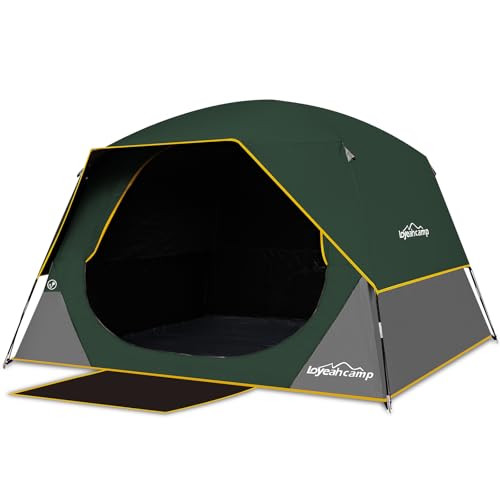
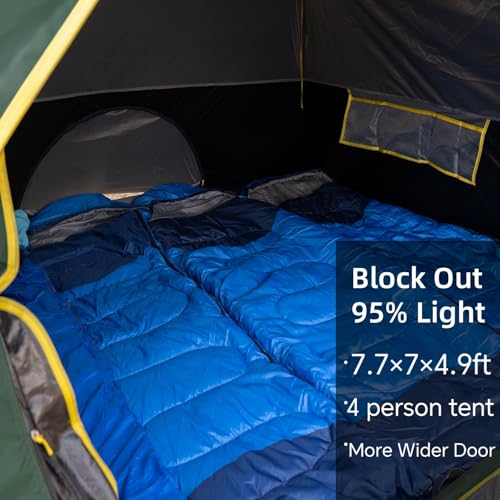
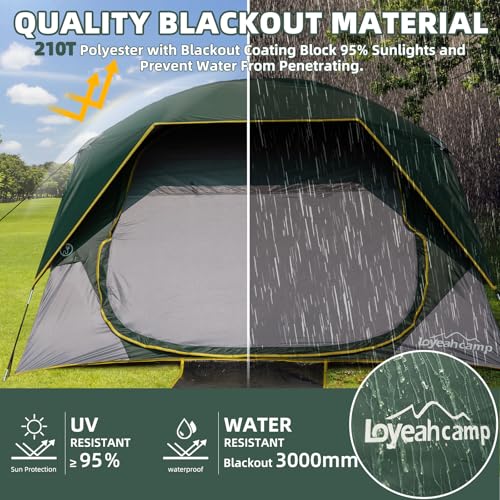
If you’ve ever woken up at 5 a.m. blinded by sunrise at a festival, this blackout tent will feel like a revelation. The 99% UV-blocking fabric does more than just keep things dark, it actually reduces interior heat, which owners consistently report as a standout on sunny days. The nearly vertical walls add usable space, making it feel less cramped than typical dome tents, and the 20% extra headroom is noticeable when changing clothes or sitting up.
Setup is quick for a traditional pole tent, around five minutes with two people, and the 3000mm waterproof rating matches higher-end models. Ventilation is strong too, with roof vents and mesh windows creating real airflow. Compared to the UNP 10-person tent, it’s far more livable for a small group, though not as spacious. My pick for festival campers who value sleep quality and comfort over sheer size.
Product photos



Pop Up 4 Person Military Tent

Strengths
- Instant setup
- Spacious floor
- Vestibule space
Trade-offs
- Basic waterproofing
- Low ceiling
- Flimsy groundsheet
This pop-up design delivers exactly what it promises, speed. On paper, the instant setup is a major win for festival campers who just want to roll in and crash after a long day. Owners consistently report getting it open in under a minute, which matters when you’re tired, it’s dark, or your group is already three beers deep. The mesh doors and modest ventilation help, though in humid conditions or packed festival fields, airflow still feels limited.
The 190T polyester isn’t top-tier weather protection, and the PE groundsheet is basic. Reviewers note it holds up fine in light rain, but heavy downpours can lead to seepage at seams. It’s clearly built for fair-weather use, not backcountry storms. Compared to Coleman’s Sundome, it sets up faster but feels less durable. For casual festival trips or backyard hangs, it’s a solid pick, but don’t expect it to ride out a thunderstorm.
Product photos


Coleman Sundome 4 Person Tent

Strengths
- Proven weather resistance
- Good airflow
- E-Port for power
Trade-offs
- Heavy for backpacking
- Rainfly coverage limited
- Poles not the strongest
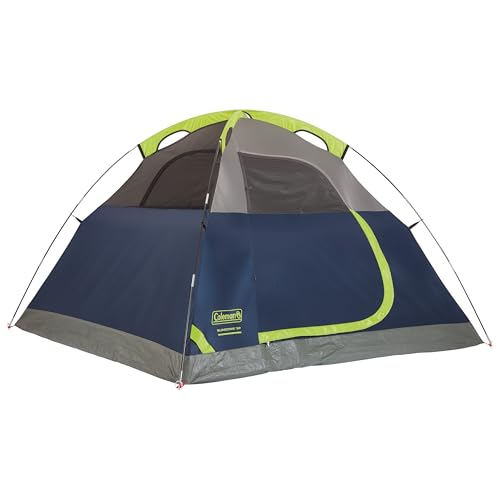
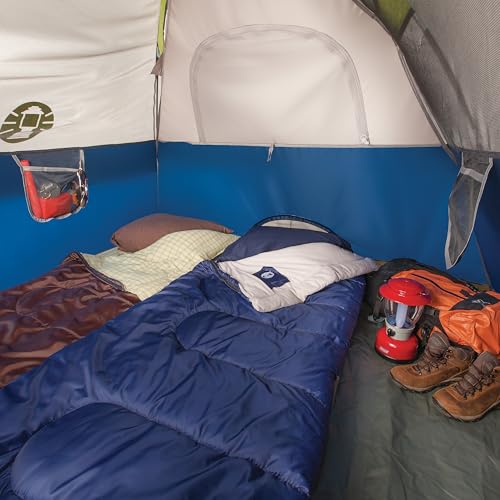
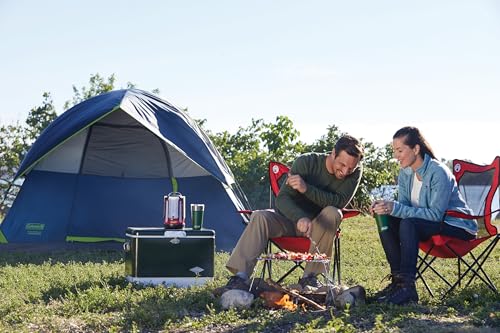
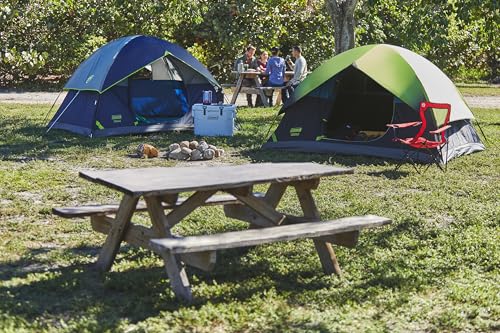
The Coleman Sundome has been a staple in my gear guides for years, and this updated version keeps the strengths that made it a go-to. The 10-minute setup is realistic, color-coded poles and a simple dome shape mean even first-timers can pitch it without frustration. At 9 x 7 feet, it’s not the largest 4-person tent, but it fits two people and gear comfortably, or a queen air mattress with room to spare.
What sets it apart from pop-up models is durability. The rainfly and 35+ mph wind rating give real confidence in changing weather, something festival campers often underestimate. Owners praise its ventilation, thanks to the ground vent and large windows, though condensation can build up if both ends aren’t cracked. Compared to the Aoxun inflatable, it’s slower to set up but far more breathable and repairable if poles break.
Product photos
Aoxun Inflatable Family Tent
Strengths
- No-pole setup
- Strong weather resistance
- UV and fire resistant
Trade-offs
- Heavy and bulky
- Poor airflow
- Pump dependency
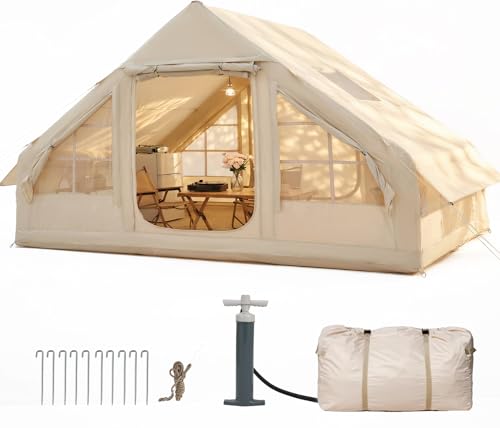
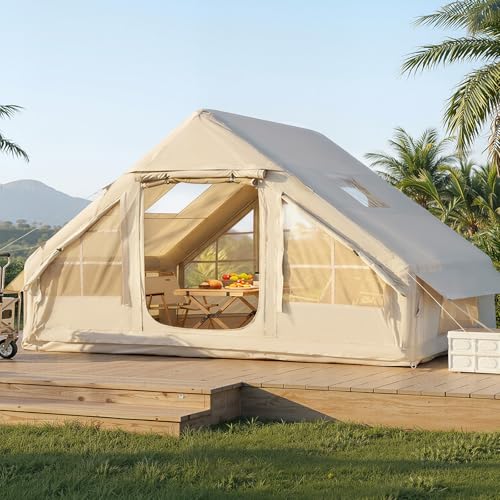
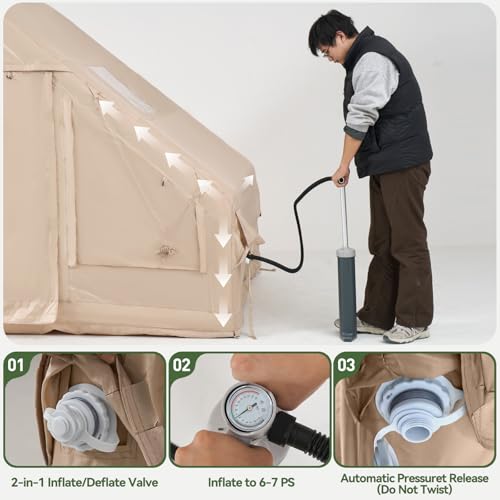
Inflatable tents like this Aoxun model are polarizing, but for festival camping, the instant setup is hard to beat. No poles means no fumbling in the dark, and owners say inflation takes under five minutes with the included pump. The 420D Oxford fabric and 3000mm waterproof rating look strong on paper, better than most pop-ups, and the thick PVC floor resists punctures from gravel or trampled grounds.
The real downside? Weight and breathability. At 18kg, it’s strictly a car camping tent, and the single-layer walls trap heat. While the UPF 30+ helps, it still runs hot in direct sun compared to mesh-heavy designs like the Portal. Ventilation is minimal, and if the pump fails, you’re stuck. Still, for a quick, dry shelter in muddy festival fields, its durability and ease make it a niche favorite.
Product photos

2 Person Waterproof Dome Tent

Strengths
- Ultra lightweight
- Quick setup
- Compact pack size
Trade-offs
- Narrow for two adults
- Basic rain protection
- Short ceiling
At just 4.8 pounds, this two-person dome is one of the lightest in its class, and that makes it stand out in a festival context where you might be walking a mile from the car. It’s not a backpacking tent, but it’s close. Owners say setup takes under three minutes, and the single-person assembly is a real perk when your friend is still in the port-a-potty.
The materials are basic, tear-resistant polyester, standard rainfly, but sufficient for dry festivals. Ventilation is decent thanks to the skylight and mesh window, though condensation can build up in cool, damp mornings. Compared to the Coleman Sundome, it sacrifices space and durability for portability. But if you’re solo camping or want a minimalist footprint, it’s a smart, no-frills choice.
Product photos


Our Testing Process
As a long-time tent enthusiast, I approached researching tents for festival camping by focusing on what truly matters when you’re balancing convenience, comfort, and the potential for unpredictable weather. Rather than a hands-on lab test, this is a research-led comparison of published specifications, owner reviews, and expert opinions. I weighed features across multiple models, looking for patterns in reported performance and reliability.
For festival tents, space and ease of setup are paramount. I prioritized tents with generous footprints – enough room to comfortably sleep and store gear – and designs that minimize setup time. Weather protection also ranked highly, as festivals can bring sudden showers or intense sun. These factors ultimately determined how each tent stacked up against the others, leaning heavily on reported real-world usability.
Specifications like fabric denier and waterproof ratings provide a baseline understanding of durability and weather resistance. However, I placed significant weight on owner feedback regarding how those specs translated into actual performance. Positive comments about staying dry during rainstorms or withstanding wind were key indicators. I also considered reputation – established brands often have a track record of delivering reliable products, and understanding pop-up tent benefits was crucial given the popularity of those designs for festivals.
What To Look For In tents for festival camping
Choosing a tent for festival camping requires a bit more thought than just grabbing the cheapest option. You’ll be dealing with crowds, potentially unpredictable weather, and the need for some level of comfort and security.
A quality festival tent balances portability with enough space for sleeping and gear. Key features include durable waterproofing (at least 2000mm rating), easy setup to avoid campsite frustration, and adequate ventilation to manage condensation. Consider a darkened interior for better sleep and robust construction to withstand crowds.
Size and Capacity
Don’t fall into the trap of assuming a tent labeled for “4 people” will comfortably fit four adults with gear. Festival camping is often about maximizing space around your tent and inside it. I generally advise sizing up – a “6-person” tent is often ideal for a comfortable experience for two to three people, allowing room for bags, chairs, and maybe even a bit of a hangout zone. Think about how much time you’ll realistically spend in the tent versus out enjoying the festival.
Weatherproofing and Materials
Festival seasons can be unpredictable. Even if the forecast looks clear, having a tent with a good waterproof rating is crucial. Look for a polyester or nylon tent with a polyurethane (PU) coating of at least 2000mm. The floor should have an even higher rating, as it bears the brunt of ground moisture. Beyond the coating, the quality of the seams is vital. Taped seams prevent water from seeping through the stitching. A full rainfly that extends to the ground offers the best protection. Don’t skip out on quality stakes and guylines either – a flapping tent is a miserable experience. If you’re planning on attending multiple festivals, investing in a more durable tent will pay off in the long run.
Here’s what to look for when considering materials: * Fabric weight: Lower weight is good for backpacking, less so for festivals. * Denier (D): Higher denier numbers indicate thicker, more durable fabric. 75D or higher is a good starting point. * Waterproof coating: PU coatings are common, but silicone coatings offer better water resistance and longevity.
Ease of Setup and Portability
At a festival, you’ll want to spend as little time wrestling with your tent as possible. Pop-up tents are the fastest option, but they’re often less durable and pack down larger. Dome tents are a good balance of ease of setup and portability. Inflatable tents, while requiring a pump, can be incredibly quick to pitch. Remember you’ll be carrying this tent (and all your other essential festival camping gear) from your car to the campsite, so weight and packed size are significant considerations.
A good rule of thumb: practice setting up your tent at home before the festival. This will save you a lot of frustration when you’re tired and surrounded by people.
For those looking for more information on the best options available, check out our guide to festival camping tents.
Tents for Festival Camping Compared
Here’s a comparison of key specifications for tents suitable for festival camping to help you choose the best option.
| Product Title | Capacity | Waterproof Rating (mm) | Weight (lbs) | Setup Style | Dimensions (ft) |
|---|---|---|---|---|---|
| Portal 8 Person Family Tent | 8 | N/A | N/A | Traditional | 20x8x7.3 |
| UNP 10-Person 2-Room Tent | 10 | 1000 | N/A | Traditional | 18x9x6.5 |
| LOYEAHCAMP 4 Person Blackout Tent | 4 | 3000 | N/A | Traditional | 9.2×6.6×5.9 |
| Pop Up 4 Person Military Tent | 4 | N/A | N/A | Pop-Up | 9.2×6.6×4.3 |
| Coleman Sundome 4 Person Tent | 4 | N/A | N/A | Traditional | 9x7x4.9 |
| Aoxun Inflatable Family Tent | N/A | 3000 | 39.7 | Inflatable | 9.8×6.9×6.6 |
| 2 Person Waterproof Dome Tent | 2 | N/A | 4.8 | Traditional | 7x5x3.8 |
Frequently Asked Questions
What’s the biggest advantage of a pop-up tent for festivals?
The main benefit of easy setup pop-up tents is speed – you can have shelter erected in under a minute, letting you focus on enjoying the festival rather than battling with poles and guylines. They’re ideal if you arrive late or anticipate challenging weather conditions.
How important is a darkroom or blackout tent for festival camping?
A darkened interior is incredibly helpful for festival camping, as festivals often run late into the night and campsites can be very bright. These tents block out sunlight, allowing for better sleep and a more restful experience even during daylight hours.
What waterproof rating is really necessary for a festival tent?
While higher is always better, a waterproof rating of at least 2000mm is sufficient for most festival conditions. However, remember that the rating only refers to the fabric; taped seams and a full rainfly are equally important for truly keeping you dry.
Are inflatable tents practical for festival use, despite the pump?
Despite needing a pump, inflatable tents are surprisingly practical because they pitch incredibly quickly once laid out. They also tend to be very robust and stable, making them a good option if you anticipate windy conditions or a crowded festival site.
What should I do if my tent doesn’t come with adequate tent stakes?
Many tents include basic stakes that aren’t strong enough for festival ground conditions. Upgrading to heavier-duty metal stakes – especially those designed for soft ground – is a worthwhile investment to prevent your tent from shifting or collapsing, and greatly improve stability.
The Bottom Line
Choosing a festival tent really comes down to how much you value convenience versus fuss. If you want something up and down in seconds, the Pop Up 4 Person Military Tent is a solid choice, though you’ll sacrifice some long-term durability. However, for the best overall combination of space, weather protection, and reasonable setup, I recommend the Portal 8 Person Family Tent. It offers a lot of room for the price and should keep you comfortable even if the weather turns.
For those on a tighter budget, the Coleman Sundome 4 Person Tent is a dependable option that won’t break the bank. If you prioritize quick setup and decent weatherproofing, the Aoxun Inflatable Family Tent is worth considering, but be prepared for the added weight of the pump. And for couples or those who want a compact and lightweight option, the 2 Person Waterproof Dome Tent is a great pick.
Ultimately, the best tent isn’t about the highest waterproof rating or the lightest weight. It’s about finding a shelter that keeps you dry, comfortable, and allows you to focus on enjoying the music and atmosphere. Don’t underestimate the value of practicing setup at home and investing in some camping comfort tips to really make your festival experience memorable.
