
Essential What To Take Camping In A Tent: 3-System Guide
This post contains affiliate links. As an Amazon Associate, we earn from qualifying purchases.
Pack for tent camping by prioritizing three systems: safety, shelter, and sleep. Your safety kit needs a stocked first aid kit, a headlamp, and a knife. Your shelter is a tent, rainfly, stakes, and 50 feet of cord. Your sleep system is a temperature-rated bag and a pad with an R-value of at least 3.0. Pack those first, then add water, food, and controlled comfort items.
Most campers pack backwards. They start with the camp chair and the giant air mattress, then realize they have no space for the water filter or a real sleeping pad. The result is a miserable, cold, thirsty night where you’re counting the hours until sunrise.
Follow the 3-system method below. It works for a weekend at a state park or a week in the backcountry. This list pulls from the National Park Service camping checklist and hard lessons learned when the forecast was wrong.
Key Takeaways
- Pack in order of survival priority: Safety items first, shelter second, sleep insulation third. Comfort gear comes last.
- A “two-person tent” fits two sleeping bodies and nothing else. Size up if you want space for gear or pets.
- Sleeping pad R-value is non-negotiable. A pad rated R-3.0 or below will suck heat from you on any night below 60°F.
- Plan for two liters of water per person, per day as a baseline. In heat or with exertion, that number doubles.
- Breathing into your sleeping bag for warmth adds moisture that will make you colder within an hour. Use a balaclava instead.
The 3-System Packing Method
Forget scrolling through hundred-item lists. You will forget something. Instead, pack by system. Each system supports a basic survival need, and you don’t move to the next one until the previous box is checked.
The U.S. National Park Service structures its official guidance around core needs: first aid, shelter, water, and food. Their checklist explicitly warns against practices like breathing inside a sleeping bag and notes that many parks prohibit tying ropes to trees for hammocks.
System 1: Safety. This is what you need to handle a small injury, see at night, cut a cord, or signal for help. It fits in a small bag.
System 2: Shelter. This is your tent, its rain protection, and the tools to secure it.
System 3: Sleep. This is your bag, your pad, and what you wear to bed. Its only job is to keep you warm and dry.
Comfort items, the camp chair, the lantern, the coffee press, get packed after these three systems are complete. This order guarantees you have the essentials, even if you forget the fancy stuff.
TL;DR: Pack safety gear first, shelter second, sleep insulation third. Everything else is a bonus.
Shelter System: More Than Just a Tent
Your tent is the most obvious piece, but it’s useless without its supporting cast. A tent alone is just a fancy tarp.
The tent itself is the easy part. The hard part is the ground it sits on and the sky it lives under. You need a rainfly that extends past the tent walls by at least six inches on all sides. You need a footprint or a tarp cut slightly smaller than the tent’s floor to protect it from abrasion.
Common mistake: Relying on the tent’s included plastic stakes, they snap in hard ground or rocky soil. Carry a set of durable metal stakes and a rubber mallet. The plastic ones are backups.
The NPS guideline on tent sizing is brutally honest: a “two-person tent” means room for two people to sleep. Not two people and their backpacks. Not two people and a dog. If you want space for gear, you need a three- or four-person tent. For a family, look at stand-up tent models with headroom.
Your shelter system also includes a plan B. What if it rains for 12 hours straight and you need a dry space outside the tent? A 10×10 ft tarp and 50 feet of polycord create a porch or a cooking area. Check the specific park’s official federal camping gear list first, many, like those managed by the NPS, ban tying ropes to trees.
| Shelter Component | The Minimum | The Upgrade | Why The Upgrade Wins |
|---|---|---|---|
| Rain Protection | Tent’s included rainfly | Separate 10×10 ft tarp + cord | Creates dry outdoor space; protects tent door. |
| Stakes | 8x plastic tent stakes | 8x 9-inch Y-beam aluminum stakes + mallet | Won’t bend in hard soil; mallet saves your hands. |
| Footprint | Polycryo sheet (window film) | Manufacturer’s custom footprint | Perfect fit; protects floor without trapping water underneath. |
| Ventilation | Open rainfly doors | Dedicated tent cooling systems | Prevents condensation in humid climates; critical for summer camping. |
Sleep System: The Ground is Your Enemy
Cold doesn’t creep into your sleeping bag from the air above you. It conducts up from the ground below you. Your sleeping bag’s loft gets compressed under your body, rendering its insulation useless. The pad is what stops the cold.
The number that matters is R-value. It measures thermal resistance. A higher number means better insulation from the ground.
* Summer (night lows > 50°F): R-value 2.0 – 3.0
* Three-Season (night lows 20–50°F): R-value 4.0 – 5.5
* Winter (night lows < 20°F): R-value 5.5+
I used a basic foam pad (R-value 2.0) on a 45°F night in the Sierra. By 3 a.m., my back was aching from the cold ground. I switched to a Therm-a-Rest NeoAir XLite (R-value 4.5) and slept through the next night at 38°F without a shiver. The difference wasn’t the bag, it was the pad.
Ignore the internet hype about thick air mattresses. They are cold air chambers. Even a “double-height” air mattress rarely has an R-value above 2.0. You will freeze. They are also unstable; when your partner moves, you roll.
For your sleeping bag, the temperature rating is a survival limit, not a comfort guarantee. A 20°F bag will keep you alive at 20°F, but you’ll be wearing every layer you own. Choose a bag rated for 10–15 degrees colder than the forecasted low.
And stop breathing into your bag. The NPS warns that moisture from your breath soaks into the insulation. Wet insulation doesn’t work. Within an hour, that moisture will sap heat from your body faster than the cold air outside. Use a neck gaiter or balaclava over your nose and mouth instead.
Safety System: The “What If” Kit
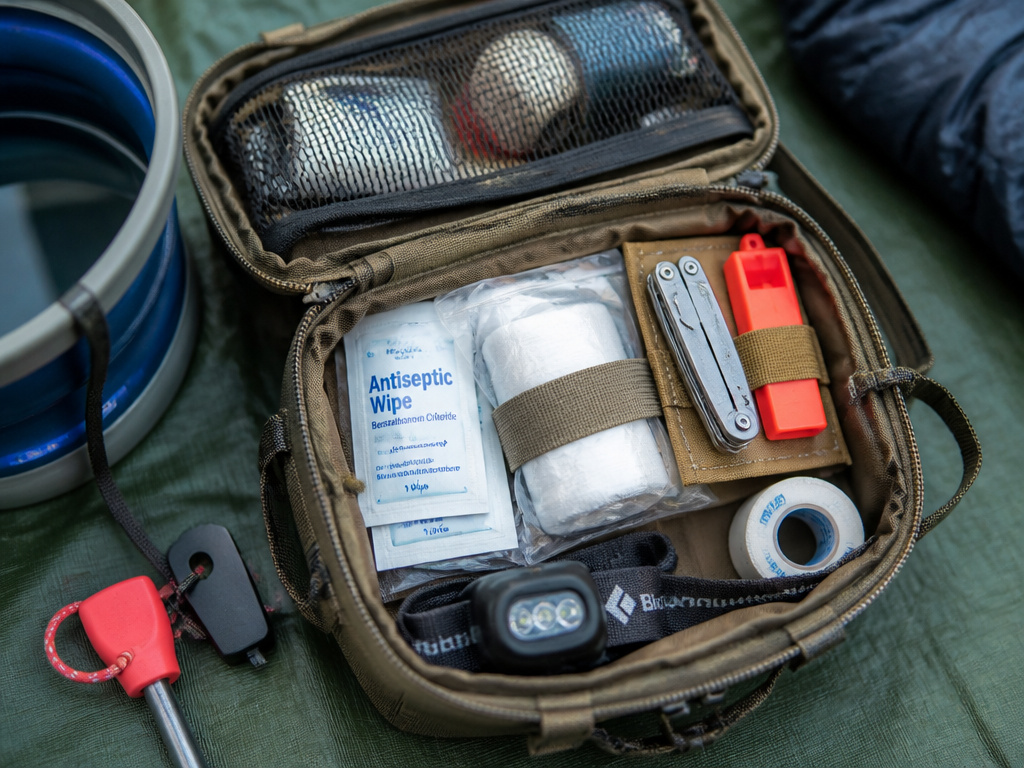
This is the kit you hope to never open. It stays packed between trips, only touched to replace used items or check expiration dates.
Your first aid kit is the cornerstone. It needs more than bandages.
1. Wound care: Antiseptic wipes, assorted adhesive bandages, gauze pads, medical tape.
2. Medications: Ibuprofen, antihistamine, anti-diarrheal, personal prescriptions.
3. Tools: Tweezers, safety pins, a compact multi-tool with a sharp blade.
4. Emergency: A whistle, a firestarter, an emergency space blanket.
A headlamp is non-negotiable. Hands-free light when you need to set up camp in the dark, find the bathroom, or manage a midnight situation is irreplaceable. Pack extra batteries for it and for any other portable tent lanterns you bring.
Fire management means a lighter and a backup firestarter, but also a way to put a fire out. A collapsible bucket is perfect for carrying water to douse a fire completely before you leave it.
TL;DR: Your first aid kit, headlamp, knife, and fire tools should live in one ready-to-grab bag. Check it before every trip.
Water and Food: Fuel for the Trip
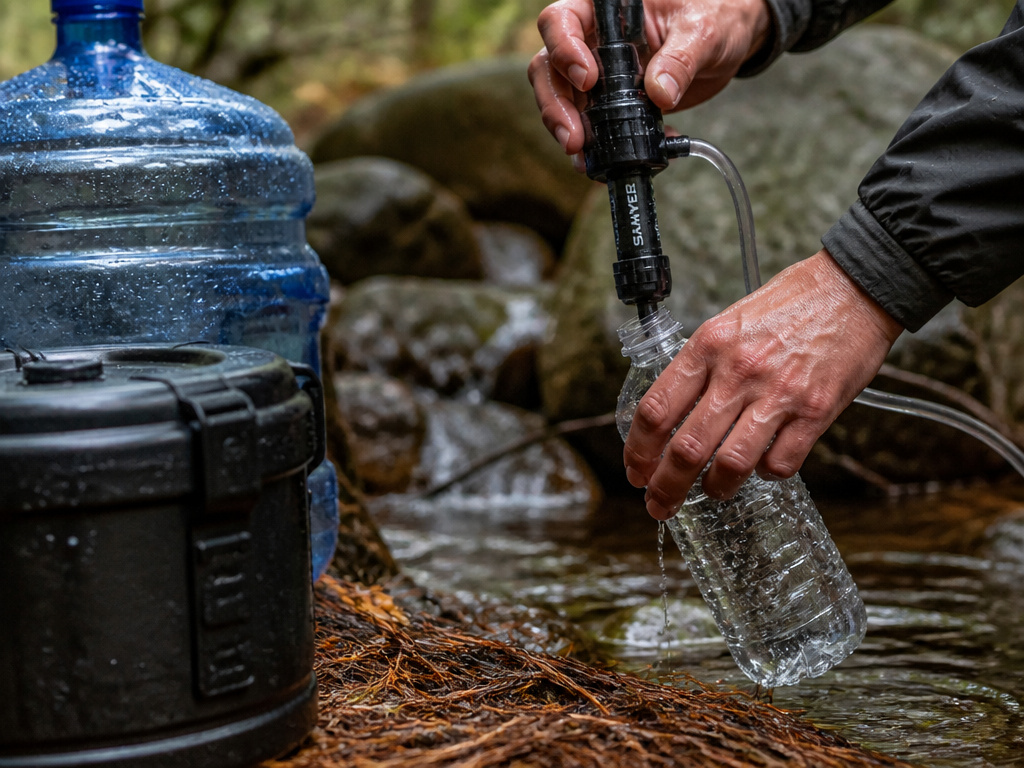
The NPS baseline is two liters of water per person per day. That’s for drinking in moderate temperatures with light activity. Hiking in the sun? Double it. Cooking and cleaning add more.
For car camping, bring a 5- or 7-gallon portable jug and fill it on arrival. For the backcountry, you need a plan. The New Zealand Department of Conservation lists the water source type for each campsite, potable, needs treatment, or bring your own. Assume all natural water needs treatment.
| Water Treatment Method | Best For | Processing Time | The Catch |
|---|---|---|---|
| Pump Filter (e.g., Katadyn) | Groups, cloudy water | 1-2 liters per minute | Needs cleaning; can freeze and crack. |
| Squeeze Filter (e.g., Sawyer) | Solo/duo, clear water | 1-2 minutes per liter | Easily clogs with silt; slow in cold weather. |
| Chemical Drops (e.g., Aquamira) | Emergency backup, ultra-light | 30 minutes to 4 hours | Imparts a taste; ineffective against some parasites. |
| UV Purifier (e.g., SteriPEN) | Clear, small volumes | 90 seconds per liter | Useless if water is murky; requires batteries. |
Your food system is dictated by wildlife. In bear country, a hard-sided bear canister is often mandatory. Even in raccoon country, a simple ratchet strap to hang a food bag from a tree limb 10 feet up and 4 feet out from the trunk is essential. Never, ever store food in your tent.
The Controlled Comfort Shortlist
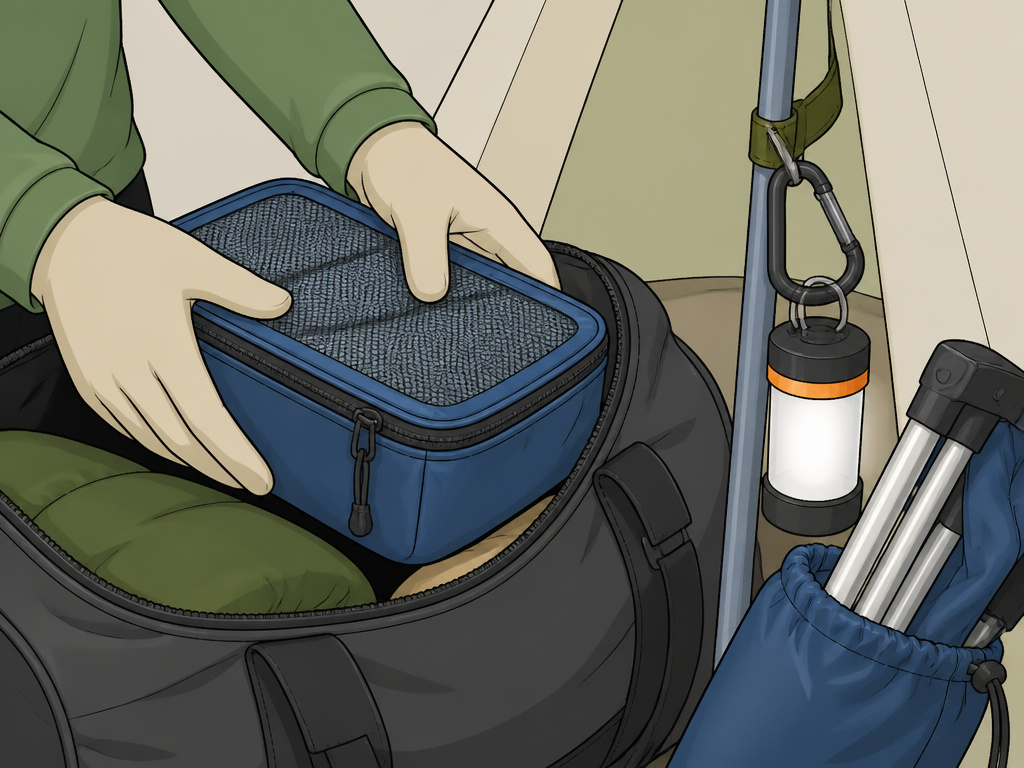
Once the survival systems are packed, you can add what makes camping enjoyable. This is where most lists start, and it’s why people forget the water filter.
Lighting: A headlamp is safety. A lantern is comfort. Solar-powered lanterns are fantastic for car camping, set them in the sun all day. For inside the tent, a dimmable, battery-powered LED lantern won’t wreck your night vision.
Seating: A camp chair is worth its weight. The cheap ones with the fabric seat and aluminum frame pack small.
Cooking: A single-burner propane stove is reliable. A cast iron pie iron turns bread and fillings into a hot meal with zero cleanup. It’s a game-changer.
Organization: Packing cubes for clothes and a separate “dirty” bag keep the tent livable. A few heavy-duty carabiners are versatile camping tools for hanging a lantern, a trash bag, or wet towels.
What to leave behind:
- Cotton everything. It holds moisture and loses insulating power when wet. Wear synthetic or wool.
- Denim jeans. They are heavy, slow to dry, and restrictive.
- Glass containers. They break. Use plastic or metal.
- Scented lotions, perfumes, deodorants. They attract insects and curious animals.
Frequently Asked Questions
What is the one thing most people forget when tent camping?
dedicated towel for the tent. You will need to wipe down condensation from the walls in the morning, dry off a muddy dog, or mop up spilled water. A packable microfiber towel lives in my tent’s stuff sack.
Can I use a hammock instead of a tent?
Maybe. You must check the specific park’s regulations. The National Park Service camping checklist explicitly states that many parks prohibit tying ropes to trees. Hammocks often fall under this rule. Always verify before you plan to hang.
Is a 20-degree sleeping bag warm enough for summer?
Usually, yes, but it depends on your location and sleep style. Summer in the mountains can drop below freezing. A 20-degree bag is a safe three-season choice. If you sleep cold, add a sleeping bag liner. Remember, the bag’s rating is a survival limit, not a comfort rating.
How do I keep my tent cool in hot weather?
Ventilation is everything. Set up in the shade, use all vents and mesh panels, and consider a battery-powered fan. For extreme heat, a specialized portable tent air conditioner can make a difference, but they are power-hungry.
What’s better for a family: one large tent or two smaller ones?
One large family camping shelter is usually better. It gives you a single, shared dry space for gear and hanging out during bad weather. Two tents mean double the setup, double the stakes, and a wet run between them in the rain.
Are expensive canvas tent options worth it?
Only if you camp frequently in fixed locations or in extreme weather. Canvas is heavier, takes longer to dry, and is more expensive. For most casual campers, a quality synthetic tent from a reputable brand is a better investment. Start with a reliable budget tent under $100 to see if you like the hobby before upgrading.
Before You Go
Packing for tent camping isn’t about checking every item off a generic list. It’s about building three non-negotiable systems that keep you safe, dry, and warm. Shelter, sleep, safety, pack in that order. Your essential tent camping gear is useless if you’re shivering on a cold pad or thirsty because you forgot the water filter.
Choose your tent for the weather you expect, a heavy rain tent for the Pacific Northwest, a high wind tent for the plains. Your sleeping pad’s R-value matters more than your bag’s brand. And your first aid kit isn’t optional.
Then add the pie iron. You’ve earned it.
