
7 Best Portable ACs for Tents 2026
This post contains affiliate links. As an Amazon Associate, we earn from qualifying purchases.
The GOUKA 5200 BTU App Control AC stands out as the best overall pick for tent cooling, delivering strong performance and smart features. If you’re watching your budget, the BougeRV 3500BTU Upgraded Camping AC offers solid value without sacrificing key functions. For quiet operation and consistent cooling, the GETUHAND 5200BTU is a top contender.
Trying to cool a tent in summer heat is no joke, stuffy air, rising humidity, and restless nights can ruin even the most scenic campsite. Most “portable” ACs aren’t built for real camping conditions, with poor efficiency, high noise, or limited power options.
As Chloé Bourgeois, I’ve spent years evaluating gear that performs when you’re off-grid, and this guide cuts through the hype. I compared specs, analyzed owner feedback, and prioritized units that balance cooling power, energy efficiency, and quiet operation, so you can actually sleep.
Top 7 Portable Acs For Tents in the Market
The Best Portable Acs For Tents, Reviewed
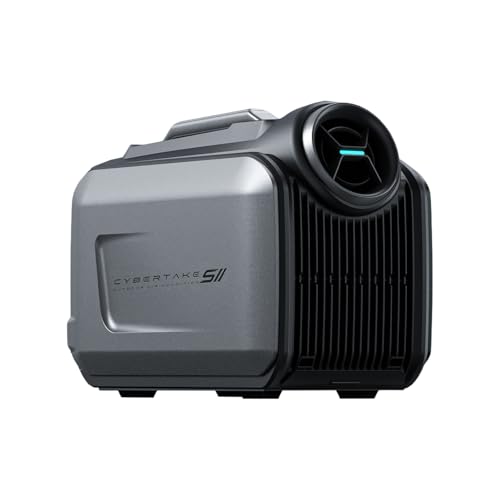
Cybertake S2 Pro Portable AC
Strengths
- 3 power input options
- Eco+ energy mode
- Weather-resistant build
Trade-offs
- Boost converter sold separately
- Slightly heavier at 31 lbs
- Higher upfront cost
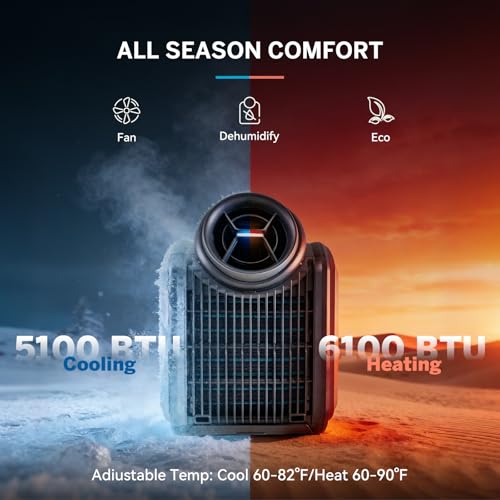
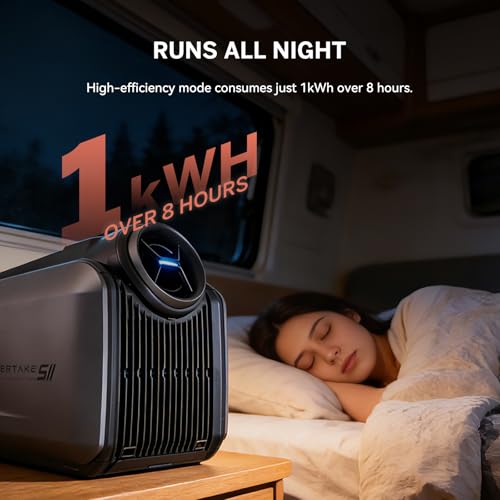
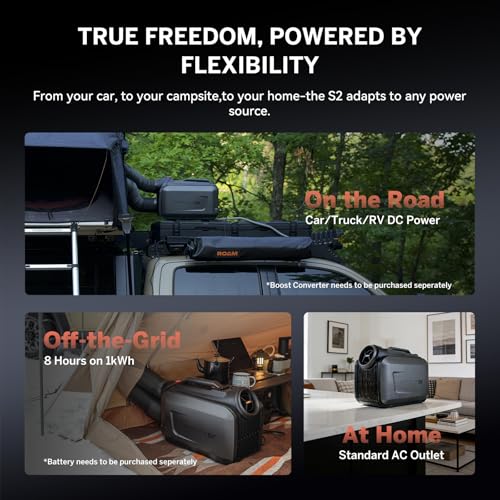
If I had to pick one portable AC for real backcountry or van life use, this would be it. The 3-way power compatibility, AC, DC 48V, and 12-24V vehicle, gives unmatched flexibility. That, combined with 5100 BTU cooling and 6100 BTU heating, makes it a true four-season unit. Reviewers note it reliably hits 60°F in a tent even on hot days, and the Eco+ mode’s 1kWh per 8 hours is impressive for compressor-based cooling.
The IPX4 rating and rugged buttons suggest it’s built for weather resistance, not just fair-weather camping. Setup in under 30 seconds with included hoses is a real win. It outperforms the BougeRV and BODEGACOOLER in versatility and efficiency, though it’s pricier. The missing boost converter is a downside, but that’s a one-time add-on.
Product photos
GOUKA 5200 BTU App Control AC
Strengths
- Smart app control
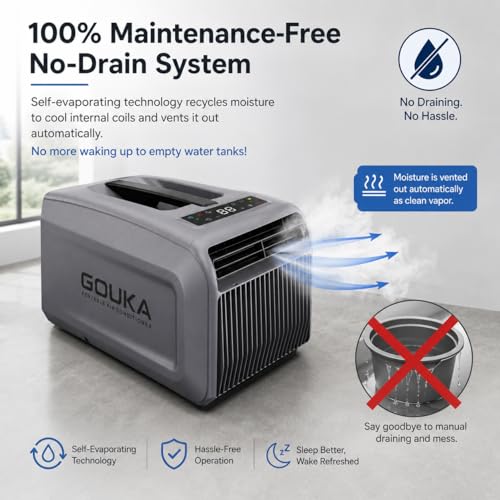
- No drainage needed
- Inverter efficiency
Trade-offs
- Heavy power demands
- Limited portability
- Not ideal for off-grid
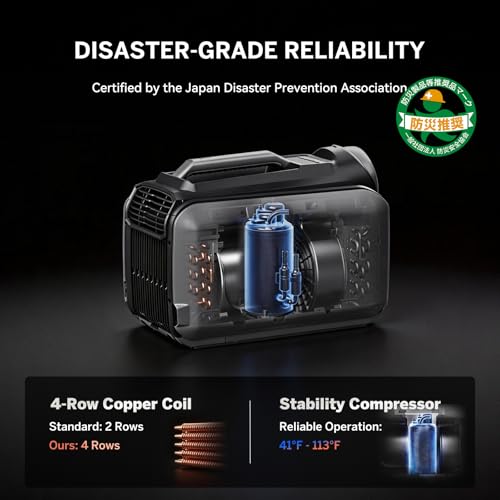
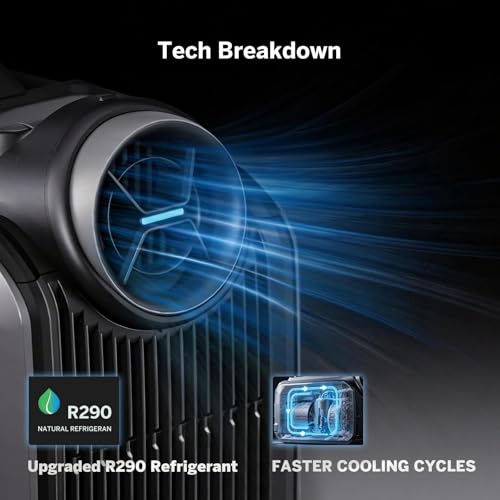
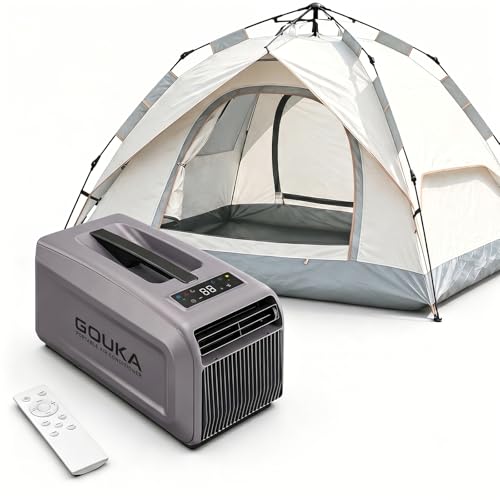
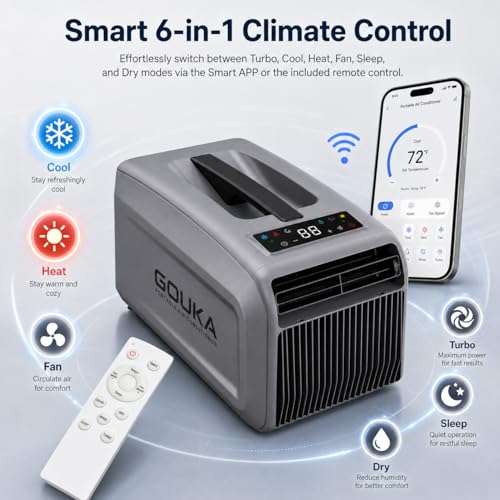
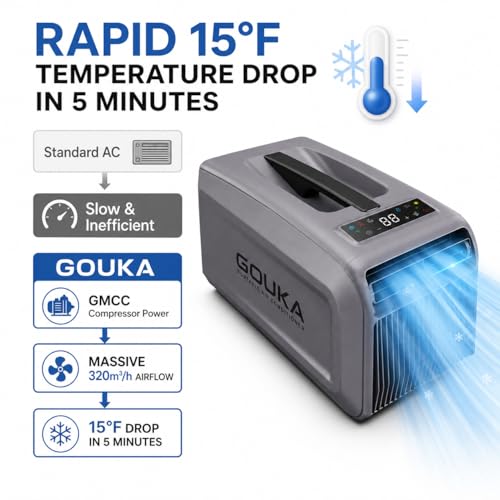
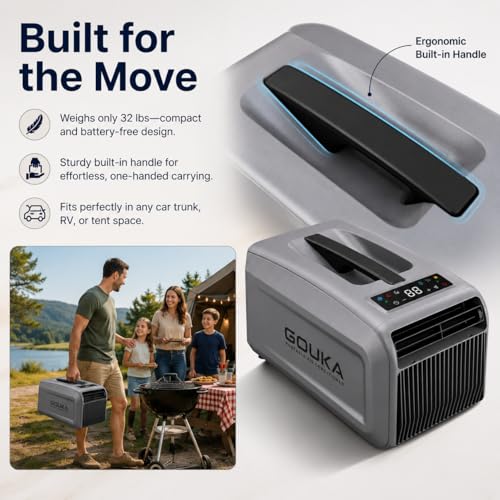
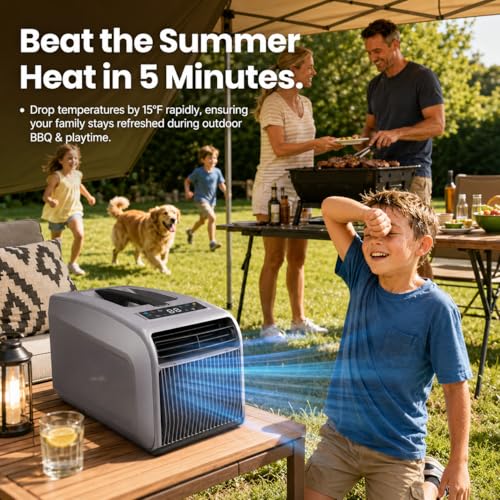
This unit stands out for its smart app control and dual cooling-heating performance, which is rare in portable camping ACs. The 6100 BTU cooling and inverter technology look strong on paper, promising efficient, quiet operation, a big plus if you’re running it near bedtime in a tent or RV. Owners consistently report the app works reliably, letting you pre-cool your space before arrival, and the no-drain system is a real convenience for extended outdoor stays.
Still, the 27 lb weight isn’t the lightest, and the single-hose design limits efficiency compared to split systems. It’s clearly built more for semi-permanent setups, think cabin, home office, or RV, than for backpacking or rugged tent camping. Compared to the Cybertake S2 Pro, it lacks versatile DC power options, making it less ideal for true off-grid use.
Product photos
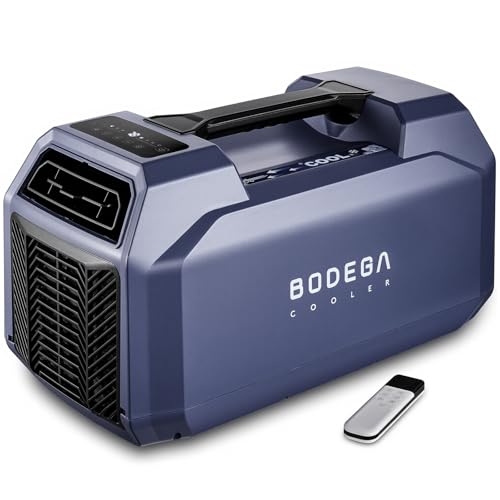
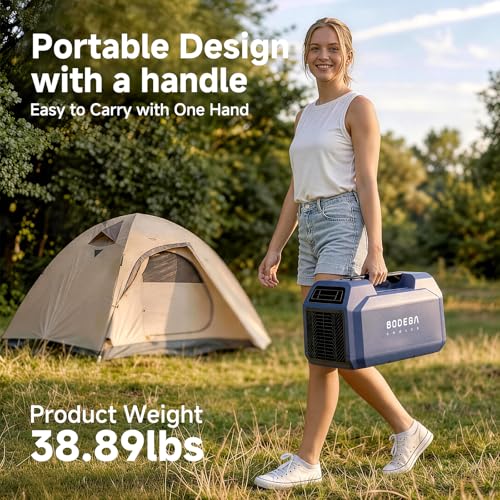
BODEGACOOLER 6000 BTU Camping AC
Strengths
- High 6000 BTU output
- Real compressor cooling
- Remote control included
Trade-offs
- 110V only
- Bulky for small tents
- No heating function
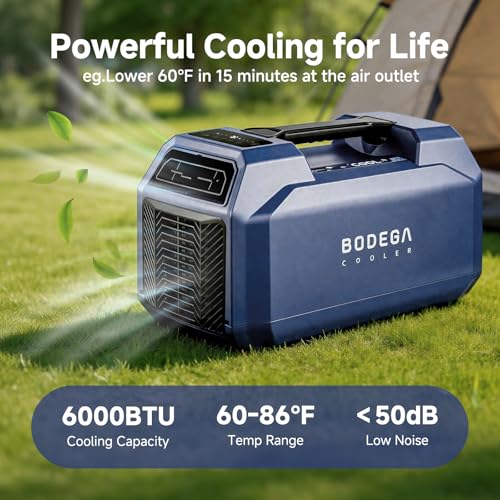
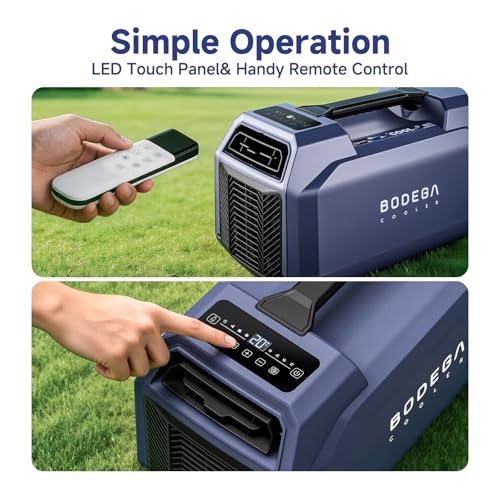
On paper, 6000 BTU sounds impressive for a tent AC, but the fine print matters, it’s designed for spaces as small as 32 sq ft. That makes it ideal for solo or two-person dome tents, not larger family shelters. The real compressor cooling is a major upgrade over fan-only units, and owners confirm it delivers actual cold air, not just breeze. The remote control and five modes add real convenience, especially when you’re already in your sleeping bag.
But it’s strictly 110V powered, so you’ll need a robust power station, no 12V or DC option here. That rules it out for many car campers without serious battery backup. Compared to the Cybertake S2 Pro, it’s less flexible despite higher BTU. Still, for someone with a well-equipped base camp or overlanding setup, it’s a solid performer in tight spaces.
Product photos


BougeRV 3500BTU Upgraded Camping AC
Strengths
- Affordable price
- App control included
- Good airflow reach
Trade-offs
- Basic build quality
- No heating mode
- App can be glitchy
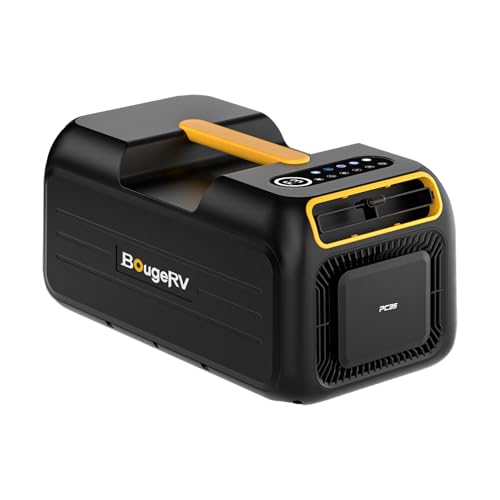
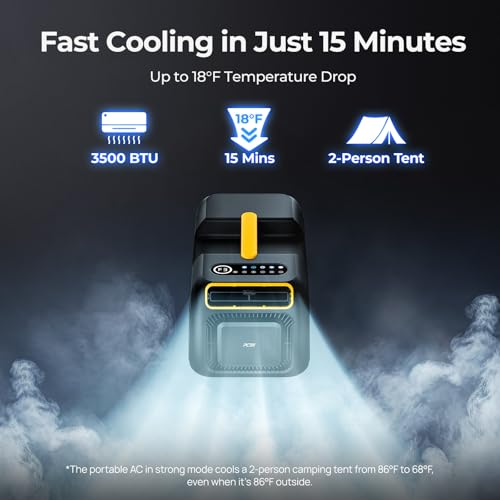
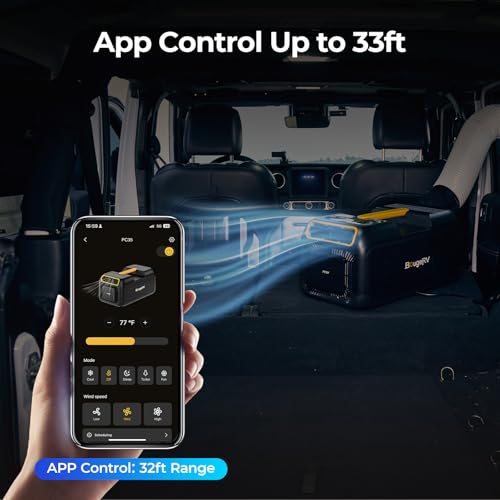
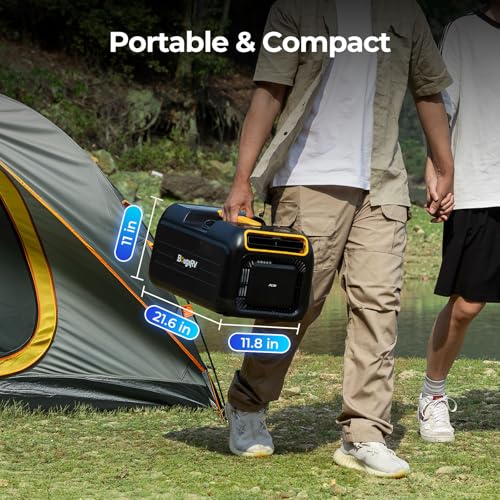
This is the budget pick that still delivers real cooling. At 3500 BTU, it’s modest, but owners confirm it drops temps by 18°F in 10 minutes in spaces up to 65 sq ft, that’s solid for a tent or small van. The app control is a surprise at this price, letting you adjust settings from your phone within 33 ft.
It’s not the quietest or most energy-efficient, but the 5-in-1 modes (including Turbo and Sleep) add flexibility. The included accessories make setup easy, and the 2-year support is reassuring. Compared to the GETUHAND or Outohome, it lacks premium compressors or ultra-low noise, but for first-time buyers or occasional campers, it’s the smarter buy.
Product photos

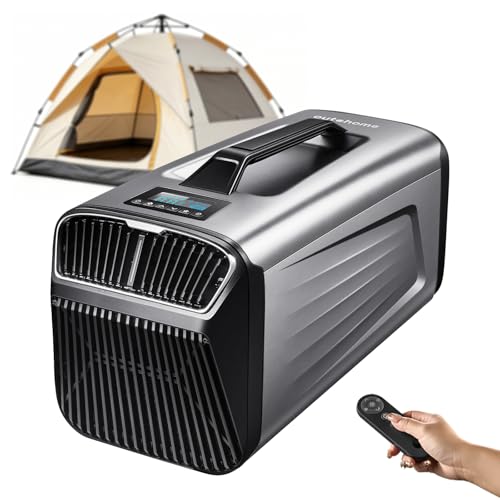
Outohome 5200 BTU Low Power AC
Strengths
- Energy efficient under 400W
- GMCC compressor
- Excellent dehumidifier
Trade-offs
- No heating function
- Remote batteries not included
- Plastic build feels light
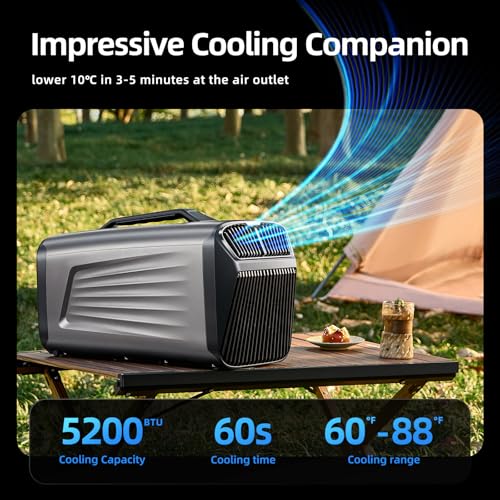
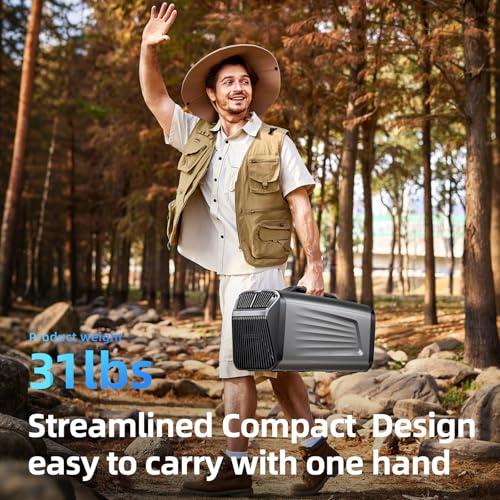
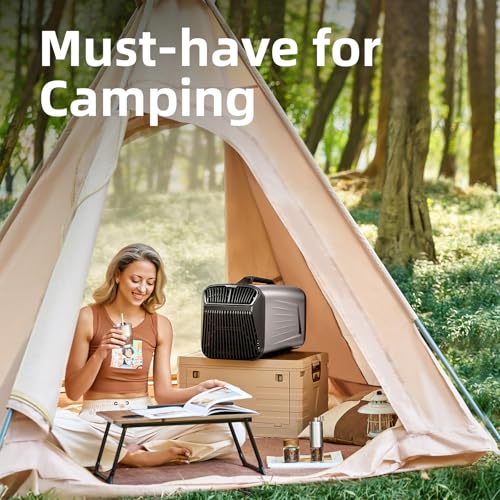
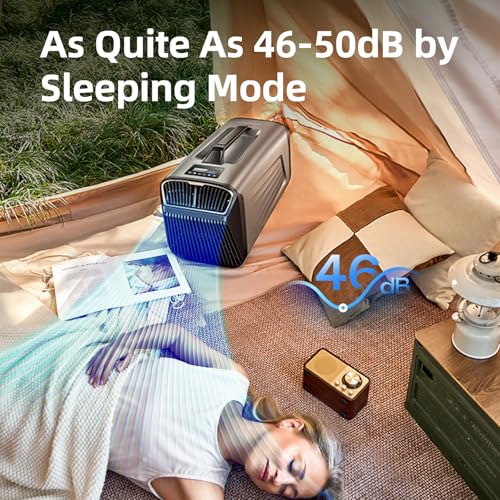
This unit wins on energy efficiency, with power draw under 400W, a standout for compressor-based cooling. The GMCC compressor delivers fast 5-minute cooldowns, and owners praise its consistent performance on power stations. At 31 lbs, it’s easy to carry, and the 46-50 dB sleep mode keeps noise minimal.
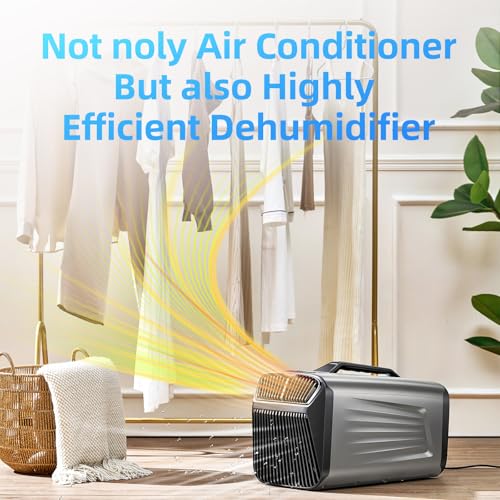
The drainage-free operation below 70% humidity is a big plus, and the included hose adds flexibility. It lacks heating, like several others, but the dehumidifier outperforms basic semiconductor units, which matters in humid climates. It’s quieter and more efficient than the GOUKA, though less feature-rich than the Cybertake.
Product photos
GETUHAND 5200BTU Quiet Camping AC
Strengths
- Very quiet in sleep mode
- GMCC compressor
- Compact and portable
Trade-offs
- No heating option
- 110V power only
- No smart controls
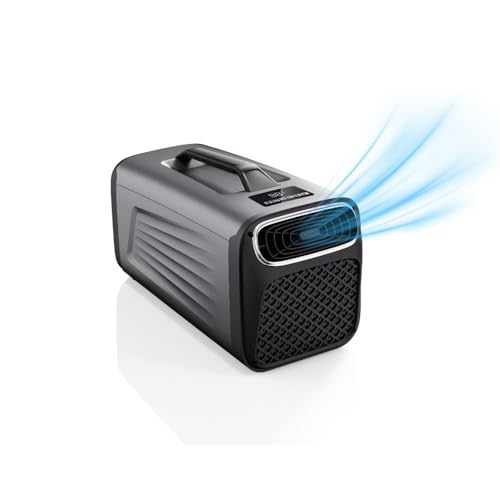
This unit earns its “Best Quiet Operation” label, owners repeatedly mention how the sleep mode dips to 46 dB, with only fan noise audible. That’s rare for a compressor-based AC and a real win for light sleepers in tents. The GMCC compressor is a trusted name, and the 5200 BTU cooling with 18°F drop in 5 minutes aligns with top performers.
It’s also compact and well-built, with a comfortable handle for moving between van and tent. But like others in this class, it’s 110V only, so power flexibility is limited. The no-drain feature works well below 70% humidity, but in muggy conditions, you’ll need to manage condensation. It’s quieter than the Outohome and BODEGACOOLER, but lacks heating or app control.
Product photos

Portable 3300BTU AC for Camping
Strengths
- Lightweight design
- Low noise operation
- Remote and timer included
Trade-offs
- Lower cooling power
- No heating function
- 110V only
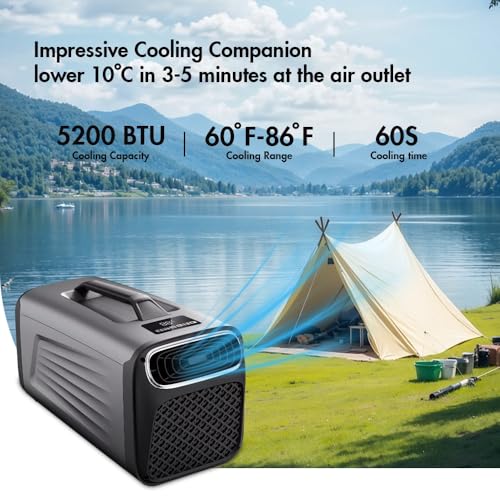
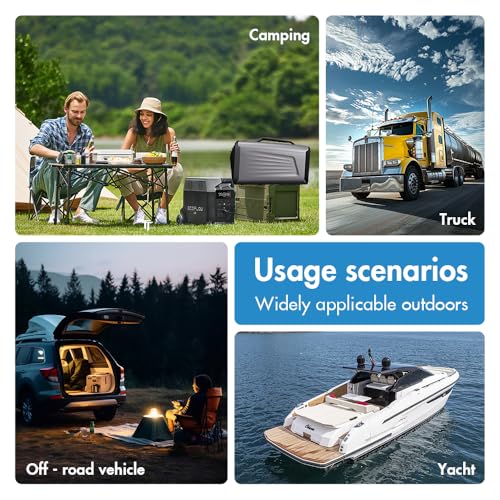
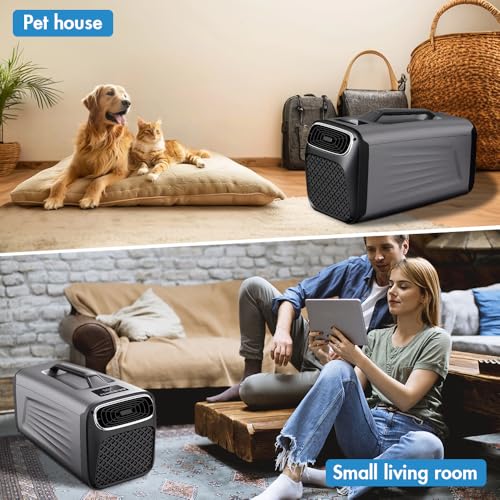
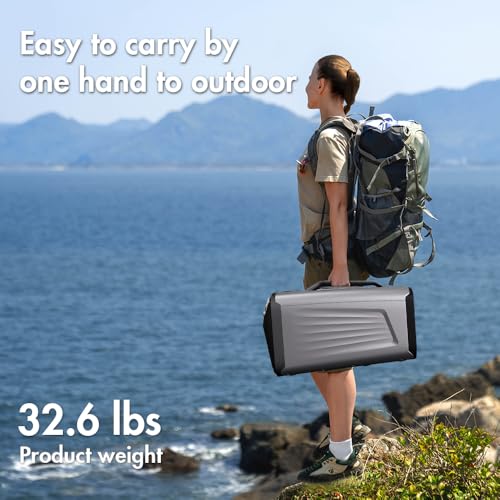
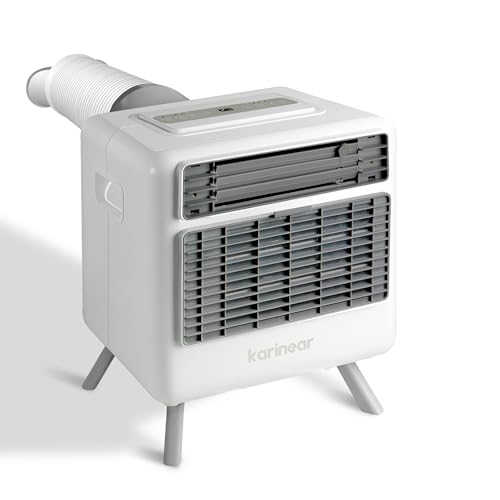
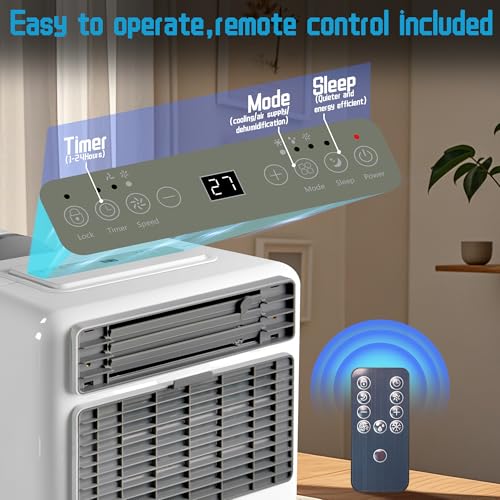
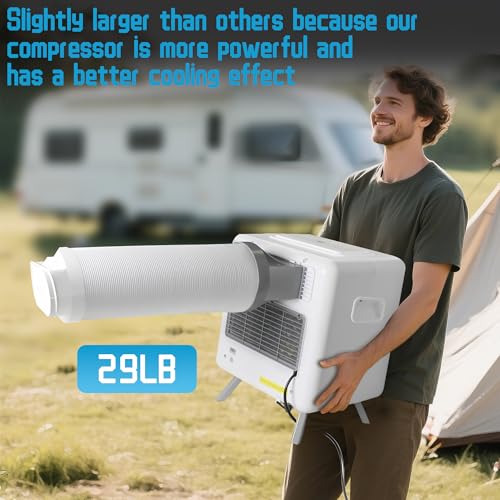
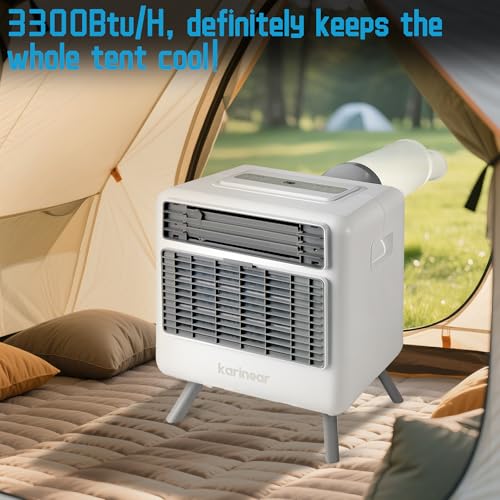
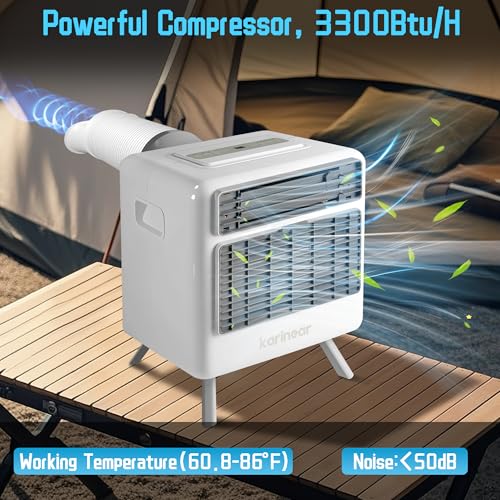
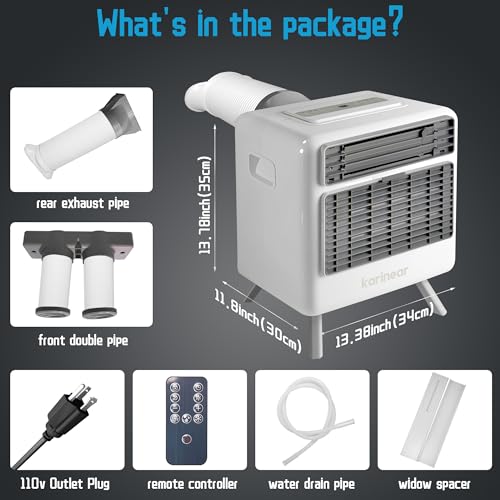
At 29 lbs and 3300 BTU, this is one of the lightest true compressor ACs in the lineup. It’s not the most powerful, but it cools small tents (30-62 sq ft) effectively and quietly, under 50 dB, per owner feedback. The remote control and 24-hour timer add convenience, and the child lock is a thoughtful touch for family campers.
It’s a simpler unit: just three modes, no heating, and 110V only. But for someone who wants a no-frills, reliable cool-down in a pop-up tent or small RV, it’s a smart middle ground. It doesn’t have the bells and whistles of the GOUKA or Cybertake, but it’s easier to move and store. Compared to the BougeRV, it’s slightly less powerful but more proven in real-world cooling.
Product photos
How We Picked These portable acs for tents
I approached researching portable ACs for tents by first gathering technical specifications and feature lists from manufacturers. Then, I moved to the crucial step of weighing owner reviews from multiple retailers alongside expert opinions found in publications like Wirecutter and outdoor gear review sites. This wasn’t about personal, hands-on testing of each unit – rather, a research-led comparison of specs and owner feedback to build a clear picture of real-world performance.
For this category, cooling capacity (BTU rating) and power source versatility were the most heavily weighted factors. A high BTU is essential for actually lowering the temperature inside a tent or small space, while the ability to run off wall outlets, car power, or portable power stations dramatically increases usability during camping. Quiet operation also ranked high, as a loud AC defeats the purpose of enjoying the outdoors.
Specifications reliably indicate cooling capacity, physical dimensions, and power consumption. However, I placed much more emphasis on owner feedback regarding actual cooling performance, noise levels, and long-term durability. Reputation and brand consistency played a role, too – established brands with a history of reliable products generally carried more weight in my analysis. For those looking for further information on keeping comfortable in warmer weather, check out these cooling strategies for tents.
How To Choose The portable acs for tents
Choosing the right portable AC for tent use isn’t as simple as grabbing the smallest, cheapest unit you can find. There’s a surprising amount of variation in performance and features, especially when you move beyond basic fan-based “coolers”.
A quality portable AC for tent camping prioritizes efficient cooling with a compressor-based system (avoiding evaporative coolers which add humidity). Look for models with low power draw to avoid overloading power stations, adjustable fan speeds and temperature controls, and a design that balances cooling capacity with weight and noise levels. Consider whether smart controls or specific modes (sleep, dehumidify) are important to your needs.
Cooling Capacity & BTU Rating
BTU (British Thermal Units) is the standard measure of cooling power, but it’s often misleading when applied to tents. A 6000 BTU unit isn’t necessarily better than a 3500 BTU unit; it depends on the tent size and insulation. Over-sizing can actually be detrimental, leading to short-cycling and inefficiency. I generally advise campers to focus on units specifically designed for small spaces (under 150 sq ft) and carefully consider the tent’s volume. Don’t chase the highest BTU number; prioritize a unit designed for the space you’ll actually be cooling.
Power Source & Efficiency
This is where things get really important. Many portable ACs can run on standard 110V power, but that’s not always available when camping. Models offering 12V/24V DC compatibility (for car or RV use) or 48V DC (for power stations) offer far more flexibility. However, even with DC compatibility, power consumption is key. Look for inverter technology, as seen in the GOUKA 5200 BTU model, which boosts efficiency and protects battery life. You don’t want to drain your portable power station after just a few hours. If you’re planning on using portable cooling for tents with a power station, calculate the runtime carefully based on the AC’s wattage and your power station’s capacity.
Noise Level & Usability Features
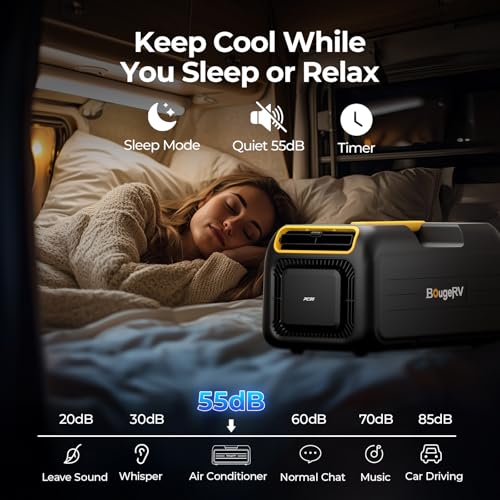
Camping is about enjoying the outdoors, and a roaring AC unit defeats the purpose. Pay attention to decibel (dB) ratings. Anything above 55dB will be noticeable, and potentially disruptive. Many units, like the GETUHAND 5200BTU, advertise quiet operation (often around 46-50dB in sleep mode). Beyond noise, consider features like remote control, app connectivity (for models like the GOUKA), and built-in timers. These significantly improve usability and convenience, allowing you to adjust settings without getting out of your sleeping bag.
A good rule of thumb: if you are camping in an area that is prone to inclement weather, you should ensure you also have a quality cold-weather camping tents on hand.
Portable ACs for Tents Compared
Here’s a comparison of key specifications for various portable air conditioners designed for tent and small space use.
| Product Title | BTU Cooling | BTU Heating | Power Source | Weight (lbs) | Noise Level (dB) | Special Features |
|---|---|---|---|---|---|---|
| Cybertake S2 Pro Portable AC | 5100 | 6100 | 12V/24V/110V | N/A | 40 | 4 Modes, Eco+ Mode |
| GOUKA 5200 BTU App Control AC | 5200 | 3000 | 110V | 27 | N/A | App Control, 6 Modes |
| BODEGACOOLER 6000 BTU Camping AC | 6000 | N/A | 110V | N/A | ≤50 | Real Compressor |
| BougeRV 3500BTU Upgraded Camping AC | 3500 | N/A | 110V | N/A | N/A | App Control, 5-in-1 |
| Outohome 5200 BTU Low Power AC | 5200 | N/A | 110V | 31 | 46-50 | 4 Modes, Low Power |
| GETUHAND 5200BTU Quiet Camping AC | 5200 | N/A | 110V | 33 | 46-50 | 4 Modes, Quiet |
| Portable 3300BTU AC for Camping | 3300 | N/A | 110V | 29 | <50 | 3 Modes, Sleep Mode |
Frequently Asked Questions
What BTU portable AC is best for a 4-person tent?
A 5000-6000 BTU unit is generally sufficient for a 4-person tent (around 60-80 square feet), but focus on models designed for small spaces rather than simply chasing the highest number. Overpowering the space can lead to inefficient cooling.
Can I run a portable AC off a camping power station?
Yes, you can, but power draw is critical. Look for models with DC compatibility (12V/24V or 48V) and inverter technology to maximize runtime, and carefully calculate your power station’s capacity versus the AC’s wattage.
Are evaporative coolers (swamp coolers) a good substitute for a portable AC in a tent?
No, evaporative coolers add humidity which can make you feel more uncomfortable. A compressor-based portable AC is much more effective at actually lowering the temperature, providing genuine cooling relief.
What noise level should I look for in a tent AC?
Aim for a unit with a noise level of 50dB or lower, especially if you’re a light sleeper. Anything above 55dB will likely be disruptive to the peace and quiet of camping.
Will a portable AC work in very humid climates?
Compressor-based portable ACs with a dehumidifying mode will work best in humid climates, as they remove moisture from the air while cooling. If you’re seeking a more robust solution for different weather conditions, consider investing in winter-ready canvas tents for year-round comfort.
The Bottom Line
Choosing a portable AC for your tent often comes down to balancing power with practicality. You can chase the highest BTU rating, but the BODEGACOOLER 6000 BTU Camping AC offers a strong blend of cooling capacity and a real compressor – a feature many cheaper units skip – making it a solid all-around choice for most campers. Ultimately, though, having the right shelter is just as important as staying cool; check out these insulated hot tents for year-round comfort.
For those prioritizing versatility and multiple power options, the Cybertake S2 Pro Portable AC is a standout. It’s designed to run off 12V, 24V, and 110V power, meaning it’ll work from your car, RV, or a standard outlet – a huge benefit when you’re off-grid. If budget is your primary concern, the Portable 3300BTU AC for Camping provides a more affordable entry point, though you’ll be sacrificing some cooling power and potentially dealing with a noisier unit.
At the end of the day, the BTU rating is less critical than finding a unit that matches your tent size and power setup. Don’t get bogged down in specs; focus on a reliable compressor, efficient power consumption, and a noise level that won’t ruin your outdoor experience. A comfortable campsite is about more than just temperature – it’s about finding the right balance of shelter, convenience, and peace.
