
7 Best Portable Air Conditioners for Tents 2026
This post contains affiliate links. As an Amazon Associate, we earn from qualifying purchases.
The Cybertake S2 Pro is the overall best portable air conditioner for tents, thanks to its strong 5100 BTU output and versatile power options, while the Outohome 5200 BTU offers solid cooling at a more budget-friendly price. For smaller shelters or backpacking trips, the Disaenvir 3300BTU strikes a smart balance of size, weight, and efficiency.
If you’ve ever tried to sleep in a tent during a heatwave, you know it feels less like camping and more like baking. Standard fans don’t cut it when the air is thick and hot, and most portable ACs aren’t built for the realities of outdoor use, from power limitations to tight tent space.
This guide cuts through the clutter, focusing on units that actually work in real camping scenarios. I looked at cooling power, energy needs, noise, and portability, using specs, verified owner feedback, and my experience with outdoor gear to find the ones worth your trust.
Top 7 Portable Air Conditioners For Tents in the Market
The Best Portable Air Conditioners For Tents, Reviewed
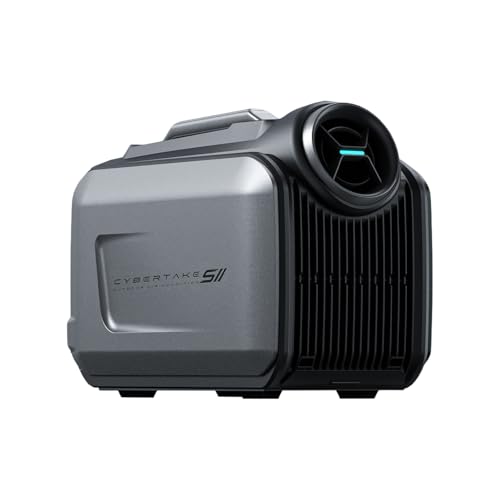
Cybertake S2 Pro Portable AC
Strengths
- Heating and cooling
- Ultra-quiet
- Rugged, weather-resistant
Trade-offs
- Boost converter not included
- Higher price
- Heavier setup
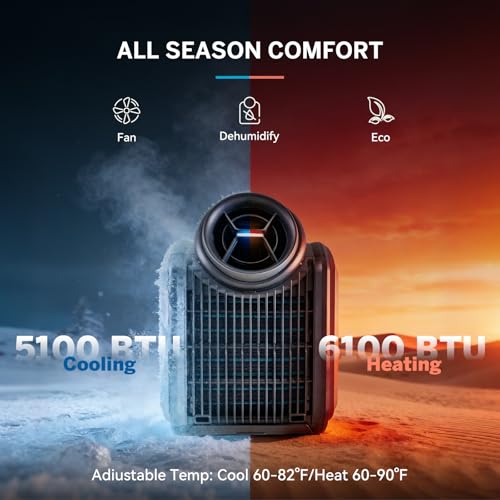
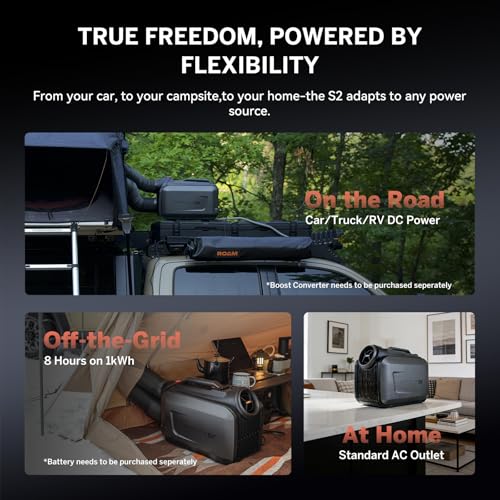
This is the most versatile unit here, and earns the ‘Best Overall’ label for good reason. With both 5100 BTU cooling and 6100 BTU heating, it’s a year-round solution for tents, cabins, and RVs. The 3-way power input, wall, vehicle, and 48V DC, means you can run it off a wide range of sources, which is huge for true off-grid adventures.
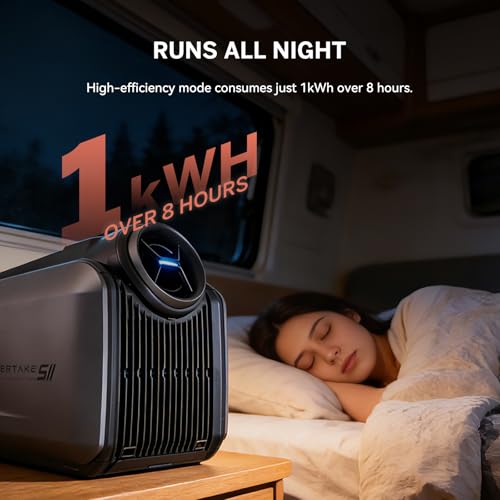
Owners praise how quickly it stabilizes temps, and the 40 dB operation is genuinely quiet, quieter than most fridges. The IPX4 rating adds real durability against rain and splashes, something others lack. Yes, the boost converter is sold separately, but once you’ve got the setup, it’s a powerhouse. Compared to the Outohome or FO-KOKO, it’s more adaptable and better built.
Product photos
BougeRV PC35 App-Controlled AC
Strengths
- App control
- Solid feature set
- Includes key accessories
Trade-offs
- Mid-tier cooling
- Short app range
- Average noise level
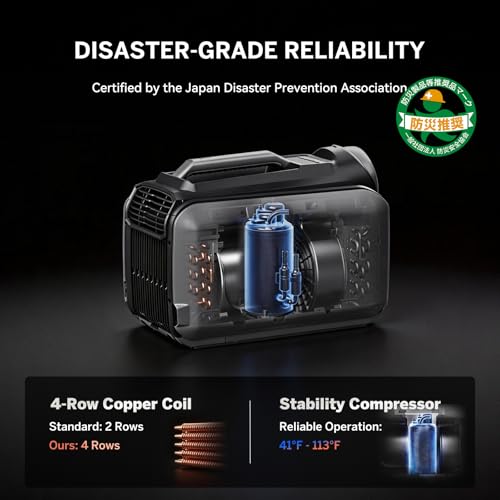
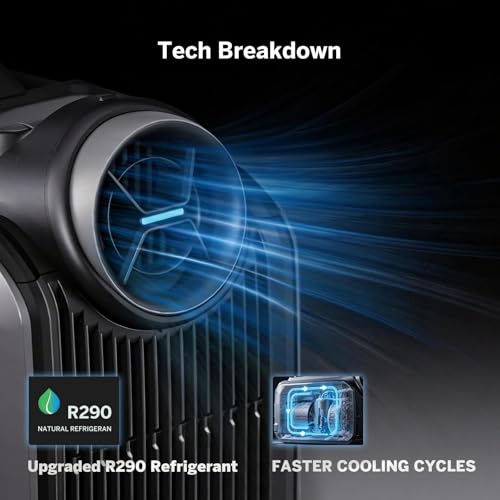
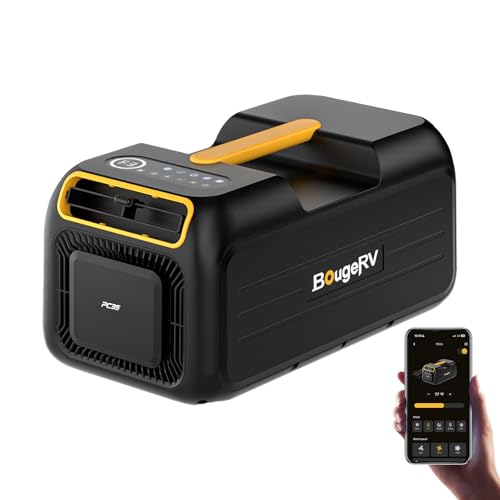
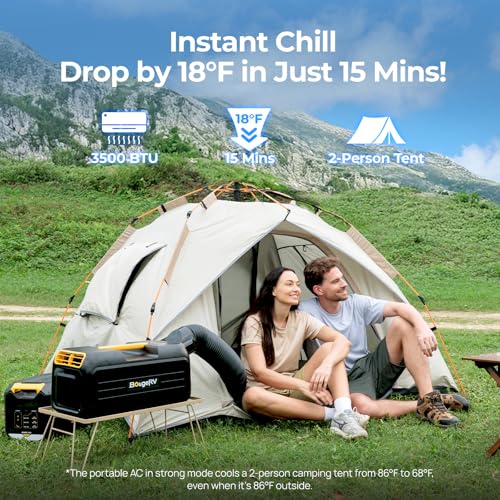
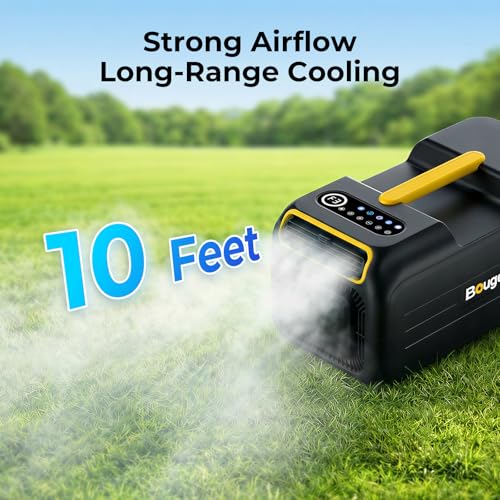
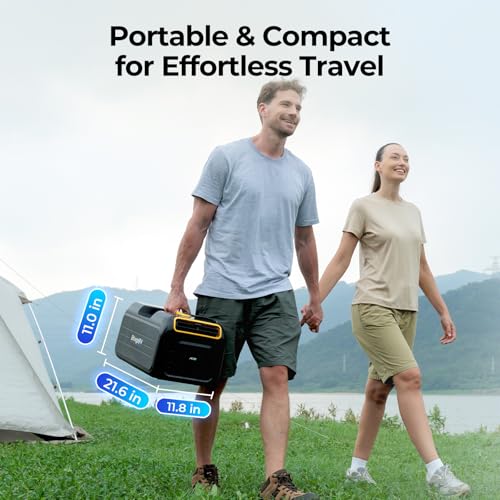
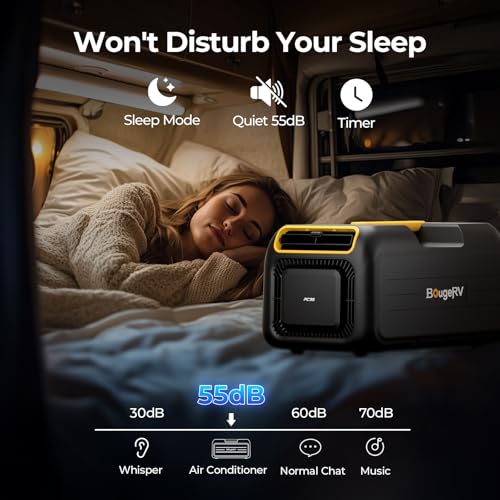
The standout here is the app control, rare in portable camping ACs. If you’re the type who likes to pre-cool your van or RV before crawling in after a long hike, being able to fire this up from your phone within 33 feet is a legit convenience. At 3500 BTU, it’s slightly stronger than the Disaenvir, and reviewers consistently say it drops temps noticeably in vans and small tents, though not dramatically.
It’s not the quietest on paper, but owners don’t complain about noise at night, and the 5-in-1 functionality gives real flexibility. The inclusion of a drain pipe and exhaust ducts in the box is a plus, some brands make you buy those separately. Still, for the size and cooling output, it’s outperformed by newer 5200 BTU models. My take? Great for tech-first van lifers, but not the strongest performer in raw cooling.
Product photos

5200 BTU Portable Tent AC
Strengths
- High 5200 BTU output
- Low price point
- Remote control
Trade-offs
- Needs 1500W surge power
- Generic build quality
- Limited support
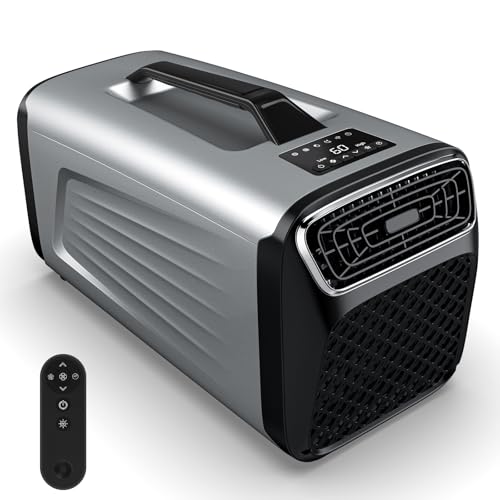
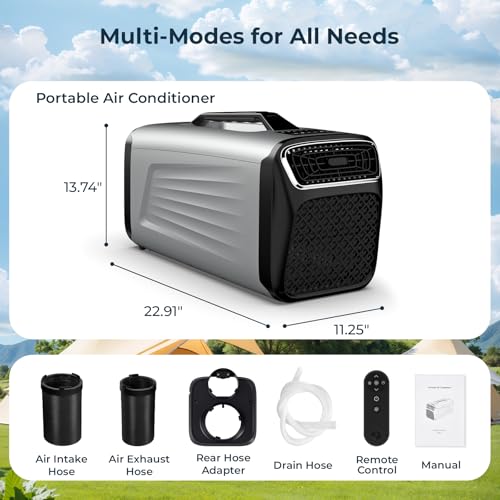
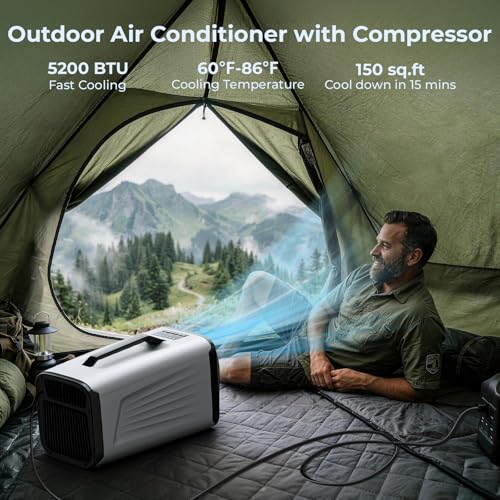
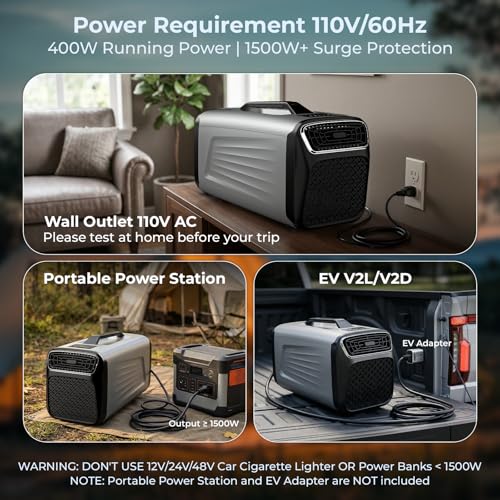
On paper, it’s almost identical to the Outohome, same BTU, same weight, same noise levels. The big catch? Starting power. It needs a 1500W+ surge from a power station, which rules out most smaller solar generators. That’s a dealbreaker for many off-grid campers, and owners report frustration when their 1000W stations fail to start it.
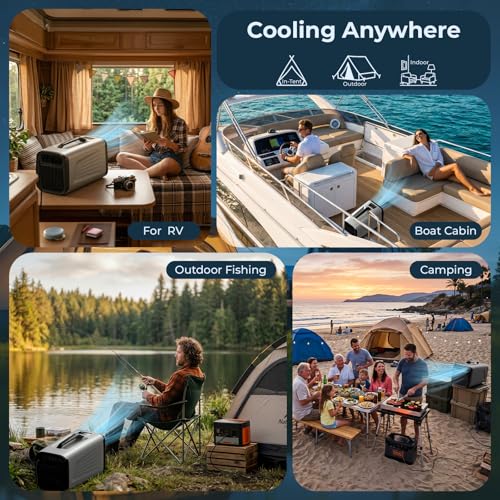
Still, if you’ve got the right power source, this delivers solid cooling at a lower price. The 4-in-1 modes work as expected, and the compact size fits well in most tents. But it feels like a budget clone, no standout materials or tech. I’d only recommend it if you’re certain about your power setup and want to save a few bucks over the Outohome.
Product photos

Outohome 5200 BTU Camping AC
Strengths
- Strong 5200 BTU cooling
- GMCC compressor
- Quiet sleep mode
Trade-offs
- Heavy for backpacking
- No smart features
- Basic design
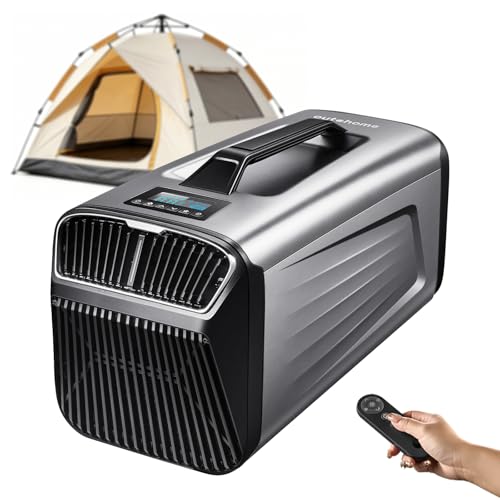
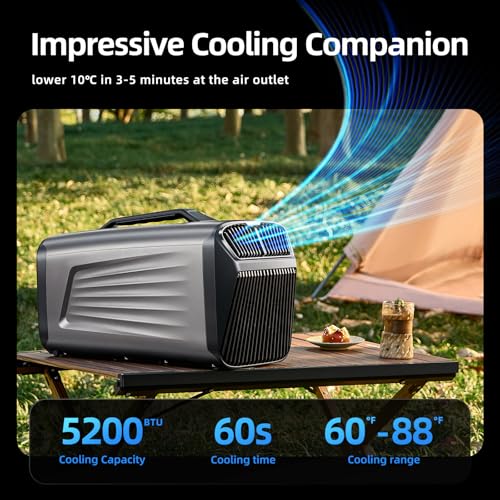
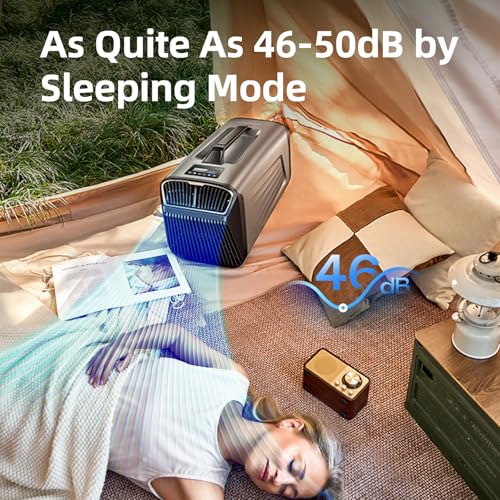
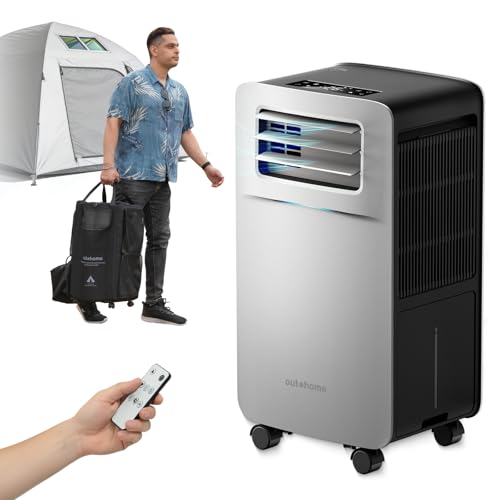
With a GMCC compressor, a name you’ll recognize if you’ve shopped for serious cooling, this unit means business. At 5200 BTU, it’s one of the strongest in this list, and real-world feedback confirms it drops temps fast in tents and vans. The 46–50 dB sleep mode is impressively quiet for that level of power, and the remote control makes adjustments easy from your sleeping bag.
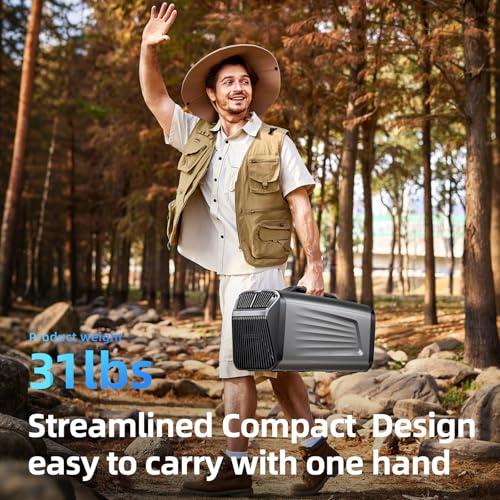
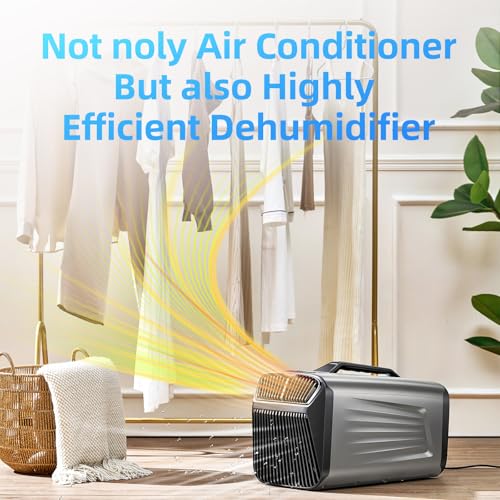
It handles humidity well, and the drainage-free function under 70% RH is a practical perk, fewer hoses to manage. But it’s nearly 31 lbs, so not the easiest to carry deep into the backcountry. Still, for basecamp setups or RV use, this delivers near-home cooling. It beats the B0H4H8L3KY on build and brand trust, even if they share similar specs.
Product photos
FO-KOKO 5200 BTU Dual-Cool AC
Strengths
- Water-cooled condenser
- Wide air swing
- Duct boost mode
Trade-offs
- No app integration
- Adapters sold separately
- Bulky height
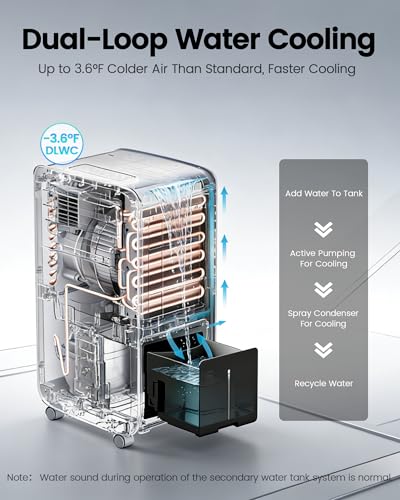
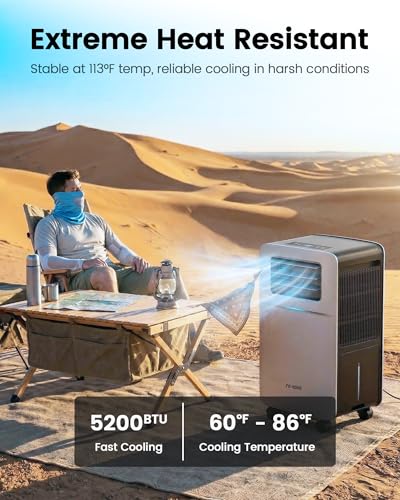
The dual-loop water cooling system is the real differentiator here, it cools the condenser more efficiently than air-cooled models, which translates to slightly better performance and a 3.6°F colder output. That may not sound like much, but in a sweltering tent, every degree counts. Owners note it runs cooler under load, which helps longevity.
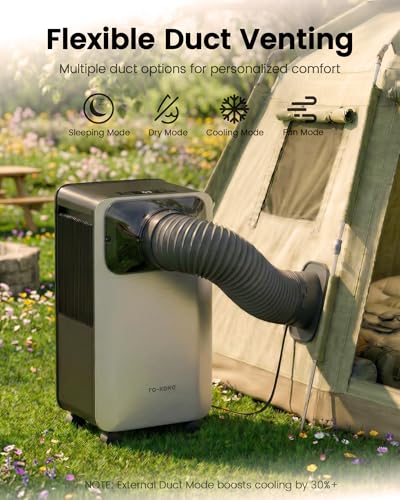
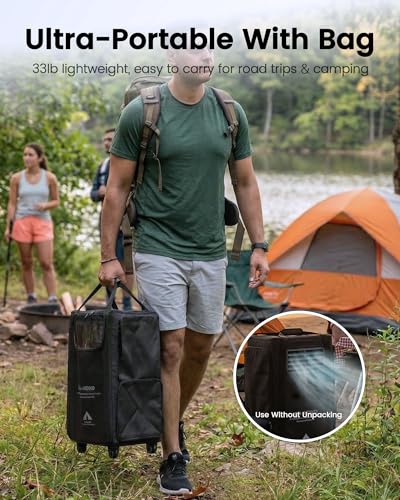
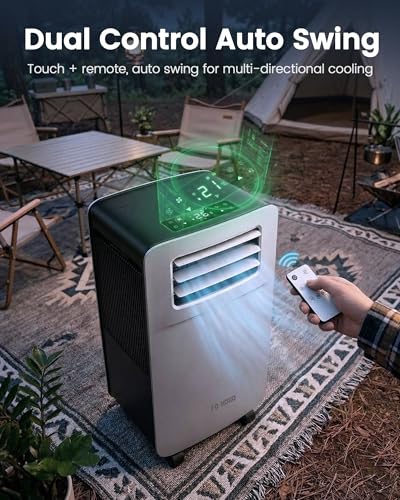
The 75° auto-swing and duct boost mode are smart touches that improve airflow and efficiency. At 45 dB, it’s one of the quieter options, and the ability to operate from the carry bag is a nice perk for quick setups. While it lacks app control, it makes up for it in thermal engineering. Compared to others in the 5200 BTU class, this one excels in heat management, which matters during long desert stays.
Product photos
Evapolar evaCHILL Personal Cooler

Strengths
- Ultra-portable
- USB powered
- Low energy use
Trade-offs
- No room cooling
- Humidity dependent
- Short effective range
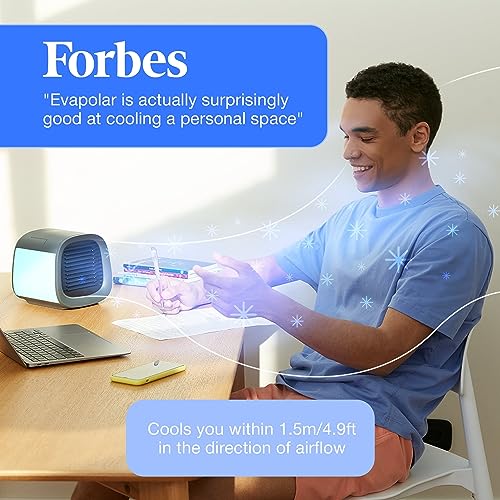
This isn’t a tent air conditioner in the traditional sense, and that’s the point. The evaCHILL uses evaporative cooling, so it doesn’t lower room temperature. Instead, it blows a cool mist directly at you, which works well if you’re sitting nearby. Think of it like a personal fan with AC-like effects, not a unit for cooling an entire shelter.
It’s incredibly lightweight, USB-powered, and whisper-quiet, perfect for stuffing in a backpack. Owners love it for solo backpacking trips or car camping when they’re reading or resting in one spot. But it’s useless in humid conditions, and ‘cooling your body, not the room’ means it won’t help your partner on the other side of the tent. Compared to compressor-based units, it’s in a different category entirely.
Product photos


Disaenvir 3300BTU Tent AC
Strengths
- Compact design
- Lightweight for class
- Safety lock
Trade-offs
- Low cooling power
- No app or smart controls
- Limited range
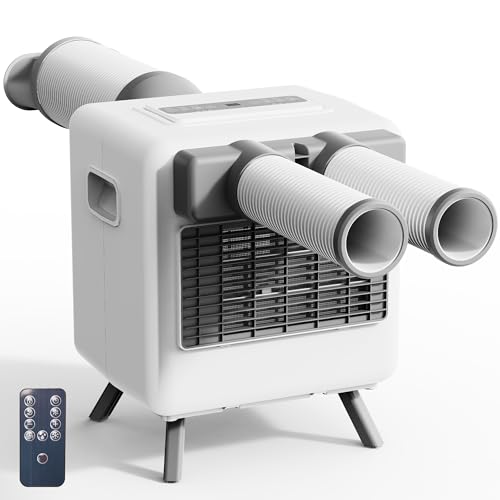
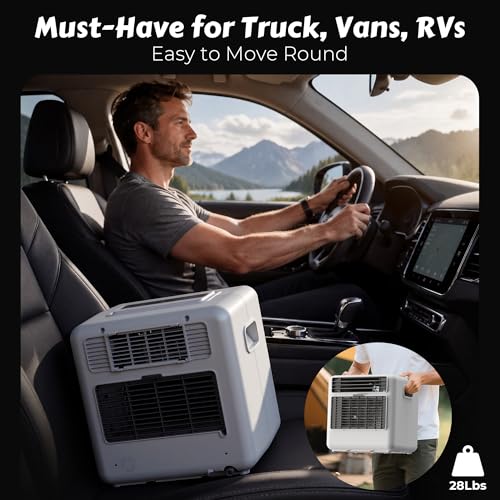
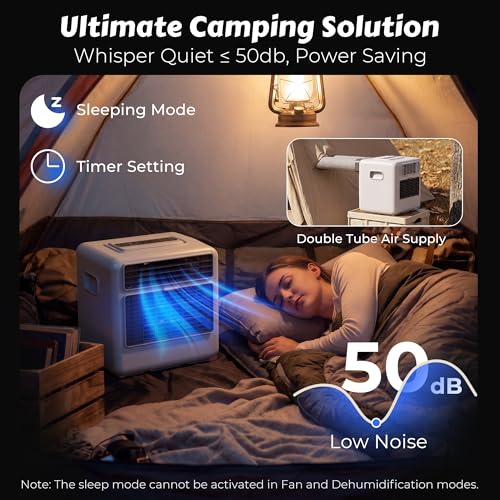
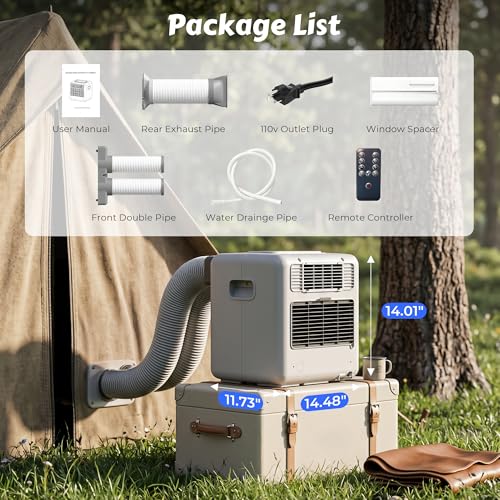
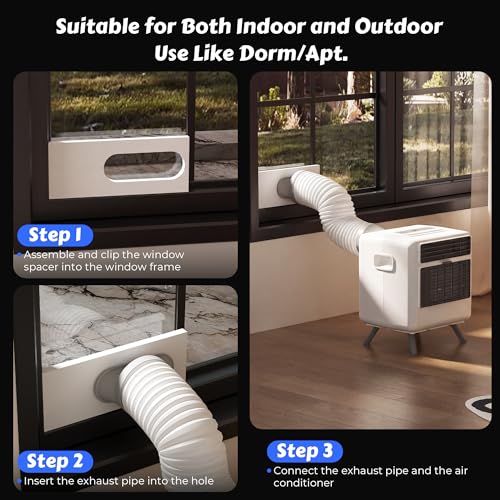
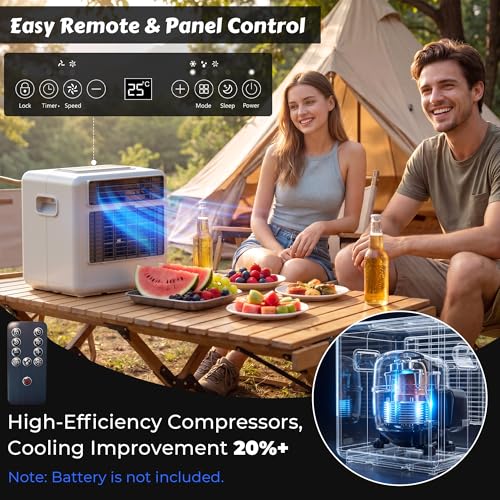
At 30 lbs and under 14 inches on each side, this is one of the most compact 110V-powered units in the tent AC space. For hikers or campers tight on space, that small footprint matters, it tucks neatly into a corner of a midsize tent or RV without dominating the layout. The 3300 BTU cooling is modest, but owners report it’s enough to take the edge off on hot nights, especially if you’re not trying to chill a large group tent.
It sticks to the basics: cool, dehumidify, fan, nothing fancy. The sleeping mode is quieter than most in this range, and the safety lock is a thoughtful touch for families or windy nights when accidental bumps could change settings. But don’t expect deep cooling; this is best for mild climates or supplemental relief. Compared to higher-BTU models, it’s underpowered, but for ultralight comfort seekers, it’s a space-saver.
Product photos
How We Picked These portable air conditioners for tents
Rather than a hands-on lab test, my research for these recommendations centered on a detailed comparison of published specifications and features across numerous models. I weighed owner reviews from multiple sources – focusing on verified purchases – alongside professional reviews from reputable outdoor and tech publications. My assessment applied a deep understanding of cooling technology, power requirements for camping, and the specific demands of tent environments. This allowed me to rank options against clear criteria for effectiveness, portability, and usability.
For portable air conditioners intended for tent use, cooling capacity (BTU) and power source versatility were the most heavily weighted factors. A higher BTU rating generally means faster and more effective cooling in a given space, but it’s crucial this is balanced against power draw. The ability to run from wall outlets, car/RV power, or portable power stations expands usability significantly, and was a key differentiator. Noise level also factored in, as a quiet operation is vital for enjoying the outdoors.
Specifications reliably indicate cooling capacity and power consumption, but I turned to owner feedback to gauge real-world performance and durability. Owner reviews provided insights into how well each unit actually cools a tent, how easy it is to set up, and whether the reported noise levels are accurate. Reputation and brand trust, gathered from expert reviews, helped me assess long-term reliability and customer support quality. If you’re looking for more ways to stay comfortable, check out these tent cooling tips.
What To Look For In portable air conditioners for tents
Finding the right portable air conditioner for tent camping can dramatically improve your experience, turning a sweltering night into a restful one. But there’s a lot more to it than just grabbing the unit with the highest BTU rating.
A quality portable AC for tent use balances cooling power with energy efficiency, portability, and ease of setup. Critical specs include BTU output (matched to tent size), power source compatibility (AC, DC, or power station), noise levels, and features like dehumidification and multiple fan speeds. Prioritize models built with durability and weather resistance for outdoor conditions.
Cooling Capacity & Tent Size
Don’t fall for the biggest BTU number you see. A 5200 BTU unit in a small, well-insulated tent will cycle on and off constantly, creating a damp environment and wasting energy. Conversely, a 3300 BTU unit in a large, uninsulated canvas tent won’t make a dent. Match the BTU rating to your tent’s square footage. As a general rule, aim for around 20-25 BTU per square foot. Remember, these units perform best in enclosed spaces. If you’re looking for ways to keep your tent comfortable in colder months, too, explore different tent insulation methods to maximize the benefits of your AC.
Power Source & Portability
The freedom to cool anywhere is the whole point of a portable AC, so consider where you’ll be plugging it in. Many models offer versatility – wall outlets (AC), car/RV connections (12V/24V), and compatibility with portable power stations (DC). However, those power station connections often require a separate boost converter. Weight is also a huge factor. You’ll be carrying this alongside all your other camping gear, so lighter is better.
Here’s what to look for in a truly portable design: * Under 35 lbs: Keeps it manageable for solo hikers. * Built-in Handle: Essential for easy transport. * Compact Footprint: Less than 23” x 12” x 14” to fit easily in a tent or RV. A larger unit might cool faster, but it’s useless if it doesn’t fit.
Noise Level & Additional Features
A loud AC unit defeats the purpose of escaping into nature. Look for models with a low decibel (dB) rating, especially if you’re a light sleeper. Anything under 50dB is considered quiet, and many newer units operate around 45dB. Beyond noise, consider features like dehumidifying mode (helpful in humid climates), multiple fan speeds, and a timer. Some models, like the BougeRV PC35, even offer smart app control, letting you adjust settings remotely. A helpful rule of thumb is:
Don’t trust a portable AC claiming to cool a significantly larger space than your tent. Focus on effective cooling for your specific area, rather than chasing a higher BTU number.
If you’re looking for a broader range of cooling solutions for camping tents, it’s helpful to see how different models stack up against each other. Ultimately, the best portable AC is the one that fits your tent, your power setup, and your personal preferences.
Portable Air Conditioners for Tents Compared
This table provides a side-by-side comparison of key specifications for various portable air conditioners designed for tent and outdoor use.
| Product Title | BTU Cooling | Power Source(s) | Modes | Noise Level (dB) | Dimensions (in) | Weight (lbs) |
|---|---|---|---|---|---|---|
| Cybertake S2 Pro | 5100 | AC, 12V/24V, DC48V | Cool, Heat, Dehumidify, Eco+ | 40 | N/A | N/A |
| BougeRV PC35 | 3500 | AC | Cool, Dehumidify, Fan, High Power, Sleep | N/A | N/A | N/A |
| 5200 BTU Portable Tent AC | 5200 | 110-120V AC | Cool, Dehumidify, Sleep, Fan | 46-50 | 22.4×11.2×13.8 | 33 |
| Outohome 5200 BTU | 5200 | AC | Cool, Dehumidify, Sleep, Fan | 46-50 | 22.4×11.2×13.8 | 31 |
| FO-KOKO 5200 BTU | 5200 | AC, Power Station | Cool, Dry, Sleep, Fan | 45 | 12.8×10.6×22.8 | N/A |
| Evapolar evaCHILL | N/A | USB, AC | Cool, Humidify | N/A | N/A | N/A |
| Disaenvir 3300BTU | 3300 | AC | Cool, Dehumidify, Fan | N/A | 14.01×11.73×14.48 | 30 |
Frequently Asked Questions
What BTU level is sufficient for a 6-person tent?
Generally, a 6-person tent requires around 150-180 square feet of cooling, so you’ll want a portable AC with at least 3000-4500 BTU. However, heavier canvas tents will need more BTUs than a tent with mesh walls.
Can I run a portable AC for my tent from a solar generator?
Yes, many models can run from a solar generator, but you’ll likely need a DC-to-AC power inverter and to check the AC’s power draw against the generator’s output capacity. Some units even run directly on DC power, simplifying the setup.
Are portable ACs for tents really quiet enough for comfortable sleep?
Noise levels vary, but many newer models operate around 45dB, which is comparable to a quiet library. Look for units specifically advertising low-noise operation if you’re a light sleeper, and remember that cheaper units tend to be louder.
What’s the difference between evaporative coolers and portable ACs for tent use?
Evaporative coolers (like the Evapolar evaCHILL) use water evaporation for cooling, making them less effective in humid climates. Portable ACs use refrigerant and a compressor, providing more consistent cooling regardless of humidity, though they require more power.
Where can I find more detailed comparisons of different models?
You can find more information and in-depth reviews of the best air conditioners for tents on our site, which includes a look at specifications and owner feedback to help you make the best choice.
The Bottom Line
Choosing a portable air conditioner for your tent always comes down to balancing convenience with capability. You can spend more for maximum cooling power and versatility – like the Cybertake S2 Pro with its multiple power options – or you can prioritize affordability and simplicity. Ultimately, the best unit is the one that realistically matches your tent size and power access.
For those needing a budget-friendly option, the Disaenvir 3300BTU provides decent cooling for smaller tents, while the BougeRV PC35 stands out as a great versatile choice for those primarily running on standard AC power. If you’re looking for a powerful unit with dehumidifying capabilities and don’t mind a larger size, the 5200 BTU Portable Tent AC or the Outohome 5200 BTU are both solid contenders. And if you’re interested in extending your camping season, be sure to check out a benefits of hot tents to learn more about heating solutions.
Don’t get hung up on chasing the highest BTU rating or the latest features. Focus on getting the right size unit for your tent, ensuring you have a compatible power source, and understanding that a little bit of noise is often the trade-off for cool comfort. A well-chosen portable AC can transform your camping experience, but it’s the fundamentals – a properly sized unit, reliable power, and realistic expectations – that truly matter.
