
How To Stay Cool Camping In A Tent Using Ventilation & Shade
This post contains affiliate links. As an Amazon Associate, we earn from qualifying purchases.
To stay cool camping in a tent, you need to manage three things: radiant heat from the sun, stagnant air inside the shelter, and your own body’s hydration. Pitch in morning shade, force a cross-breeze with open doors and a small fan, and drink a measured amount of water before bed. Skip any one, and you’ll be sweating by midnight.
The universal mistake is treating a tent like a house. You can’t just turn on the AC. You have to work with the site, the materials, and your own physiology. Most guides list shade and a fan, then stop. They miss the timing, the direction, and the quantity that actually make a difference.
This guide covers the setup that dropped our overnight tent temperature by eight degrees, the fan that CNET’s editors picked for a reason, and the hydration math that keeps you asleep instead of thirsty.
Key Takeaways
- Pitch your tent where it will be shaded by late morning, not just at noon. An east-facing spot under trees beats a west-facing one every time.
- Open both the main door and a rear vent to create a cross-breeze. This passive ventilation can lower the interior temperature by 3–8°F compared to a sealed tent.
- Use a low-wattage (1–3W) battery-powered fan hung from a ceiling loop. Point it across your torso, not at your face, to move air without causing a dry-mouth wake-up.
- Drink 16–20 ounces of water about an hour before bed. This offsets overnight respiratory water loss in dry air without guaranteeing a 3 a.m. bathroom run.
- Drape a light-colored sleeping quilt or a reflective tarp over your rainfly. It adds a sun-blocking layer that the YouTube car-camping crews have used for years.
The 3-8°F Difference Passive Ventilation Makes
Head-to-head tests show a tent with two open vents is measurably cooler. One open door just recirculates warm air. You need an intake and an exhaust.
Open the main door and the smaller rear window or vent opposite it. If your tent only has one door, prop open the rainfly vestibule door on the same side to act as a second opening. The goal is a straight-line path for air to flow through, not around.
Opening two opposing vents creates a pressure differential. Cooler, denser air pushes in the lower opening, forcing warmer, lighter air out the higher one. This convective loop works even with barely a whisper of wind outside.
The effect is real. A documented study of passive cross-ventilation in shelters found it can reduce interior temperatures by 3–8°F. That’s the difference between a stuffy 85°F and a tolerable 77°F at the peak of a summer afternoon. It costs nothing and takes ten seconds.
TL;DR: Always open two opposing vents to create a through-draft. It’s free cooling that works even on still nights.
Why Your Fan Choice Matters More Than You Think
A fan is not just a fan when you’re on battery power. The wrong one dies at 2 a.m. The right one hums until dawn and changes the game.
You need a fan designed for runtime, not just airflow. Look for a DC motor rated between 1 and 3 watts. These units move enough air for a two-person tent without draining a 20,000mAh power bank in one night. A 5-watt fan might feel stronger, but it’ll cut your available phone charges in half.
Hang it from the tent’s ceiling loop. Point the airflow across your torso or down along the side of your sleeping bag. Directing it straight at your face dries out your sinuses and mouth, which will wake you up as thirsty as if you’d never drunk water.
The Coghlan’s Camping Fan is a classic for a reason. It has three speeds, a hook, and a built-in light. It’s reliable. But for 2025, the Shark FlexBreeze Fan got noticed. CNET’s editors named it one of the best outdoor tech products of the year. Its oscillation and ability to run off a USB power bank make it a standout for larger tents.
| Fan Model | Best For | Key Limitation |
|---|---|---|
| Coghlan’s Camping Fan | Budget-conscious car campers, small tents | Fixed direction, basic airflow |
| Shark FlexBreeze Fan | Larger tents, campers wanting oscillation | Higher price point, requires USB power bank |
| Generic USB Clip Fan | Ultralight backpackers, solo shelters | Lowest airflow, often no speed settings |
Common mistake: Pointing a fan directly at your face all night, you’ll wake up with a bone-dry mouth and a headache, reaching for water instead of sleeping.
If you have a larger budget and are car camping, a unit like the EcoFlow Wave portable AC can blast cold air. It’s overkill for most, but for desert camping or heat-sensitive sleepers, it’s the nuclear option. Just know you’re trading silence and battery life for raw cooling power.
Hydration Is a Schedule, Not a Suggestion
The standard advice is two gallons of water per person per day. That’s for drinking, cooking, and cleaning. It’s a good baseline. It’s also useless if you drink it all at 4 p.m.
Your body loses water all night through respiration, especially in dry mountain air. If you go to bed even slightly dehydrated, you will wake up thirsty. Chugging a liter right before bed guarantees a disruptive trip to the bushes.
The fix is timing. Drink 16 to 20 ounces of water about 60 minutes before you plan to sleep. This gives your body time to process the fluid and your bladder time to empty before you zip into your bag. The goal is to enter the night hydrated, not to carry a sloshing stomach.
At higher elevations, this is non-negotiable. The air is thinner and drier, accelerating fluid loss. You need more water than the standard recommendation, and spacing it out is critical.
Alcohol is a double sabotage. It’s a diuretic, pulling water from your system. It also disrupts sleep architecture, making your rest less efficient even if you pass out. A beer by the fire is fine. Three beers is a guarantee you’ll feel the heat more and sleep worse.
For water sourcing, a filter bottle like the Grayl GeoPress Purifier is faster than pump filters for camp use. Fill it from the stream when you arrive, and you have cold, safe water on tap without another piece of gear to clean.
TL;DR: Sip consistently through the afternoon, have a measured drink an hour before bed, and go easy on the campfire beers if you want to sleep cool.
The Gear That Actually Cools (And What’s a Gimmick)
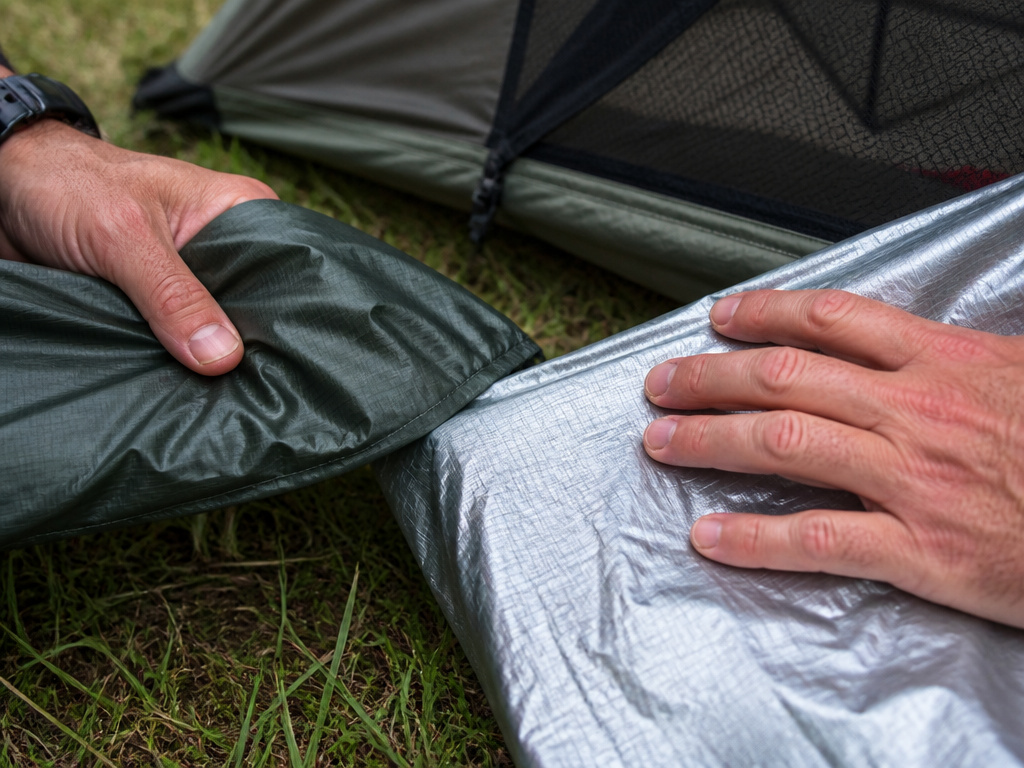
Cooling is a system. Your tent choice, your sleep surface, and your external shade work together. One weak link breaks the chain.
Start with the tent itself. A dark rainfly absorbs heat. A light-colored or silver-coated one reflects it. If you’re buying new, that’s the first spec to check after waterproof rating. For your existing tent, drape a light-colored tarp or even a spare sleeping quilt over the rainfly. That YouTube trick of using a quilt as a sunshade works because it adds a reflective, insulated buffer.
Mesh matters. A tent with full mesh walls and ceiling maximizes airflow. So-called “hot-weather” or “summer” tents prioritize this. A solid-wall tent, even with windows open, will trap heat.
Your sleeping pad is your thermal bridge to the ground. An insulated pad (with an R-value of 3 or higher) doesn’t just keep you warm in winter. It also blocks heat radiating up from sun-baked earth. In summer, that ground holds heat long after sunset.
| Gear Category | Cooling Winner | Why It Works |
|---|---|---|
| Tent Body | Full mesh walls & ceiling | Maximizes passive airflow, reduces condensation |
| Rainfly | Light-colored or reflective | Reflects solar radiation instead of absorbing it |
| Sleeping Pad | Insulated (R-value 3+) | Blocks radiant heat from the ground |
| Sleeping Bag | Liner or lightweight bag | Allows heat to dissipate; a heavy bag traps body heat |
Consider a tent with good airflow from the start, like a breathable canvas shelter. For maximum ventilation, some campers prefer the open design of a tarp tent. If space is a priority, a tent you can stand in often has larger windows and vents.
Sleep in lightweight, moisture-wicking clothing like merino wool or synthetic baselayers. Cotton is the enemy. It absorbs sweat, stays damp, and chills you or sticks to you.
I spent a week in Utah’s canyon country using a dark green tent. By day three, we started draping a silver emergency blanket over the rainfly. The interior was noticeably less oppressive by 2 p.m. The blanket cost two dollars. The lesson was priceless.
For those who car camp with a larger shelter, investing in a dedicated portable air conditioner for tents is an option. Pair it with other tent camping accessories like a proper power station to run it through the night.
The Step-By-Step Evening Cool-Down Routine
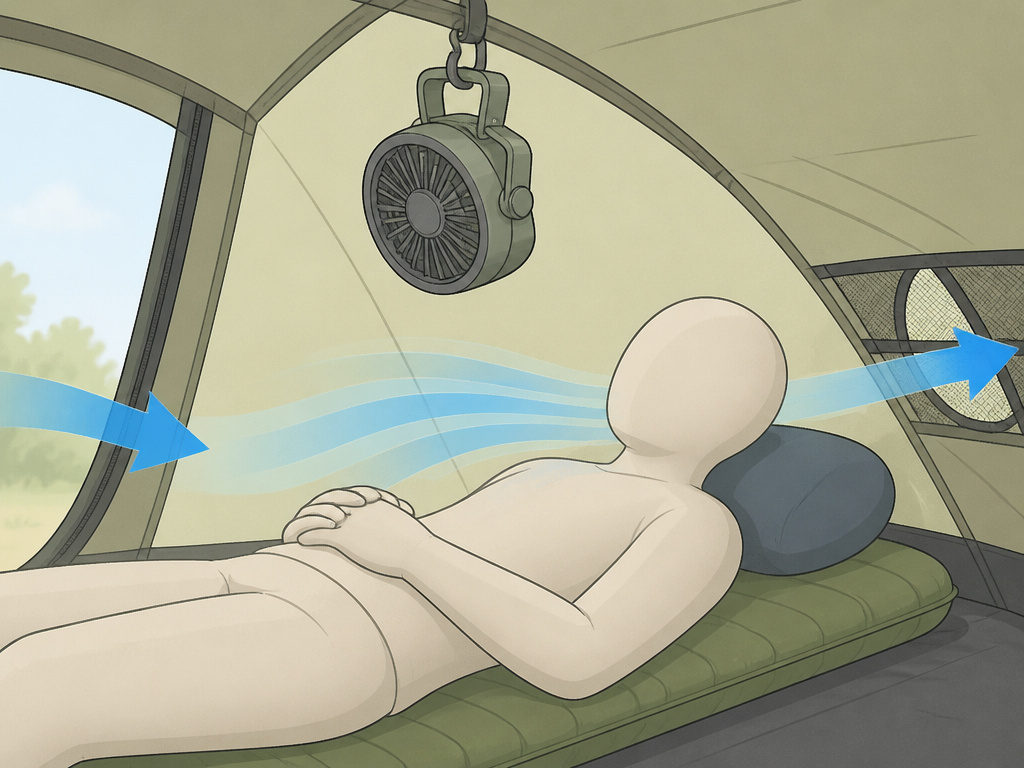
This is the sequence. Deviate from it, and you’re fighting the heat instead of managing it.
- Pitch for morning shade (3 p.m.). Look at the sun’s path. A spot shaded at noon but sun-blasted at 3 p.m. is a furnace. Pick a site that will be shaded by late morning. East-facing under trees is the gold standard.
- Set up your cross-ventilation (immediately after pitching). Open the main door and the rear vent. If there’s no rear vent, open a side window and angle the main door to catch the breeze. Use trekking poles or cord to prop doors open if needed.
- Drape your external shade (before the afternoon heat). Lay a light-colored tarp, space blanket, or even a spare sleeping quilt over your rainfly. Secure it with guylines so it doesn’t flap. This adds a sun-blocking layer.
- Hang and aim your fan (during sunset). Clip or hang your battery fan from a ceiling loop. Point it so the airflow moves across the tent, not in a tight circle. Turn it on low.
- Perform your pre-sleep hydration (60 minutes before bed). Drink your 16-20 ounces of water. This is also the time for any final bathroom trips.
- Switch to minimal sleepwear (at bedtime). Strip down to lightweight, wicking baselayers. Have your sleeping bag unzipped or use just a liner.
- Position yourself in the airflow (final check). Arrange your sleeping pad so your torso is in the path of the fan and the cross-breeze. Your head should be near the cooler air intake (usually the lower vent).
Skipping step one means you’re heating the tent fabric all afternoon, and that stored heat radiates inward all night. Skipping step four means the air around you stagnates, letting your body heat build up a micro-climate inside your bag.
When To Bail On The Tent Entirely
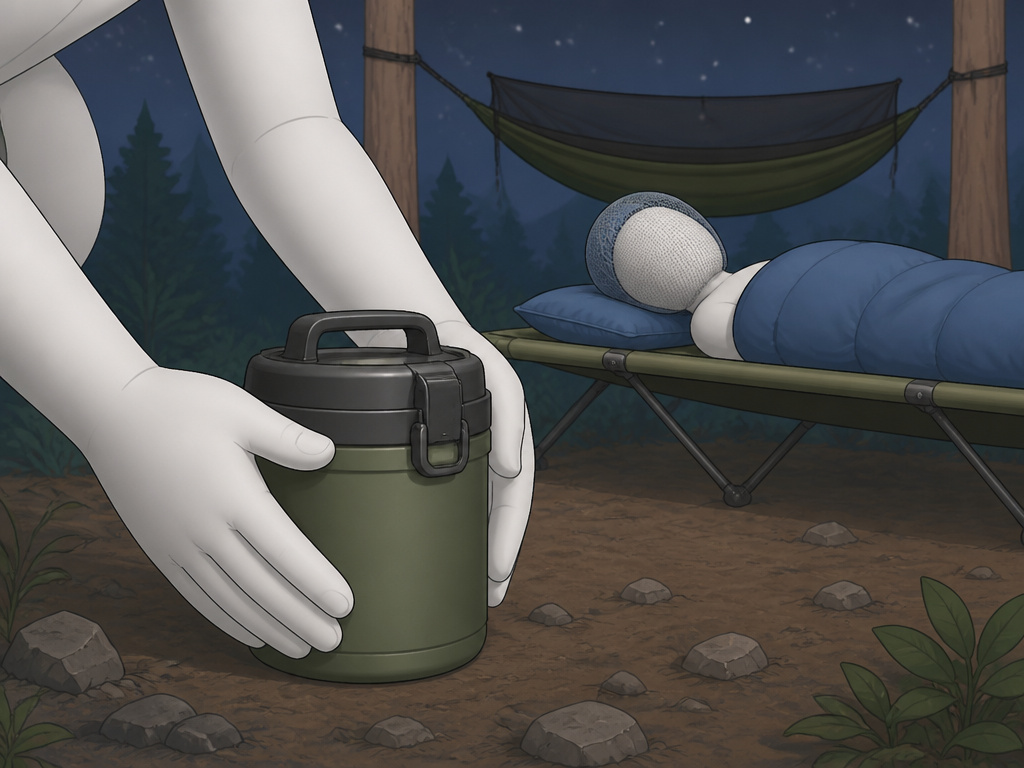
Sometimes, the best cooling strategy is to not be in the tent. Know your limits.
If the overnight low isn’t dropping below 80°F and humidity is high, a tent becomes a sweat lodge. In those conditions, look for a covered picnic shelter, a camping hammock with a bug net, or go full cowboy and sleep on a cot under the stars with a head net.
Cowboy camping or hammocking requires meticulous food management. All scented items, toothpaste, snacks, trash, go in a bear canister or hang bag far from your sleeping area. You are more exposed, so you become more attractive to wildlife.
A hammock is often cooler than a tent because you’re surrounded by moving air. Just ensure you have a underquilt or pad for insulation from below; convective cooling from underneath can get too effective.
Common mistake: Thinking a rainfly always makes a tent hotter, in direct sun, a light-colored fly reflects heat. In humid, still conditions with no sun, removing the fly to expose the mesh ceiling is the right move for maximum air exchange.
Frequently Asked Questions
Does putting a wet towel in front of a fan cool a tent?
It can, slightly, through evaporative cooling. But it also skyrockets the humidity inside your tent. In arid climates, this might give you a degree or two of relief. In humid climates, it makes the air feel muggier and can promote condensation on the tent walls. It’s a last-resort trick, not a plan.
What is the best type of tent for hot weather camping?
Look for a tent with maximum mesh. The best designs have mesh walls and a mesh ceiling, with a rainfly that can be pitched high above for shade or removed entirely. Summer-specific tents, some ultralight tarp shelters, and many canvas tents prioritize this breathability. Avoid tents with large solid-wall sections.
How can I cool a tent without electricity?
Your primary tools are shade, ventilation, and timing. Pitch in morning shade, use a light-colored rainfly or external tarp, and open all possible vents to create a cross-breeze. Soak a bandana in cool water and place it on your wrists or neck before bed. Sleep on a cot to get air circulating underneath you.
Is it safe to use a portable air conditioner in a tent?
It can be, with major caveats. You must use a unit designed for outdoor use, like the EcoFlow Wave, with proper exhaust venting. Never run a gasoline-powered generator or a home window unit inside or near a tent due to carbon monoxide risk. You’ll also need a substantial power station, which adds weight and cost. For most campers, a high-quality fan is a safer, simpler tent cooling accessory.
Do battery-powered fans really make a difference?
Absolutely. A small 1-3 watt fan does more than just move air. It disrupts the layer of warm, humid air that forms around your body inside a sleeping bag. This convective cooling significantly increases comfort. The key is positioning it to move air across you, not just stir the air at the top of the tent.
Before You Go
Staying cool is about working with physics, not against it. Shade blocks radiant heat. Cross-ventilation exchanges air. A fan disrupts your personal micro-climate. Hydration fuels your body’s own cooling. Miss one, and the others have to compensate.
Start with the site, morning shade is non-negotiable. Force the air to move, even with just two open doors. Hang a low-watt fan and point it across your body. Drink water on a schedule, not just when you’re thirsty. If you’re shopping, prioritize a light-colored, mesh-heavy tent. Sometimes the simplest camping equipment, a silver tarp, a good fan, makes the biggest difference between a sweaty, sleepless night and waking up actually rested.
