
How to Secure a Canopy Tent on Concrete Safely
This post contains affiliate links. As an Amazon Associate, we earn from qualifying purchases.
To secure a canopy tent on concrete, you must use suspended ballast weights, not just weights on the legs. Fire codes like Summit County’s mandate a minimum of 40 pounds per leg for a 10’x10′ canopy, suspended from the top corner. For true wind resistance, calculate 22.5 pounds per square foot of tent footprint. This means a 10’x10′ tent needs 2,250 lbs total, secured with ratchet straps, not rope.
I learned this lesson the hard way at a family reunion on my aunt’s paved driveway. Confident in my new Eurmax 10’x10′ canopy and its included nylon ropes, I tied four 25-pound sandbags to the legs. A 30-mph gust hit during setup. The ropes stretched, the bags slid, and my canopy—not one I was just watching—tore free. It cartwheeled across the concrete, shearing two leg joints and coming to a stop only after gouging a deep scratch in my cousin’s car door. That single gust taught me more about concrete anchoring than any generic guide ever could.
Forget “heavy enough.” On impermeable surfaces, you’re fighting physics and often local law. This guide cuts through the guesswork with the specific calculations fire marshals use, the gear that meets code, and the common methods that will get your event shut down.
Key Takeaways
- The non-negotiable minimum is 40 pounds of ballast per leg, suspended from the top corner, as specified in official policies like the RWB Fire safety document.
- For serious wind resistance, calculate 22.5 pounds per square foot of your tent’s area. A common 10’x10′ canopy needs 2,250 lbs total.
- Ratchet straps are mandatory; rope is a liability. Nylon rope can stretch up to 30% under load, creating deadly slack.
- Many common solutions are banned by fire code, including water jugs, loose sandbags, bricks, and gym weights.
- If you can stake into adjacent soil, use a 1″ x 36″ steel stake driven to full depth for over 1,000 lbs of holding force.
How Much Weight Do You Actually Need?
Throwing a few cinder blocks at the base of each leg feels secure until the first real gust. Wind doesn’t just push sideways; it creates massive uplift under the canopy roof, acting directly on the top corners. Weight on the ground does nothing to counter that lift. You need weight attached high on the frame.
For a tent or canopy up to 20’x20’, 40-pound weights must be used on each leg, suspended from the top corner and secured to each leg. The weight must be self-contained and permanently sealed.
— Summit County Tent & Canopy Policy
This 40-pound rule is a baseline for smaller pop-ups. For larger tents or high-wind areas, you must calculate the load. The City of Salina’s engineering guide, referencing IFAI testing, uses a formula of 22.5 pounds per square foot (psf). This includes a 1.5 safety factor over a 15 psf design load.
| Tent Size | Total Square Footage | Total Ballast Required | Per-Leg Weight (4 legs) |
|---|---|---|---|
| 10′ x 10′ | 100 sq ft | 2,250 lbs | ~560 lbs |
| 20′ x 20′ | 400 sq ft | 9,000 lbs | 2,250 lbs |
| 30′ x 60′ | 1,800 sq ft | 40,500 lbs | 10,125 lbs |
These numbers seem extreme for a backyard, but they explain why flimsy solutions fail. Your 10-pound weight bag isn’t just a little light; it’s off by a factor of 56.
TL;DR: Start with 40 lbs per corner, suspended high. For real security, use the 22.5 psf formula to calculate your total needed weight.
What Your Local Fire Code Definitely Bans
You can follow the math perfectly and still fail a safety inspection. Public event codes exist for a reason, and they outlaw the cheap, easy fixes. Summit County’s policy is explicit. The following are not approved for anchoring:
* Containers of water (open or sealed) other than 55-gallon drums.
* Bags of sand not designed by the tent/canopy manufacturer.
* Bricks, cinder blocks, or rocks.
* Gym-type weights.
The Salina guide is equally blunt, noting that typical 55-gallon plastic barrels are “not recommended for ballast due to being top-heavy and they are prone to sliding,” and that 5-gallon buckets of concrete (~100 lbs) are “not consistent with volume or weight and are easily displaced.”
These policies exist because places like Summit County face “unpredictable weather and strong, gusty, and erratic winds.” Your stack of patio pavers might work until it doesn’t. The difference between a safe setup and a dangerous projectile is often an inspector’s checklist. For your own property, these rules are a stark warning against cutting corners.
Common mistake: Using rope instead of ratchet straps. Nylon rope can stretch significantly under sustained load, creating slack that allows the canopy to “walk” and then catch a gust. I’ve seen this lead to a total failure in under 10 seconds of strong wind.
Choosing Your Anchoring Method
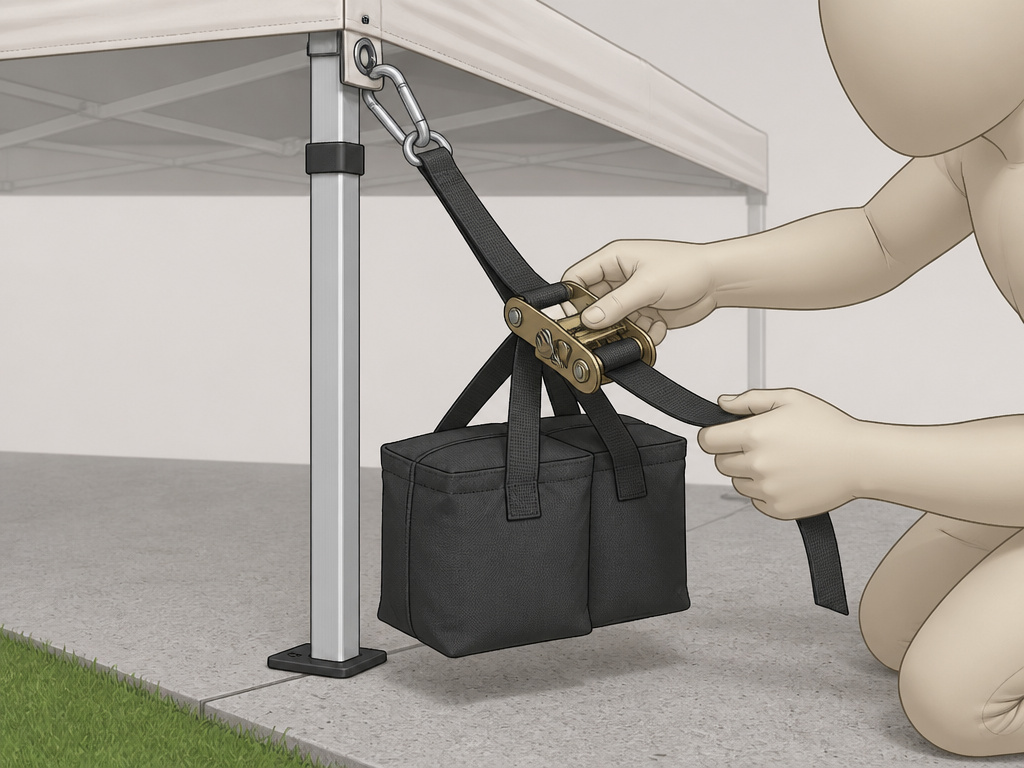
Your concrete situation dictates your approach. You have two proven paths, each with a specific gear list.
The Full Ballast System (For Solid Slabs)
This is for patios, pool decks, or parking lots with no exposed soil nearby. Every pound of resistance must come from suspended weight.
My go-to kit for this on my own concrete patio includes:
* Four commercial weight bags, like the AB Canopy Pro Weight Bag (rated for 40 lbs each). I use two per leg for larger canopies.
* Four ratchet straps, minimum 1” wide, with a Working Load Limit (WLL) of at least 500 lbs. Check for a stamp that says “For Overhead Lifting” if required by local code.
* Four heavy-duty carabiners to connect to the canopy’s top corner grommets.
Here’s my setup drill:
1. Assemble the canopy on the concrete.
2. Place two weight bags directly next to each leg.
3. Clip a carabiner through the metal grommet at the canopy’s top corner.
4. Hook one end of the ratchet strap to the carabiner.
5. Run the strap down through the handles of both weight bags.
6. Bring the strap back up and secure it tightly to the canopy leg, just above the ground.
7. Crank the ratchet until the strap is drum-tight and the weight bags are slightly suspended. They should hang, not sit flat.
8. Repeat for all four corners.
This pendulum effect is what fights uplift. It’s a core principle for creating a secure tent structure in exposed locations.
The Hybrid Ballast & Stake System (For Driveways)
If your concrete slab borders soil or grass, this method is more secure and often easier. It uses lighter ballast on the concrete and heavy-duty stakes in the ground for tension.
You’ll need:
* Four lighter weight bases (20-25 lbs each).
* Four 1” x 36” steel stakes.
* Four ratchet straps.
* A 3-lb mini sledgehammer.
I prefer this for my driveway setup. Position the canopy so each leg is about 18 inches from the concrete edge. Drive a stake straight down into the soil at a 45-degree angle away from the canopy, leaving only 1-2 inches above ground. Attach a ratchet strap from the canopy’s top corner to the stake, then back to the leg, and crank it tight. The stake absorbs the lateral and uplift force, while a single weight bag by the leg prevents it from skidding. This hybrid approach is a smart part of any comprehensive tent camping equipment strategy.
Why Ratchet Straps Are Non-Negotiable
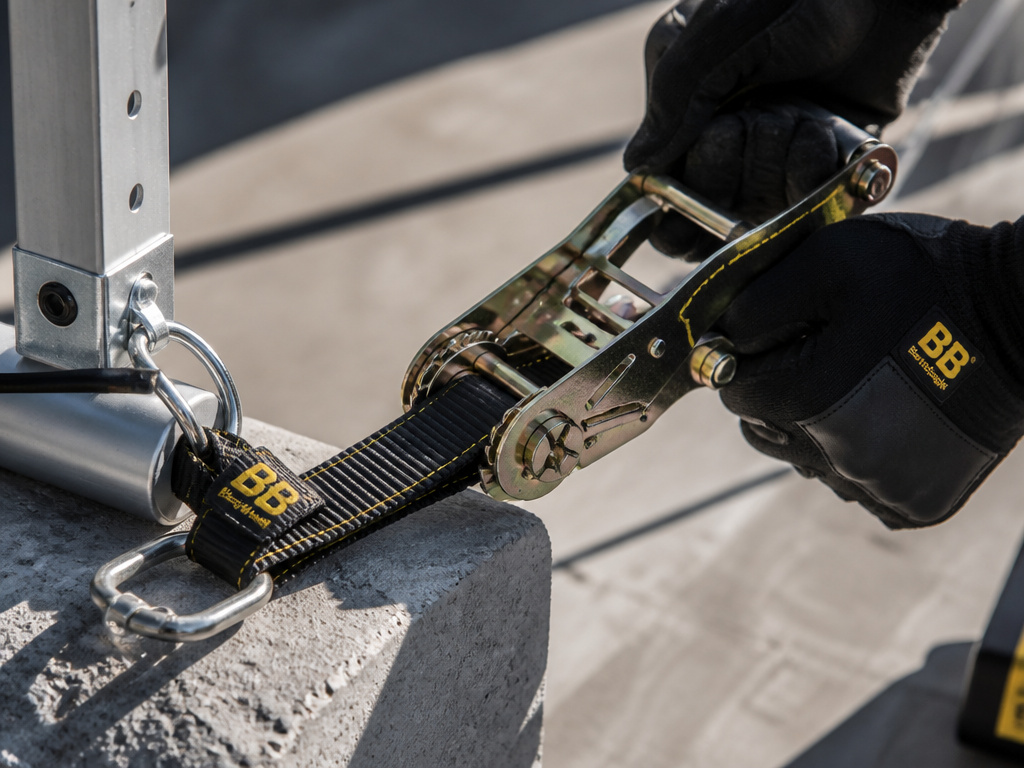
The sound that changed my mind was a sickening twang followed by aluminum screeching on asphalt. That was the sound of a nylon rope stretching to its limit and failing. Polyester ratchet straps have minimal elongation, typically under 3%, and the ratchet mechanism lets you apply far more tension than any human could pull by hand.
For the critical connection from the top corner to your ballast, a strap is the only safe choice. When tying off to a ground stake, a taut-line hitch or trucker’s hitch knot works, but for primary ballast suspension, the ratchet is king. It’s as essential as reliable tent lighting solutions for nighttime safety.
Before you start: Canopy collapse or flight poses serious injury and property damage risks. Always check ratchet strap ratings (WLL) for your calculated load. Never use damaged or sun-faded straps. During setup and takedown, have a partner stabilize the frame. Never leave a canopy unattended in rising winds.
When You Can Stake: The Specs That Matter
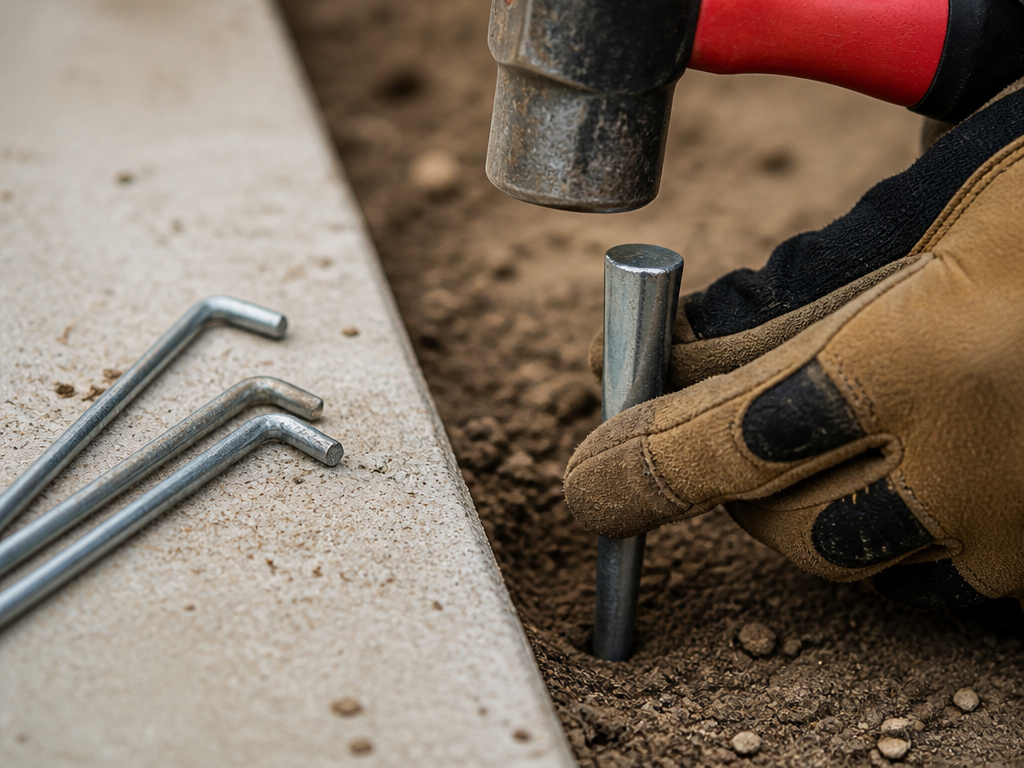
If you have the hybrid option, the stake’s holding power isn’t about brand—it’s about size and soil. The Salina guide provides tested average holding forces that should inform your purchase.
| Stake Size & Material | Holding Force (Driven Full Depth) | Holding Force (Driven Half Depth) |
|---|---|---|
| 5/8″ diameter x 18″ Steel | 200 lbs | 135 lbs |
| 5/8″ diameter x 24″ Steel | 500 lbs | 275 lbs |
| 1″ diameter x 36″ Steel | 1,150 lbs | 400 lbs |
| 1″ diameter x 42″ Steel | 1,450 lbs | 700 lbs |
“Full depth” means the stake is driven so only 1-2 inches remain above grade. The performance drop at half-depth is catastrophic. For a canopy on a concrete border, where the adjacent soil is often compacted, you need the mass and length of a 1” x 36” model. Don’t waste time with the thin, hooked stakes included with most budget tents under $100; they’re designed for soft ground, not serious anchoring.
Frequently Asked Questions
Can I use gallon water jugs to hold down my canopy?
While a full jug weighs about 8.3 lbs, they are a poor choice. They are top-heavy, prone to tipping, and often explicitly banned by fire codes like Summit County’s. To meet the 22.5 psf standard for a 10’x10′ tent, you’d need over 65 jugs per leg, which is entirely impractical and unstable.
Is 40 pounds per leg really enough for a 10×10 canopy?
It is the minimum standard for permitted events in some jurisdictions, like Summit County, for canopies up to 20’x20′. However, for personal use or in high-wind areas, it’s wise to exceed this. The calculated 22.5 psf standard calls for over 500 lbs per leg. The 40-lb rule is a starting point for code compliance, not a guarantee for all conditions.
What’s the best knot for securing a canopy?
For tying a guyline to a stake, the taut-line hitch is ideal because it’s adjustable and tightens under tension. However, for the primary connection from the canopy frame to your ballast weight, you should not use a knot at all. Use a ratchet strap. Its mechanical advantage and lack of stretch are superior for this critical, high-load application.
Are concrete blocks or sandbags better?
Concrete blocks are superior. They are denser, don’t shift shape, and are less likely to be displaced. Many fire codes prohibit sandbags unless they are part of a manufacturer-designed system, as they can rupture, leak, and become inconsistent in weight. A concrete block, properly secured with a strap, is a more reliable durable canvas tents anchor point.
Can I secure a canopy to concrete with screws?
Drilling into concrete to use screw-in anchors or concrete bolts is possible and very secure, but it is generally not recommended for temporary structures. It damages the surface, requires specialized tools, and is often impractical. This method is better suited for permanent installations, not for pop-up canopies.
The Bottom Line
Securing a canopy on concrete is an exercise in applied physics, not guesswork. The 40-pound-per-corner minimum is your baseline, but true security comes from suspending adequate weight from the top corners using unyielding ratchet straps. Always check your local fire code—the convenient solution is often the forbidden one.
Your shelter is an investment. Protect it with ballast that meets the calculated standard and attachments that won’t stretch. When the wind picks up, you’ll appreciate the peace of mind that comes from a properly anchored setup, leaving you free to enjoy the gathering, not worry about it. For other challenging environments, like sandy beaches, the principles of weight and secure attachment also apply to choosing the right wind-resistant pop-up tents.
