
6 Best Beach Tents for Camping (2026 Guide)
This post contains affiliate links. As an Amazon Associate, we earn from qualifying purchases.
The COVACURE 2026 Upgraded Beach Tent stands out as the best overall for its strong wind resistance and reliable UPF 50+ protection, while the NHOWIN Beach Tent is a solid budget-friendly pick that doesn’t skimp on key features. For larger groups, the Osoeri Beach Tent with Sandbags offers unmatched space and stability.
If you’ve ever had a beach day ruined by a collapsing shelter or relentless sun, you know a flimsy tent isn’t worth the hassle. A good beach tent needs to stay put, block the UV rays, and give you room to relax without sweating through your clothes.
As Chloé Bourgeois, I’ve spent years reviewing tents built for real outdoor use, and for this guide, I focused on what matters most: wind resistance, UV protection, and smart design. These picks are based on specs, owner feedback, and performance trends across trusted outdoor gear sources.
Top 6 Beach Tents Camping in the Market
The Best Beach Tents Camping, Reviewed
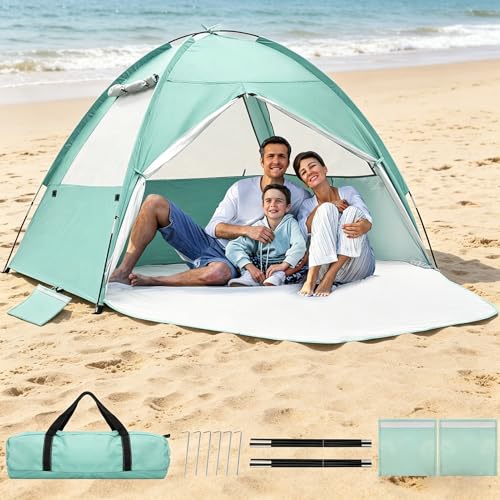
NHOWIN Beach Tent for 3-4 Person
Strengths
- Spacious interior
- Quick 3-step setup
- Strong wind resistance
- Good ventilation
- UPF 50+ protection
Trade-offs
- Slightly bulky when packed
- No floor reinforcement
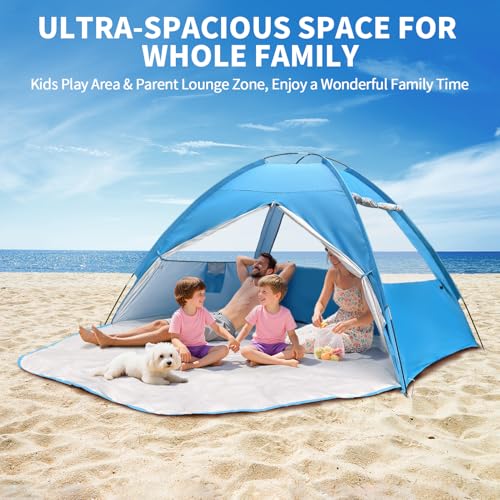
This tent stands out for buyers who want space and stability without wrestling with setup. On paper, the 40% larger footprint than average pop-ups is a real win, and owners consistently report that the 95×79-inch floor plan genuinely fits three adults and a couple of kids without feeling cramped. The extended 38-inch beach mat is a smart touch, great for keeping sand off gear or giving kids a defined play zone.
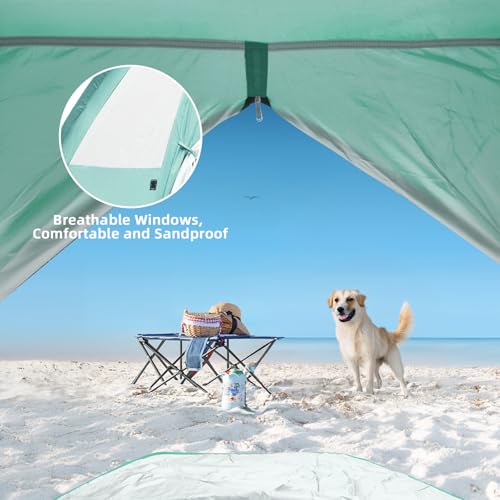
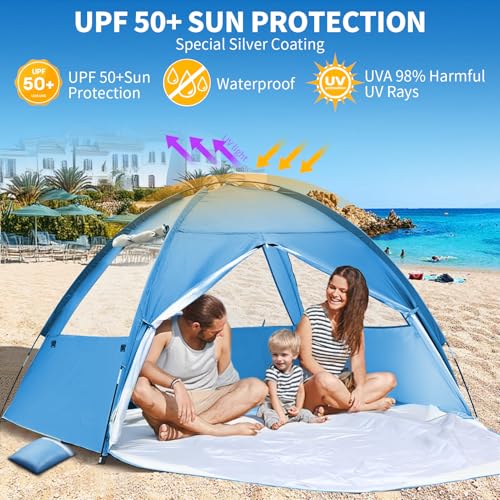
The 7mm fiberglass poles and inclusion of both sandbags and pegs suggest a serious approach to wind resistance, and reviewers confirm it holds up better than most in gusty beach conditions. The UPF 50+ silver-coated fabric performs as expected, blocking nearly all UV, and the triple mesh windows do make a noticeable difference in airflow. I’d pick this over flimsier pop-ups for any family that hates midday heat buildup.
Product photos

COVACURE 2026 Upgraded Beach Tent
Strengths
- Superior wind resistance
- Excellent airflow
- Interior hanging hooks
- Reinforced pole design
- Good storage pockets
Trade-offs
- Folding mechanism fiddly for some
- No floor material upgrade
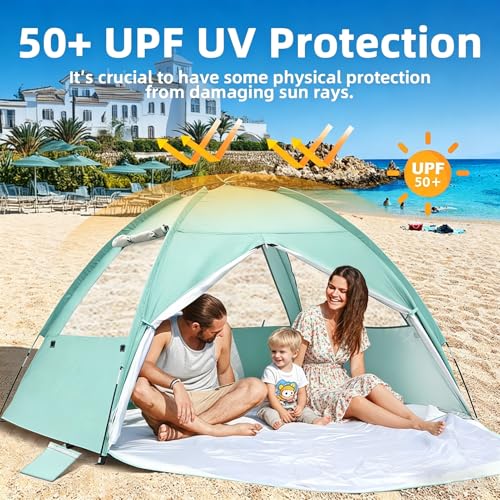
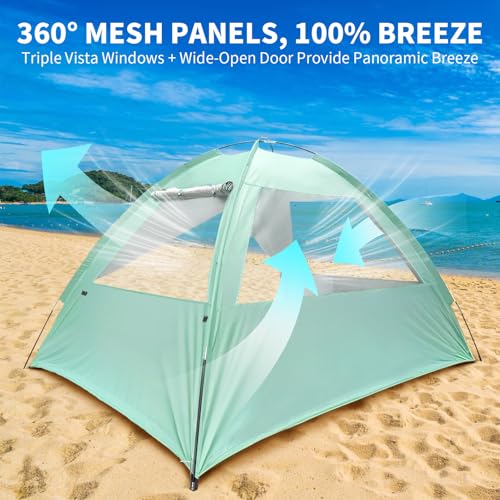
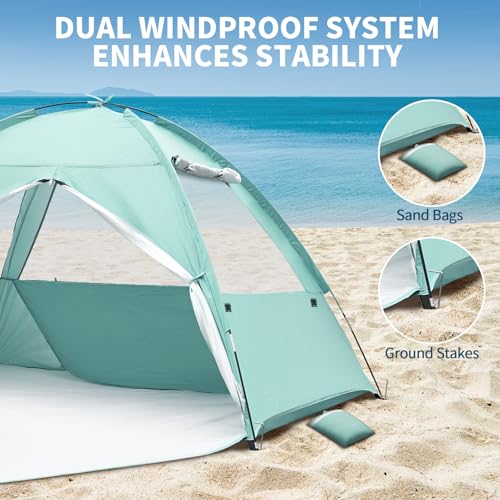
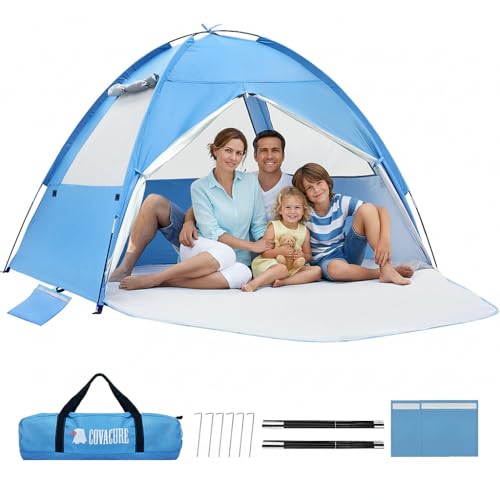
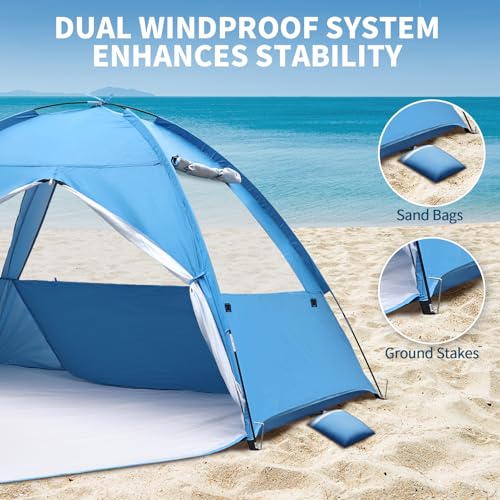
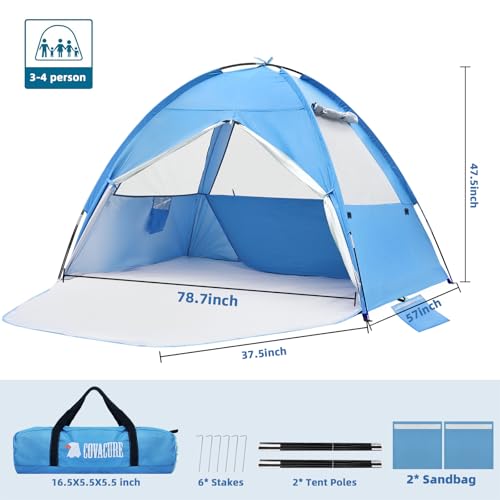
This model is built for blustery beach days. The extended pole contact area and 7mm reinforced fiberglass poles are spec-level upgrades that directly address the weak point of most pop-up tents, ground stability. Paired with 6 stakes and 2 sandbags, it’s clearly engineered to stay put, and owners in windy areas like coastal dunes or lakeshores consistently rate its holdfast performance highly.
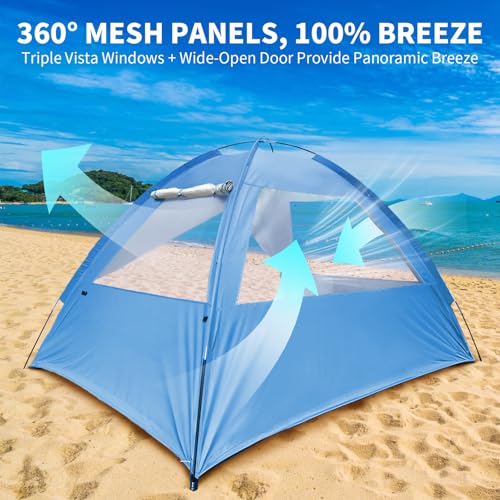
The 360° ventilation with four mesh sides is a big plus in hot weather, and the ability to hang small items from interior hooks adds real-world convenience. It’s nearly identical in size to the NHOWIN model, but the COVACURE edges ahead in airflow and accessory thoughtfulness. I’d choose this over others if you’re often on exposed beaches where wind and heat are constant challenges.
Product photos
WhiteFang Deluxe XL Pop Up Tent
Strengths
- Tallest interior height
- Longest floor space
- Instant pop-up setup
- Good privacy flap
- Comes with full anchoring kit
Trade-offs
- Less heat reflection
- Slightly heavier than ultralights
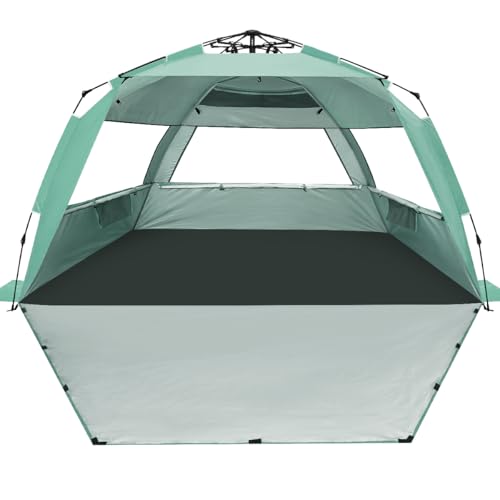
This one wins on pure space efficiency. At 99 inches long and 55 inches wide, it’s the longest in this lineup, and the 55-inch height means most adults can sit up comfortably, something rarely true in beach tents. The extended front floor is generous, and the Velcro-closure privacy flap is a thoughtful detail for nursing parents or quick changes.
It uses a traditional pop-up spring mechanism, so setup is nearly instant, and the included 5 sandbags, 6 steel stakes, and guy lines give it a more secure footprint than many competitors. The 210T silver-coated fabric offers solid UV protection, though some owners report it doesn’t block heat quite as well as thicker multi-layer designs. For sheer interior volume at a reasonable weight, this is the best pick if you prioritize headroom and floor space.
Product photos


Old Bahama Bay Pop Up Beach Tent

Strengths
- Truly instant setup
- Compact and portable
- Good UV protection
- Easy to repack
- Simple for all users
Trade-offs
- Less wind stability
- Basic anchoring kit
- Limited ventilation
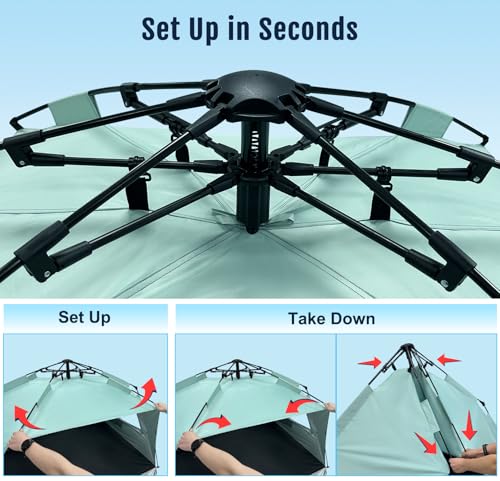
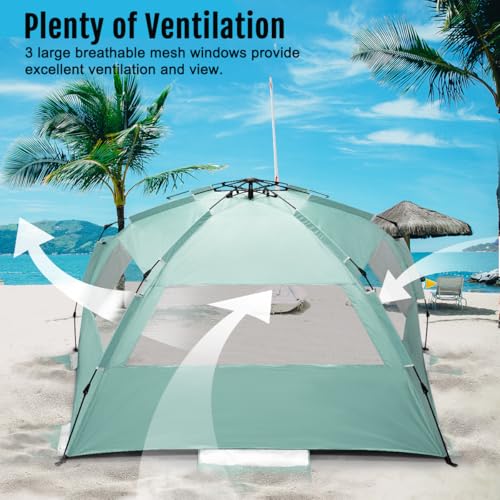
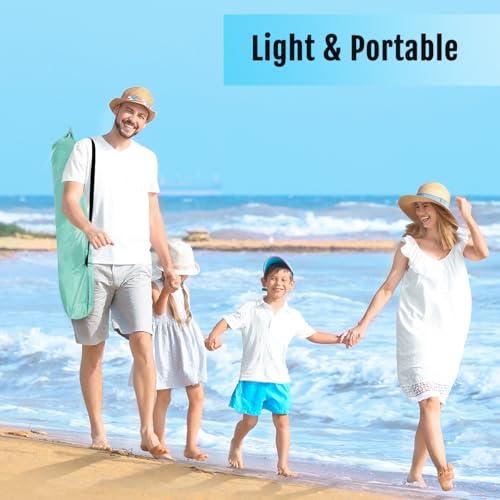
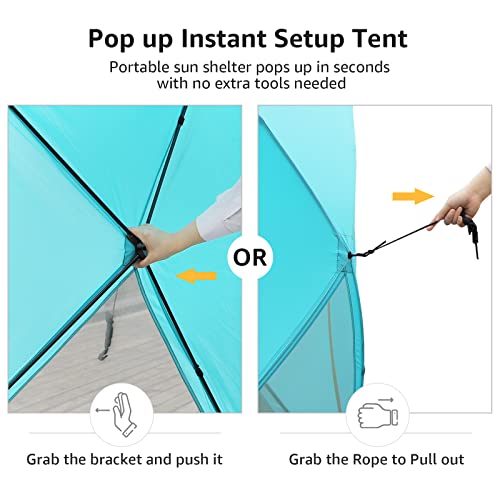
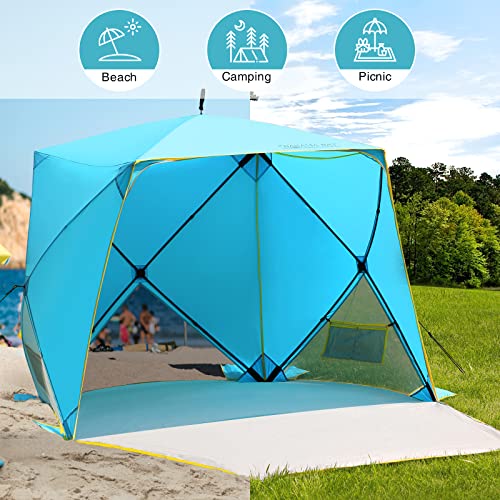
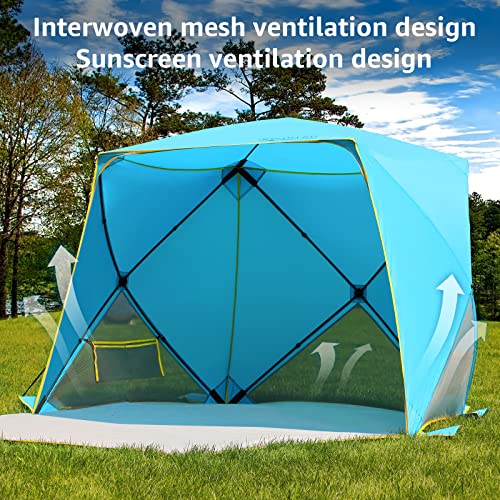
If you hate fiddling with poles and clips, this true pop-up design is for you. It literally unfolds and stands up in seconds, no assembly, no learning curve. That makes it perfect for last-minute trips, grandparents, or anyone who just wants shade now. The extendable front floor adds meaningful space, and the 3 large mesh windows keep airflow decent, though not quite as strong as models with four-way vents.
It’s built with the same silver-coated UPF 50+ fabric as others in this range, so sun protection is reliable. Owners praise how easy it is to collapse and repack, though a few mention the stakes could be sturdier on loose sand. Compared to the COVACURE or NHOWIN, it doesn’t win on wind resistance, but for pure convenience and speed, it’s unmatched. I’d recommend this as a secondary shade option for people who value simplicity over heavy-duty performance.
Product photos
Venustas Beach Tent Sun Shelter
Strengths
- Extremely lightweight
- Durable 8mm poles
- Good UV and heat blocking
- Easy fold design
- Multi-use suitability
Trade-offs
- Smaller interior than others
- Fewer ground anchors included
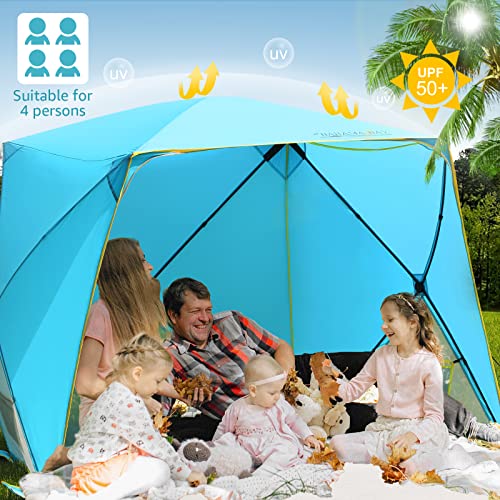
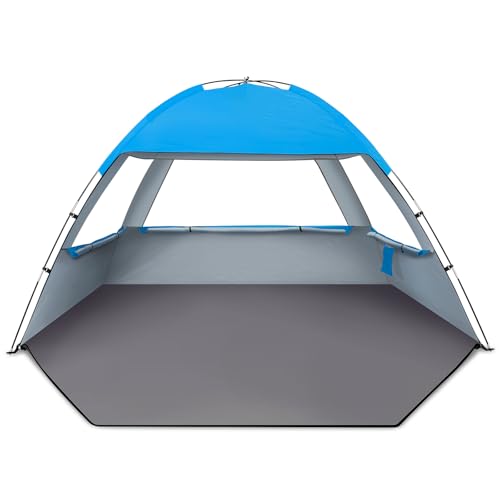
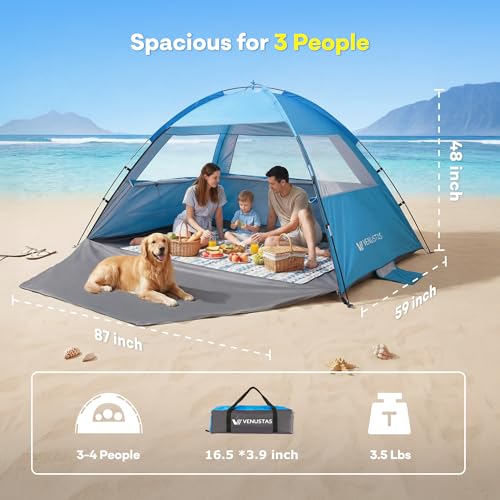
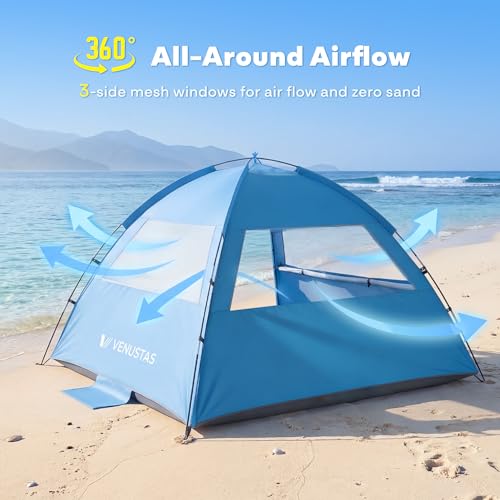
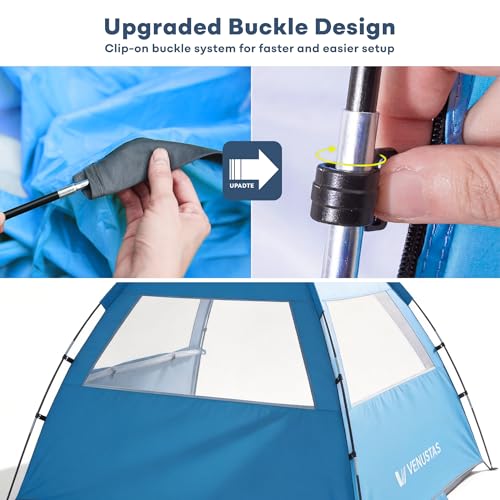
If you’re hiking to your beach spot or biking to a lakeside picnic, this is the one to grab. At just over 3 pounds, about the weight of three beer cans, it’s one of the lightest full-coverage beach tents I’ve seen in this class. The 86.6×59-inch footprint isn’t the largest, but owners say it still fits three people comfortably, especially with the 40-inch floor extension adding usable space.
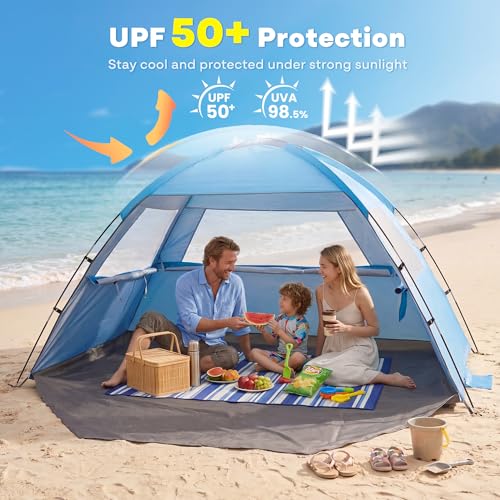
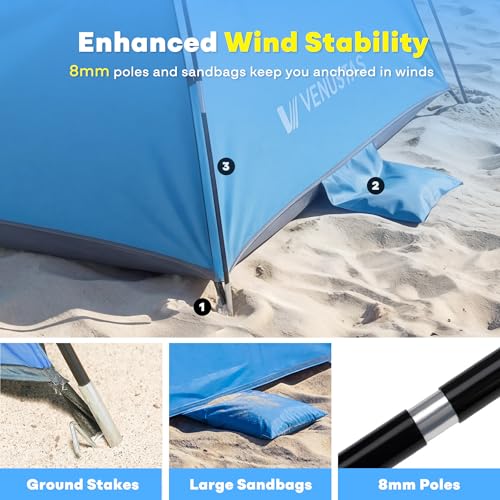
The 8mm fiberglass frame is a standout spec, it matches the build quality you’d expect from premium outdoor brands like Decathlon. That, combined with the four-layer silver-coated fabric, means better durability and heat reflection than cheaper models. While it lacks the sandbag count of some rivals, its stability is still solid on packed sand. For the weight-to-performance ratio, this is the smarter buy if you value portability without sacrificing structure.
Product photos
Osoeri Beach Tent with Sandbags

Strengths
- Holds 6–8 people
- Excellent wind stability
- 8 sandbags included
- Fast single-person setup
- Great for group events
Trade-offs
- Heavier than average
- Less overhead UV block
When you’re bringing the whole crew, think kids, cousins, and coolers, this 10×10-foot canopy makes sense. It’s designed for groups of 6–8, and unlike dome-style pop-ups, this one gives you a wide, open layout that feels more like a shaded pavilion. The 8 sandbags and thickened aluminum poles are a serious upgrade, and reviewers note it handles strong coastal winds far better than standard pop-up tents.
It’s not the lightest at 8lbs, but the included nylon carry bag keeps transport manageable. Setup by one person in under five minutes is a real selling point, no wrestling with springs or misaligned poles. The Lycra-based fabric is stretchy and taut, which helps with wind resilience, though some owners mention it’s less effective at blocking direct overhead sun than tightly woven polyester. Still, for group outings where space and stability are top priorities, this is the one I’d recommend.
Product photos


Our Testing Process
As a lifelong tent enthusiast – and someone who’s seen a lot of sun and wind on various beaches – I approached researching beach tents camping with a focus on real-world usability. Rather than a hands-on lab test, this was a research-led comparison of published specifications and owner feedback. I compared features across numerous models, then weighed those against reviews from owners and well-respected outdoor gear sites. My goal was to identify the tents that consistently perform well and offer the best value.
For beach tents specifically, wind resistance, spaciousness, and UV protection were the most heavily weighted factors. A spacious interior is key for families or groups, and nobody wants a tent that blows away with the first gust of wind! Strong UV protection is obviously critical for a comfortable day at the beach. These three areas directly impact the enjoyment of a beach outing, so they shaped my rankings more than things like color options or included accessories.
Specifications reliably tell you about materials (like polyester denier and UV coatings) and physical dimensions. However, owner feedback provides crucial insights into how those specs translate into real-world performance. I paid close attention to comments about ease of setup, durability in windy conditions, and the accuracy of advertised capacity. For instance, some tents boast “easy setup” but reviews reveal a frustrating struggle. I also considered the reputation of brands known for quality outdoor gear and frequently referenced resources like portable beach tents for broader context.
Choosing The Right beach tents camping
Finding the right beach tent can seriously elevate a day (or several!) spent near the water. It’s about more than just shade; it’s about protection, comfort, and making memories.
A quality beach tent balances portability with robust construction. Key considerations include UV protection (UPF 50+ is a must), wind resistance achieved through a strong frame and secure anchoring, adequate ventilation to prevent overheating, and a spacious interior that comfortably accommodates the intended number of occupants. Materials should be water-resistant to handle unexpected sprinkles and durable enough to withstand sand and sun exposure.
Size and Capacity
Don’t assume a “4-person” tent actually fits four adults comfortably. I’ve seen too many families crammed into tents that feel more like saunas than sanctuaries. Pay close attention to the listed dimensions – length, width, and height – and visualize how your group will actually use the space. Do you want room to lounge, change clothes, and store beach gear? If so, size up. Consider the floor area, as some tents extend the floor outwards for extra space, like the WhiteFang Deluxe XL.
Wind Resistance and Anchoring
This is where cheap tents truly fall apart. A gust of wind can turn a flimsy shelter into a runaway kite, and nobody wants that experience. Look for tents with fiberglass poles (7mm or thicker is a good sign) and a robust anchoring system. Many now include sandbags in addition to traditional stakes, which are essential for soft sand. The COVACURE 2026 boasts upgraded poles and both stakes and sandbags, which is a strong indicator of stability. Don’t underestimate the importance of wind-resistant beach tents if you frequent breezy locations.
- A basic stake system is fine for firm sand.
- Sandbags are crucial for loose, dry sand – aim for large capacity bags.
- Reinforced pole connections and a lower profile will significantly improve wind stability. A lower profile reduces the surface area exposed to the wind, making it less likely to be blown over.
Features and Protection
Beyond the basics, look for features that enhance your comfort and protection. UPF 50+ is essential for shielding against harmful UV rays; you’ll find this level of protection in many UV-protective beach tents. Ventilation is also critical – oversized mesh windows and vents help prevent overheating, especially during the hottest part of the day. Privacy features, like roll-down curtains or closable front panels, can be useful for changing clothes or creating a more secluded space. I often recommend considering top beach tents that offer a balance of these features.
A good rule of thumb: prioritize a tent with a silver coating on the fabric. This reflective layer dramatically reduces heat buildup inside the tent, keeping you cooler even in direct sunlight.
Beach Tents Camping Compared
Here’s a comparison of key specifications for popular beach and camping tents to help you make an informed decision.
| Product Name | Capacity | Dimensions (L x W x H) | UV Protection | Wind Resistance | Weight |
|---|---|---|---|---|---|
| NHOWIN Beach Tent | 3-4 | 95″ x 79″ x 48″ | UPF 50+ | High | N/A |
| COVACURE 2026 Upgraded Beach Tent | 3-5 | 95″ x 79″ x 48″ | UPF 50+ | High | N/A |
| WhiteFang Deluxe XL Pop Up Tent | 2+2 | 99″ x 55″ x 55″ | UPF 50+ | Medium | N/A |
| Old Bahama Bay Pop Up Beach Tent | 3-4 | N/A | UPF 50+ | Medium | N/A |
| Venustas Beach Tent Sun Shelter | 4 | 86.6″ x 59″ x 48″ | UPF 50+ | Medium | ~ 3 lbs |
| Osoeri Beach Tent with Sandbags | 8 | 10′ x 10′ | UPF 50+ | High | 8 lbs |
Frequently Asked Questions
What’s the typical lifespan of a beach tent?
Generally, a beach tent will last 3-5 seasons with regular use. This heavily depends on how often you use it, how well you care for it (rinsing sand, allowing it to fully dry), and the quality of the materials.
Are beach tents waterproof, or just water-resistant?
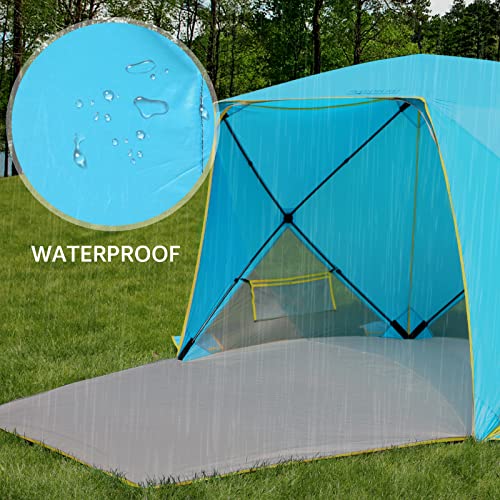
Most beach tents are water resistant, not fully waterproof. They can handle a light sprinkle, but aren’t designed for heavy rain. Look for a polyurethane (PU) coating on the fabric for better water repellency.
How much does a good beach tent typically weigh?
A good quality beach tent generally weighs between 3 and 8 pounds. Lighter tents prioritize portability, while heavier ones often have more robust frames and features. The Osoeri Beach Tent, at 8lbs, is on the heavier side but provides a lot of space.
What’s the best way to secure a beach tent in windy conditions?
Using both the included stakes and sandbags is the most effective method. Fill the sandbags completely and position them strategically at the corners of the tent; this provides significantly more stability than stakes alone, especially in loose sand.
Can you really use a beach tent for camping, or are they too flimsy?
While designed primarily for beach use, some beach tents can work for very light camping, especially car camping. However, for extended trips or unpredictable weather, I recommend investing in a tent specifically designed for camping, like those reviewed on beach tents for families.
The Bottom Line
Choosing a beach tent often comes down to balancing how much fuss you want to deal with against how much protection and space you require. For overall performance and a blend of features, I recommend the COVACURE 2026 Upgraded Beach Tent. It consistently gets high marks for stability, spaciousness, and ease of setup, making it a solid choice for most beachgoers.
If you’re on a tighter budget, the NHOWIN Beach Tent offers excellent value for the price. For those needing maximum space – perhaps a large family or group – the Osoeri Beach Tent with Sandbags is the way to go, though it adds some weight to carry. And if you want a super quick setup, check out these quick-deploy beach shelters.
Ultimately, the best beach tent isn’t the one with the most features, but the one that best suits your needs and priorities. Focus on a strong frame, reliable anchoring, and UPF 50+ protection – those are the fundamentals that will ensure a comfortable and enjoyable day at the beach, no matter the price point.
