
Pop-Up Tents: The Honest Truth About Instant Shelters
This post contains affiliate links. As an Amazon Associate, we earn from qualifying purchases.
A pop-up tent is a shelter with a pre-assembled frame sewn into its fabric, allowing it to spring open in seconds. This design trades weather resistance, durability, and interior space for unmatched setup speed, making it a fair-weather tool for specific, convenient uses.
I’ll admit it: I love the theater of a pop-up tent. There’s a childlike joy in unzipping a bag, tossing the bundle, and watching a shelter magically appear. But after one too many soggy, windy nights wrestling with flapping fabric, I learned they’re not magic. They’re a compromise. That instant gratification comes with a list of very real limitations most marketing glosses over.
This isn’t a hate letter to pop-ups. It’s a field guide from someone who’s used them everywhere from music festivals to soggy British beaches. We’ll look at how they actually work, where they genuinely excel, and the specific, often hilarious, ways they can fail. More importantly, we’ll talk about how to pick one that won’t leave you cursing its name.
Key Takeaways
- The instant setup works via pre-coiled, sewn-in poles under tension, but a single broken pole often means a complete tent failure.
- Manufacturer capacity ratings are notoriously optimistic; a “4-person” pop-up typically fits two adults with minimal gear.
- They are fair-weather shelters. Most struggle in winds over 15 mph and lack the sealed seams and robust fabrics needed for reliable rain protection.
- The infamous pack-down uses a non-intuitive “figure-8 fold” that requires practice to master without frustration.
- Condensation is a major issue due to the single-skin, non-breathable polyester construction common in most models.
How Does a Pop-Up Tent Actually Work?
The core mechanism is elegantly simple, which is why it’s so reliable when it works. Forget complex pole assemblies; the entire frame is built into the tent body.
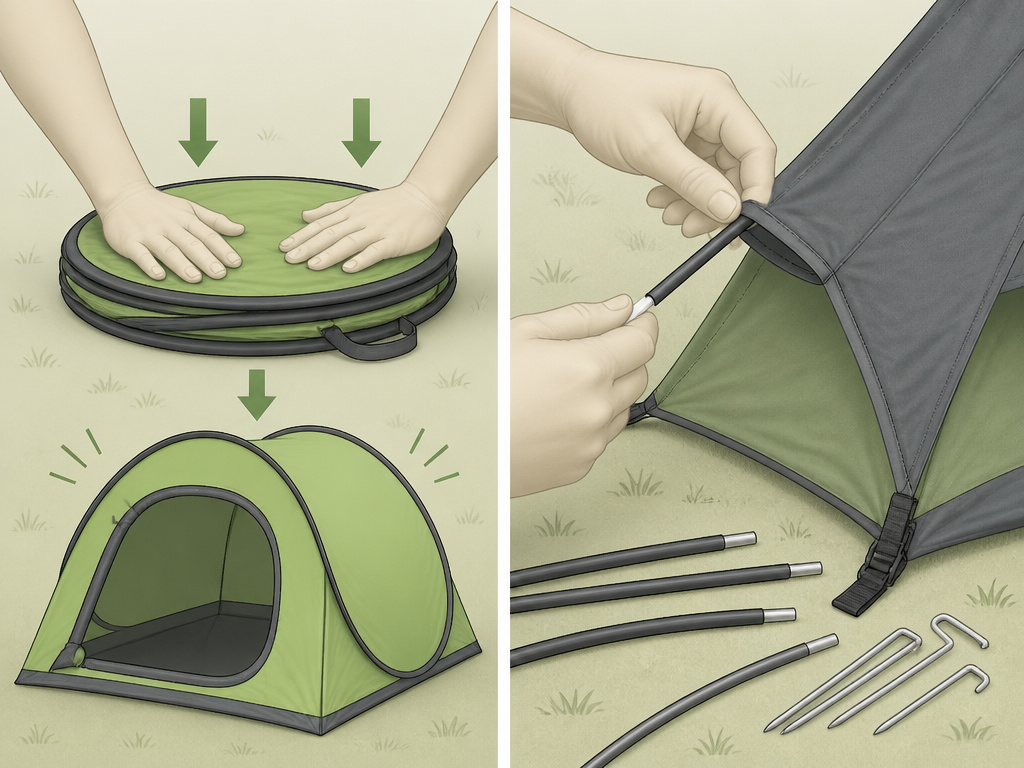
A pop-up tent’s structure comes from pre-connected plastic-coated aluminum loops sewn directly into the tent body. When released from its storage bag, the tension is released, the loops unwind, and they pull the fabric into shape automatically.
You unzip the carry bag, release a simple Velcro strap, and the stored energy in those coiled rods does the rest. The tent practically throws itself into shape. Your only jobs are to place it, stake out the corner loops, and maybe secure a few guy lines. For a first-time camper or anyone arriving at a site after dark, it’s a revelation.
The trade-off is permanence and fragility. You can’t replace a single segment. The entire frame is a single, integrated unit. I learned this the hard way with a cheap festival tent—a gust snapped a fiberglass rod, and the whole structure sagged like a deflated balloon. My repair involved duct tape and a prayer, but the tent was never right again.
TL;DR: The frame is a sewn-in spring that self-erects, making setup foolproof but turning a single broken pole into a terminal failure.
Where Do Pop-Up Tents Shine (And Where Do They Fail)?
These tents aren’t for every adventure. They fill specific niches where speed and simplicity are worth the trade-offs.
- Music Festivals & Day Events: When your priority is a shaded base camp, not a fortress. Their limited weather resistance matters less if you’re only using it for daytime cover and have a car nearby. The quick setup means more time for the main event.
- Beach & Backyard Days: Many models, like some pop-up beach tents, prioritize UPF sun protection over rainproofing. They’re brilliant for creating instant shade. For kids, the ability to set up their own den is a huge confidence booster.
- Spontaneous Shelter: Tossing one in the boot for impromptu picnics or a quick changing room is where they excel. They’re perfect for affordable family tents on a sunny weekend trip where the car is your backup plan.
However, their failure modes are specific. They are not designed as storm-ready shelters. The Outsunny Pop-Up Canopy Tent manual explicitly warns: “Do not leave gazebo up in heavy weather conditions.” This isn’t legal boilerplate; it’s essential advice. The lightweight materials and flexible poles simply can’t handle sustained abuse. For trips where weather is uncertain or you need a robust shelter, you’ll want a traditional car camping tent with a proper rainfly and pole system.
What Are the Real-World Compromises?
Choosing a pop-up means consciously accepting three core limitations. Ignoring them is a recipe for discomfort.
Weather Resistance: The Biggest Weakness
The tall, flat profiles and flexible poles make them vulnerable. My worst camping memory involves a Vango AirBeam 200 (a hybrid design) in a Scottish coastal breeze that wasn’t even forecast as strong. The sound of the fabric slapping all night was maddening, and the constant flexing of the poles kept me awake, waiting for a snap.
| Condition | Typical Pop-Up Performance | The Reason Why |
|---|---|---|
| Wind | Poor above 15-20 mph (Beaufort 5-6). | The structure acts like a sail. Flexible poles lack the rigidity of hubbed systems. |
| Rain | Varies wildly. Needs 1500mm+ hydrostatic head & sealed seams. | Many cheaper models have minimal seam sealing. Single-skin design means condensation wets the inner wall if the outside gets damp. |
| Condensation | High in cool, humid conditions. | Single-skin, non-breathable polyester traps body moisture inside with no air gap for ventilation. |
Common mistake: Assuming “water-resistant” means “waterproof” for overnight rain. I trusted a generic beach pop-up during a brief evening shower, only to find a fine mist of condensation soaking my sleeping bag by morning. Now, I only use them for rain if the model has a verified 1500mm+ rating and I’ve seam-sealed it myself.
The Capacity Lie and Cramped Quarters
Pop-up tent capacity follows what feels like an inflated standard. A “2-person” rating often means two sleeping pads touching, with zero room for a backpack. I once tried to fit myself and my gear into a rated 2-person model; I ended up sleeping with my boots on my chest.
For a realistic sense of space, ignore the person count and look at the square footage. Then mentally subtract about 25% for the aggressively sloping walls. If you want room to sit up, change, or store gear inside, you need to size up dramatically. The livable space of a proper stand-up tent is in another league entirely.
The Infamous Pack-Down Puzzle
The setup is a party trick. The pack-down is the puzzle you have to solve when you’re tired, it’s dark, and maybe raining. The required figure-8 folding technique is genuinely counterintuitive.
Honestly, my first attempt was a disaster. I looked like I was wrestling an angry octopus in my living room. The trick I learned (after some swearing) is to not fight the twist but guide it: palm on one side of the circle, other hand on the opposite, and rotate your wrists inward. It clicks into place with a satisfying snap the YouTube tutorials never mention.
- Collapse the tent flat into a loose circle.
- Create the figure-8 by crossing your hands and twisting the circle, introducing a full twist into the poles.
- Fold the figure-8 in half, aligning the poles so they lay parallel (this adds another twist).
- Wrestle the now-compact, twisted bundle back into its always-too-tight bag.
Practice this at home, in good light, with dry gear. Your future self, packing up at a muddy festival at midnight, will offer a silent prayer of thanks.
Pop-Up Tent vs. Traditional Tent: A Side-by-Side Look
This table isn’t about declaring a winner, but about matching the tool to the job.
| Feature | Pop-Up Tent | Traditional Camping Tent |
|---|---|---|
| Setup Time & Ease | 2–4 minutes, truly one-person. | 10–20 minutes, often easier with two. |
| Weather Resilience | Fair-weather only. Struggles with wind, moderate rain. | Good to excellent. Designed for conditions with robust poles and separate rainflies. |
| Durability & Repairs | Low. Integrated frame; a broken pole often ends the tent’s life. | High. Pole segments are replaceable; fabric can be patched. |
| Interior Livability | Cramped for its rating, severe wall slope. | More livable. Steeper walls, often includes vestibules for gear. |
| Best Use Case | Beach days, festivals, backyard fun, quick sun/rain shade. | Multi-day camping, hiking, trips with uncertain weather, basecamps. |
For campers who prioritize space and durability, a traditional tent wins. For a group needing quick shade at a tailgate, the pop-up is perfect. Some seasoned campers even bring both—a pop-up for daytime lounge area and a quality tent under $200 for secure, comfortable sleeping.
How to Choose the Right Pop-Up Tent
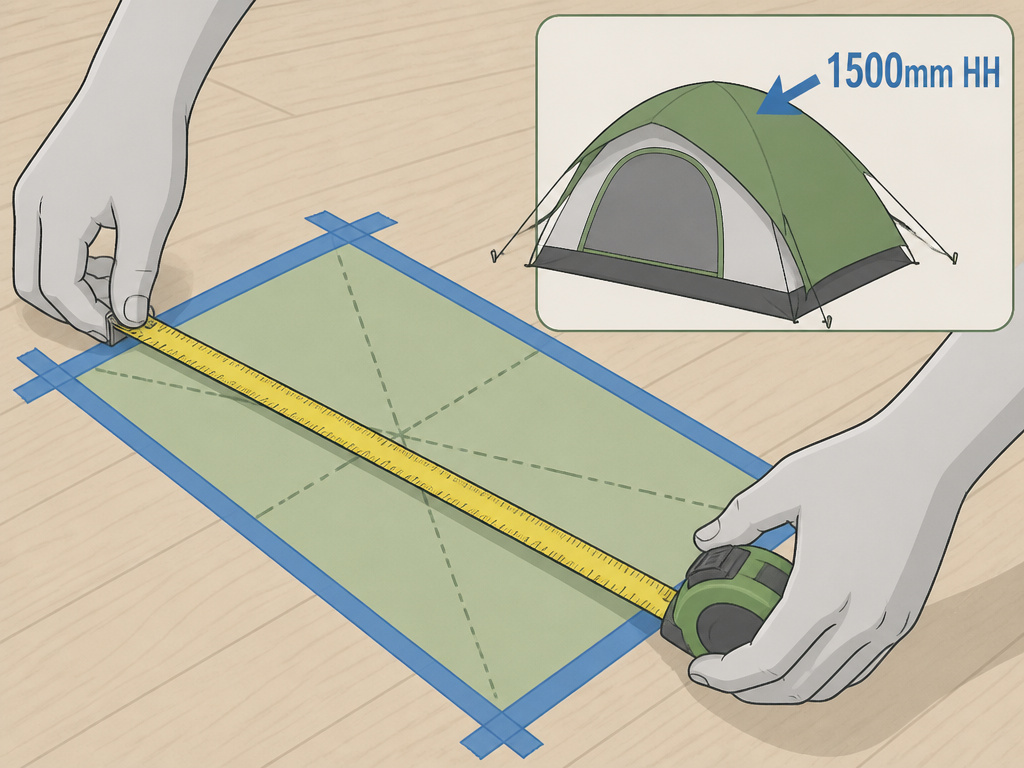
Don’t just grab the cheapest option. Use this checklist to match a tent to your actual needs.
- Measure the Floor: Tape out the dimensions on your floor at home. Will your air mattress and your gear fit? Ignore the “person” count.
- Check the Hydrostatic Head: For any chance in rain, look for a rating of 1500mm or higher. If it’s not listed, assume it’s for sun only.
- Prioritize Ventilation: Look for multiple mesh panels, ideally placed to create a cross-breeze. This is critical for managing the condensation these tents are prone to.
- Consider the Frame: Fiberglass is common but brittle, especially in cold weather. Aluminum is more resilient but adds cost and sometimes weight.
- Don’t Skimp on Stakes: The included ones are often flimsy. A proper set of tent camping accessories, including robust stakes and extra guylines, is a wise investment.
- Watch a Pack-Down Video: Before you buy, find a video for that specific model. If the process looks like more hassle than you can handle, reconsider.
Your investment starts with honest expectations. A pop-up is a fantastic, specialized tool, not a universal replacement for a proper shelter. Pairing it with the right tent camping equipment makes all the difference.
Frequently Asked Questions
Are pop-up tents good for rain?
Most are not. They require a high hydrostatic head rating (1500mm+) and fully sealed seams to be remotely reliable. Even then, the single-skin design promotes internal condensation. Treat them as water-resistant for short showers, not waterproof for sustained rain. If you’re caught in a shower, immediately guy out all points to reduce fabric flutter (which drives water through seams) and wipe the inner wall periodically.
Can one person set up and take down a pop-up tent?
Setting up is a true one-person job, often under a minute. Taking down and repacking, however, is notoriously difficult for one person until they’ve mastered the specific folding technique. The first few times, a second pair of hands can be very helpful.
Why is the figure-8 fold so difficult?
It’s a non-intuitive mechanical process that requires you to twist the spring-loaded frame against its natural state. Without the correct hand placement and twisting motion, the poles won’t align, and the bundle remains too bulky for the bag. It’s a learned skill, not a logical one.
How long do pop-up tents typically last?
With careful, fair-weather use and perfect folding technique, you might get 3-5 seasons. However, the fiberglass poles are a common failure point, especially in wind or if folded incorrectly under stress. Their lifespan is generally shorter than a traditional tent with replaceable parts.
Are there pop-up tents for backpacking or winter?
Virtually none. The heavy, bulky coiled frame makes them unsuitable for backpacking. Their lack of insulation, poor weather resistance, and condensation issues rule them out for winter camping. They are strictly three-season, fair-weather, car-accessible shelters.
Before You Go
A pop-up tent is the ultimate convenience tool for the right job. It turns a chore into a spectacle, which has real value when you’re just trying to get to the fun part. But you must speak its language: “instant” means “fair-weather,” and “4-person” means “2-adults cozy.”
Before you click “buy,” decide if you’re shopping for a convenient fair-weather tool or a reliable all-conditions shelter. If it’s the former, a well-chosen pop-up will serve you well. Just practice that fold in daylight, stake it down every single time, and never bet on it against a real storm. For everything else—from a reliable budget tent under $100 to a durable canvas tent—the traditional design still reigns supreme.
