
Does Tent Insulation Matter? The Truth About Staying Warm
This post contains affiliate links. As an Amazon Associate, we earn from qualifying purchases.
Yes, your tent matters for insulation, but not like a blanket. With an average thermal resistance of just 0.00351 m²·K/W, about as insulating as a cotton t-shirt, its real job is managing radiant heat gain (the “greenhouse effect”) and convective heat loss (the “cold-room effect”). Your sleeping bag and pad handle conduction; a smart tent setup manages the other two heat-transfer paths to let your core gear work.
I learned this the hard way on a clear, frigid night in Wyoming’s Wind River Range. Confident in my high-end three-season tent, I pitched in a clearing to catch the last of the sun’s warmth. By 2 AM, the radiant heat loss to the starry sky had plunged the interior temperature, and my own breath had frozen into a sheet of ice on the inner wall, collapsing the vent. I spent the rest of the night wearing every scrap of clothing I had, shivering and vowing to understand the real physics at play.
Let’s cut through the marketing. A tent isn’t a magic bubble of warmth. It’s a dynamic thermal environment. Here’s what actually determines if you’ll sleep comfortably or miserably.
Key Takeaways
- Tent fabric provides negligible conductive insulation, your sleeping pad’s R-value is hundreds of times higher. The tent’s real roles are blocking radiant heat (summer) and slowing convective drafts (winter).
- The documented “greenhouse effect” can spike interior temps up to 15°C above ambient, while the “cold-room effect” can drop them 10°C below, especially in wind.
- Fancy materials like Phase Change Materials (PCMs) or aerogel work only in specific bands and add cost. Your biggest warmth upgrades are strategic: a sunshade in summer, a wind block and ground pad in winter.
- A double-wall tent’s main benefit is condensation management, not insulation. A dry sleeping bag is far warmer than a slightly thicker tent wall.
- Before buying a new tent, master campsite selection and use a reflective blanket or foam pad to address the tent’s specific thermal weaknesses.
How Does a Tent Actually Interact With Heat?
Heat moves in three ways: conduction (through contact), convection (via moving air), and radiation (infrared energy). Your sleeping system tackles one; your tent tackles the other two.
Conduction is why you need a good sleeping pad. When you lie on cold ground, heat transfers directly from your body into the earth. A pad with a high R-value, like the Therm-a-Rest NeoAir XTherm (R-6.9), creates a barrier. Tent fabric is terrible at this. One peer-reviewed study measured an average tent fabric thermal resistance of 0.00351 m²·K/W. Your pad does the conductive heavy lifting.
Convection is wind stealing warmth. A taut rainfly and a well-sealed vestibule on a storm-resistant tent slow this down. A flapping fly in a 20-mph gust creates a refrigerator effect, stripping heat from the air inside.
Radiant heat transfer is governed by surface emissivity (ε). For a specific tent fabric, research published in E3S Web of Conferences measured the green side at ε = 0.96 and the gray side at ε = 0.84. A higher emissivity means the material radiates heat more effectively, detrimental in winter when you lose heat to the cold sky, but beneficial in summer when the tent radiates absorbed solar heat outward.
Radiation is the stealthy player. The sun heats your rainfly, which then radiates infrared energy inward, that’s the summer greenhouse effect. Your warm body radiates heat toward the cold tent walls, which then radiate it to the even colder night sky. This is the winter cold-room effect. This is where your tent’s color, material, and setup matter most.
TL;DR: Your pad stops conduction. Your tent must manage convection and radiation. Confuse these roles, and you’ll be uncomfortable no matter what you spent.
What Are the “Greenhouse” and “Cold-Room” Effects?
These aren’t just catchy phrases. They are documented physical phenomena with real temperature consequences that can ruin a trip.
The Summer Greenhouse: When Your Tent Becomes an Oven
On a clear, sunny day, solar radiation (around 800 W/m² at noon) hits your rainfly. The fabric absorbs this energy, heats up, and re-radiates it inward. Research, including the tent heat-transfer mechanisms review, shows single-layer canvas tents can hit 50°C inside when it’s 35°C outside. You’ll feel the stifling heat within 30 minutes of direct sun.
| Symptom | Cause | Field Fix |
|---|---|---|
| Interior feels like a sauna by mid-morning | Dark rainfly absorbing solar radiation | Pitch a reflective tarp 6-8 inches above tent. |
| Sleeping bag damp with sweat | High radiant temps raising body temp & humidity | Maximize cross-ventilation; use a portable tent air conditioner for extreme heat. |
| Driven out of tent during day | Rapid heat accumulation with no relief | Choose a light-colored tent and always seek full shade. |
The Winter Cold-Room: Radiant Heat Loss to the Night Sky
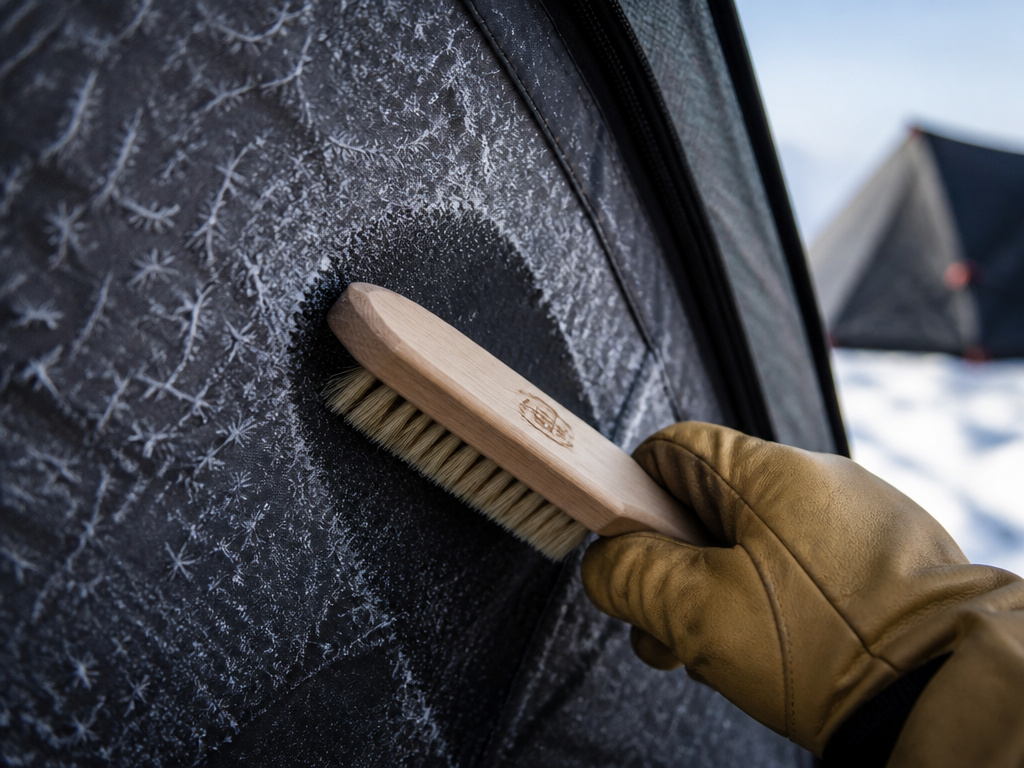
Your body constantly emits infrared radiation. If your tent walls are near the outside air temperature (e.g., -5°C), that heat radiates straight through them to the colder sky. Suzuki & Honda (2012) noted this can plunge indoor temperatures below -10°C. You’ll wake to frost on the inner wall, a sure sign of high radiative loss. This is why minimizing mesh and managing drafts are key for tents for cold weather.
Common mistake: Pitching in a sunny winter spot for “warmth.” The minor radiant heat gain is utterly overwhelmed by conductive loss into the frozen ground and radiative loss to the vast night sky. A shaded, wind-protected site is always warmer after sunset.
TL;DR: In summer, block the sun before it hits your tent. In winter, insulate the ground under you and block the wind around you. The tent itself is almost irrelevant.
Do Tent Design and Materials Make a Real Difference?
Marketing loves terms like “thermal reflective” and “four-season warmth.” The reality is more nuanced, and your choice in tent camping gear should be driven by climate, not claims.
The Single-Wall vs. Double-Wall Debate
The dead air space in a double-wall tent is for condensation management, not insulation. That thin gap does little to stop heat transfer. An analysis by Backpacking Light concluded the warmth difference isn’t enough to justify the extra weight and bulk. The real win is that the inner wall stays drier, preserving your sleeping bag’s loft. A wet down bag can lose over 30% of its insulating value.
Fabric Tech: What the Data Says
Some innovations work, but within strict limits.
- Phase Change Materials (PCMs): Microcapsules in fabric absorb/release heat as they change state. Lan et al. found PCM layers could increase thermal resistance by 50%, raising internal temps from -15°C to -5°C. The catch? They only work within a narrow temperature band. Outside that, they’re dead weight.
- Aerogel Interlayers: With a thermal conductivity of ~0.015 W/m·K, aerogel is incredibly effective. Bai et al. used it to maintain a temperature differential within 5°C. But it’s expensive and fragile, rare in consumer backpacking tents.
- Reflective Coatings: Zhao et al. used TiO₂ coatings to reduce fabric solar absorptivity to 0.3, lowering peak interior temperatures to 38°C (a ~30% reduction). This is a legitimate upgrade for hot tents in desert use, though coatings can wear off.
TL;DR: High-tech materials can tweak performance at the margins, but the most significant gains come from your setup strategy, not the fabric tag.
What Are the Most Effective Field Upgrades?
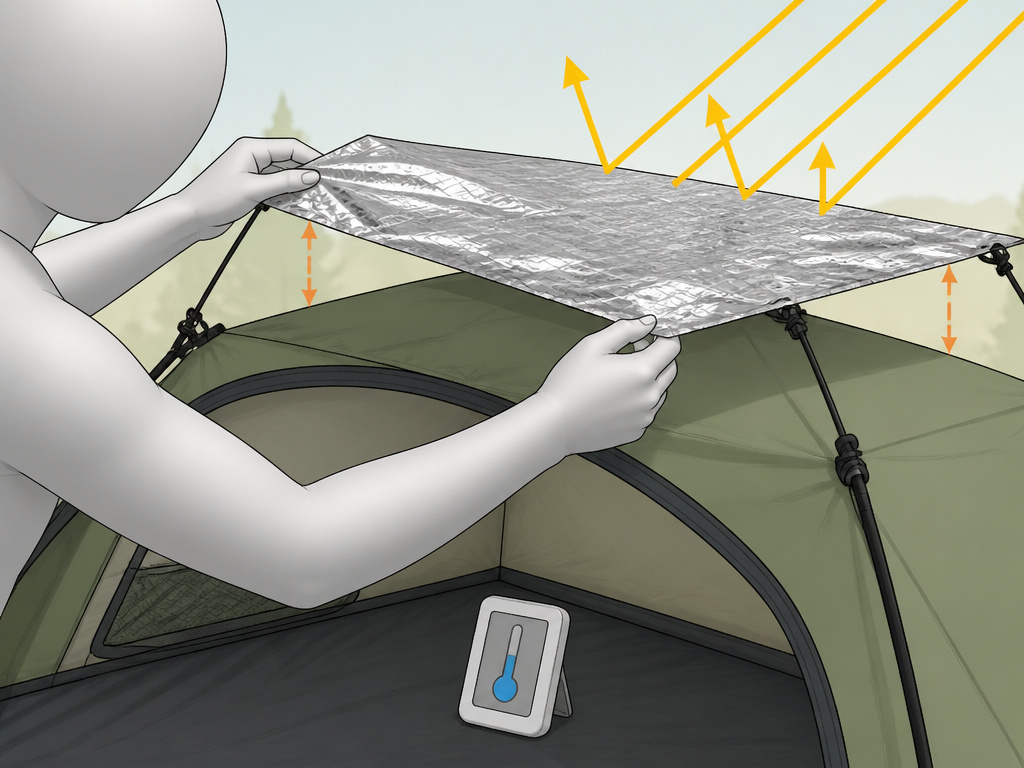
Forget buying a new tent first. These practical modifications address the core physics and cost far less.
Beating the Summer Heat
Your goal is to block radiant energy before it hits the rainfly.
- Create an Air-Gap Sunshade: Pitch a SOL Emergency Blanket or a lightweight silver tarp 6-8 inches above your tent. This creates a shaded buffer zone. The tarp absorbs and re-radiates heat outward, not inward. Field tests show an 8–10°C interior temperature drop.
- Ventilate Aggressively: Open all vents, doors, and even lift the rainfly edges if weather permits. Convective cooling carries heat away. A small USB fan can help, but moving air is the priority.
- Choose Your Site Wisely: Always seek afternoon shade. A site shaded after 2 PM is better than one shaded only in the morning.
Fighting the Winter Chill
Your goal is to trap radiant heat from your body and stop convective drafts.
- Insulate the Ground First: The tent floor’s R-value is negligible. Add a closed-cell foam pad like a Gossamer Gear Thinlight under your inflatable pad. This addresses the conductive loss the tent ignores.
- Reduce Interior Volume: A smaller tent is easier to warm with body heat. In a larger tent, hang a reflective blanket to create a lower ceiling, reducing the air volume you need to heat.
- Eliminate Wind: Site your tent behind a natural windbreak. Ensure the rainfly is drum-tight and sealed to the ground. A flapping fly is a warmth vampire.
- Manage Humidity Diligently: Your breath adds moisture that condenses on cold walls, wetting your gear and killing insulation. Crack top vents slightly, even in freezing temps, to allow moist air to escape.
Before you start: Never use a fuel-burning heater inside a standard tent. Carbon monoxide is odorless and deadly. Only use tent wood stoves in shelters specifically designed with a stove jack and proper ventilation, like dedicated canvas tents with stove jacks.
When Does Your Tent Choice Actually Matter for Warmth?
For most conditions, your shelter is a rain and wind block. But in these edge cases, its design becomes critical for safety and comfort.
Extreme Cold (< -15°C / 5°F): Standard three-season tent fabrics become brittle, and condensation freezes instantly into an interior ice layer. A true four-season or winter backpacking tent has stronger poles, less mesh, and more flexible fabric. The warmth benefit is indirect, it survives the conditions so your sleeping system can work.
High-Radiant Environments: The ASHRAE 55-2020 standard notes human thermal tolerance varies with activity and climate. At high altitude with intense sun, a tent’s radiant heat management is paramount. A lightweight heated shelter with a reflective coating becomes a safety item. Studies show that in air-conditioned tents, high radiant temperatures can increase perceived warmth significantly.
Hot, Arid Climates: Here, a tent’s ability to reflect solar radiation is everything. A dark heavy-duty canvas shelter will become an oven. A light-colored, reflective rainproof shelter with a generous shade-creating fly is the difference between rest and heat exhaustion.
Frequently Asked Questions
Does a double-walled tent make you warmer?
Not directly. The primary benefit is condensation control. By keeping the inner wall drier, it helps maintain your sleeping bag’s loft, which is your main insulation. The thin air gap between layers provides minimal insulating value.
What is the R-value of a tent?
Tent fabric itself has a very low thermal resistance. One tent heat shield insulation study measured an average of 0.00351 m²·K/W. For comparison, a standard closed-cell foam pad has an R-value around 2.0, which is over 500 times more effective. Tents are not rated with an R-value because their primary role isn’t conductive insulation.
Are four-season tents warmer than three-season tents?
They are built to withstand snow load and high winds, which indirectly keeps you warmer by maintaining a stable, draft-free environment. However, they are not “insulated.” Their warmth comes from robust construction that allows your sleeping system to perform as designed.
Can you add insulation to a tent?
Yes, effectively. In summer, add a reflective sunshade above the rainfly. In winter, add insulating layers under your sleeping pad and around you inside (like hanging a blanket to reduce air volume). These strategies address the tent’s thermal weaknesses better than any fabric treatment.
Do darker tents get hotter inside?
Yes. Dark colors have higher solar absorptivity, converting more sunlight into heat. A dark green rainfly will create a more intense greenhouse effect than a light gray or silver one. The difference can be several degrees Celsius inside.
What Actually Matters
Your tent is a sophisticated weather shell, not a blanket. Its job is to manage radiant heat and convective drafts so your sleeping bag and pad can do their jobs. Obsessing over a tent’s “warmth” is a distraction from the real levers you control.
Before you invest in a new shelter, run a simple field test: tape a small thermometer to the tent wall near your head. If it reads within 2°C of the outside air at night, your problem is radiative loss, fix it with a space blanket hung inside. If it’s much colder, you have a convective draft, seal the vestibule with your pack.
Bring a reflective tarp for desert trips. Pack an extra foam pad for alpine nights. Site your tent out of the wind and sun. Understanding the principles from the experimental tent thermal model turns vague worries about insulation into concrete, effective fixes. Master those, and sleep will follow.