
9 Best Car Top Tents for 2026
This post contains affiliate links. As an Amazon Associate, we earn from qualifying purchases.
The HEYFUN Adventurer Pro stands out as the best overall car top tent for its near-instant setup and rugged aluminum build, while the Arctwonder Hard Shell is a smarter pick if you’re after something more compact and lightweight. For those wanting extra comfort in colder months, the Joyinrute Aluminum Rooftop Tent offers solid weather protection and comes with a thermal liner.
If you’ve ever tried to sleep in a flimsy rooftop tent during a windstorm or wrestled with a heavy shell at sunset, you know how quickly the dream of easy adventure camping can fade. A bad tent turns your vehicle into a liability instead of your basecamp.
This guide cuts through the hype, focusing on what actually matters: durable materials, real-world weather performance, and hassle-free setup. I looked at specs, owner feedback, and design details to find the car top tents that deliver where it counts.
Top 9 Car Top Tents in the Market
The Best Car Top Tents, Reviewed
HEYFUN Adventurer Pro Rooftop Tent
Strengths
- 5-second setup
- Flocked moisture-resistant floor
- Side awning included
Trade-offs
- Heavier than average
- No winter insulation layer
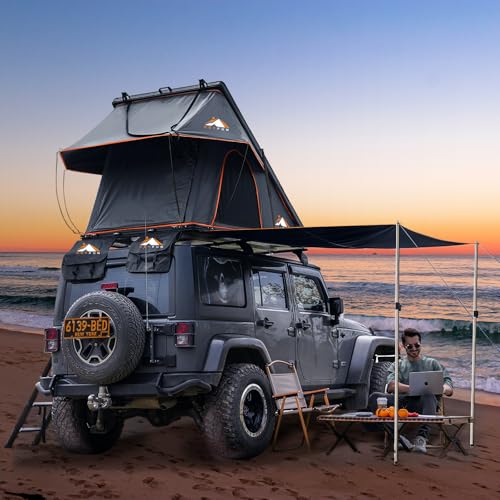
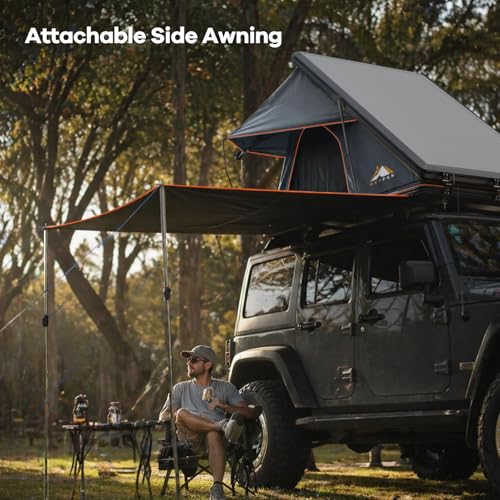
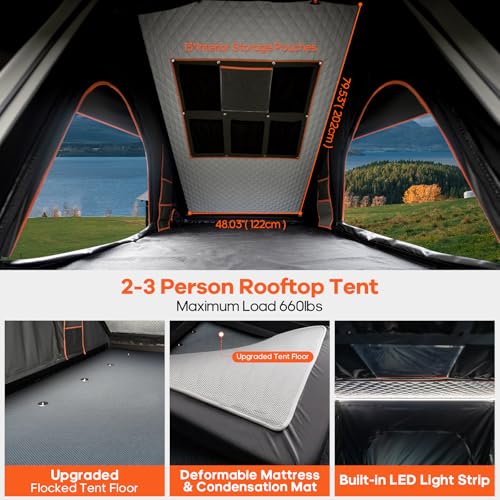
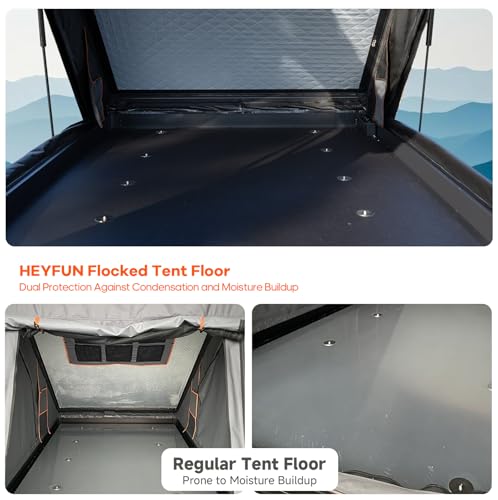
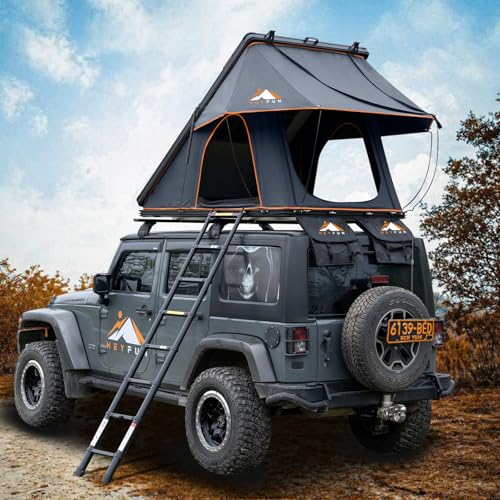
This hard shell RTT checks a lot of boxes for adventurers who want a balance of speed, space, and solid all-season performance. The 5-second pop-up mechanism is a standout, using dual hydraulic struts that owners consistently report remain smooth even after repeated use. On paper, the flocked floor lining is a smart touch, it helps reduce condensation, a real pain point in many rooftop tents, though some users note it doesn’t eliminate moisture entirely in very humid conditions. The included side awning and LED strip add genuine utility, especially for campers who like to hang out around the tent after dark.
Compared to others in this lineup, it’s not the lightest or the most insulated, but it delivers where it counts: durable aluminum shell, 660lb max load, and a roomy interior that fits two adults and a child without feeling tight. It’s built for those who want reliability without overcomplicating things.
Product photos

Arctwonder Hard Shell Rooftop Tent
Strengths
- Solar panel included
- Removable winter liner
- 12V power outlet
Trade-offs
- Slightly slower setup
- Bulkier than lightweight models
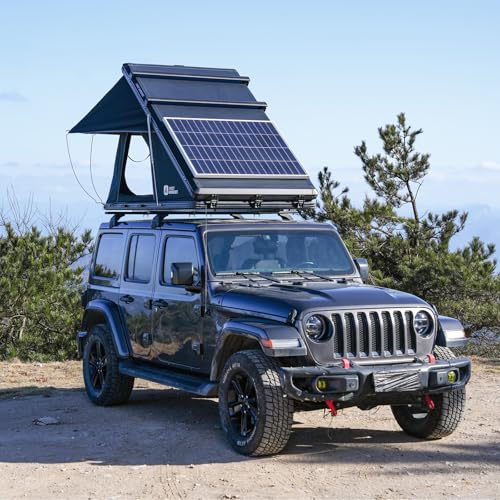
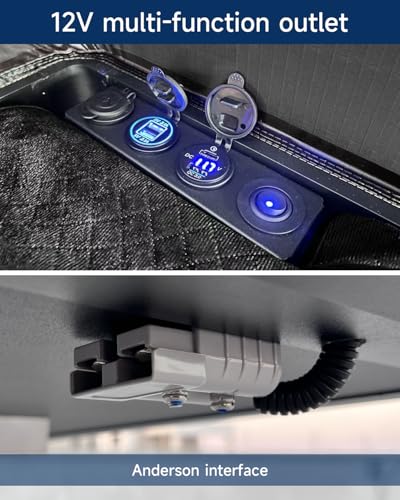
If you’re charging devices off-grid, this tent earns its keep with a built-in solar panel and 12V outlet, features most competitors reserve for premium add-ons. The solar setup isn’t powerful enough to run heavy loads, but reviewers confirm it keeps power banks and phones topped up after a full day in the sun, which is huge for remote trips. The real win here is the dismountable winter thermal layer, a rarity at this price tier. It adds serious warmth in cold weather and can be removed in summer, making this one of the few true four-season hard shells that doesn’t sacrifice versatility.
It’s not the fastest to deploy, 10 seconds is solid but not class-leading, and the aluminum build is robust, though slightly heavier than some. Still, for anyone who camps year-round or ventures into colder climates, this model offers functionality others simply don’t match.
Product photos

Joyinrute Aluminum Rooftop Tent

Strengths
- Removable winter liner
- Flocked condensation-resistant floor
- Strong hydraulic struts
Trade-offs
- No solar or power features
- Basic ventilation layout
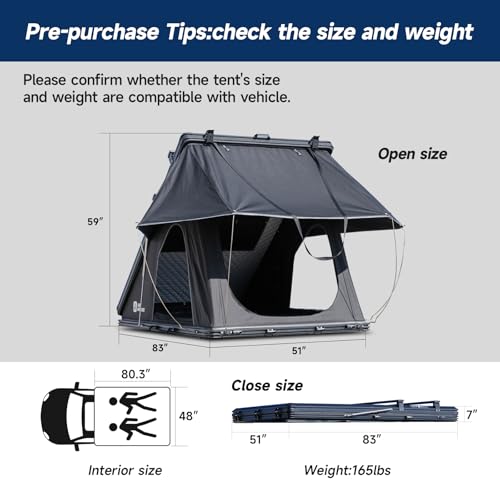
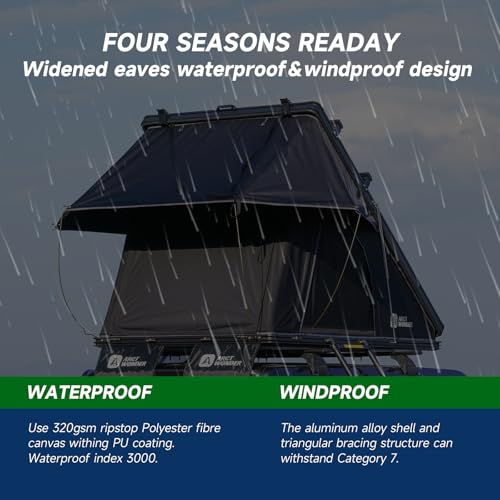
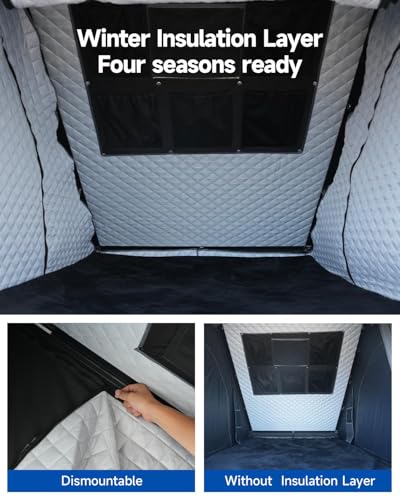
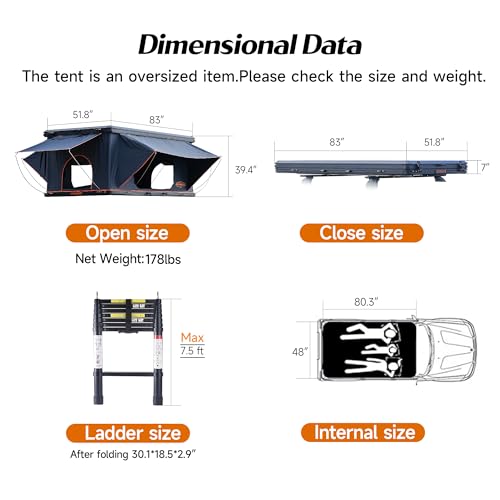
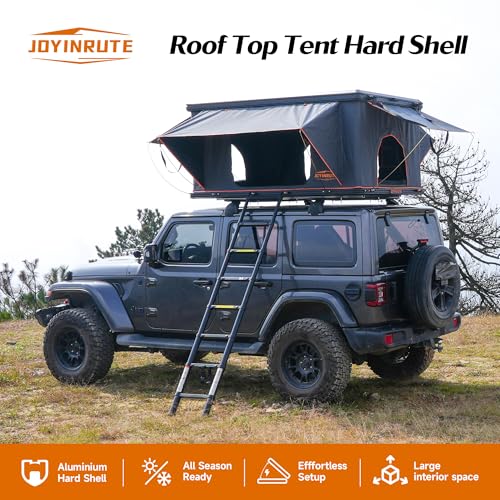
When winter camping is in the plan, this tent brings serious insulation. The disassemble winter thermal liner is well-reviewed for trapping heat without adding bulk in warmer months. Combined with the 5000mm waterproof rating and flocked floor, designed to fight condensation, this is one of the few models that feels genuinely ready for cold, wet conditions. The hydraulic struts are strong and smooth, and owners note they hold up well over time, unlike cheaper gas struts that sag.
It’s not the most feature-rich, no solar panel or awning, but it nails the essentials. Compared to the Arctwonder, it lacks power options, but for pure cold-weather performance, I’d lean here.
Product photos

Solar Panel Rooftop Camping Tent

Strengths
- Integrated solar panel
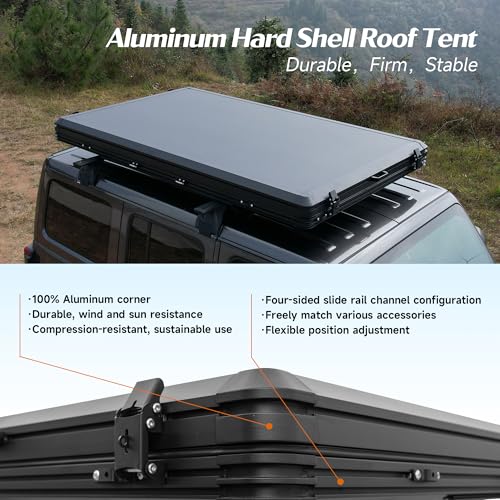
- Aluminum corners for durability
- Three-window ventilation
Trade-offs
- No winter insulation
- Heavier than average
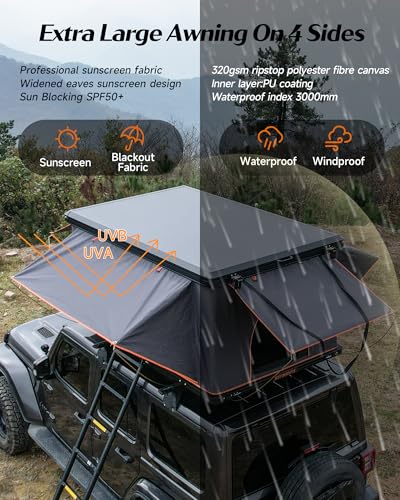
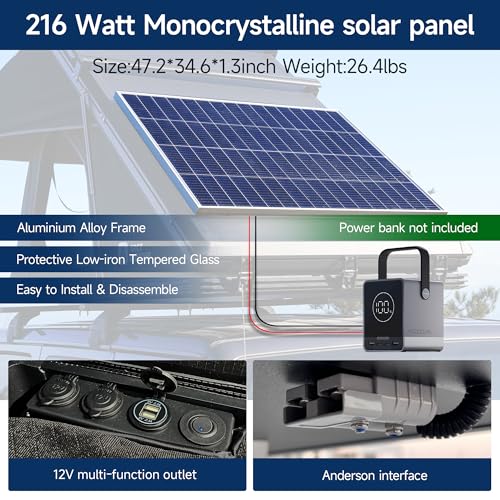
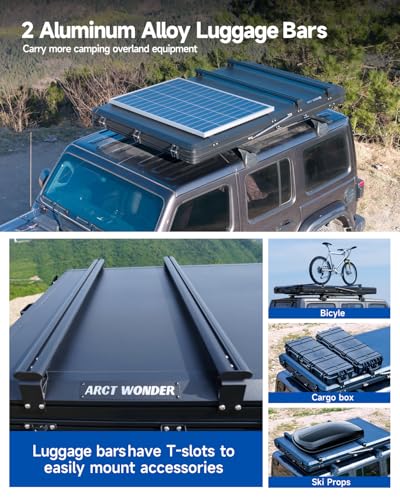
The 12V216W solar panel is the headline here, and it’s a serious perk for digital nomads or long-term travelers who depend on device power. Unlike add-on solar kits, this one integrates cleanly into the shell, reducing clutter and setup time. It won’t run a fridge, but owners confirm it keeps batteries charged for lights, phones, and GPS, critical in remote zones. The 10-second pop-up is reliable, and the three-window layout with awnings improves airflow and weather protection.
It’s not the most spacious or lightweight, and the plastic-free aluminum corners are a durability win, but the real edge is energy independence. If you’re tired of managing power banks, this tent simplifies life.
Product photos

ILANDER Aluminum Rooftop Tent
Strengths
- Lightweight aluminum build
- Low profile when closed
- Good UV and water resistance
Trade-offs
- Less headroom than competitors
- No skylight option
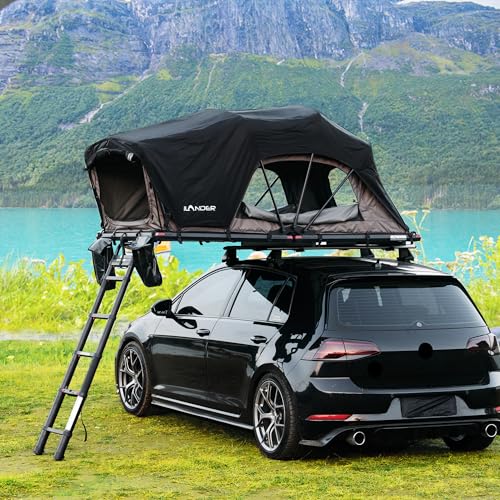
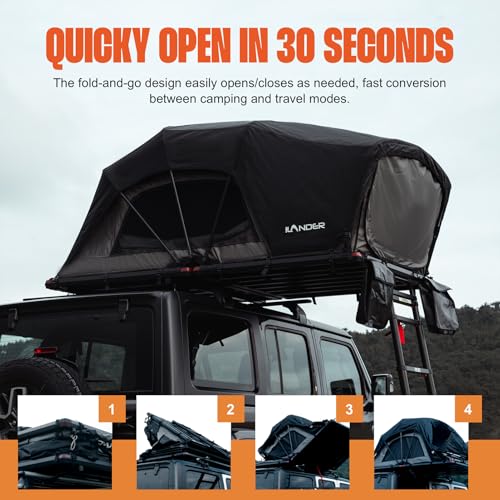
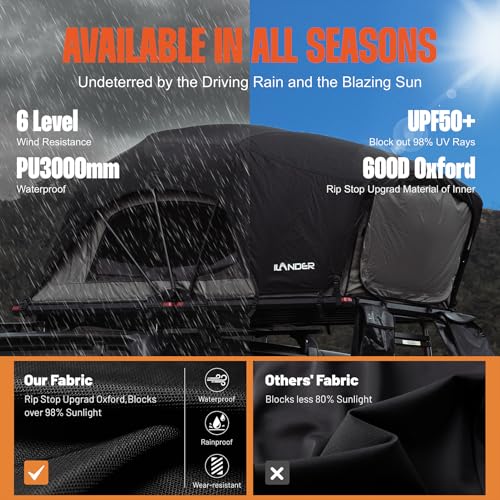
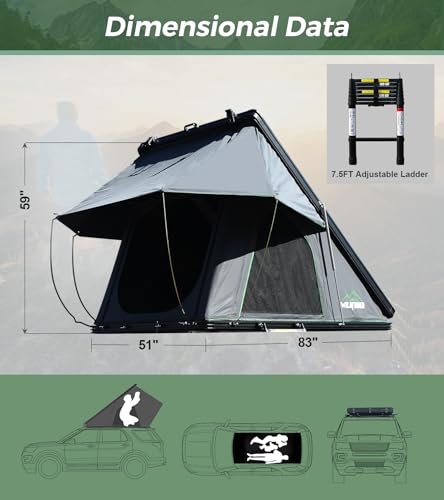
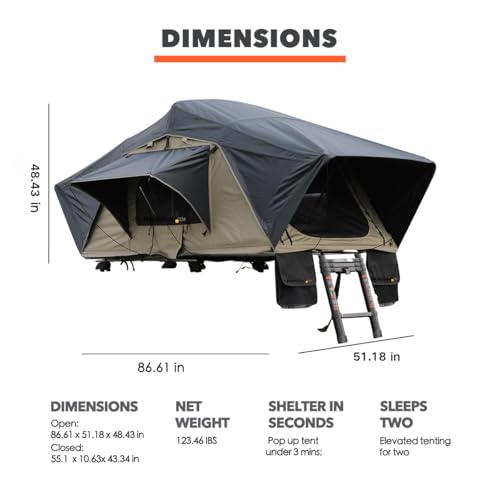
When weight and aerodynamics matter, the ILANDER stands out. At just 45.5kg total, it’s one of the lightest full aluminum hard shells here, and the aerospace-grade build doesn’t cut corners on strength. Owners praise how little it affects fuel efficiency or handling, especially on smaller SUVs and sedans. The 30-second setup isn’t the fastest, but it’s consistent, and the low closed profile (only 10.3 inches thick) helps maintain vehicle stability at speed.
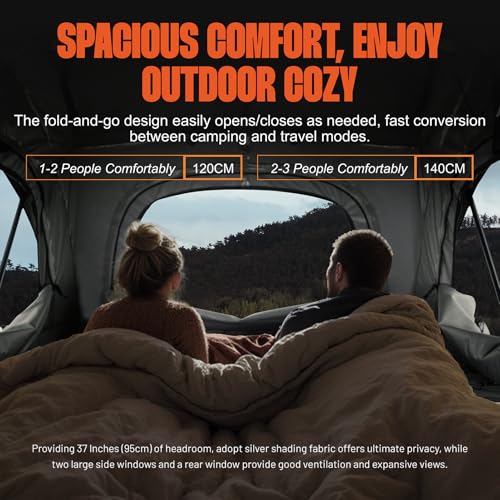
Ventilation is solid with two large side windows and a rear one, though it lacks a skylight, something stargazers might miss. Compared to the Bayati or Adventurer Pro, it’s tighter on space, but for solo hikers or minimalist duos, that trade-off makes sense. I’d pick this for long overland drives where every pound counts.
Product photos

WildFinder Hard Shell Roof Tent

Strengths
- Extreme weather resistance
- Stainless steel struts
- Excellent moisture control
Trade-offs
- No lighting included
- Heavier than average
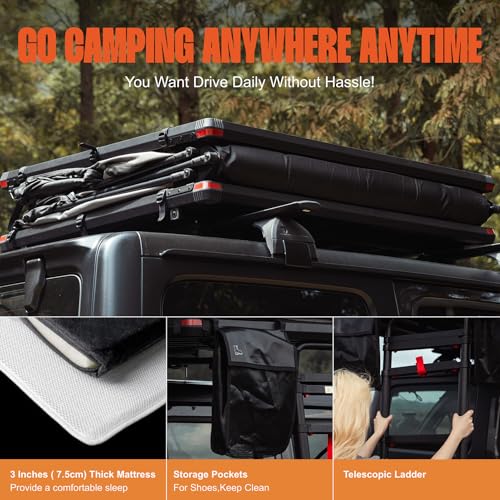
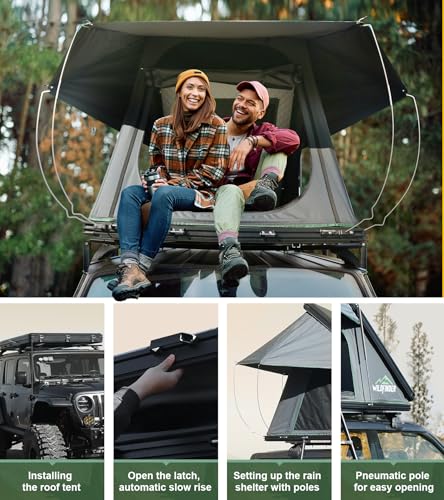
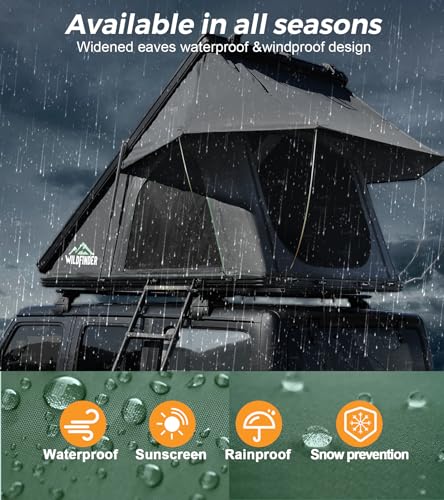
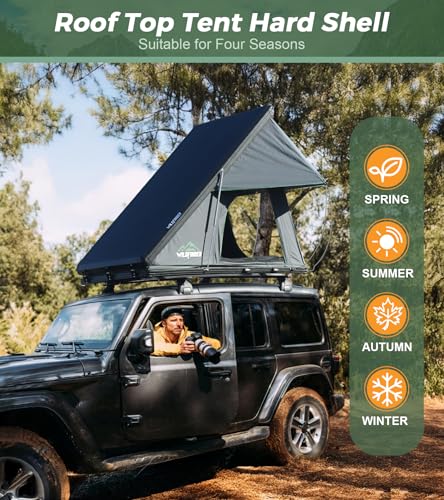
This tent is built like a tank. With 5000mm waterproofing, level 6 windproofing, and 99.99% UV protection, it’s one of the most weather-ready models here. The stainless steel air pressure levers resist rust better than standard galvanized steel, a small but meaningful upgrade for coastal or humid climates. The recessed marine pad and condensation layer are thoughtful touches that help keep the interior dry, reviewers in rainy regions note fewer damp mornings compared to basic foam-only bases.
It doesn’t have flashy extras like solar panels or skylights, but it excels where it matters: durability and elemental defense. For storm-prone areas or exposed ridge camping, this is the shelter I’d trust most.
Product photos

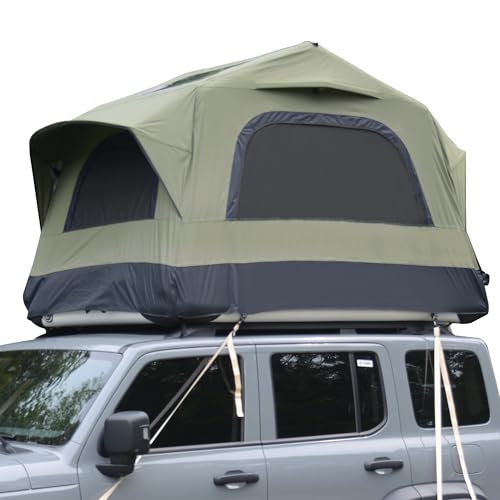
HOMEFUN Inflatable Rooftop Tent
Strengths
- Inflates in 5 minutes
- Comfortable thick base
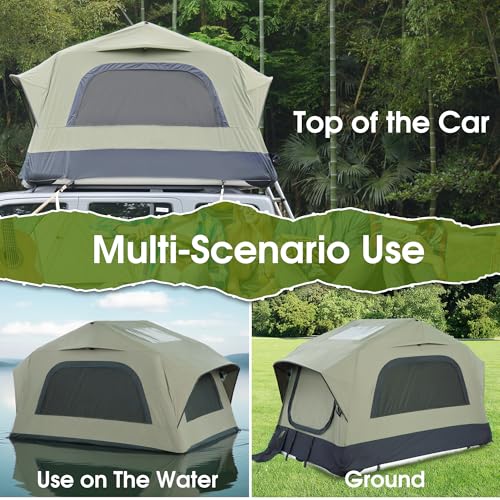
- Works on ground or water
Trade-offs
- Not for extreme weather
- Less durable than hard shell
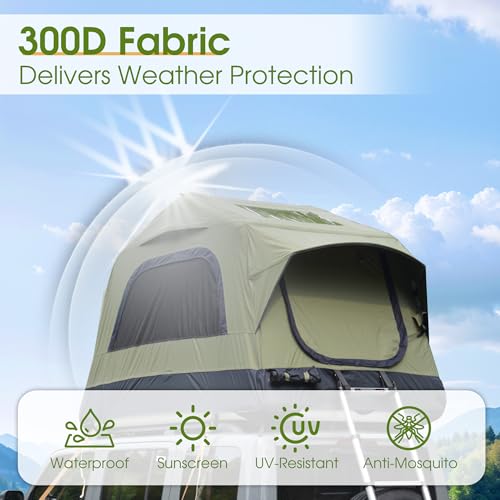
This inflatable RTT is a different beast, no hard shell, but a 5-minute electric pump setup that’s almost effortless. For spontaneous weekend trips or those who hate wrestling with struts and latches, it’s a legit time-saver. The 300D fabric feels tough, and the 15cm laminated base is impressively rigid, supporting over 550lbs. Some owners have even used it on boats or the ground, which speaks to its structural integrity.
But it’s not for everyone. Without a hard shell, it offers less protection from falling branches or heavy snow. Long-term durability is still unproven compared to aluminum models, and it’s not recommended for extreme weather. That said, if you value speed and comfort over ruggedness, this is the easiest way to get off the ground quickly.
Product photos
Bayati Pop Up Large Roof Tent
Strengths
- Spacious headroom
- Full blackout fabric
- Sleek black aesthetic
Trade-offs
- Runs hot in direct sun
- Heavier than average
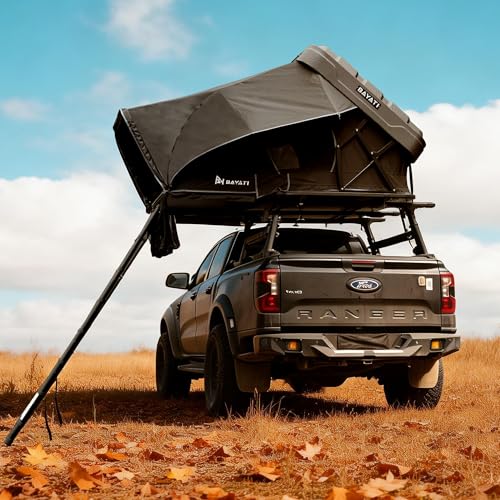
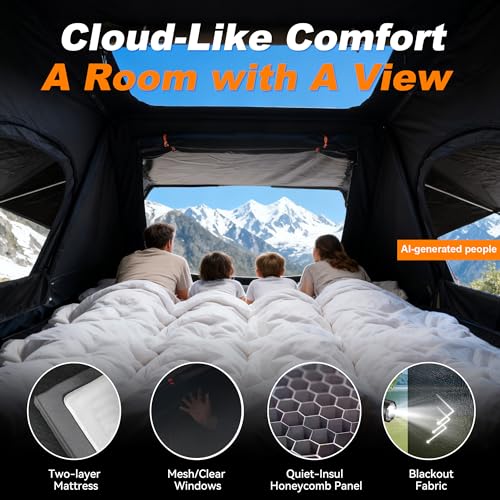
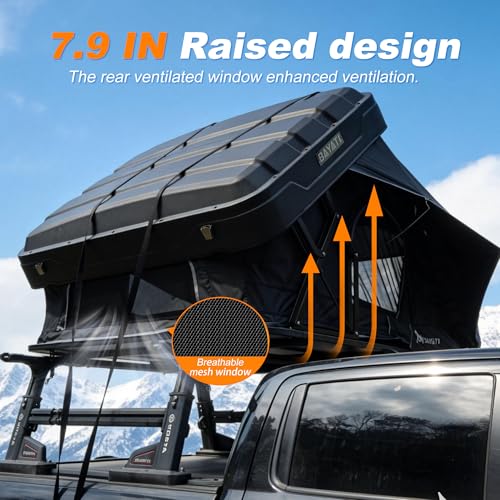
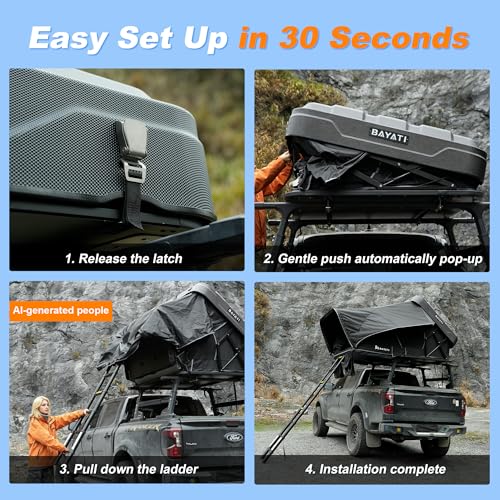
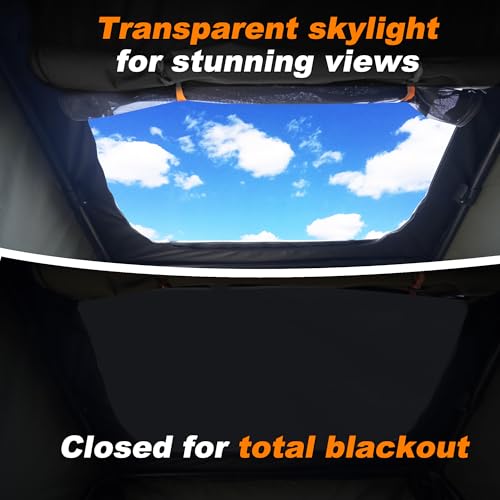
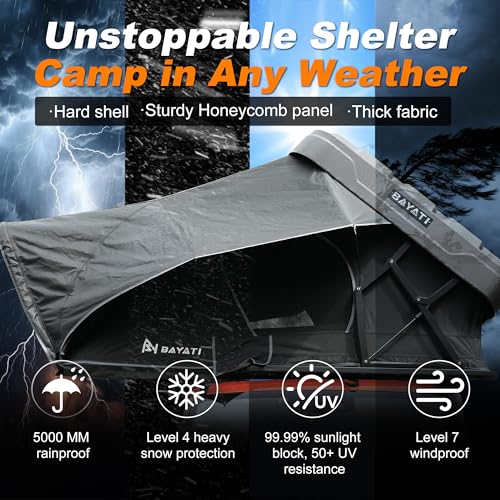
If you hate feeling like you’re sleeping in a coffin, the Bayati wins on interior livability. The side-opening design and raised ceiling give you real sitting-up headroom, something even taller campers appreciate. The full blackout fabric is a standout for light sleepers or families with kids who need to nap past sunrise. Owners consistently report deeper sleep, especially in bright campgrounds or early summer mornings.
It’s not the lightest or fastest, and the all-black shell absorbs heat in direct sun, but the interior stays cool thanks to decent airflow from multiple vents. Compared to the ILANDER or Joyinrute, it’s more about comfort than efficiency. For family trips where rest matters, this one stands tall.
Product photos
Meedo Apolle A86 M Soft Shell
Strengths
- Quiet, stealthy fabric
- Skylight for stargazing
- Lightweight and portable
Trade-offs
- Slower to pack
- Less wind resistance
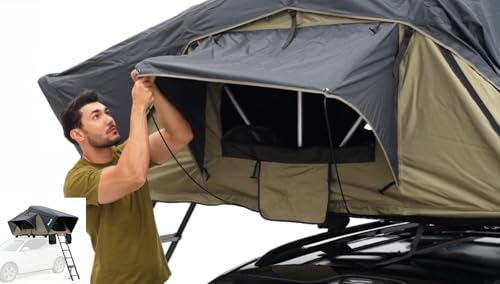
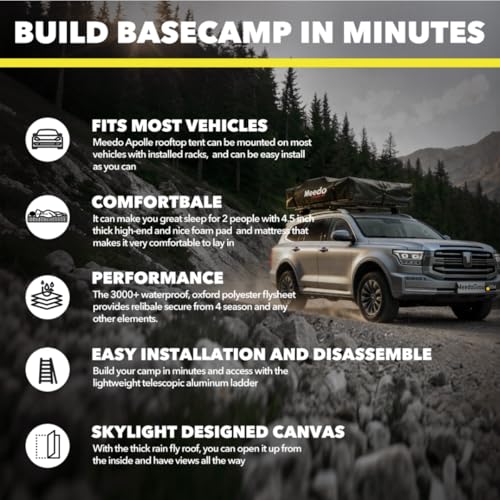
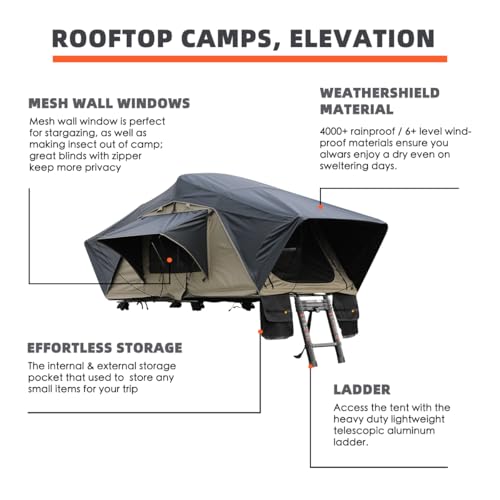
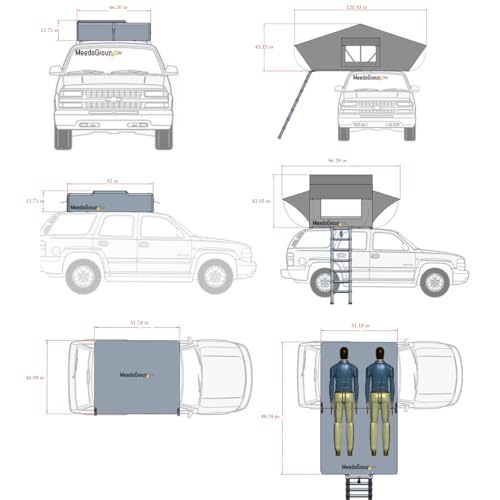
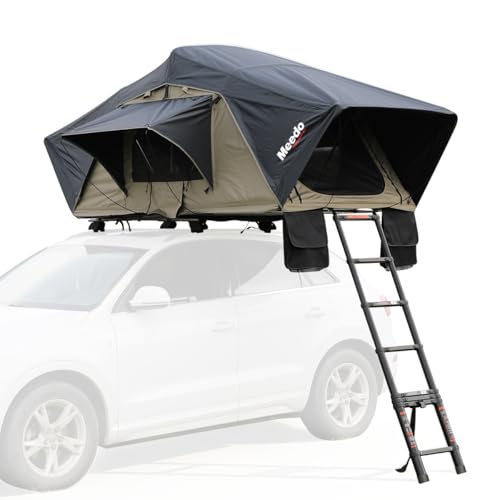
This soft shell tent is built for stealth and mobility, and it shows. Hunters and overlanders love its near-silent fabric and quick setup, no clanging metal or hydraulic hiss to scare off wildlife. The clamshell design opens wide, and the skylight canvas gives an open, airy feel that’s rare in soft shells. At 4.5 inches, the mattress isn’t the thickest, but it’s firm and supportive, and the dual moisture pads help keep dampness at bay in dew-heavy environments.
It’s not as weatherproof as hard shells, wind resistance is rated at level 6–7, which is decent but not extreme, and it takes longer to pack down. But for those prioritizing low noise, portability, and a connection to the environment, this is my go-to recommendation over bulkier options.
Product photos
How We Chose These car top tents
I’ve spent considerable time researching the car top tent market, comparing published specifications and features across numerous models. This wasn’t a hands-on, lab-based test of each tent, but rather a research-led comparison of specs, owner feedback from sites like Amazon and camping forums, and reputable expert reviews from outdoor publications. My goal was to identify the tents that consistently score highly across a range of important criteria.
For car top tents, durability, weather resistance, and ease of setup were the factors I weighted most heavily. A tent’s ability to withstand wind and rain is paramount for comfortable and safe camping, and the materials used – particularly the shell and fabric – are key indicators. Quick setup is also critical; nobody wants to spend hours wrestling with poles and fabric after a long drive. Spaciousness and features like solar panel compatibility were also considered, but secondary to the core performance aspects.
Specifications reliably tell you about materials (aluminum vs. plastic, fabric denier, waterproof ratings) and dimensions. However, real-world performance – how well a tent actually holds up to repeated use, how easy it is to set up in practice, and any potential flaws – is best gleaned from owner feedback and independent reviews. I carefully weighed both positive and negative comments to get a balanced picture of each tent’s strengths and weaknesses, and consulted guides like a roof tent setup guide to understand the potential challenges of mounting roof tent systems.
What To Look For In car top tents
Picking the right car top tent can dramatically improve your camping experience, but there’s a lot to consider beyond just price.
A quality rooftop tent prioritizes durable materials – look for aircraft-grade aluminum frames and waterproof, UV-resistant fabrics (typically 300D or 600D polyester). Pay attention to weight capacity, both for the tent itself and the dynamic load rating of your vehicle’s roof. Consider ease of setup, ventilation features, and whether the tent’s dimensions will comfortably accommodate your party and gear.
Shell Material & Durability
The shell material is a huge indicator of how long your tent will last and how well it will stand up to the elements. While many tents boast aluminum frames, the quality of that aluminum varies. Cheaper tents may use lower grades that are more prone to bending or corrosion. I’ve seen owners report issues with plastic components cracking after prolonged sun exposure, so prioritizing a full aluminum alloy construction – like you find in the Arctwonder models – is a solid investment. Don’t be fooled by claims of “aircraft-grade” aluminum without looking at specific alloy numbers; it’s a marketing term often used loosely.
Insulation & Seasonality
Many car top tents claim to be four-season, but true all-weather capability requires more than just waterproof fabric. If you plan to camp in colder temperatures, look for features like a detachable thermal liner (Joyinrute is a good example here) or a well-insulated shell. These additions significantly reduce condensation buildup and keep you warmer. A good rule of thumb is this:
Don’t assume a tent advertised as “four-season” is suitable for sub-freezing temperatures without specific insulation details.
Think about the type of camping you’ll be doing. A simple, basic tent is fine for summer, but if you are going to be camping in the winter you will need something that is properly insulated.
Value & Convenience Features
Beyond the core construction, consider the small details that can make or break your experience. Integrated LED lighting, like on the HEYFUN Adventurer Pro, is incredibly convenient. Storage pouches inside the tent help keep things organized, and a well-designed ladder is essential. However, don’t pay for features you won’t use. If you’re primarily a fair-weather camper, a built-in solar panel (featured in some models) might be unnecessary. If you’re looking for a broader overview, check out this roof tent buying guide to help you narrow down your options.
Here’s how I break down the importance of convenience features:
- Ladder Quality: A flimsy ladder is a safety hazard.
- Internal Pockets: Helpful for keeping small items organized, but not a dealbreaker.
- Integrated Lighting: A significant convenience, especially for nighttime use, making it worth the extra cost for many campers.
Finally, when researching brands, I always recommend looking at the top tent manufacturers to see who has a reputation for quality and customer support.
Car Top Tents Compared
Here’s a comparison of key specifications for several popular car top tents to help you make an informed decision.
| Product Name | Capacity | Material (Shell) | Waterproof Rating | Weight (lbs) | Setup Time |
|---|---|---|---|---|---|
| HEYFUN Adventurer Pro | 2-3 | Aluminum | N/A | N/A | 5 seconds |
| Arctwonder Hard Shell | 1 | Aluminum | 5000 | N/A | 10 seconds |
| Joyinrute Aluminum Rooftop Tent | 2-3 | Aluminum | 5000 | N/A | N/A |
| Solar Panel Rooftop Camping Tent | 2-3 | Aluminum | 5000 | N/A | 10 seconds |
| ILANDER Aluminum Rooftop Tent | 3 | Aluminum | 2000 | 45.5 | 30 seconds |
| WildFinder Hard Shell | 2-3 | Aluminum | N/A | N/A | N/A |
| HOMEFUN Inflatable Rooftop Tent | 2-3 | Fabric | 100% | N/A | 5 minutes |
| Bayati Pop Up Large Roof Tent | 2-3 | ABS | N/A | N/A | N/A |
| Meedo Apolle A86 M | 2 | Aluminum/Polyester | 3000 | N/A | N/A |
Frequently Asked Questions
What’s the typical lifespan of a car top tent?
With proper care and storage, you can reasonably expect a car top tent to last 5-10 years. The shell material and frame construction are the biggest factors; choosing durable hard-shell roof tents with aluminum frames will extend its life considerably.
Are car top tents difficult to install on my vehicle?
Installation generally requires a roof rack compatible with your vehicle, and while not overly complex, it’s not a solo job for everyone. Expect to spend a couple of hours, and it’s best to have a helper, especially when lifting the tent onto the rack.
How do car top tents perform in heavy rain or wind?
A quality tent with a waterproof rating of at least 2000mm and a fully enclosed shell will handle moderate rain well. However, strong winds are a greater concern; ensure the tent is securely mounted and consider the tent’s aerodynamic profile to minimize wind resistance.
Can I leave a car top tent on my vehicle permanently?
Yes, many owners leave their tents mounted year-round, but it’s important to consider the added height and potential impact on fuel economy. Regularly inspect the mounting hardware for any signs of loosening or corrosion, and use a cover to protect the tent from UV exposure.
What’s the weight limit I should consider when choosing a car top tent?
Your vehicle’s roof has a dynamic load limit (weight it can carry while moving) and a static load limit (weight when parked). Always stay well below both limits, and factor in the weight of the tent plus occupants and any other gear on the roof.
The Bottom Line
Choosing a car top tent often comes down to balancing initial cost with long-term durability and convenience. While there are many options available, the HEYFUN Adventurer Pro consistently stands out as the best overall pick – its quick setup, solid construction, and thoughtful features make it a fantastic choice for most campers.
For those on a tighter budget or looking for a specific feature set, there are great alternatives. The Joyinrute Aluminum Rooftop Tent offers a good balance of price and quality for basic camping needs, while the Solar Panel Rooftop Camping Tent is a smart pick if you regularly camp off-grid and want integrated power. If you prefer a more streamlined, minimalist experience, exploring options like the Arctwonder Hard Shell can deliver a quick and reliable shelter.
Ultimately, the most important things aren’t a high price tag or a long list of extras. Focus on a robust shell material, a reliable waterproof rating, and a design that genuinely suits your camping style. Prioritizing those core elements will ensure you have a comfortable and safe shelter for many adventures to come, and help you avoid the pitfalls of poorly made easy assembly tents.
