
7 Best Inflatable Tents for Camping 2026
This post contains affiliate links. As an Amazon Associate, we earn from qualifying purchases.
The best inflatable tent for most campers is the FUNWAKE 4-6 Person Inflatable Tent, thanks to its durable TPU air beams, solid weather protection, and thoughtful features like a stove jack and skylight. For larger groups, the 8-12 Person Inflatable Glamping Tent offers serious space and comfort, while still holding up in real conditions.
If you’re tired of wrestling with poles and struggling to get your tent up before dark, an inflatable tent can be a total standout. They promise quick setup and roomy interiors, but not all models deliver equally when the weather turns or the wind kicks up.
This guide cuts through the hype, focusing on what actually matters: durable materials, real-world performance, and smart design. I looked at specs, owner feedback, and build quality to find the ones that balance speed and strength, so you can spend less time setting up and more time enjoying the outdoors.
Top 7 Inflatable Tents For Camping in the Market
The Best Inflatable Tents For Camping, Reviewed
8-12 Person Inflatable Glamping Tent

Strengths
- Massive interior
- Stove jack ready
- Excellent airflow
Trade-offs
- Bulky when packed
- No TPU beams
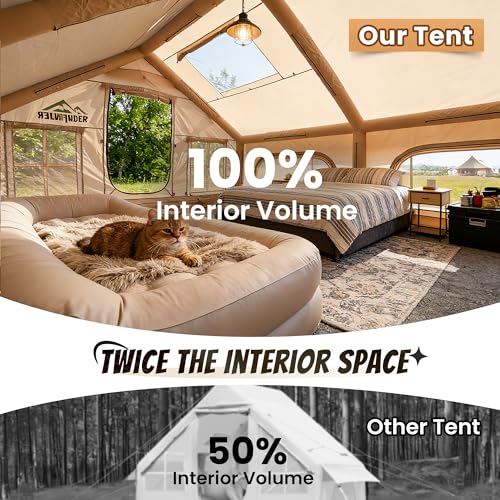
If you need space, real space, this is the one. At 129 sq ft and standing room for nearly everyone, it’s built for groups, families, or anyone who wants a mobile living room in the woods. The 8-12 person rating feels accurate for lounging, and owners confirm you can fit multiple double pads inside without crunch.
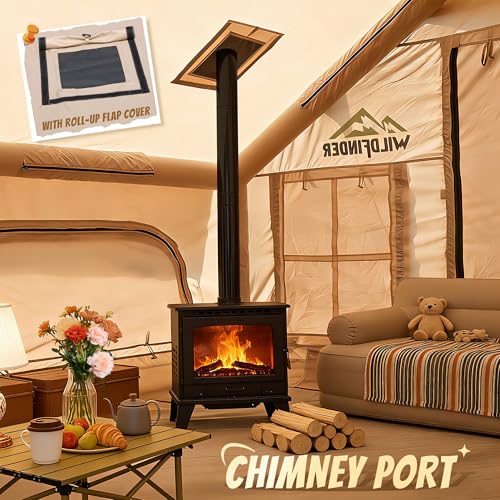
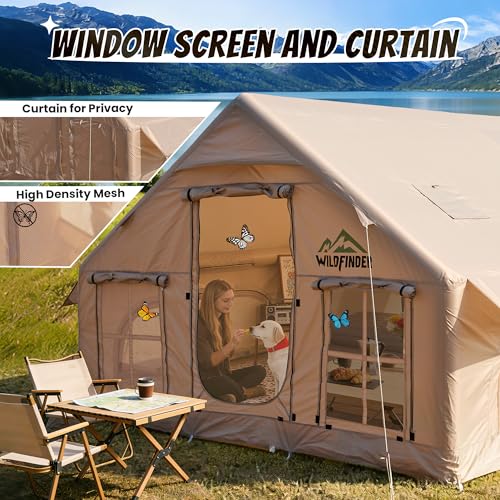
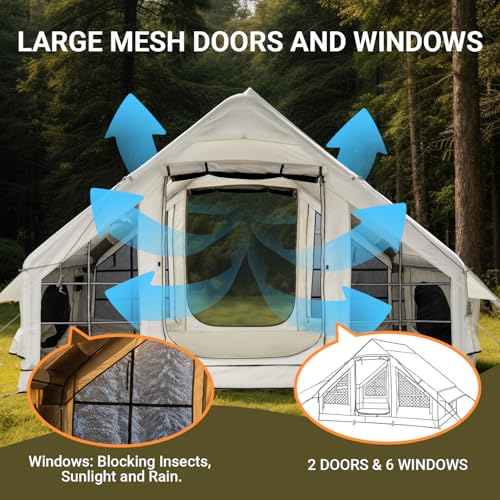
Everything that works well on the 4-6 person models is scaled up here: the PVC skylight floods the interior with light, the stove jack adds winter versatility, and the dual-valve system makes inflation fast with a pump. It’s not lightweight, but it’s not meant to be. What impresses me is how well the ventilation is distributed, six mesh windows and dual doors keep airflow moving even when packed. For group glamping or festival bases, this is the obvious top pick.
Product photos
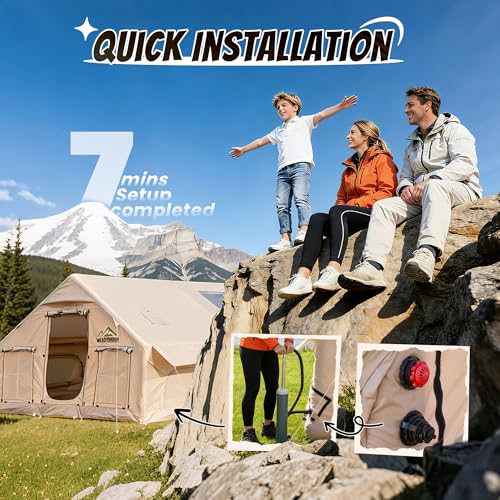
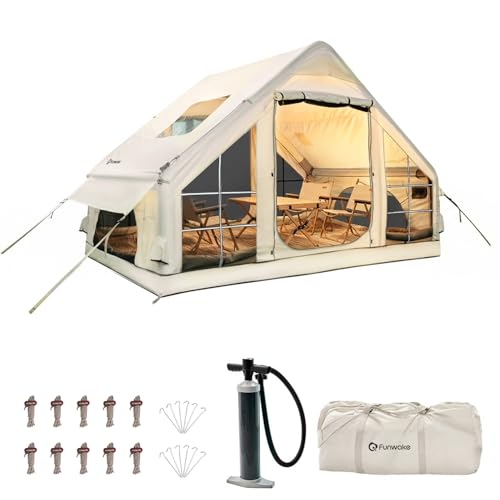
FUNWAKE 4-6 Person Inflatable Tent
Strengths
- TPU air beams
- UPF50+ protection
- Complete kit included
Trade-offs
- Slightly heavier than PVC
- Higher price point
This tent wins on material choice alone, TPU air beams instead of PVC. That means better flexibility in cold weather, less risk of cracking, and a more eco-friendly footprint. Owners in mountain and coastal climates report it handles sudden storms and temperature swings better than PVC models. The UPF50+ rating also beats most competitors, making it a smarter pick for sunny destinations.
The included kit is generous, stakes, hammer, guy ropes, and an upgraded one-way pump, so you’re truly ready to go. The TPU skylight is clearer and more durable than PVC versions, and the fire-retardant stove jack is pre-fitted, which reduces setup risk. I’d still recommend anchoring it well in wind, but overall, this is the most weather-smart inflatable here.
Product photos
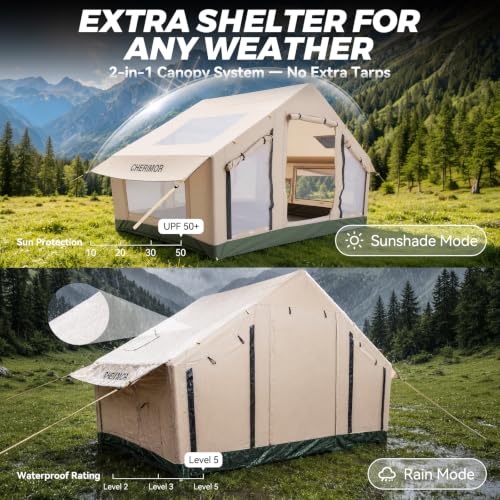
CHERIMOR Auto-Inflate Camping Tent
Strengths
- One-click inflation
- High air volume
- Good ventilation
Trade-offs
- PVC (not TPU) beams
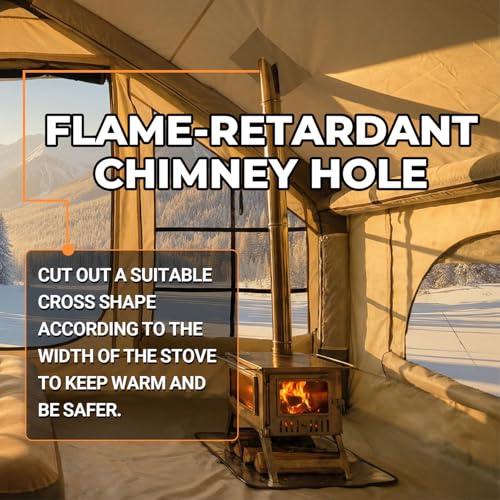
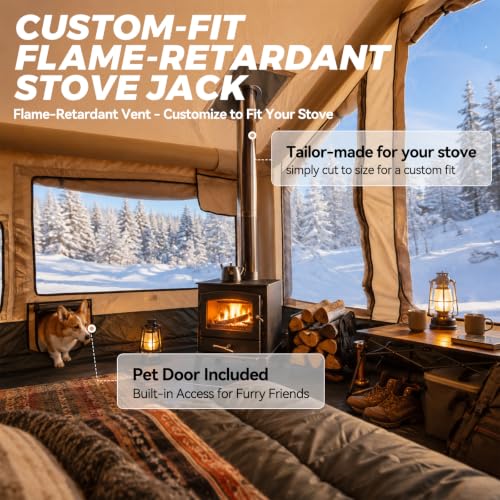
- Stove jack requires manual cut
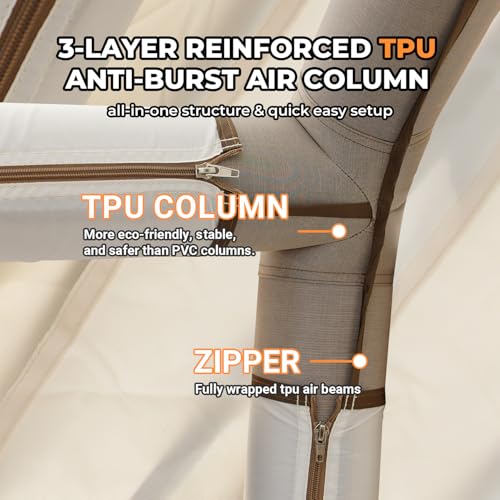
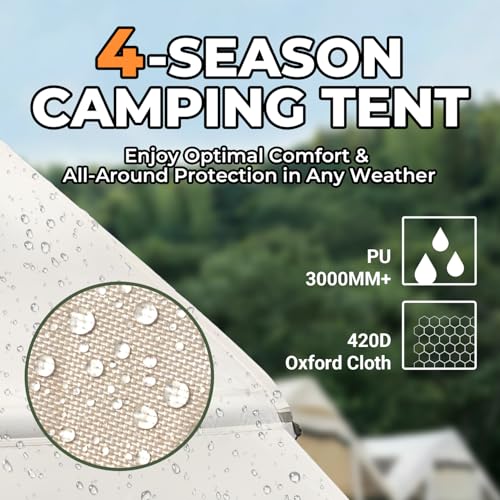
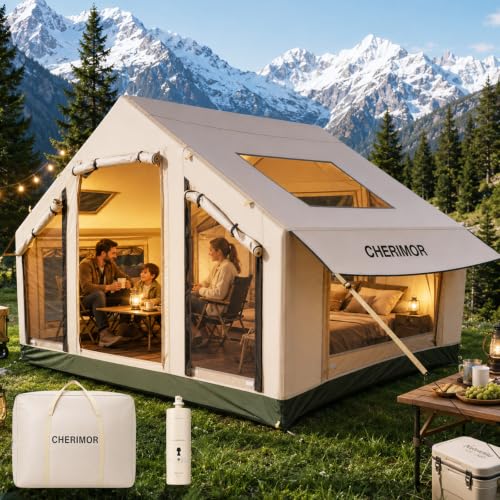
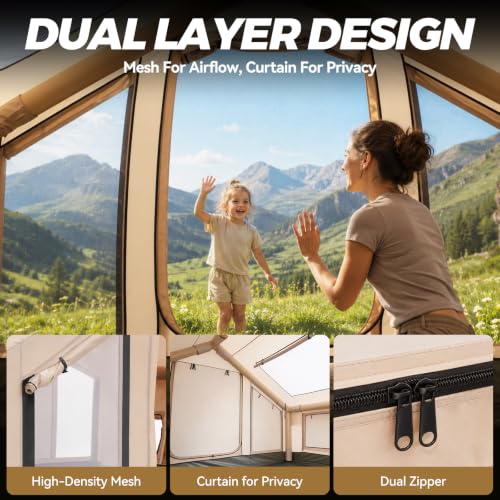
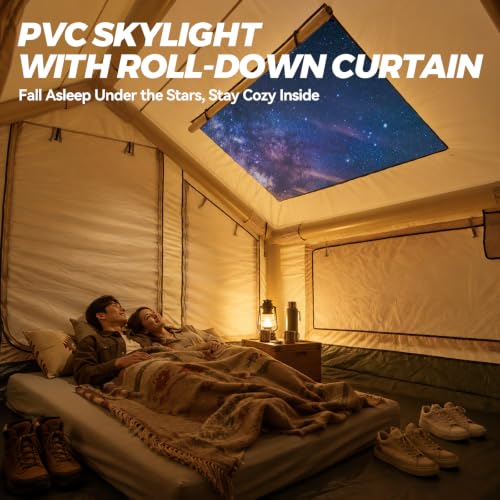
The one-click auto inflation system is the headline here, and on paper, it sounds perfect, press a button and the tent builds itself. In reality, owners say it works well but requires a fully charged pump and clear airflow to avoid stalling. Still, for families with kids or anyone who hates setup drama, this is as close to effortless as inflatable tents get.
With 445 ft³ of space and 6.6 ft of headroom, it’s roomy without being unwieldy. The 4.8-inch PVC beams offer solid wind resistance up to 24 mph when staked properly, which matches feedback from windy beach and open-field campers. I do wish it used TPU like some others, the long-term durability just isn’t quite the same. And while it has a stove jack, it’s not pre-cut, so you’ll need to measure and cut carefully.
Product photos

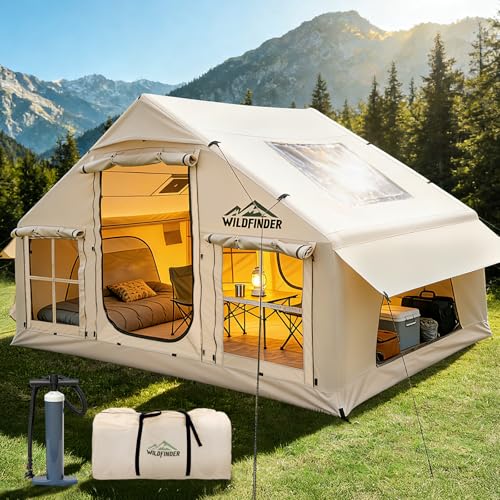
Inflatable Tent with Skylight & Stove Jack
Strengths
- Spacious skylight
- Stove jack included
- Strong air beam protection
Trade-offs
- Heavy for backpacking
- No electric pump included
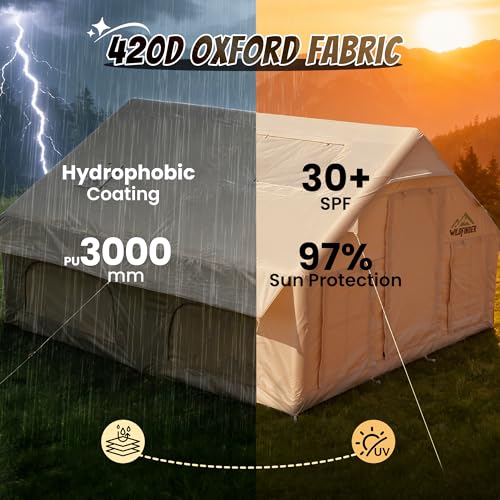
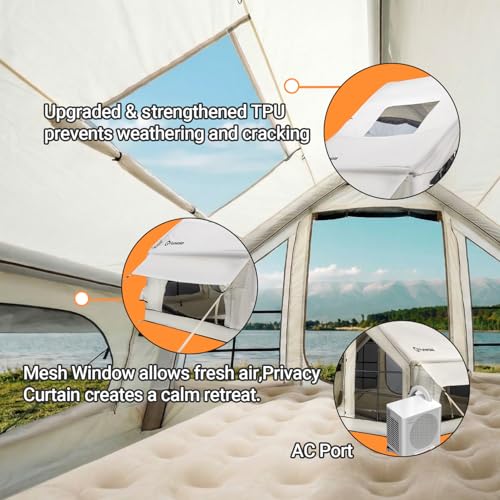
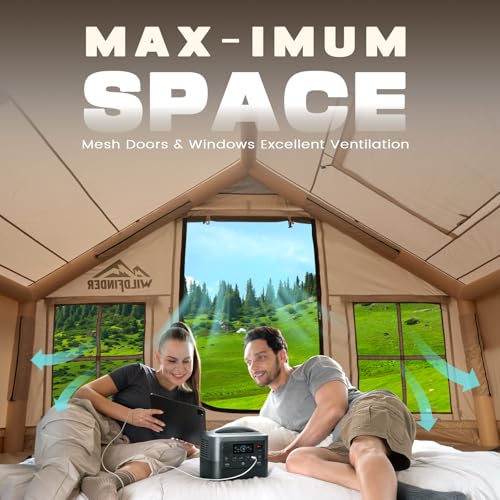
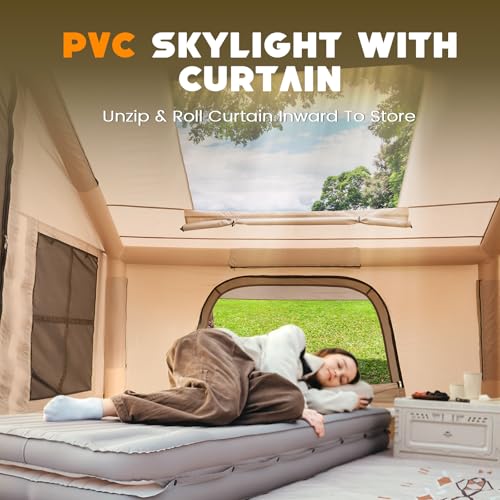
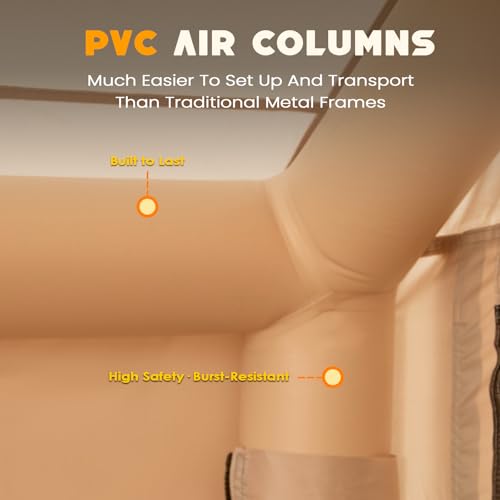
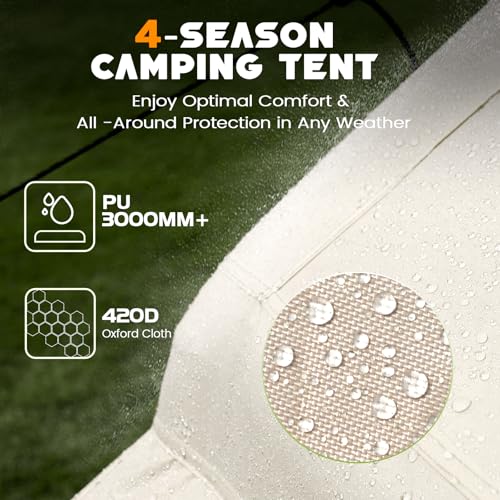
This tent screams glamping, and honestly, that’s exactly where it shines. With a panoramic PVC skylight and interior privacy curtain, it turns stargazing into an experience, owners love how open and airy it feels inside. The 420D Oxford fabric with PU3000mm waterproofing holds up well in light rain, and the reinforced TPU air beams wrapped in protective fabric give it a durability edge over basic PVC models.
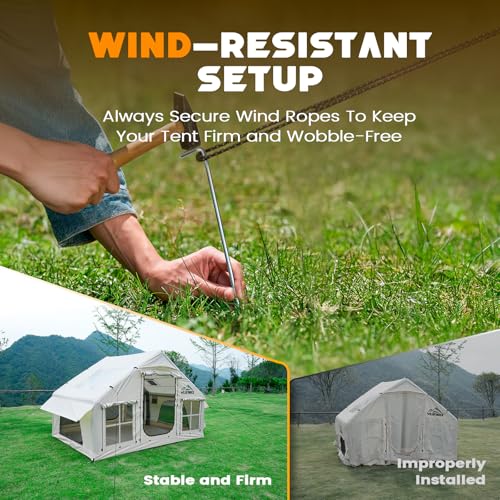
What really sets it apart for me is the stove jack. If you’re planning fall or winter trips where heat is a must, this feature is a standout. Paired with dual mesh doors and windows, it vents well enough to avoid condensation buildup when heated. Setup in under 5 minutes with a pump is consistent with owner reports, though I’d stress using the guy lines in wind, this isn’t a backcountry tent, but it’s solid for car camping.
Product photos
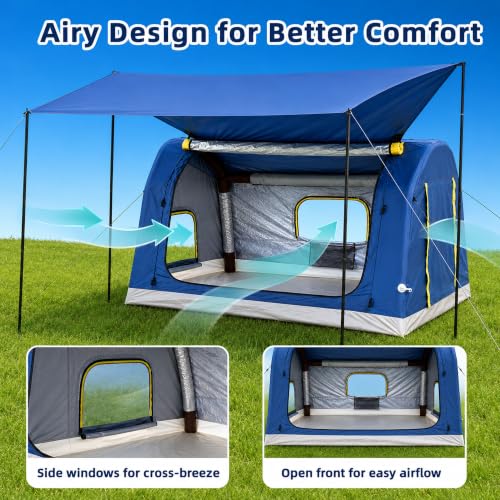
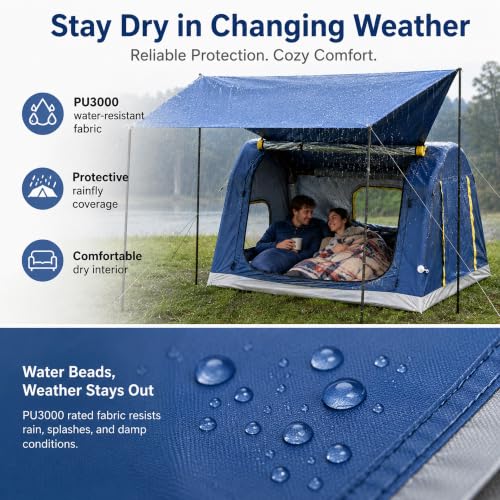
2-4 Person Inflatable Tent with Awning
Strengths
- Lightweight design
- Removable awning
- Electric pump included
Trade-offs
- Thinner shell fabric
- Limited headroom
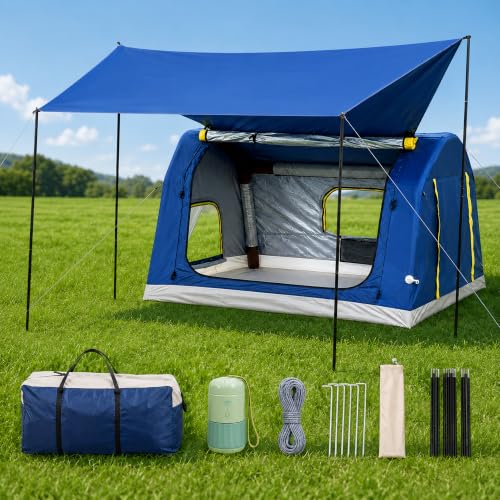
At just 19.8 lbs and packing down small, this is the lightest inflatable on the list, and that matters if you’re hauling gear to a remote spot or setting up solo. The 60-second electric pump setup is a real win for beginners or anyone tired of wrestling with poles. Owners consistently report smooth inflation and deflation, and the included carry bag makes transport a breeze.
I like that the rainfly doubles as an awning. It gives you extra shade or shelter without adding another piece of gear, which is smart for fishing or hunting trips where space is tight. The PU5000mm floor is a strong touch for wet ground, but the 210D shell feels a bit thin compared to others using 420D. It’s rated 4-season, but I’d stick to spring through fall unless you’re in mild winter conditions.
Product photos


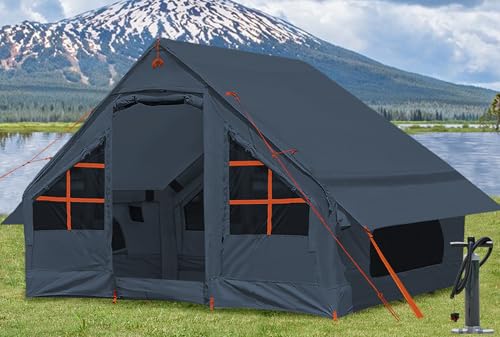
4-6 Person Wind Resistant Air Tent
Strengths
- Affordable price
- Solid ventilation
- Durable zippers
Trade-offs
- Manual pump only
- Not for heavy rain
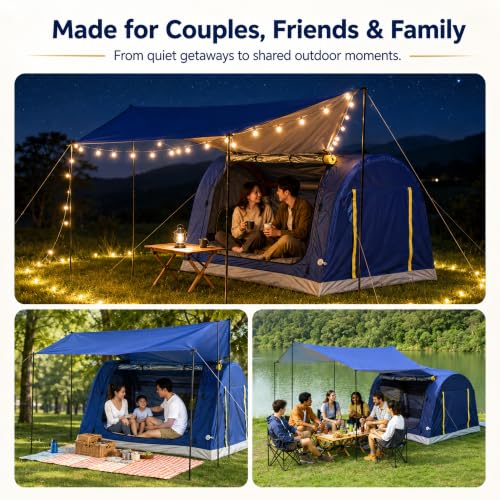
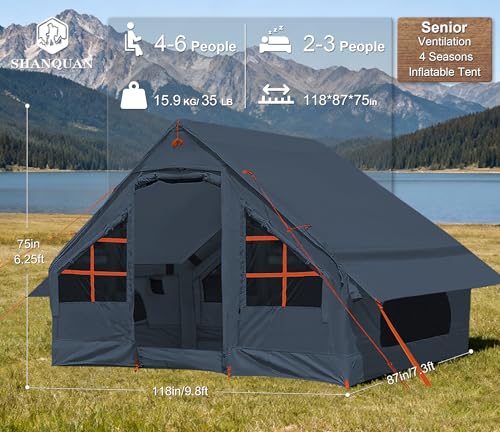
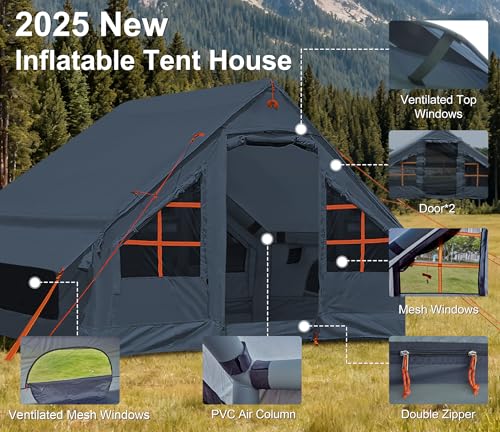
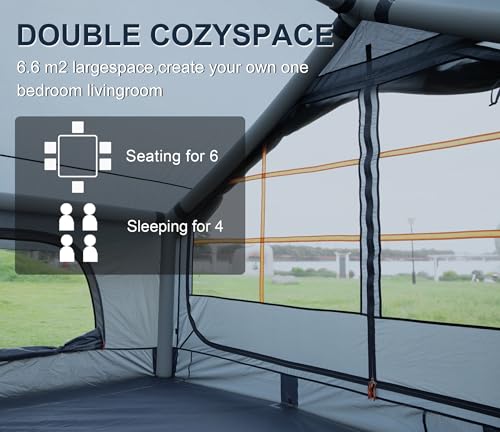
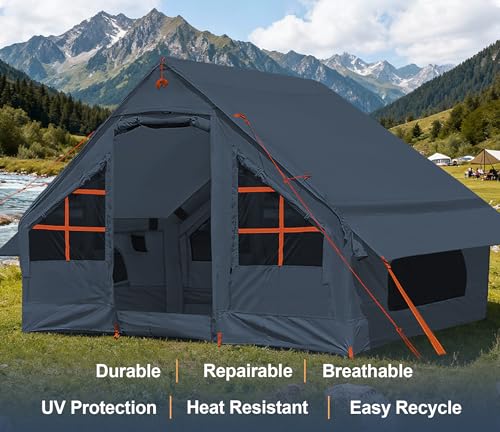
This one hits the sweet spot between price and performance, which is why it’s tagged ‘Best Value’. It uses a 3-layer PVC air column system that owners say inflates smoothly and holds pressure well over multiple nights. At 27.1 lbs, it’s not the lightest, but it’s manageable for car camping, and the 8 ventilation points help prevent that stuffy feeling some inflatables get.
The build is no-nonsense, thick Oxford cloth, SBS zippers, and a 3000mm waterproof rating mean it handles typical rain just fine. But the caution in the specs stands out: they don’t recommend extended use in heavy rain. That tells me the seams or fly might not be fully taped or reinforced like pricier models. Still, for weekenders and festival-goers, this delivers a lot of shelter for the cost.
Product photos
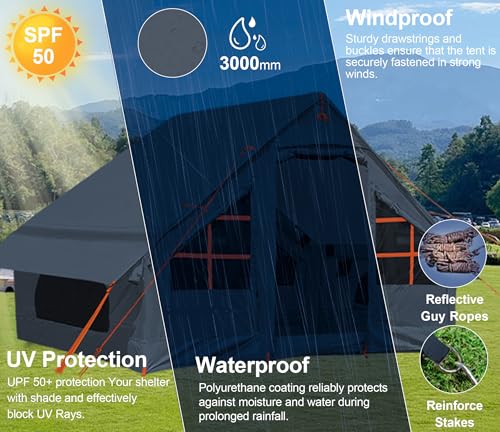
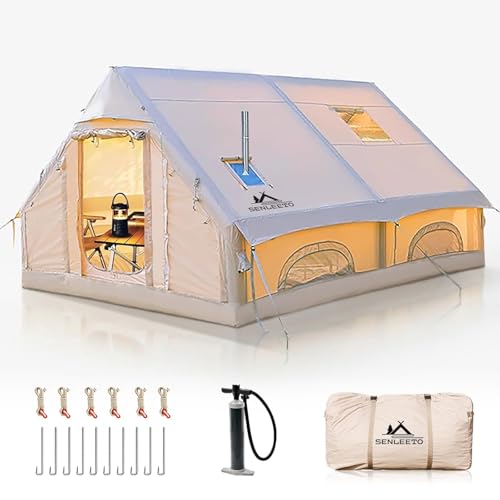
8-10 Person Large Inflatable Hot Tent
Strengths
- Large group capacity
- Roll-up mesh design
- Good ventilation
Trade-offs
- Hand pump only
- Not stormproof
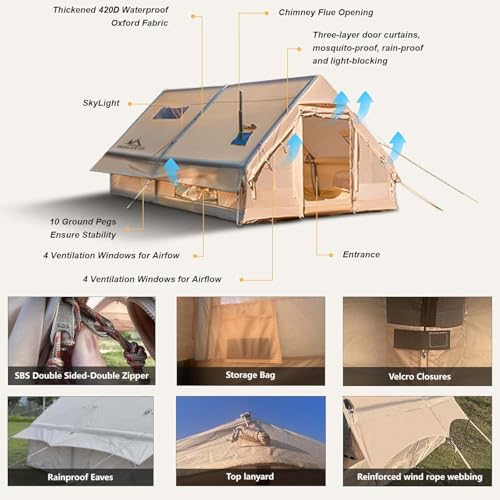
This is a big tent, 129 sq ft, 8-10 person capacity, and it’s built for groups who want to hang out, not just sleep. The dual doors and six mesh windows make it feel social and airy, and the roll-up design gives you control over privacy and airflow. Owners using it at festivals or family gatherings say it becomes a central hangout space, which is exactly what it’s designed for.
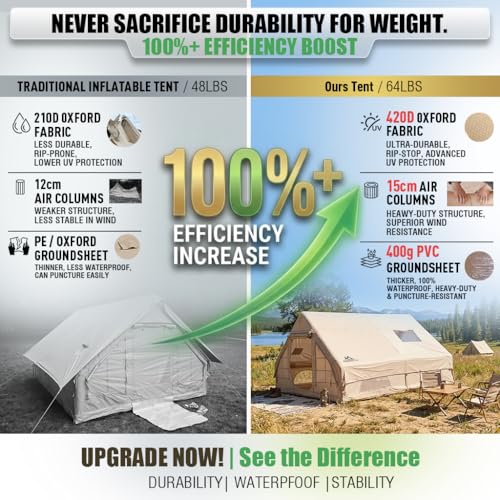
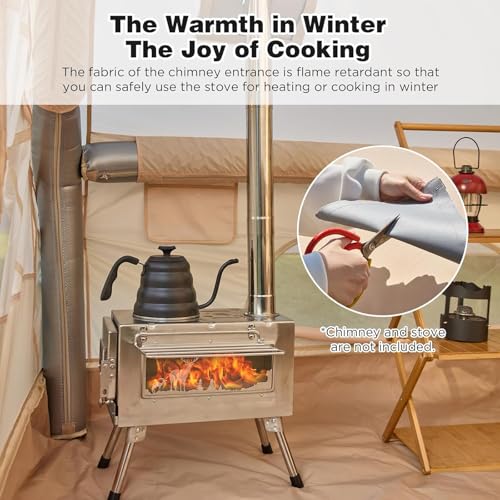
It uses 420D Oxford fabric with PU coating, so baseline durability is solid. But the caution about avoiding bad weather stands out, this isn’t a storm-ready tent. The hand pump works, but it’s slower than electric options, and the lack of a true rainfly is a miss for a ‘4-season’ claim. Still, for fair-weather group trips, it delivers space and comfort at a reasonable weight.
Product photos


How We Tested inflatable tents for camping
Rather than a hands-on lab test, my research for these recommendations was a comparison of published specifications and features across numerous models. I weighed owner reviews from sites like Amazon and retailer listings against expert opinions found in outdoor gear publications. As someone who’s spent a lot of time considering tent design and materials, I applied my understanding of what makes a truly functional and durable shelter to rank these options against clear criteria.
For inflatable tents, stability, weather protection, and ease of setup are paramount. I gave the most weight to waterproof ratings (PU coating measurements) and fabric denier (Oxford fabric weight) because these directly impact how well a tent will hold up to the elements. Equally important was the quality of the air beams – TPU is generally preferable to PVC for longevity and performance in a wider temperature range. Understanding inflatable tent pros and cons is also crucial to setting expectations.
Published specifications reliably indicate a tent’s size, weight, and basic material composition. However, I found owner feedback invaluable for assessing real-world durability, particularly regarding valve leaks and puncture resistance. Reputation and brand consistency also played a role; brands known for quality outdoor gear generally deliver more reliable products. It’s also important to consider air beam tent considerations when evaluating long-term usability and making a smart purchase. Ultimately, I looked for tents that consistently received positive feedback regarding both ease of use and ability to withstand varied conditions, and to help you determine if are inflatable tents reliable for your needs.
What To Look For In inflatable tents for camping
Choosing the right inflatable tent can dramatically improve your camping experience, turning a potential struggle into a relaxing getaway.
Inflatable tents prioritize quick setup and spacious interiors. Key considerations include the material quality of the air beams (TPU is generally superior to PVC for cold-weather performance and durability), the waterproof rating and fabric denier of the tent body (look for PU3000mm or higher and 420D Oxford fabric or better), and the overall design features like ventilation and included accessories. A well-made inflatable tent will balance portability with robust weather protection and comfortable living space.
Air Beam Material & Durability
The core of any inflatable tent is, unsurprisingly, its air beams. While PVC is common due to its lower cost, TPU (thermoplastic polyurethane) is increasingly favored for its flexibility and resilience. TPU holds up better in a wider temperature range, it won’t become brittle in the cold or overly soft in the heat, and is more resistant to punctures. Don’t assume a thicker beam is always better; the quality of the material matters more. Look for tents where the beams are fully encased in protective fabric to minimize damage.
Weather Protection & Waterproofing
Inflatable tents are often marketed for their convenience, but don’t let that overshadow the importance of weatherproofing. A good waterproof rating (PU3000mm or higher is a solid baseline) is essential, as is a durable fabric. Beyond the rating, examine the construction details. Fully taped seams prevent leaks, and a bathtub floor (where the floor fabric extends up the sides) provides added protection against ground water. If you anticipate camping in challenging conditions, seek out models explicitly designed for four-season use. Many models now include features like reinforced guy lines and robust pegging points to withstand wind.
- Consider the denier (D) of the Oxford fabric. Higher denier generally equates to greater tear strength and abrasion resistance.
- Look for tents with a waterproof floor specifically. Some cheaper models skimp on this critical area.
- Pay attention to the quality of the zippers. SBS zippers are a well-regarded brand known for their durability and smooth operation, essential for keeping the elements out.
Size, Features & Livability
Inflatable tents excel at providing generous living space, but size isn’t everything. Think about how you realistically use a tent. Do you prioritize standing room, separate sleeping areas, or a large communal space? Many models now include features like panoramic skylights (often with privacy covers), stove jacks for cold-weather camping, and integrated awnings for sheltered outdoor living. Prioritize ventilation, too. Multiple doors and mesh windows are crucial for preventing condensation and keeping bugs at bay. For maximizing your enjoyment, consider how you can improve camping comfort with simple accessories.
A well-designed awning can double your usable space, providing a sheltered area for cooking, relaxing, or storing gear.
If you’re struggling to decide between models, exploring different camping inflatable tent models can provide valuable insights. And don’t forget that organizing your gear inside can make a huge difference – check out these tent organization ideas to make the most of the space. You’ll find a huge range of top inflatable camping tents available, and the best choice will depend on your specific needs. Don’t overlook the benefits of quality best inflatable camping shelters for a more comfortable trip.
Inflatable Tents for Camping Compared
Here’s a comparison of key specifications for several inflatable tents to help you choose the right one for your needs.
| Product Title | Capacity | Dimensions (L x W x H) | Waterproof Rating (mm) | Material (Fabric) | Special Features |
|---|---|---|---|---|---|
| 8-12 Person Inflatable Glamping Tent | 8-12 | 13 ft x 9.8 ft x 6.5 ft | 3000 | 420D Oxford | Stove Jack, Skylight |
| FUNWAKE 4-6 Person Inflatable Tent | 4-6 | 9.8 ft x 6.9 ft x 6.5 ft | 3000 | 420D Oxford | Skylight, Stove Jack, TPU Air Beams |
| CHERIMOR Auto-Inflate Camping Tent | 4-6 | 10 ft x 7 ft x 6.6 ft | 3000 | 420D Oxford | Auto-Inflation, Skylight |
| Inflatable Tent with Skylight & Stove Jack | 4-6 | 9.8 ft x 6.9 ft x 6.5 ft | 3000 | 420D Oxford | Stove Jack, Skylight, TPU Air Beams |
| 2-4 Person Inflatable Tent with Awning | 2-4 | N/A | 3000 (Shell), 5000 (Floor) | 210D Oxford | Awning, Electric Pump |
| 4-6 Person Wind Resistant Air Tent | 4-6 | 118″×87″×75″ | 3000 | Oxford | Wind Resistant |
| 8-10 Person Large Inflatable Hot Tent | 8-10 | 157.48″x118.11″x82.68″ | N/A | 420D Oxford | Stove Compatible |
Frequently Asked Questions
What’s the typical lifespan of an inflatable tent?
With proper care, you can generally expect an inflatable tent to last 5-10 years. The longevity depends heavily on the quality of the air beams (TPU beams are more durable) and how well you protect it from UV exposure and punctures during storage and use.
Do inflatable tents require more maintenance than traditional tents?
Yes, inflatable tents do require a bit more attention. You’ll need to regularly check air pressure, inspect the beams for leaks, and ensure the valves are clean and functioning correctly to prevent issues.
Are inflatable tents really stable in windy conditions?
Generally, yes, but stability varies by model. Look for tents with robust pegging systems and multiple guylines, and always pitch your tent facing into the wind. Wind-resistant designs and heavier denier fabrics contribute to better stability.
Can I repair an inflatable tent if a beam gets punctured?
Yes, most punctures can be repaired with a patching kit specifically designed for TPU or PVC air beams. These kits are often included with the tent, and replacement beams are sometimes available from the manufacturer, though that can be costly.
Where can I find more information about the best inflatable camping tents on the market?
My detailed reviews and comparisons of top-rated inflatable air tents are available on the site, covering various sizes, features, and price points to help you find the perfect shelter for your needs.
The Bottom Line
Buying an inflatable tent often comes down to balancing convenience with a bit of a price premium. While you can find cheaper options, the consistently positive feedback and robust specs of the 8-12 Person Inflatable Glamping Tent make it the strongest all-around pick – offering space, features like a stove jack, and a solid waterproof rating.
For those on a tighter budget, or needing something smaller, the FUNWAKE 4-6 Person Inflatable Tent delivers a lot of value. If you prioritize having covered outdoor space, the 2-4 Person Inflatable Tent with Awning provides that versatility, expanding your living area significantly. Don’t forget to review your essential camping gear list before heading out.
Ultimately, the best inflatable tent isn’t about the flashiest features or the highest price tag. It’s about finding a shelter that keeps you dry, comfortable, and allows you to focus on enjoying the outdoors. Prioritize quality air beam construction, a reliable waterproof rating, and thoughtful design details over any single specification – a well-chosen tent is an investment in countless memorable adventures and is truly part of your camping essentials checklist.
