
7 Best Tents for Beaches 2026
This post contains affiliate links. As an Amazon Associate, we earn from qualifying purchases.
The Gorich Large Beach Tent Sun Shelter is the best overall beach tent thanks to its spacious footprint, UPF 50+ protection, and reliable pop-up design. For a budget-friendly option that still delivers solid sun coverage, the Wolfwise Pop Up Beach Tent stands out. If you need more shade and open space, the besuhot 10x10FT Beach Shade Canopy offers unmatched versatility.
Picking a tent for the beach isn’t just about shade, it’s about surviving wind, sand, and sun without a setup struggle. Too many beach tents promise quick shelter but fail when the breeze picks up or the midday heat rolls in.
This guide cuts through the noise by focusing on what actually matters: real-world stability, UPF-rated fabric, and how easy it is to carry and assemble under the sun. I compared specs and owner feedback across top models to find the ones that deliver where it counts.
Top 7 Tents For Beaches in the Market
The Best Tents For Beaches, Reviewed
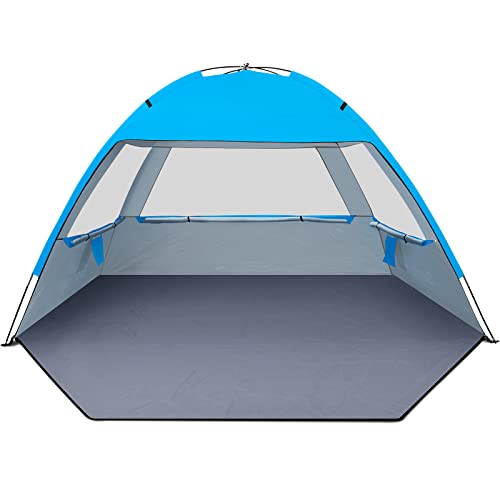
Gorich Large Beach Tent Sun Shelter
Strengths
- Spacious interior
- Lightweight and packable
- Strong UV and wind resistance
Trade-offs
- Floor not fully enclosed
- Setup not fully automatic
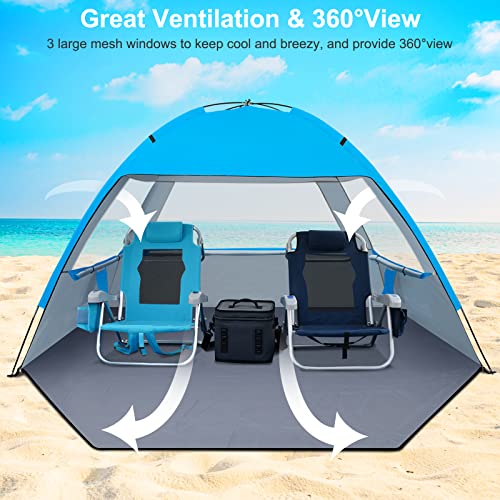
This is the model I’d recommend to most buyers looking for a balanced mix of size, weight, and durability. At 45% larger than many comparable tents, it gives real space for 4–5 people without being unwieldy. The silver-coated UPF 50+ fabric delivers on sun protection, and the 8mm imported fiberglass frame is noticeably sturdier than cheaper alternatives. Ventilation is strong thanks to three mesh windows, and the water-repellent coating handles light rain well, a rare plus in this category.
It folds down small and weighs under 6 pounds, making it easier to carry than bulkier canopies. While not quite as fast to deploy as a pop-up, it’s close. For the versatility, beach, camping, festivals, it’s the most well-rounded pick.
Product photos




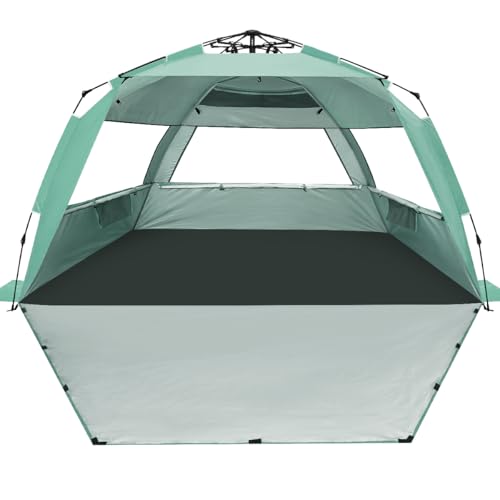
WhiteFang Deluxe XL Pop Up Tent
Strengths
- Extra-large floor space
- Privacy-friendly front closure
- Comes with full anchoring kit
Trade-offs
- One-way ventilation
- Slightly heavier than average
The extended floor is the standout feature here, it’s not just for sitting, but for spreading out toys, towels, or snacks without kicking sand into the main area. At 99 inches long, it offers more usable square footage than most 3–4 person tents, and the Velcro-closable front adds a layer of privacy rare in pop-up designs. Owners appreciate this for nursing or quick changes without exposing the whole interior.
Ventilation is decent with three roll-up windows, but the single-door design limits cross-flow compared to dual-door models. It comes with a full set of stakes and sandbags, which boosts stability, though not quite to besuhot’s level. Still, for the space-to-price ratio, it’s a strong contender.
Product photos

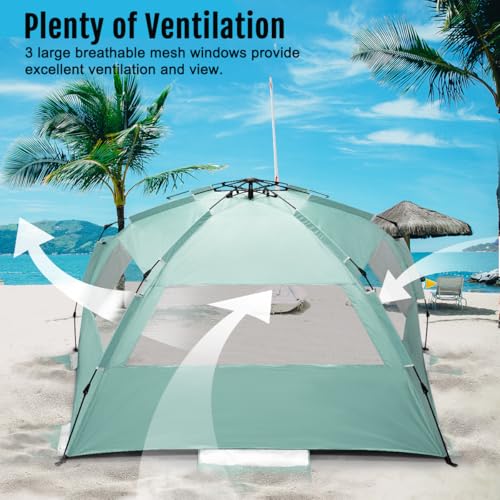
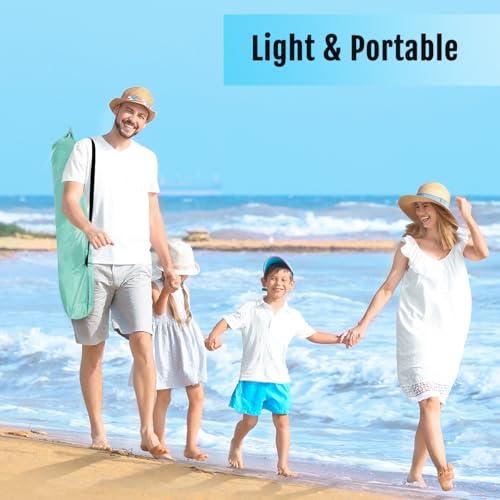

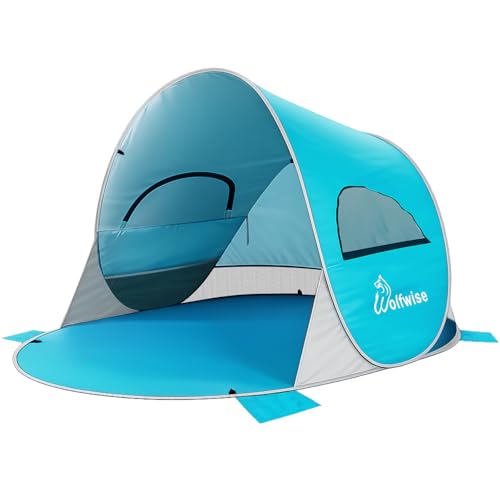
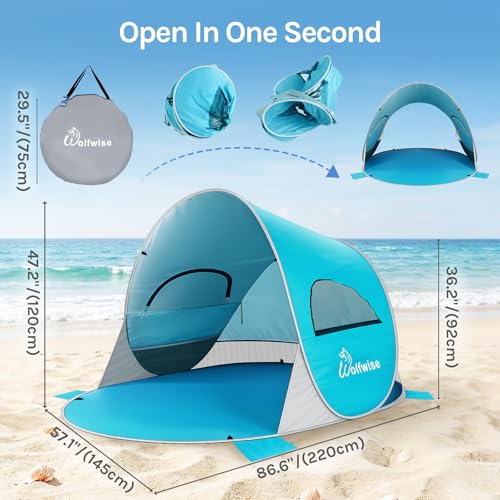
Wolfwise Pop Up Beach Tent
Strengths
- Instant pop-up setup
- Ultra-light and compact
- 360-degree mesh ventilation
Trade-offs
- Limited headroom
- Sand pockets fill quickly
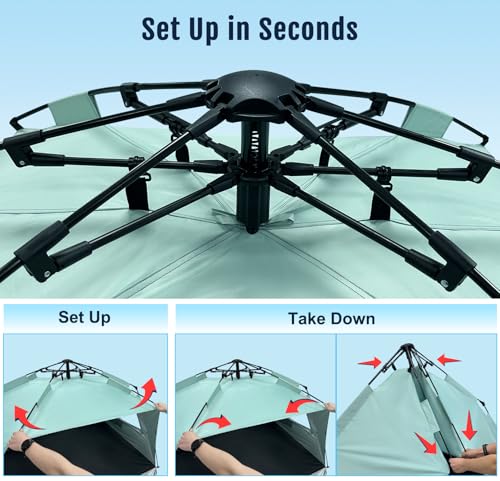
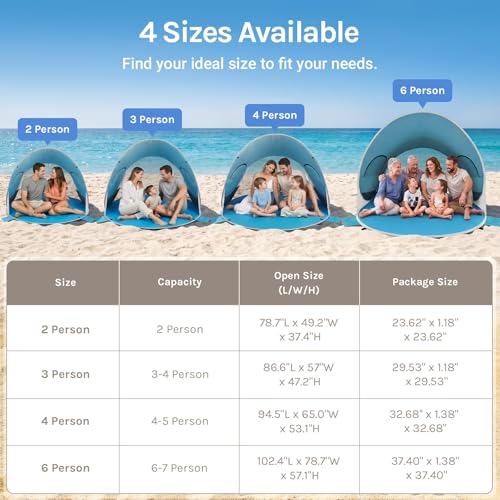
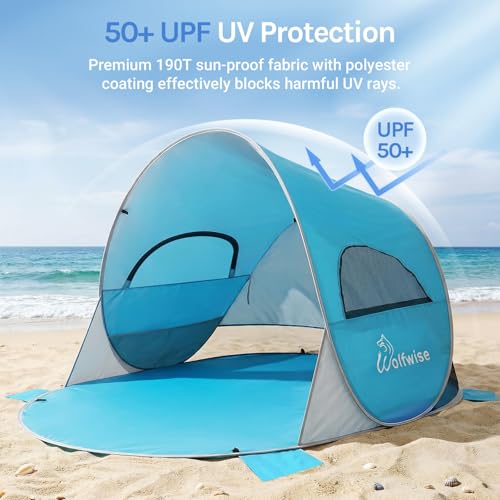
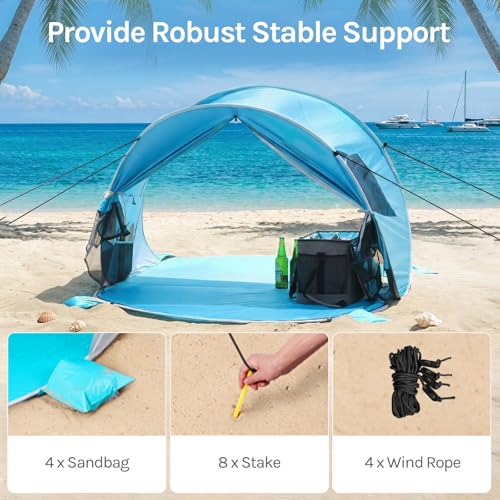
When speed matters most, this is the tent to beat. It truly pops open in seconds, no threading poles, no guessing at frame alignment. At just 4.2 pounds and folding flat to under 2 inches thick, it’s the most packable option here, ideal for tossing in a beach cart or even a large backpack. The high-density mesh delivers solid 360-degree ventilation, and the silver coating provides reliable UPF 50+ protection.
It’s not the roomiest, best for 2 adults or 3 smaller users, and the sand pockets are smaller than I’d like for gusty days. But for a quick game-day shade or spontaneous beach stop, nothing else matches its convenience.
Product photos

Portable Sun Shelter for Family
Strengths
- UPF 50+ protection
- Good headroom
- Stable cross-pole design
Trade-offs
- Slower setup
- Heavier than pop-ups
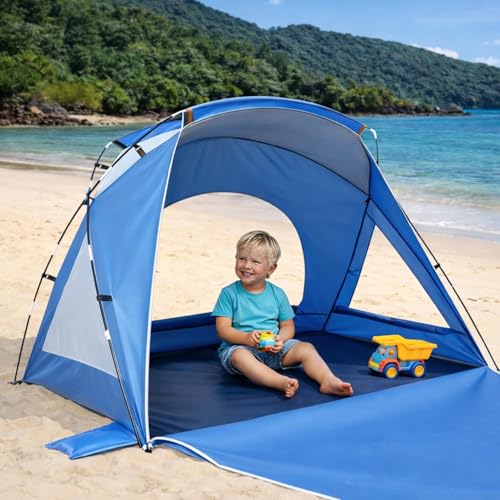
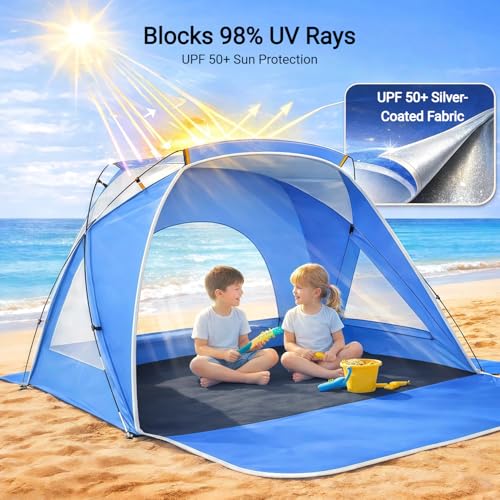
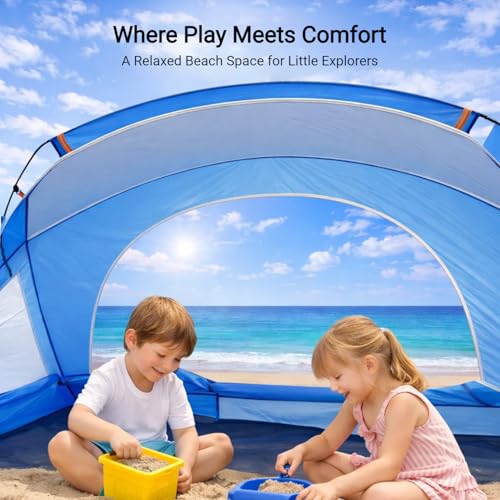
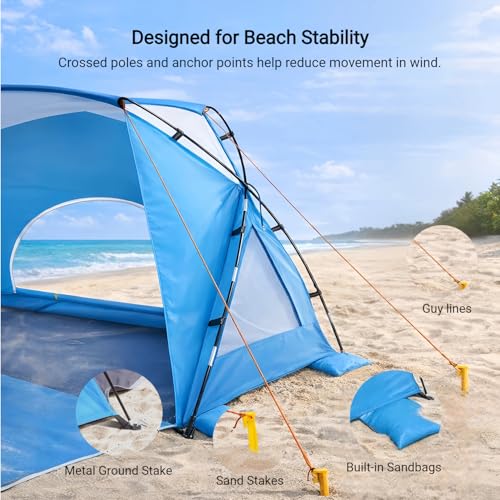
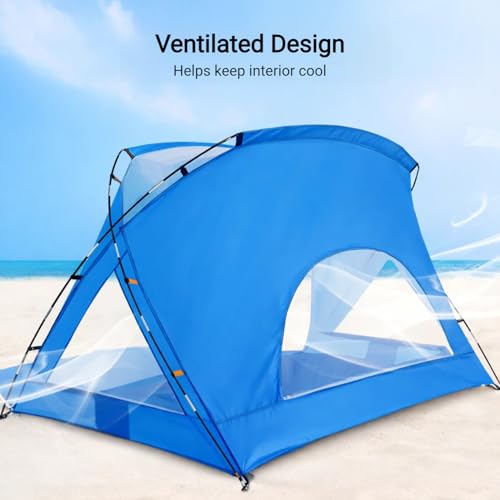
This tent checks all the boxes for families who want reliable, roomy shade without wrestling with poles. The cross-structure frame gives it better headroom than most pop-up styles, which matters when you’re sitting with kids or feeding toddlers. On paper, it’s built to handle real beach conditions, silver-coated UPF 50+ fabric, mesh ventilation, and a floor that resists sand abrasion. Owners consistently report it holds up well in light wind, especially when staked properly and weighted down.
Still, it’s not the fastest to set up compared to true pop-up models. The fiberglass poles are durable, but some reviewers note it takes two people to tension the canopy correctly on breezy days. That said, its multi-use design, working on grass or sand, makes it more versatile than single-purpose cabanas.
Product photos
Raynesys Square-Top Beach Shade Tent
Strengths
- Superior airflow
- Wide view with dual doors
- Expandable floor option
Trade-offs
- Lower interior height
- Setup takes practice
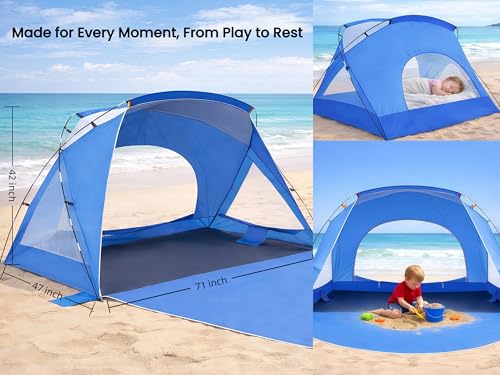
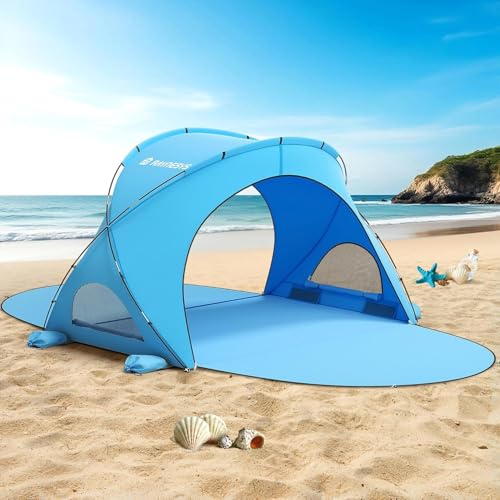
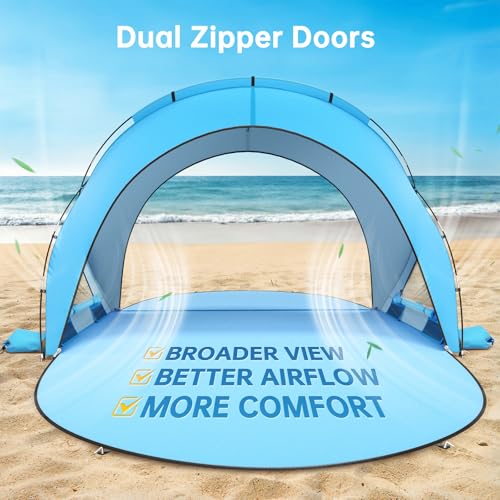
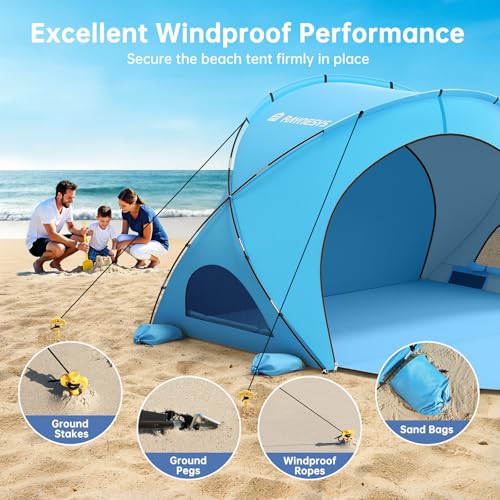
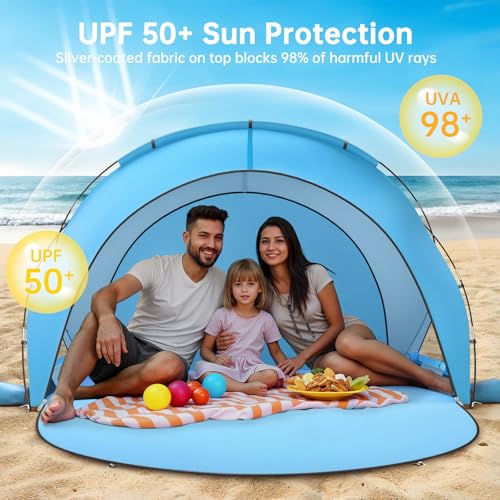
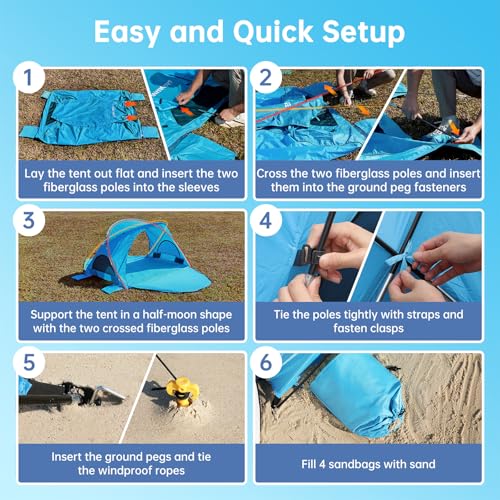
The square-top design does what most dome-style beach tents don’t, it creates a flatter roof that doesn’t collect heat and gives a more open feel. With two zippered doors and mesh windows on opposite sides, airflow is excellent, and owners consistently praise the 360-degree view while staying shaded. You can unzip both sides and lay the flaps down as an extended floor, which works great for group beach lunches or kid play zones.
The cross-support frame and 12 pegs make it surprisingly stable, though the 52-inch height means less standing room. It’s not the fastest to set up, but the trade-off is better ventilation and visibility than nearly any other model here.
Product photos
besuhot 10x10FT Beach Shade Canopy
Strengths
- Excellent wind stability
- Tall interior clearance
- Quick pin-lock setup
Trade-offs
- Bulky when packed
- Longer setup than pop-ups
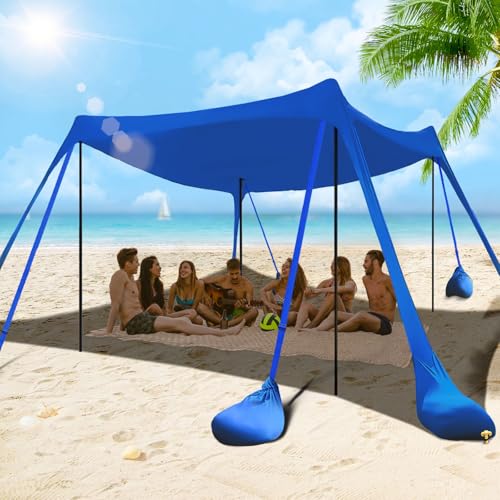
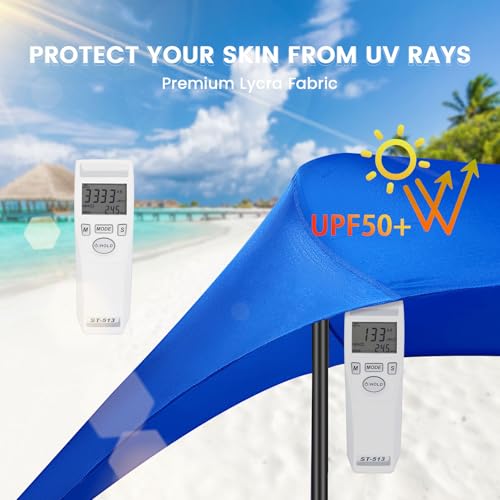
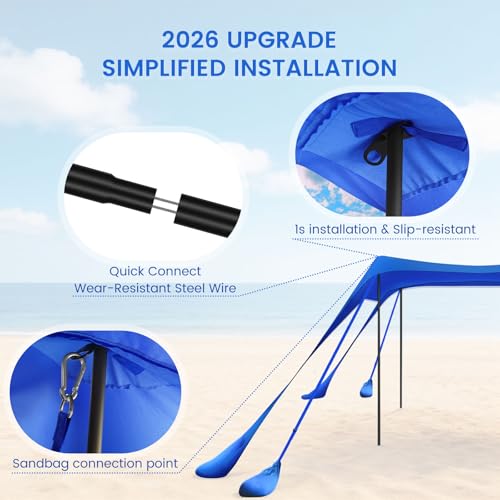
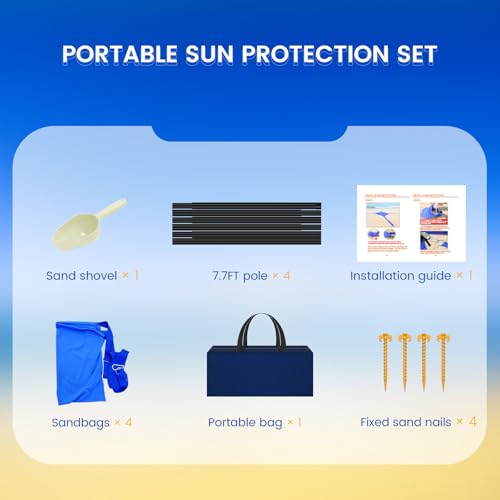
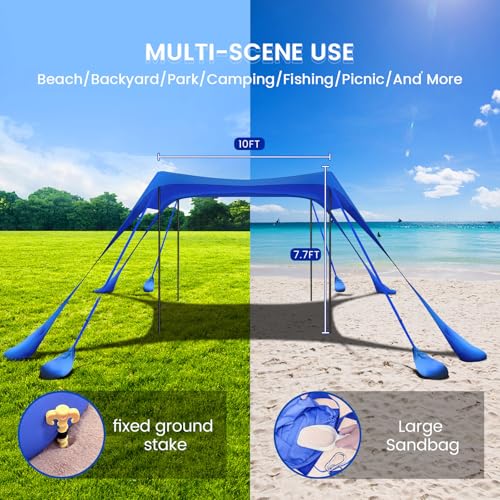
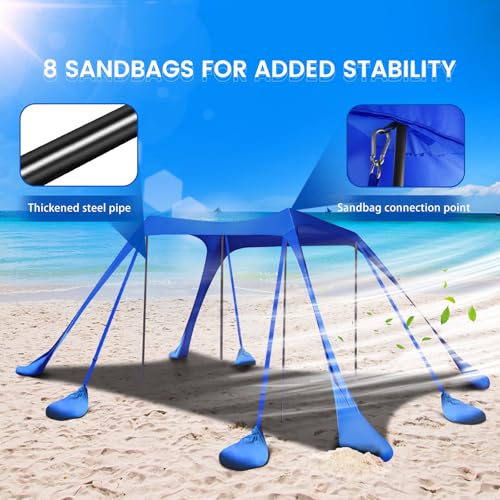
At 10×10 feet, this is one of the roomiest beach shelters here, and the 7.7-foot stabilizer bar actually makes a difference, you can stand comfortably inside, which most beach tents don’t allow. The pre-strung poles with pin-lock mechanism are a smart upgrade, cutting setup time significantly. Reviewers note it stays put better in wind than most thanks to the eight sandbags and heavy-duty ground anchors for grass. The Lycra fabric feels stretchy and resilient, and the UPF 50+ rating holds up under real sun exposure.
It’s not the lightest, and the size means it’s overkill for small groups. But if you’re tired of cramped beach tents that flap in the slightest breeze, this one’s engineered to solve that.
Product photos
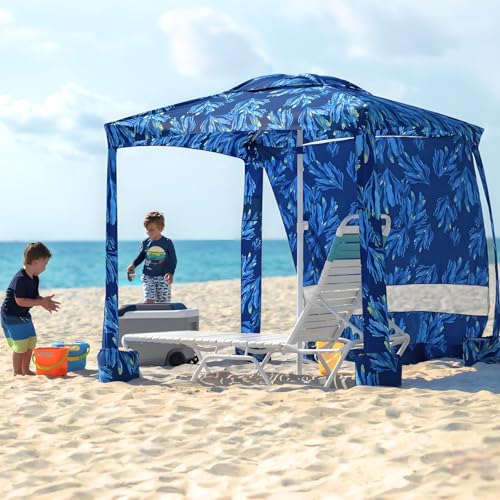
AMMSUN Coral Tropical Beach Cabana
Strengths
- Eye-catching design
- Easy one-person setup
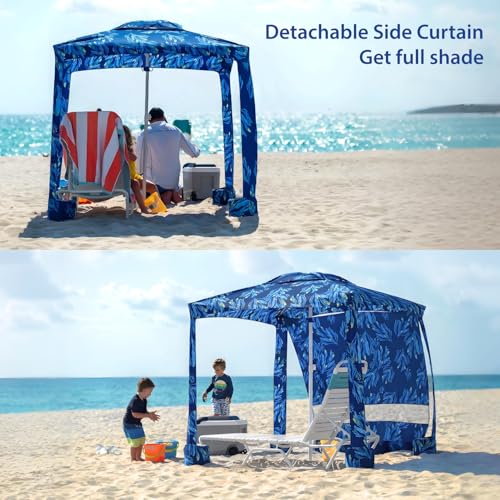
- Removable sidewall
Trade-offs
- Weak in wind
- No sandbags or stakes
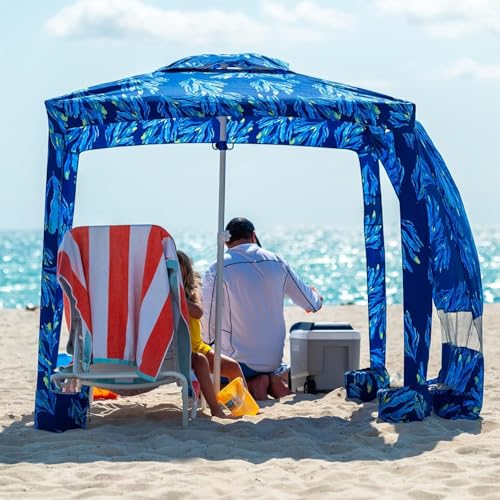
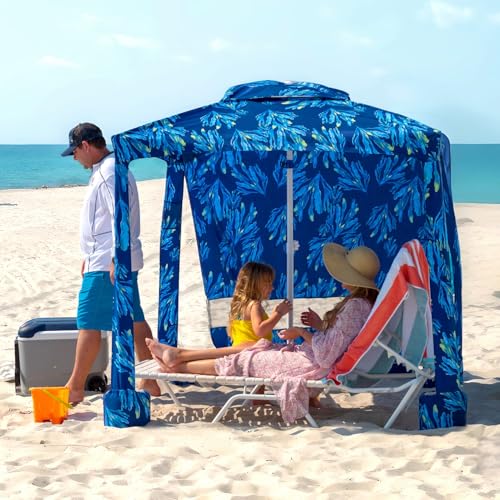
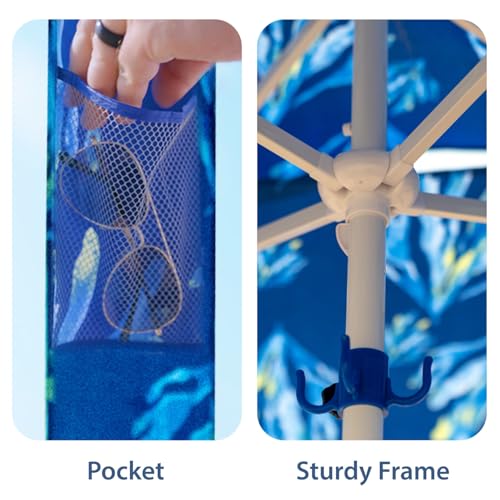
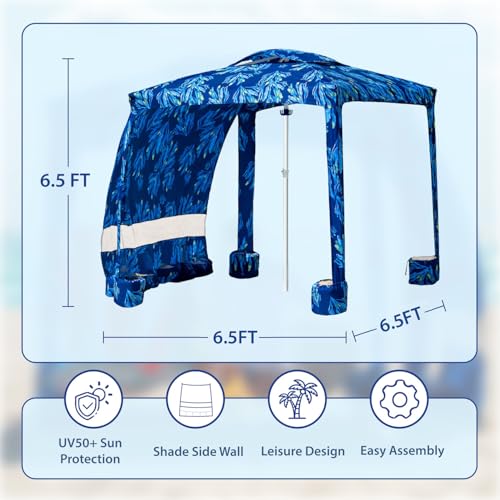
If you’ve ever lost your spot on a crowded beach, you’ll appreciate the AMMSUN cabana’s vibrant coral tropical print, it’s easy to spot from a distance, which is a small but real win. The two-part setup with umbrella and extension pole is simple for one person, and the steel ribs feel sturdy under normal conditions. The included removable sidewall adds flexibility: use it for full sun block or take it off for airflow. Owners like the mesh pocket for small items, a thoughtful touch missing on many competitors.
But it’s not built for wind. Without sandbags or guy lines, it relies solely on sand pockets, and several reviewers report it collapsing in moderate gusts. It’s more of a fair-weather cabana than a shelter.
Product photos
How We Chose These tents for beaches
I approached researching tents for beaches by looking at a lot more than just marketing claims. My process involved comparing published specifications and features across numerous models, then weighing those details against owner reviews from sites like Amazon and independent camping forums. I also considered insights from reputable outdoor gear reviewers. Ultimately, I ranked each tent based on how well it met a set of criteria important for beach use – stability, sun protection, portability, and overall value. Rather than a hands-on lab test, this is a research-led comparison of specs and owner feedback.
For beach tents specifically, I focused heavily on UPF protection and wind resistance. A tent that doesn’t offer strong sun shielding isn’t really suited to a day at the beach. Equally important is stability; nobody wants their shelter collapsing in a breeze. I also prioritized ease of setup and portability, as beachgoers often have a lot of gear to manage. Understanding pop-up tent benefits was key to assessing how quickly and easily these models could be deployed.
Specifications reliably communicate things like fabric denier, pole material, and UPF ratings. However, I placed more weight on owner feedback when it came to real-world performance – how a tent holds up in wind, how easy it truly is to fold, and whether the sun protection lives up to the advertised claims. Reputation and consistent positive comments about durability and stability were strong indicators of quality. I also looked for patterns in negative feedback to identify potential drawbacks of each model, and to better understand the trade-offs between different designs and features in instant setup tents.
Choosing The Right tents for beaches
Picking the right beach tent can mean the difference between a relaxing day and a miserable one.
A good beach tent prioritizes sun protection (UPF 50+ is key), easy portability (weight under 10lbs is ideal), and stability in wind. Look for features like silver coatings for UV blocking, reinforced frames, and included sandbags or stakes. Ventilation is also crucial to prevent overheating, so mesh windows and adjustable vents are a plus.
Size and Capacity
Don’t underestimate how much space you’ll actually want. While a tent labeled for “4-5 people” might technically fit that many, comfort quickly diminishes. I consistently see people wishing they’d sized up. Consider not just how many people you need to shelter, but also how much gear you’ll have – towels, toys, coolers, and beach bags all take up valuable real estate. If you have small children, extra space is especially valuable for naps and changing.
Stability in Windy Conditions
Beaches are notorious for sudden gusts of wind, and a flimsy tent is a recipe for disaster. Look beyond just the frame material (fiberglass is common, but steel is more durable) and consider the overall design. Many tents now include sandbags to weigh down the corners, which are a must-have. Beyond that, pay attention to how the tent anchors to the ground. Simple stakes are okay for soft sand, but for harder-packed beaches, you’ll want tents that include more robust ground anchors. I’ve seen some fantastic designs, like the wind-resistant pop-up tents that use a combination of stakes and sand pockets.
- A basic stake setup is fine for calm days, but it’s the first thing to fail in a breeze.
- Sandbags are essential, and larger ones are better. Don’t skimp here, even if it means paying a bit more.
- Reinforced pole connections and a low profile design significantly improve wind resistance, reducing the surface area exposed to gusts.
A good rule of thumb: if the forecast calls for winds over 15 mph, bring extra stakes and sandbags, and be prepared to take the tent down if conditions worsen.
Portability and Setup Ease
Let’s be honest, no one wants to wrestle with a complicated tent setup after a long drive to the beach. The convenience of a easy setup beach tents is hard to overstate. Pop-up designs are the quickest, often setting up in seconds, but they can be bulkier when folded. Traditional pole-and-sleeve tents take longer but usually pack down smaller. Weight is another key factor. You’ll be carrying this thing across sand, so anything over 10 pounds starts to feel heavy quickly. If you’re considering a more complex shelter like a Neso, familiarize yourself with the Neso brand instructions before you head to the beach.
Tents for Beaches Compared
Here’s a comparison of specifications for various beach tents to help you make an informed purchase.
| Product Title | Size (L x W x H) | Weight | UV Protection | Setup | Wind Resistance |
|---|---|---|---|---|---|
| Gorich Large Beach Tent Sun Shelter | 102.4″ x 65″ x 59.1″ | 5.8 lbs | UPF 50+ | Quick Pop-Up | N/A |
| WhiteFang Deluxe XL Pop Up Tent | 99″ x 55″ x 55″ | N/A | N/A | Quick Pop-Up | Sandbags, Stakes |
| Wolfwise Pop Up Beach Tent | 86″ x 57″ x 47″ | 4.2 lbs | UPF 50+ | Quick Pop-Up | Sand Pockets |
| Portable Sun Shelter for Family | N/A | N/A | UPF 50+ | Quick Pop-Up | Stakes, Sandbags |
| Raynesys Square-Top Beach Shade Tent | 80.71″ x 55.12″ x 52.36″ | N/A | UPF 50+ | Quick Pop-Up | Sandbags, Ropes |
| besuhot 10x10FT Beach Shade Canopy | 10×10 FT | N/A | UPF 50+ | Quick Pop-Up | Sandbags, Anchors |
| AMMSUN Coral Tropical Beach Cabana | 6.5′ x 6.5′ | 9.7 lbs | UPF 50+ | Manual | Sand Pockets |
Frequently Asked Questions
What’s the best way to clean sand off a beach tent?
Simply brush off as much dry sand as possible with a soft brush. Then, use a damp cloth to wipe down the fabric – avoid harsh chemicals or detergents, as these can damage the UV coating.
Are pop-up tents truly as durable as traditional tents?
While pop-up tents are known for convenience, durability varies by model. Look for those with reinforced poles and high-denier fabrics for better longevity, and consider that family beach tents with simpler designs often hold up better to repeated use.
Can I use regular tent stakes on a beach?
Regular stakes can work on some beaches, but they often pull out of soft sand easily. It’s better to use wider, longer stakes specifically designed for sand, or use the included sandbags that come with many beach tents.
What UPF rating should I look for in a beach tent?
A UPF of 50+ is ideal, as it blocks 98% or more of harmful ultraviolet (UV) rays. Lower ratings still offer some protection, but a higher number means better shielding from the sun during long beach days.
How can I best protect my beach tent from wind?
Always use the provided sandbags or stakes, filling them completely and positioning them to face into the wind. A low-profile design and reinforced pole connections also significantly improve stability, especially if you’re looking at spacious beach shelters.
The Bottom Line
Choosing a beach tent often comes down to balancing convenience with robust protection. While pop-up designs offer incredible speed and simplicity, the Gorich Large Beach Tent Sun Shelter strikes the best overall balance of features, portability, and verified sun protection. It’s a solid choice for most beachgoers who want reliable shade without a lot of fuss.
If you’re on a tighter budget, the Wolfwise Pop Up Beach Tent delivers surprising value for the price. For those who prioritize versatility and need a larger shelter for groups, the besuhot 10x10FT Beach Shade Canopy provides ample space and strong wind resistance – just be prepared for a slightly more involved setup and a bit more weight. Understanding local beach tent rules is also essential before you head out.
Ultimately, the most important factors aren’t fancy features or high price tags. Focus on a tent with a UPF 50+ rating, a reliable way to secure it against the wind (sandbags are key!), and enough space for your group and gear. A well-chosen tent is an investment in a more comfortable and enjoyable day by the sea.
