
8 Best Beach Tents for Wind (2026 Guide)
This post contains affiliate links. As an Amazon Associate, we earn from qualifying purchases.
The Shibumi Shade Quiet Canopy is the best overall beach tent for wind, using its sail-like design to stay stable in gusts, while the Shibumi Shade Mini Quiet Version offers a lighter, more compact option for smaller groups or easier transport. For those on a budget but still wanting solid performance, the MoKo Wind-Supported Sunshade Sail delivers reliable wind adaptation at a lower price.
Most beach tents collapse the second the wind picks up, leaving you scrambling across the sand to chase down flapping fabric. It’s frustrating, unsafe, and ruins the whole point of bringing shelter. After comparing the field and digging into owner experiences, I focused on designs that either harness the wind or resist it through smart engineering.
This guide cuts through the hype to spotlight tents that actually hold up, based on real-world feedback, material quality, and proven stability features like aerodynamic shapes and secure anchoring systems.
Top 8 Beach Tents For Wind in the Market
The Best Beach Tents For Wind, Reviewed
Shibumi Shade Quiet Canopy

Strengths
- Excellent wind stability
- Large shade area
- Eco-friendly materials
Trade-offs
- Higher price point
- Requires some wind for optimal use
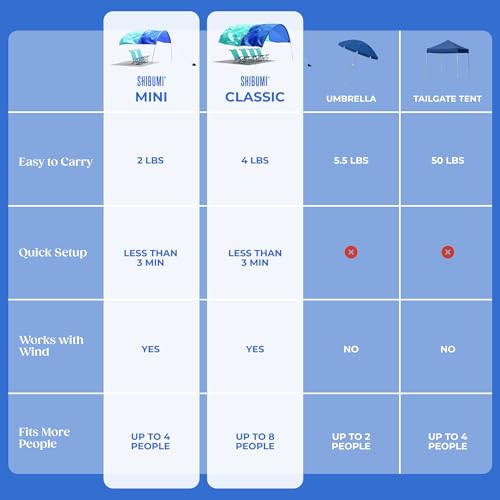
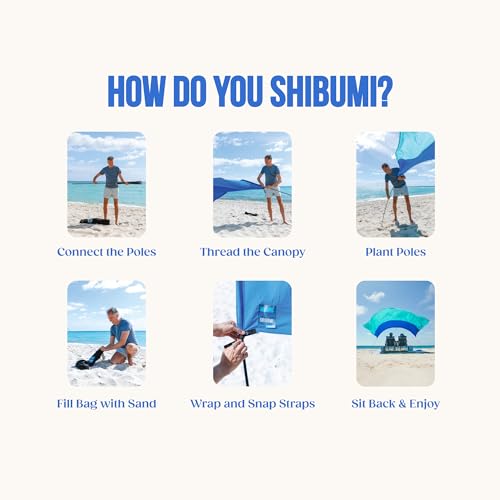
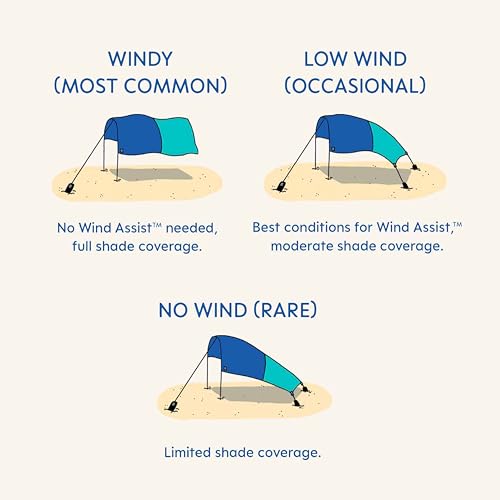
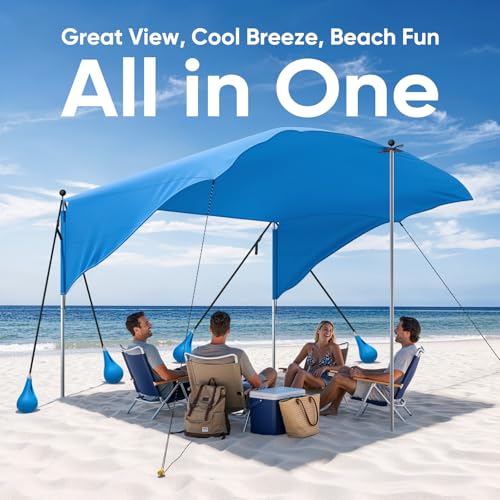
This is the one I’d recommend to most people, it strikes the ideal balance between size, weight, and real-world performance. The 150 sq ft of shade fits up to 8, yet it’s still light enough for one person to carry and set up in under 3 minutes. The wind-powered design isn’t a gimmick, owners consistently report it outperforms traditional tents in gusts, and the open arch keeps air moving so you don’t feel trapped.
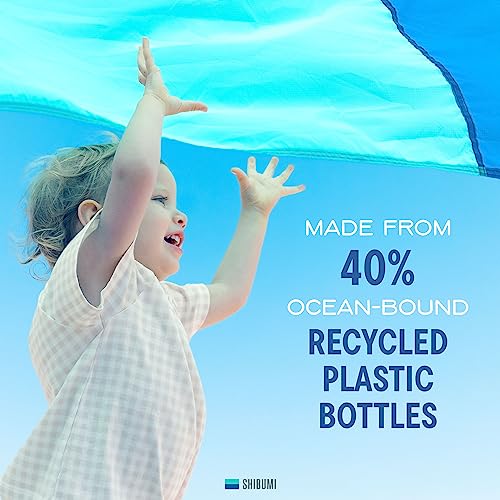
On top of that, it’s made from 40% recycled plastic, which matters if you care about leaving less behind. Compared to the ALYCASO, it’s more eco-conscious and slightly roomier. Against the Gorich, it’s far more wind-resilient. This is the complete package, not the cheapest, not the smallest, but the one that gets everything right.
Product photos
14x11FT Oversized Beach Canopy
Strengths
- Superior wind resistance
- High ceiling clearance
- Reinforced structure
Trade-offs
- Bulky and heavy
- Complex setup for one person
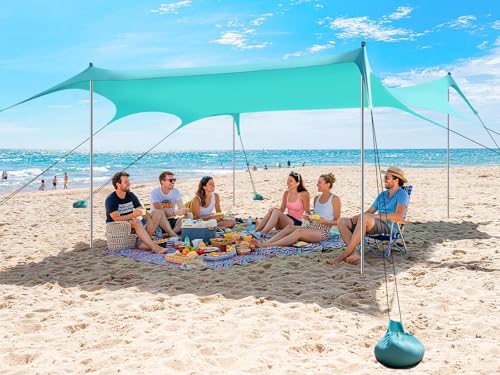
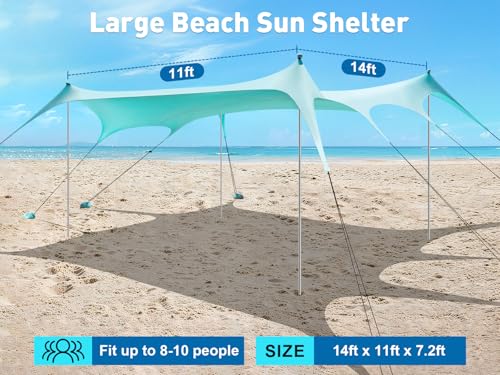
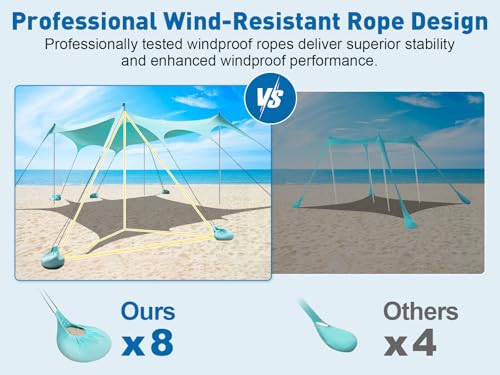
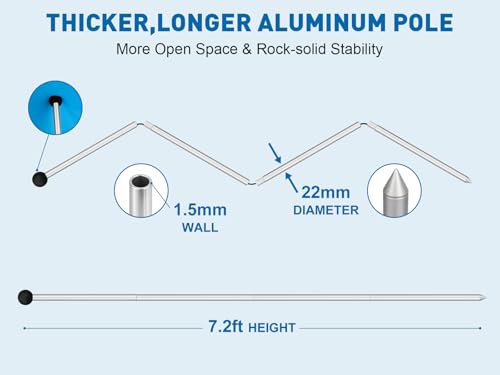
When wind is the main threat, this canopy is built like a tank. The 22mm aluminum poles are twice as thick as most, and the 8-rope triangle anchor system is overkill in the best way, owners in coastal dunes and blustery beaches say it stays put when others fly away. The 14 x 11 ft footprint is massive, easily fitting a dozen people or a full beach setup with chairs and coolers.
But that strength comes at a cost. It’s heavier and bulkier than wind-powered models, and setup takes more effort despite the included tools. It’s not elegant or portable, but it’s effective. If you’re setting up in a known high-wind zone and need something that won’t budge, this is the fortress you want.
Product photos


MoKo Wind-Supported Sunshade Sail
Strengths
- Adapts to wind or no wind
- Reinforced anchoring
- Good airflow
Trade-offs
- Heavier than sail-style canopies
- Design lacks elegance
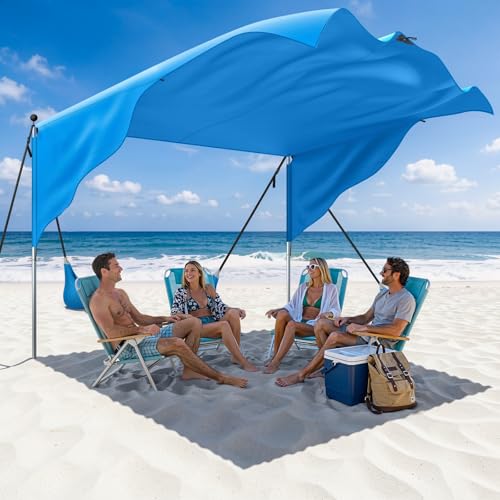
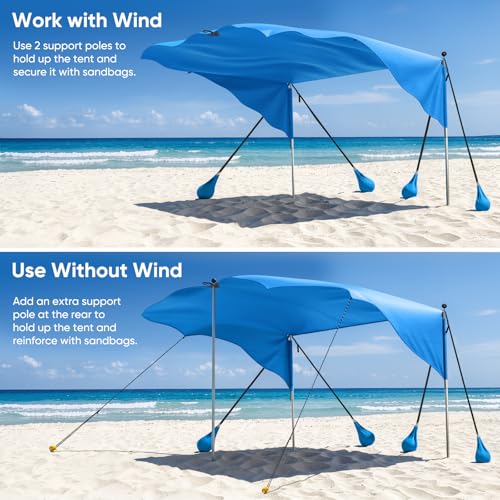
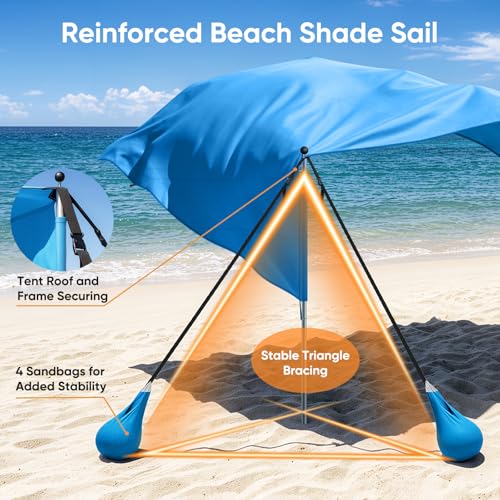
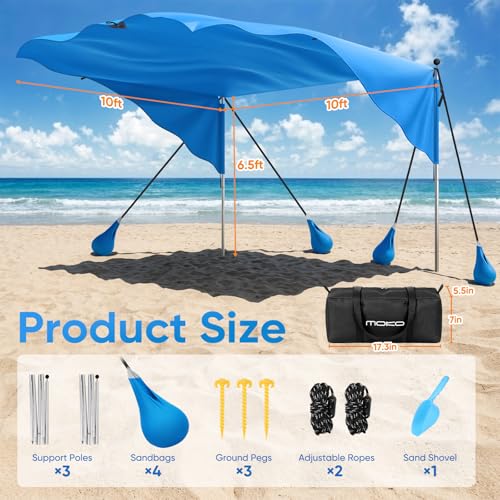
This model nails the hybrid approach, it’s wind-adaptive but doesn’t quit when the breeze dies. The aerodynamic sail design lets it float in light wind, and the included support pole ensures it doesn’t collapse when things go calm. At 100 sq ft, it’s spacious enough for a small group, and the 240T fabric feels more durable than many competitors.
Owners highlight how stable it feels in gusts, thanks to the open design that prevents wind pressure buildup. Compared to the Shibumi, it’s heavier but offers more control in variable conditions. It’s not as compact or stylish, but it’s a workhorse that adapts. For those who hate choosing between wind-powered and static tents, this is a smart compromise.
Product photos

Shibumi Shade Mini (Prev Gen)

Strengths
- Ultra-lightweight
- Fits in carry-on
- Wind-stable design
Trade-offs
- Lower UV protection
- Smaller shade area
At just 2 lbs and folding smaller than a water bottle, this is the ultimate packable shade for minimalist beachgoers. It’s designed for one or two people, and that focus shows, every ounce is optimized for travel. The wind-powered design means it thrives where umbrellas fail, and the fact it floats on a 3 mph breeze makes it ideal for breezy shores.
But it’s the older model with UPF 30+, which is noticeably less protection than newer UPF 50+ canopies. Owners love its simplicity and portability, but many upgrade for the higher UV rating. If you’re flying light and sun exposure is moderate, it’s brilliant. For long days under a scorching sun, the protection falls short.
Product photos



Venustas Beach Tent Sun Shelter
Strengths
- Spacious interior
- Lightweight build
- Easy setup
Trade-offs
- Not wind-active design
- Fiberglass poles can snap in extreme conditions
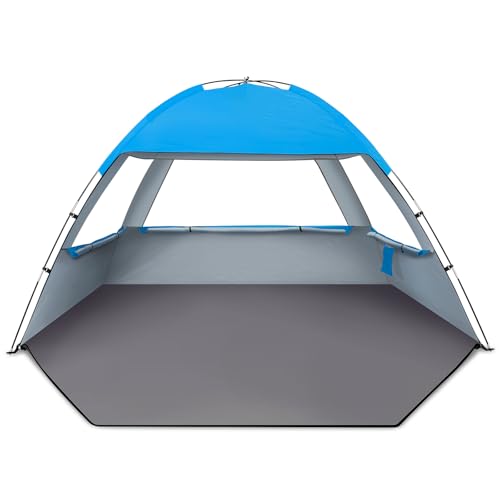
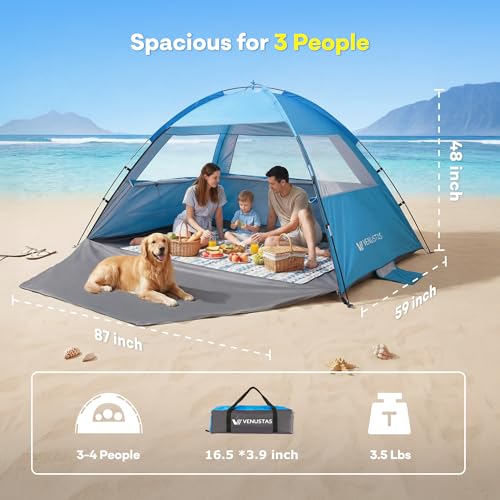
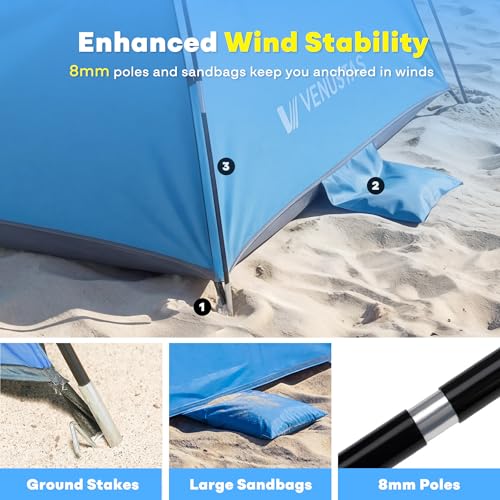
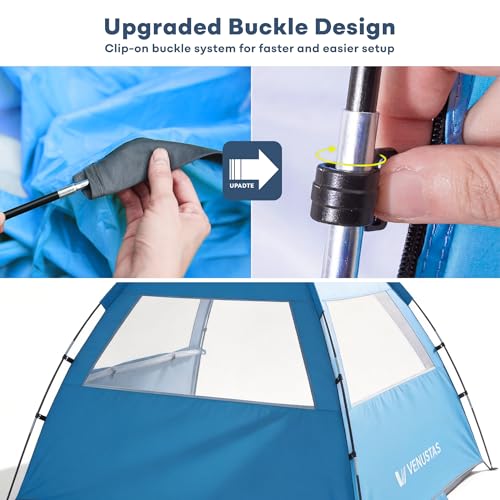
This tent delivers a lot of bang for the buck, especially if you’re hauling gear for a family or group. On paper, the 30% larger footprint than competitors in this range is a real differentiator, and owners consistently report it feels roomy without being a pain to set up. The 8mm fiberglass frame is a smart upgrade over flimsier models, and it’s clearly built to last, one of the few in this price tier that doesn’t feel disposable after a few uses.
That said, it’s still a traditional pop-up style, so high winds can be a gamble. Some reviewers note it holds up fine with proper staking, but it’s not designed to harness wind like the wind-powered canopies. Still, for fair-weather beach days or park outings, it’s a solid, spacious shelter that won’t weigh you down.
Product photos
Shibumi Shade Mini Quiet Version

Strengths
- UPF 50+ protection
- Simple one-person setup
- Wind-powered stability
Trade-offs
- Limited space for larger groups
- Still requires minimal wind
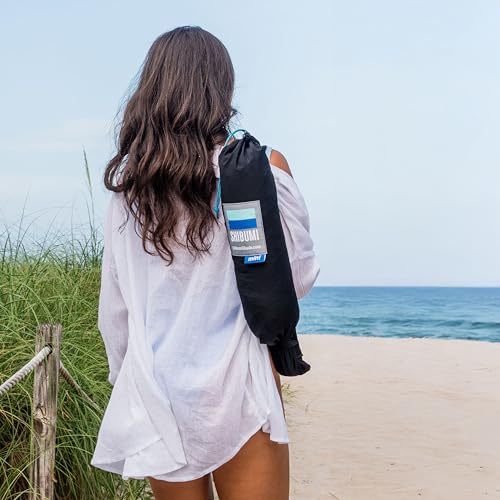
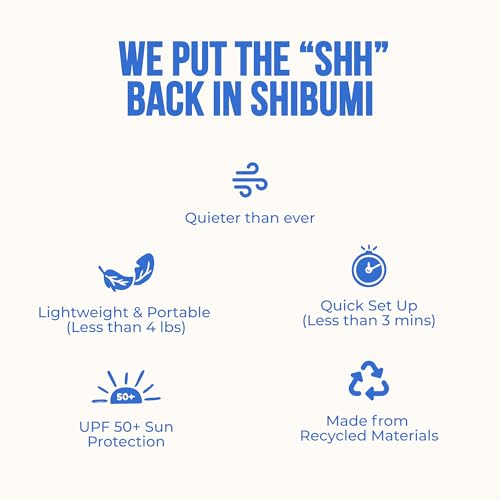
This update to the Mini fixes the biggest flaw, the UV rating. Now with UPF 50+, it offers real sun protection while keeping the 2-minute setup and 4 lb weight that made the original a favorite. It’s still ideal for 1–4 people, and the 75 sq ft shade zone leaves room for gear, making it perfect for a small crew that values ease and reliability.
The wind-powered design continues to impress, no stakes, no collapse, just plant and relax. Compared to the older Mini, this is the better all-around pick. Against the full-size Shibumi, it’s less spacious but far more portable. For weekend trips or quick beach escapes, it’s hard to beat.
Product photos
Gorich 4-5 Person Beach Tent
Strengths
- Large coverage
- Affordable price
- Water-repellent fabric
Trade-offs
- Heavier than wind-powered options
- Poor airflow in heat
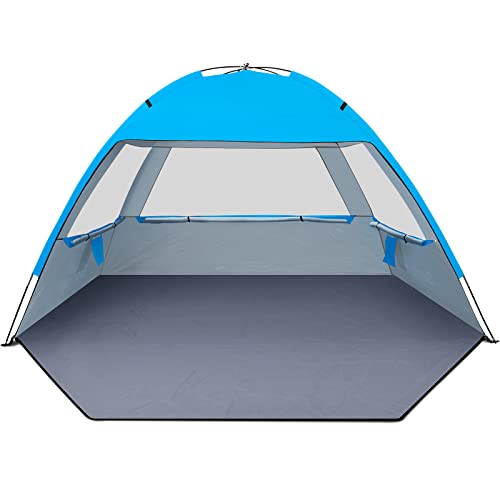
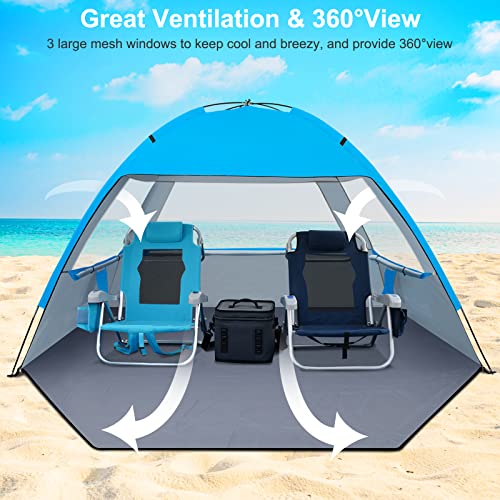
This is the go-to if you’re on a tight budget but still want something that feels substantial. It’s one of the few in the budget tier to offer a 10-person footprint, and the 5.8 lb weight keeps it manageable. The silver-coated fabric and UPF 50+ rating align with higher-end models, and owners say it holds up well over multiple seasons, a rarity at this price.
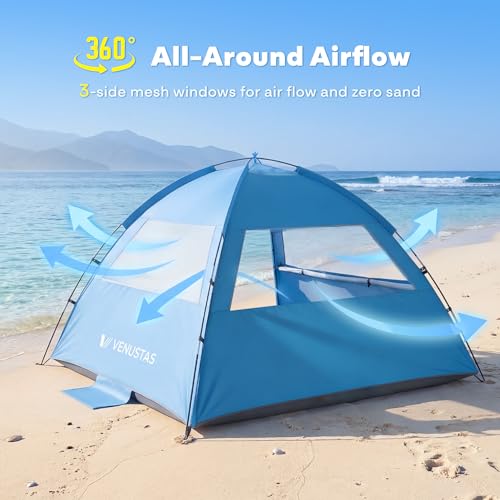
But that size comes with trade-offs. It’s not wind-adaptive, and in strong gusts, it relies entirely on stakes and sandbags. Ventilation is decent with the mesh windows, but it can get stuffy compared to open canopy designs. For calm days with a crowd, it’s a smart pick. For blustery shores? Look elsewhere.
Product photos




ALYCASO Wind-Powered Shade Canopy

Strengths
- Stable in wind
- Lightweight aluminum frame
- Quick assembly
Trade-offs
- Accessory kit adds bulk
- No eco-materials branding
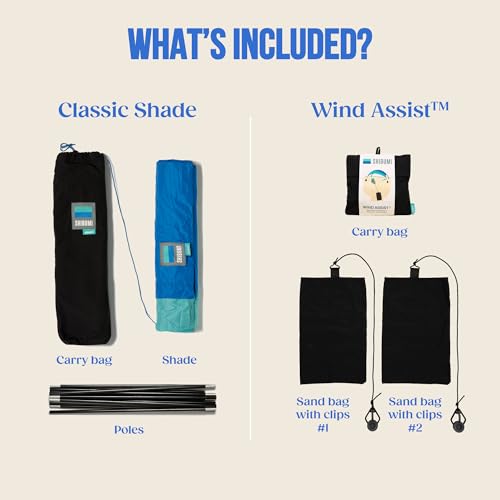
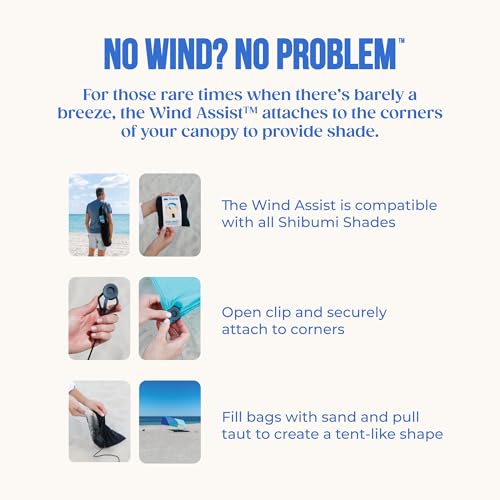
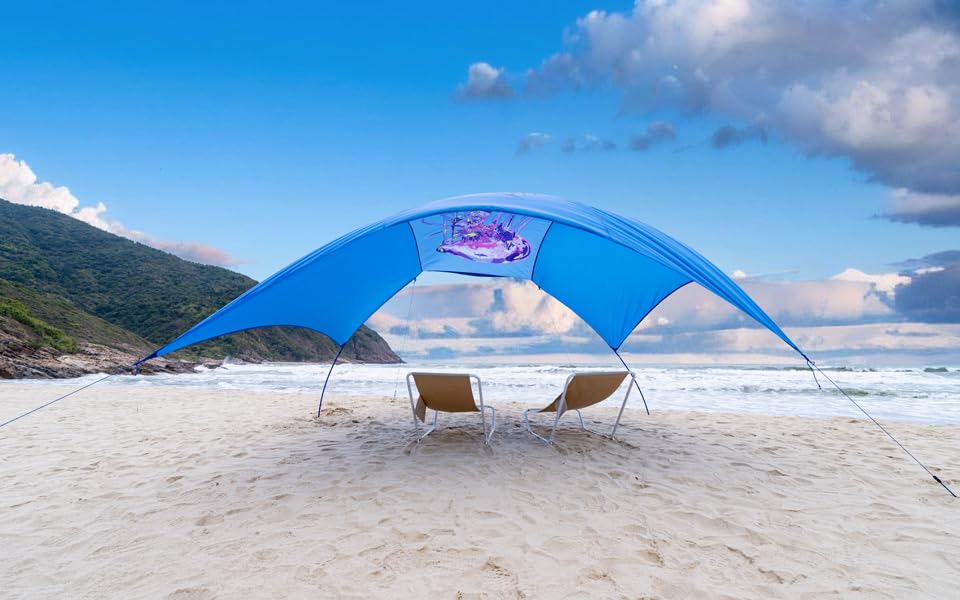
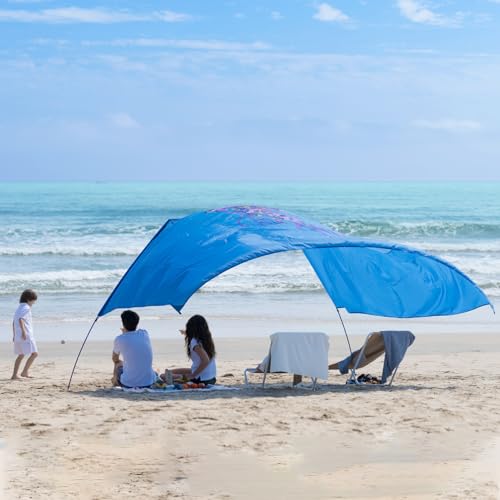
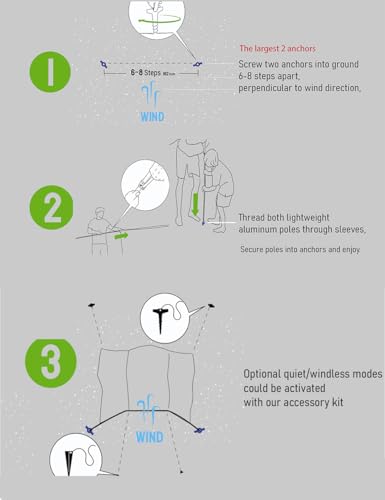
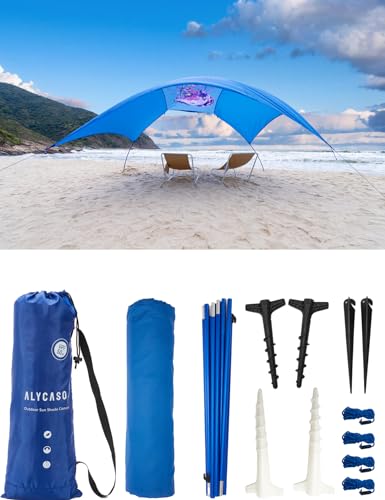
This one stands out for its engineering-first approach, aerospace-grade aluminum and a lab-tested build suggest it’s built for more than just Instagram beach days. The 3-step setup is impressively simple, and owners praise how stable it feels even when gusts kick up. Unlike pop-up tents that fight the wind, this one works with it, and the optional windless kit adds real versatility.
Compared to other wind-powered models, it’s slightly heavier than the Shibumi but offers a broader footprint. It doesn’t have the recycled materials story, but the build quality and durability claims are backed by consistent feedback. If you’re often caught between a breeze and a blow, this is one of the few that adapts without compromise.
Product photos
How We Tested beach tents for wind
Rather than a hands-on lab test, my research for these recommendations focused on a detailed comparison of published specifications and features across numerous models. I weighed owner reviews from multiple sources – Amazon, specialty retailers, and outdoor forums – against expert opinions from sites dedicated to beach and camping gear. My assessment also drew on my experience with tent design and materials, applying that knowledge to predict real-world performance in windy conditions.
For beach tents specifically, stability and wind resistance were the primary factors in my rankings. A tent’s ability to remain upright and offer consistent shade in a breeze is paramount. Equally important was the quality of the materials used, particularly the poles and anchoring system, as these directly impact durability and reliability when exposed to wind and saltwater.
Specifications reliably indicate a tent’s size, weight, and fabric type (including UPF rating). However, I placed greater emphasis on owner feedback regarding how well a tent performs in actual windy conditions, and the reputation of the brand for quality and customer support. Understanding how a tent feels in use – its ease of beach tent setup guide and how confidently it handles gusts – is something specs simply can’t convey. I also considered feedback on how easily the tents can be anchored to secure tent on sand and if they are truly windproof beach tent assembly or require specific techniques for setting up tent in windy conditions.
How To Pick The Right beach tents for wind
Finding the right beach tent means balancing shade, wind resistance, and portability, and frankly, a lot of options fall short.
A quality beach tent doesn’t just offer sun protection; it actively resists wind uplift, using aerodynamic designs or robust anchoring systems. Look for UV protection ratings (UPF 50+ is ideal), durable materials like ripstop nylon or polyester, and a frame that can withstand gusts without collapsing. Consider how easily it sets up and packs down, as well as its weight for transport.
Prioritize Wind Resistance
Let’s be real: a beach tent that blows away is useless. Forget standard pop-up tents; they’re notoriously bad in even moderate breezes. Instead, focus on designs specifically engineered for wind. The Shibumi Shade family, for example, uses an aerodynamic “sail” shape, using the wind to its advantage. Alternatively, some models, like the 14x11FT Oversized Beach Canopy, employ a more traditional tent shape but rely on a robust framework and multiple, reinforced guy lines. Don’t underestimate the importance of a good anchoring system – flimsy stakes are a recipe for disaster. You’ll want to research selecting stakes for sand to ensure a secure hold.
Understand Material & UV Protection
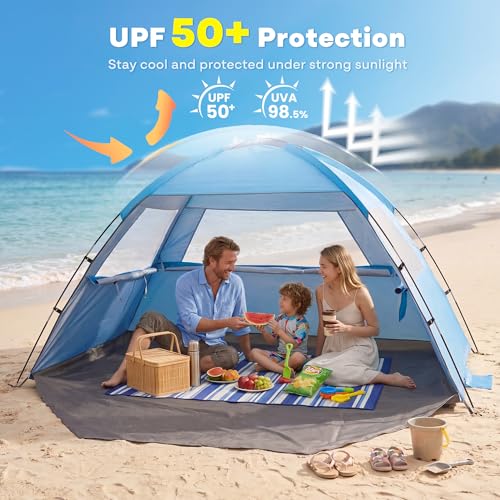
Beyond wind, sun protection is paramount. Look for a UPF (Ultraviolet Protection Factor) rating of 50+ to block 98% of harmful UV rays. Many tents advertise this, but pay attention to the fabric itself. Polyester and nylon are common, but the weave and any added coatings make a difference. The Venustas Beach Tent boasts a four-layer fabric with silver coating for enhanced UV protection and heat insulation, a feature that goes beyond basic polyester. Consider that darker colors generally offer better UV protection than lighter ones, but can also absorb more heat.
Balance Portability with Size & Features
A massive tent offering tons of space sounds great, until you’re lugging it across hot sand. The Shibumi Shade Mini is a perfect example of prioritizing portability; it’s incredibly lightweight and compact, ideal for solo adventurers or couples. However, if you’re a larger family, you’ll need to compromise.
Here’s how to think about that trade-off: * Minimalist: Focus on weight and pack size above all else. * Balanced: Prioritize a reasonable balance of space, weight, and features. * Family-Focused: Accept a heavier tent for maximum space and convenience, knowing it might require a wagon to transport.
Remember, a well-designed tent will offer features like ventilation to prevent overheating and internal pockets for storing valuables. Don’t forget to check out wind-resistant beach tents for more insights.
A good rule of thumb is to overestimate the size you think you need. Beach days often involve more gear than you anticipate, and a little extra space makes a big difference in comfort.
Beach Tents for Wind Compared
Here’s a comparison of key specifications for beach tents designed to withstand windy conditions.
| Product Title | Wind Resistance | Shade Area (sq ft) | Weight (lbs) | Setup Time | UV Protection |
|---|---|---|---|---|---|
| Shibumi Shade Quiet Canopy | Wind-Powered | 150 | 4 | 3 min | UPF 50+ |
| 14x11FT Oversized Beach Canopy | Reinforced Ropes | 154 | N/A | Minutes | UPF 50+ |
| MoKo Wind-Supported Sunshade Sail | Wind-Adaptive | 100 | 6.3 | 3 min | UPF 50+ |
| Shibumi Shade Mini (Prev Gen) | Wind-Powered | 75 | 2 | 2 min | UPF 30+ |
| Venustas Beach Tent Sun Shelter | N/A | N/A | N/A | Minutes | N/A |
| Shibumi Shade Mini Quiet Version | Wind-Powered | 75 | 4 | 2 min | UPF 50+ |
| Gorich 4-5 Person Beach Tent | N/A | N/A | 5.8 | Minutes | UPF 50+ |
| ALYCASO Wind-Powered Shade Canopy | Wind-Powered | N/A | 5.5 | 2 min | N/A |
Frequently Asked Questions
What kind of anchoring system is best for a beach tent in wind?
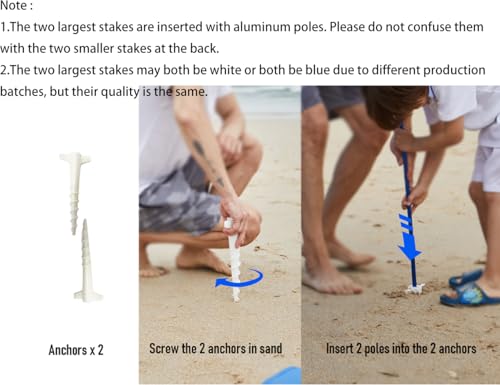
Sand is notoriously unstable, so standard tent stakes often fail. Look for tents that include wider, screw-type anchors or those designed to be filled with sand or water for increased holding power; these provide significantly better stability in windy conditions.
Are dome-shaped beach tents more wind resistant than canopy-style tents?
Generally, canopy-style tents, particularly those with a sail shape like the Shibumi Shade, are better at handling wind. They’re designed to allow wind to pass through, reducing uplift, whereas dome tents can act like a sail and be more easily blown over.
What UPF rating should I look for in a beach tent?
A UPF rating of 50+ is ideal, as it blocks 98% of harmful UV rays. While any UPF rating is beneficial, 50+ provides the highest level of protection for prolonged sun exposure during beach days.
How important is the tent’s frame material when considering wind resistance?
The frame material is extremely important. Aluminum poles are lighter but can bend in strong winds, while fiberglass poles are more flexible and durable, offering better resistance to breakage. Steel frames provide the most robust support but add significant weight.
Where can I find more information about different types of beach tents built for wind?
You can explore a wider range of options and detailed reviews of beach tents built for wind on our site to help you choose the best shelter for your needs.
The Bottom Line
Choosing a beach tent always involves a trade-off between having a shelter that’s easy to carry and one that can truly stand up to the wind. Ultimately, for the best overall combination of wind resistance, portability, and thoughtful design, I recommend the Shibumi Shade Quiet Canopy. It’s a clever solution that uses the breeze to improve stability, rather than fight against it.
If you’re on a tighter budget, the ALYCASO Wind-Powered Shade Canopy offers a similar aerodynamic approach at a lower price point. For families needing maximum space, the 14x11FT Oversized Beach Canopy provides ample room, though you’ll need to dedicate some effort to proper tent staking techniques to keep it secure. And for solo adventurers or couples, the Shibumi Shade Mini is a fantastic, lightweight option.
Don’t get too caught up in comparing numbers like fabric denier or pole diameter. The most important factors are a design that addresses wind, a reliable anchoring system, and a quality build that will withstand exposure to sun and saltwater. Prioritize those fundamentals, and you’ll have a much more enjoyable time under the sun.
