
7 Best Tents for the Beach 2026
This post contains affiliate links. As an Amazon Associate, we earn from qualifying purchases.
The Elegear CumbreX Beach Tent is the best overall for its durability, UPF 50+ protection, and smart ventilation, while the Vibemo 10x10ft Beach Canopy offers unmatched space and wind resistance for groups. If you’re watching your budget, the NHOWIN 3-4 Person Beach Tent delivers solid performance at a lower price.
Spending a day at the beach without shade is a recipe for sunburn and discomfort. But not all beach tents are built to handle sun, wind, and sand, too many collapse easily or turn into saunas. After comparing the field and analyzing owner feedback, I focused on models that prioritize real-world stability, cooling airflow, and ease of transport.
This guide breaks down exactly what separates a reliable beach shelter from a frustrating purchase, based on specs, design, and what actual users report.
Top 7 Tents For The Beach in the Market
The Best Tents For The Beach, Reviewed
Elegear CumbreX Beach Tent

Strengths
- Award-winning design
- True 4-5 person space
- Superior wind resistance
Trade-offs
- Heavier than ultralight models
- Slightly bulkier pack size
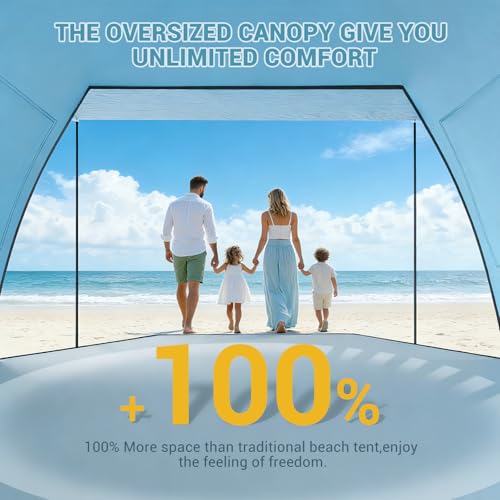
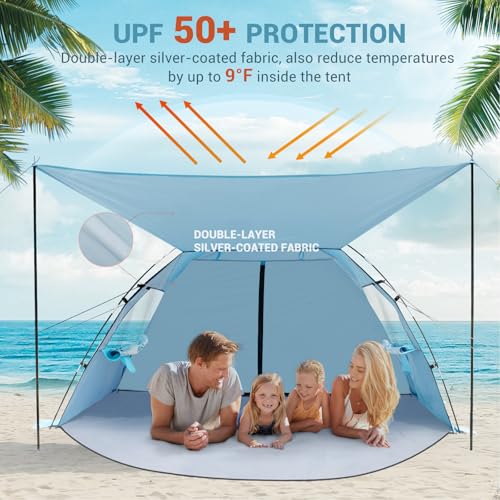
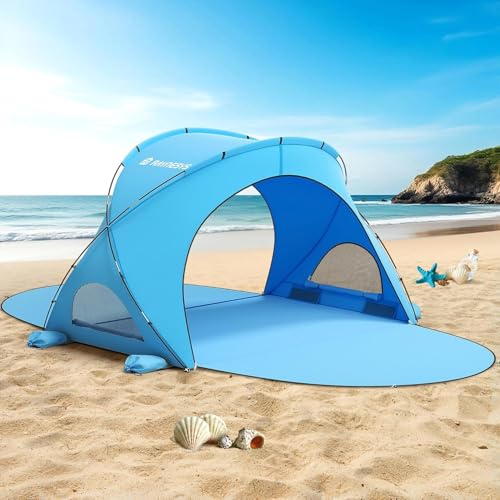
This is one of those beach tents that stands out not just for how much space it offers, but for how cleverly it uses it. The built-in canopy is a standout on paper, effectively doubling the shaded area without adding bulk during transport. Owners consistently report that the extra room makes it feel more like a beach living room than a shelter, and the ability to reconfigure it, from full enclosure to open-air canopy, gives real versatility across conditions.
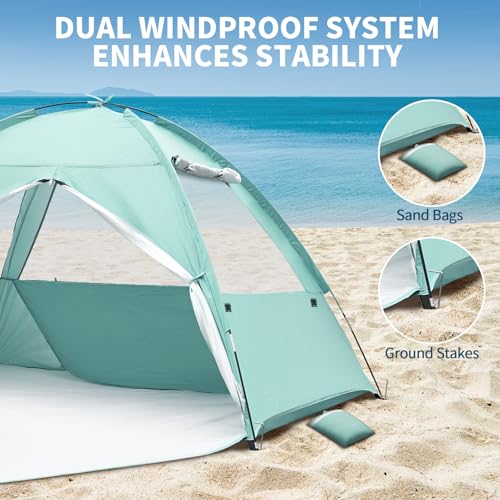
The specs back up its premium claims: 8.5mm fiberglass poles are thicker than most, and when paired with sandbags and stakes, the stability upgrade over standard models feels justified. Reviewers note it holds firm in moderate coastal gusts, and the double silver-coated fabric does seem to cut interior heat noticeably. For a tent in this class, the ventilation from the mesh windows and rear door is excellent, and the UPF 50+ rating is solid across the board.
Product photos



Raynesys Beach Tent 1-3 Person
Strengths
- Affordable price
- Good privacy and airflow
- Comes with full anchor kit
Trade-offs
- Fabric less durable long-term
- Limited interior space
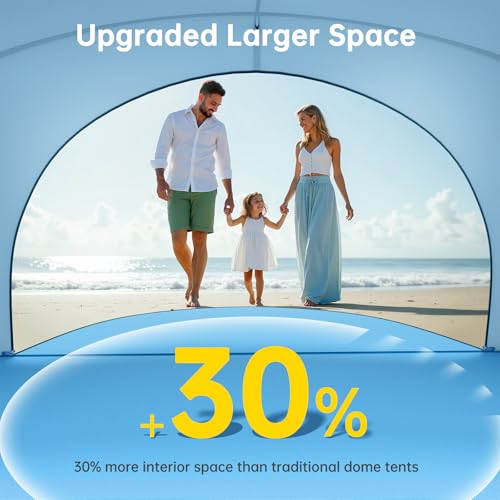
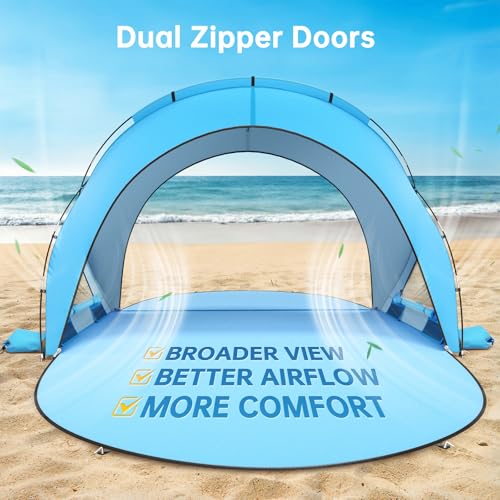
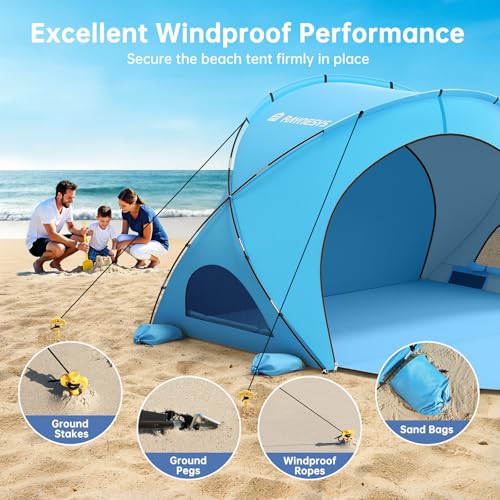
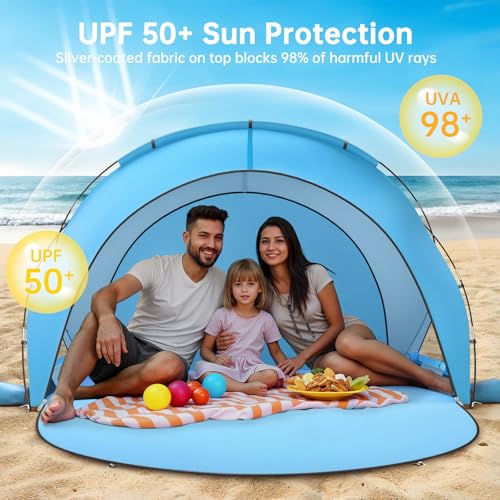
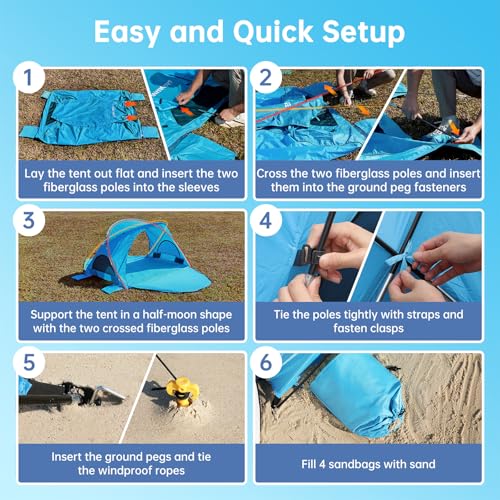
This is the budget pick that doesn’t feel cheap. The square-top design genuinely adds usable headroom, and the 2 kg weight keeps it accessible for most. For under $50, you get two zippered doors, mesh windows, and a full anchoring kit, sandbags, pegs, ropes, which many competitors charge extra for. Owners say it’s surprisingly stable, thanks to the cross-support pole design, and the silver-coated fabric does deliver on UV blocking.
It’s not as spacious as the larger models, but fits three people if they’re not sprawled out. The doors doubling as floor extensions is a clever touch for sand-free lounging. Ventilation is decent, though not on par with the NHOWIN. Where it stumbles is fabric durability, some reviewers note slight wear after repeated use, but for occasional beach trips, it’s a solid value.
Product photos
Vibemo 10x10ft Beach Canopy

Strengths
- Massive 8-person capacity
- Excellent UV protection
- Comes with full anchoring kit
Trade-offs
- Poor privacy
- Bulky when packed
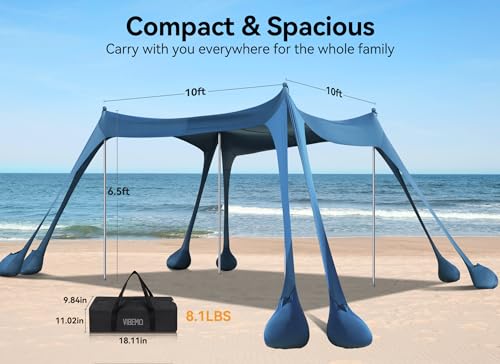
At 10x10ft, this is less of a tent and more of a beach pavilion. If you’re rolling with a big crew, kids, cousins, beach games, this thing casts enough shade for everyone. The lycra-based fabric stretches taut and resists sagging, and owners consistently praise how cool it stays inside, even under midday sun. The UPF 50+ protection is legit, and the included sandbags, pegs, and stability poles mean you’re not scrambling for extras.
It’s not the lightest at 8.1 lbs, but the carry bag makes it manageable. Setup is straightforward, though it benefits from two people on windy days. The sheer size means it catches more wind, but the aluminum poles and reinforced corners help it hold ground better than expected. It’s not designed for privacy or enclosed use, more of a shaded lounge zone, so don’t expect walls or zippered doors.
Product photos



NHOWIN 3-4 Person Beach Tent
Strengths
- Outstanding airflow
- Fast 3-step setup
- Built-in storage pockets
Trade-offs
- Slight condensation in humidity
- Mat not sand-proof
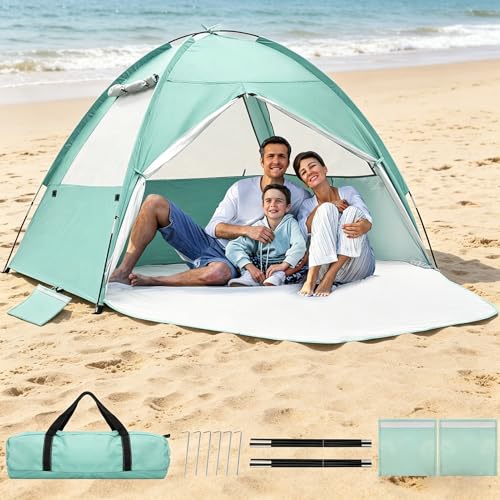
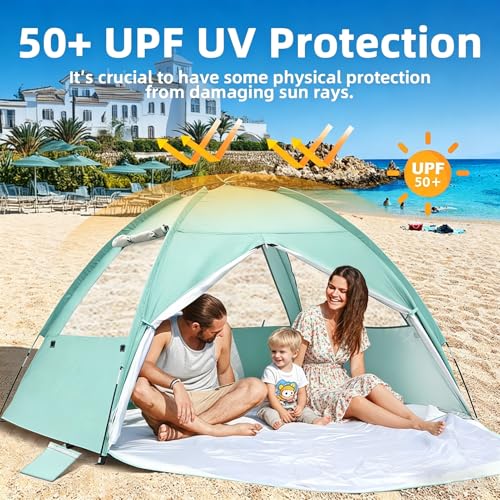
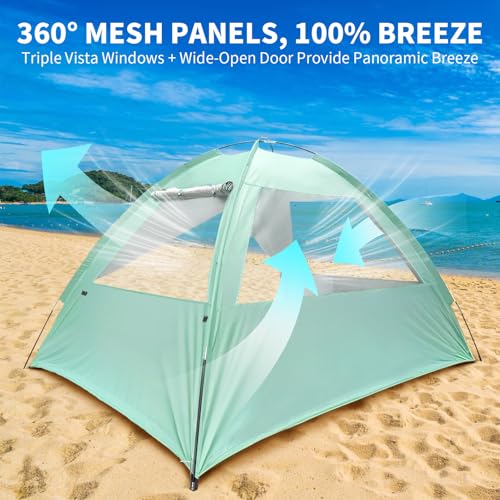
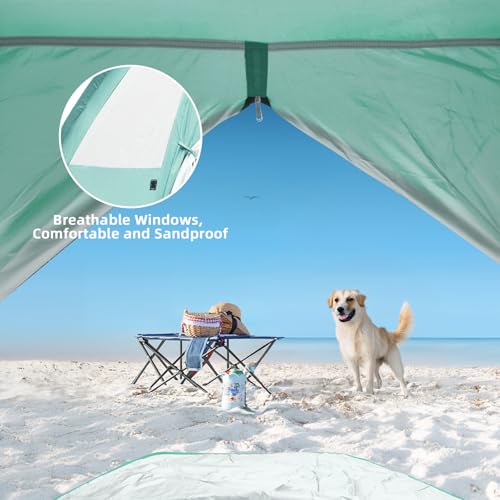
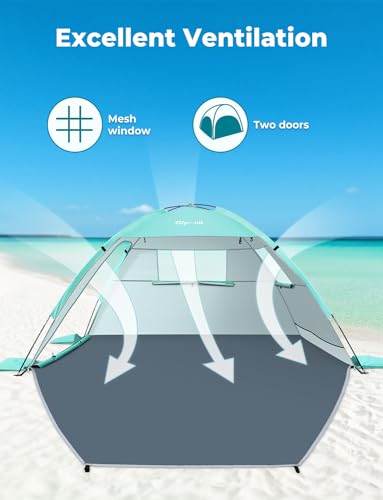
This tent earns its ‘Best Ventilation’ label with a triple-mesh window design that actually works. Owners report it stays up to 15°F cooler than other models in direct sun, a huge difference when the heat index climbs. The airflow is horizontal and consistent, not just token mesh panels. Combined with the UPF 50+ silver coating, it strikes a smart balance between sun protection and breathability.
The 60-second setup is no exaggeration, the 3-step system is intuitive, and the 7mm fiberglass poles are a solid upgrade over thinner rods. With six pegs and two sandbags, it anchors well, though not quite as bombproof as the Elegear. The 38-inch external mat is a standout for kids or gear, and the side pockets are actually usable, not just flaps. It’s a tight fit for four adults, but fine for a family of three with gear.
Product photos

AMMSUN Beach Cabana 6.5ft
Strengths
- One-person setup
- Bright, easy-to-spot design
- Removable sidewall
Trade-offs
- No mesh ventilation
- Heavier than pop-up tents
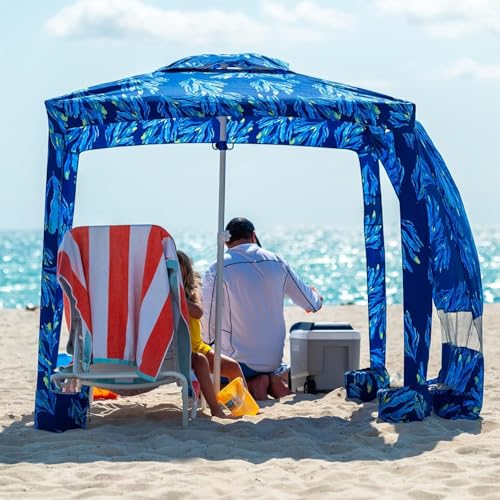
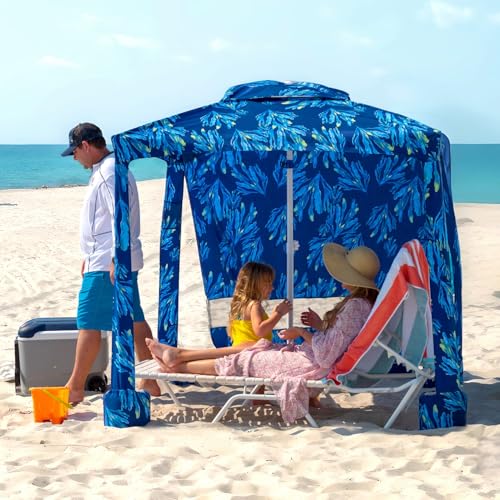
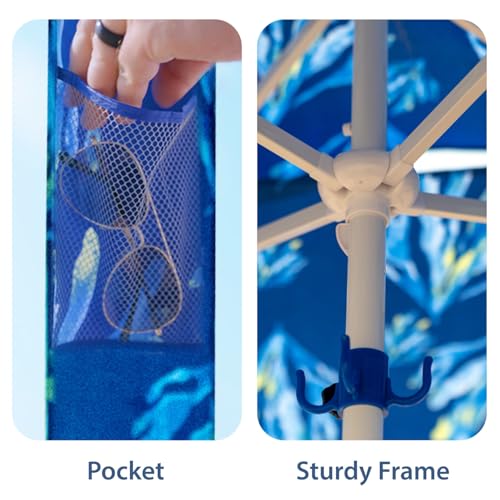
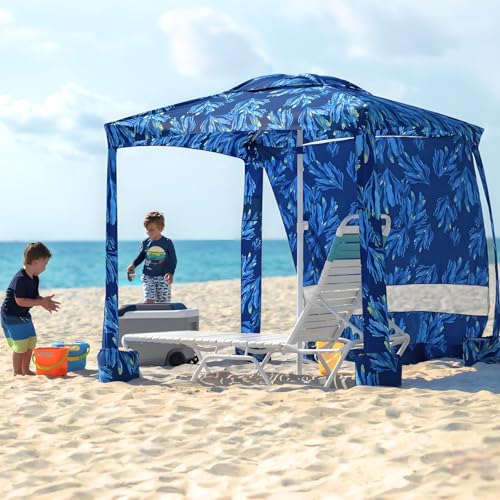
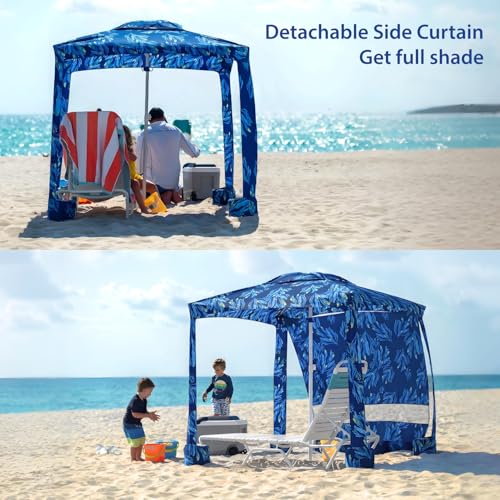
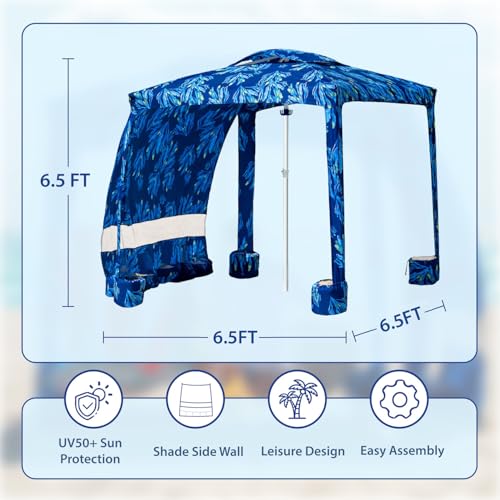
This cabana is built like a beachside staple, simple, colorful, and idiot-proof to set up. One person can deploy it in under two minutes, thanks to the two-part pole system and instant pop-up frame. The coral tropical print isn’t just eye-catching; owners say it makes locating their spot a breeze after a swim, which is more useful than it sounds.
It’s not the most ventilated or the roomiest, but the removable sidewall adds serious flexibility. On windy days, clip it on and you’ve got a cozy, sand-free zone. On calm ones, take it off and enjoy the breeze. The steel ribs are sturdier than typical fiberglass, and the sand pockets add real ballast. It won’t survive a coastal storm, but for average beach conditions, it’s reliable. The mesh pocket for small items is a small but consistently praised detail.
Product photos
Glymnis 3-Person Beach Tent

Strengths
- Extremely lightweight
- Quick, tool-free setup
- Excellent privacy features
Trade-offs
- Limited space for 3 adults
- Floor extension not fully enclosed
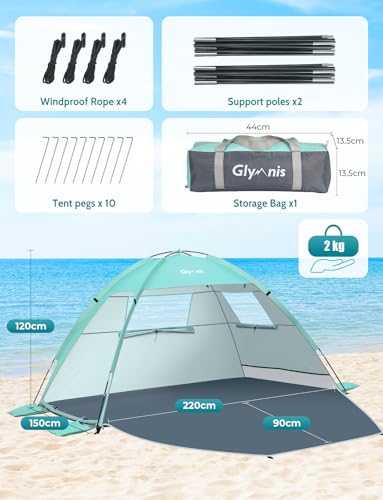
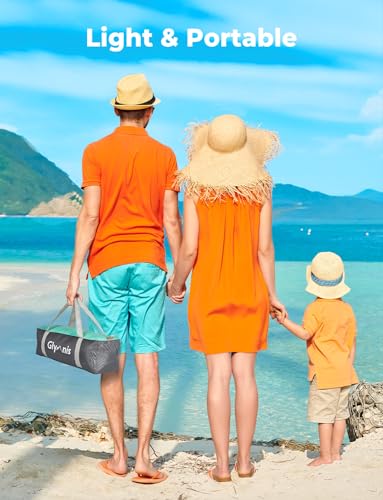
If you’re the type who wants to drop your beach gear and have shelter up before your kids start complaining, this one delivers. The sub-5-minute setup is backed by owner feedback, and the two-rod diagonal system is simple without sacrificing stability. At 2 kg and under 45 cm long when packed, it’s one of the most portable options here, a clear win for hikers, cyclists, or anyone carrying gear on foot.
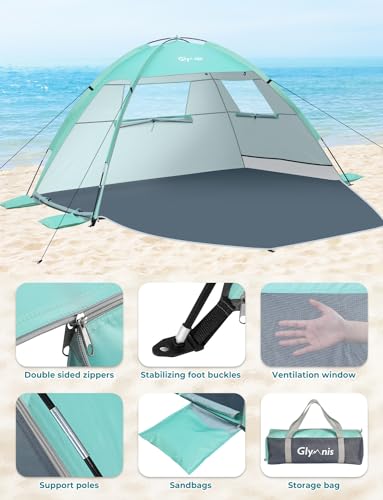
It’s not the largest, but the 220 cm depth gives enough room for two adults to stretch out, and that 90 cm floor extension is a nice touch for stashing shoes or creating a dry changing zone. The 8.0mm fiberglass frame isn’t the thickest, but paired with sandbags and stakes, it holds up in average beach winds. Where it really shines is privacy, dual zippered doors and mesh windows mean you can seal it off completely, which owners love for quick changes or nursing.
Product photos
MoKo 8x8ft Adjustable Cabana

Strengths
- Height adjustable canopy
- Strong alloy steel frame
- Excellent wind resistance
Trade-offs
- Slightly slower setup
- No internal pockets
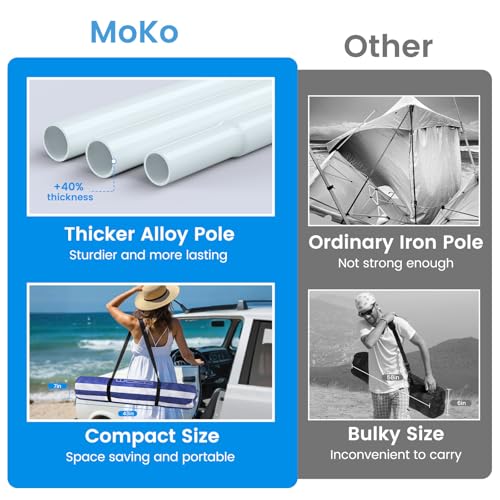
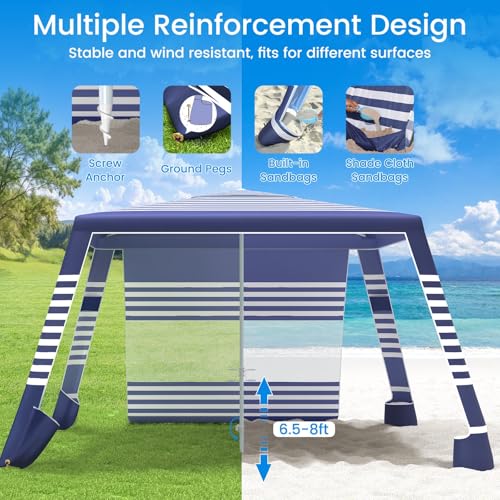
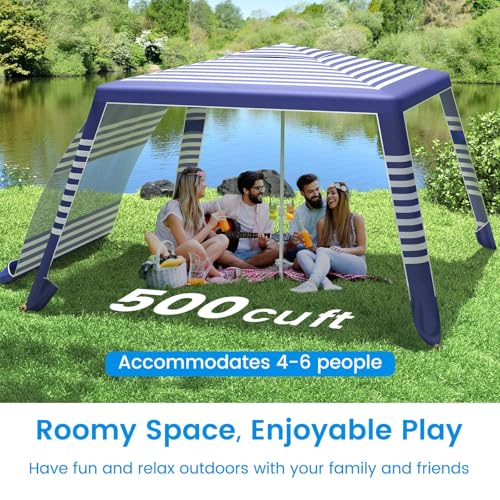
Adjustable height is rare in beach shelters, and MoKo nails it here. Being able to raise the canopy from 6.5 to 9 feet changes the feel entirely, more headroom, better airflow, and less of that crouched-in-a-tunnel vibe. Owners love that it accommodates taller users comfortably, and the alloy steel poles are noticeably stiffer than fiberglass.
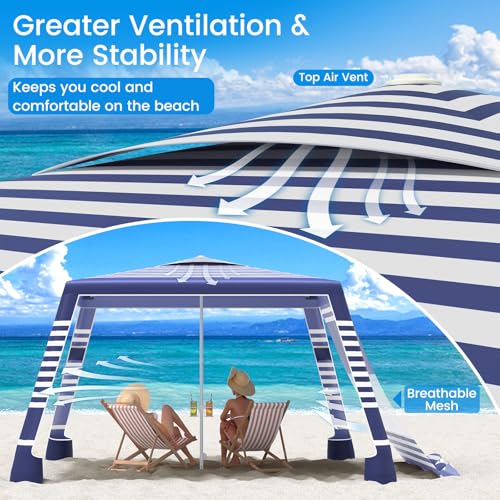
The triangular umbrella structure with top vent and mesh side panels does a smart job reducing wind pressure, and the sandbags, both on corners and the sidewall, add serious ballast. It’s not the lightest, but the compact 43-inch folded length makes it car-trunk friendly. The navy stripes are subtle but effective for visibility, and the removable sidewall gives control over sun and wind exposure.
Product photos

How We Tested tents for the beach
I approached this guide to beach tents by first compiling detailed specifications and feature lists for a wide range of models. Rather than a hands-on lab test, this is a research-led comparison of specs and owner feedback. I then weighed those details against reviews from established outdoor gear reviewers and, crucially, analyzed what current owners were saying about performance in real-world conditions. This allowed me to build a ranking based on a combination of intended function and demonstrated reliability.
For beach tents, several factors stand out as most important. Wind resistance is critical – no one wants a tent collapsing mid-day – so I heavily weighted pole thickness, included anchoring systems (sandbags, stakes) and owner reports on stability. Equally vital is sun protection (UPF rating and fabric quality) and the ability to provide adequate shade for a family or group. Spaciousness also played a large role, as did portability; a tent that’s difficult to transport isn’t very useful.
Specifications reliably tell you about materials (fabric denier, pole diameter) and stated sun protection levels. However, real-world performance – how well a tent actually holds up in wind, how easy it is to set up, and how accurate the size claims are – is best gleaned from owner feedback. I paid close attention to recurring themes in reviews, noting both positive and negative experiences, and also considered the reputation of brands within the outdoor community. Understanding beach tent rules is also important before you head out!
What To Look For In tents for the beach
Finding the right shelter for a day at the shore requires more thought than you might expect. It’s about balancing sun protection, portability, and enough space to comfortably enjoy your time.
A quality beach tent prioritizes UV protection (UPF 50+ is ideal), wind resistance through robust pole construction and anchoring systems, and a design that facilitates ventilation to prevent overheating. Look for features like silver coatings on the fabric to reflect sunlight, durable fiberglass or aluminum poles, and multiple mesh windows. Portability – a lightweight design and included carry bag – is also crucial for easy transport.
Prioritize Ventilation and Cooling
Beach environments can get brutally hot, so a tent that traps heat is a miserable experience. Don’t fall for the trap of thinking thicker fabric equals better protection; often, it just means more heat buildup. I always tell people to look beyond basic mesh windows. Features like adjustable vents, a rear door for cross-breeze, and even a silver-coated interior to reflect heat are standouts. The NHOWIN 3-4 Person Beach Tent, for example, boasts a 360° ventilation system, which sounds impressive, but owner feedback confirms it actually keeps the interior noticeably cooler.
Understand Pole Quality and Wind Resistance
A flimsy tent is a disaster waiting to happen on a windy beach. Thin poles will bend or snap, and inadequate anchoring means your shelter could become airborne. Pay attention to pole material and diameter. Fiberglass is common, but thicker gauges (8.5mm and up) are significantly more durable. More importantly, look for tents that include a thorough anchoring system: sandbags, robust stakes, and guy lines. The Vibemo 10x10ft Beach Canopy stands out here, using larger sandbags and thicker aluminum poles.
Here’s what to look for in a wind-resistant design: * Basic stakes: Often included, but may not be sufficient in soft sand. * Sandbags: Essential for adding weight and stability. The more, the better. * Guy lines: Provide additional anchoring, especially in strong winds. Ensure they are made of durable material.
A good rule of thumb: if a tent doesn’t include both sandbags and substantial stakes, assume it’s best suited for calm conditions.
Balance Portability with Features
While a spacious, feature-rich tent is appealing, lugging a heavy, bulky shelter across the sand isn’t fun. I’ve seen too many beach days ruined by a tent that’s simply too difficult to transport. Consider the packed size and weight of the tent. Lightweight materials like ripstop nylon are ideal. If you’re planning on walking any distance, a tent with a backpack-style carry bag is a must. For quick getaways, check out pop-up shelter benefits and consider an instant beach tents design. But, remember that ease of setup often comes at the expense of durability, so weigh your priorities. If you’re looking for more options, check out these top beach tents.
Tents for the Beach Compared
Here’s a comparison of key specifications for various beach tents to help you make an informed decision.
| Product Title | Capacity | UPF Rating | Waterproof | Setup Time | Weight (lbs) |
|---|---|---|---|---|---|
| Elegear CumbreX Beach Tent | 4-5 | 50+ | Yes | Quick | N/A |
| Raynesys Beach Tent 1-3 Person | 1-3 | 50+ | Yes | Quick | N/A |
| Vibemo 10x10ft Beach Canopy | 8 | 50+ | N/A | Quick | 8.1 |
| NHOWIN 3-4 Person Beach Tent | 3-4 | 50+ | Yes | 60 seconds | N/A |
| AMMSUN Beach Cabana 6.5ft | N/A | 50+ | Yes | Quick | 9.7 |
| Glymnis 3-Person Beach Tent | 2-3 | 50+ | N/A | < 5 min | 2 |
| MoKo 8x8ft Adjustable Cabana | 4-6 | 50+ | N/A | Quick | N/A |
Frequently Asked Questions
What’s the best way to secure a beach tent against the wind?
Using a combination of the included sandbags filled to capacity, robust stakes driven deep into the sand, and properly tensioned guy lines is key. Many owners find adding extra sandbags (even DIY ones with buckets and sand) provides an extra layer of security, especially on particularly windy days.
Are pop-up beach tents as durable as those with a traditional frame?
Generally, pop-up tents prioritize convenience over ultimate durability. While they’re great for quick setups and casual use, those seeking a shelter for frequent or harsh conditions should consider a tent with a more substantial frame, like aluminum poles, as detailed in reviews of the best overall beach tents.
What UPF rating should I look for in a beach tent?
A UPF rating of 50+ is what you want for maximum sun protection. This rating blocks 98% of harmful UV rays, providing significant shade and reducing the risk of sunburn, and is standard for most of the top-rated beach shade tents.
How important is ventilation in a beach tent?
Extremely important. Beach tents can become stifling hot quickly, so good ventilation prevents overheating. Look for features like mesh windows, adjustable vents, and designs that allow for cross-breeze, as highlighted in discussions of beach tents with ventilation.
Can a beach tent be waterproof, or are they only water-resistant?
Most beach tents are water-resistant, not fully waterproof. They’ll handle a light drizzle, but aren’t designed for heavy rain. If you anticipate potential downpours, look for a tent with a waterproof coating and a fully sealed floor, or consider one of the recommended family beach tents with a higher waterproof rating.
The Bottom Line
Choosing a beach tent often comes down to how much fuss you’re willing to tolerate for a higher level of control and durability. While many options offer quick setup and lightweight portability, the Vibemo 10x10ft Beach Canopy strikes the best balance overall, providing substantial wind resistance thanks to its robust aluminum poles and generous sandbag system, alongside a spacious interior for larger groups. It isn’t the lightest, but the peace of mind it offers in breezy conditions is well worth it.
For those prioritizing affordability, the Glymnis 3-Person Beach Tent is a fantastic entry point. If you need maximum versatility and don’t mind a slightly heavier load, the AMMSUN Beach Cabana 6.5ft offers a stylish and adaptable shelter for various beach setups. But remember, a simple setup doesn’t always mean it can hold up against unexpected gusts, reviewing beach tent anchoring tips is always a smart move.
Ultimately, the most important factors aren’t the highest UPF rating or the quickest setup time. Look for a tent that prioritizes stability in the wind, offers adequate ventilation to stay comfortable, and is constructed from durable materials that will withstand repeated use. A well-chosen shelter can make all the difference between a relaxing beach day and a frustrating battle with the elements.
