
4 Best 3-Person 4-Season Tents of 2026
This post contains affiliate links. As an Amazon Associate, we earn from qualifying purchases.
The best 3-person 4-season tent overall is the CANTUO 2/3 Person 4-Season Tent, it hits the sweet spot of weight, weather protection, and stability. For a lighter option that still handles winter conditions well, the Forceatt 3-Person Ultralight Tent is a solid pick, though it trades some durability for the lower pack weight.
Most people shopping for a 3-person 4-season tent aren’t just planning a few chilly nights, they’re eyeing real winter conditions, high alpine passes, or long shoulder-season trips where the weather won’t cut you any slack. A flimsy shelter won’t last, and poor ventilation can leave you waking up soaked in condensation, no matter how dry it was outside.
This guide cuts through the marketing and focuses on what actually matters: pole strength, waterproof construction, and real-world reliability. I compared specs, owner experiences, and design details to find the tents that deliver in stormy, snowy, or subfreezing conditions, so you can trust your shelter when it counts.
Top 4 3 Person 4 Season Tents in the Market
The Best 3 Person 4 Season Tents, Reviewed
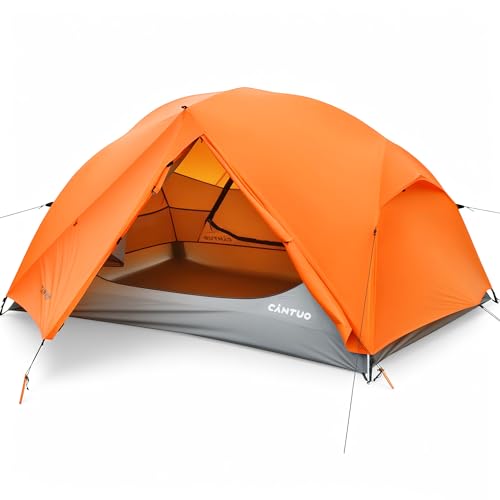
CANTUO 2/3 Person 4-Season Tent
Strengths
- 4000mm waterproof rating
- Dual vestibules
- Ultralight 4.12 lbs
Trade-offs
- 20D fabric less durable than 40D+
- Not ideal for four seasons in extreme cold
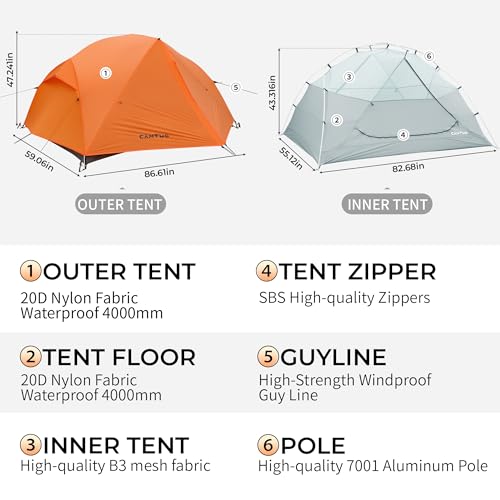
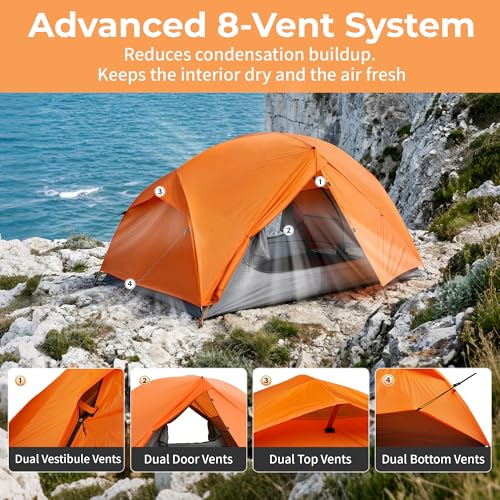
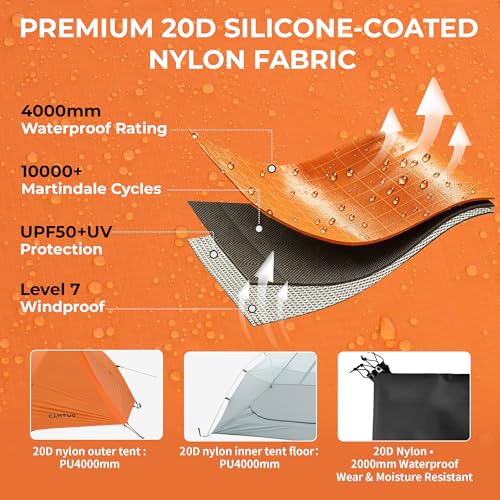
On paper, the CANTUO 2/3 person tent hits a sweet spot for hikers who want true 4-season performance without the weight penalty. At 4.12 lbs, it’s not the lightest in class, but the 20D ripstop nylon with PU 4000mm coating gives it serious weather chops, owners consistently report staying dry through mountain downpours and shoulder-season snows. The 7001 aluminum poles add rigidity in wind, and the taped seams are a must-have for real winter use.
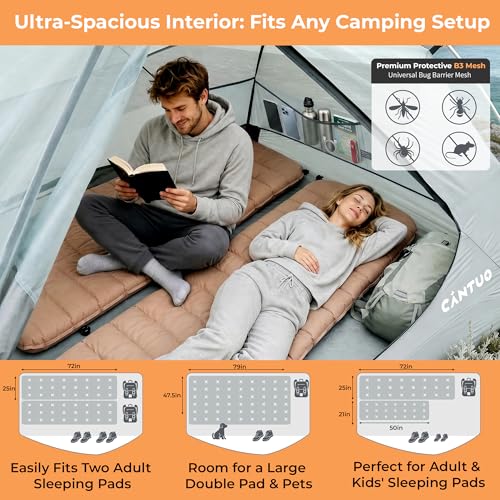
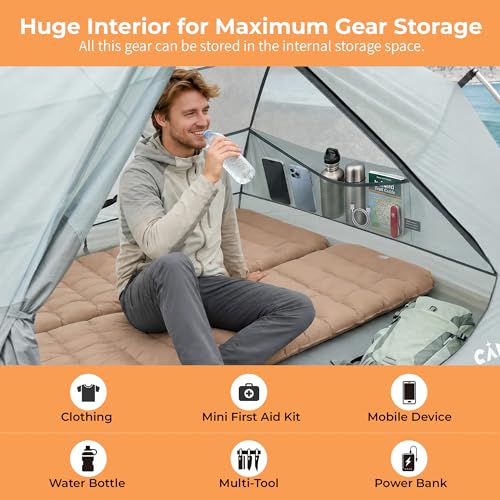
What stands out is the balance of space and function. With 31.64 sq. ft. and nearly 4 feet of headroom, two people can move without crawling over each other, and the dual vestibules are large enough for boots and packs. I’d pick this over bulkier dome tents when backpacking in unpredictable alpine terrain. It’s not quite a four-person shelter, but for two who want elbow room or a solo trekker needing gear space, it’s ideal.
Product photos
Forceatt 3-Person Ultralight Backpack Tent

Strengths
- Lower price point
- Welded floor
- Lighter than sibling model
Trade-offs
- Still not ultralight
- Limited 4-season credibility
- 70D fabric shows wear over time
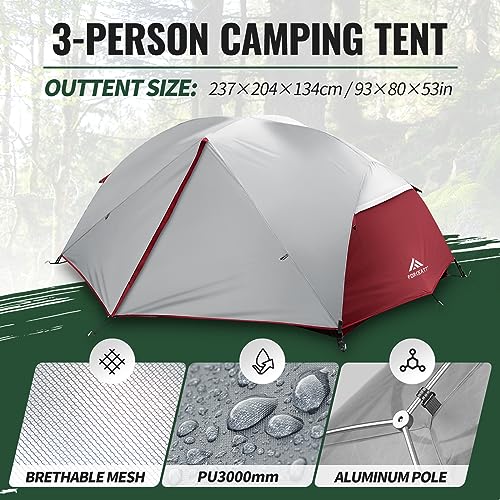
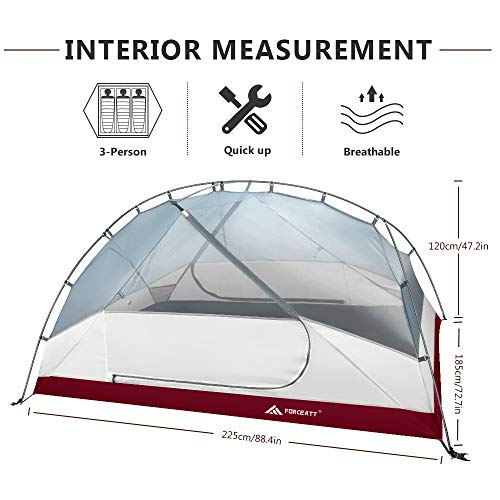
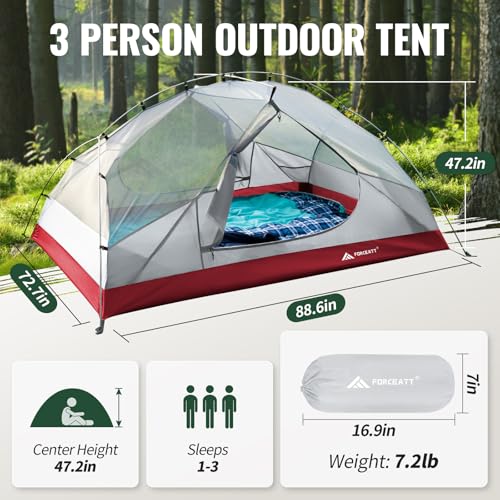
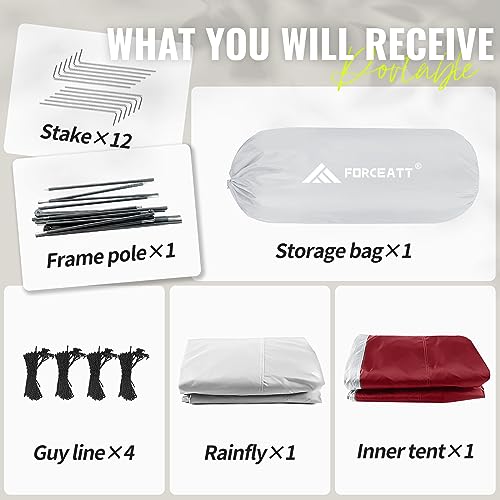
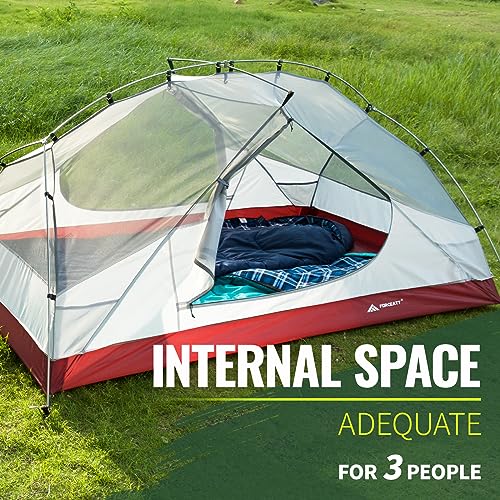
At 2.98 kg (~6.6 lbs), this Forceatt model is the lightest of the two in their lineup, and it’s clearly aimed at budget-focused buyers who still want decent weather resistance. The specs mirror the other Forceatt tent, 70D polyester, welded floor, and similar dimensions, but it’s slightly lighter, likely due to minor material tweaks. Owners praise the value, calling it “surprisingly sturdy for the price.”
Still, it doesn’t outshine its sibling in performance. The ventilation and setup are nearly identical, and while it handles rain well, the pole strength and wind tolerance don’t match true 4-season builds. Compared to the CANTUO, it’s heavier and less weather-capable. But if you’re outfitting a family or new to backpacking and don’t want to overspend, this is a reasonable entry point. I’d recommend it only if budget is the top constraint.
Product photos
ShinHye 3-4 Person Quick Setup Tent
Strengths
- Quick setup
- Dual doors
- Good airflow
Trade-offs
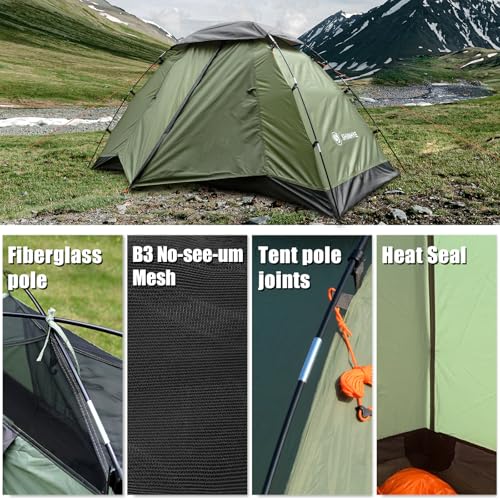
- Fiber poles less sturdy
- Not true 4-season
- Tight fit for three
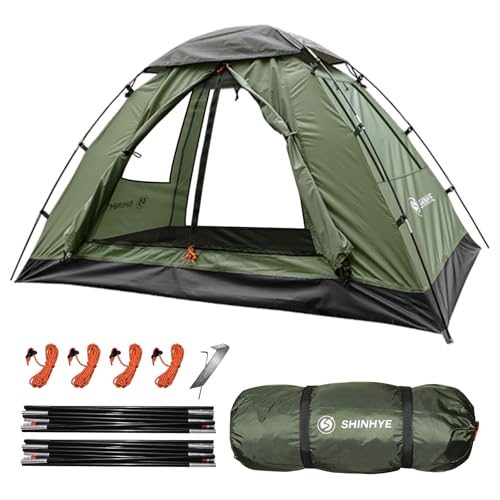
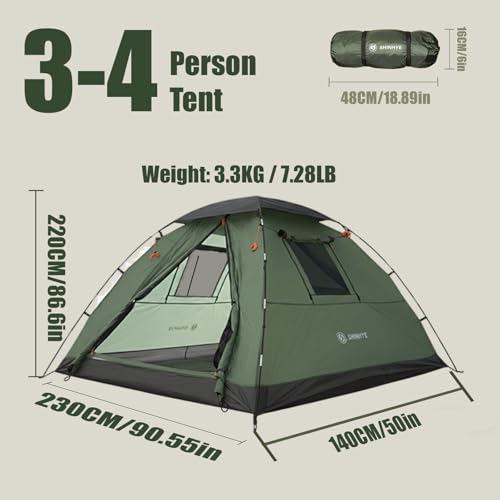
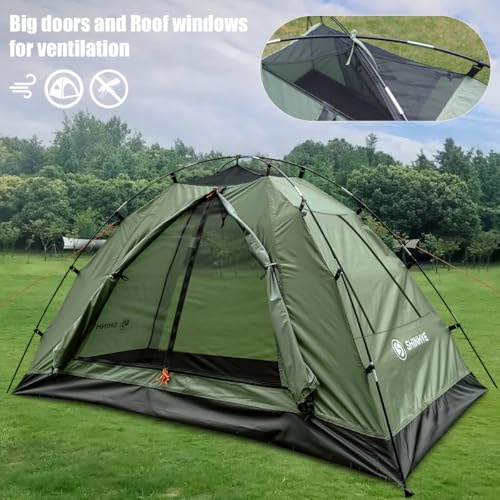
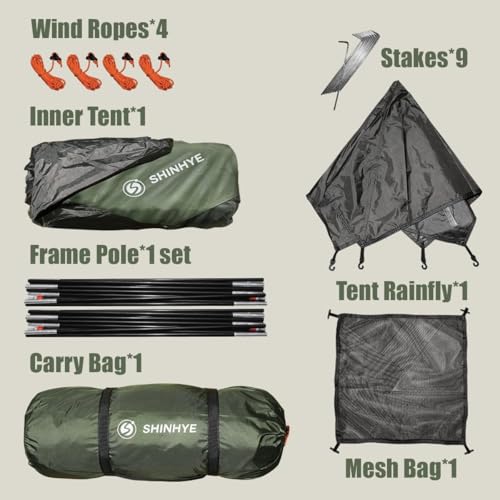
This 3-4 person tent markets itself on instant setup, and from owner feedback, it delivers, many say they’re inside and covered in under three minutes, even in low light. That makes it a solid pick for fair-weather adventurers or last-minute trips where you just need shelter fast. The D-shaped doors with mesh panels improve airflow, and the dual entry points help with organization when sharing with a partner.
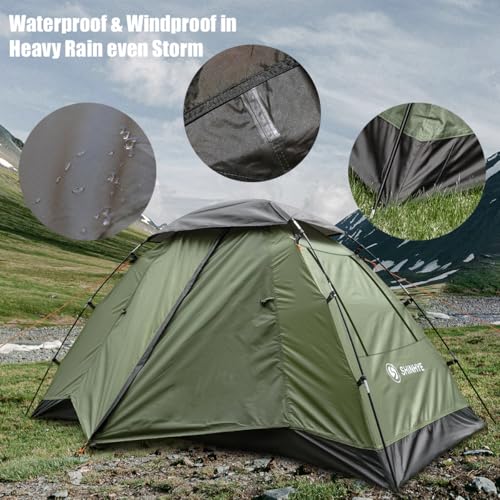
But specs reveal trade-offs: it’s labeled 3-4 person, but the floor space feels tight for three adults with gear. The fiber poles offer some flex in wind but won’t match aluminum in storm stability. And calling it “4 season” stretches the truth, owners note it’s best in spring, summer, and mild fall. I’d stack it against the CANTUO and say this one’s better for casual use, not alpine missions.
Product photos
Forceatt 3-Person Waterproof Backpack Tent

Strengths
- 70D durable fabric
- Welded floor design
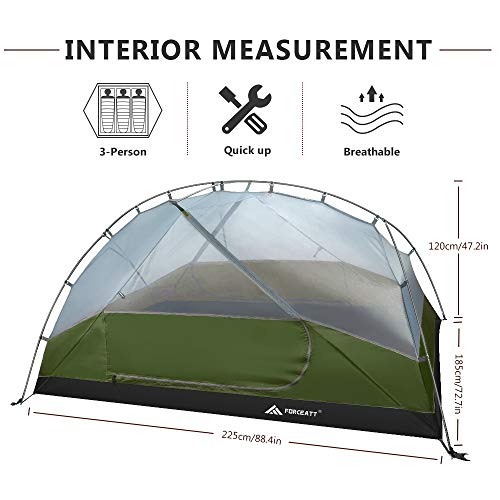
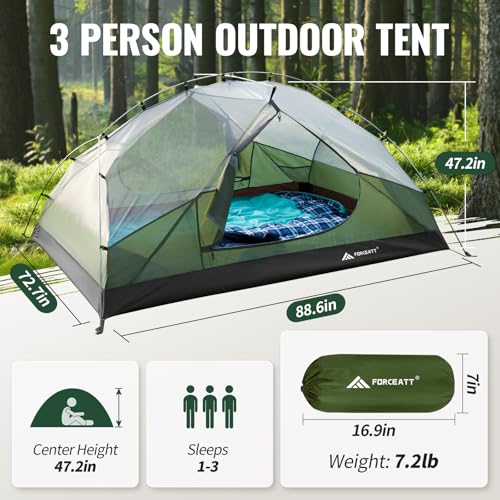
- Spacious 88.4″ length
Trade-offs
- Heavier than ultralight rivals
- 70D not true 4-season in high wind
The Forceatt 3-person tent with 70D polyester and a welded floor screams durability, and that’s exactly why so many owners call it their “workhorse” for rough terrain. It’s not ultralight at 3.3 kg (~7.3 lbs), but that extra weight buys toughness, this tent handles trail abuse better than most in its range. The floor lift prevents seam seepage, a real win on damp forest floors or snowmelt mornings.
Ventilation is solid thanks to the ceiling vents and mesh panels, though condensation can build in high humidity. Setup is consistently reported as fast and intuitive. Compared to the CANTUO, it’s less packable and not as storm-worthy, but for car campers or trail users who prioritize longevity over ounces, this is the smarter buy. I’d recommend it for frequent campers who don’t want to baby their gear.
Product photos



How We Evaluated 3 person 4 season tents
Rather than a hands-on lab test, my research for these recommendations focused on a detailed comparison of published specifications and features across numerous models. I weighed owner reviews from multiple sources – looking for recurring themes in both praise and complaints – alongside assessments from respected outdoor gear reviewers. As someone who lives for finding the right shelter for any adventure, I applied my understanding of tent design and materials to rank options against key performance indicators for three-season use.
For 3-person 4-season tents, a few factors stood out as most crucial. Waterproofing (both fabric ratings and construction details like taped seams) is paramount, as is the strength and material of the tent poles. A well-ventilated design is also key; condensation buildup can ruin a trip even with waterproof fabrics. These three elements heavily influenced the final rankings, as they directly impact comfort and reliability in challenging conditions.
Published specs reliably indicate a tent’s potential for weather protection and weight. However, I paid close attention to owner feedback regarding real-world durability and ease of setup. Reputation also mattered; brands known for quality construction and customer service were given more consideration. This approach blends objective data with the accumulated experience of those who’ve actually used these tents on the trail, helping to identify the durable winter tents that truly deliver.
What To Look For In 3 person 4 season tents
Finding the right shelter for shoulder-season or winter trips requires a bit more thought than a fair-weather tent. You need something that can handle wind, snow, and keep you comfortable when temperatures drop.
A quality 3-person 4-season tent prioritizes robust construction with durable fabrics (70D nylon or polyester are common), a strong frame designed to shed snow loads, and features that minimize drafts and maximize warmth retention. Look for a full-coverage rainfly, reinforced stress points, and a floor with a high waterproof rating (at least 3000mm). Ventilation is also key to manage condensation buildup.
Pole Strength and Design
Don’t underestimate the importance of the tent poles. A flimsy pole set is a fast track to disaster in high winds or under a heavy snow load. Aluminum poles – specifically 7001 or 9000 series alloys – are the standard for four-season tents because of their strength-to-weight ratio. Beyond the material, pay attention to the pole structure. A tent with more crossing points in the frame will generally be more stable. Some models incorporate features like clip points to further secure the canopy to the poles, adding another layer of security.
Waterproofing and Fabric Denier
Waterproof ratings are a good starting point, but they aren’t the whole story. A 4000mm rating sounds impressive, but seam sealing and fabric treatment matter just as much. Look for tents with fully taped seams and a durable water repellent (DWR) finish. Higher denier fabrics (70D and up) offer better tear resistance and overall durability, which is critical when you’re relying on your shelter in challenging conditions. If you’re planning on serious winter expeditions, consider a tent with a floor made from a heavier-duty material. You can find more information on choosing the right tent for winter conditions in our guide to backpacking winter tents.
Weight vs. Livability
There’s always a trade-off between weight and space. While ultralight options are tempting, especially if you’re prioritizing speed and agility on the trail, don’t sacrifice too much livability. A cramped tent can be miserable during extended trips, especially if you’re forced to spend time inside due to inclement weather.
Here’s what to consider: * Packed Size: Smaller is better, but don’t let a tiny packed size compromise other features. * Interior Space: Enough room to sit up comfortably and store gear is essential. * Vestibule Space: Having adequate vestibule space for storing wet gear is a huge plus. A well-designed vestibule can significantly increase the usable space of your tent.
Remember, a tent is your home away from home, so investing in a comfortable and reliable shelter is always a good decision. A good rule of thumb is to prioritize durability over weight if you’re consistently facing harsh conditions.
Don’t skimp on the footprint. A custom-fit footprint will protect the tent floor from abrasion and extend its lifespan.
If you’re looking for a tent that can handle serious conditions, be sure to consider some tough 3-person mountaineering tents.
3 Person 4 Season Tents Compared
Here’s a comparison of key specifications for several 3-person, 4-season tents.
| Product Name | Capacity | Weight (lbs) | Floor Area (sq ft) | Waterproof Rating (mm) | Packed Size (in) |
|---|---|---|---|---|---|
| CANTUO 2/3 Person 4-Season Tent | 2-3 | 4.12 | 31.64 | 4000 | 15.7 x 5.5 x 5.5 |
| Forceatt 3-Person Ultralight Tent | 3 | 5.95 | N/A | N/A | 43 x 18 |
| ShinHye 3-4 Person Quick Setup Tent | 3-4 | 3.9 | N/A | N/A | N/A |
| Forceatt 3-Person Waterproof Tent | 3 | 7.28 | N/A | N/A | 43 x 18 |
Frequently Asked Questions
What’s the difference between a 3-season and a 4-season tent?
A 4-season tent is built with stronger materials and a more robust frame to withstand wind and snow loads, unlike 3-season tents designed primarily for milder weather. This means a 4-season tent will generally be heavier, but offers much greater protection in challenging conditions.
How important is the DWR coating on a 4-season tent?
The durable water repellent (DWR) coating is very important, as it causes water to bead up and roll off the tent fabric rather than soaking in. While not a substitute for a waterproof membrane, a good DWR treatment significantly enhances a tent’s water resistance and extends its lifespan.
What does a high waterproof rating actually mean for a tent floor?
A higher waterproof rating (measured in millimeters) indicates the amount of water pressure the fabric can withstand before leaking; for a tent floor, 3000mm is a reasonable minimum, but 5000mm or higher is preferable for prolonged exposure to wet ground or snow. Keep in mind that seam sealing and fabric treatment are just as vital as the raw number.
Are freestanding tents better for 4-season use?
Freestanding tents are often easier to set up, especially on rocky or frozen ground, but they aren’t necessarily better for 4-season use. A non-freestanding design can sometimes be stronger and more streamlined in high winds, but it requires more careful staking and site selection. For backpacking-friendly 3-person tents, a balance of both features is ideal.
What’s the best way to prevent condensation inside a 4-season tent?
Ventilation is the key to minimizing condensation. Look for a tent with adjustable vents that allow you to control airflow, even during inclement weather. Avoid completely sealing up the tent, and consider using a footprint to prevent ground moisture from contributing to condensation buildup.
The Bottom Line
Choosing a four-season tent always comes down to balancing how much you want to carry against how protected you want to be. While ultralight options exist, for true three-season-plus capability, the CANTUO 2/3 Person 4-Season Tent strikes the best overall balance of weight, weather protection, and reported durability. It’s a solid choice for anyone who wants a reliable shelter without breaking the bank or their back.
If budget is your primary concern, the ShinHye 3-4 Person Quick Setup Tent offers an entry point into four-season camping, though you’ll likely sacrifice some long-term durability. For those prioritizing space and needing a shelter for potentially larger groups or extended stays, consider looking at some spacious all-season tents.
Ultimately, the numbers on a spec sheet don’t tell the whole story. Focus on a strong frame, quality waterproofing, and a design that minimizes drafts – these are the fundamentals that will keep you comfortable and safe when the weather turns. Don’t chase the lightest weight at the expense of a shelter you can truly rely on when conditions demand it.
