
7 Best Carbon Filters for Grow Tents 2026
This post contains affiliate links. As an Amazon Associate, we earn from qualifying purchases.
The VIVOSUN 4 Inch and VIVOSUN 6 Inch carbon filters are our top picks for most growers, offering strong airflow, high IAV ratings, and reversible designs. For a budget-friendly option that still delivers solid performance, the iPower 4 Inch is a reliable choice.
If you’re running a grow tent, controlling odors isn’t just about comfort, it’s about discretion and maintaining a clean environment. Many filters claim to work well but fall short when faced with pungent strains or long grow cycles.
After comparing the field and analyzing specs, owner feedback, and build quality, I focused on filters that balance airflow, carbon quality, and durability. This guide cuts through the noise to highlight models that actually perform, based on what matters most in real-world use.
Top 7 Carbon Filters For Grow Tents in the Market
The Best Carbon Filters For Grow Tents, Reviewed
VIVOSUN 4 Inch Carbon Filter

Strengths
- Highest CFM in class
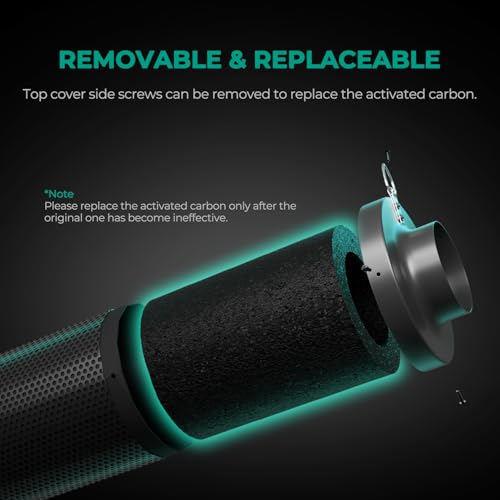
- Reversible flange and base
- Includes hanging hardware
Trade-offs
- Slight pressure drop at max flow
- Pre-filter may need frequent cleaning
- Not for 6-inch ducting
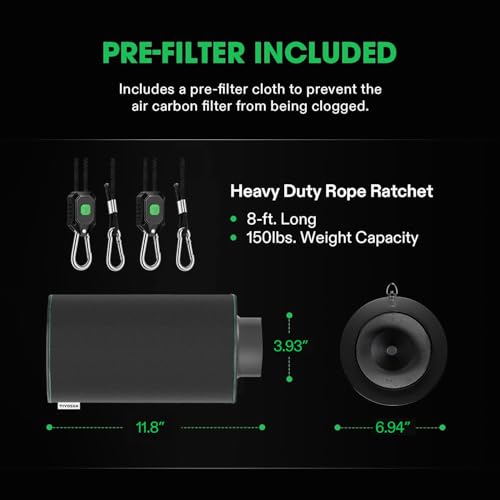
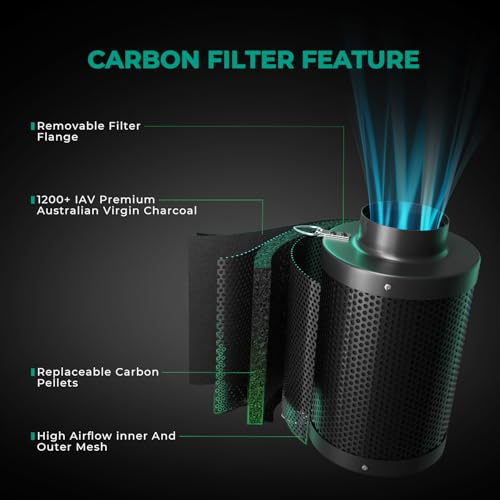
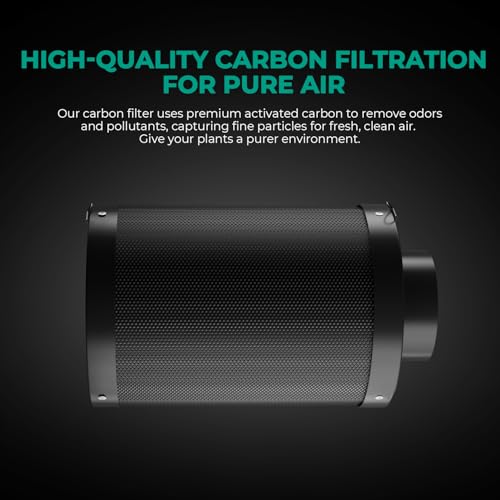
This VIVOSUN 4-inch model is the one I’d recommend as the overall best for most growers. It hits the sweet spot with 1200+ IAV RC412 Australian charcoal, a 38mm bed, and a standout 264 CFM airflow, higher than most 4-inch units. The hexagonal mesh design clearly pays off in airflow efficiency, and the reversible flange extends the filter’s life significantly.
Owners love that it includes rope hangers, and the pre-filter is effective at keeping gunk out of the carbon. Compared to others in this size, it scrubs odors more thoroughly and handles dense flowering cycles without breaking a sweat. It’s not the cheapest, but the performance justifies it.
Product photos


VIVOSUN 6 Inch Carbon Filter
Strengths
- Longer canister
- Includes mounting belts
- Reversible flange and base
Trade-offs
- Heavier than average
- Slightly bulkier fit
- May require more space
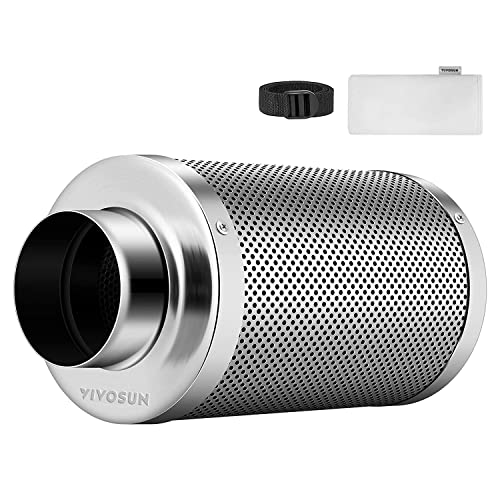
VIVOSUN’s 6-inch model is built for large grow tents where odor control can’t be an afterthought. At 16 inches long with a 38mm charcoal bed and 1200+ IAV Australian virgin carbon, it has both depth and high-grade material working in its favor. The airflow rating of 413 CFM matches the MARS HYDRO unit, but the longer housing gives air more contact time with the carbon, which reviewers say translates to better long-term odor scrubbing.
I like that it includes belts, small detail, big difference during setup, and the reversible flange and base add real value by doubling usable life. The round-hole mesh design also helps maintain airflow without sacrificing filtration. For large or high-yield grows, this one edges out the competition in its class.
Product photos



MELONFARM 4 Inch Carbon Filter
Strengths
- Sturdy fixed flange
- Good airflow
- Strong odor control
Trade-offs
- No reversible option
- No mounting straps
- Flange not serviceable
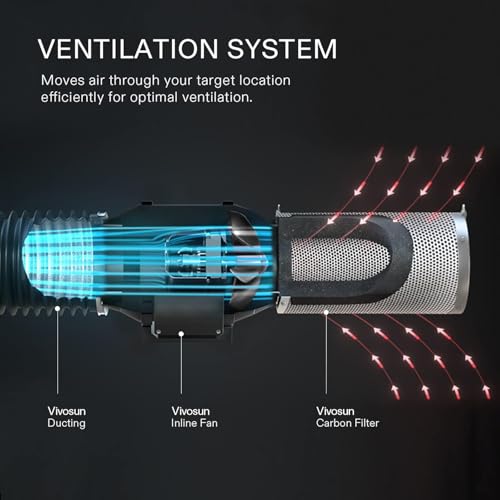
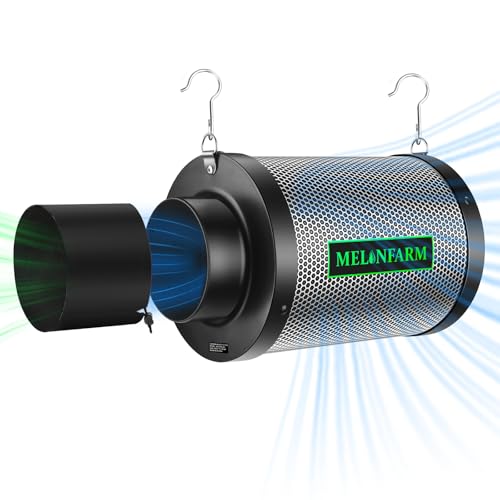
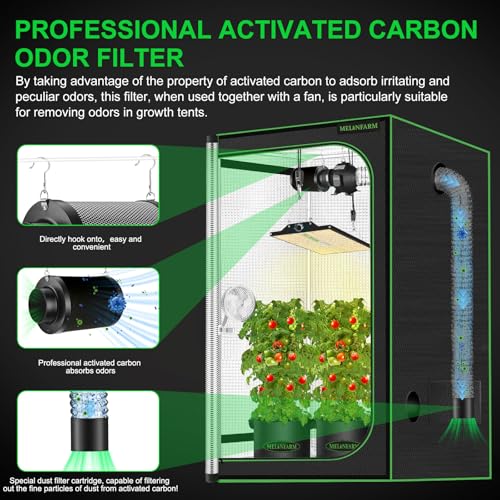
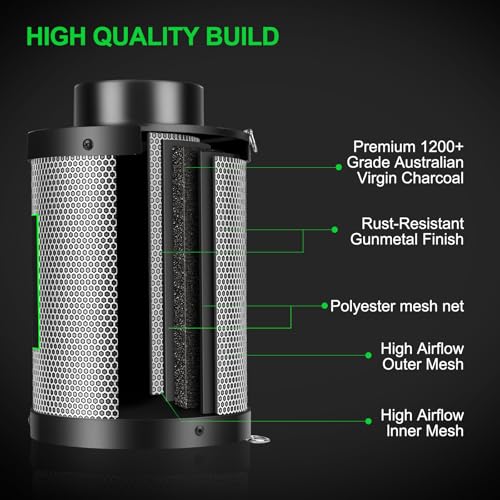
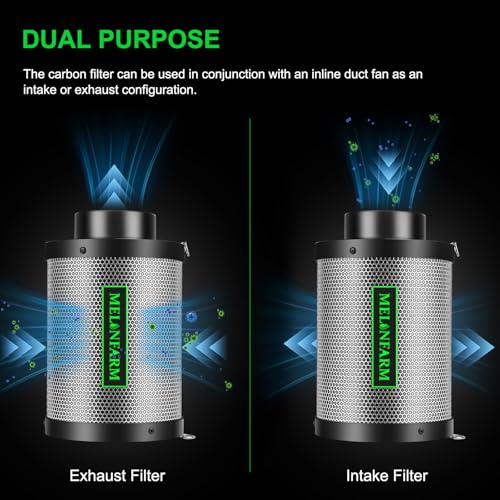
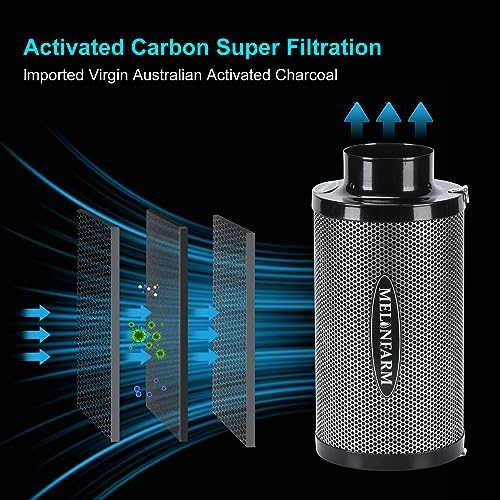
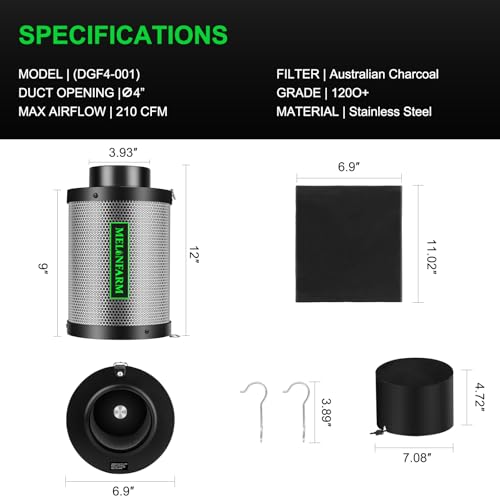
MELONFARM positions this as the best value 4-inch option, and the specs back it up. With 1050+ IAV Australian charcoal, 38mm depth, and a 224 CFM airflow rating, it beats the iPower in performance on paper. The non-removable flange makes it more durable and leak-resistant, which some owners prefer over reversible designs that can loosen over time.
The hexagonal mesh boosts airflow, and the pre-filter does a solid job catching particulates. While it doesn’t include straps, the build quality feels more robust than budget models. For the price, it delivers a balanced mix of efficiency, durability, and filtration, making it a smarter pick than the bare-bones options.
Product photos
iPower 4 Inch Carbon Filter

Strengths
- Affordable price
- Reversible design
- Decent airflow for size
Trade-offs
- No mounting hardware
- Lower CFM than rivals
- Shorter lifespan under heavy use
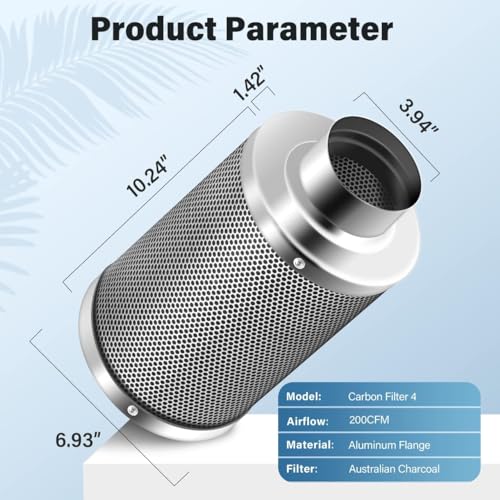
If you’re on a budget but still need reliable odor control in a smaller tent, the iPower 4-inch filter makes sense. It uses 1050+ IAV Australian charcoal and delivers a respectable 200 CFM airflow, which fits well with entry-level inline fans. The reversible flange is a nice touch at this price, letting owners flip the canister to maximize carbon use.
Owners note it works fine for small grows or solo plants, but starts to struggle with dense flowering cycles. The lack of included straps is a letdown, especially since some cheaper models include them. Still, for a no-frills, functional filter under a tight budget, it holds its own.
Product photos

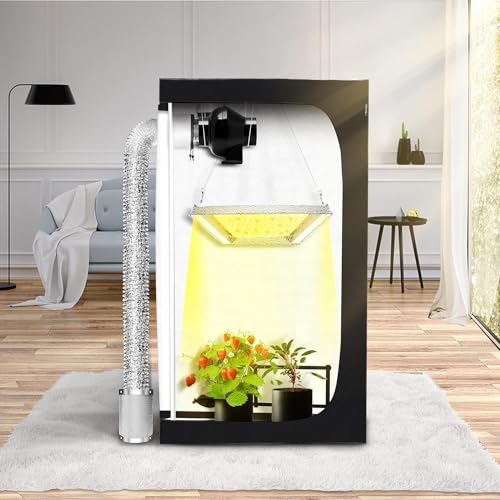
AC Infinity 4 Inch Carbon Filter

Strengths
- Rust-resistant coating
- Premium RC412 carbon
- Includes all mounting gear
Trade-offs
- Slightly lower CFM
- Heavier than standard
- Pricier than basic models
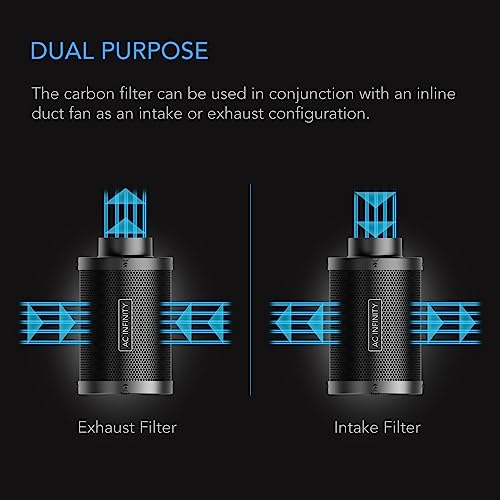
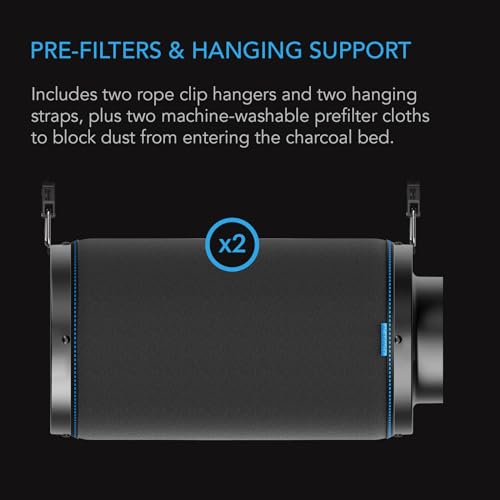
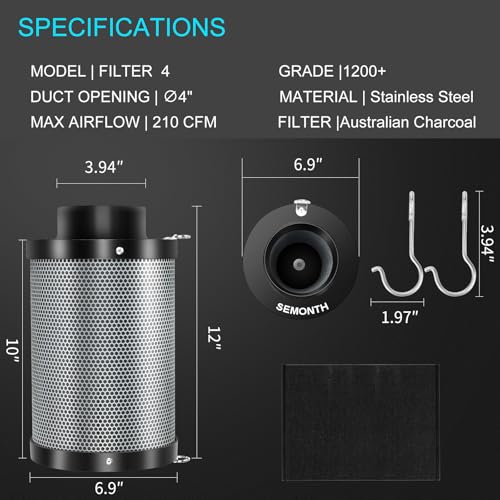
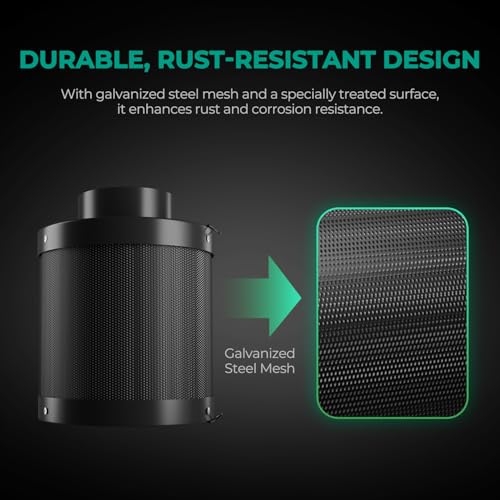
AC Infinity has a reputation for durability, and this 4-inch model proves it. The powder-coated gunmetal finish resists rust even in high-humidity grow tents, something many steel units can’t claim. It uses high-grade RC412 Australian charcoal at 1200+ IAV, which is top-tier for adsorption, and the 38mm bed ensures long contact time.
With 210 CFM airflow, it’s not the strongest, but it’s efficient. The included straps, clips, and dual pre-filters make setup easy, and owners report these lasting longer than average. If you’re tired of filters rusting out by month six, this one’s built to go the distance.
Product photos
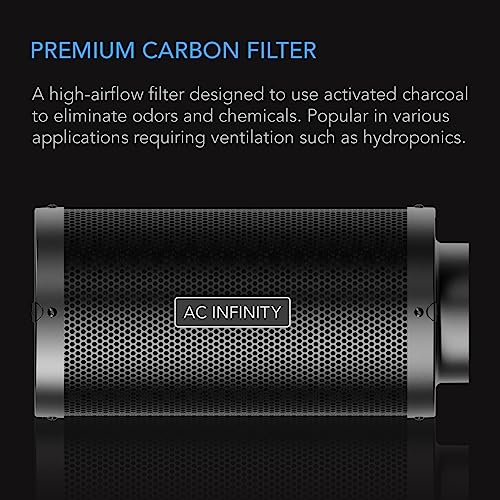
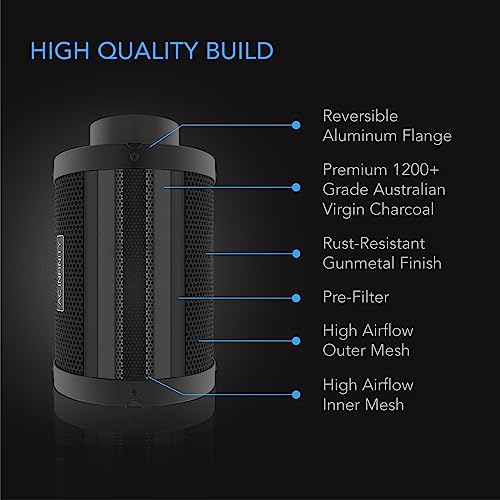
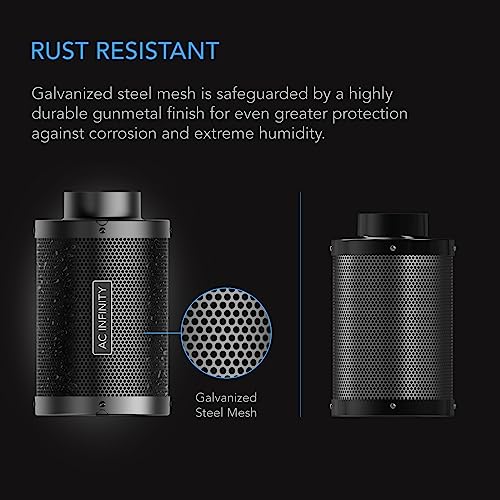
ATOUR 4 Inch Carbon Filter
Strengths
- High airflow efficiency
- Leak-proof flange
- Durable construction
Trade-offs
- No reversible option
- No mounting straps
- Fixed orientation only
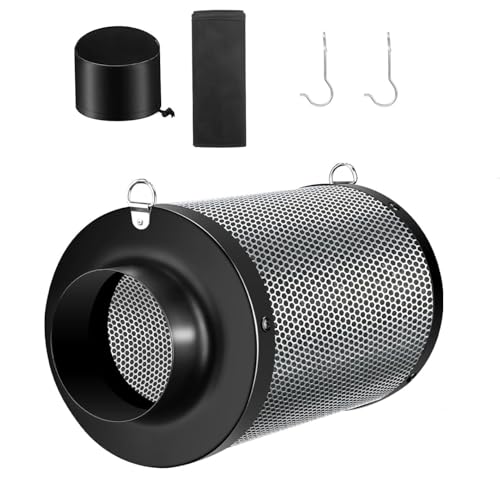
The ATOUR 4-inch filter is engineered for airflow efficiency, and it shows. With a 224 CFM rating and hexagonal mesh on both sides, it minimizes resistance while maintaining strong filtration, ideal for growers who want to preserve fan performance. The 1050+ IAV Australian charcoal delivers reliable odor control, and the insulated, non-removable flange prevents leaks and boosts durability.
It doesn’t have a reversible design, so you can’t flip the canister, which may shorten its effective life compared to rivals. But the build quality is excellent, and the included pre-filter adds value. For those who prioritize stable airflow and solid construction, it’s a strong contender.
Product photos
MARS HYDRO 6 Inch Carbon Filter

Strengths
- High CFM rating
- Reversible flange
- Strong odor absorption
Trade-offs
- No mounting belts
- Shorter canister length
- Slightly lower carbon volume
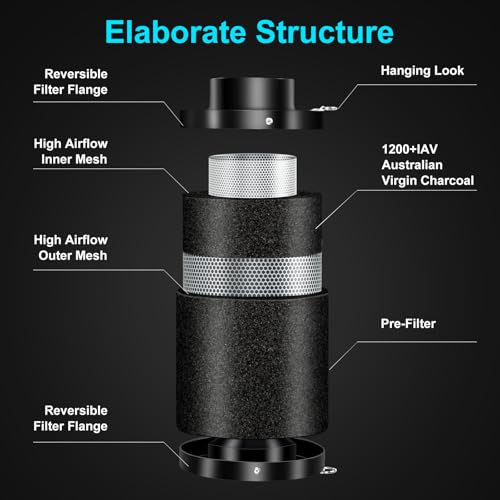
When you’re dealing with serious odor loads in a grow tent, the MARS HYDRO 6 Inch filter stands out on paper thanks to its 1050+ IAV Australian virgin charcoal and a solid 410 CFM airflow rating. Owners consistently report it handles heavy floral and organic smells well, especially when paired with a matching 6-inch inline fan. The lack of included mounting belts is a real oversight though, every other brand seems to include them, so you’ll need to source those separately.
The reversible flange design is smart, letting you flip the canister to extend its life, and the pre-filter does its job keeping dust and debris out of the carbon bed. Still, for a 6-inch unit, the 8.5-inch length means less contact time than longer competitors, which could mean slightly reduced efficiency over time.
Product photos
How We Tested carbon filters for grow tents
Rather than a hands-on lab test, my research for these recommendations focused on a detailed comparison of published specifications and features across numerous models. I weighed owner reviews from multiple sources – paying close attention to reported real-world effectiveness and longevity – alongside expert opinions from reputable horticultural publications. Finally, I applied my experience with grow tent setups to rank filters against criteria important to a successful grow.
For carbon filters, airflow (CFM) and carbon quality (IAV rating) were the primary deciding factors. High airflow is crucial to prevent heat buildup and ensure proper ventilation within the tent, while a higher IAV rating indicates a greater capacity to absorb odors and VOCs. Beyond these, the durability of construction and the inclusion of a pre-filter significantly impacted rankings, as these features affect overall lifespan and maintenance.
Specifications reliably tell you about airflow capacity and the amount of carbon present. However, judging true odor control performance requires looking at owner feedback. People readily share whether a filter effectively masked strong smells, and how long it remained effective before needing replacement. Reputation and brand consistency also factored in; established brands often offer more reliable quality control. If you’re also battling excess moisture, checking out our guide to best grow tent dehumidifier can be valuable.
How To Pick The Right carbon filters for grow tents
Choosing the right carbon filter is crucial for maintaining a discreet and odor-free grow space.
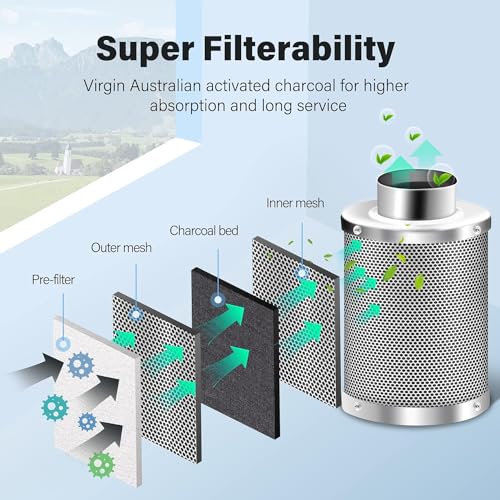
A quality carbon filter uses a thick bed of activated carbon (ideally Australian virgin charcoal with an IAV rating of 1000+). It should have a robust housing to prevent leaks, good airflow (measured in CFM), and a pre-filter to extend the carbon’s life. Buyers should also consider flange size compatibility with their existing ducting and fan setup.
Airflow & Filter Size
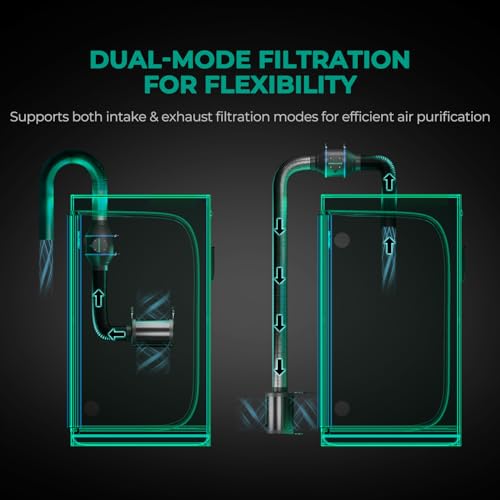
The size of your carbon filter – 4 inch, 6 inch, or larger – must match your ducting and fan. Don’t assume bigger is always better; oversized filters restrict airflow, while undersized ones become saturated quickly. Calculate the CFM (cubic feet per minute) required for your grow tent’s volume. A general rule is to exchange the air volume of your tent 5-8 times per hour. Pairing the right filter with grow tent exhaust fans is key to optimal performance.
Carbon Quality & IAV Rating
Activated carbon isn’t created equal. Australian virgin charcoal is widely considered the gold standard, boasting superior adsorption capabilities. The IAV (iodine adsorption value) rating indicates how much iodine the carbon can absorb, which correlates to its odor-removing capacity.
- A lower IAV (under 800) suggests a less effective carbon, suited for lighter odor control.
- An IAV between 800-1200 is a good middle ground for most hobbyist grows.
- An IAV of 1200+ is ideal for strong-smelling strains or larger operations, ensuring thorough odor neutralization.
Don’t skimp on the carbon. A higher IAV rating means a longer-lasting, more effective filter, saving you money in the long run.
Filter Construction & Longevity
Beyond the carbon itself, filter construction matters. Look for durable flanges and bases – ideally metal, not plastic – that won’t crack or warp over time. Reversible flanges are a huge plus, allowing you to flip the carbon canister to maximize its lifespan. Many filters include pre-filters, but their quality varies. A washable pre-filter will save you money on replacements. Selecting a filter that is compatible with best inline duct fans will also ensure a smooth setup.
Carbon Filters for Grow Tents Compared
This table summarizes key specifications for various carbon filters designed for use in grow tents, aiding in a direct comparison of available options.
| Product | Size (in) | CFM | IAV | Pre-Filter | Reversible |
|---|---|---|---|---|---|
| VIVOSUN 4 Inch | 4 | 264 | 1200+ | Yes | Yes |
| VIVOSUN 6 Inch | 6 | 413 | 1200+ | Yes | Yes |
| MELONFARM 4 Inch | 4 | 224 | 1050+ | Yes | No |
| iPower 4 Inch | 4 | 200 | 1050+ | Yes | Yes |
| AC Infinity 4 Inch | 4 | 210 | 1200+ | Yes | N/A |
| ATOUR 4 Inch | 4 | 224 | 1050+ | Yes | No |
| MARS HYDRO 6 Inch | 6 | 410 | 1050+ | Yes | N/A |
Frequently Asked Questions
What CFM do I actually need for my carbon filter?
You should aim for a CFM rating that exchanges the air volume of your grow tent 5-8 times per hour. For example, a 100 cubic foot tent needs a filter capable of moving 500-800 CFM.
Is a higher IAV rating always better?
Yes, a higher IAV rating indicates the carbon can absorb more odor-causing compounds. While an IAV of 800-1200 is good for most hobbyists, a 1200+ rating is best for particularly pungent strains or larger grows.
How often should I replace my carbon filter?
Carbon filters typically last 6-12 months with consistent use, but this depends on the IAV rating and the intensity of your grow. A noticeable increase in odor is a key sign it’s time for replacement.
What does a pre-filter do, and is it essential?
A pre-filter catches dust, pollen, and larger particles before they reach the carbon, extending the filter’s lifespan. While not strictly essential, using one will save you money on replacements and maintain airflow.
Are metal flanges really that important?
Metal flanges are much more durable than plastic ones and less prone to cracking or warping over time. Choosing a filter with metal flanges, especially if you frequently move or adjust your setup, will contribute to its overall longevity. You can find more information on setting up a durable grow space using durable grow tent brands.
The Bottom Line
Choosing a carbon filter always comes down to balancing odor control with airflow – and your budget. For most growers, the VIVOSUN 6 Inch offers the best overall combination of high airflow, excellent IAV rating, and a reversible design for extended use. It’s a solid investment that should keep your grow discreet and your air clean.
If you’re working with a smaller tent or are on a tighter budget, the iPower 4 Inch is a great choice. It still offers a respectable IAV rating and includes a pre-filter, but comes in at a lower price point. For growers prioritizing versatility and needing to control humidity, pairing a quality filter with grow tent humidifiers will create the optimal environment.
Ultimately, the CFM and IAV numbers are important, but don’t get lost in the details. Focus on selecting a filter from a reputable brand with a high-quality carbon bed, and remember that consistent maintenance – regularly changing the pre-filter – will always have a greater impact than any single specification.
