
8 Best Fans for Grow Tents 2026
This post contains affiliate links. As an Amazon Associate, we earn from qualifying purchases.
The MARS HYDRO M6 Smart WiFi Fan stands out as the overall best grow tent fan for its powerful airflow, quiet 32 dBA operation, and smart controls. For budget-conscious growers, the Pidemeo 5″ Non-Oscillating Fan 2-Pack delivers solid performance at a low cost, while the AC Infinity CLOUDRAY S6 EC Fan offers unmatched oscillation flexibility for precise airflow management.
Most growers struggle with either stagnant air or fans that are too loud, unreliable, or hard to control. Poor ventilation stresses plants, invites mold, and limits growth, but the wrong fan can create new problems.
This guide cuts through the noise. Based on specs, owner feedback, and my experience with controlled environments, I’ve ranked the top fans that deliver strong, reliable airflow without overwhelming sound or complexity. We looked at motor type, CFM, noise, and real-world durability to find models that actually perform in humid, demanding grow spaces.
Top 8 Fans For Grow Tents in the Market
The Best Fans For Grow Tents, Reviewed
MARS HYDRO M6 Smart WiFi Fan
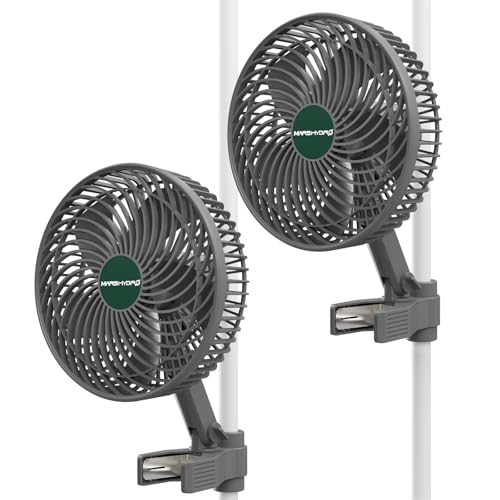
Strengths
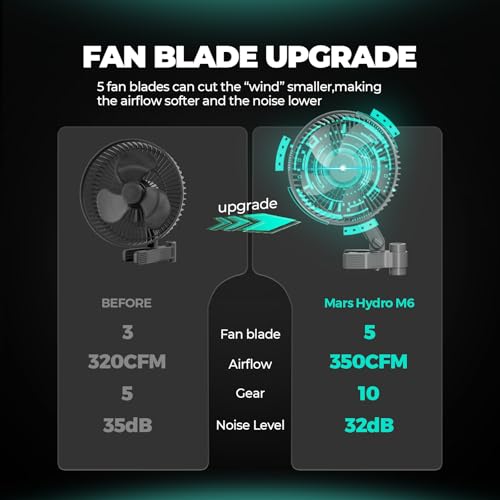
- 350 CFM airflow
- Smart WiFi control
- 5-blade design
- 32 dB quiet
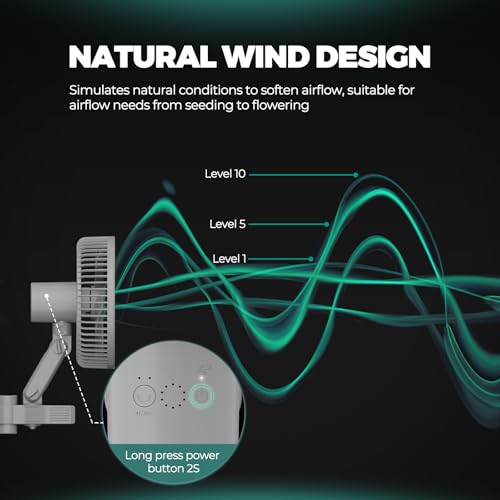
- Natural wind mode
Trade-offs
- Requires iHub Pro
- App setup can be fussy
- No screw-lock clamp
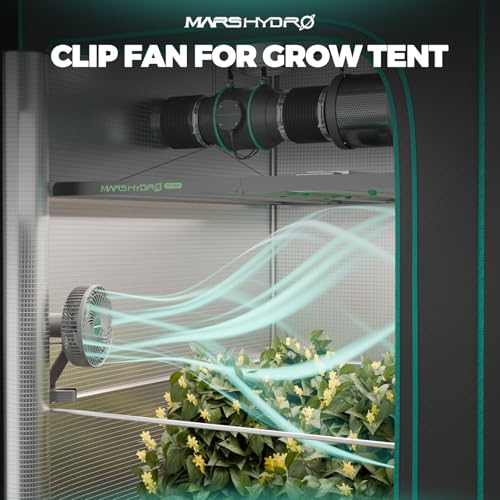
If you’re building a complete, modern grow setup, this 2-pack is hard to beat. The 350 CFM airflow per fan is serious for a 6-inch unit, and the five-blade design helps distribute air more evenly while staying under 32 dB, just shy of whisper level. I appreciate that MARS HYDRO didn’t skimp on the motor, using a durable EC unit rated for 50,000 hours. The real standout is the smart WiFi control via iHub Pro, which lets you adjust wind patterns, timing, and modes from your phone. For growers managing multiple tents or complex cycles, that’s a major convenience.
Owners love the dual oscillation modes (45° and 90°) and report fewer hotspots in their canopies. Compared to the VIVOSUN E6 Gen2, it offers similar app functionality but at a better value in a 2-pack. You’re not just buying fans, you’re buying a connected system. The natural wind mode is also well-tuned, mimicking real outdoor gusts to strengthen plant stems.
Product photos

VIVOSUN AeroWave E6 Gen2 Smart Fan

Strengths
- Smart app control
- 33 dB quiet
- IP54 rated
- Natural wind mode
- 5-level oscillation
Trade-offs
- Requires GrowHub
- Higher price point
- Clamp can be stiff
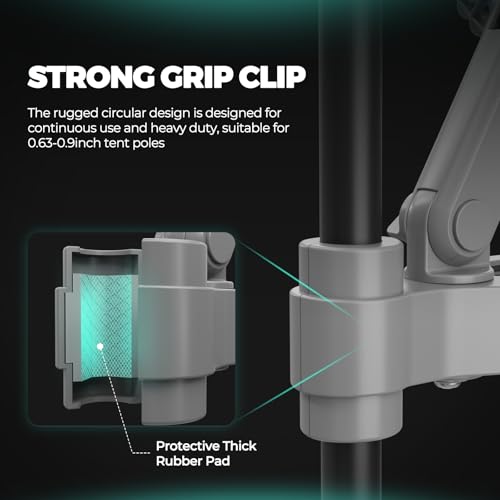
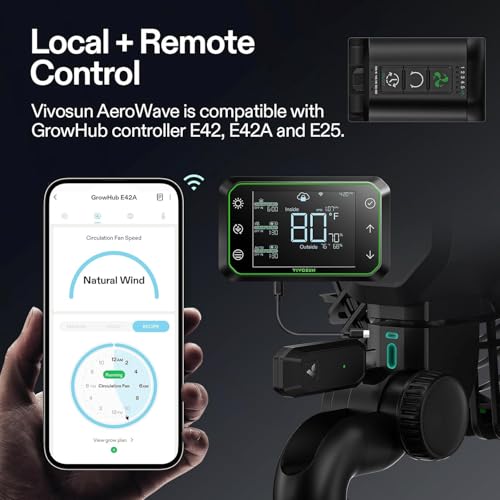
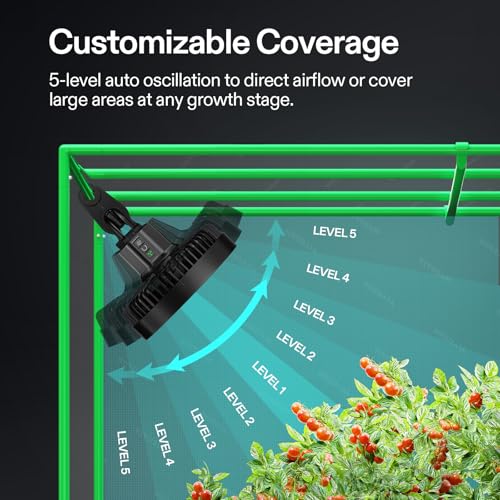
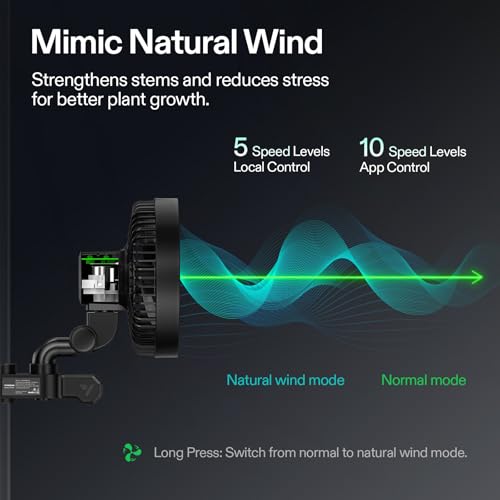
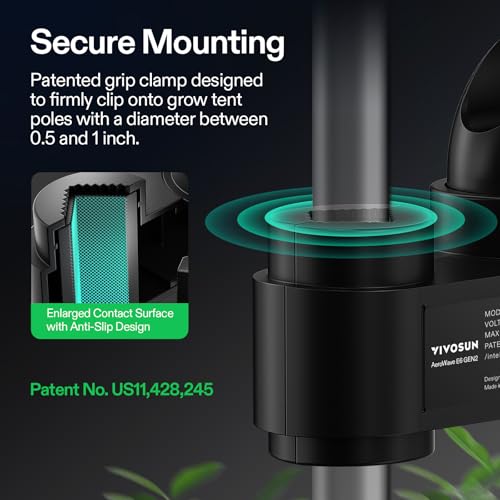
This is the smart hub of a modern grow room. With EC motor power, 10 speeds, and 5-level oscillation, it delivers strong, quiet airflow at just 33 dB. But the real story is smart integration, when paired with the GrowHub, it syncs with lights, filters, and sensors as part of a full climate ecosystem. The natural wind mode is well executed, varying speed to mimic outdoor gusts, which owners say improves plant resilience. The patented clamp grips both round and square poles securely, and the IP54 rating means it won’t flinch in high humidity.
Compared to the AC Infinity CLOUDRAY S6, it offers similar durability but better app features. The local timer is handy for standalone use, but the real value is automation. If you’re building a connected grow, this fan isn’t just a tool, it’s a node in your system.
Product photos

AC Infinity CLOUDRAY S6 EC Fan

Strengths
- Long-life EC motor
- Carbon steel gears
- IP54 rated
- 10 wind modes
- UIS controller link
Trade-offs
- Expensive
- Clamp less intuitive
- App required for full features
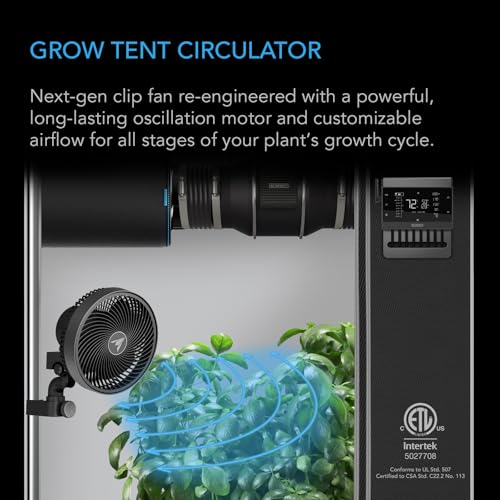
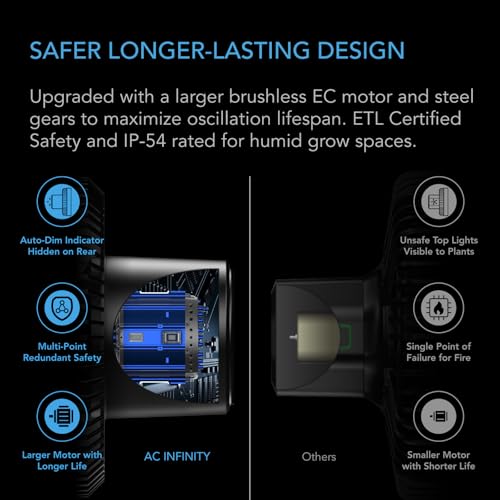
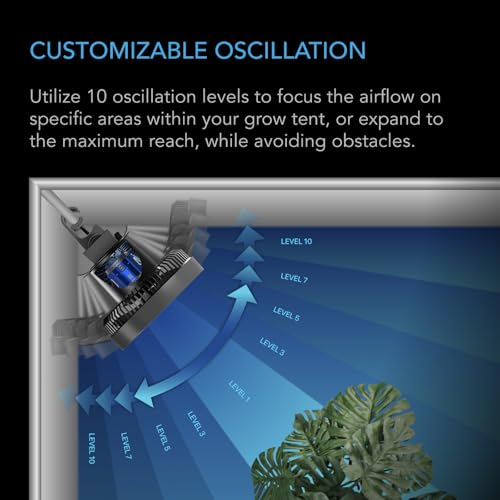
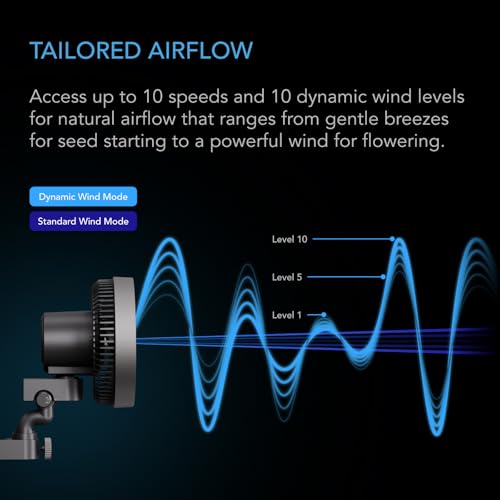
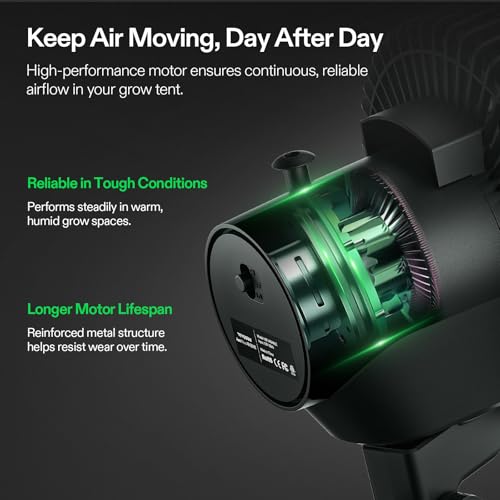
This fan is built like a fortress. With a reinforced EC motor, carbon steel gears, and dual-ball bearings, it’s engineered to outlast most others in the category. The IP54 rating and 10-speed, 10-oscillation setup give you serious control, and owners report minimal wear even after extended use in hot, humid tents. The dynamic wind modes simulate outdoor gusts effectively, which helps strengthen plant stems, a subtle but real benefit for yield.
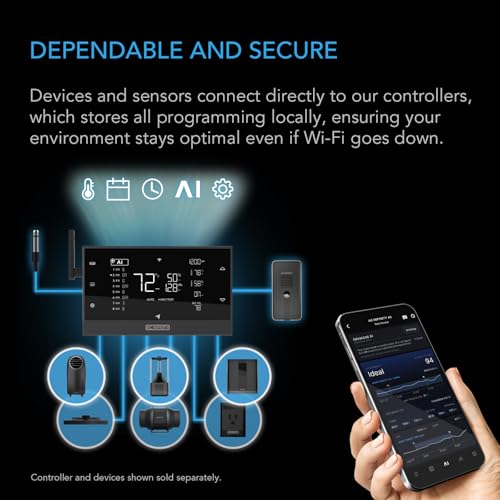
What pushes it over the edge for durability is the UIS controller compatibility, allowing for advanced automation and climate triggers. Compared to the VIVOSUN E6 Gen2, it’s similarly smart but feels more industrial. It’s not the cheapest, but if you’re tired of replacing fans every season, this one’s worth the investment.
Product photos
Pidemeo 5″ Non-Oscillating Fan 2-Pack
Strengths
- Screw-lock clamp
- 67,000-hour motor
- 330 CFM airflow
- 8 ft cord
- IP54 rated
Trade-offs
- No oscillation
- Noisy at high speed
- Manual speed only
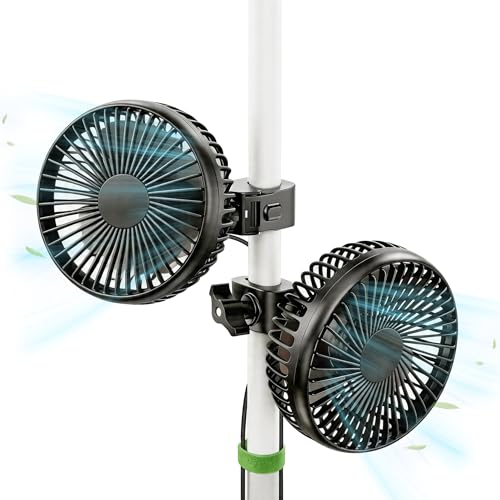
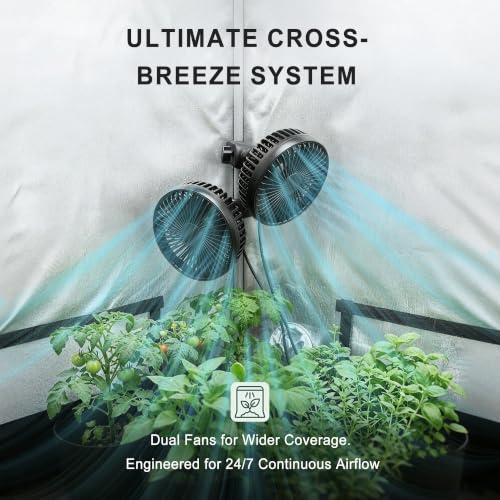
This is the tank of grow fans, built for growers who prioritize reliability over bells and whistles. No oscillation gears to jam, no apps to sync. Just two brushless DC motors rated for 67,000 hours, each pushing 330 CFM with a rugged screw-lock clamp that won’t slip. The cross-breeze strategy, placing one in each corner, is proven in small tents, and owners report near-zero failures even after months of continuous use. For anyone who’s lost plants to stagnant air or fan collapse, this is peace of mind in a box.
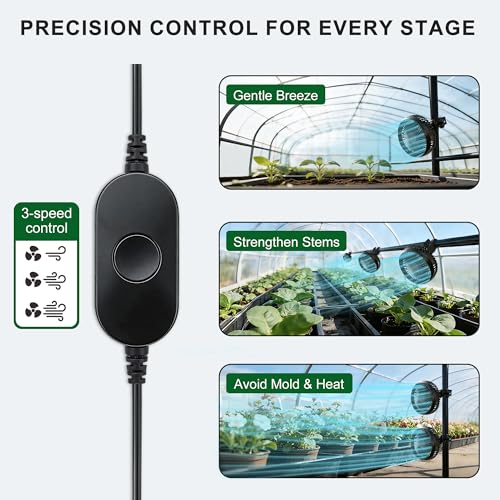
It’s not the quietest, noise ranges from 37 to 53 dBA depending on speed, but it’s not disruptive. The 8-foot cord with inline switch is a small but meaningful detail, letting you toggle without opening the tent. Compared to oscillating models like the VIVOSUN A6, it sacrifices coverage flexibility but gains absolute dependability. If your priority is “set it and forget it,” this is your fan.
Product photos

Spider Farmer 6″ EC Clip Fan
Strengths
- EC motor
- 10 wind speeds
- IP54 rated
- 33 dB quiet
- Auto rebound
Trade-offs
- No smart app
- Clip less robust than screw-lock
- No timer
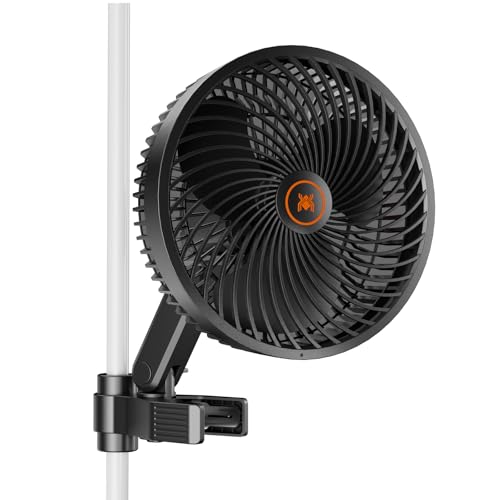
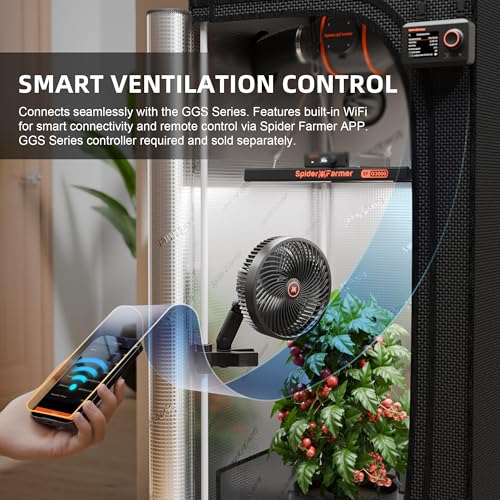
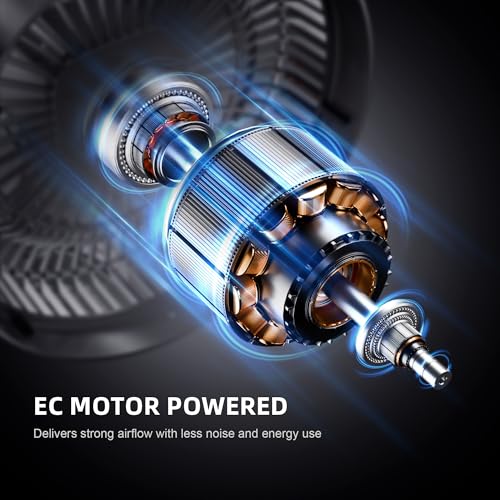
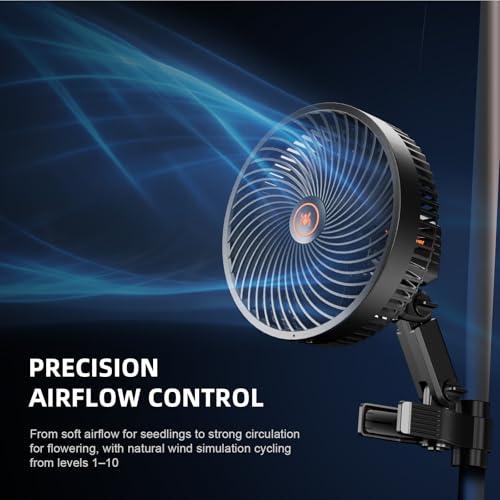
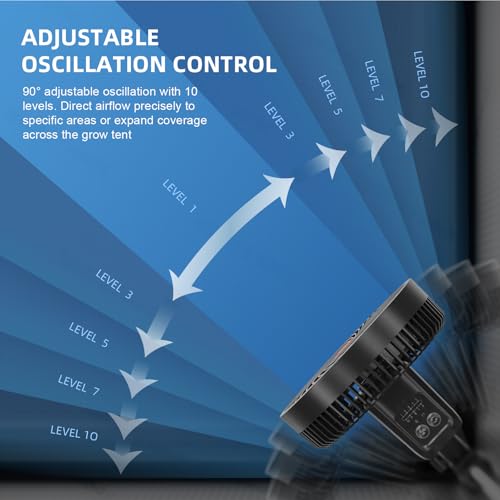
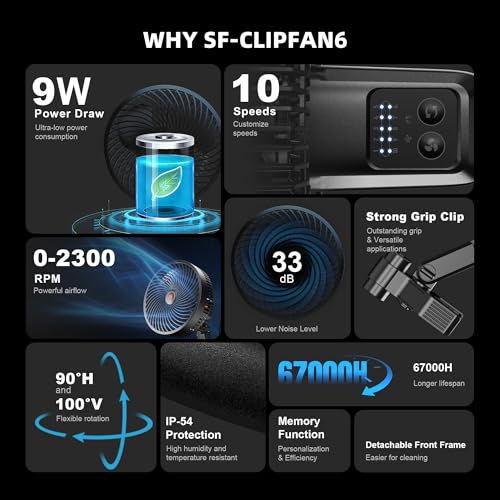
This fan stands out in the crowded clip-on market by delivering on what matters most: quiet, reliable airflow with smart customization. The EC motor is a big win, offering 10 wind speeds and hitting up to 2300 RPM while staying under 33 dB, that’s library-quiet for a grow space. Owners consistently report it handles humidity well and holds up over time, which is no small thing when you’re running gear 24/7. The 10-level oscillation and solid clip design make it easy to position without drift.
What really sets it apart is how it balances performance and subtlety. Unlike cheaper fans that either underwhelm or rattle after a few weeks, this one feels built to last. Compared to the MARS HYDRO M6, it lacks app control, but if you prefer simplicity and strong fundamentals, this is a top-tier pick. The natural wind simulation is a nice touch for reducing plant stress, something experienced growers know matters.
Product photos
VIVOSUN AeroWave A6 Oscillating Fan
Strengths
- Lever-lock clamp
- Natural wind mode
- 90° oscillation
- Easy cleaning
- 38 dB quiet
Trade-offs
- Only 2 speeds
- No smart features
- Plastic build
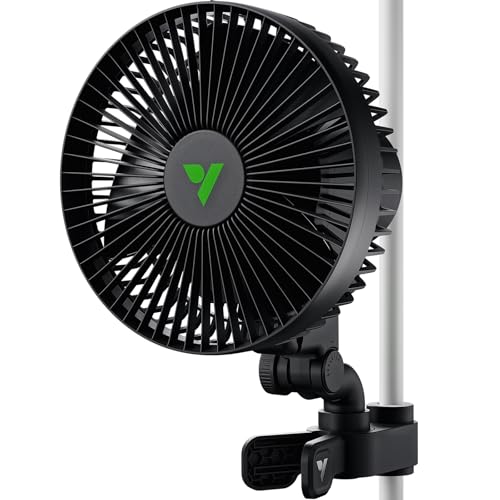
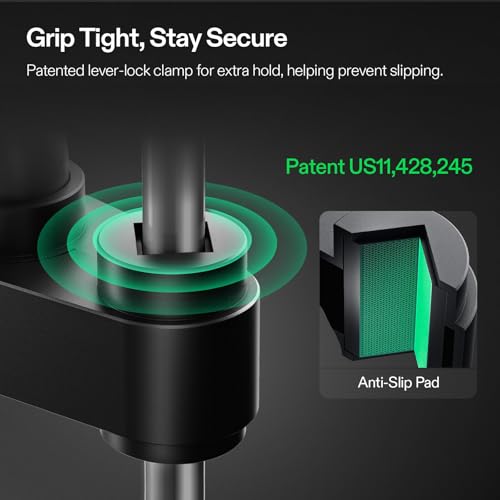
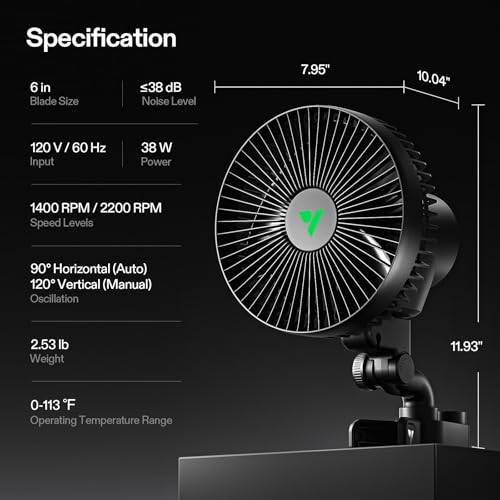
This fan hits the sweet spot between performance and price, which is why it earns the Best Value title. The 2200 RPM motor pushes solid airflow at 38 dB, and the 90° oscillation covers a good portion of a medium tent. The patented lever-lock clamp is a standout, thick rubber padding and strong grip prevent slippage, a common pain point with cheaper fans. Owners consistently praise how well it stays put, even after weeks of use. The natural wind simulation helps reduce plant stress, and the removable grille makes cleaning a breeze.
Compared to the Spider Farmer 6″, it’s slightly noisier but offers oscillation and a more secure clamp. It doesn’t have app control like the MARS HYDRO M6, but for a single fan, it’s a smarter standalone buy. If you’re building out a tent on a budget but don’t want to sacrifice reliability, this is the one.
Product photos

VIVOSUN AeroWave D4 4″ Mini Fan
Strengths
- Compact 4″ design
- 35 dBA quiet
- 4 mounting options
- Memory function
- Adjustable airflow
Trade-offs
- Low airflow for large tents
- No oscillation
- Magnet not included
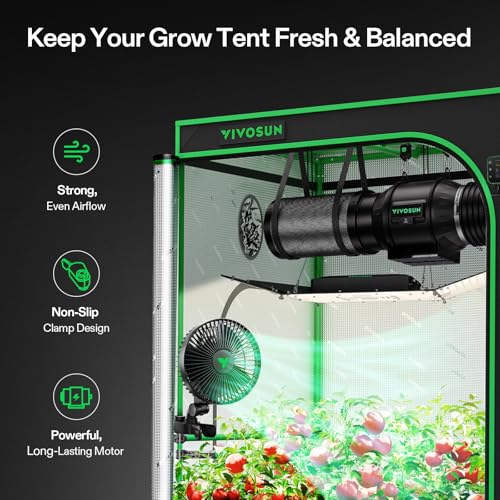
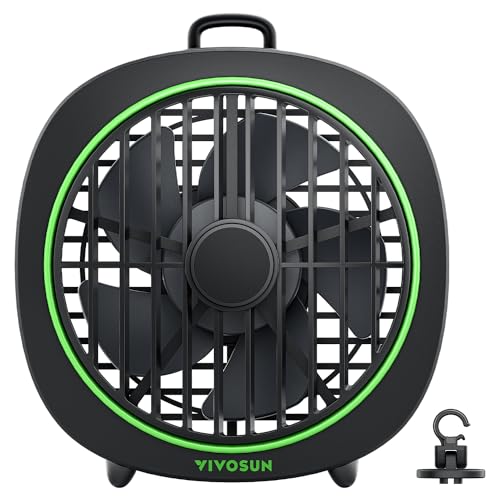
This tiny fan punches above its weight for small or low-clearance tents. At just 4 inches, it’s not meant to cool a 5×5 space, but for seedlings, propagation trays, or nano tents, it’s ideal. The 3500 RPM motor delivers strong airflow for its size, and the 35 dBA max noise keeps it out of the way acoustically. I like the four mounting options, especially the magnetic setup with an iron plate, because it gives you flexibility most clip fans don’t. The adjustable airflow knob lets you pivot between wide dispersion and focused streams, which is useful when you’re managing microclimates.
It’s not going to replace a 6-inch fan in a flowering tent, but as a supplemental circulator, it’s excellent. Compared to the Tonree 5.5″, it’s smaller but smarter in design. The memory function is a nice touch, power goes out, it comes back at the same speed. For tight spaces where every inch counts, this is the move.
Product photos


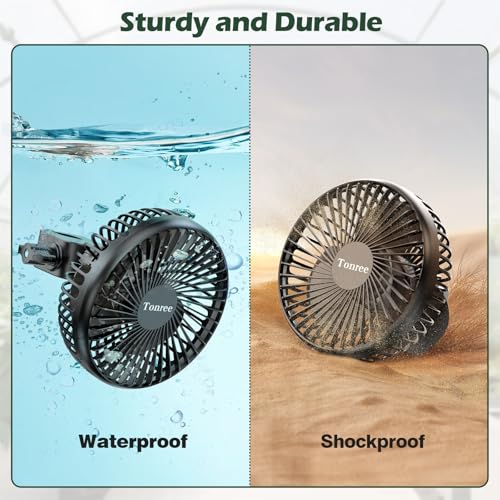
Tonree 5.5″ Brushless Grow Tent Fan
Strengths
- USB powered
- 360° tilt
- Non-slip clamp
- Low noise
- 67,000-hour motor
Trade-offs
- 260 CFM limited
- No oscillation
- No smart control
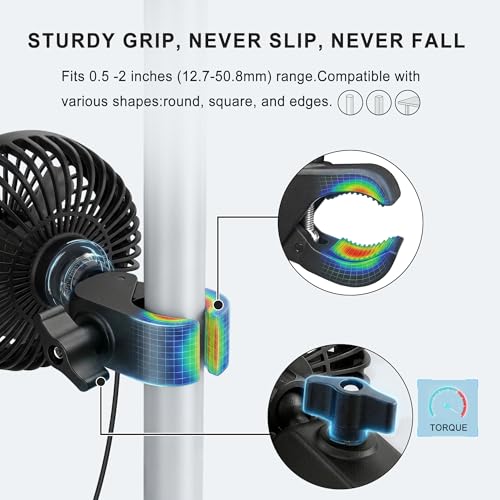
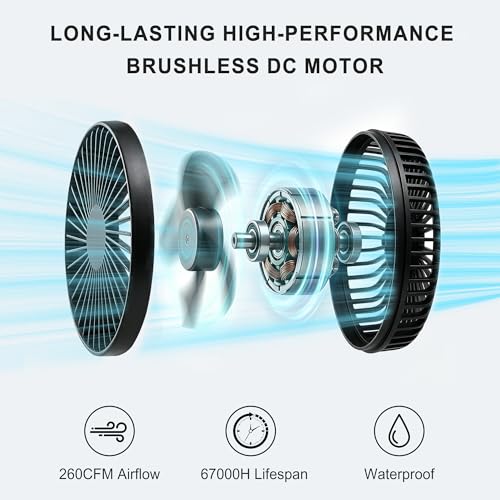
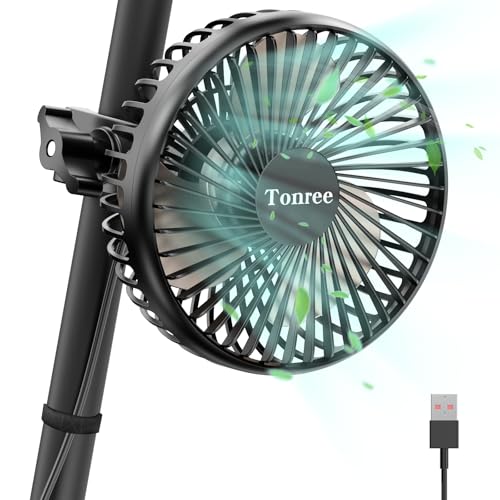
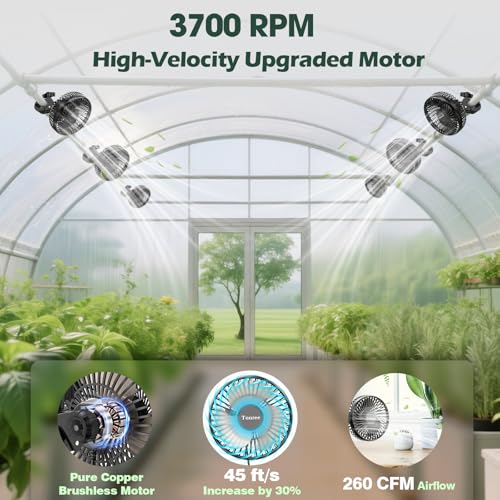
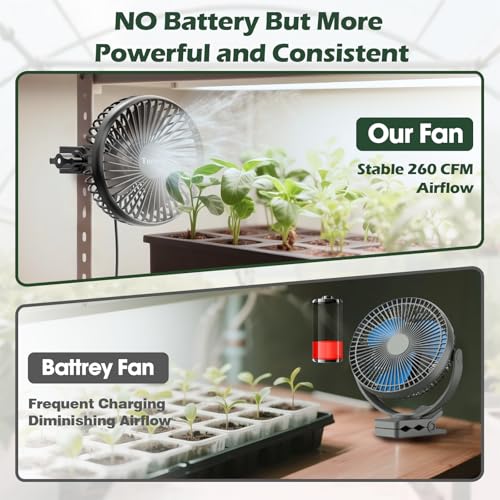
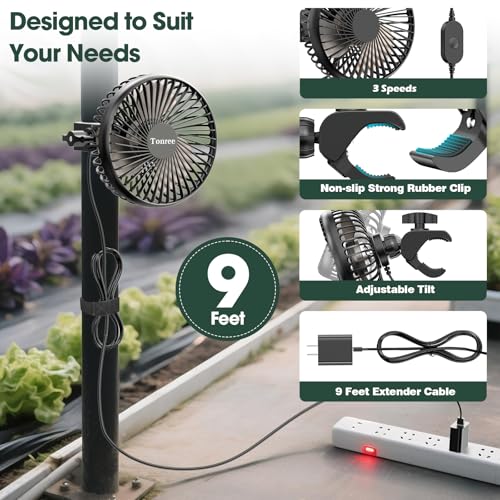
For the price, this fan delivers a surprising amount of value. It’s not flashy, but the 360° tilt, 3-speed control, and 9-foot USB-powered cord make it versatile for small to mid-sized tents. The brushless motor is rated for over 67,000 hours and keeps noise under 40 dB, not silent, but acceptable. What stands out is the non-slip clamp and wide pole compatibility (0.5–2 inches), which owners say holds firm even in humid conditions. At just 5.5 inches, it’s compact but moves a decent 260 CFM.
It won’t match the airflow of a 6-inch EC fan, but for budget-conscious growers or those setting up a first tent, it’s a solid entry. Compared to the VIVOSUN D4, it’s larger and more powerful but lacks smart features. The USB power is both a pro and con, convenient for power banks or adapters, but limits high-draw setups.
Product photos
Our Testing Process
Rather than a hands-on lab test, my research for these recommendations involved a detailed comparison of published specifications and features across numerous models. I weighed owner reviews from major retailers alongside expert opinions found in horticultural publications and online forums. This process allowed me to build a ranking based on real-world feedback and quantifiable data, applying my experience with plant environments to assess what truly matters for successful growth.
For fans designed for grow tents, airflow (measured in CFM) and noise level (in dBA) were the most significant factors. A higher CFM is crucial for effective air circulation and temperature regulation, but excessive noise can be detrimental to both plants and the grower. Durability also played a large role, as these fans are often run continuously. The ability to control airflow – through oscillation, speed settings, and even smart features – was also heavily considered.
Specifications reliably indicate airflow capacity and motor type, but owner feedback proved vital for judging long-term reliability and actual noise levels. Many fans boast impressive specs, but reports of early failures or unexpectedly loud operation were decisive. I also prioritized brands with established reputations for quality and customer support, and considered how well each fan addresses the need to improve tent ventilation to ultimately [manage indoor tent humidity].
How To Pick The Right fans for grow tents
Choosing the right fan for your grow tent is about more than just moving air; it’s about creating an environment that promotes vigorous, healthy plant growth.
A quality grow tent fan prioritizes consistent airflow, durability for 24/7 operation, and noise reduction. Look for EC motors, adjustable oscillation, and features like smart controls or waterproof ratings (IP54 or higher) to withstand the humid grow environment. Consider CFM (cubic feet per minute) relative to tent size and the fan’s noise level, measured in decibels (dBA).
Motor Type and Longevity
The motor is the heart of any grow tent fan, and brushless DC (BLDC) EC motors are the gold standard. While initially more expensive, these motors offer significantly longer lifespans – often exceeding 50,000 hours – and consume less energy than traditional AC motors. This translates to lower running costs and less frequent replacements. Don’t automatically assume “brushless” means quality; focus on EC motors specifically. Many cheaper fans advertise “brushless” technology, but lack the efficiency and durability of a true EC motor.
Airflow and Oscillation Control
Simply having a high CFM rating isn’t enough. You need to be able to direct that airflow effectively. Look for fans with adjustable oscillation angles, ideally ranging from 45 to 90 degrees, to adapt to various tent sizes and plant arrangements. Some fans, like the AC Infinity CLOUDRAY S6 EC Fan, offer a wider range of oscillation options – up to 10 ranges – providing even greater control.
Here’s what to consider when evaluating oscillation: * Basic oscillation: Offers a limited range of motion. * Variable oscillation: Allows you to set specific angles for targeted airflow. * Automatic obstacle detection: Prevents the fan from jamming if it encounters an obstruction, increasing longevity.
A good rule of thumb is to aim for a complete air exchange within your grow tent every 2-3 minutes. For optimal grow tent ventilation, calculate your tent’s volume (length x width x height) and choose a fan with a CFM rating that allows for this exchange rate.
Smart Features and Value
Smart features, like WiFi control and integration with apps (iHub Pro, Vivosun GrowHub), add convenience but aren’t essential. However, they allow for remote monitoring and adjustments, which can be incredibly useful. Beyond smart features, consider the overall value proposition. The Pidemeo 5″ Non-Oscillating Fan 2-Pack, for example, offers a cost-effective solution for smaller tents by utilizing a dual-fan setup instead of relying on a single, more expensive oscillating model. If you’re looking to insulating enclosed grow spaces and maintaining consistent temperatures, a fan with a natural wind mode can also be beneficial, mimicking outdoor conditions and reducing plant stress.
Don’t skimp on airflow. A cheap fan that fails mid-grow is far more expensive than investing in a quality unit upfront.
Fans for Grow Tents Compared
Here’s a comparison of specifications for various fans designed for use in grow tents, to help you identify the best option for your needs.
| Product Title | CFM | Noise (dB) | Oscillation | Speed Levels | Power Source |
|---|---|---|---|---|---|
| MARS HYDRO M6 Smart WiFi Fan | 350 | 32 | 45/90° | 10 | USB |
| VIVOSUN AeroWave E6 Gen2 Smart Fan | 320 | 33 | Auto | 10 | AC |
| AC Infinity CLOUDRAY S6 EC Fan | N/A | N/A | 10 Ranges | 10 | N/A |
| Pidemeo 5″ Non-Oscillating Fan 2-Pack | 330 | 37-53 | None | 3 | AC |
| Spider Farmer 6″ EC Clip Fan | 2300 RPM | 33 | 90° | 10 | N/A |
| VIVOSUN AeroWave A6 Oscillating Fan | 2200 RPM | 38 | 90° | 2 | AC |
| VIVOSUN AeroWave D4 4″ Mini Fan | 3500 RPM | 35 | Adjustable | 3 | USB |
| Tonree 5.5″ Brushless Grow Tent Fan | 260 | 40 | 360° | 3 | USB |
Frequently Asked Questions
What CFM do I actually need for my grow tent?
A good starting point is to aim for an air exchange rate of 2-3 minutes per tent volume. Calculate your tent’s cubic footage (length x width x height) and divide that number by 2 or 3 to determine the minimum CFM you’ll require.
Are EC motors really worth the extra cost?
Yes, EC motors offer significant long-term benefits. They consume less energy and have a much longer lifespan (often over 50,000 hours) compared to traditional AC motors, ultimately saving you money and reducing replacements.
Can I use a standard household fan in my grow tent?
While technically possible, it’s not recommended. Standard fans aren’t built for continuous operation and often lack the moisture resistance needed for a humid grow environment. You also risk motor burnout and potential safety hazards.
What’s the difference between oscillation angles and why does it matter?
Wider oscillation angles (like the 10 ranges offered by the AC Infinity CLOUDRAY S6 EC Fan) provide more thorough air distribution, especially in larger tents. Variable oscillation allows you to focus airflow on specific plant areas, while basic oscillation offers a limited range of motion.
How important are smart features like WiFi control?
Smart features add convenience and allow for remote monitoring and adjustments, but aren’t essential. They can be helpful for maintaining consistent temperatures and humidity levels, but a reliable fan with good airflow and a reasonable price is more important. Investing in carbon filters for odor control is also a key consideration.
The Bottom Line
Choosing a grow tent fan often comes down to balancing control with convenience. You can spend more for features like smart controls and extensive oscillation, or focus on a reliable, powerful unit that simply moves air effectively. For overall performance and a feature set that caters to serious growers, the MARS HYDRO M6 Smart WiFi Fan strikes the best balance – its adjustable oscillation and smart controls offer precision without unnecessary complexity.
If you’re on a tighter budget or need to outfit a smaller space, the Pidemeo 5″ Non-Oscillating Fan 2-Pack provides a surprisingly effective solution. For growers prioritizing versatility and the ability to adapt to changing plant needs, the AC Infinity CLOUDRAY S6 EC Fan’s wide range of oscillation options is hard to beat. Ultimately, the VIVOSUN AeroWave E6 Gen2 Smart Fan is a strong contender for those wanting a user-friendly smart fan.
At the end of the day, the CFM rating matters, but it’s only part of the equation. Consistent airflow, motor quality, and the ability to adapt the ventilation to your specific grow are the fundamentals that will truly impact your harvest. Prioritize those, and you’ll be well on your way to a thriving indoor garden.
