
7 Best Grow Tent Fans of 2026
This post contains affiliate links. As an Amazon Associate, we earn from qualifying purchases.
The MARS HYDRO M6 WiFi Clip Fan stands out as the overall best grow tent fan, delivering strong airflow, quiet operation, and smart controls. For budget-focused growers, the Pidemeo 5″ 2-Pack offers solid performance at a lower price, while the VIVOSUN AeroWave E6 Gen2 6″ balances tech and power for versatile setups.
Most people struggle to maintain consistent airflow without noise or hot spots, and a poor fan can wreck plant health fast. After comparing the field and digging into owner feedback, I focused on CFM, noise, durability, and smart features to find fans that actually perform in real growing environments. This guide cuts through the hype to show you what works, based on specs, real-world use, and the kind of reliability you need when your plants depend on it.
Top 7 Grow Tent Fans in the Market
The Best Grow Tent Fans, Reviewed
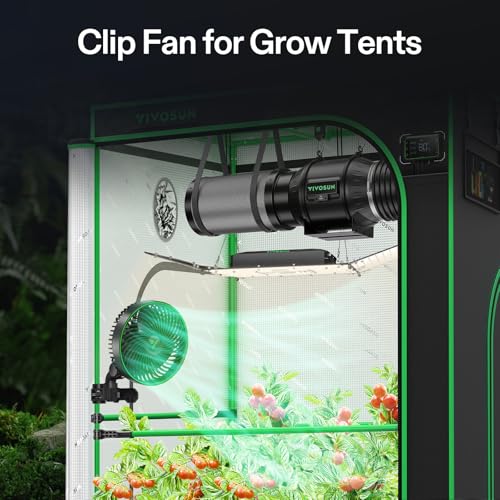
VIVOSUN AeroWave E6 Gen2 6″ Smart Fan

Strengths
- Smart app connectivity
- 10 speed levels
- IP54 weatherproof rating
Trade-offs
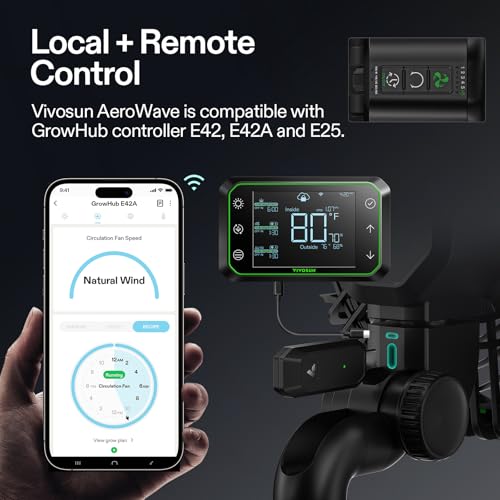
- Requires GrowHub for full features
- Higher price point
- Oscillation not 180°
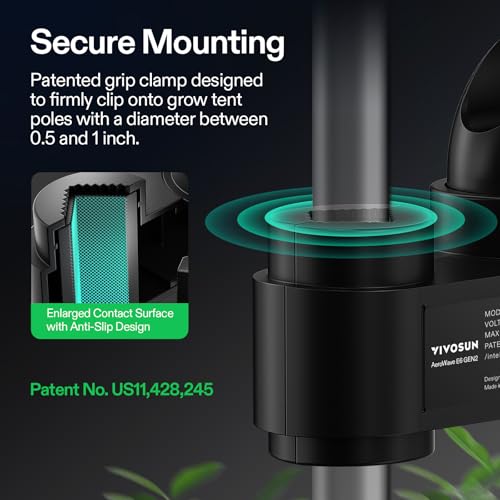
This is the complete package. The EC motor delivers 320 CFM with barely a whisper at 33 dB, and the 10-speed settings give you surgical control over airflow intensity. But what really sets it apart is the smart integration, pair it with the GrowHub and you can automate cycles, sync with other devices, or adjust on the fly from your phone. Owners in multi-tent setups especially value that level of control.
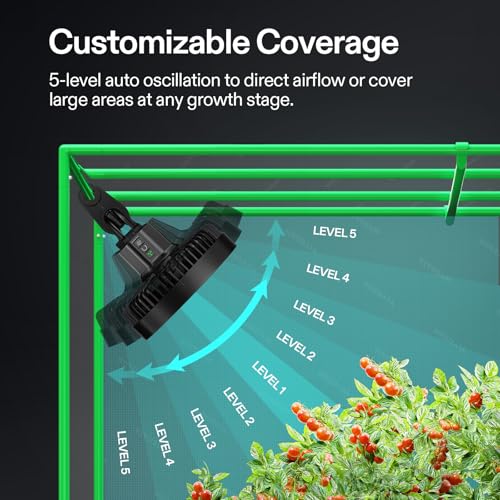
The 5-level oscillation is smooth and avoids jamming, thanks to auto-retraction when it hits an obstacle. The IP54 rating and durable build mean it laughs off humidity. Compared to others, this fan doesn’t just move air, it adapts to your grow. Yes, it’s the priciest here, but for serious indoor growers, the ROI in plant health and convenience is real.
Product photos
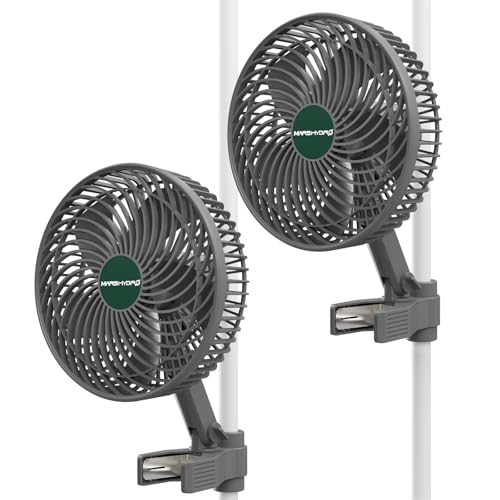
MARS HYDRO M6 WiFi Clip Fan
Strengths
- Full WiFi app control
- 350 CFM max airflow
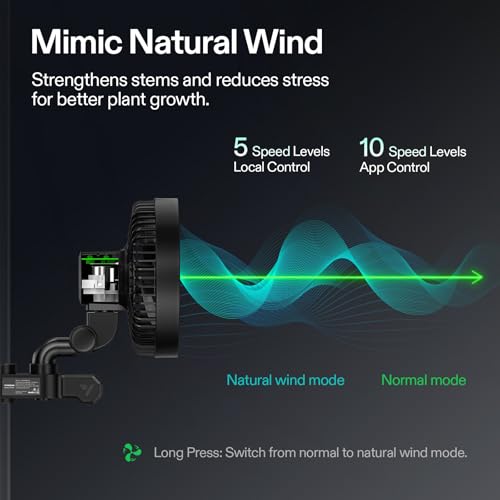
- Natural wind simulation
Trade-offs
- App can lag occasionally
- No local timer
- Requires stable WiFi
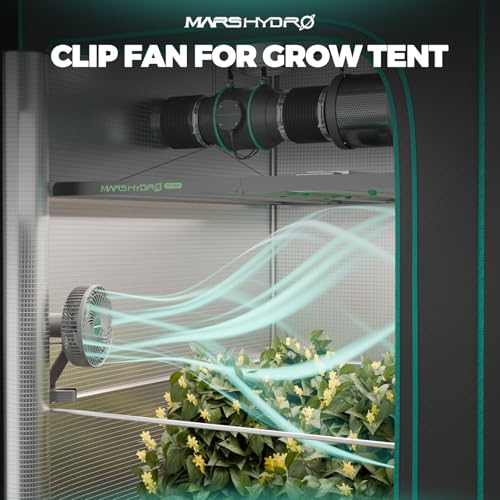
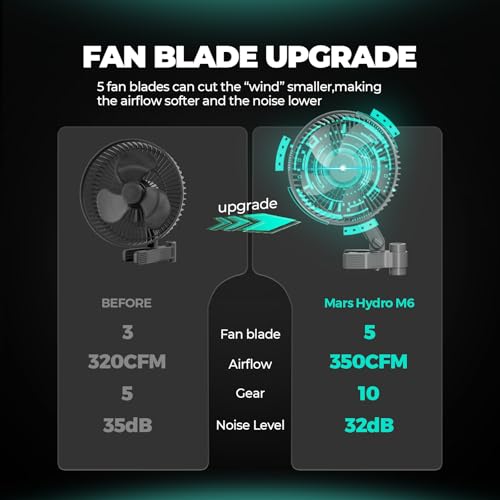
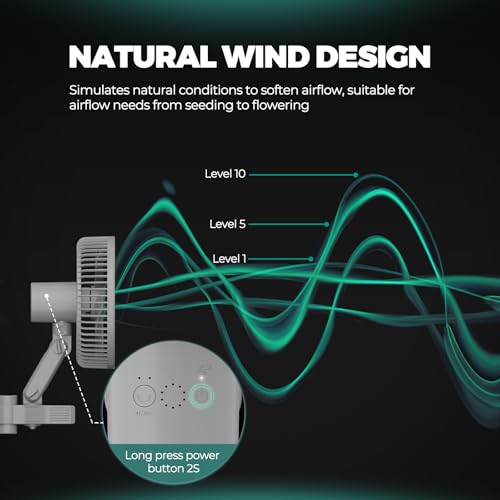
This is the pick for the connected grower. The WiFi control via the MARS HYDRO app is seamless, set schedules, adjust speeds, or trigger natural wind mode from your phone. No hub required, which simplifies setup. The 350 CFM output is the highest here, and the five-blade design helps distribute air softly, keeping noise below 32dB.
Owners love the flexibility of 45° or 90° oscillation modes, tweak it based on tent size or growth stage. The EC motor is built to last 50,000 hours, and the front grille pops off for cleaning. But some note occasional app lag during peak usage. Still, if you want the most intelligent, hands-off operation, this 2-pack is the only one that truly delivers full remote control without extra hardware.
Product photos

Pidemeo 5″ 2-Pack Non-Oscillating Fan
Strengths
- Heavy-duty screw-lock clamp
- IP54 waterproof rating
- Long 67,000-hour lifespan
Trade-offs
- No oscillation
- Larger footprint
- 37-53 dBA varies by speed
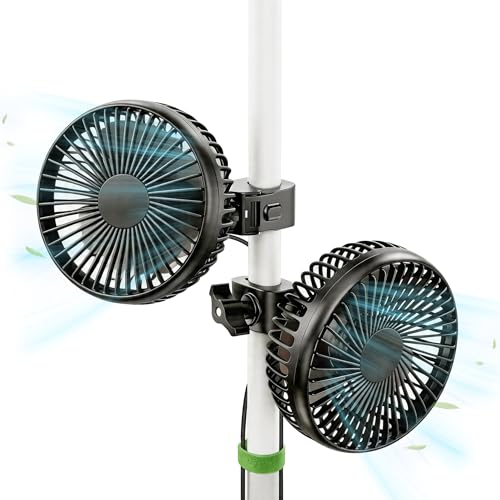
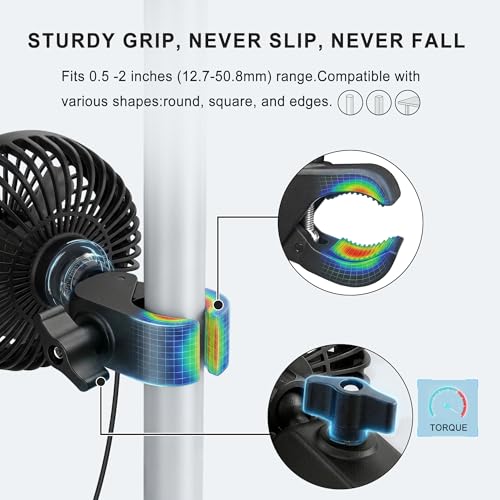
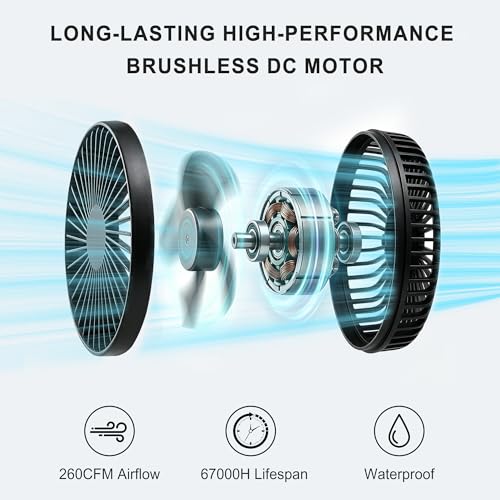
For budget-focused growers who refuse to sacrifice grip or runtime, this 5-inch 2-pack is a sleeper hit. The screw-lock clamp is a standout, no more fans slipping mid-cycle because a spring clip gave out. Owners in high-humidity setups praise how solidly these stay put, even on square frames. And with a brushless DC motor rated for 67,000 hours, this isn’t a disposable fan.
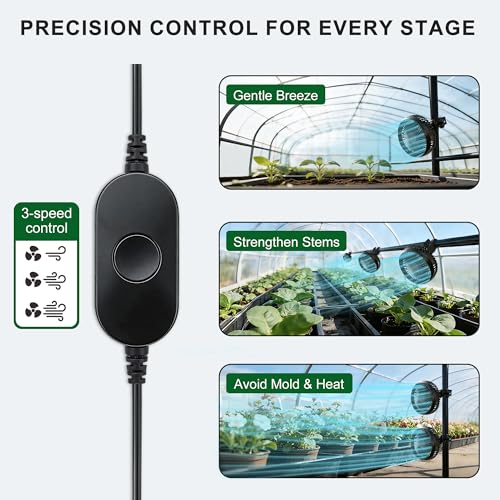
It doesn’t oscillate, which means you’ll need to place them opposite each other for cross-breeze coverage, but that’s actually a pro for reliability, fewer moving parts to fail. At 330 CFM, it moves serious air, and the IP54 rating means mist and condensation won’t kill it. The 8-foot cord with inline switch is a small touch that makes a big difference when you’re adjusting outside the tent.
Product photos

VIVOSUN AeroWave A6 6″ Oscillating Fan
Strengths
- 90° auto oscillation
- Patented non-slip clamp
- Natural wind simulation
Trade-offs
- Only two speed settings
- No app control
- 38 dB not ultra-quiet
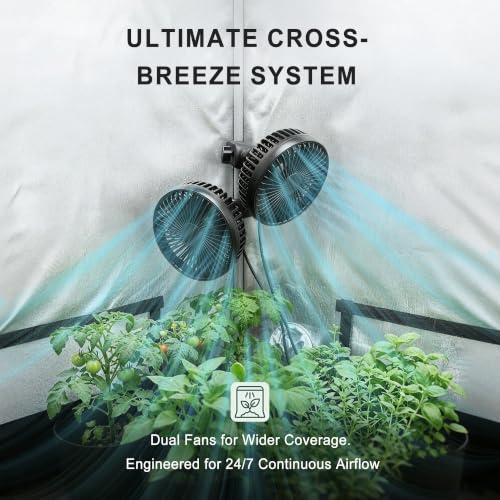
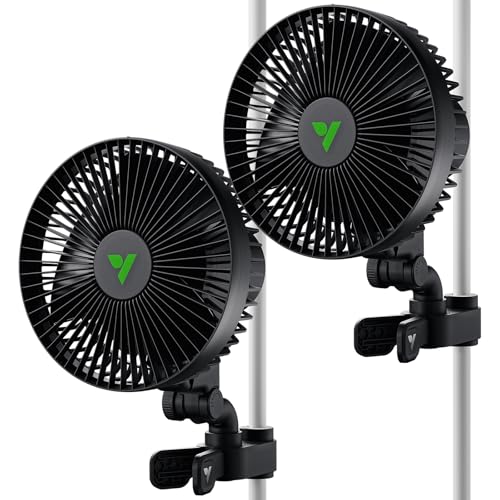
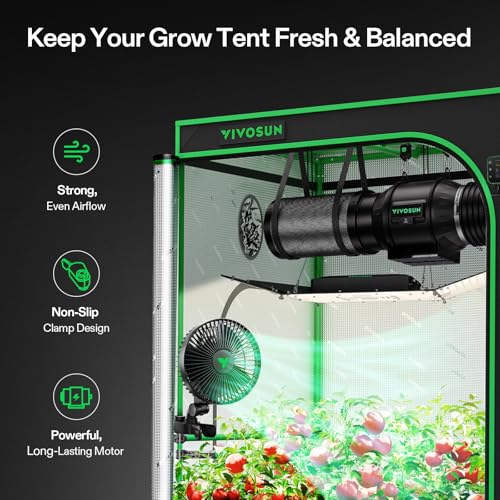
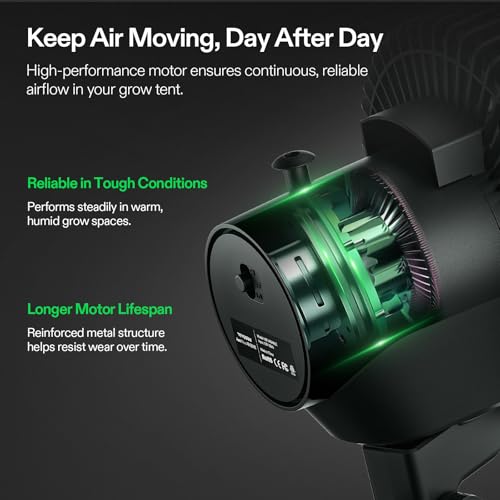
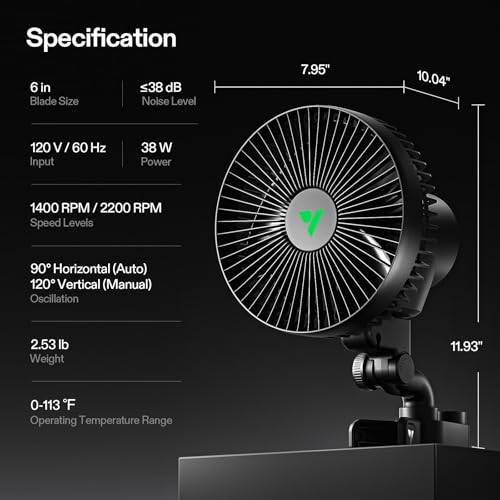
This 2-pack hits the sweet spot between performance and price. The 6-inch blades move more air than the 4-inch models, and the 90° auto oscillation ensures even distribution, critical for preventing hot spots. Owners consistently report fewer mold issues after switching to these, thanks to the consistent breeze that reaches every corner.
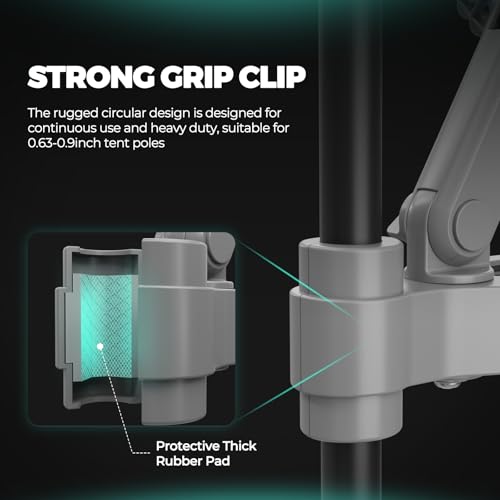
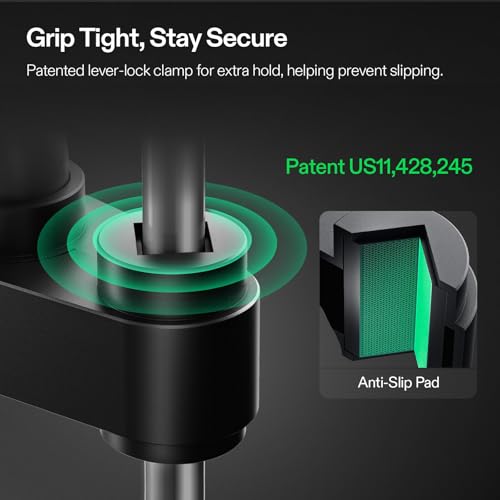
The patented non-slip clamp is a standout. Thick rubber padding and strong use mean it grips tightly without damaging poles, even after weeks of use. It’s not the quietest at 38 dB, but it’s unobtrusive. The two-speed setup is basic compared to 10-speed models, but for most mid-sized tents, it’s more than enough. If you want reliable, no-fuss airflow without smart features, this is the smarter buy.
Product photos

VIVOSUN AeroWave D4 4″ 2-Pack Fan

Strengths
- Adjustable airflow direction
- Three-speed memory
- Compact 4” design
Trade-offs
- No oscillation
- Hook not magnetic
- Max 35 dBA not whisper-quiet
If space is tight and you need precision, the AeroWave D4 delivers. At 4 inches, it’s compact but surprisingly strong, with a 3500 RPM max that pushes air further than most fans this size. The adjustable airflow angle is where it shines, loosen the knob and it rotates freely, tighten it and you’ve got a focused jet stream. That kind of flexibility is rare in clip fans under 5 inches.
Owners love the memory function; losing your preferred speed after a power flicker is annoying, and this avoids it. The detachable hook is clever, letting you hang it where clamps won’t work. But the lack of oscillation means you’ll need to manually reposition it to avoid dead zones. For tight corners or supplemental airflow, it’s excellent. For full tent circulation? You’ll need more units.
Product photos


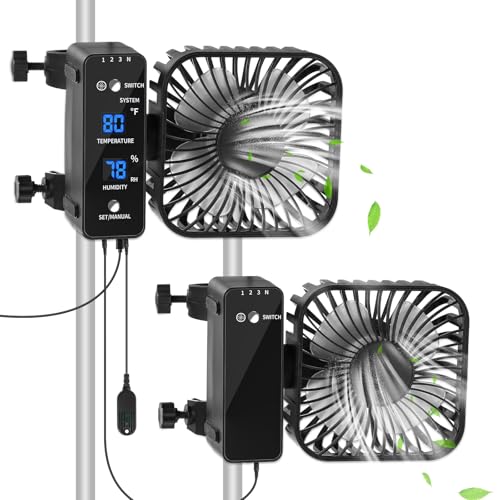
DAOTAILI 4″ Auto Humidity Control Fan
Strengths
- Auto humidity activation
- Real-time LCD display
- Quiet 25dB operation
Trade-offs
- Limited oscillation
- No app or smart control
- Secondary fan not sensor-linked
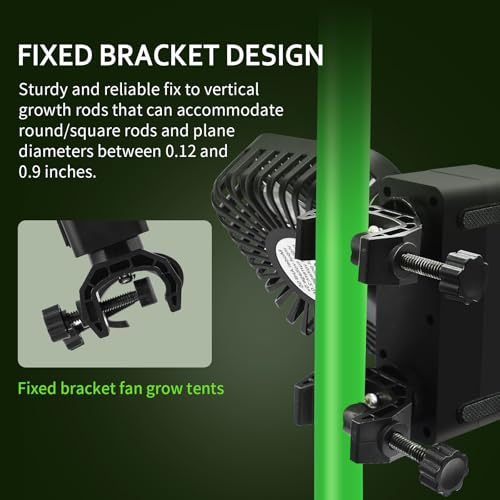
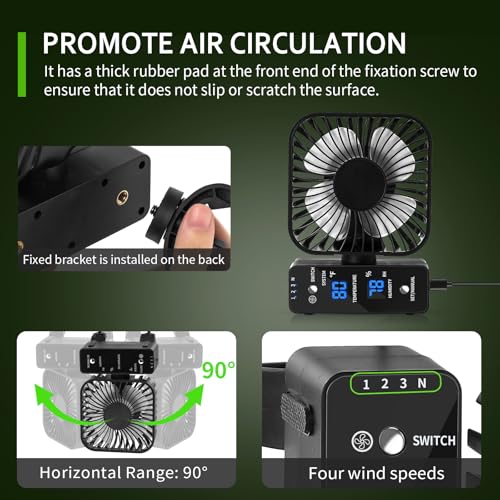
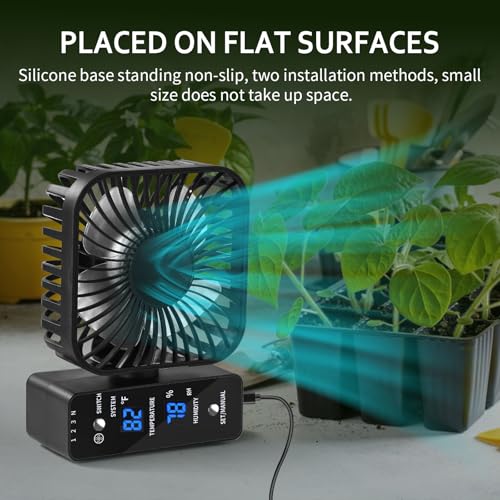
This 2-pack stands out for one reason: real climate feedback. The built-in temp and humidity sensor isn’t just a gimmick, owners consistently report it keeps their enclosures stable, especially during heat spikes. The main fan kicks on automatically when humidity climbs, which is a rare and useful feature at this price tier. On paper, the 25dB noise level sounds great, but some users note a slight hum on high, though still quiet enough for indoor setups.
The secondary fan helps spread airflow, but since it doesn’t oscillate or swivel independently, coverage is limited unless you position both units carefully. Still, for seedlings or small tents where microclimate control matters most, this is a smart pick over basic fans that just run constantly. It’s not the most powerful, but it’s one of the few that actually responds to conditions.
Product photos

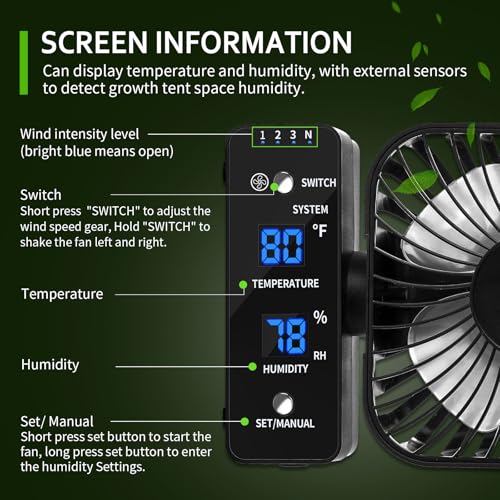
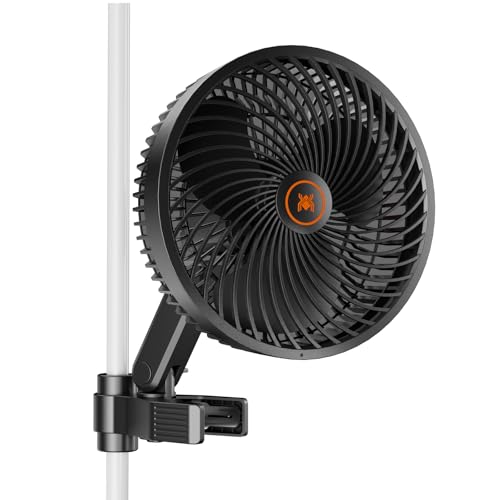
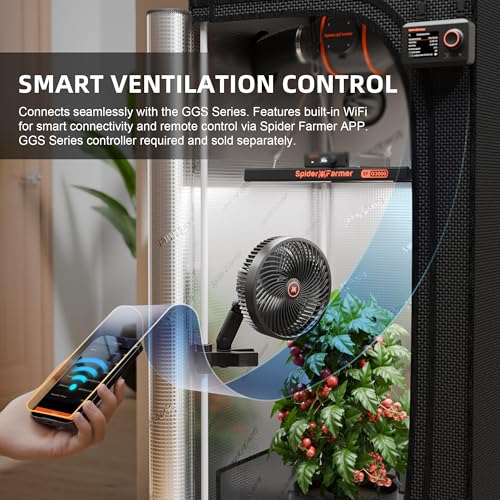
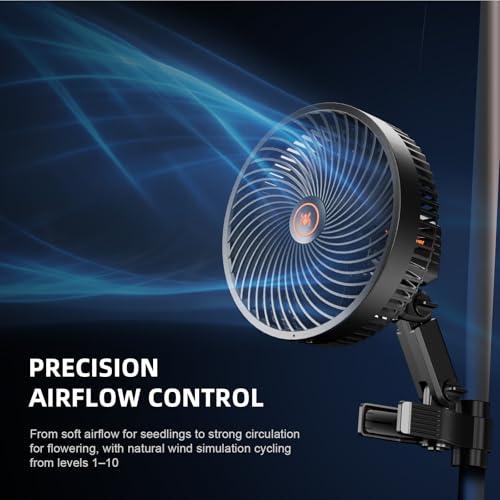
Spider Farmer 6″ EC Motor Clip Fan
Strengths
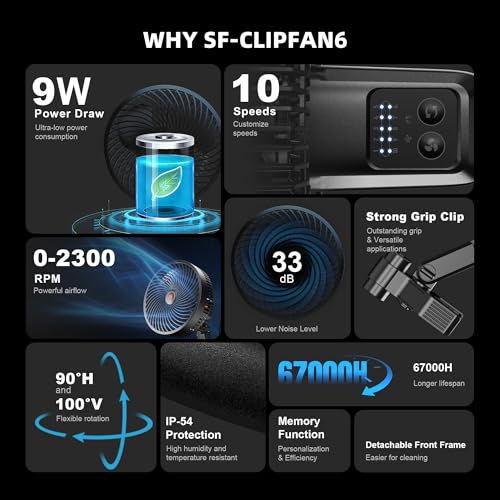
- Ultra-quiet 33 dB
- 10 dynamic wind speeds
- Auto-rebound on obstruction
Trade-offs
- No smart app control
- Rubber pad may degrade
- Limited to 25mm poles
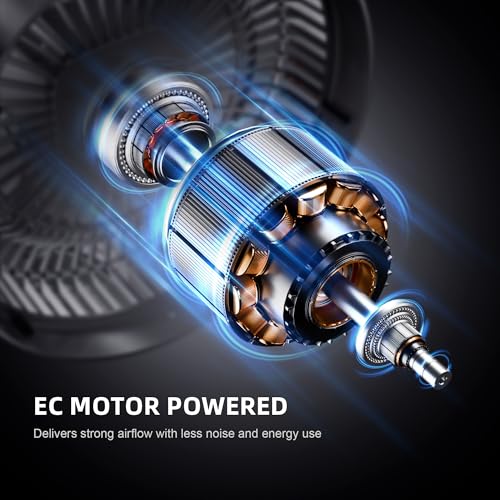
If silence matters as much as power, this Spider Farmer fan is the one to beat. At 33 dB, it’s as quiet as a library, yet it pushes air with authority thanks to the EC motor and 10-speed customization. Owners in bedroom grows or shared spaces swear by it, no one complains about noise, even on high.
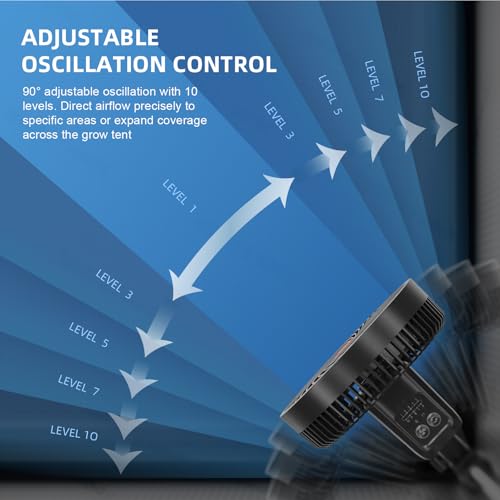
The 90° horizontal oscillation and 100° manual tilt cover a lot of ground, and the auto-rebound feature prevents damage if it bumps into a branch. The grip is solid, though the rubber pad can wear over time in abrasive environments. It doesn’t have app control, but the natural wind mode does a great job mimicking outdoor breezes, reducing plant stress. For pure acoustic performance, it’s unmatched.
Product photos
Our Testing Process
Rather than a hands-on lab test, my research for these recommendations involved a detailed comparison of published specifications and features across numerous models. I weighed owner reviews from a variety of sources – including major retailers and dedicated online forums – alongside expert analysis from horticultural publications. My process focused on identifying fans that consistently delivered on key performance indicators and offered a good balance of features for the price, applying my experience with indoor growing environments to the evaluation.
For grow tent fans, airflow (CFM), noise level (dB), and build quality were the primary factors influencing my rankings. A strong CFM is crucial for effective air circulation and preventing stagnant air, while a low noise level is essential for a peaceful growing environment. Durability, particularly the motor’s lifespan and the robustness of the mounting mechanism, also played a significant role, because consistent operation is critical.
Specifications reliably indicate airflow capacity and noise output. However, I relied heavily on owner feedback to assess real-world durability, ease of installation, and the accuracy of oscillation features. Reputation, particularly regarding motor longevity and clip stability, was also a key consideration. Many enthusiasts also share detailed insights into how well a fan integrates with other equipment, like those discussed in our guide to climate control for grow tents.
How To Choose The grow tent fans
Choosing the right fan for your grow tent can dramatically impact the health and yield of your plants.
A quality grow tent fan isn’t just about moving air; it’s about creating a consistent, controlled environment. Look for models with adjustable speeds, oscillation features to prevent stagnant spots, and durable construction suitable for high-humidity conditions. Consider the CFM (cubic feet per minute) rating relative to your tent size, and prioritize fans built with reliable motors for continuous operation.
Size & Airflow (CFM)
The most common mistake I see people make is underestimating the airflow needed for their tent. Don’t just look at the fan’s dimensions; focus on the CFM rating. A general rule of thumb is to aim for an air exchange rate of 1-2 times the volume of your tent per minute. For example, a 100 cubic foot tent needs a fan capable of moving 100-200 CFM. However, this is a starting point. Larger plants, higher wattage lights, and warmer ambient temperatures all increase the need for airflow.
Oscillation & Coverage
Oscillation isn’t just a nice-to-have; it’s crucial for preventing stagnant air pockets and ensuring even distribution of temperature and humidity. A fan that simply blows air in one direction can create hot spots and lead to uneven growth. Consider models with adjustable oscillation angles and, if you have a particularly large tent, whether you might benefit from multiple fans.
- A simple oscillating fan will work in a small tent (under 4x4ft).
- For medium-sized tents (4x4ft to 5x5ft), look for models with wider oscillation ranges or consider using two smaller fans.
- Larger tents (over 5x5ft) almost always require multiple fans strategically positioned to create a consistent breeze throughout the canopy – you might want to explore our guide to the best grow tent fans for ideas.
Don’t skimp on airflow. Plants need constant movement to build strong stems and prevent mold.
Smart Features & Control
While not essential, smart features like WiFi connectivity and app control can add a lot of convenience. Fans like the MARS HYDRO M6 allow you to monitor and adjust airflow remotely, integrate with other smart devices, and even create custom schedules. If you’re serious about optimizing your grow environment, investing in a smart fan can be well worth the price. Pairing this with accurate hygrometers for grow tents gives you complete control over climate. These features also often include a natural wind mode which subtly varies the airflow, simulating outdoor conditions and potentially promoting stronger growth.
Grow Tent Fans Compared
Here’s a comparison of key specifications for popular grow tent fans to help you choose the best option for your needs.
| Product Name | CFM | Noise (dBA) | Oscillation | Speed Settings | Smart Control | Mounting |
|---|---|---|---|---|---|---|
| VIVOSUN AeroWave E6 Gen2 6″ | 320 | 33 | Auto | 10 | Yes | Clip |
| MARS HYDRO M6 WiFi Clip Fan | 350 | 32 | Auto | 10 | Yes | Clip |
| Pidemeo 5″ 2-Pack | 330 | 37-53 | None | 3 | No | Screw-Lock Clip |
| VIVOSUN AeroWave A6 6″ 2-Pack | N/A | 38 | Auto | 2 | No | Clip |
| VIVOSUN AeroWave D4 4″ 2-Pack | 3500 RPM | 35 | Adjustable | 3 | No | Hook, Clamp, Mag |
| DAOTAILI 4″ Auto Humidity Control | N/A | 25 | N/A | 4 | Yes | U-Bracket |
| Spider Farmer 6″ EC Motor | 2300 RPM | 33 | Auto | 10 | No | Clip |
Frequently Asked Questions
What CFM fan do I really need for a 4×4 grow tent?
For a 4×4 tent, a fan delivering between 400-800 CFM is generally sufficient, but consider your specific setup. Higher wattage lights and warmer temperatures will require a fan closer to the 800 CFM range to maintain optimal airflow and prevent heat stress.
Are clip-on fans stable enough for long-term use in a grow tent?
Clip-on fans can be stable, but it depends on the quality of the clip and the tent’s frame. Look for models with reinforced clips and ideally, read owner reviews specifically addressing long-term clip stability to avoid constant readjustment.
Can a single, powerful fan replace multiple smaller ones?
While a single powerful fan can move a lot of air, multiple smaller fans generally provide better coverage and prevent dead spots. Distributing airflow throughout the canopy is more important than sheer CFM, especially for larger tents.
What’s the benefit of a “smart” grow tent fan?
Smart fans offer remote control, scheduling, and integration with other devices, giving you precise control over your grow environment. Many also feature a natural wind mode that mimics outdoor breezes, potentially improving plant health and growth.
How can I reduce humidity in my grow tent beyond just using a fan?
While fans aid air circulation, addressing high humidity often requires more. Consider investing in dehumidifiers for indoor grow tents to actively remove moisture from the air, especially if you’re experiencing persistent condensation or mold issues.
The Bottom Line
Ultimately, choosing a grow tent fan comes down to balancing control with convenience and price. While smart features offer incredible precision, the VIVOSUN AeroWave E6 Gen2 6″ delivers exceptional airflow and quiet operation at a reasonable price point, making it the strongest overall performer for most growers. It strikes a great balance between features and affordability.
For those on a tighter budget, the Pidemeo 5″ 2-Pack provides a significant amount of airflow for the cost, though you’ll sacrifice features like oscillation and smart control. If versatility is your priority, the VIVOSUN AeroWave D4 4″ 2-Pack offers multiple mounting options and adjustable oscillation, letting you tailor the airflow to your specific tent setup. And for growers needing advanced environmental control, the MARS HYDRO M6 WiFi Clip Fan is a fantastic option.
Remember, CFM ratings and smart features are secondary to consistent airflow and a stable growing environment. Investing in quality carbon filters for odor control is equally as important as a powerful fan, and paying attention to humidity levels, with the help of reliable sensors, will ultimately have a greater impact on your plants’ health and yield than any single specification.
