
7 Best Grow Tent Air Conditioners of 2026
This post contains affiliate links. As an Amazon Associate, we earn from qualifying purchases.
The AC Infinity TERRAFORM 8 stands out as the best overall grow tent air conditioner for its precision climate control and smart integration, while the Garvee 10000BTU Portable AC is a solid budget-friendly pick with strong cooling and dehumidifying power. For smaller spaces, the BougeRV PC35 offers surprising versatility in a compact package.
If you’ve ever lost a crop to heat stress or humidity swings, you know how quickly things can go sideways in a grow tent. Most portable ACs aren’t built for the unique demands of indoor growing, where stability is everything.
This guide cuts through the noise, focusing on models that deliver reliable cooling, effective moisture control, and smart features that make management easier. I researched each unit based on specs, real-world feedback, and how well it meets the needs of serious growers.
Top 7 Grow Tent Air Conditioners in the Market
The Best Grow Tent Air Conditioners, Reviewed
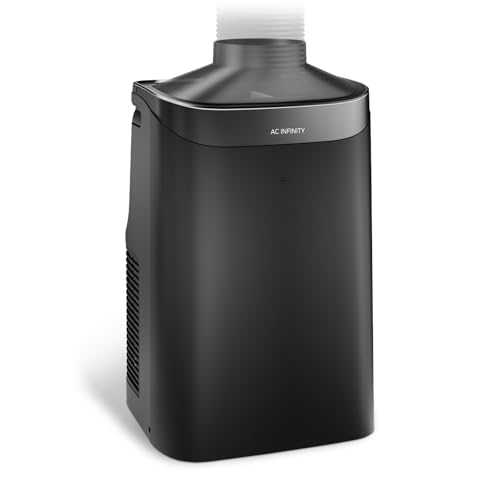
AC Infinity TERRAFORM 8 Plant Climate System
Strengths
- AI climate control
- Self-evaporative
- Single-duct versatility
Trade-offs
- Expensive
- Requires controller for full features
- Complex setup
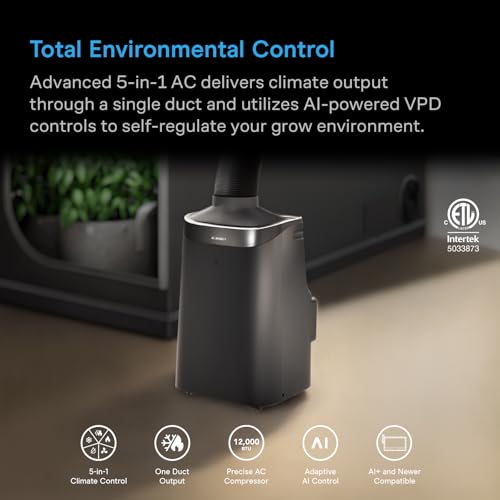
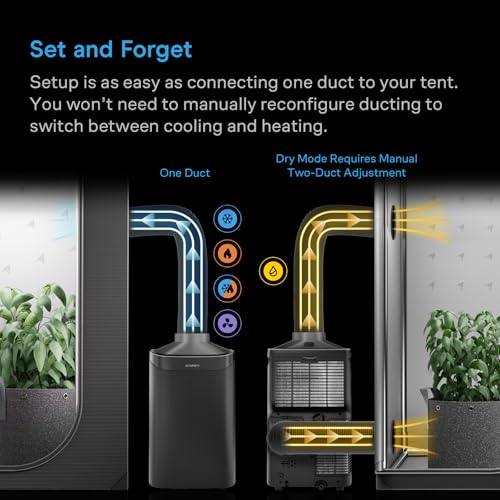
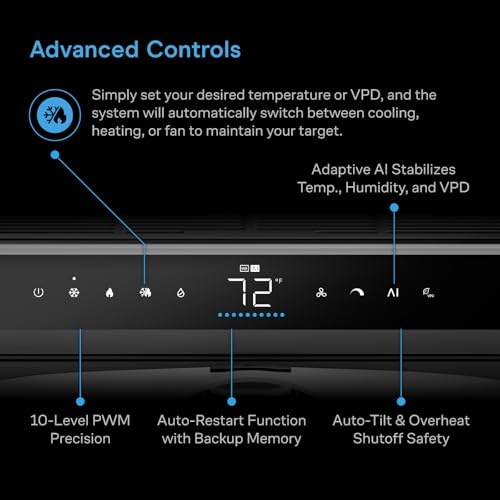
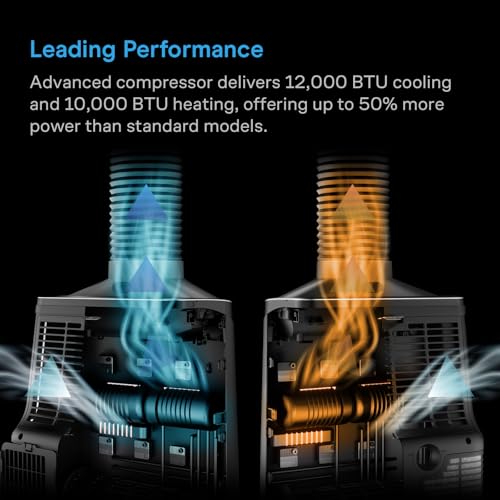
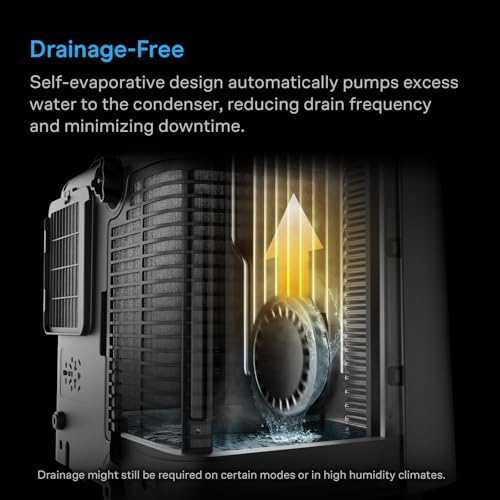
If you’re running a serious grow operation, the TERRAFORM 8 is the closest thing to a set-and-forget climate brain. With 12,000 BTU and AI-driven VPD control, it doesn’t just cool, it heats, dehumidifies, and auto-switches between modes using a single duct. That’s rare. Most units force you to choose cooling or heating, but this one adapts dynamically, which owners say keeps their plants stress-free during light cycle shifts. The self-evaporative design also means less draining, a big plus during long grows.
When paired with AC Infinity’s Controller AI+, it unlocks automations and real-time tracking, making it a top-tier pick for tech-forward growers. It’s pricier than basic portables, but compared to the Garvee 10,000BTU units, it offers smarter integration and better long-term stability. I’d pick this over raw power any day if you’re growing high-value crops.
Product photos
VIVOSUN AeroLush C08 Smart Air Conditioner
Strengths
- VPD monitoring
- Smart ecosystem sync
- Heating included
Trade-offs
- App required for full use
- Limited to VIVOSUN users
- Average noise level
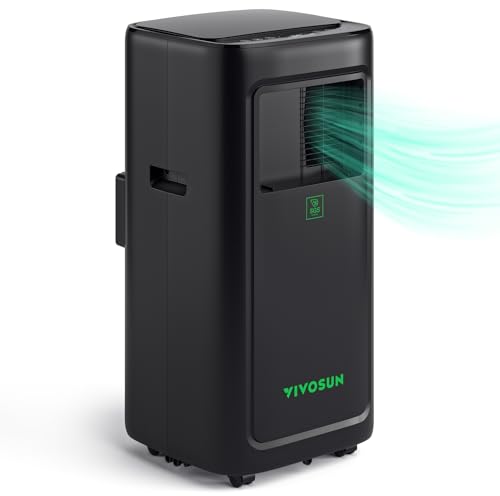
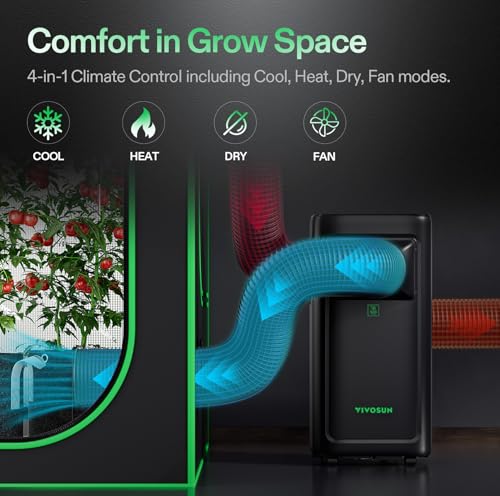
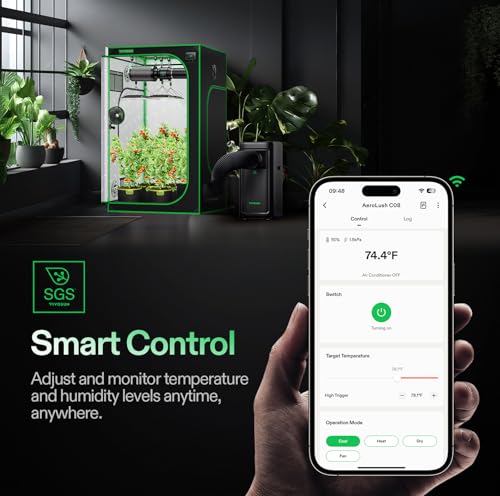
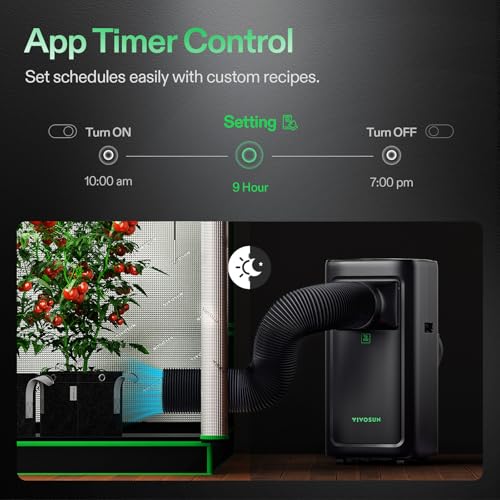
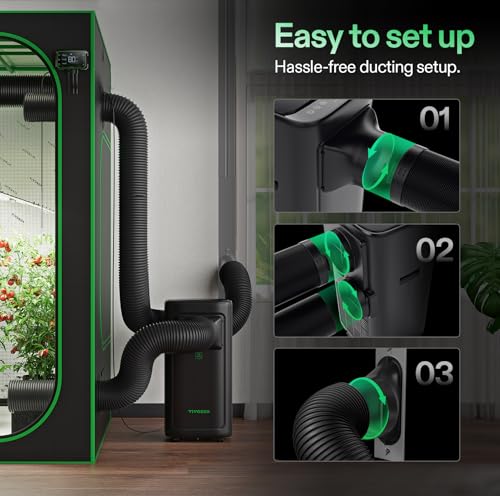
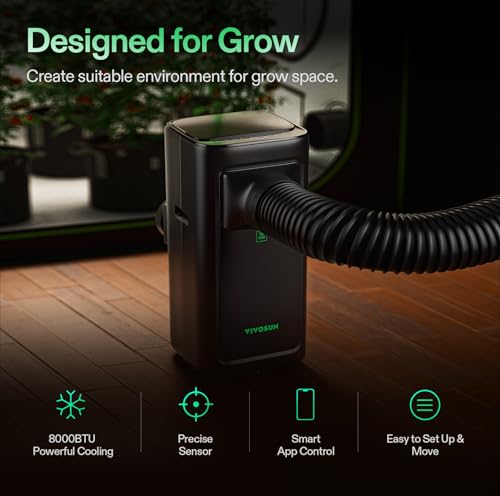
The VIVOSUN AeroLush C08 leans hard into smart growing, and it shows. With 8,000 BTU and a Sensirion sensor for real-time VPD monitoring, it’s built for precision. The 4-in-1 function, cooling, drying, heating, fan, means it adapts year-round, and the app integration with the VIVOSUN ecosystem lets you sync it with lights, exhausts, and timers. Owners who run automated grows love that it auto-adjusts based on humidity and temp data.
It’s not the most powerful, but for a 5×5 tent, it’s more than capable. Compared to the EUHOMY, it offers better intelligence and tighter feedback loops. If you’re already in the VIVOSUN ecosystem, this is the logical upgrade. For me, the smart control edge makes it stand out, even if the raw specs look similar on paper.
Product photos
Garvee 10000BTU Portable AC Unit
Strengths
- High BTU output
- Strong dehumidifier
- Energy efficient
Trade-offs
- No heating mode
- No app connectivity
- Heavy unit
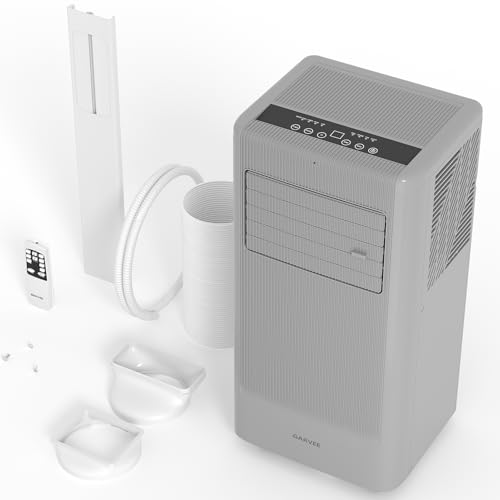
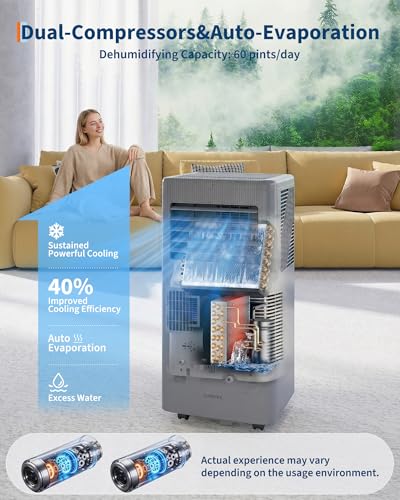
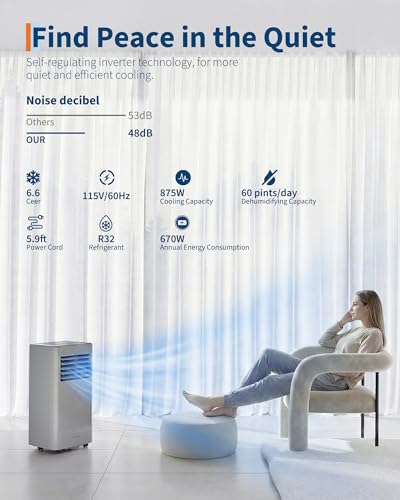
When cooling power is the main concern, the Garvee 10,000BTU model delivers. With ASHRAE-rated 10,000 BTU and a CEER of 6.7, it’s one of the most powerful portables here, capable of handling spaces up to 450 sq ft. Owners highlight its fast cooldown and strong dehumidification, up to 60 pints per day, which helps in humid grow environments. The remote and 24H timer make scheduling easy, and at 48dB, it’s impressively quiet for its size.
It doesn’t have smart app control like the ZAFRO or VIVOSUN units, but it doesn’t need to if you’re prioritizing raw output. Compared to the BougeRV PC35, it’s in a different league. But it’s also bulkier and lacks heating. For hot, muggy climates where you need brute-force cooling, this is the smarter buy.
Product photos


Garvee 8000BTU 3-in-1 Portable Air Conditioner
Strengths
- Affordable
- Quiet operation
- Easy setup
Trade-offs
- No heating mode
- No app control
- Basic design
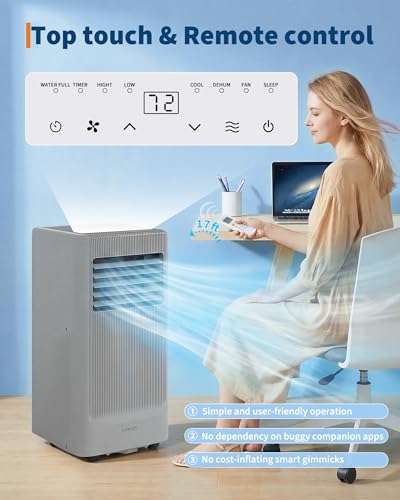
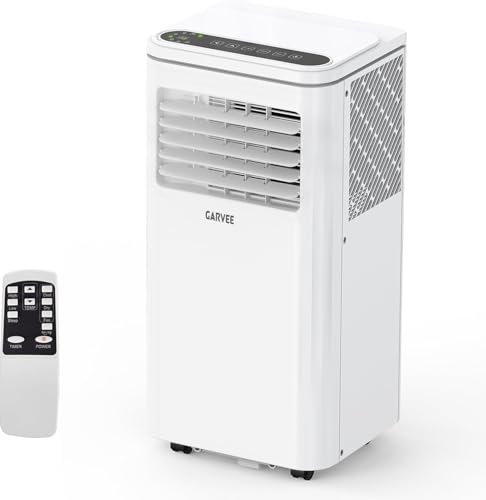
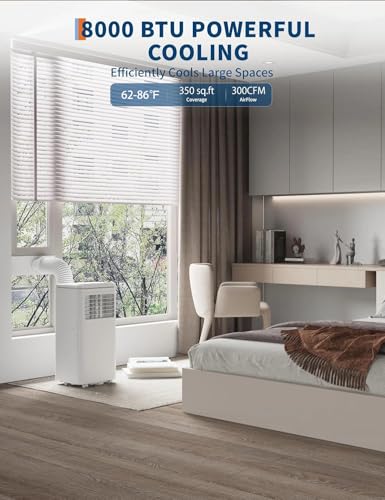
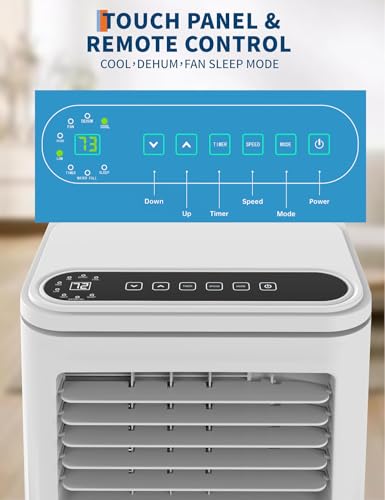
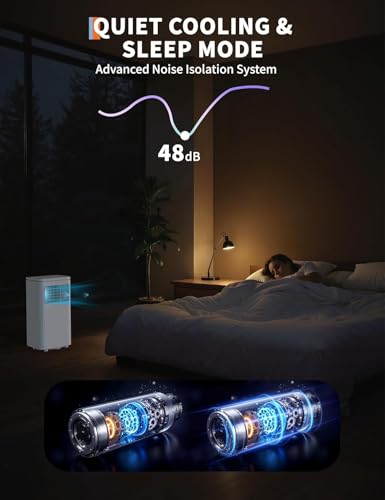
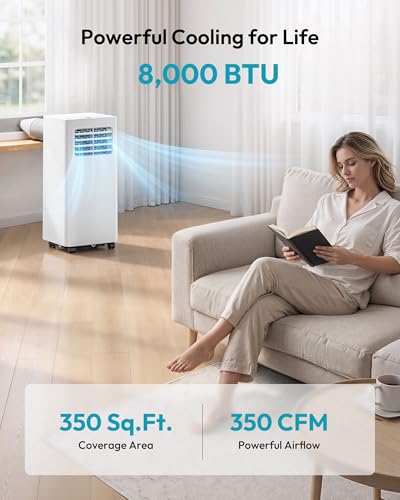
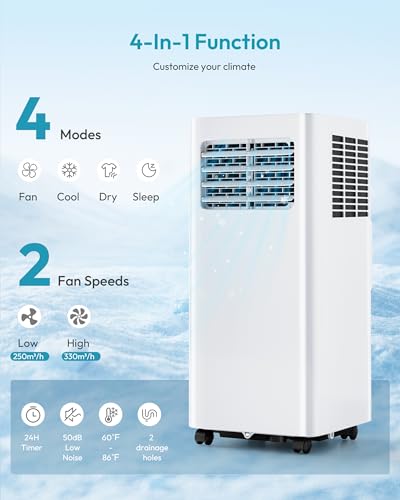
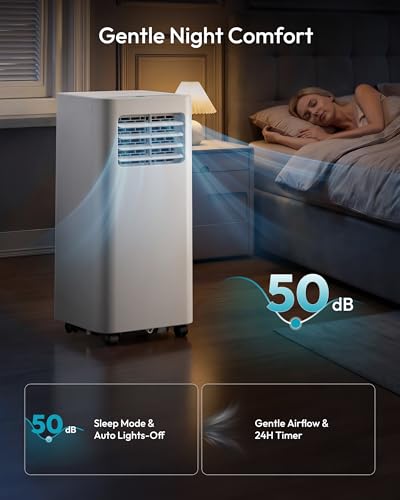
The Garvee 8,000 BTU hits a sweet spot between cost and performance, which is why it’s labeled ‘Best Value’. It’s not flashy, but it’s reliable: self-evaporating, quiet under 50dB, and easy to move with smooth casters. It handles rooms up to 350 sq ft, and owners say it cools consistently in moderate climates. The 3-in-1 function covers cooling, dehumidifying, and fan modes, enough for most small grows or spare rooms.
Compared to the EUHOMY 8,000BTU, it lacks app control but matches it in core functionality. It doesn’t offer heating, so you’ll need a separate unit if temps drop. But for someone setting up a budget-friendly tent or spare room grow where smart features aren’t a priority, this is a no-nonsense workhorse.
Product photos

BougeRV PC35 Tent Air Conditioner
Strengths
- App control
- Ultra-portable
- 5-in-1 function
Trade-offs
- Low cooling capacity
- Not for grow tents
- Limited range
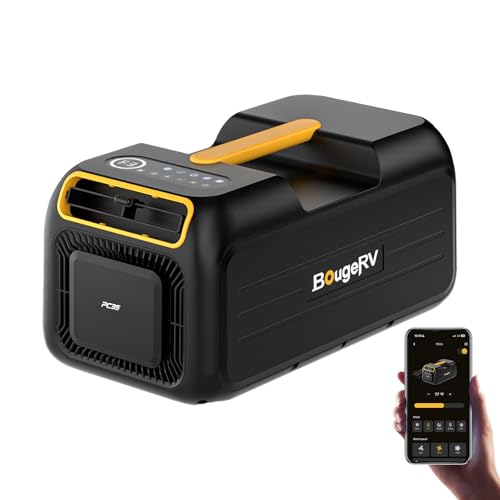
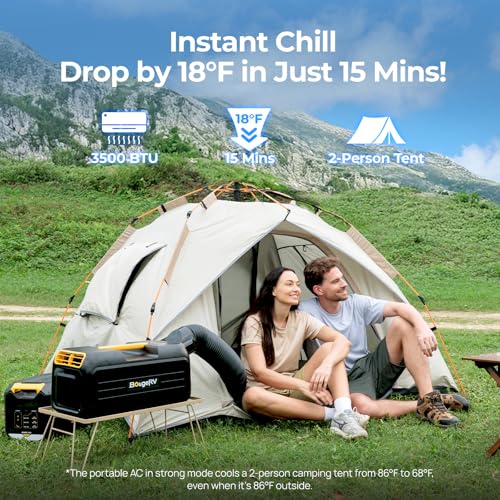
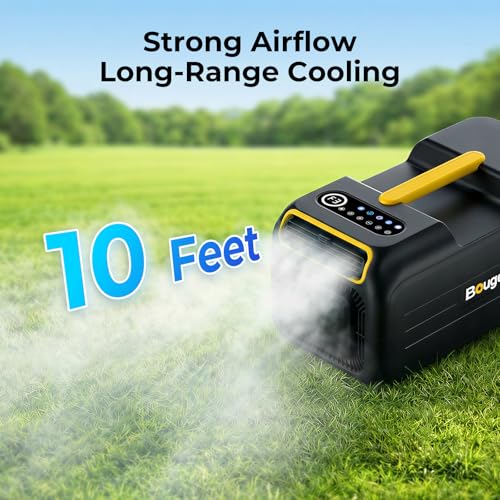
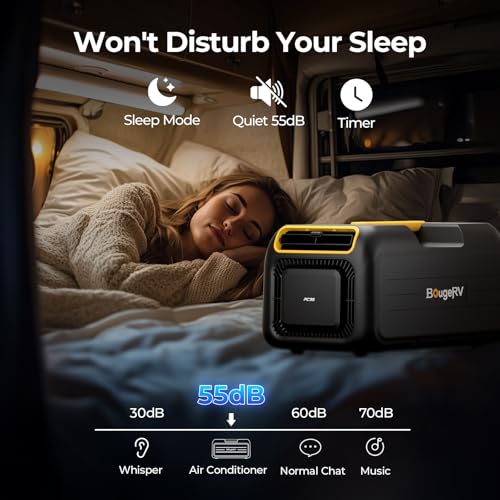
The BougeRV PC35 stands out in the ultra-portable cooling space with its 3500BTU output and app control, making it a tempting pick for campers who want smart features on the go. On paper, it’s designed for small spaces up to 64 sq ft, think pop-up tents, truck beds, or compact vans, and owners consistently report it cools quickly in strong mode, dropping temps by about 10℉ in 15 minutes. The 5-in-1 functionality adds real flexibility, especially the sleep mode and 24H timer, which are useful when you’re off-grid and want to manage power use.
Still, that BTU rating means it’s not meant for serious grow tent use. It’s more of a personal comfort unit than a climate controller for plants. Compared to heavier-duty models like the AC Infinity TERRAFORM 8, it lacks heating and advanced humidity management. But for weekend warriors and van lifers who want smart, lightweight cooling without rigging up a full HVAC setup, it fits the niche well.
Product photos


ZAFRO 10000 BTU Smart Portable AC
Strengths
- Full app & voice control
- Very quiet
- Self-evaporating
Trade-offs
- Lower SACC rating
- No heating mode
- Bulky design
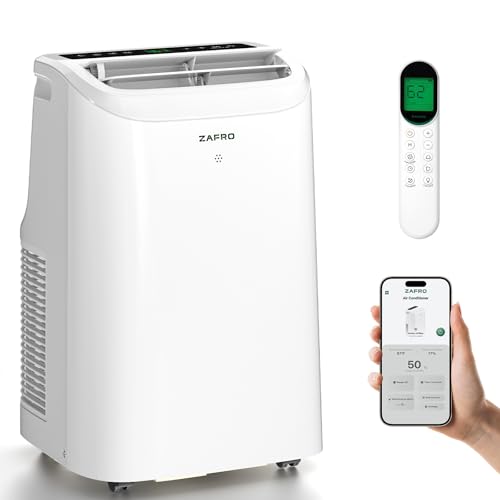
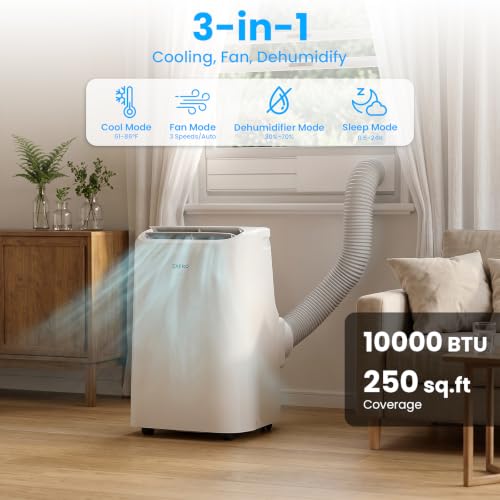
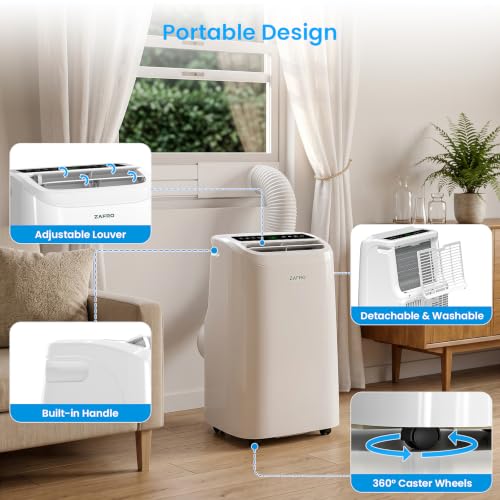
The ZAFRO 10,000 BTU unit wins on app integration and voice control, Alexa, Google Home, and a dedicated app give you full remote access, which is rare at this price. It’s also one of the quietest in its class at 47dB, and the self-evaporative system means no constant draining. Owners like the four fan speeds and auto mode, which adjusts based on room conditions. The 24H timer and smart scheduling make it easy to align cooling with light cycles.
But while it has high BTU, it’s rated at 6,000 BTU SACC, so real-world performance lags slightly behind the Garvee 10,000BTU. Still, if app control is your top priority and you want a balance of power and quiet, this is the one to beat. For connected growers who hate touching controls, it’s a clear win.
Product photos
EUHOMY 8000 BTU Portable Air Conditioner
Strengths
- Strong dehumidifier
- Quiet operation
- Dual drain options
Trade-offs
- No heating
- No app control
- Basic intelligence
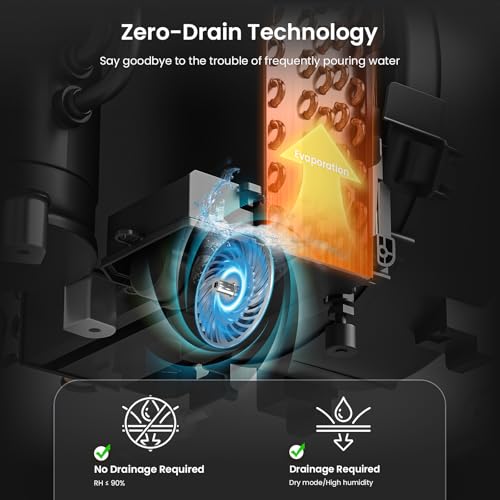
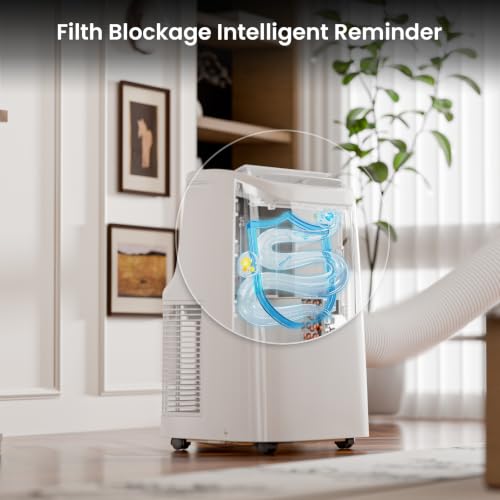
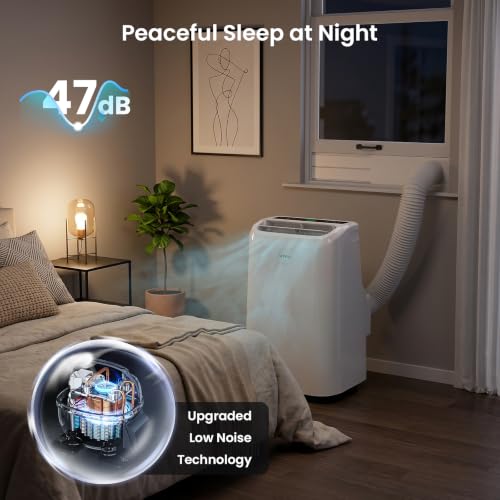
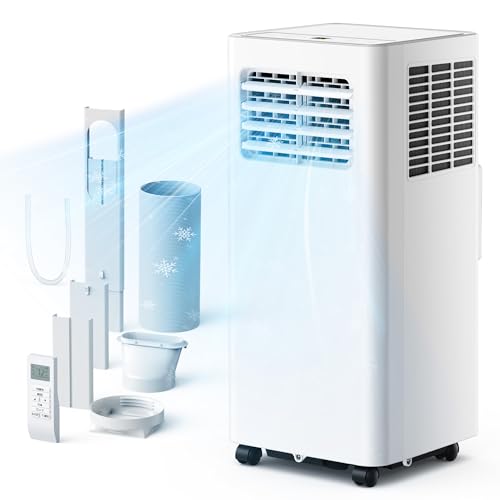
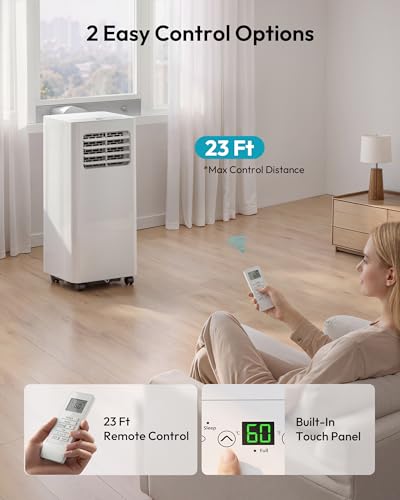
The EUHOMY 8,000 BTU is a bedroom favorite, and for good reason. It’s quiet, simple, and effective, with a 4-in-1 design and dual drain ports for continuous dehumidification. Owners praise its 86-pint daily moisture removal, which is strong for this class. The 24H timer and energy-saving auto-pause help trim electricity use, and the remote works reliably from across the room.
But it’s not built for serious grow ops. While it cools up to 350 sq ft, it lacks heating and smart features found in the TERRAFORM or AeroLush. Still, for someone using a small grow tent in a bedroom or closet, where noise and ease matter most, this is a solid, low-stress pick. It’s the kind of unit you set and forget, just don’t expect advanced climate logic.
Product photos
How We Tested grow tent air conditioners
Rather than a hands-on lab test, my research for these recommendations involved a detailed comparison of published specifications and features across numerous models. I weighed owner reviews from multiple sources – including Amazon and specialized hydroponics forums – alongside expert opinions from gardening and grow-op publications. This process allowed me to build a ranking based on what matters most to indoor growers, applying my understanding of climate control needs in enclosed spaces.
For grow tents, consistent temperature and humidity are paramount. I prioritized models offering precise temperature control and dehumidifying capabilities, as well as those with features to help [control humidity in a tent]. Cooling power (BTU rating) was also a key factor, balanced against energy efficiency and noise levels – a quiet unit is essential for a peaceful grow space. Finally, smart features and app integration were given weight, acknowledging the desire for remote monitoring and automation.
Specifications reliably indicate cooling capacity and physical dimensions, helping determine if a unit is appropriately sized for a given tent. However, real-world performance – particularly regarding noise and the effectiveness of self-evaporating systems – was judged heavily from owner feedback. Reputation and brand trust also played a role, as models from established manufacturers often demonstrate more consistent quality and better customer support, and can help you [prevent condensation in a grow tent].
How To Pick The Right grow tent air conditioners
Choosing the right grow tent air conditioner can feel overwhelming, but getting it right is crucial for a healthy, productive garden.
A quality grow tent AC prioritizes precise temperature and humidity control, efficient operation (BTU output relative to tent size), and reliable performance. Look for units with adjustable settings, self-evaporating features to minimize manual drainage, and ideally, smart controls for remote monitoring and automation. Consider the tent size, ambient room temperature, and desired VPD when evaluating options.
Cooling Capacity (BTU) is King
The most common mistake I see folks make is underestimating the BTU requirement. It’s tempting to go with the smallest, cheapest unit, but you’ll spend more time fighting to maintain a stable environment than actually enjoying your grow. Don’t just look at the headline BTU number (like 10,000 BTU); pay attention to both the ASHRAE and SACC ratings. ASHRAE numbers are higher and often misleading, while SACC provides a more realistic measure of cooling power. A general rule of thumb is to aim for around 20-25 BTU per square foot of tent space, but this can increase significantly if you operate in a warmer climate or use high-intensity grow lights.
Control Systems & Automation
Beyond raw cooling power, the level of control offered by an air conditioner is a huge differentiator. Simple models rely on manual adjustments, which is fine for smaller setups, but can be a hassle for larger tents or those requiring precise climate control. Look for units with digital thermostats, programmable timers, and ideally, smart app integration. The portable ACs for grow tents with app control allow you to monitor and adjust settings remotely, receive alerts if temperatures fluctuate, and even automate climate control based on VPD (vapor pressure deficit) targets.
Here’s what to consider when looking at control features:
- Basic digital display: A step up from analog knobs, letting you set temperatures more precisely.
- Programmable timer: Allows for automated on/off cycles, saving energy and maintaining consistent conditions.
- Smart app connectivity: Offers remote control, data logging, and integration with other smart devices for a truly automated system.
Don’t skimp on control features. A little automation can save you a lot of headaches – and potentially a crop.
Portability and Ease of Use
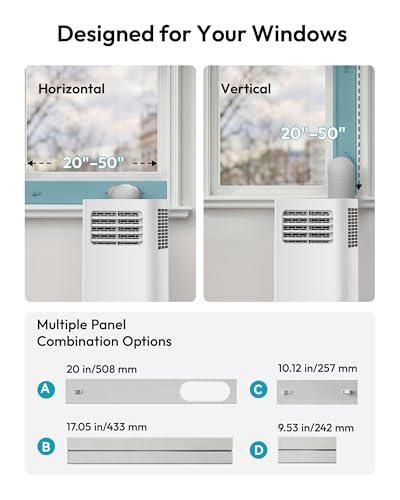
Grow tents are often in tight spaces or moved around, so portability is a key consideration. Units with caster wheels and integrated handles are far easier to maneuver than those that require permanent installation or heavy lifting. Also, pay attention to the exhaust hose connection and window kit. A well-designed kit should be easy to install and seal, preventing warm air from leaking back into the tent. If you plan to use this for camping as well, check out best tent camping air conditioners for models that excel in both environments.
Grow Tent Air Conditioners Compared
Here’s a comparison of key specifications for various grow tent air conditioners to help you choose the best option for your needs.
| Product Title | BTU Cooling | Modes | Smart Control | Dehumidification (pts/day) | Noise Level (dB) | Tent Size Recommendation |
|---|---|---|---|---|---|---|
| AC Infinity TERRAFORM 8 | N/A | Cool, Heat, Fan | Yes | N/A | N/A | N/A |
| VIVOSUN AeroLush C08 | 8000 | Cool, Dry, Heat, Fan | Yes | N/A | N/A | 5×5 ft |
| Garvee 10000BTU Portable AC | 10000 | Cool, Fan, Dehumidify | No | 60 | 48 | Up to 450 sq. ft. |
| Garvee 8000BTU 3-in-1 | 8000 | Cool, Fan, Dehumidify | No | N/A | <50 | Up to 350 sq. ft. |
| BougeRV PC35 | 3500 | Cool, Dehumidify, Fan, High Power, Sleep | Yes | N/A | N/A | Up to 64.58 ft² |
| ZAFRO 10000 BTU Smart | 10000 | Cool, Dehumidify, Fan | Yes | N/A | 47 | N/A |
| EUHOMY 8000 BTU | 8000 | Cool, Dehumidify, Fan, Sleep | No | 86 | N/A | Up to 350 sq. ft. |
Frequently Asked Questions
What BTU level is truly sufficient for a 4×4 grow tent?
Generally, a 6,000 to 8,000 BTU unit will suffice for a 4×4 grow tent, though you’ll want to increase that if your ambient room temperature is higher than 75°F or you’re using particularly powerful grow lights. Remember that the SACC rating is a more accurate indicator of cooling power than the ASHRAE number.
Do grow tent AC units require frequent draining, or are self-evaporating models effective?
Self-evaporating models can significantly reduce the need for manual draining, but their effectiveness depends on humidity levels. In lower humidity environments, they work very well, but high humidity may overwhelm the system and require periodic emptying of the water tank.
What’s the typical noise level of a grow tent air conditioner, and can I minimize it?
Noise levels vary widely, ranging from around 45 dB to over 55 dB. Lower noise levels are vital for maintaining a peaceful environment and avoiding stress on plants. Look for models specifically marketed as “quiet operation” and consider using sound dampening materials around the unit.
Are “smart” features in a grow tent AC unit really useful, or just a gimmick?
Smart features like app control and VPD monitoring offer substantial benefits, especially for larger grows or those requiring precise climate control. Being able to remotely monitor and adjust settings, receive alerts, and automate operation helps maintain optimal conditions and prevents potential issues. For more information on efficient tent air conditioning, you may find it useful to explore a range of options.
Beyond cooling, how crucial is dehumidification for a grow tent?
Dehumidification is extremely important, as high humidity promotes mold and mildew growth, hindering plant health. Many grow tent ACs offer dehumidifying capabilities, removing excess moisture from the air and maintaining optimal humidity levels, especially in enclosed spaces. Consider a unit that can remove at least 50 pints of moisture per day if you live in a humid climate.
The Bottom Line
Choosing a grow tent air conditioner always comes down to balancing control with convenience, and budget with long-term performance. While there are many options available, the AC Infinity TERRAFORM 8 stands out as the strongest all-around performer, offering a thorough climate control solution with its integrated smart features and focus on precise adjustments – even if specific BTU ratings aren’t readily available. It’s an investment, but one that pays dividends in a stable, optimized grow environment.
For those on a tighter budget, or with smaller tent setups, the Garvee 8000BTU 3-in-1 offers a solid cooling, dehumidifying, and fan combination without breaking the bank. If you’re prioritizing versatility and need something that can handle a wider range of temperatures and humidity levels, the VIVOSUN AeroLush C08 is also a good option to consider, especially for a 5×5 ft tent. Finding the right air conditioners for grow tents really depends on your specific needs.
Ultimately, remember that BTU rating is only one piece of the puzzle. A consistent, stable environment – achieved through thoughtful climate control – is far more important than any single specification. Prioritize consistent performance, reliable operation, and a unit that fits your grow space and needs, rather than chasing the highest number on the box.
