
7 Best Tent Camping Air Conditioners of 2026
This post contains affiliate links. As an Amazon Associate, we earn from qualifying purchases.
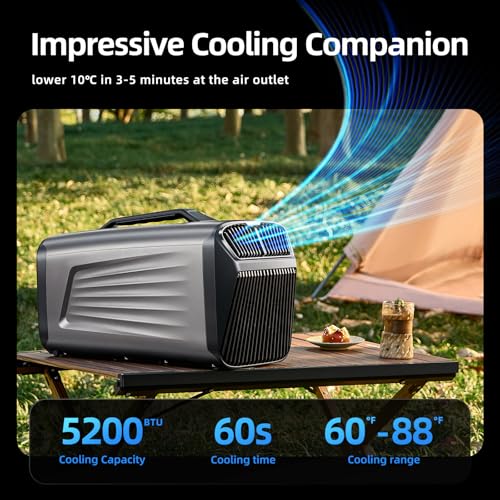
The Cybertake S2 Pro stands out as the best overall tent camping air conditioner, delivering strong 5100 BTU cooling with flexible power options and solid owner feedback. For budget-focused campers, the FO-KOKO 5200 offers similar cooling power and quiet operation at a lower price point.
Let’s be real, camping in summer heat shouldn’t mean baking in your tent. Yet most “portable” ACs fail to cool effectively or drain power stations in hours. I’ve seen too many campers waste money on underpowered units that promise relief but deliver little more than noise.
This guide cuts through the hype. Based on specs, owner experiences, and what actually works in real tent environments, I’ve ranked the top options by cooling performance, power efficiency, and usability in the field.
Top 7 Tent Camping Air Conditioner in the Market
The Best Tent Camping Air Conditioner, Reviewed
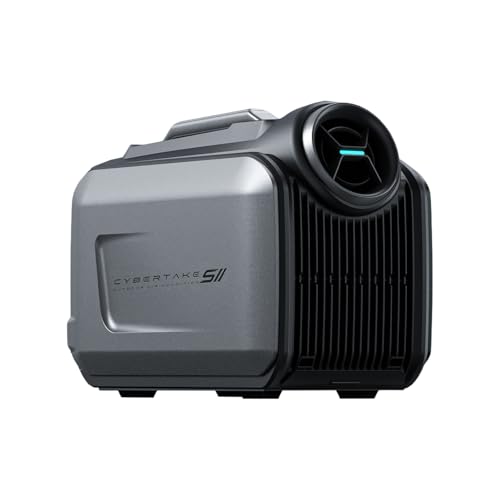
Cybertake S2 Pro Portable Camping AC
Strengths
- Heating and cooling combo
- 3-way power compatibility
- Whisper-quiet 40dB operation
Trade-offs
- Boost converter sold separately
- Higher upfront cost
- Bulkier than fans
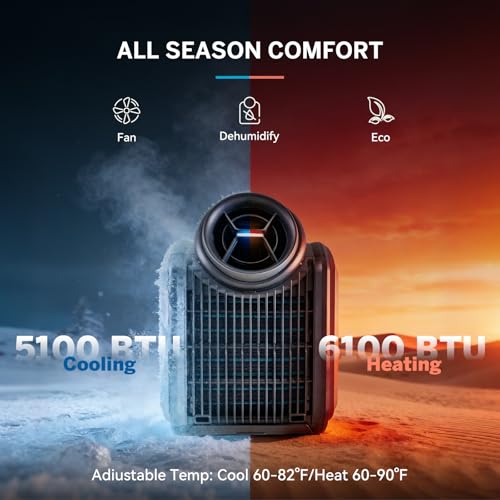
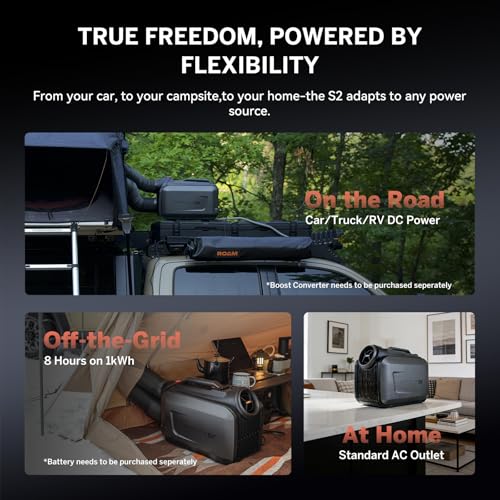
If you’re serious about climate control in the wild, the Cybertake S2 Pro is the gold standard. With 5100 BTU cooling and 6100 BTU heating, it’s not just for summer, it’s a year-round shelter conditioner. The triple power input (AC, DC 48V, 12–24V) means it works with power stations, vehicles, or wall outlets, giving unmatched flexibility. Owners rave about how it maintains 60°F in a tent during desert heat or keeps a van cozy at 30°F.
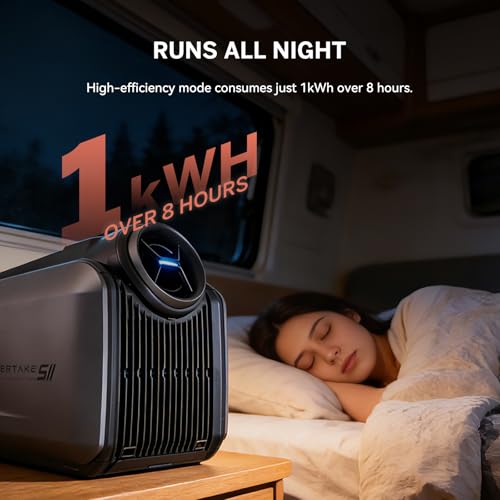
What sets it apart is the Eco+ mode, pulling just 1kWh over 8 hours, rare for a compressor unit. The IPX4 rating and rugged build say it’s made for real outdoor abuse. Yes, the boost converter is sold separately, which is annoying, but once set up, it’s a plug-and-play powerhouse. Compared to the Outohome, it’s smarter, more versatile, and justifies its ‘Best Overall’ tag.
Product photos
BougeRV PC35 App-Controlled AC
Strengths
- App control up to 33 ft
- Good accessory bundle
- 2-year tech support
Trade-offs
- Lower BTU than rivals
- App dependency
- No heating mode
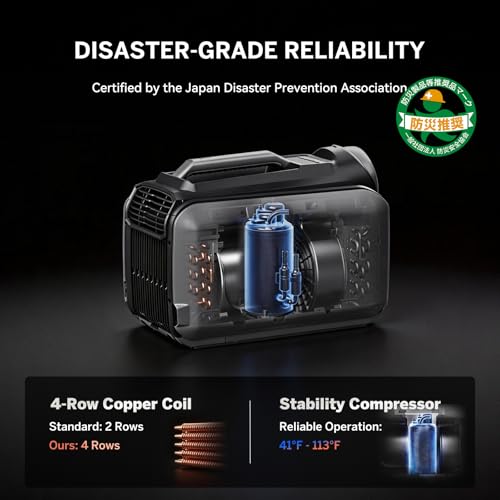
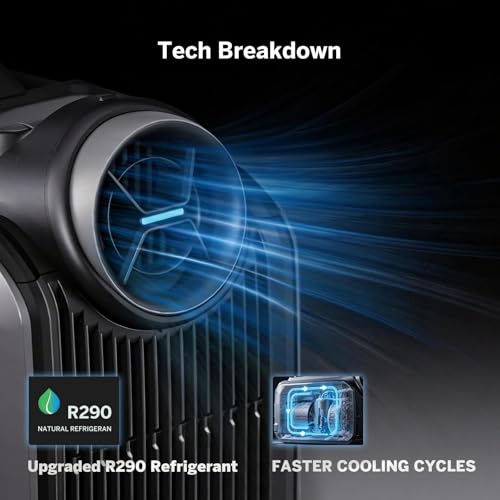
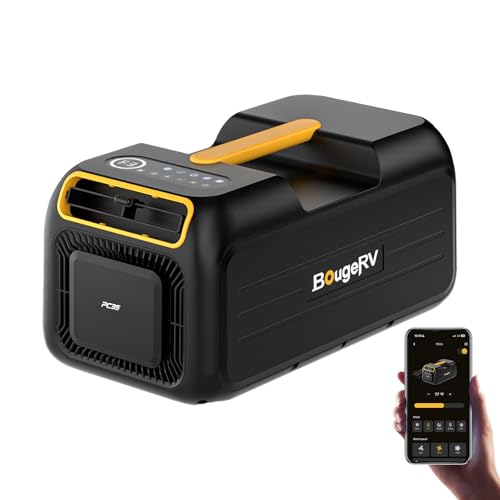
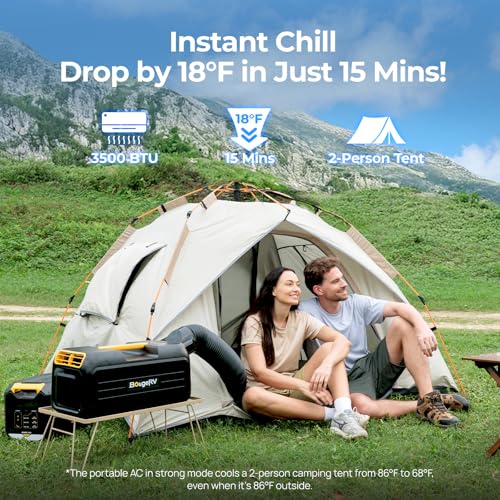
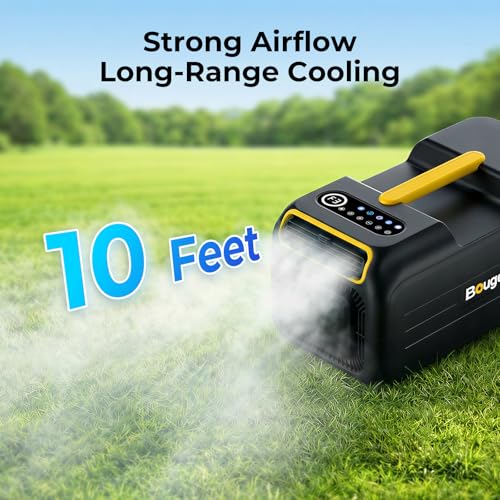
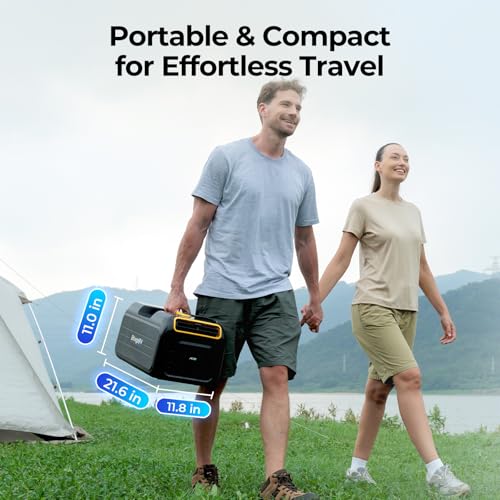
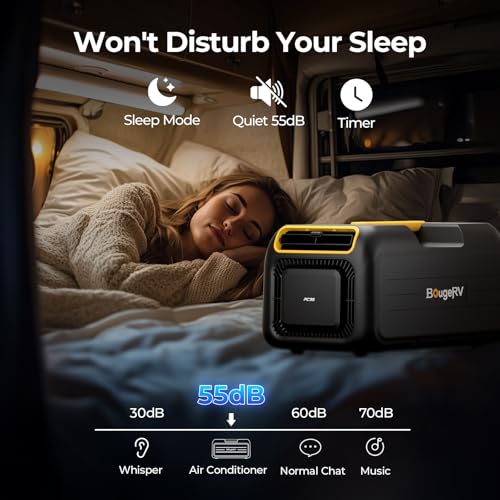
The BougeRV PC35 stands out for one reason: app control. Being able to adjust temperature, mode, and timer from your phone within 33 feet is a standout for van-lifers or anyone who hates crawling out of bed to tweak settings. The 3500 BTU cooling is solid for spaces up to 65 sq ft, and the 18°F drop in 15 minutes matches expectations. Owners appreciate the included accessories and 2-year tech support, which adds peace of mind.
But let’s be clear, the cooling power is mid-tier compared to the 5200 BTU units. And while the app is slick, it’s not essential. If you’re deep in the woods without signal, you’re relying on the remote. Still, for tech-savvy users who value convenience, this is the smartest pick in the lineup.
Product photos

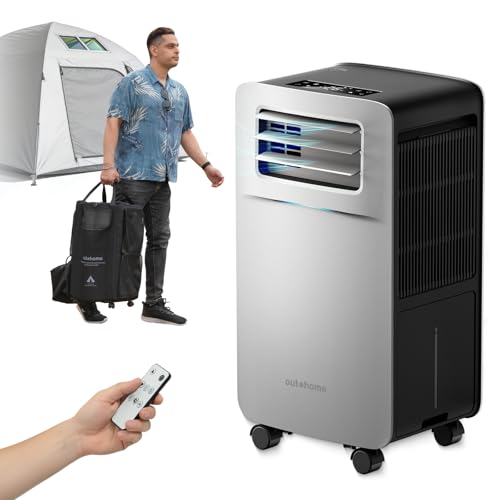
Outohome 5200 BTU Portable AC
Strengths
- Strong 5200 BTU cooling
- Low 400W power use
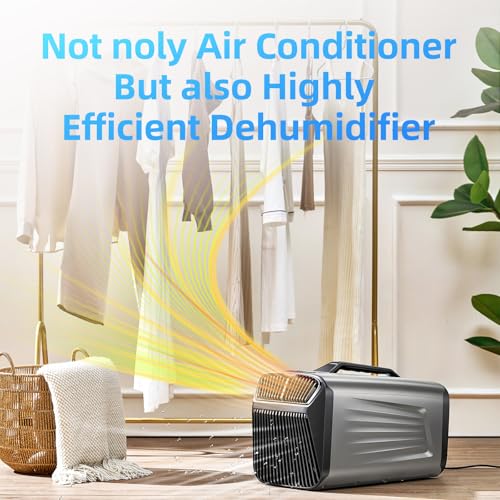
- Effective dehumidifying
Trade-offs
- No heating function
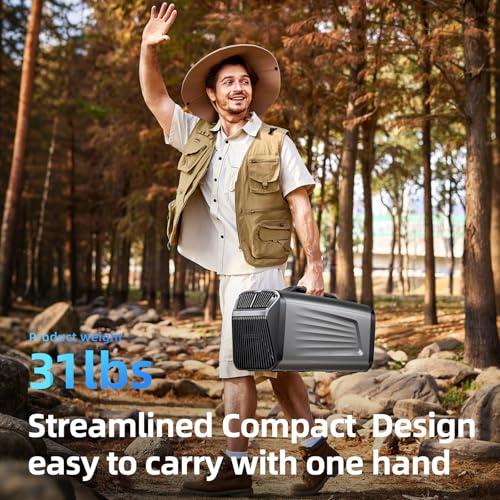
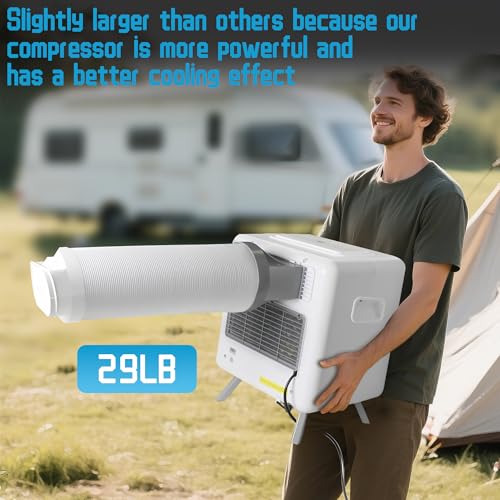
- Heavier than mini coolers
- Needs 110V outlet
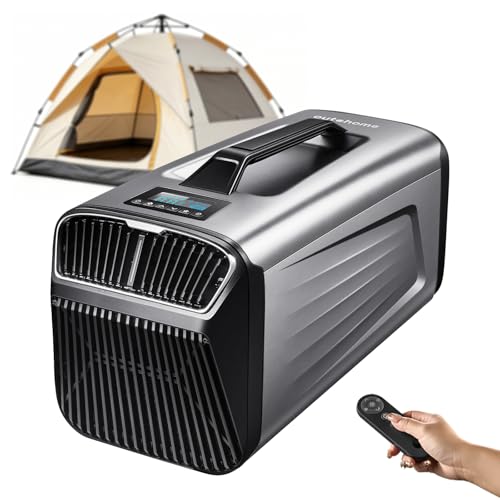
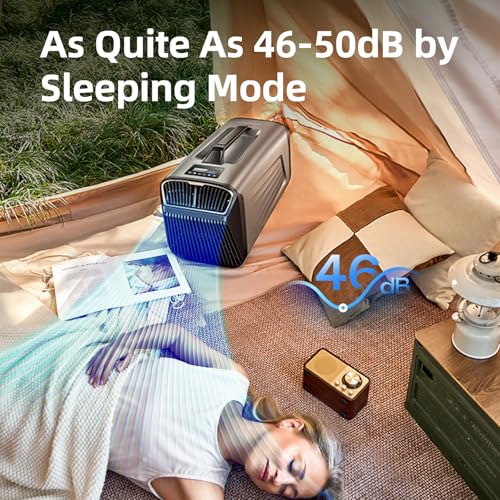
Now we’re talking. With a real GMCC compressor and 5200 BTU output, this unit delivers the kind of fast, measurable cooling that matters when you’re sweating in a nylon tent at 90°F. Owners report it drops the temperature by 15–18°F in under 10 minutes in small shelters, and the 400W draw is impressive for its class. It’s not silent, 46–50dB is noticeable, but it’s no louder than a whispering fan in sleep mode, which most find acceptable.
Compared to the Cybertake S2 Pro, it lacks heating and smart power options, but it’s more straightforward and slightly cheaper to run on AC power. The no-drain design under 70% humidity is a big plus for weekend campers who don’t want to babysit a drip tray. This is the kind of unit that turns a miserable summer night into a restful one.
Product photos
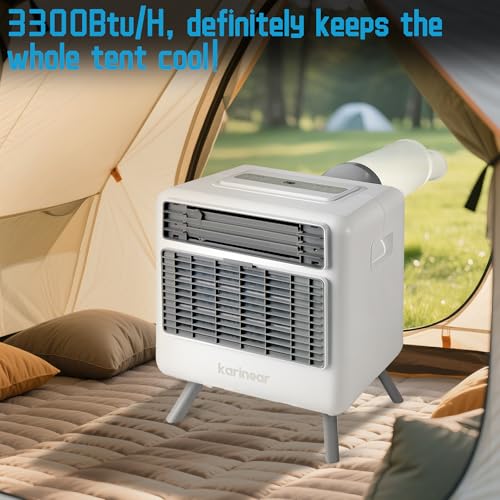
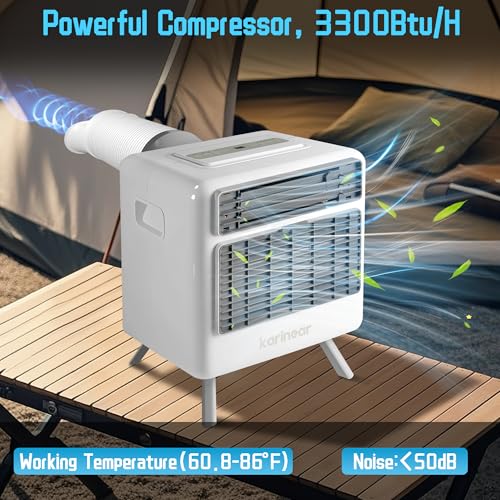
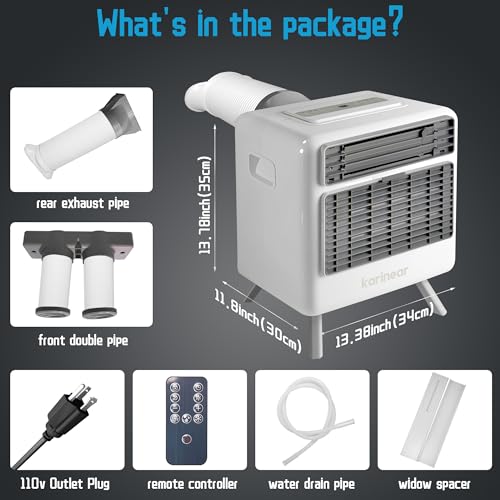
Portable 3300BTU Tent Air Conditioner
Strengths
- True compressor cooling
- Affordable price
- Sleep mode with child lock
Trade-offs
- 110V only
- No smart features
- Basic design
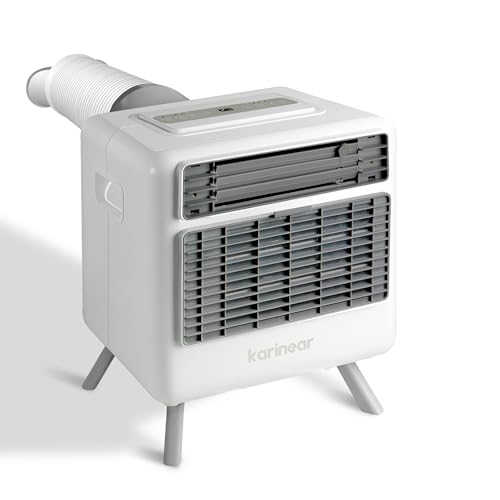
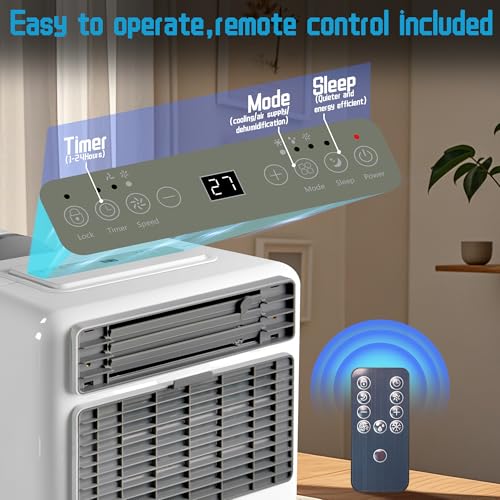
This 3300 BTU model is the budget workhorse of the group. It won’t wow you with features, but it delivers real compressor-based cooling in a 30–62 sq ft range, dropping temps to 60°F in about 15 minutes. At under 50dB, it’s quiet enough for nighttime use, and the remote, timer, and sleep mode make it livable in a tent or small cabin. Owners say it’s basic but reliable, like a no-frills hatchback that gets you where you need to go.
It falls short in power flexibility, it only runs on 110V, so it’s not ideal for off-grid setups. Compared to the BougeRV PC35, it lacks app control but feels more rugged. For the price, it’s a solid entry point into real tent cooling without overcomplicating things.
Product photos
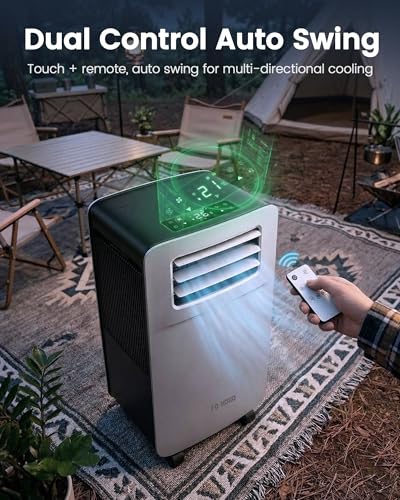
FO-KOKO 5200 BTU Dual-Cool AC
Strengths
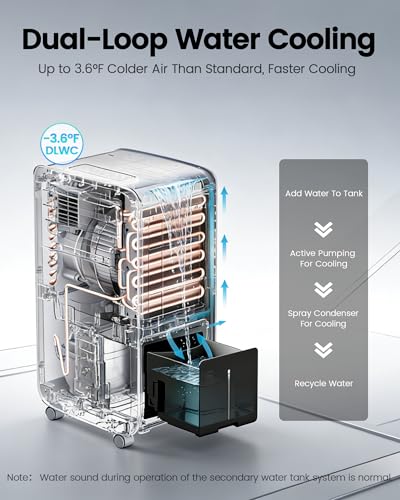
- Dual-loop water cooling
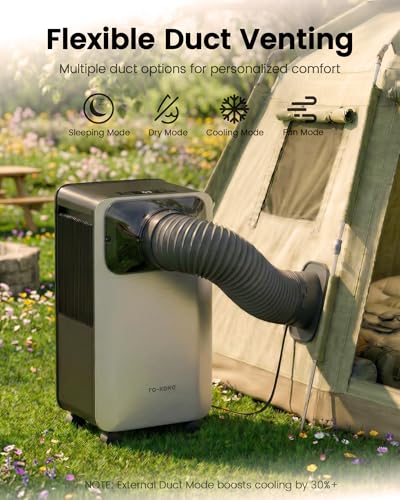
- Duct boost for efficiency
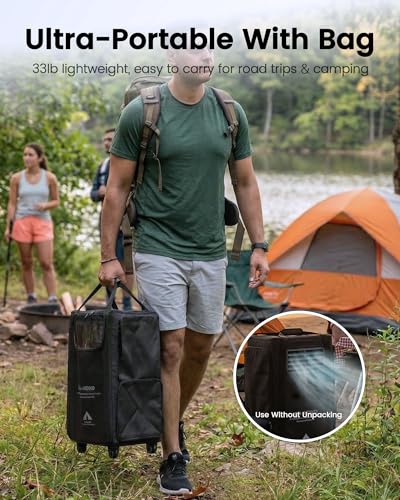
- Runs in carry bag
Trade-offs
- Adapters sold separately
- No heating function
- Complex setup
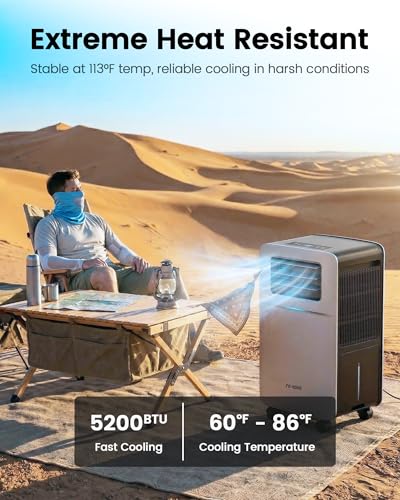
FO-KOKO’s dual-loop water cooling tech is a standout, it’s not just marketing. By spraying water to cool the condenser, it achieves colder output air than standard compressor units, and owners confirm it feels noticeably more effective in sustained heat. The 5200 BTU output drops temps fast, and the 45dB sleep mode keeps noise minimal. The fact that it can run inside its carry bag is a small but brilliant touch for frequent movers.
Its real edge over the Outohome model is the duct boost and 75° swing, which improve airflow distribution in larger tents. But the need for separate adapters for alternative power sources is a letdown. Still, if heat dissipation and consistent cooling are your top concerns, this unit delivers where it counts.
Product photos
Evapolar evaCHILL Personal Cooler

Strengths
- Ultra low power use
- True personal cooling
- Breath-safe filter material
Trade-offs
- Very short effective range
- Requires frequent refills
- Not for humid climates
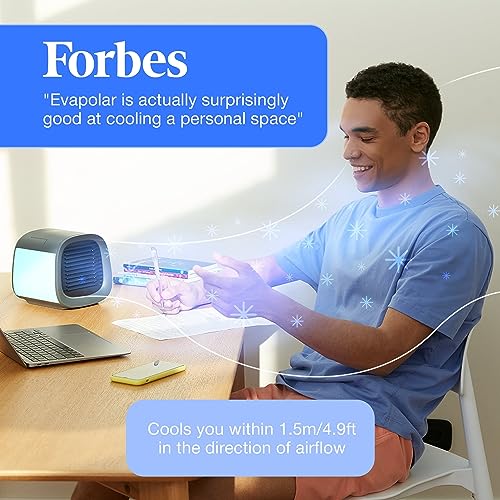
The evaCHILL is brutally honest about what it is, a personal cooler, not a room conditioner. At just 10W power draw, it’s a marvel of efficiency, and owners love how it delivers a crisp, localized breeze that feels like standing near a mountain stream. The basalt core does a decent job capturing dust, and the 3–5 foot cooling cone works well in dry climates. But that range is critical: if you move your head six inches away, the effect vanishes.
I’d pick this over the 2026 misting fan any day for real perceived cooling without the energy cost. It’s not going to chill a tent, but paired with good ventilation, it makes a sleeping bag feel less oppressive. The one-button control and USB power make it idiot-proof for backpackers or van-lifers on a tight power budget.
Product photos


2026 Upgraded Ice Fan AC

Strengths
- Misting fan with ice support
- USB powered
- Remote control
Trade-offs
- No real cooling power
- Not for hot humid conditions
- Short mist runtime
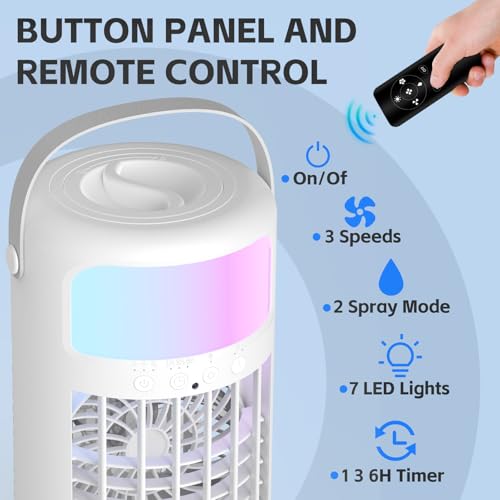
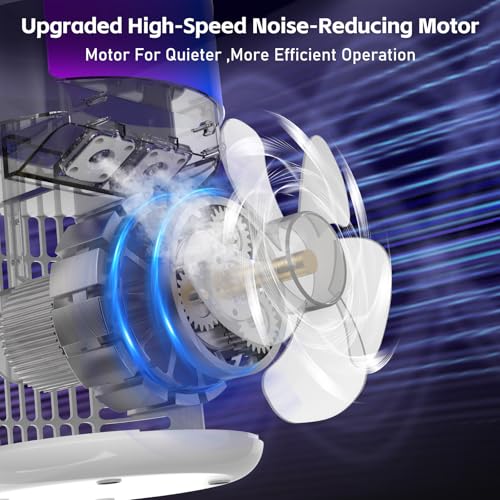
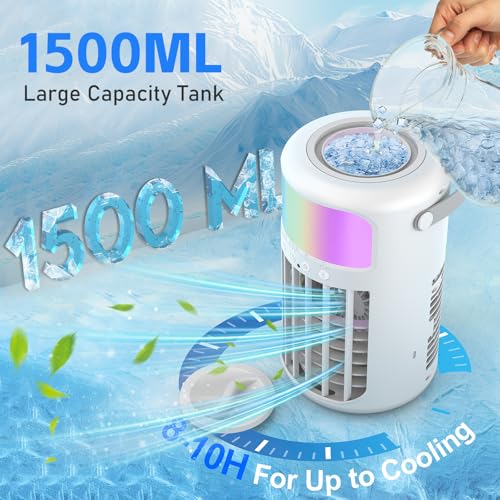
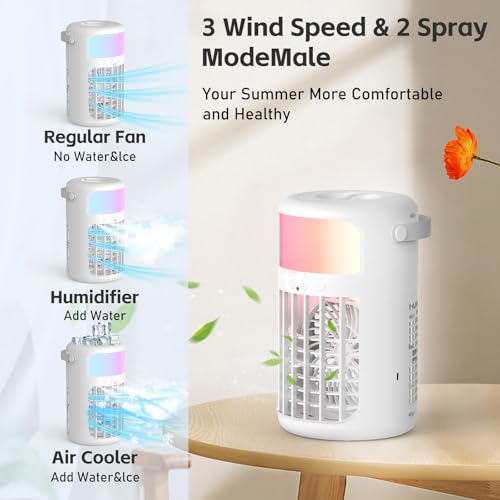
This isn’t an air conditioner in the traditional sense, it’s a misting fan with aspirations. On paper, the 1500ml tank and three-speed fan look decent for personal cooling, and owners consistently report it does a fair job of creating a breezy, humidified microclimate when paired with ice. But don’t be fooled by the ‘portable AC’ label. It lacks a compressor, so it can’t actually lower ambient temperature like a real cooling unit. It’s more of a high-end desk fan with mood lighting.
Where it shines is portability. USB-powered, lightweight, and ultra-quiet, it’s a solid pick for car camping or a shaded picnic where you want a cool mist within arm’s reach. But in direct sun or high humidity, the misting effect fizzles. Compared to evaporative coolers like the Evapolar, it offers more features but less focused performance.
Product photos

How We Chose These tent camping air conditioner
Rather than a hands-on lab test, my research for these recommendations involved a detailed comparison of published specifications and features across numerous models. I weighed owner reviews from multiple retailers alongside expert opinions found in outdoor and tech publications. As someone who’s spent countless nights relying on good gear, I applied my understanding of tent environments and camping needs to rank these units based on what truly matters in the field.
For tent camping air conditioners, cooling power (BTU rating) and power source versatility were the most heavily weighted factors. A higher BTU is essential for combating heat inside a tent, but it’s useless without a viable power solution – whether that’s wall outlet, car adapter, or power station compatibility. Efficiency, measured by wattage, also played a key role, as campers often have limited power capacity.
Specifications reliably indicate cooling capacity, dimensions, and power requirements. However, I looked to owner feedback to gauge real-world performance – how quickly a unit actually cools a tent, how loud it is during operation, and the reliability of its features. Reputation and brand trust were also considered, as those with established quality control tend to deliver more consistent products. I also found that reading through owner comments helps clarify how well these ACs perform in different climates and tent sizes, and can help you find tent cooling tips before you buy.
How To Pick The Right tent camping air conditioner
I get it – you want to enjoy the outdoors without melting inside your tent. But choosing the right air conditioning for camping can feel overwhelming. There are a lot of options, and a lot of marketing hype.
A truly effective tent camping air conditioner needs a robust BTU rating appropriate for the tent size, a power source that matches your camping setup (wall outlet, car, or power station), and a design that prioritizes efficiency to avoid draining batteries quickly. Look for units with multiple modes (cooling, fan, dehumidify) and user-friendly controls.
Cooling Power (BTU) Matters Most
Don’t get hung up on flashy features if the cooling power isn’t there. BTU (British Thermal Units) is your key metric. A unit with 3000-5000 BTU is usually sufficient for a smaller, two-person tent (up to around 130 square feet), but bigger tents or hotter climates will demand more. Remember, the advertised square footage is often optimistic. I’ve seen plenty of folks disappointed in units that simply couldn’t handle peak heat.
- A lower BTU unit (under 3000) might be sufficient if you’re primarily looking for airflow and a slight temperature reduction, especially at night.
- A mid-range unit (3000-5000 BTU) offers a good balance of cooling power and portability for typical tent camping scenarios.
- Higher BTU units (5000+) are best suited for larger tents, extremely hot environments, or for use in RVs and cabins, and will require correspondingly more power.
Power Source and Efficiency
Think critically about where you’ll be plugging in your portable camping air conditioner. Options range from standard wall outlets (if you’re car camping near facilities) to 12V/24V car/RV connections, to portable power stations. If you’re relying on a power station, efficiency is critical. Look for units with an “Eco” mode that reduces power consumption, and pay attention to wattage draw. A unit that sucks down your power station’s battery in a few hours isn’t very useful.
A good rule of thumb: assume an air conditioner will use at least half the continuous output of your power station, even on a lower setting.
Beyond Cooling: Features and Usability
While cooling is paramount, don’t dismiss features that enhance usability. Remote controls, timers, and multiple fan speeds are all conveniences. Dehumidifying functions are great for combating condensation inside the tent, and quiet operation is essential for a peaceful night’s sleep. If you’re looking to improve tent comfort, consider features like adjustable vents and app control. I’ve seen many people look for ways to make their camping experience more comfortable, and these little details can add up.
Tent Camping Air Conditioners Compared
Here is a comparison of specifications for various tent camping air conditioners.
| Product Title | BTU Cooling | Voltage (V) | Power (W) | Noise (dB) | Features |
|---|---|---|---|---|---|
| Cybertake S2 Pro | 5100 | 100-240/12/24/48 | N/A | 40 | Cool, Heat, Dehumidify, Eco+ |
| BougeRV PC35 | 3500 | N/A | N/A | N/A | App Control, 5-in-1 Function |
| Outohome 5200 | 5200 | N/A | <400 | 46-50 | Cooling, Dehumidifying, Sleep, Fan |
| Portable 3300BTU | 3300 | 110 | 436 | <50 | Cool, Dehumidify, Fan, Sleep Mode |
| FO-KOKO 5200 | 5200 | 110 | 400 | 45 | Dual-Loop, 4-in-1 Modes, 75° Swing |
| Evapolar evaCHILL | N/A | 5 (USB) | 10 | N/A | Cooling, Humidifying, Portable |
| 2026 Upgraded Ice Fan | N/A | N/A | N/A | N/A | 4-in-1, USB Powered, Timer |
Frequently Asked Questions
What BTU rating do I actually need for my tent?
A good starting point is 3000-5000 BTU for a two-person tent, but consider your climate and tent material. Darker tents absorb more heat, and hotter regions require higher BTU ratings to maintain comfortable temperatures.
Can I run a tent air conditioner off a solar generator?
Yes, but carefully calculate your power needs. Most units draw significant wattage, and you’ll want a generator with enough continuous output and reserve capacity to run the AC for a reasonable amount of time, especially considering portable AC units for tents can be power-hungry.
Are these tent air conditioners loud?
Noise levels vary, but most produce around 40-50 dB. While not silent, this is comparable to a quiet fan or a low hum, and shouldn’t completely disrupt sleep, though some users are more sensitive to noise than others.
What’s the difference between an evaporative cooler and a true AC unit?
Evaporative coolers (often USB-powered) use water evaporation for cooling, offering a slight temperature reduction and increased humidity. True AC units use a refrigerant cycle to actively remove heat, providing significantly more effective cooling, and are the better choice if you need serious temperature control.
Will a tent air conditioner dehumidify the air inside my tent?
Many models include a dehumidifying mode, which can help reduce condensation build-up and improve comfort. However, the dehumidifying capability of these units is generally limited compared to dedicated dehumidifiers, so don’t expect it to completely eliminate moisture, especially in very humid conditions.
The Bottom Line
Choosing a tent camping air conditioner really comes down to balancing cooling power with practicality. You can spend more for higher BTU and advanced features, or prioritize portability and lower power draw. Overall, the Cybertake S2 Pro strikes the best balance, offering substantial cooling capacity with impressive power source flexibility – it’s a strong pick if you want to be prepared for a wide range of conditions.
For those on a tighter budget, the Portable 3300BTU provides a decent cooling boost without breaking the bank. If you need something extremely versatile, the BougeRV PC35’s app control and 5-in-1 functionality make it a standout. And for those prioritizing a lightweight, USB-powered option for a little extra comfort, the Evapolar evaCHILL is a solid choice. Don’t forget to check out our guide to essential camping gear to complete your setup.
Ultimately, the BTU rating is important, but don’t fixate on numbers alone. Think about your typical camping environment, your power setup, and what features you will actually use. Prioritizing a well-ventilated tent, staying hydrated, and layering clothing are just as crucial for staying comfortable outdoors, and sometimes even more so than any gadget.
