
7 Best Grow Tent Dehumidifiers of 2026
This post contains affiliate links. As an Amazon Associate, we earn from qualifying purchases.
The AC Infinity HYDRONE 7 stands out as the best overall grow tent dehumidifier for its smart climate control and seamless integration, while the MARS HYDRO 38 Pint offers serious moisture removal at a more accessible price. For smaller spaces, the AC Infinity HYDRONE 5 balances compact design with precision.
Grow tent humidity isn’t just about comfort, it directly impacts plant health, yield, and the risk of mold. Too much moisture and you’re inviting trouble. Too little, and your plants struggle. I’ve seen setups fail because of overlooked dehumidifiers that couldn’t keep up.
This guide cuts through the noise, focusing on real-world performance, ease of use, and reliability. I compared specs and owner feedback to find units that actually maintain stable conditions, so you can protect your grow and trust your environment.
Top 7 Grow Tent Dehumidifiers in the Market
The Best Grow Tent Dehumidifiers, Reviewed
VIVOSUN AeroDrain D12 Smart Dehumidifier
Strengths
- High daily capacity
- Smart app integration
- Sensor probe included
- Easy mobility
- Auto restart function
Trade-offs
- Larger footprint
- Pricier than basic models
- Less effective in cold
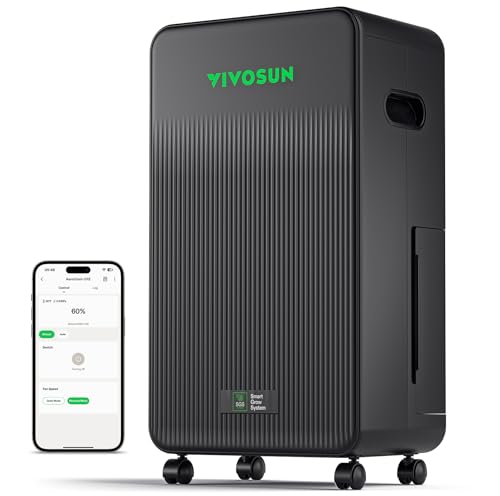
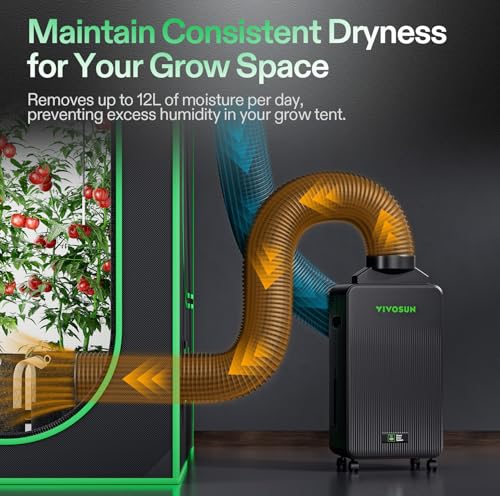
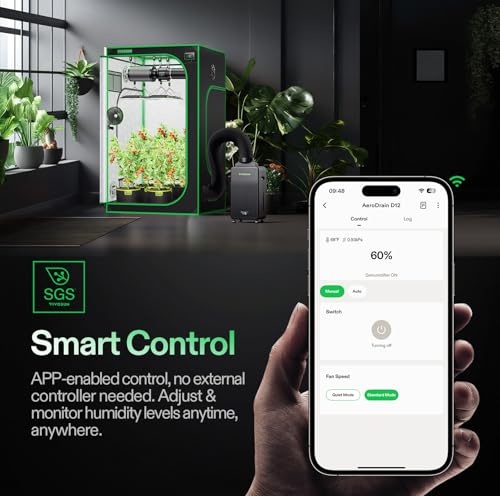
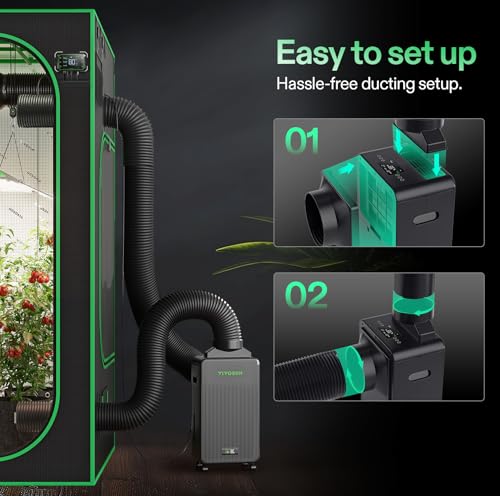
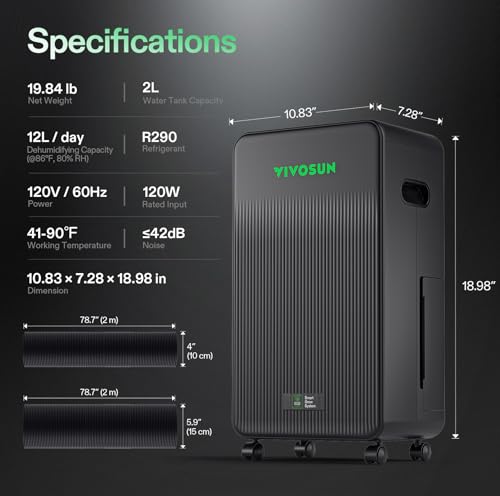
The VIVOSUN AeroDrain D12 stands out in the grow tent dehumidifier space because it’s built for integration, not just function. With a 12L/day capacity and smart app control, it’s clearly designed for serious growers who want automation. Owners consistently report that the humidity control is stable and responsive, especially when paired with other Vivosun smart devices, making it a strong centerpiece for a connected grow environment.
The inclusion of a remote sensor probe is a real advantage over basic models, letting you monitor conditions right at canopy level. While it’s recommended for up to 5×5 ft tents, performance does dip in colder environments, which is typical for compressor-based units. Still, for those prioritizing smart automation and seamless setup, this one makes a strong case for being the top pick.
Product photos

AC Infinity HYDRONE 7
Strengths
- AI humidity & VPD control
- 10 precise drying levels
- Works in extreme temps
- Ductable exhaust
- Closed-loop compatible
Trade-offs
- Higher price point
- App required for full control
- No built-in wheels
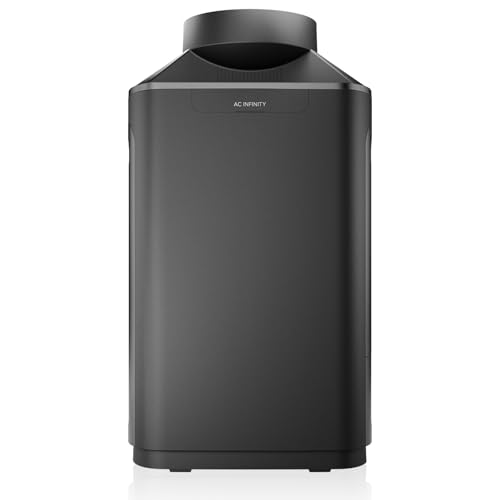
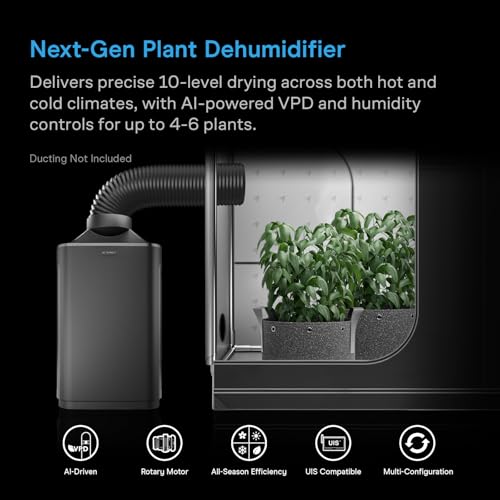
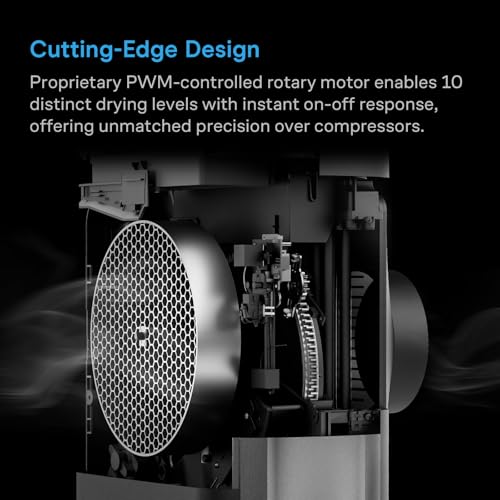
If you’re managing a 4-6 plant setup and want surgical precision in humidity control, the HYDRONE 7 delivers. Its AI-driven VPD targeting is rare at this level and gives it an edge for advanced users who understand vapor pressure deficit’s role in plant health. The 10 drying levels, powered by a PWM-controlled rotary motor, allow for micro-adjustments that most dehumidifiers simply can’t match.
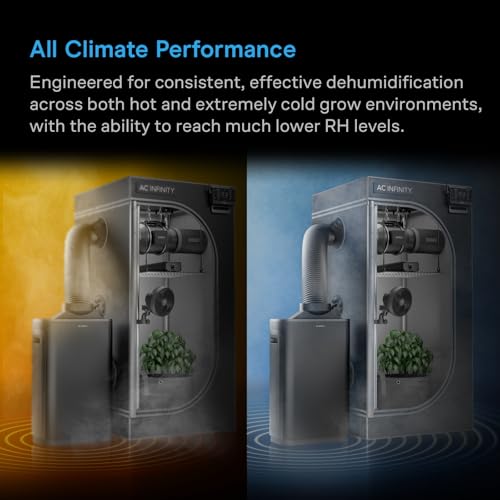
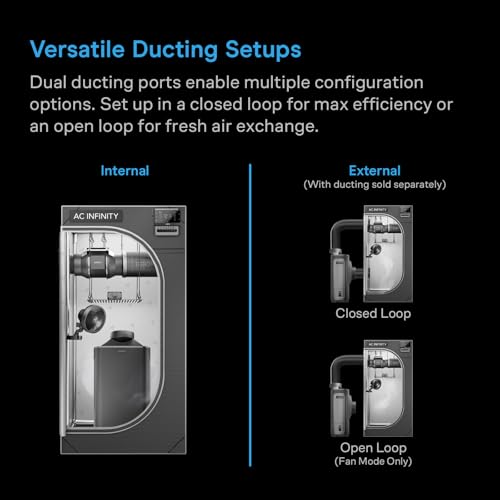
What really sets it apart is its ability to perform in both hot and cold environments, a pain point for many compressor units. Reviewers note consistent results even in less-than-ideal temps. The closed-loop ducting capability is another pro for stealthy, heat-conscious grows. It’s not the cheapest, but for those who want adaptive drying power, it’s hard to beat.
Product photos
AC Infinity HYDRONE 5
Strengths
- 10 drying levels
- Dual duct ports
- Smart controller compatible
- Effective in cold temps
- Precision motor
Trade-offs
- No built-in wheels
- App needed for automation
- Higher cost for small tents
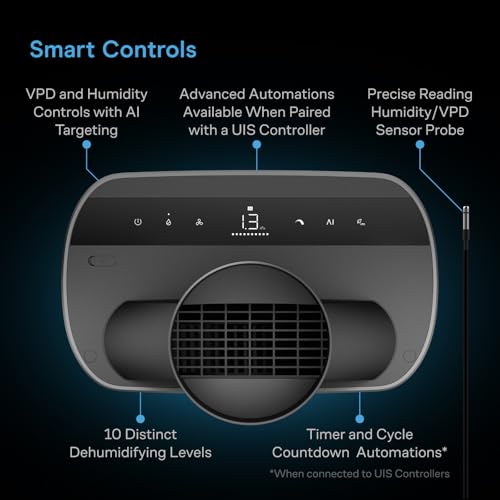
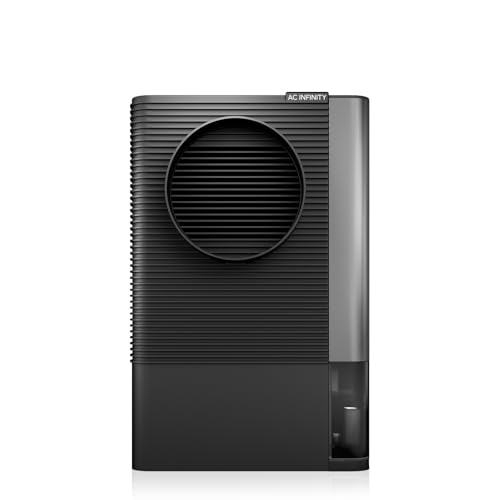
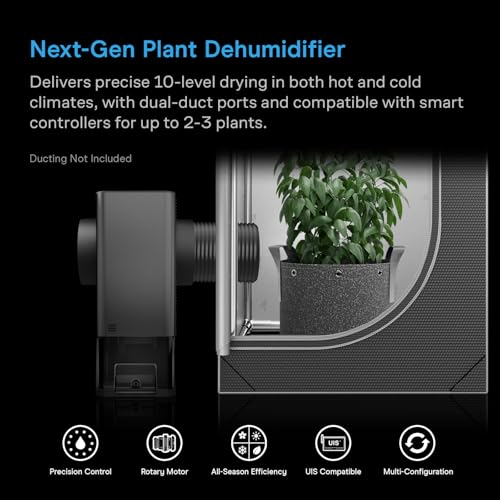
Think of the HYDRONE 5 as the compact sibling of the HYDRONE 7, and a very capable one at that. It brings the same PWM rotary motor and 10 drying levels to the table, but scaled for 2-3 plant tents. For smaller operations, this level of control is overkill in the best way: it means you’re never over-drying or underperforming.
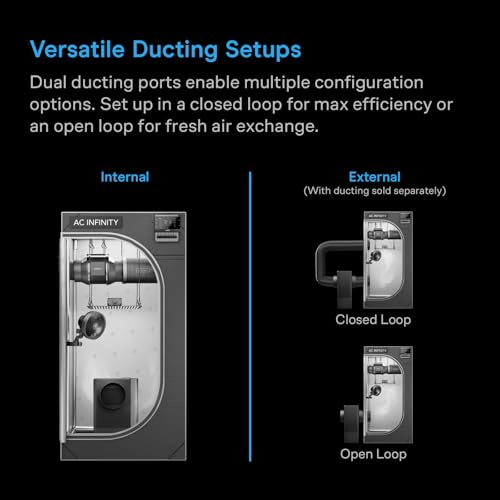
Owners appreciate the dual duct ports, which allow for flexible airflow routing, a feature usually found on larger units. It also supports smart controllers and app automation, so you can integrate it into a broader climate system. While it doesn’t have quite the raw output of the 7, for a 3×3 or 2×4 tent, it’s more than sufficient. I’d pick this over the 7 if your space doesn’t demand that extra power.
Product photos


SPIDER FARMER 38 Pint Dehumidifier
Strengths
- Affordable price
- Air duct design
- Auto defrost function
- Large coverage area
- Rotating caster wheels
Trade-offs
- No smart controls
- Drain hose not included
- Alarm can be loud
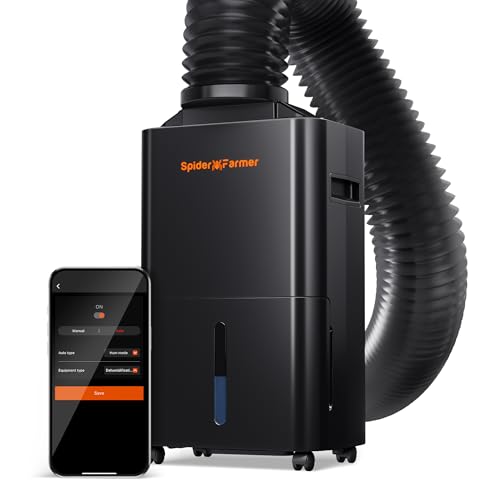
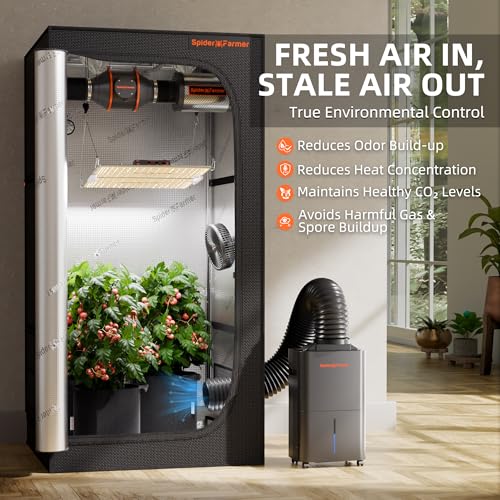
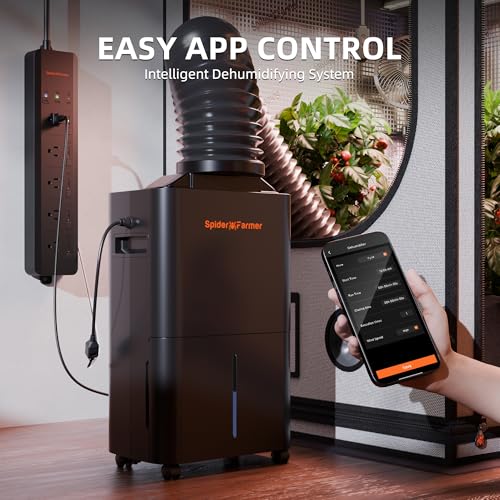
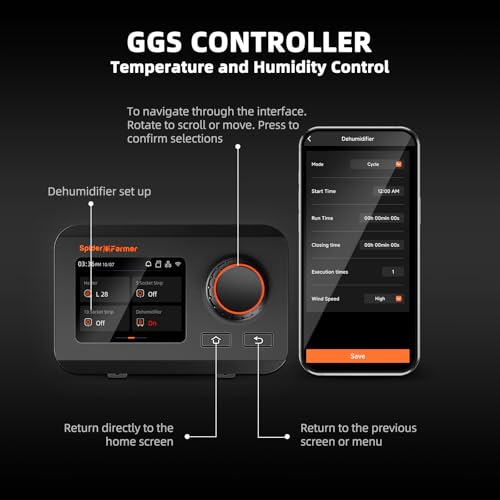
For growers who want solid performance without overspending, the SPIDER FARMER dehumidifier is the smarter buy. It matches the MARS HYDRO unit in core specs, 38 pints/day, air duct design, digital controls, but usually comes in at a lower price. The auto defrost function is a nice touch, preventing icing in cooler rooms, which helps extend runtime in less-than-ideal conditions.
Owners praise its ease of movement and the clear digital display, though some report the alarm sound when the tank is full can be jarring. It lacks app control, but for most users, that’s not a dealbreaker. When you factor in the customer service reputation and value, this one edges out as the best budget-friendly option that doesn’t feel cheap.
Product photos
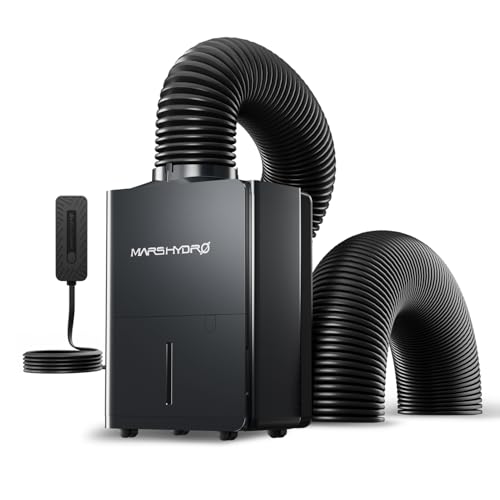
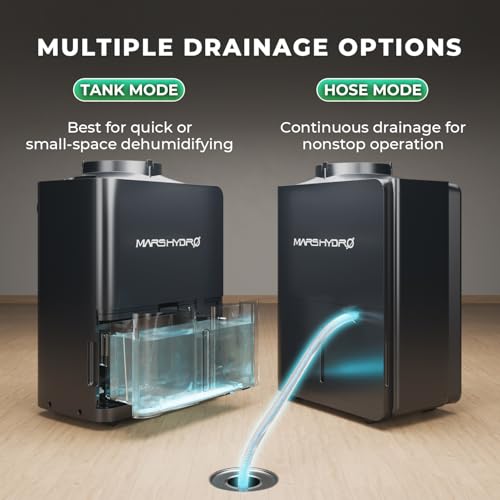
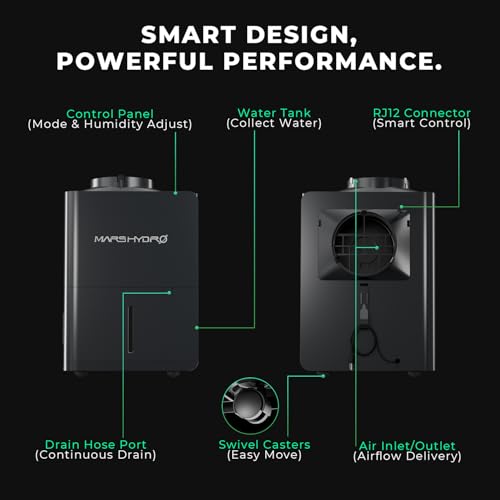
MARS HYDRO 38 Pint Compressor Dehumidifier
Strengths
- Air duct for external placement
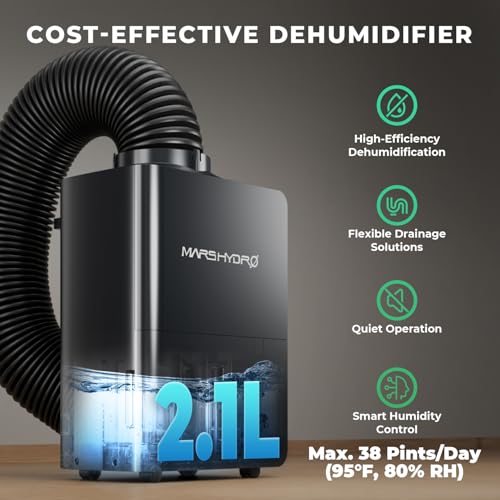
- High moisture removal
- Washable filter
- Smooth-rolling wheels
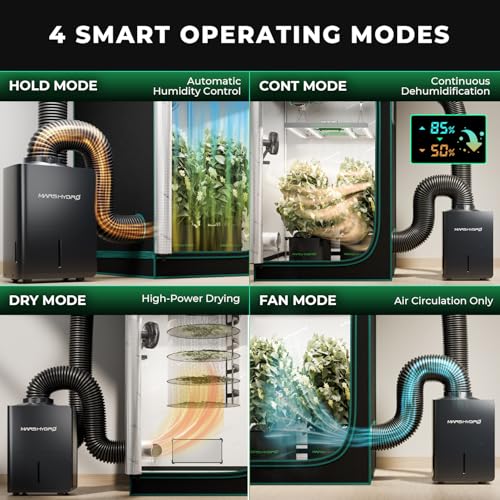
- Digital humidity control
Trade-offs
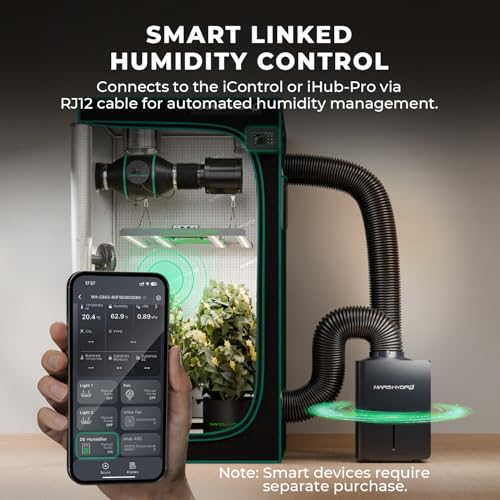
- No smart app connectivity
- Slightly louder than average
- Drain hose sold separately
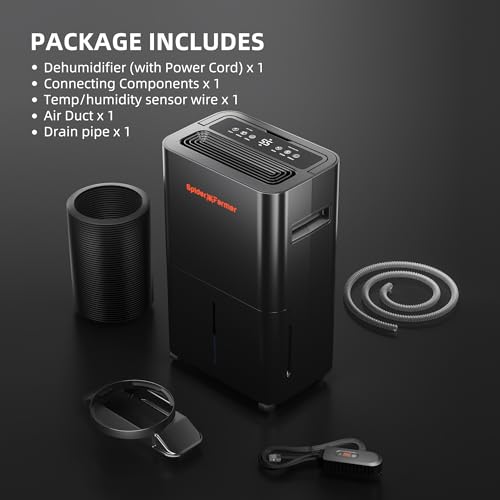
MARS HYDRO nailed the practical side of grow tent dehumidification with this model. The air duct design is the standout feature, it lets you place the unit outside the tent, which keeps excess heat out and simplifies airflow management. That’s a big win for heat-sensitive grows. With an 18L/day capacity, it’s strong enough for 4×4 tents and handles moisture removal efficiently.
The digital display and auto mode make setup straightforward, and the washable filter is a small but meaningful cost-saver over time. Reviewers highlight its reliability during extended runs, though some note the casters could be sturdier. Compared to the SPIDER FARMER model, it feels slightly more refined in build and interface, worth it if you value clean integration and lasting performance.
Product photos
Auto Small Dehumidifier for Confined Space
Strengths
- Perfect for tight spaces
- Active dehumidification
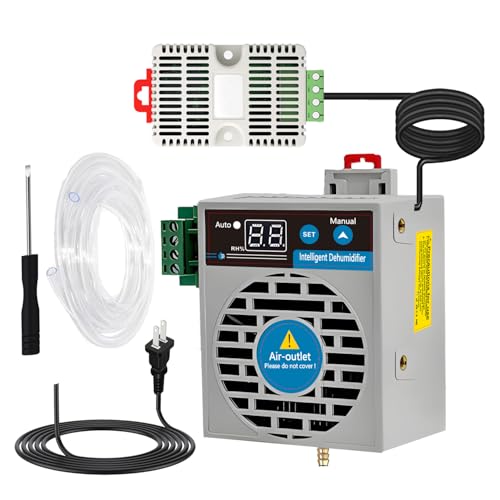
- External humidity sensor
- AC/DC power compatible
- Auto shut-off
Trade-offs
- Very low moisture capacity
- Not for full tents
- Limited airflow
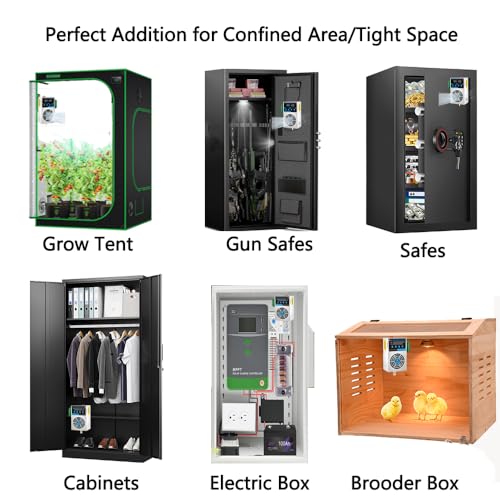
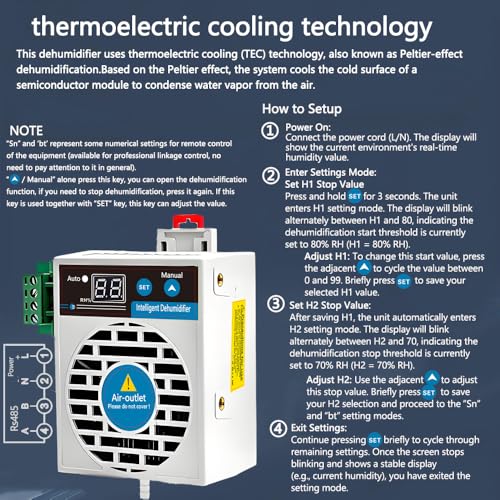
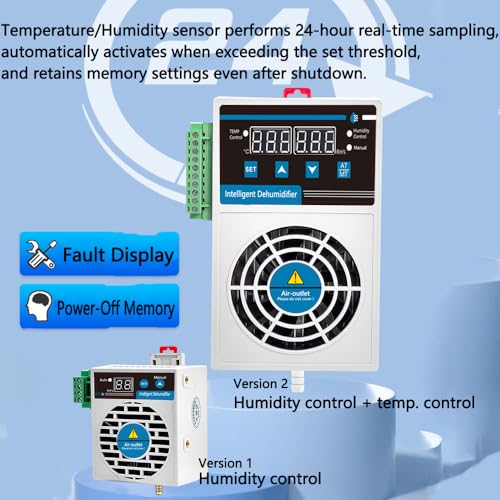
This isn’t a grow tent dehumidifier, it’s a micro-environment protector, and it excels in that role. Designed for electrical cabinets, safes, or tiny grow enclosures, it’s one of the few active dehumidifiers built for confined spaces where passive packs just don’t cut it. The external humidity sensor is a standout, giving accurate readings without guesswork.
It runs on both AC and DC power, which is rare and useful for off-grid or low-voltage setups. The auto shut-off and drain hose support make it low-maintenance. While it won’t handle a full tent, for incubators, propagation boxes, or gear storage, it’s invaluable. I’d recommend this as a supplemental unit, not a primary solution.
Product photos

Levoair 68oz Mini Dehumidifier with Hose

Strengths
- Very quiet
- Lightweight and portable
- Continuous drain option
- Low energy use
- Easy one-button control
Trade-offs
- Not for cold environments
- Low daily capacity
- Peltier less efficient
This little unit is the definition of a budget workhorse, it won’t impress with specs, but for small tents or enclosed spaces under 650 sq ft, it gets the job done quietly. The ultra-quiet operation (under 40 dB) makes it a favorite for indoor use where noise matters, like in a bedroom or closet. Since it uses Peltier cooling instead of a compressor, it’s lighter and cooler-running, but that also means it struggles below 59°F or in low humidity.
The 5ft drain hose is a solid perk for continuous use, and the portability is excellent thanks to the handle and compact size. But owners report it maxes out quickly in high-humidity grow environments. It’s not built for heavy-duty plant drying cycles. Still, as a supplemental dehumidifier or for very small spaces, it holds its own.
Product photos


How We Chose These grow tent dehumidifiers
Rather than a hands-on lab test, this is a research-led comparison of published specifications and owner feedback. I examined each dehumidifier’s stated moisture removal capacity, features like smart controls and drainage options, and compatibility with common grow tent sizes. To build a well-rounded view, I weighed owner reviews from multiple sources alongside expert opinions found in horticultural publications and online forums. This allowed me to rank options based on real-world performance and reliability.
For grow tent dehumidifiers, consistent humidity control and ease of integration were the most important factors. Maintaining precise humidity levels is crucial for plant health and maximizing yields, so models with accurate sensors and adjustable settings took priority. Similarly, features like built-in ducting or continuous drain hoses, which simplify operation within an enclosed space, strongly influenced the rankings.
Specifications reliably indicate a unit’s potential moisture removal capacity and physical dimensions. However, I placed more weight on owner feedback regarding actual performance in real-world grow tent environments. Reports on noise levels, long-term reliability, and the accuracy of humidity sensors were vital. Understanding how to [reduce humidity in grow tent] setups, as informed by user experience, was critical to making informed recommendations. Ultimately, I prioritized dehumidifiers that consistently deliver on their promises and offer a user-friendly experience.
How To Choose The grow tent dehumidifiers
Picking the right dehumidifier for your grow tent is about more than just grabbing the cheapest unit. It’s about protecting your investment – your plants – and maximizing your yield.
A quality grow tent dehumidifier actively manages moisture levels, preventing mold and mildew, and maintains optimal VPD (vapor pressure deficit) for plant health. Key considerations include removal capacity (pints/day), control precision, drainage options, and suitability for the tent size. Don’t skimp on features that offer automated control or continuous drainage for a truly “set it and forget it” operation.
Size and Capacity Matter
The biggest mistake I see people make is underestimating the dehumidification power they need. A small unit in a large tent will run constantly and likely fail to keep up. Look closely at the square footage recommendation, but also consider your climate. If you live in a particularly humid area, or if you’re growing plants that demand very low humidity, you’ll want to err on the side of more capacity. Don’t just look at the pint removal rate; consider the operating temperature range. Some dehumidifiers struggle to pull moisture effectively in cooler temperatures.
Control and Automation are Key
Simply removing moisture isn’t always enough. Different plants thrive at different humidity levels, and those levels change throughout the growth cycle. A dehumidifier with precise control – ideally digital – is a huge advantage. Even better is a unit with automated features. Many newer models, like the AC Infinity options, offer AI-powered humidity and VPD control, which will automatically adjust settings to maintain your ideal climate. For those wanting more information, checking out a guide to humidity control dehumidifiers can be a great starting point.
- Basic models offer limited humidity settings (e.g., low, medium, high).
- Digital controls allow you to set a precise target humidity level (e.g., 50%, 60%).
- Smart dehumidifiers integrate with apps and sensors to automatically adjust settings based on real-time conditions, providing the most consistent environment and reducing the risk of issues like needing to remove mildew from tent.
Drainage Options: Convenience and Reliability
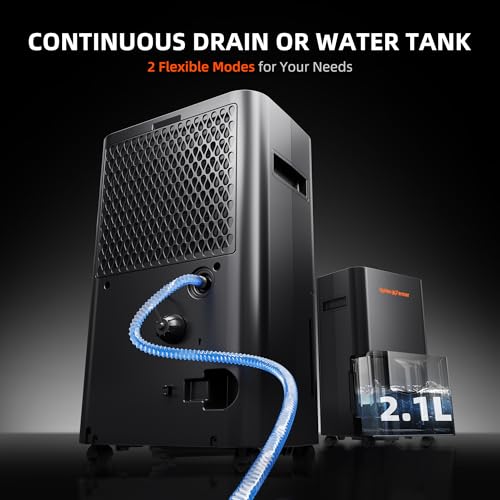
Dealing with a full water tank is a pain, especially if you’re away from your grow space frequently. That’s where drainage options come in. While all dehumidifiers have a tank, the ability to connect a hose for continuous drainage is a standout. Look for units with a dedicated drain port and, ideally, a long enough hose included.
A full water tank is a sign of a job well done, but letting it sit is an invitation to mold and mildew. Continuous drainage, if possible, is your best bet.
Grow Tent Dehumidifiers Compared
Here’s a comparison of key specifications for popular grow tent dehumidifiers to help you choose the right one for your needs.
| Product Title | Moisture Removal (Pints/Day) | Tank Capacity (oz) | Smart Control | Air Duct Included | Recommended Tent Size |
|---|---|---|---|---|---|
| VIVOSUN AeroDrain D12 | 12 | N/A | Yes | No | Up to 5×5 ft |
| AC Infinity HYDRONE 7 | N/A | N/A | Yes | Yes | 4-6 Plants |
| AC Infinity HYDRONE 5 | N/A | N/A | Yes | Yes | 2-3 Plants |
| SPIDER FARMER 38 Pint | 32 | N/A | No | Yes | 3×3, 2×4, 4×4 ft |
| MARS HYDRO 38 Pint | 38 | N/A | No | Yes | 3×3, 2×4, 4×4 ft |
| Auto Small Dehumidifier | N/A | N/A | No | No | Confined Space |
| Levoair 68oz Mini | 35 | 68 | No | Yes (5ft Hose) | Up to 650 sq ft |
Frequently Asked Questions
What size dehumidifier do I really need for my grow tent?
Don’t rely solely on tent square footage; consider your local climate and plant needs. If you live in a humid area or grow plants requiring low humidity, choose a unit with higher pint removal capacity than the minimum recommendation for your space. Checking out resources for dehumidifiers for 4×4 grow tents can help narrow down the best fit.
Are “smart” dehumidifiers worth the extra cost?
Yes, especially for maintaining precise VPD. They use sensors and algorithms to automatically adjust settings, reducing manual intervention and creating a more stable, optimized environment for your plants, which is critical throughout different growth stages.
How often will I need to empty the water tank?
That depends on your tent’s humidity and the dehumidifier’s capacity. Continuous drainage via a hose is the most convenient option, avoiding frequent emptying and reducing the risk of stagnant water becoming a breeding ground for mold.
Can I use a standard household dehumidifier in my grow tent?
While technically possible, it’s not ideal. Grow tents require units designed for enclosed spaces, with features like ducting ports and optimized airflow. Standard dehumidifiers lack these features and may be less efficient or even damage your plants with improper air circulation.
What’s the difference between a desiccant and a refrigerant dehumidifier for a grow tent?
Refrigerant dehumidifiers are more common and generally more energy-efficient at higher humidity levels, but they lose effectiveness in cooler temperatures. Desiccant dehumidifiers work well in cooler environments, but use more energy and can be less effective in very humid conditions.
The Bottom Line
Choosing a grow tent dehumidifier often comes down to how much control you want versus how much you’re willing to spend. While many options will remove moisture, the AC Infinity HYDRONE 7 stands out as the strongest overall performer, offering intelligent climate control and seamless integration into your grow space. It’s an investment, but one that pays off in plant health and peace of mind.
For those on a tighter budget, the SPIDER FARMER 38 Pint dehumidifier delivers a substantial amount of moisture removal at a very competitive price. If you need something for a smaller, more confined space, the Auto Small Dehumidifier is a surprisingly capable option. And for those prioritizing versatility, the Levoair 68oz Mini dehumidifier can handle a range of spaces and even help you [dry a wet tent quickly] when needed.
Ultimately, the best dehumidifier isn’t about chasing the highest pint removal rating or the newest features. It’s about creating a stable, consistent environment for your plants. Prioritize accurate humidity control, reliable operation, and a unit that fits your specific tent size and climate. Remember, maintaining optimal VPD is far more critical than any single specification.
