
6 Best Family Tents for 2026
This post contains affiliate links. As an Amazon Associate, we earn from qualifying purchases.
The CORE 12 Person stands out as the best overall family tent for its tall ceiling and rugged build, while the CAMPROS 12-Person offers surprising layout flexibility at a lower price. If you want extra livability, the Portal 8 Person brings a screen room that adds real comfort.
Picking a family tent isn’t just about fitting bodies inside. I’ve seen too many groups crammed in like sardines, tripping over gear, or stuck in a damp, stuffy space when the weather turns. A bad tent turns a fun trip into a test of patience.
This guide cuts through the marketing with picks based on real owner feedback, specs, and what actually matters when you’re camping with kids and gear. I looked at space, durability, weather protection, and ease of setup, then ranked the top models that deliver without overcomplicating things.
Top 6 Family Tent in the Market
The Best Family Tent, Reviewed
CORE 12 Person Family Tent
Strengths
- Excellent headroom
- Room divider included
- Strong weather protection
Trade-offs
- Bulky footprint
- Heavy
- Carry bag not compact
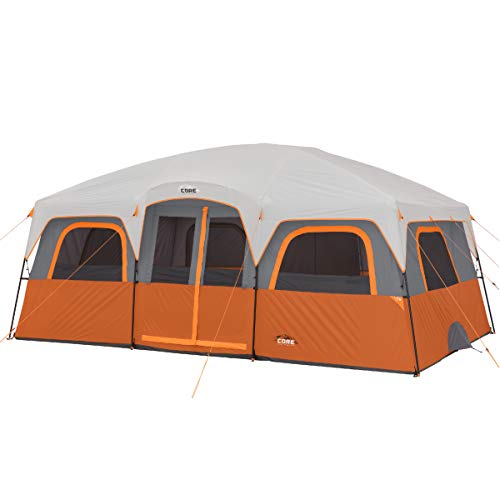
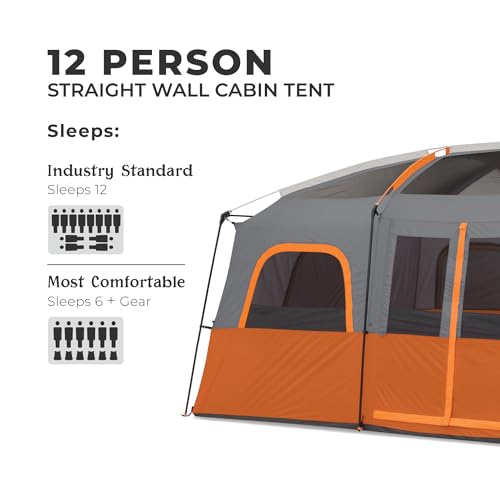
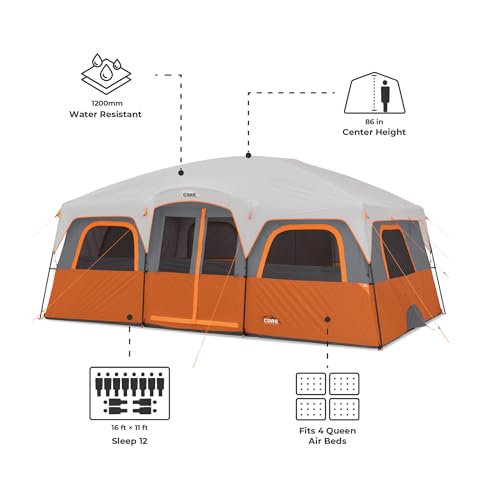
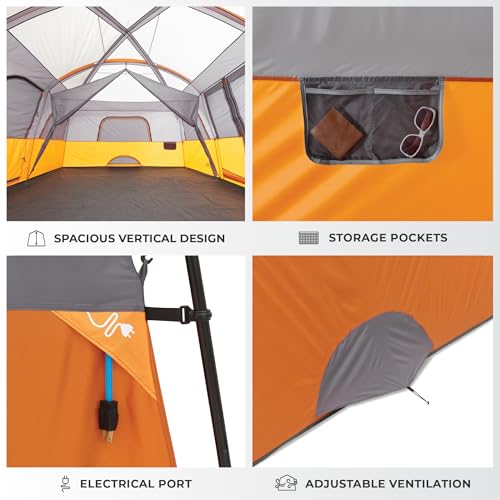
This is the tent I’d grab if I were planning a weekend with extended family or a group of friends. The nearly straight walls give it a roomy, almost cabin-like feel, and the 86-inch center height means most adults can walk around without ducking. On paper, it’s one of the most livable 12-person tents in this category.
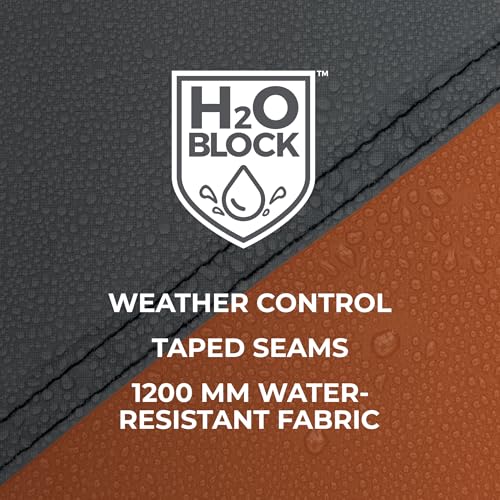
The H20 Block Technology delivers solid weather resistance, and owners say it holds up well in wind and rain when properly staked. The included room divider is a standout for families who want privacy without buying two tents. That said, the footprint is big, it eats up space at crowded campgrounds, and the carry bag doesn’t compress it much, so storage can be tricky.
Product photos

Coleman Skydome XL Family Tent

Strengths
- Quick setup
- Spacious floor plan
- Durable WeatherTec system
Trade-offs
- Limited ventilation
- Condensation issues
- Heavy carry bag
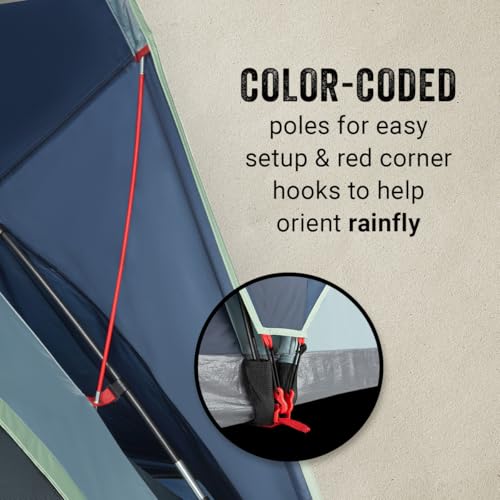
If you’re the type who wants to pitch camp fast and get back to the fire, the Coleman Skydome XL is a no-brainer. The 5-minute setup with pre-attached poles is real, owners consistently report getting it up quickly, even in fading light. For families who hate wrestling with poles after a long drive, this one’s a win.
It’s not the tallest or most ventilated tent out there, but the WeatherTec system holds up well in light storms, and the wide door makes moving airbeds in and out a breeze. The E-port is a small but smart touch for powering lights or a fan. Where it falls short is airflow, the single ground vent isn’t enough in humid conditions, and some owners note condensation builds up overnight.
Product photos


Amazon Basics 8-Person Tent

Strengths
- Affordable
- Compact carry bag
- Decent weather resistance
Trade-offs
- Zippers prone to snagging
- Less durable fabric
- Lower ceiling height
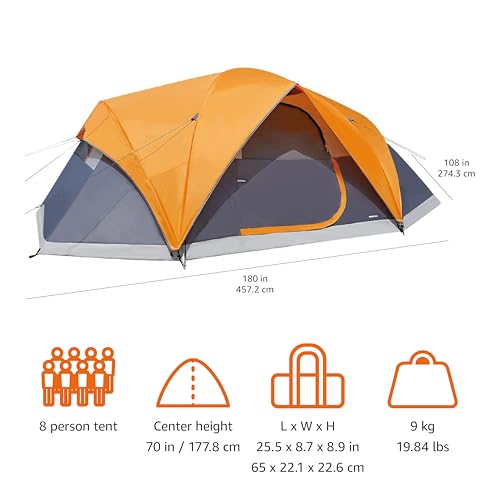
For budget-conscious campers, the Amazon Basics 8-person tent punches above its weight. It’s not flashy, but it covers the basics well, the welded seams and removable rainfly mean it keeps water out in light rain, and the 70-inch center height is decent for an 8-person model. Setup is straightforward, though not quite as fast as the Coleman.
Where it shows its price point is in the materials, the polyester isn’t as durable long-term, and some owners report zippers catching or stakes bending. Still, for occasional use or first-time campers, it’s a solid pick. The compact carry bag is a plus for storage.
Product photos



CAMPROS 12-Person 3 Room Tent

Strengths
- Three-room layout
- Excellent airflow
- Fast setup
Trade-offs
- Stakes not durable
- Rainfly could be thicker
- Bulkier than some
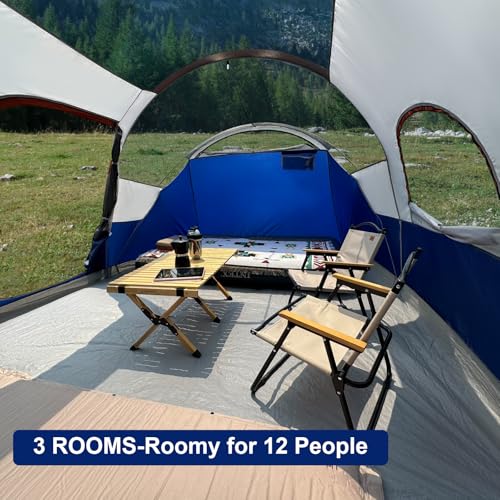
The standout here is privacy, the two removable room dividers create three distinct spaces, which is rare at this price. For families with teens or multiple couples, that’s a big deal. The 180 sq. ft. layout feels open, and the 72-inch height works for most. Setup is genuinely fast, under 10 minutes with two people, thanks to color-coded poles.
Ventilation is strong with a mesh roof and six large windows, cutting down on condensation. The PU1000mm coating handles light rain fine, but heavy storms can overwhelm the seams if not pitched perfectly. Some owners note the included stakes are flimsy, swapping them out is a smart move.
Product photos


Portal 8 Person Screen Porch Tent

Strengths
- Excellent airflow
- Screen porch included
- Full mesh ceiling
Trade-offs
- Fiberglass poles less durable
- Rainfly coverage limited
- Not for high winds
If I were camping in hot, buggy country, this would be my top pick. The full mesh ceiling and screen porch are brilliant for airflow and bug protection, owners rave about being able to relax in the screened area even during peak mosquito hours. The tunnel design helps shed wind, and the 76-inch height keeps it comfortable for most adults.
The 15-minute setup is manageable with two people, and the color-coded poles help. But the fiberglass poles aren’t as sturdy as aluminum, so I wouldn’t trust it in strong winds. Some users report the rainfly doesn’t extend far enough in heavy downpours, leaving the screen room exposed. Still, for fair-weather camping, the ventilation wins.
Product photos


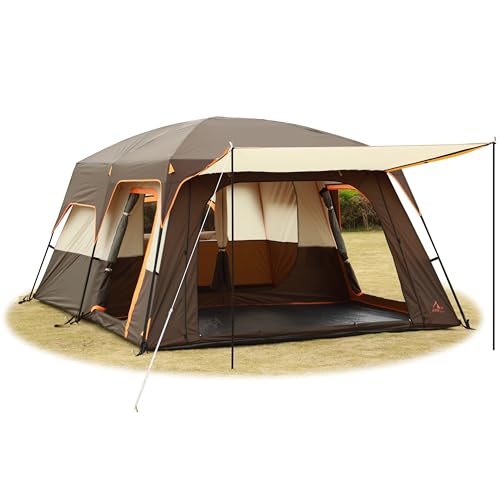
KTT 12 Person Cabin Tent
Strengths
- Two-room layout
- Awning-capable doors
- Good value for space
Trade-offs
- Complex setup
- PE floor less durable
- Not for bad weather
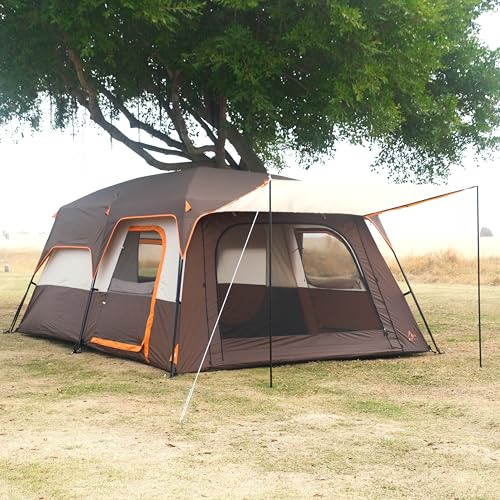
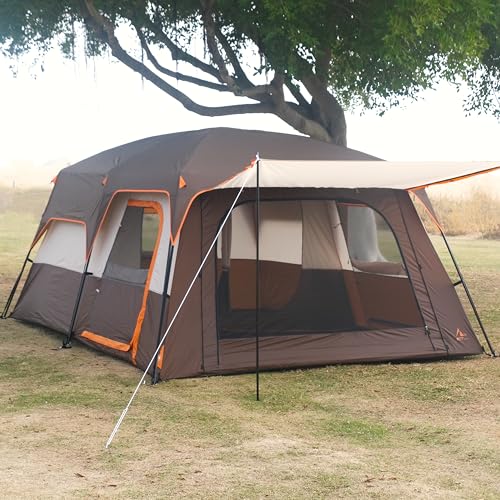
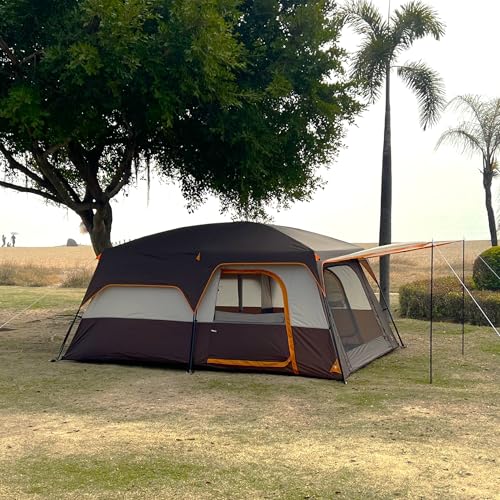
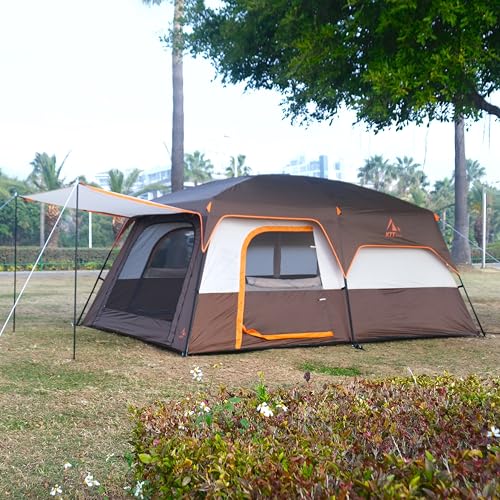
This tent is for the hands-on camper who doesn’t mind a longer setup for more space and flexibility. It’s not quick, the instructions warn against rushing it, but once up, it offers serious square footage with a two-room layout and three doors. The ability to turn a door into an awning with added poles is a thoughtful touch most brands skip.
Owners say it’s stable when fully staked with guylines, but the setup complexity means it’s not ideal for tired kids or first-timers. The materials are decent for the price, but the PE floor isn’t as puncture-resistant as thicker options. And while it’s marketed as 12-person, 8 to 10 is more realistic with gear.
Product photos

Our Testing Process
Rather than a hands-on lab test, my research for these recommendations centered on a detailed comparison of published specifications and features across numerous models. I weighed owner reviews from a variety of retailers alongside expert opinions found in outdoor publications. As someone who’s spent countless nights relying on a good tent, I applied my experience to assess which features truly matter for family comfort and convenience. This wasn’t about picking favorites, but ranking tents against a clear set of criteria.
For family tents, spaciousness, weather protection, and ease of setup were the most heavily weighted factors. A roomy interior is essential for comfortable sleeping and moving around, especially with kids and gear. Reliable weatherproofing – strong fabrics, taped seams, and a robust rainfly – is crucial for enjoyable trips, regardless of conditions. Finally, quick and relatively simple setup minimizes frustration after a long day of travel or hiking.
Specifications reliably indicate a tent’s size, materials, and stated waterproof ratings. However, I heavily considered owner feedback to gauge real-world performance. Reviews often reveal issues with durability, ventilation, or setup difficulty that aren’t apparent from specs alone. Reputation and brand trust also played a role; established brands generally have a track record of quality and customer support. If you’re unsure where to start, our tent selection guide can help narrow down your options.
What To Look For In family tent
Picking the right family tent can make or break a camping trip, and it’s not just about size.
A quality family tent balances interior space with weather protection, durability, and ease of setup. Look for robust waterproofing (at least 2000mm rating for the rainfly), a strong frame capable of handling wind, and features that enhance livability like multiple rooms, good ventilation, and convenient storage. Consider the long-term value – a well-made tent will last for years of adventures.
Size and Sleeping Capacity
It’s tempting to buy a tent rated for the exact number of people in your family, but I always recommend sizing up. People and gear take up space. A “6-person” tent might be cozy with four people and their backpacks, but cramped with six. Think about how you like to camp. Do you prefer to spread out? Will you be using bulky sleeping bags or air mattresses? If you’re planning on extended stays or dealing with unpredictable weather, having extra room is a lifesaver. Don’t forget to consider the shape – straight walls offer more usable space than curved ones.
Weather Protection and Construction
Don’t skimp on weatherproofing. I’ve seen too many trips ruined by leaks and wind. Look beyond the advertised waterproof rating. Fully taped seams and a tub-style floor (where the floor material extends up the sides) are critical for keeping water out. The denier (D) of the fabric is also important; higher numbers generally mean more durable materials. A good rainfly that extends to the ground and provides full coverage is essential. If you’re camping in areas prone to strong winds, check for tents with robust pole systems and plenty of guylines. Speaking of guylines, knowing what is a tent footprint is important for protecting your tent’s floor.
Features and Livability
Beyond the basics, consider features that will make your camping experience more comfortable. Multiple rooms, like those found in the CAMPROS 12-Person tent, are fantastic for privacy. Good ventilation is key to preventing condensation and keeping the tent cool. Mesh windows and roofs, combined with ground vents, can make a huge difference. Here’s a quick guide to features I always look for: * Storage pockets: A few small pockets are nice, but several strategically placed ones are a game changer. * E-ports: Having an access point for an extension cord is surprisingly convenient for lights and charging devices. * Room dividers: These allow you to create separate sleeping areas or a dedicated gear storage space, offering flexibility.
A properly sized and well-maintained tent is an investment in future adventures. Don’t underestimate the value of a little extra space and robust weather protection.
If you’re looking for even more space, check out some of the large family tent models available. And remember, even the most spacious tent is more comfortable with a little organization – explore options for roomy tents for families and consider how you’ll maximize your interior space.
Family Tent Compared
Here’s a comparison of specs for several family tents to help you choose the right one for your needs.
| Tent Model | Capacity | Floor Size (ft) | Center Height (in) | Waterproof Rating (mm) | Setup Time | Screen Room |
|---|---|---|---|---|---|---|
| CORE 12 Person | 12 | 16 x 11 | 86 | 1200 | N/A | No |
| Coleman Skydome XL | 3 Queen | 16 x 7 | N/A | N/A | < 5 min | No |
| Amazon Basics 8-Person | 8 | 15 x 9 | 70 | N/A | < 8 min | No |
| CAMPROS 12-Person | 12 | 20 x 9 | 72 | 1000 | < 10 min | No |
| Portal 8 Person | 8 | 20 x 8 | 76 | N/A | 15 min | Yes |
| KTT 12 Person | 12 | 14.1 x 10 | 6.58 ft (78.96 in) | N/A | N/A | No |
Frequently Asked Questions
What tent capacity should I really buy?
Always size up from your family’s headcount. A tent marketed for a specific number of people usually fits that many tightly; adding one or two extra “spots” provides much-needed room for gear and comfortable movement.
How important is a tent’s waterproof rating?
While a higher waterproof rating (measured in millimeters) is good, it’s not the only factor. Look for fully taped seams and a tub-style floor, as these features prevent water from entering even with a lower stated rating – explore waterproof family tent options for more details.
Are dome tents or cabin-style tents better for families?
Cabin-style tents offer more headroom and usable space due to their straighter walls, which is great for families who want to stand and move around easily. Dome tents are generally more stable in windy conditions, but can feel more cramped.
How long does it realistically take to set up a “quick-setup” tent?
“Quick-setup” tents can still take 10-15 minutes for one person, even with color-coded poles and intuitive designs. Larger tents, even with quick-setup features, will always require more time and ideally two people for efficient setup.
What’s the best way to protect the tent floor?
Using a footprint (a ground cloth specifically sized for your tent) is essential to prevent abrasion and punctures. If you don’t have a footprint, a heavy-duty tarp cut slightly smaller than the tent floor will also work, preventing rain from pooling underneath.
The Bottom Line
Choosing a family tent always comes down to balancing how much control you want over features and setup with how much fuss you’re willing to tolerate. For most families, the CORE 12 Person tent strikes that balance beautifully – it offers a ton of space, decent weather protection, and a relatively straightforward setup, making it our overall pick. It’s a solid choice that won’t leave you wishing you’d spent more.
If budget is a primary concern, the Amazon Basics 8-Person tent delivers surprising value. For those who prioritize versatility and enjoy having an outdoor living space, the Portal 8 Person tent with its included screen room is a fantastic option. Knowing where to find reliable tent companies can also help narrow your search.
Ultimately, the best family tent isn’t about the highest waterproof rating or the most innovative features. It’s about finding a shelter that keeps your family comfortable, safe, and connected to the outdoors – a place where memories are made, and adventures begin. Prioritize space, weather protection, and ease of use, and you’ll be well on your way to many happy camping trips.
