
8 Best Lights for 24-Hour Grow Tent (2026)
This post contains affiliate links. As an Amazon Associate, we earn from qualifying purchases.
The FECiDA 130W is the best overall light for a 24 grow tent, delivering strong PPFD and solid cooling, while the KingLED KP1000 100W is a smart budget pick with reliable full spectrum output and dedicated growth modes. For those needing flexible mounting and app control, the VIVOSUN LumaRay 100W stands out as the most versatile option.
Choosing the right light for a 24” grow tent isn’t just about brightness, it’s about giving your plants the right kind of light at every stage, without cooking them or wasting energy. I’ve seen too many growers pick based on wattage alone, only to end up with leggy seedlings or scorched leaves.
That’s why this guide cuts through the noise. I compared specs and real owner feedback to find lights that actually perform, focusing on spectrum quality, heat management, and long-term reliability. These picks are based on what works in real grow tents, not just what looks good on paper.
Top 8 Lights For 24 Grow Tent in the Market
The Best Lights For 24 Grow Tent, Reviewed
FECiDA 130W Full Spectrum LED Grow Light

Strengths
- True full spectrum
- Daisy chain capable
- Quiet cooling
Trade-offs
- No ratchet hangers included
- Slightly pricier
If I had to pick one light for a 2×2 or small 3×3 tent, it’d be the FECiDA 130W. The specs line up well, real 130W draw, full 380–780nm spectrum, and a daisy chain feature that makes scaling up effortless. The dimming knob is a small but meaningful touch, letting you tailor intensity for seedlings or flowering without extra gear. Owners praise its quiet operation and consistent canopy penetration, even after months of use.
It’s not the cheapest, but it outperforms budget models like the VIPARSPECTRA P1000 in spectrum balance and heat management. The 14-year brand experience gives me confidence in long-term reliability, and the 2-year warranty is a solid safety net. For most home growers, this is the smarter buy.
Product photos



KingLED KP1000 100W Full Spectrum Grow Light

Strengths
- Veg and bloom modes
- High PPFD output
- 3-year warranty
Trade-offs
- No daisy chaining
- No remote control
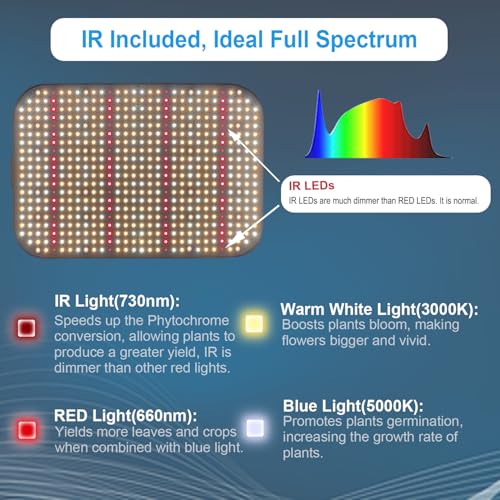
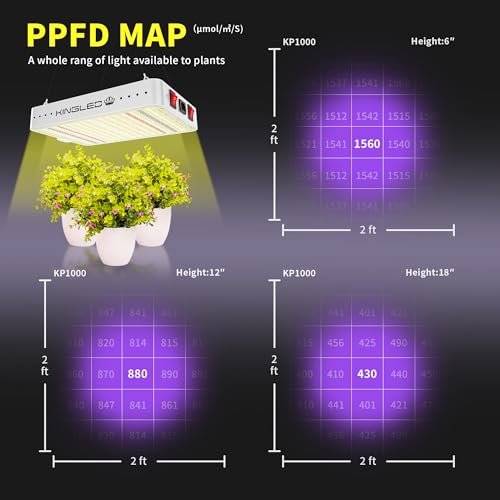
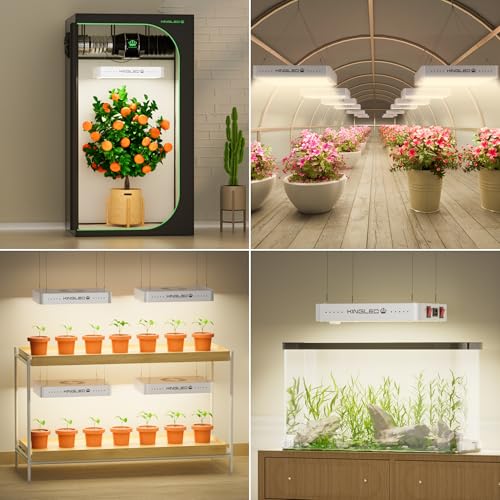
The KingLED KP1000 is a full-cycle workhorse. With dedicated veg and bloom modes and a strong 1560 μmol/㎡/s PPFD at 6 inches, it covers every stage from seed to harvest in a 2×2 tent. The ratchet hangers are a nice touch, no dimmer knob needed, just raise or lower for intensity. Owners consistently rate it highly for even canopy penetration and quiet cooling fans.
It stacks up well against the VIPARSPECTRA and FECiDA models, especially with its 3-year warranty. The lack of daisy chaining is a miss, but the reliability and performance make it a top contender. If you want one-and-done lighting for small-scale grows, this is it.
Product photos



VIPARSPECTRA P1000 Dimmable LED Grow Light

Strengths
- Affordable price
- Fanless design
- Daisy chain up to 20
Trade-offs
- Lower diode density
- Shorter lifespan than premium models
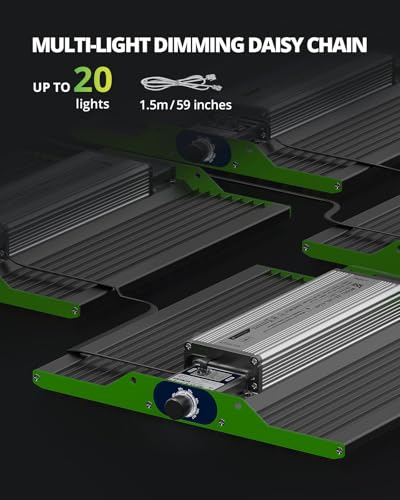
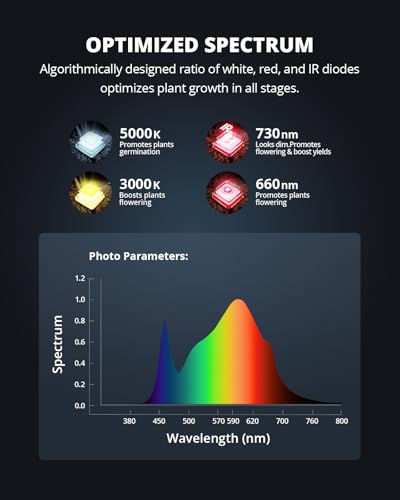
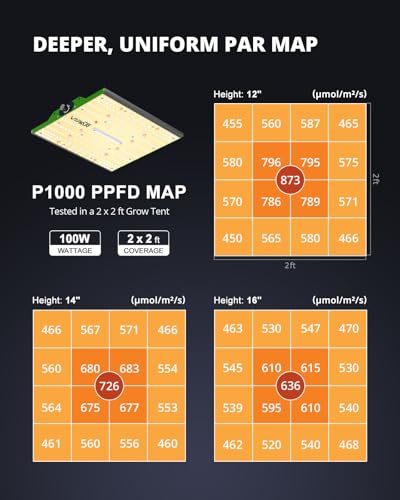
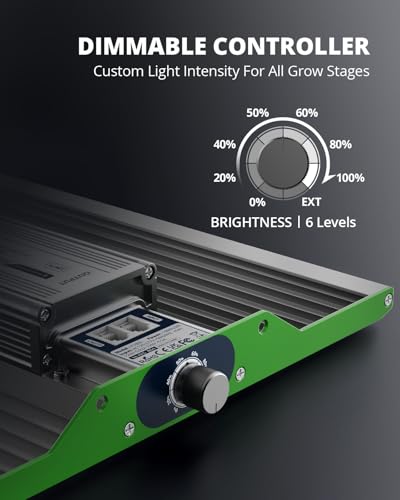
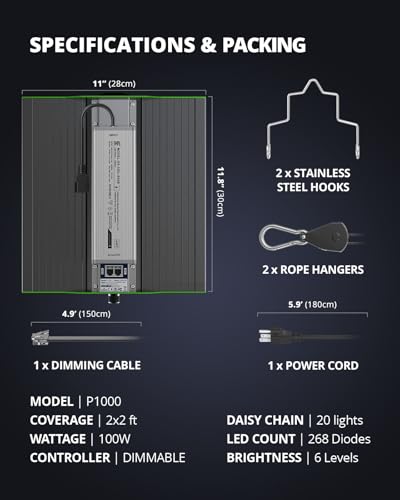
The VIPARSPECTRA P1000 is the budget baseline for a reason, it works. For 100W draw, it delivers solid PAR output and full spectrum coverage for a 2×2 tent, and the fanless design keeps it silent. The daisy chain feature is surprisingly robust, supporting up to 20 units, which is great for scaling on a tight budget.
But it’s not without trade-offs. The diodes aren’t as densely packed as in the FECiDA or KingLED, and long-term owner feedback shows faster lumen depreciation. Still, for beginners or those testing small grows, it’s the most forgiving entry point. My recommendation? Start here, then upgrade as your needs grow.
Product photos
Uallhome 200W LED Grow Light Panel (2-Pack)

Strengths
- Sunlike spectrum
- Low heat output
- Easy installation
Trade-offs
- Lower actual wattage
- Not ideal as main light
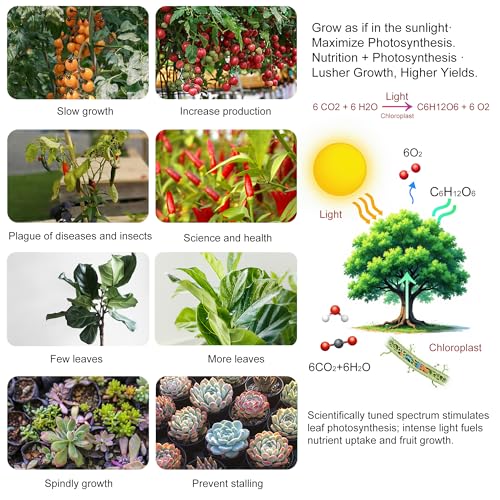
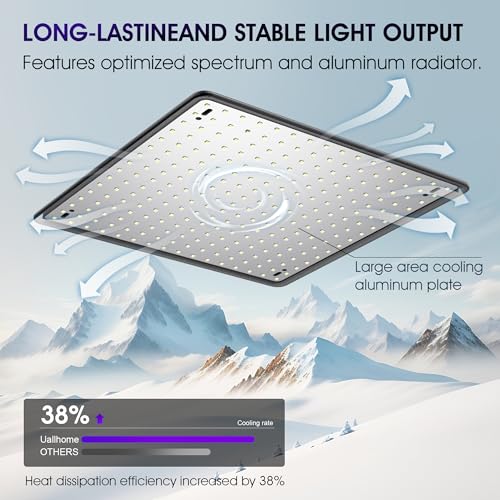
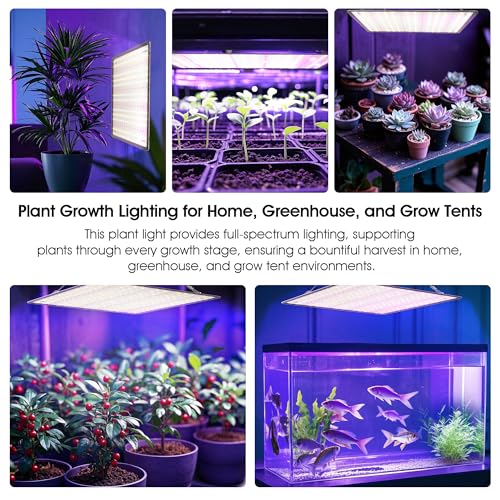
On paper, the Uallhome 200W grow light panel setup looks like a smart move if you’re expanding coverage in a 4×4 tent. The sunlike spectrum with white, blue, red, UV, and IR diodes suggests strong versatility across growth stages, and owners consistently report solid performance when used as supplemental bloom lighting. I appreciate that they’re low-heat and compact, ideal for fitting into tight spaces without burning nearby foliage.
Still, calling it a 200W light can be misleading. Reviewers note the actual power draw is lower, meaning it’s not a primary light source for a full 4×4 canopy. It works best as a side or edge booster, especially in larger tents where light fall-off is an issue. Compared to higher-output panels like the FECiDA or KingLED, this one plays a supporting role.
Product photos


VIVOSUN LumaRay 100W Under Canopy Grow Light
Strengths
- Boosts lower canopy growth
- SGS app compatible
- Magnetic mounting
Trade-offs
- Controller sold separately
- Only supplemental use
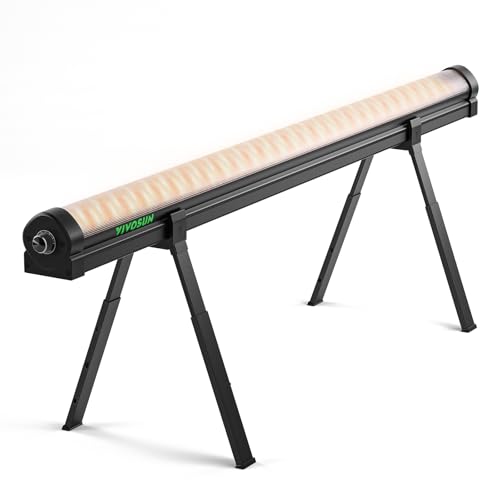
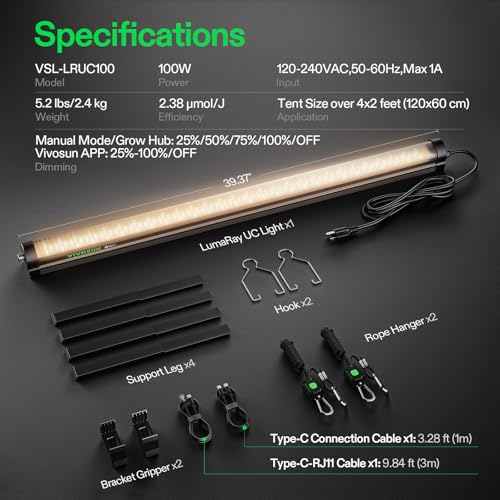
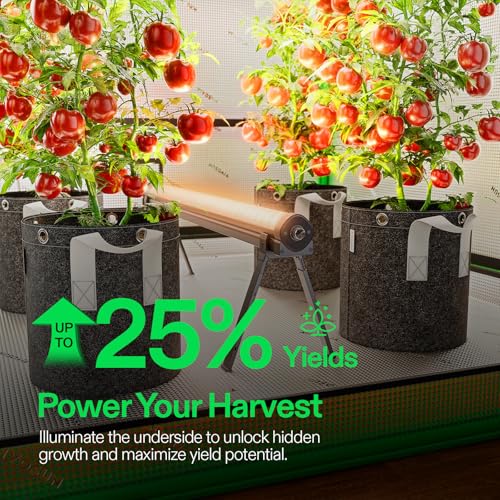
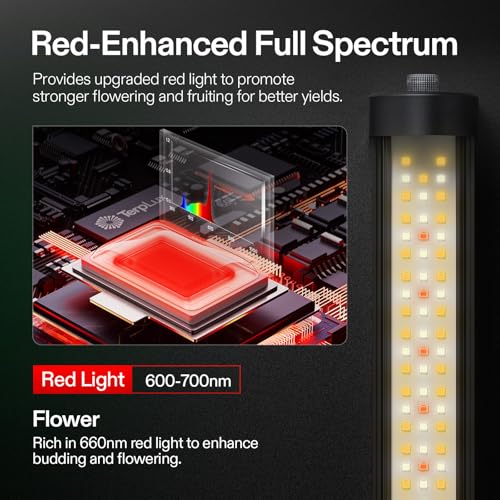
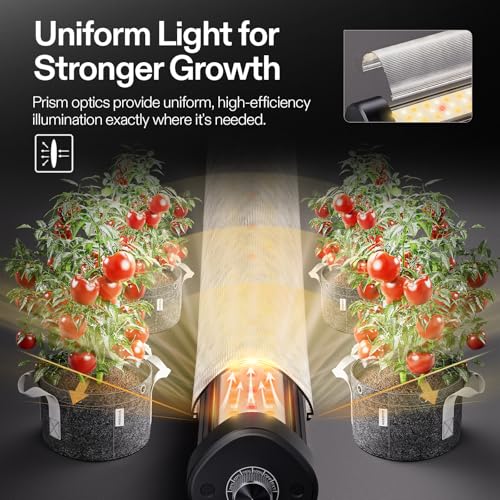
The VIVOSUN LumaRay is built for one job, getting light under the canopy, and it does it well. With a red-enhanced full spectrum and prism lens for even spread, it targets lower buds that main lights often miss. Reviewers say yields jumped noticeably when paired with a top canopy light, and the 25%–100% dimming via SGS controller adds serious flexibility for advanced users.
I like the magnetic mounting and daisy chaining with other VIVOSUN lights, but the need for a separate controller (sold separately) is a real downside. You’re not getting full functionality out of the box. Still, if you’re already in the VIVOSUN or SGS ecosystem, this is a seamless upgrade.
Product photos
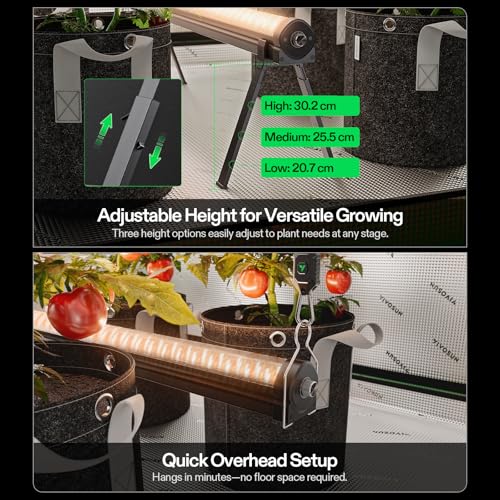
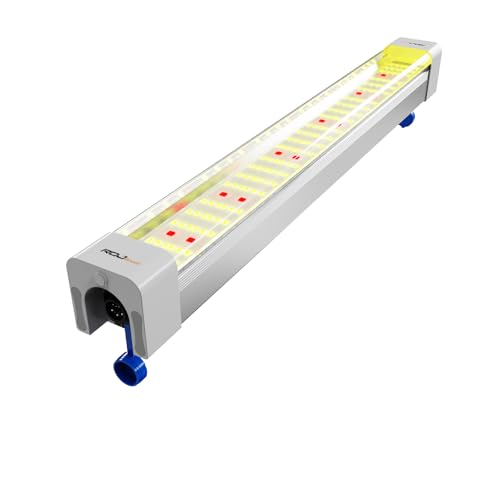
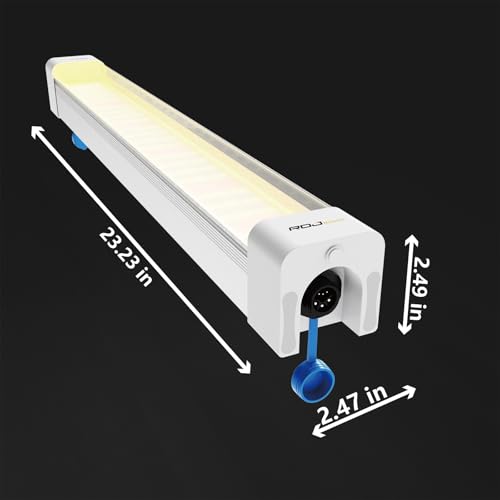
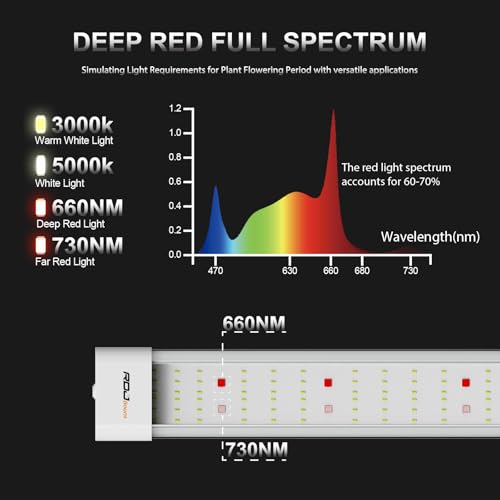
RDJ Bouns U60 60W Under Canopy LED Bar
Strengths
- IP65 waterproof rating
- Far-red IR spectrum
- Daisy chain up to 18
Trade-offs
- Overkill for small grows
- Requires external dimmer
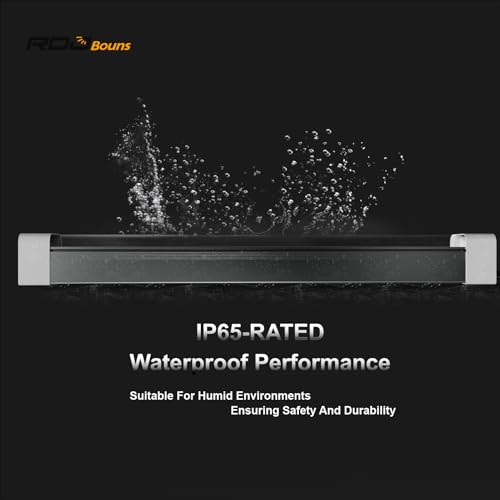
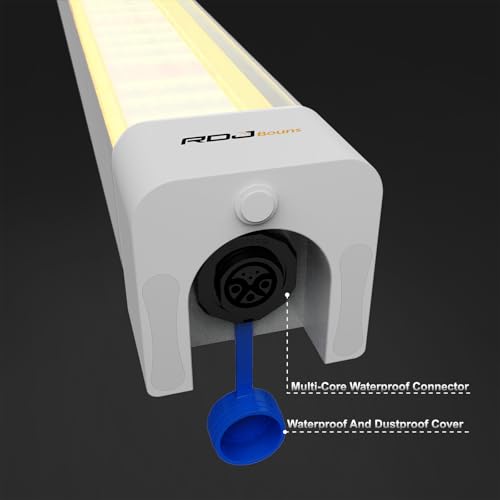
When humidity is a constant battle, the RDJ Bouns U60 makes sense. Its IP65 waterproof rating is rare in under-canopy lights, and the aviation-grade aluminum heat sink keeps things cool even in steamy greenhouses. The 660nm red and 730nm far-red IR spectrum is tailored for flowering, and owners report faster bud development when used alongside main lights.
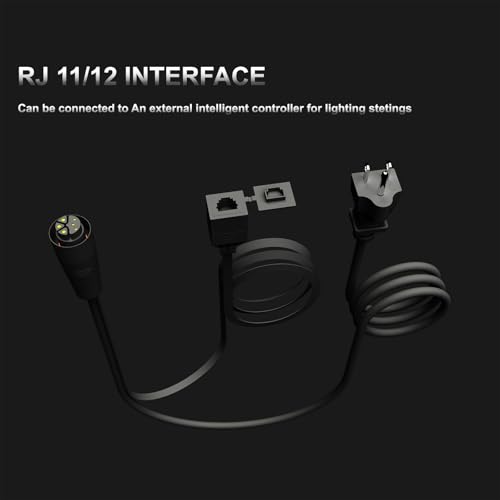
The 0–10V dimming and daisy chain support up to 18 units make it scalable for commercial builds. But for home growers, it might be overkill. The price and setup complexity don’t make sense unless you’re running a serious hydroponic or greenhouse operation.
Product photos
GLOWRIUM 24W Adjustable Height Grow Light
Strengths
- Adjustable height up to 71″
- Flexible gooseneck heads
- Built-in timer
Trade-offs
- Low power for flowering plants
- Bulky footprint
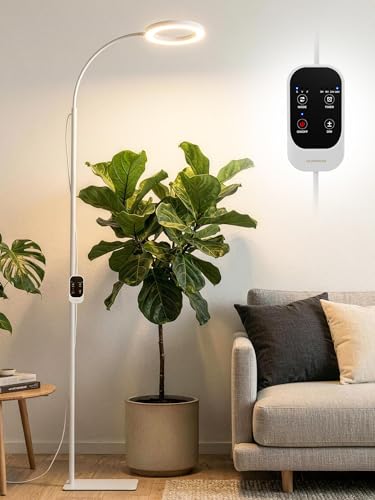
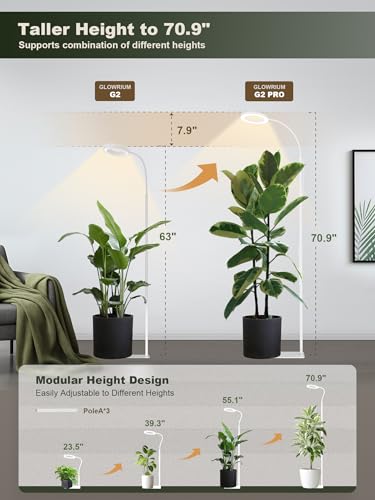
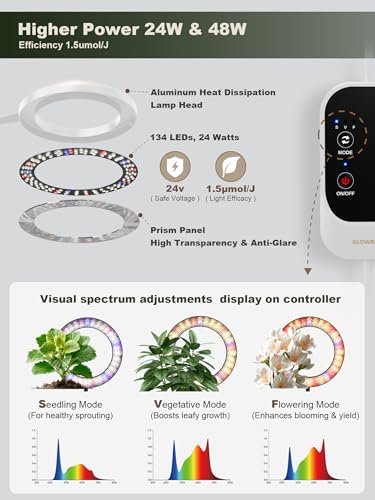
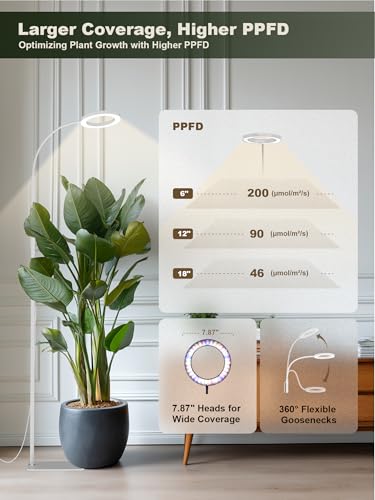
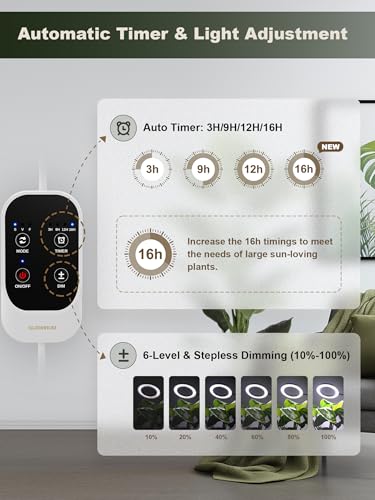
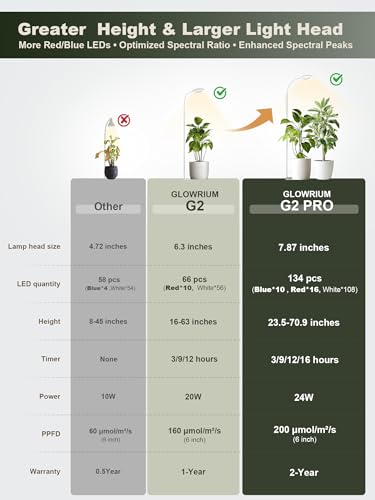
The GLOWRIUM stands out for one reason: height. At 70.9 inches tall with flexible goosenecks, it’s made for tall, floor-growing plants like fiddle leaf figs, monsteras, or indoor citrus. The 360° adjustable heads let you wrap light around large foliage, and the timer and 6-level dimming make automation simple. Owners love the stability from the 5.29lb base and aluminum pole.
But let’s be clear, it’s not for dense grow tents. The 24W output and 200 μmol/m²/s PPFD at 6 inches are decent for low to medium-light plants, but won’t cut it for flowering crops. It’s a niche product, but for that niche, it’s excellent.
Product photos
Barrina 144W T8 LED Grow Light (6-Pack)

Strengths
- Linkable up to 10
- Eye-friendly 5000K light
- Easy setup
Trade-offs
- Not for flowering plants
- Lower efficiency than COB LEDs
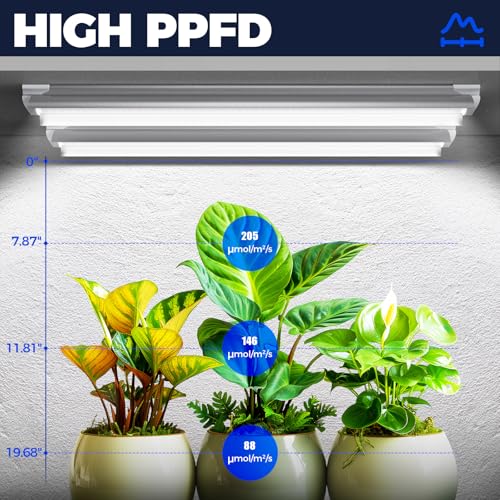
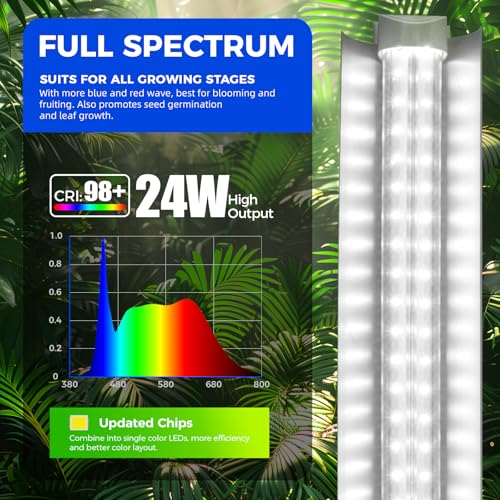
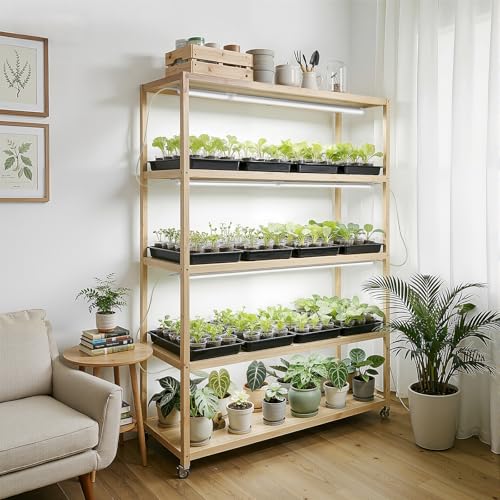
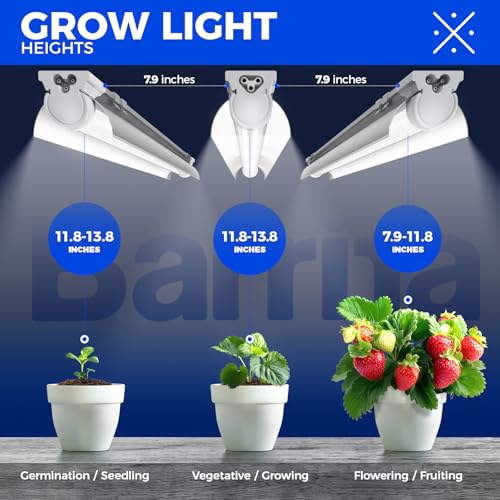
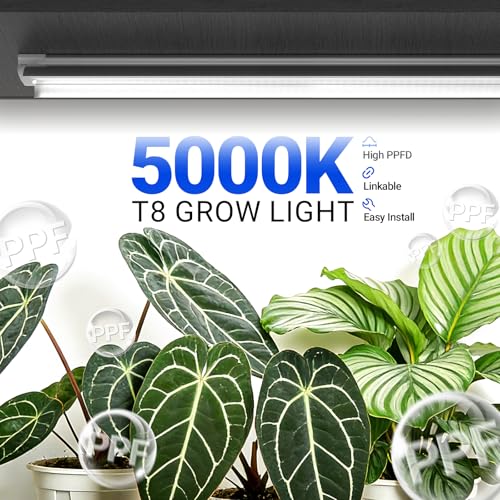
The Barrina 2FT T8 LED strips feel like a throwback to fluorescent days, but in a good way. If you’re retrofitting a shelf, closet, or small greenhouse with a linkable, white-light system, these are solid. The V-shaped reflector boosts efficiency by up to 20%, and the 5000K full spectrum is easy on the eyes while still supporting growth. Owners like the plug-and-play setup and the ability to link 10 strips.
But this isn’t high-intensity lighting. It’s best for leafy greens, herbs, or seedlings, not flowering plants. Compared to modern full-spectrum panels, it’s less efficient per watt. Still, for low-light applications, it’s a clean, modular solution.
Product photos
How We Evaluated lights for 24 grow tent
I approached this guide by researching the specifications and features of numerous lights designed for 24” grow tents. I then weighed those technical details against owner reviews from major retailers and expert opinions found in horticultural publications. My goal was to identify lights that consistently deliver on their promises – providing the right spectrum and intensity for healthy plant growth – and represent good value for the money. Rather than a hands-on lab test, this is a research-led comparison of specs and owner feedback.
For lights intended for grow tents, several factors stand out as most important. Light spectrum is critical, ensuring plants receive the wavelengths needed for both vegetative growth and flowering. Equally important is the light’s intensity (PPFD), which directly impacts photosynthesis. Finally, efficient heat management is key; excessive heat stresses plants and shortens the lifespan of the fixture. I looked for lights from top grow tent manufacturers as these often design lights to work optimally with their tents.
Published specifications reliably indicate a light’s wattage, spectrum, and dimensions. However, real-world performance – particularly light distribution and heat output – is often better understood through owner experiences. I prioritized reviews that detailed actual growing results and noted any common complaints about overheating or premature failure. Owner feedback also helped me assess the ease of installation and usability of features like dimming and daisy-chaining. Ultimately, a combination of technical data and user reports informed my recommendations.
How To Choose The lights for 24 grow tent
Choosing the right grow lights for your 24” grow tent can feel overwhelming. There are so many options, and the marketing hype can be intense. But getting it right is crucial for healthy, productive plants.
A good grow light delivers the correct spectrum and intensity for each stage of plant growth, offers efficient energy use, manages heat effectively, and is built to last. Buyers should pay close attention to wattage, spectrum output (PPFD and wavelengths), cooling mechanisms, and whether the light is dimmable to adapt to different growth phases.
Wattage & Coverage Area
Don’t fall for the “equivalent” wattage claims. Manufacturers often inflate numbers to sound more impressive. Instead, focus on actual wattage and PPFD (Photosynthetic Photon Flux Density) – the amount of usable light reaching your plants. For a 24” tent, you generally want lights designed for a 2×2 or slightly larger footprint. A light claiming 100W but delivering low PPFD will underperform compared to a true 130W light with a high PPFD output. If you’re looking to expand coverage, consider options like the Barrina 144W T8 LED Grow Light (6-Pack) which is ideal for linking multiple panels.
Spectrum & Plant Stage
Plants need different light spectra during different phases of growth. Seedlings and vegetative growth thrive under blue-rich light (around 400-500nm), while flowering and fruiting require more red light (around 620-700nm). Many lights offer “full spectrum” options, but quality matters. Look for lights that include both white, red, and blue diodes, and ideally, some far-red infrared as well. The KingLED KP1000 100W Full Spectrum Grow Light is particularly good for seed-to-harvest growth, with dedicated Veg and Bloom modes.
- Consider the types of plants you’re growing. Leafy greens need less intense light than flowering plants.
- Dimming capabilities are incredibly useful. They allow you to adjust the light intensity as your plants grow and change needs.
- Pay attention to the specific wavelengths offered. Some lights emphasize certain wavelengths over others, which can impact plant development.
Cooling & Longevity
LEDs generate heat, and excessive heat can damage both the light and your plants. A good grow light will have an effective cooling system – usually a combination of aluminum heat sinks and fans. Look for lights that advertise quiet operation, especially if you’re growing in a living space. A well-cooled light will have a longer lifespan and deliver more consistent performance. Remember, a cheap light that burns out quickly isn’t a bargain. Consider a protective grow tent floor mat to help insulate and protect your investment, as well.
A rule of thumb: don’t skimp on cooling. A light that runs too hot will degrade faster and potentially harm your plants.
Lights for 24 Grow Tent Compared
Here’s a comparison of specifications for lights suitable for use in a 24″ grow tent, to help you find the best option for your needs.
| Product Name | Wattage | Spectrum | Coverage Area | Dimmable | Features |
|---|---|---|---|---|---|
| FECiDA 130W | 130W | Full Spectrum | N/A | Yes | Daisy Chain, Quiet Fan |
| KingLED KP1000 100W | 100W | Full Spectrum | 2×2 ft | No | Veg/Bloom Modes |
| VIPARSPECTRA P1000 100W | 100W | Full Spectrum | 2.5×2.5 ft (Veg), 2×2 ft (Flower) | Yes | Daisy Chain |
| Uallhome 200W (2-Pack) | 200W | Full Spectrum | N/A | No | Panel, Adjustable Height |
| VIVOSUN LumaRay 100W | 100W | Red-Enhanced | N/A | Yes | Under Canopy, App Control |
| RDJ Bouns U60 60W | 60W | Full Spectrum | 2×2 ft | Yes | Waterproof, Daisy Chain |
| GLOWRIUM 24W | 24W | Full Spectrum | N/A | Yes | Adjustable, Timer |
| Barrina 144W (6-Pack) | 144W | 5000K White | N/A | No | Linkable, T8 Style |
Frequently Asked Questions
What wattage is sufficient for a 24-inch grow tent?
Around 100-130 watts is generally ideal for a 24” grow tent, but prioritize PPFD over simply chasing higher wattage numbers. A quality light delivering high PPFD at that wattage will outperform a cheaper option claiming a higher wattage with lower output.
Can I use a single light for both vegetative and flowering stages?
Yes, many “full spectrum” lights can handle both stages, but dimming capabilities are very helpful. Being able to reduce the intensity during the vegetative stage and increase it during flowering will optimize growth and prevent light burn.
What does PPFD mean, and why is it important?
PPFD (Photosynthetic Photon Flux Density) measures the amount of usable light reaching your plants, and it’s a better indicator of performance than wattage alone. Higher PPFD generally translates to faster growth, but it needs to be balanced with the right spectrum and appropriate distance from the plants.
How can I prevent my grow tent from overheating with LED lights?
Good ventilation is key, but also look for lights with robust heat sinks and fans. Consider adding a ventilation fan specifically for heat removal, and monitor the tent’s temperature regularly to make sure it stays within the ideal range for your plants.
Where can I find more information about lighting for larger grow tents?
If you’re planning to scale up your grow operation, you can find more detailed guidance on best lights for 2×4 tent with more powerful options and specific recommendations for larger spaces.
The Bottom Line
Ultimately, choosing a grow light comes down to balancing your budget with your desired level of control and quality. While there are many options available, I consistently find myself recommending the FECiDA 130W as the strongest all-around performer. It offers a great balance of power, spectrum, and features – plus, the dimming and daisy-chaining capabilities give you flexibility as your grow evolves.
For those on a tighter budget, the RDJ Bouns U60 60W is a solid choice. It provides a full spectrum within a smaller footprint, and its dimmable function adds a level of control you won’t find in cheaper options. If you need to illuminate a larger area or want the flexibility of a panel-style light, the Barrina 144W (6-Pack) is the way to go, offering a lot of light for the money, and it’s perfect for matching tent specs to lighting setup.
At the end of the day, wattage and spectrum are important, but don’t get lost in the details. Prioritize a light that delivers consistent, usable light to your plants, manages heat effectively, and is built to last. Remember, a healthy plant is a happy plant – and that starts with the right light.
