
9 Best Tent Fans for Camping 2026
This post contains affiliate links. As an Amazon Associate, we earn from qualifying purchases.
The FRIZCOL 3-in-1 Camping Fan is the best overall pick for its massive 24,000mAh battery and strong airflow, while the geonfi 11″ Wireless Camping Fan stands out as a lightweight, affordable option for smaller tents or backpacking. If you need maximum coverage, the Gliztech Canopy Fan 20″ delivers serious reach and runtime.
Let’s be real, nights in a tent can get stuffy, especially when you’re stuck with a fan that quits halfway through the night or moves air like a whisper. I’ve seen too many campers waste money on flashy gear that fails when the temperature rises. After comparing the field and digging into owner feedback, I focused on what actually matters: battery life, airflow, noise, and smart features that earn their space in your pack.
This guide breaks down the top performers based on real-world specs and user experiences, so you can find a fan that keeps you cool without draining your power bank, or your patience.
Top 9 Tent Fans in the Market
The Best Tent Fans, Reviewed
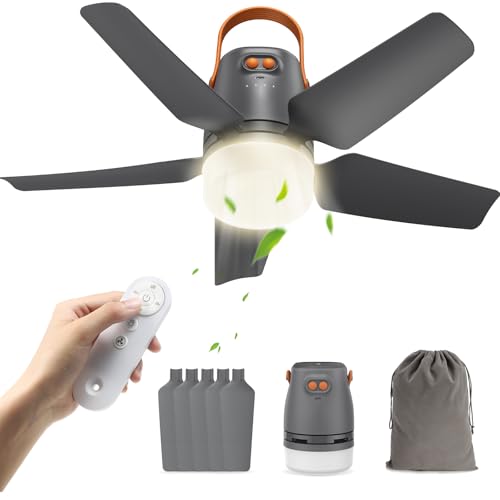
20″ Portable Ceiling Fan with Light
Strengths
- Detachable for storage
- Long battery life
- Full-featured remote
Trade-offs
- Bulkier setup
- Higher price point
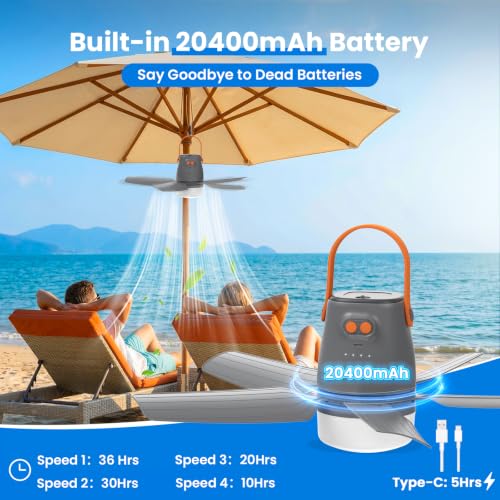
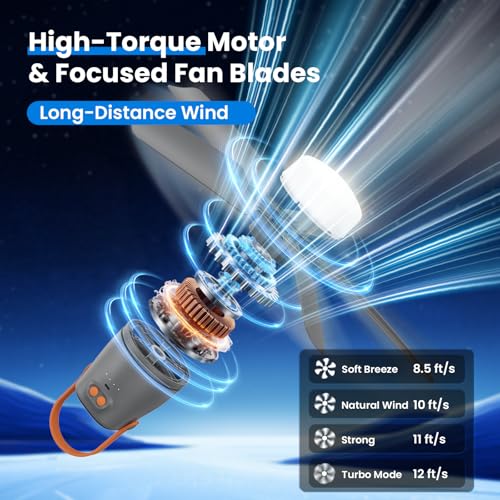
This is the most complete package in the lineup, no surprise it earns ‘Best Overall’. The 20,400mAh battery powers a 20-inch fan with 5 blades, delivering wide, strong airflow that owners say cools entire canopies or large tents. Runtime varies from 10 to 36 hours, depending on settings, and the USB-C charges in just 5 hours. The 4-speed brushless motor is quiet even on high, a rare combo.
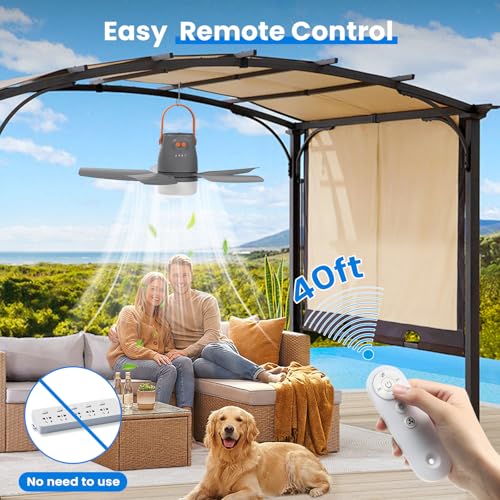
The lighting system is top-tier: 3000K–6500K CCT adjustment, dimmable brightness, and a frosted cover that eliminates glare. The remote works up to 40ft with 360° signal penetration, no need to aim it. But the real genius is the detachable design: blades come off, shrinking it to water-bottle size. That makes storage and transport way easier than most large fans. For serious campers, this is the gold standard.
Product photos


Gliztech Canopy Fan 20″ with Remote

Strengths
- Large air coverage
- Adjustable light color
- Extension hook included
Trade-offs
- Longer charge time
- Setup takes effort
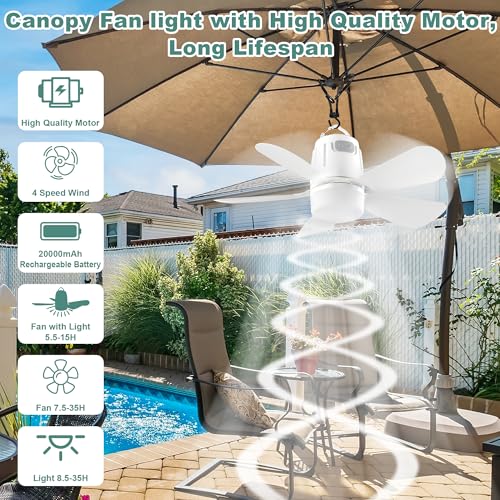
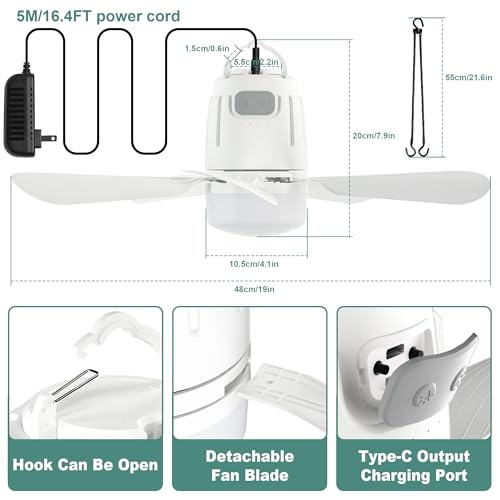
Designed for large shelters, this 20-inch fan dominates in coverage. The 20000mAh battery runs fan and light for up to 15 hours, or just the fan for 35 hours, owners say it handles multi-day events well. The 4-speed brushless motor is quiet, and the 5-blade design moves air broadly, ideal for canopies or large tents.
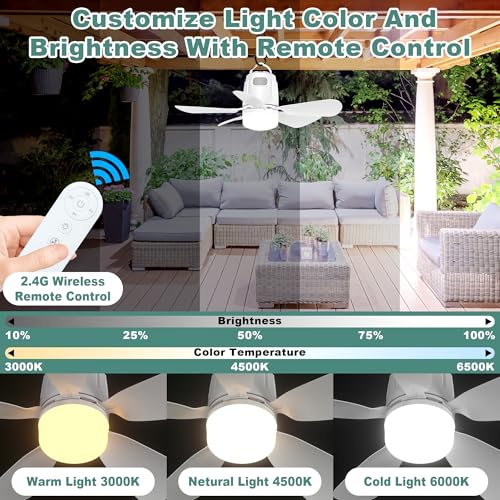
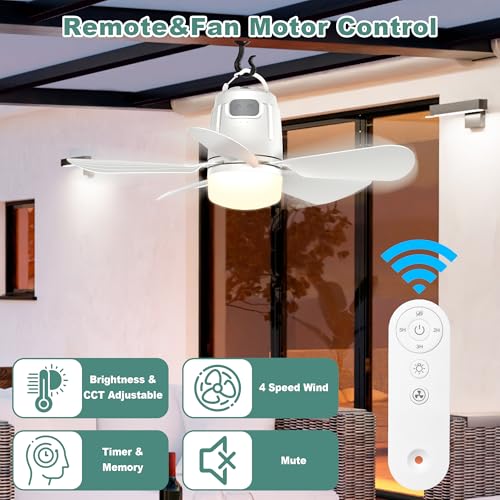
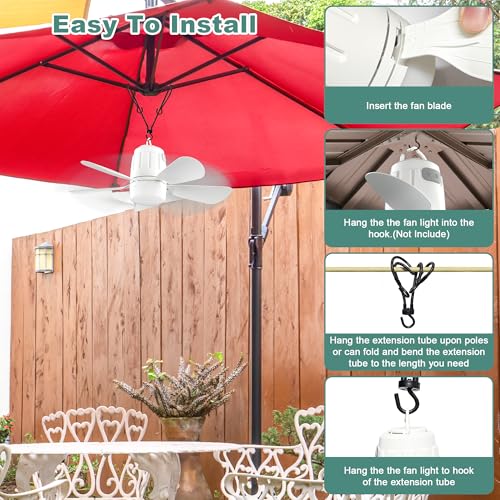
The remote is 2.4G with 25-meter range and works through obstacles, no need to point it. The CCT-adjustable light (3000K–6500K) and dimming feature let you set the mood. The included 55cm extension hose is a thoughtful touch for height adjustment. Detachable blades make storage manageable. For base camp or festival use, it’s one of the most capable.
Product photos
FRIZCOL 3-in-1 Camping Fan 24000mAh

Strengths
- Longest battery life
- Power bank function
- Stable base
Trade-offs
- Bulky for backpacking
- Light lacks brightness
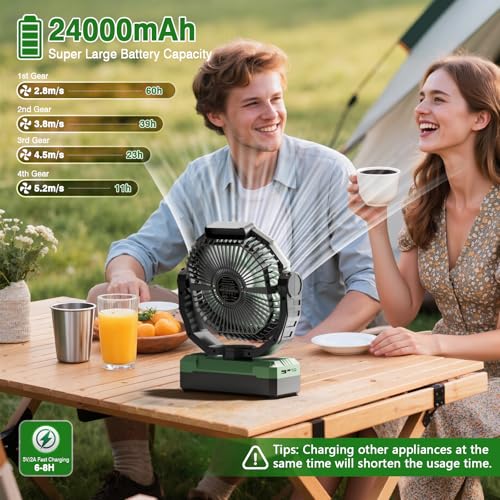
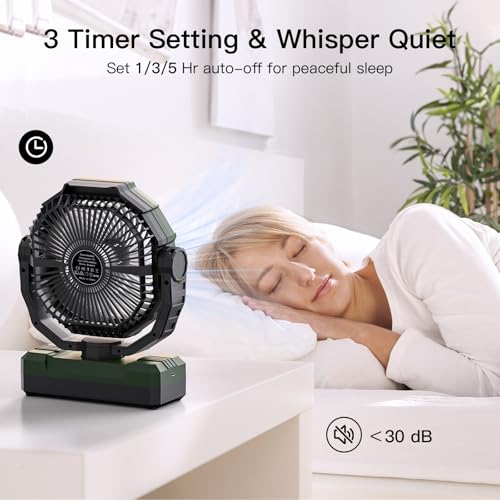
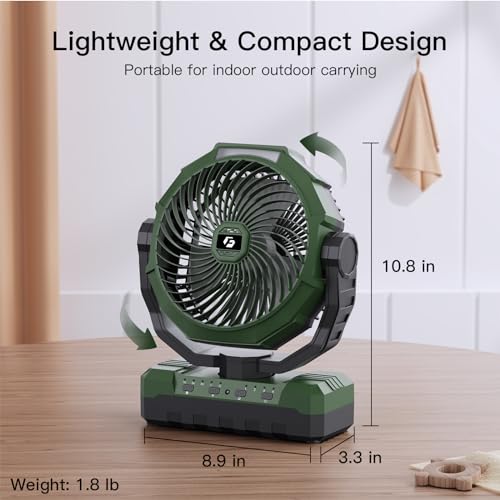
With a 24000mAh battery, this fan claims the longest runtime, up to 60 hours on low, and owners back that up. It’s a powerhouse for extended trips or off-grid stays. The 4-speed motor pushes air at 5.2 m/s, which is strong for a portable unit, and noise stays under 30dB on lower settings. The light has two levels, not the most customizable, but functional.
The remote is convenient, and the vertically adjustable head lets you angle airflow precisely. Build feels rugged, and the non-slip base adds stability on tables or RV counters. It also doubles as a power bank, useful when outlets are scarce. While the light isn’t the brightest, the sheer battery capacity makes this a survival-tier pick.
Product photos


Camping Fan with Remote 12000mAh

Strengths
- Budget-friendly
- Long runtime
- Device charging port
Trade-offs
- Plastic build quality
- Light not very bright
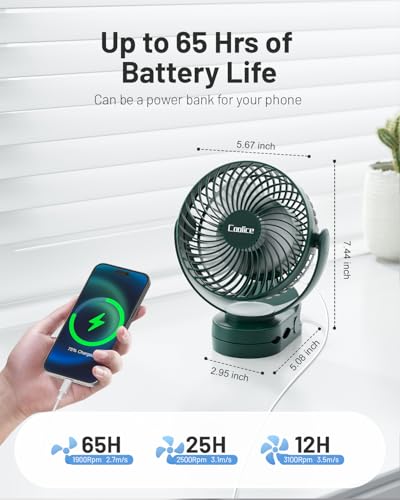
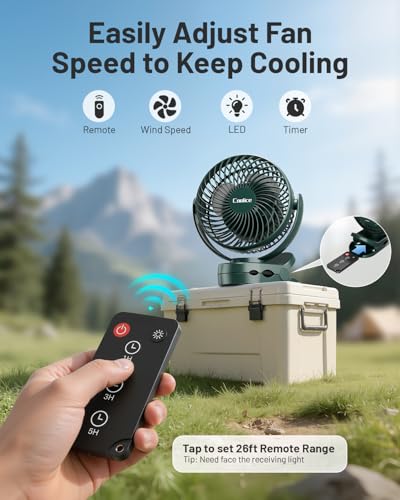
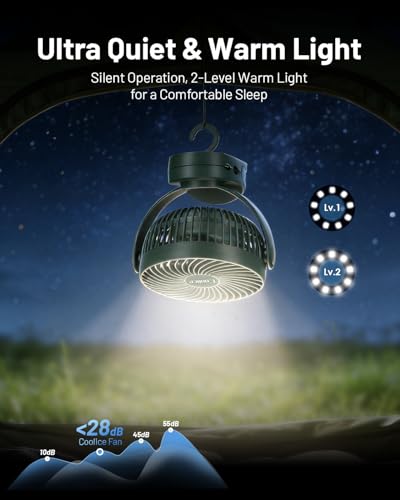
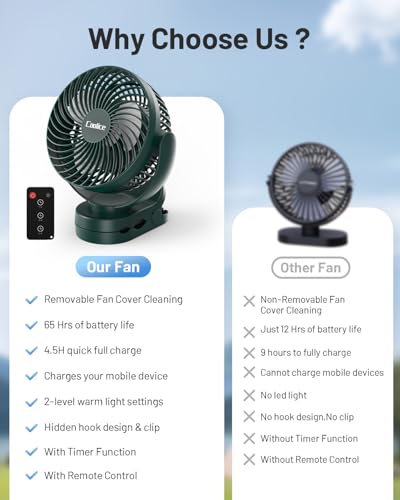
Priced to move, this fan punches above its weight on runtime and features. The 12000mAh battery supports up to 65 hours on low, owners confirm it’s reliable during extended outages or weekend trips. The remote is basic but functional, with timer settings and separate controls for light and fan. The 600-lux LED isn’t the brightest, but it’s adequate for small tents.
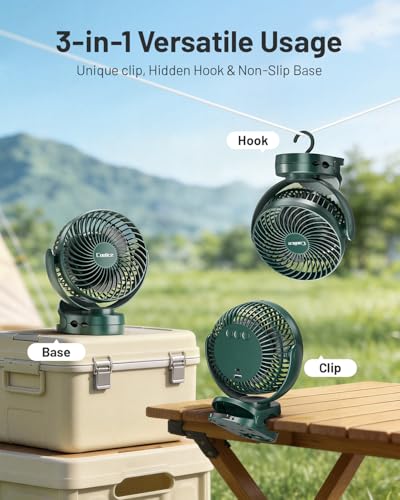
Build quality feels budget-friendly, and some reviewers note the plastic feels thin. Still, for the price, getting a remote, USB-C charging, and device charging port (5V/2A output) is impressive. It hangs well with the 360° rotatable hook and works fine in 1–2 person tents. If you want solid features without spending premium, this is the smarter buy.
Product photos
geonfi 11″ Wireless Camping Fan
Strengths
- Remote control
- Even 360° lighting
- Auto safety stop
Trade-offs
- Limited airflow reach
- Small size not for groups
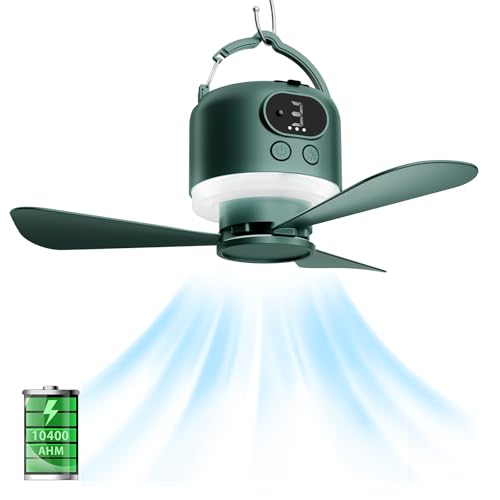
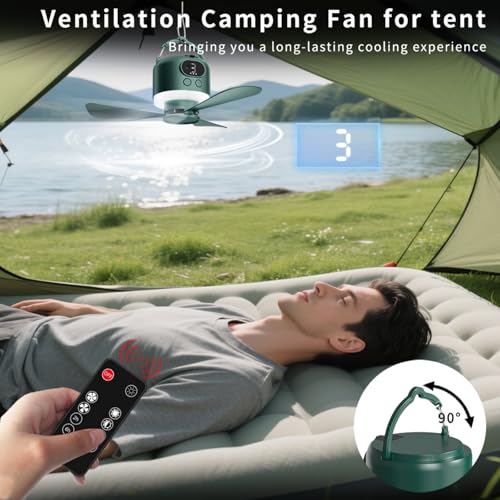
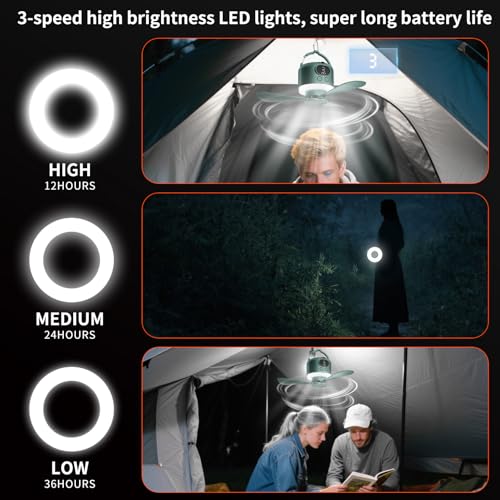
This fan excels in small, intimate spaces, exactly as its ‘Best for Small Tents & Hammocks’ label suggests. The 10040mAh battery delivers up to 38 hours, and owners report it easily lasts a weekend trip. The 360° LED ring light is a game-winner for even illumination, outshining strip-style lanterns. The brushless motor keeps noise minimal, crucial when you’re inches from your head in a hammock.
The remote control is a major usability win, adjusting speed, brightness, or setting a timer from your sleeping bag beats fumbling with buttons. Safety features like auto-shutoff on blade contact make it family-friendly. Its compact 11.4-inch size fits tight quarters, but that also limits airflow coverage. It’s not for large groups, but for solo or duo trips, it’s nearly perfect.
Product photos

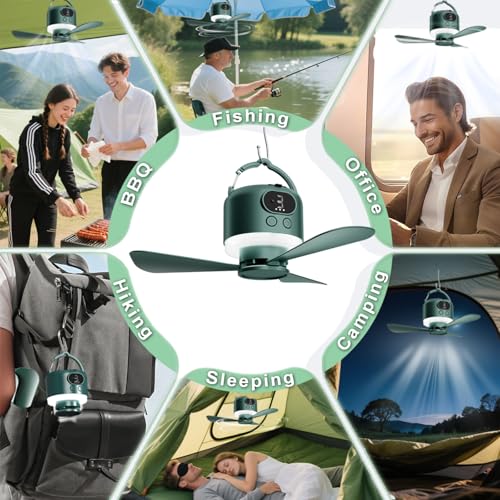

MORECORE 8″ Rechargeable Tent Fan

Strengths
- Strong airflow
- Bright lantern
- Stable stand option
Trade-offs
- Heavier than compact models
- No remote
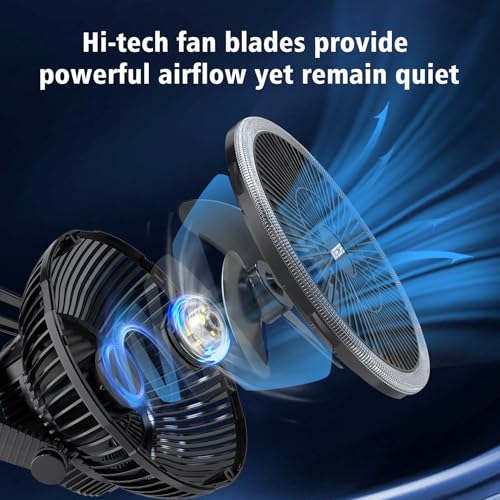
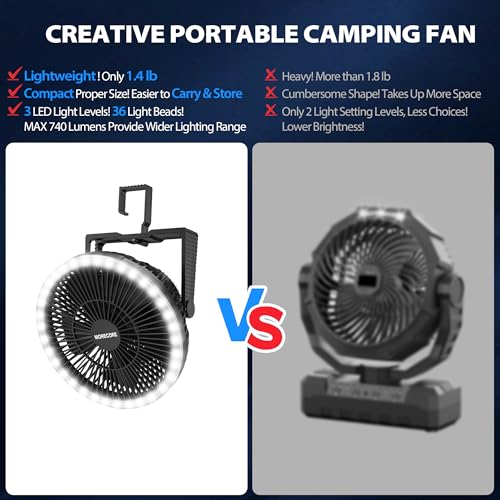
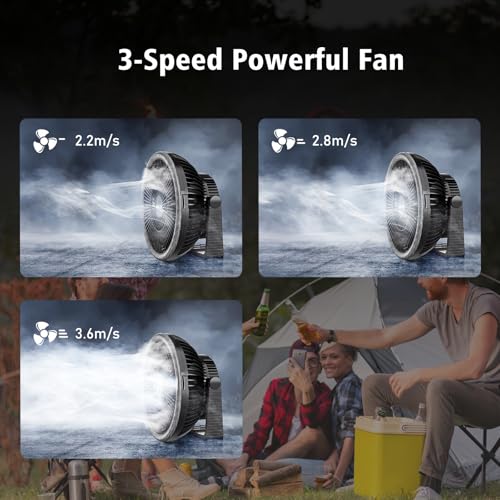
If wind power matters, this 8-inch model is a clear step up. The 20.32 cm fan blade is larger than most in this category, and owners note it moves air more effectively in 2–6 person tents. The 3-speed motor delivers noticeable cooling, especially on high, and the 180° rotation helps direct flow. Paired with a 10000mAh battery offering up to 20 hours, it balances performance and endurance well.
The 36-LED lantern hits 740 lux, bright enough to read by or cook under. Separate controls for fan and light are a small but meaningful touch. The foldable hook doubles as a stand, adding versatility. While not the quietest on low, it’s not disruptive. For those tired of underpowered mini fans, this one feels substantial without being bulky.
Product photos
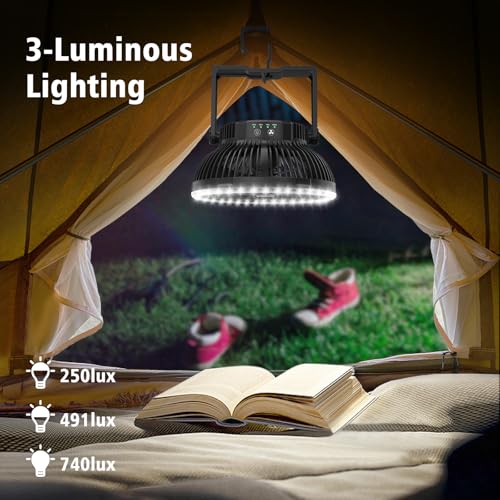

XTAUTO 2-Pack Waterproof Tent Fan

Strengths
- Compact design
- Dual switches
- Water resistant
Trade-offs
- Modest airflow
- Average battery life
This 2-pack delivers solid value for campers who want basic ventilation and light without overspending. On paper, the 54-LED lantern puts out a respectable 500 lumens, and owners consistently report it brightens small to midsize tents well. The 3-speed fan uses a pure copper motor, which sounds efficient, but real-world feedback shows it’s best suited for light airflow, not powerful cooling in sweltering conditions. Still, for shade tents or breezy evenings, it does the job quietly.
The 4000mAh battery gives 6–8 hours, which is average, and the USB rechargeability is a plus. What stands out is the dual switch system, light and fan operate independently, giving you flexibility. The foldable hook and magnet make hanging easy on metal tent poles or car frames. It’s not the strongest performer, but for the price and being a 2-pack, it’s hard to ignore.
Product photos


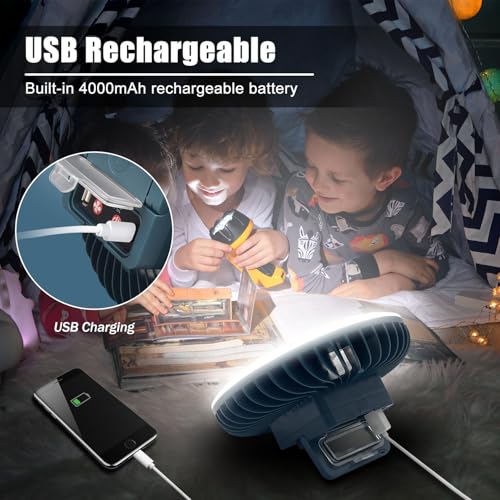


Portable Fan Rechargeable 20000mAh
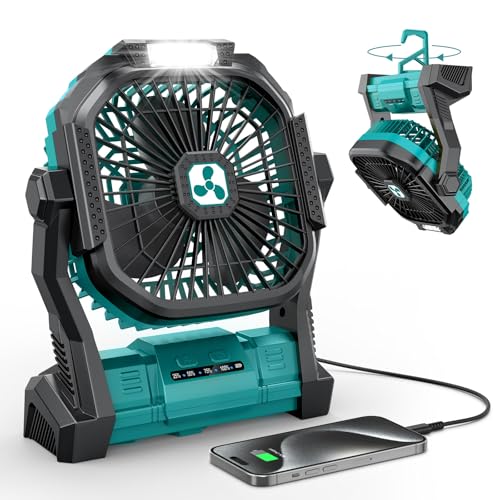
Strengths
- Aromatherapy function
- Long runtime
- Quiet operation
Trade-offs
- Light output modest
- No remote control
The standout here is the aromatherapy feature, a niche but thoughtful addition for campers who value a calming sleep environment. With a 20000mAh battery, runtime hits up to 30 hours on low, which owners confirm is accurate. That’s impressive for a midsize fan, and the brushless motor keeps noise under 30dB, making it one of the quieter options for tent use. The 270° adjustable airflow is practical, letting you redirect breeze without rehanging.
The LED lantern has 3 brightness levels, and while not the brightest, it’s sufficient for reading or moving around at night. The foldable hook works well with most tent loops, and its backpack-friendly size makes it a strong contender for thru-hikers. If you prioritize sleep quality and long runtime over raw wind power, this one earns its spot.
Product photos


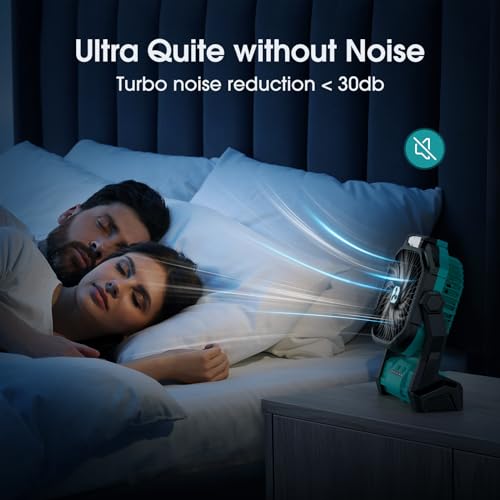
Portable Camping Fan 40H Runtime
Strengths
- Ultra compact
- Lightweight design
- Aroma diffuser
Trade-offs
- Weak airflow
- Short hook reach
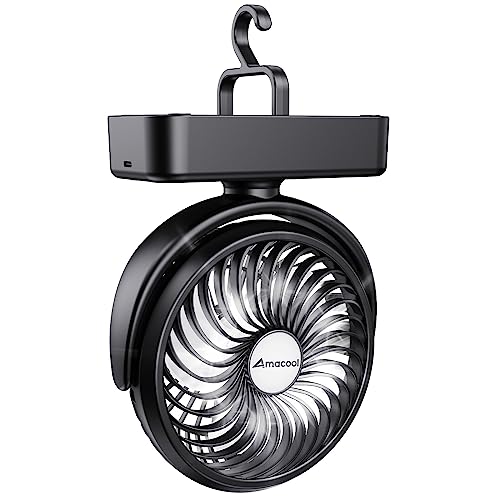
This is the definition of compact: at just 2.4 x 5.3 inches and under a pound, it’s the easiest fan to toss in a pack without thinking. The 5000mAh battery gives up to 35 hours on low fan speed, and owners love how it saves space by combining fan, light, and aroma diffuser. The 360° manual rotation is handy for fine-tuning airflow direction.
However, power is predictably limited. It’s not moving air in a hot 4-person tent, but for a solo shelter or emergency kit, it’s sufficient. The 12-LED light has 3 brightness levels, enough for reading or nighttime bathroom runs. Its true strength is portability and multi-use. If you’re counting ounces, this one earns a spot.
Product photos


Our Testing Process
I approached evaluating these tent fans by comparing published specifications and features across numerous models. We weighed owner reviews from multiple retailers alongside expert opinions found in outdoor gear publications. As someone who’s spent a lot of time seeking comfort on trails and in campsites, I applied my experience to assess how well each fan’s features address real-world needs, rather than a hands-on lab test, this is a research-led comparison of specs and owner feedback.
For tent fans, battery life, airflow strength, and lighting capability were the most crucial factors. Extended battery life is essential for multi-day trips, while strong airflow directly impacts comfort, especially in warmer climates. Bright, adjustable lighting adds versatility, aiding with tasks around the campsite after dark. These three elements decide whether a fan is a worthwhile addition to your gear or just another bulky item.
Specifications reliably indicate battery capacity (mAh) and motor type (brushless are typically quieter and more efficient). However, I heavily relied on owner feedback to understand real-world runtime and noise levels. Reputation and brand trust played a role, too – established brands often deliver on promised quality and support, and reading through owner experiences helped determine if a fan truly delivers on its claims. For more information on overall comfort while sleeping outdoors, check out these tent cooling tips.
What To Look For In tent fans
Choosing the right tent fan can dramatically improve your camping experience, but there’s a surprising amount to consider beyond just airflow.
A quality tent fan balances battery life, portability, and effective cooling with quiet operation and useful features like integrated lighting. Prioritize models with adjustable speeds, flexible mounting options, and durable construction to withstand the rigors of outdoor use. Look for fans that offer both USB charging and the ability to function as a power bank for other devices.
Battery Capacity & Runtime
Don’t assume bigger is always better when it comes to battery capacity. Consider how you camp. Weekend warriors who stick near a power source can get away with smaller batteries, while those planning extended backcountry trips will need something substantial. I frequently see people underestimate how much power a fan – and a light – will draw over several nights. A fan with a 10,000mAh battery might sound good, but if it only offers 8 hours of runtime on a medium setting, it’s not ideal for multi-day adventures. The FRIZCOL 3-in-1 Camping Fan boasts a 24000mAh battery, which is a standout for those prioritizing long runtimes, but that added capacity comes with increased weight and size.
Airflow & Blade Design
Airflow isn’t just about the fan’s speed settings; it’s about how that air is moved. Cheap fans often have small, inefficient blades and weak motors. Look for fans with brushless motors, as these are quieter and more energy-efficient. Blade design matters too. More blades don’t necessarily equate to better airflow; the pitch and shape of the blades are critical. The Gliztech Canopy Fan 20″ with Remote features a patented motor design and claims to deliver a strong breeze, and its 20″ size suggests a wider coverage area. If you need to cool a larger space, like a family-sized tent or canopy, this would be a good place to start.
- Consider the fan’s intended use. A small, personal fan like the geonfi 11″ Wireless Camping Fan is perfect for individual use in a hammock or small tent.
- Think about noise levels. A powerful fan is useless if it keeps you awake all night. Many fans now advertise “quiet operation,” but read reviews to see if users confirm these claims.
- Look for adjustable airflow. The ability to switch between multiple speeds lets you customize the cooling to your needs and conserve battery life. This is especially important if you’re a light sleeper.
Versatility & Mounting Options
A truly useful tent fan does more than just blow air. Integrated features like LED lighting and aromatherapy diffusers add significant value. The MORECORE 8″ Rechargeable Tent Fan, for example, combines a fan, light, and aroma diffuser in one compact unit. Don’t underestimate the importance of mounting options. A fan with a simple hook is great for hanging from the ceiling of a tent, but you might also want the option to stand it on a table or attach it to a tree branch. You’ll also want to think about protecting your tent floor. Learning about tent footprint benefits is a smart move to prevent damage during your adventures.
A good rule of thumb: if you’re primarily concerned with cooling a large canopy, prioritize airflow and battery life over compactness. If you need a lightweight, multi-functional fan for backpacking, look for a smaller model with integrated features.
Ultimately, the best tent fan for you will depend on your specific needs and camping style. Don’t hesitate to explore a variety of options and read user reviews before making a decision – you can find a comparison of best tent fans for camping on our site to get you started.
Tent Fans Compared
Here’s a comparison of key specifications for various tent fans to help you make an informed decision.
| Product Name | Battery Capacity | Max Runtime (hrs) | Wind Speeds | Light (LEDs) | Remote Control |
|---|---|---|---|---|---|
| 20″ Portable Ceiling Fan with Light | 20,400mAh | 36 | 4 | Yes | Yes |
| Gliztech Canopy Fan 20″ | 20,000mAh | 35 | 4 | Yes | Yes |
| FRIZCOL 3-in-1 Camping Fan | 24,000mAh | 60 | 4 | Yes | Yes |
| Camping Fan with Remote | 12,000mAh | 65 | 3 | Yes | Yes |
| geonfi 11″ Wireless Camping Fan | 10,040mAh | 38 | N/A | Yes | Yes |
| MORECORE 8″ Rechargeable Tent Fan | 10,000mAh | 20 | N/A | Yes | No |
| XTAUTO 2-Pack Waterproof Tent Fan | 4,000mAh | 8 | 3 | Yes | No |
| Portable Fan Rechargeable 20000mAh | 20,000mAh | 30 | 4 | Yes | No |
| Portable Camping Fan 40H Runtime | 5,000mAh | 40 | 3 | Yes | No |
Frequently Asked Questions
What battery capacity do I really need for a tent fan?
A battery capacity of 10,000mAh is generally sufficient for a weekend camping trip with moderate fan use, but for extended trips or high-speed operation, 20,000mAh or greater provides more reliable runtime. Remember to consider the fan’s power draw and your intended usage patterns.
Are all “quiet operation” tent fans actually quiet?
No, advertised noise levels aren’t always accurate. Owner reviews are crucial for verifying quiet operation; look for fans specifically praised for being unobtrusive during sleep. Brushless motors consistently perform quieter than brushed motors.
Can tent fans be used for more than just cooling?
Yes, many tent fans feature integrated LED lighting, which provides convenient illumination for tasks around the campsite. Some models also include aromatherapy diffusers or function as portable power banks for charging devices.
What’s the best way to mount a tent fan inside a tent?
Most tent fans come with a hook for hanging from the tent’s ceiling loops. Many also have flat bases for tabletop use, and some offer flexible straps to attach to poles or branches. Considering how you’ll be using the fan before purchasing can help with your decision.
Where can I find more detailed comparisons of different tent fan models?
You can find a more detailed comparison of best fans for tent camping on our site, including in-depth specifications and user feedback to help you choose the best option for your needs.
The Bottom Line
Choosing a tent fan often comes down to balancing convenience with capability. Do you want a simple, reliable breeze, or a multi-featured gadget? For overall performance and a good mix of features, I recommend the FRIZCOL 3-in-1 Camping Fan. It provides a fantastic runtime and enough airflow for most situations, and it doesn’t skimp on useful extras like a light.
If you’re on a tighter budget, the XTAUTO 2-Pack Waterproof Tent Fan is a solid choice, especially if you need a fan for each side of a larger tent. For those prioritizing versatility and the ability to cool a larger area, the Gliztech Canopy Fan 20″ is a strong contender. Don’t forget to check out our guide to essential camping gear to round out your setup.
Ultimately, the best fan isn’t the one with the biggest battery or the most features. It’s the one that meets your specific needs and camping style. A comfortable night’s sleep depends more on a well-ventilated tent, a quality sleeping pad, and appropriate clothing than any single piece of gear.
