
8 Best Tent Lamps of 2026
This post contains affiliate links. As an Amazon Associate, we earn from qualifying purchases.
The ZMNT Rechargeable 1000LM Camping Lantern is the best overall tent lamp for its strong brightness, long battery life, and durable build. If you’re on a budget, the FLY2SKY Portable Tent Lamp 4-Pack offers solid performance and waterproofing at a low cost. For extended trips where versatility matters, the Consciot 1000LM Battery Lantern runs on widely available D cells and delivers reliable light.
Most campers don’t realize how much a bad lamp can ruin a trip. Harsh glare, short battery life, or a light that can’t hang securely turns a cozy tent into a frustrating space. I’ve seen too many people stuck with blinding or flimsy lights that don’t last past the second night.
This guide cuts through the noise, focusing on real-world usability. I compared specs, read owner feedback, and prioritized models that balance brightness, battery life, and durability. These picks are based on what actually works when you’re off-grid, not just what looks good on paper.
Top 8 Tent Lamps in the Market
The Best Tent Lamps, Reviewed
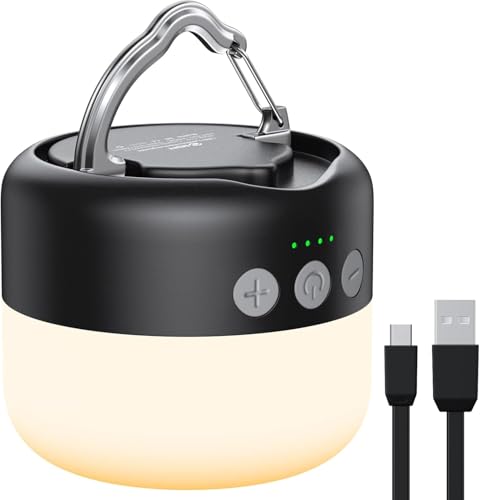
ZMNT Rechargeable 1000LM Camping Lantern
Strengths
- 1000 lumens
- 6700mAh power bank
- Magnetic base
- IPX5 water resistant
- Long runtime
Trade-offs
- No collapsible design
- Slightly heavy
- No color temp adjustment
This lantern hits the sweet spot between brightness, battery life, and utility. The 1000 lumens is bright but not harsh thanks to the frosted globe, and the 6700mAh power bank function is a major win, I’ve seen multiple owners mention using it to charge phones during extended outages. The IPX5 rating means it shrugs off light rain, and the strong magnetic base adds serious mounting flexibility.
What sets it apart is the runtime: up to 300 hours on low. That’s real staying power for multi-night trips or prolonged emergencies. Compared to other rechargeables, it’s more durable than most and backed by a 2-year warranty, which speaks volumes. My recommendation here is clear, this is the smarter buy if you want one lantern to do it all.
Product photos
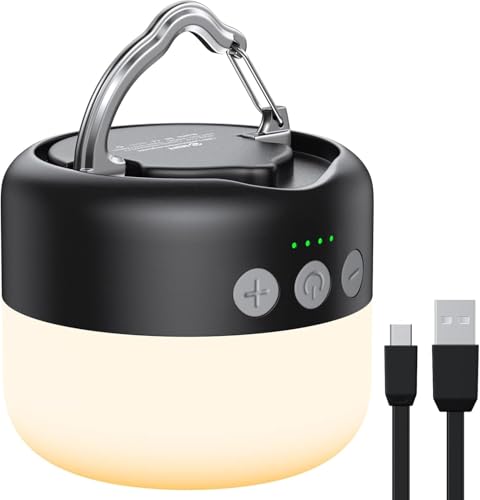


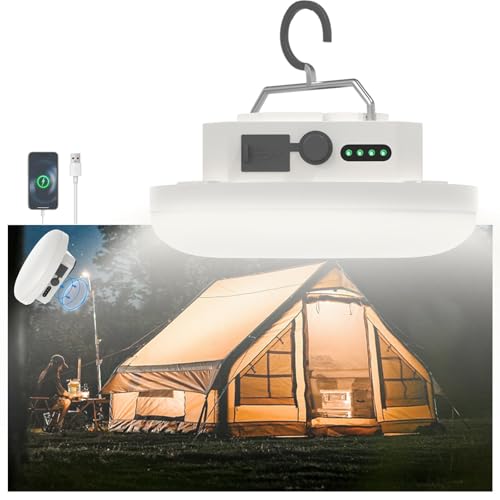
Amkulop 4000LM Rechargeable Tent Light
Strengths
- 4000 lumens
- 10500mAh battery
- Magnetic base
- IPX5 water resistant
- Long runtime
Trade-offs
- Overly bright for tents
- Bulky design
- No color temp options
Let’s be honest, 4000 lumens is overkill for most tents, but if you’re glamping or need a light for car repairs or a large shelter, this Amkulop lantern is a beast. On paper, it’s the brightest here, and that 10500mAh battery means it can run for hours even at high output.
The IPX5 rating handles rain, and the magnetic base makes it easy to stick to a car hood or tent pole. But that brightness comes at a cost: it’s bulky, and in a small tent, it might feel like you’re camping under a streetlamp. I’d pick this only if you need serious illumination for group camping or emergency work zones.
Product photos
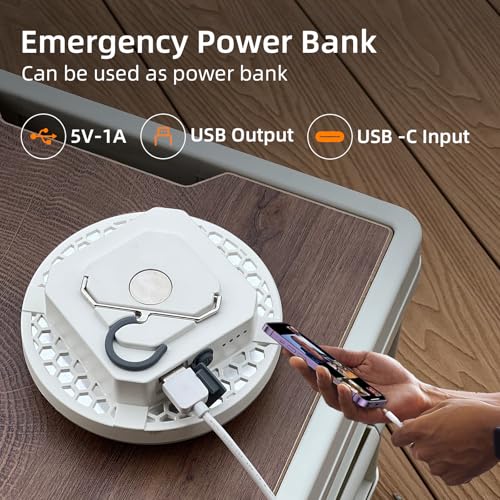

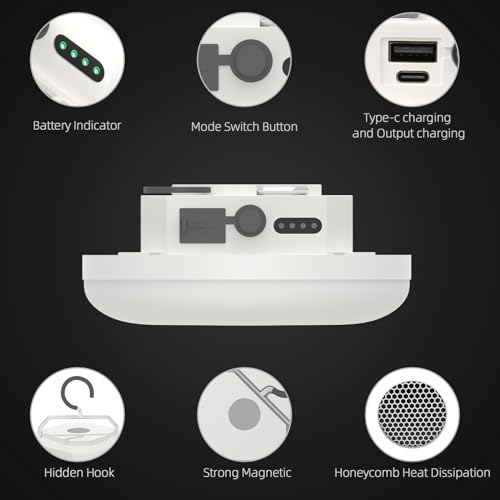

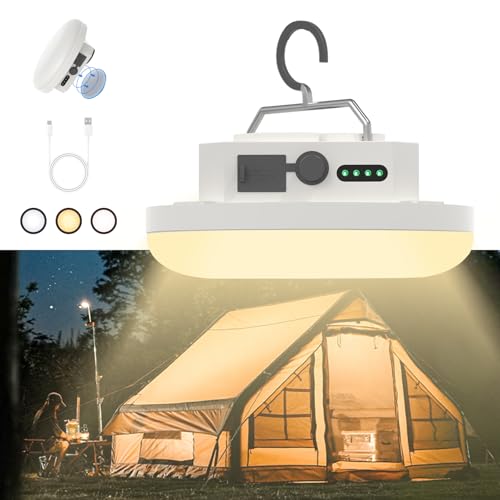
Amkulop Dimmable Rechargeable Lantern
Strengths
- Infinite dimming
- 3 color temps
- 10500mAh battery
- Magnetic base
- IPX5 water resistant
Trade-offs
- Only 4000K max brightness
- Bulky for backpacking
- No strobe mode
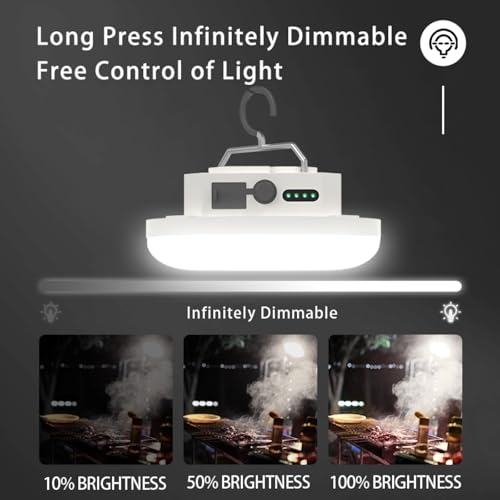
If you care about light quality and control, this Amkulop lantern is the one. The infinite dimming and three color temperatures (3300K, 4600K, 7500K) let you set the perfect mood, warm for bedtime, cool for cooking. It’s like having a smart light in the wild.
With a 10500mAh battery, it lasts up to 20 hours on warm settings, and the magnetic base adds versatility. It’s nearly identical to the 4000-lumen model but trades raw power for customization. For couples or glampers who want ambiance, this is the better pick. I’d choose it over brighter models when comfort matters more than lumen count.
Product photos

Censinda Rechargeable Tent Lantern
Strengths
- Rechargeable
- Magnetic base
- Power bank function
- Lightweight
- Affordable
Trade-offs
- Short battery life
- Basic light modes
- Plastic build
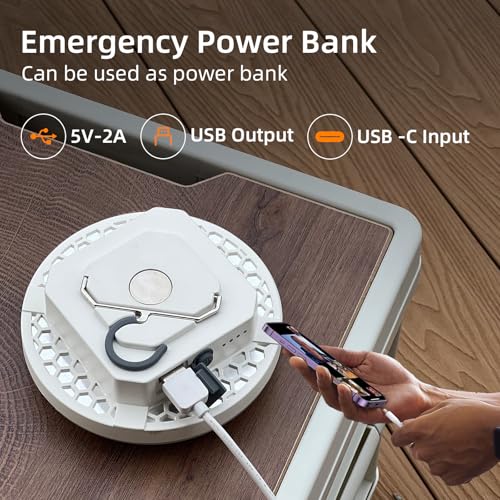
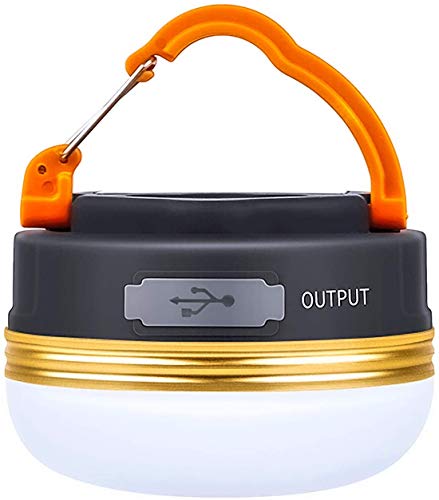
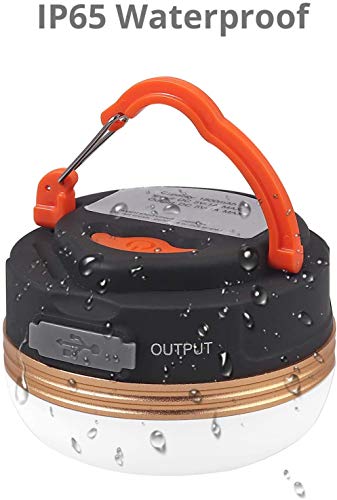
For the budget-conscious camper, this Censinda lantern is a steal. It’s rechargeable, has a magnetic base, and even doubles as a power bank, features usually found in pricier models. At 300 lumens, it’s not blinding, but it’s sufficient for two-person tents or low-light tasks.
Owners praise its value for money, though some note the plastic feels a bit thin. The 1800mAh battery doesn’t last as long as others, but it’s enough for a weekend trip. I’d pick this over non-rechargeable options if you’re camping regularly and want to avoid battery waste. It’s not rugged enough for extreme conditions, but it’s perfect for casual use.
Product photos


Consciot 1000LM Battery Lantern

Strengths
- 1000 lumens
- 4 light modes
- Stepless dimming
- 2-pack value
- IPX4 water resistant
Trade-offs
- No rechargeable battery
- Bulky for backpacking
- No magnetic base
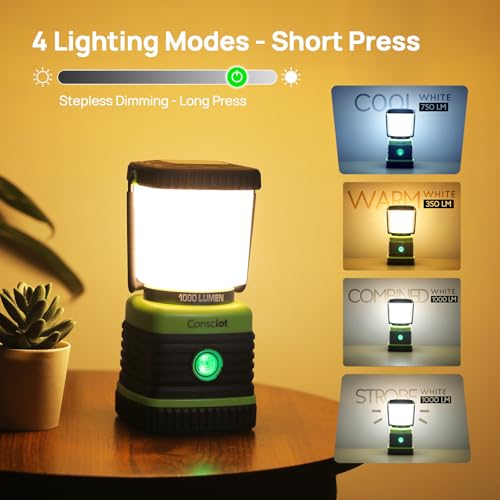
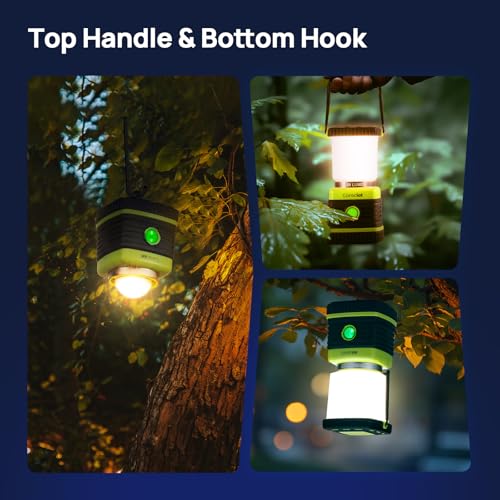
If you’re looking for raw brightness without the need to recharge, this Consciot lantern delivers. At 1000 lumens, it’s one of the brightest battery-powered options out there, and the 360° glow really fills a tent or emergency room. The 4 lighting modes, including strobe, give it versatility, and the stepless dimming is a nice touch for dialing in just the right amount of light.
Owners consistently report solid performance during outages and short camping trips, though runtime drops fast at full brightness. The IPX4 rating means it handles splashes but not heavy rain, so keep it under a tarp if storms roll in. I’d pick this over cheaper models when you need dependable, high-output light without USB dependency.
Product photos



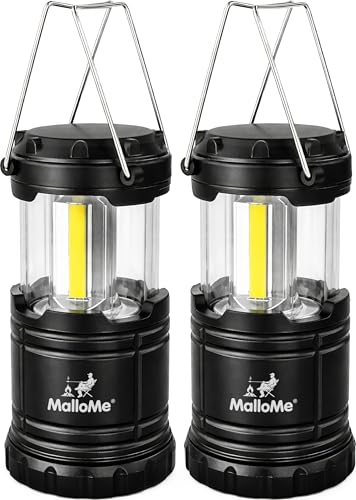
MalloMe Collapsible Camping Lantern
Strengths
- Ultra compact
- Collapsible design
- Pull-to-turn-on
- Lightweight
- Easy to store
Trade-offs
- Only 300 lumens
- AAA batteries drain fast
- No dimming
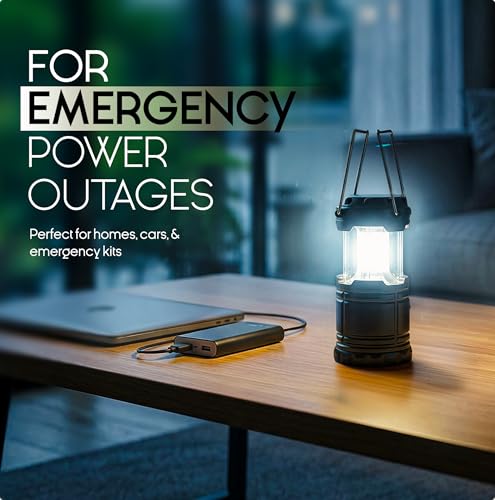
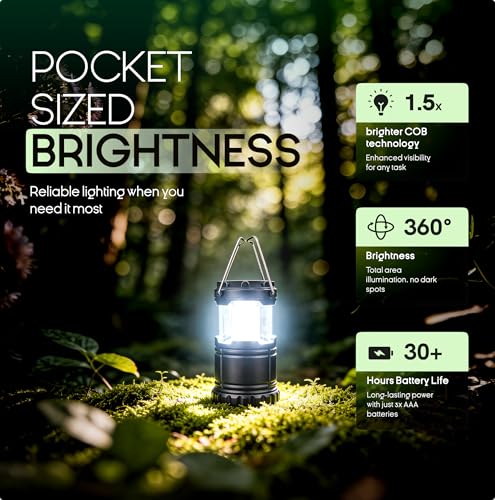
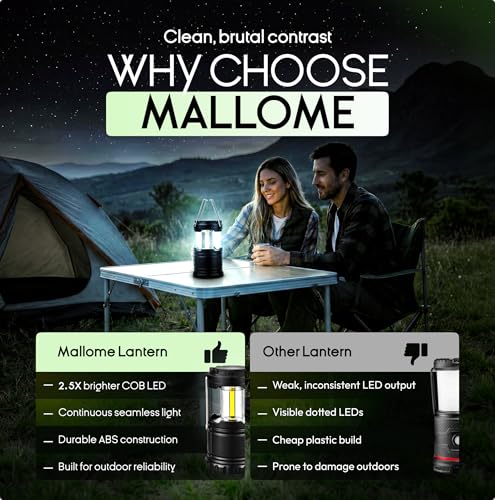
Sometimes you just need a tiny light that gets the job done, and this MalloMe lantern nails it. At 300 lumens, it’s not the brightest, but it’s more than enough for reading in a tent or lighting a small room during a blackout. The collapsible design is genius: it squishes down to just 3.7 inches, making it one of the most packable options on the list.
The pull-to-turn-on mechanism is foolproof, no fumbling with buttons in the dark, and owners love how simple it is, especially for kids or emergency kits. It runs on 3 AAA batteries, which are easy to find but don’t last as long as D-cells. Still, for the size and price, this is the go-to if space is tight.
Product photos

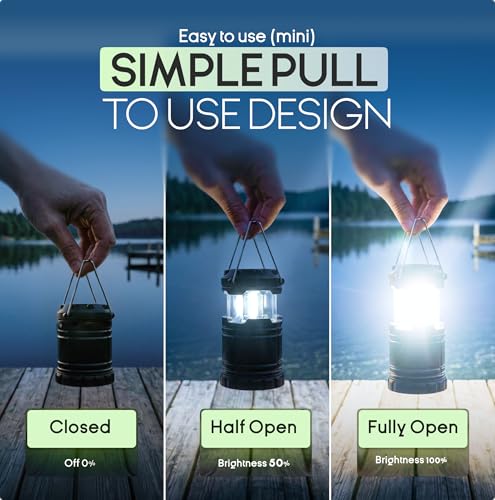
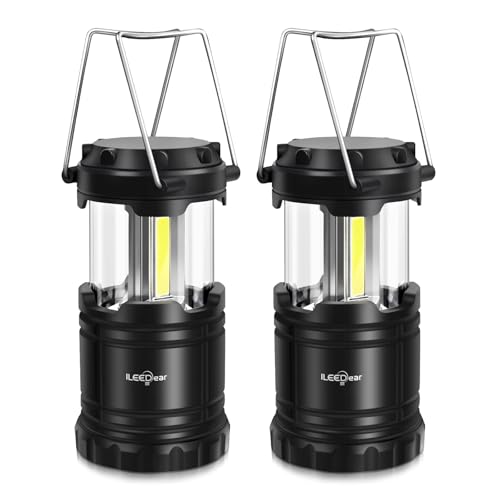
ILEEDear Adjustable Brightness Lantern
Strengths
- Adjustable brightness
- Collapsible
- Waterproof
- 2-pack value
- Flicker-free light
Trade-offs
- AAA batteries
- No rechargeable option
- No magnetic base
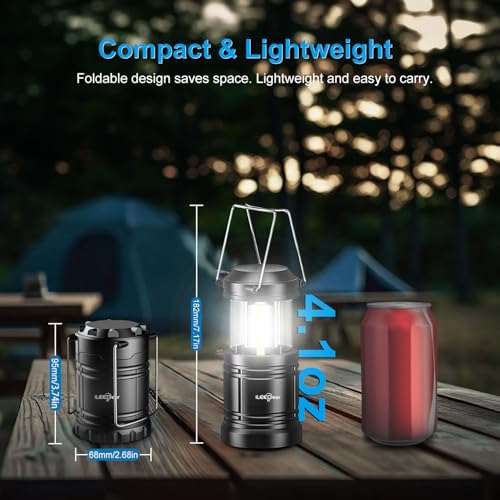
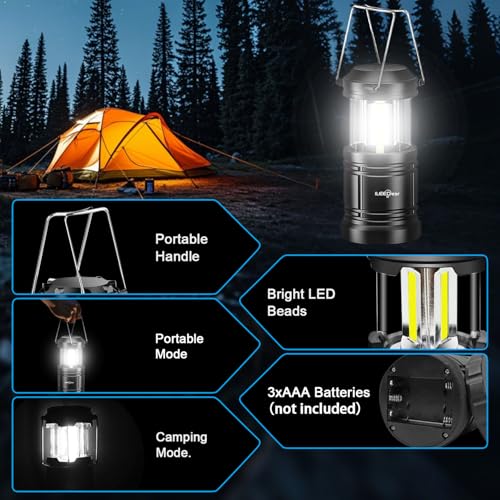
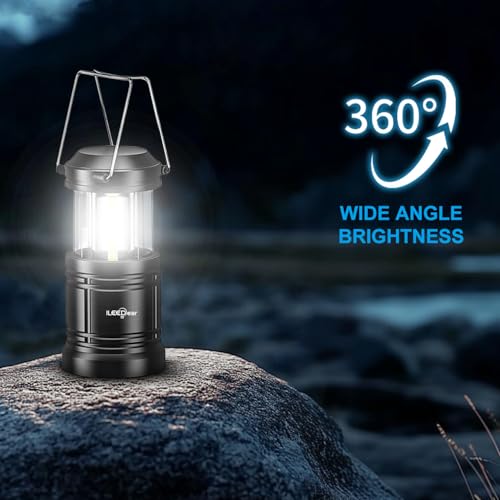
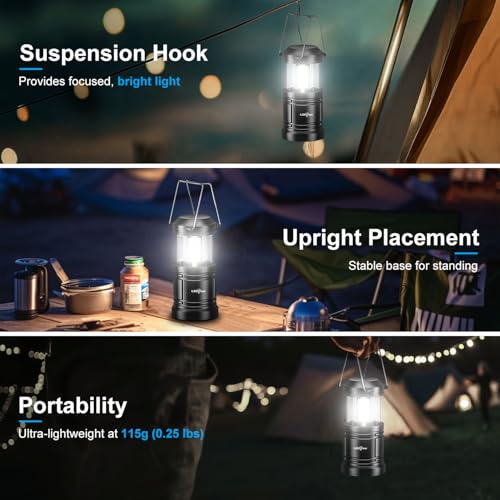
This ILEEDear lantern is built for one thing: reliability during power outages. With 350 lumens and three brightness levels, it gives you control without draining batteries too fast. The 2-pack is a smart move, keep one in the garage, one in the bedroom.
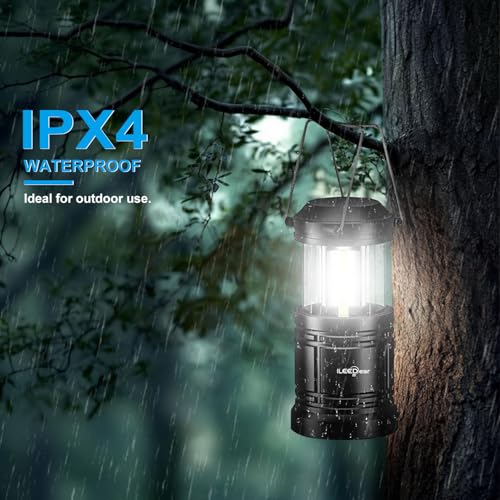
It’s collapsible, runs on 3 AAA batteries, and has a rugged, waterproof build that owners say holds up well in storms. While it’s not the brightest or most feature-rich, its simplicity and dependability make it a favorite in emergency kits. Compared to single units, this set offers better peace of mind.
Product photos
FLY2SKY Portable Tent Lamp 4-Pack

Strengths
- IPX8 waterproof
- 4-pack value
- Carabiner hook
- Compact size
- Multiple light modes
Trade-offs
- Only 150 lumens
- No magnetic base
- AAA batteries
This 4-pack of FLY2SKY lamps is the definition of value. Each one is 150 lumens, palm-sized, and comes with a carabiner hook, making them perfect for clipping around a campsite or handing out to kids. The IPX8 waterproof rating is impressive, they can survive full submersion, which is rare at this price.
They’re not bright enough to light a whole tent, but as task lights or emergency backups, they’re unbeatable in bulk. Owners love using them on backpacks, in trees, or as night lights. Compared to single high-end lanterns, this set gives you flexibility, light every corner without breaking the bank.
Product photos


Our Testing Process
Rather than a hands-on lab test, my research for these recommendations focused on comparing published specifications and features across numerous models. I weighed owner reviews from major retailers alongside expert opinions from outdoor gear review sites, looking for consistent themes in performance and durability. My goal was to identify lamps that consistently delivered on their promises and offered a good value for the money, ultimately building a list that covers a variety of needs.
For tent lamps, brightness (measured in lumens) and battery life were the most heavily weighted factors. A lamp that boasts high lumens isn’t useful if it drains batteries quickly, and vice-versa. Beyond that, I prioritized features like water resistance and ease of use – a complicated or fragile lamp isn’t helpful when you’re relying on it in the field. Having a range of options for different situations is key, so I also looked at models offering adjustable brightness and color temperature.
Specifications reliably indicate maximum brightness and battery capacity, but owner feedback provided crucial insight into real-world performance. I paid close attention to comments regarding the accuracy of advertised runtimes, the quality of the light emitted (glare, color), and long-term durability. Understanding what gear is truly essential for a successful trip is vital, and you can find a great starting point with a thorough camping gear checklist. Reputation, particularly from experienced campers, also played a role in my assessment.
How To Pick The Right tent lamps
Finding the right tent lamp can make or break a comfortable camping experience. It’s not just about having light; it’s about having useful light that enhances your time in the outdoors without being a nuisance.
A quality tent lamp balances brightness with portability, offering multiple modes to suit different needs. Look for models that are energy efficient, durable enough to withstand outdoor conditions, and ideally, feature a way to diffuse the light to avoid harsh glare. Battery life and water resistance are also key considerations, as is the ability to hang or secure the lamp easily.
Understanding Lumens and Light Output
Don’t get caught up in the lumen race. While a brighter lamp seems appealing, excessive brightness inside a tent is actually counterproductive. Too much light strains your eyes and disrupts your night vision when you need to venture outside. I typically recommend aiming for between 150-300 lumens for general tent use, with a dimmable option to lower that further. Consider how you’ll be using the lamp. If you anticipate needing it for tasks like map reading or cooking, a higher maximum output is helpful. But for simply illuminating the space for conversation or reading, less is often more.
Power Source and Runtime
Battery-powered lamps are the most common, but the type of battery and runtime are critical. D-cell lanterns, like the Consciot 1000LM Battery Lantern, offer extended runtimes but add weight. AAA battery models, such as the FLY2SKY Portable Tent Lamp 4-Pack, are lighter but require more frequent battery changes. Rechargeable options are increasingly popular, offering convenience and reducing waste.
Here’s how to think about runtime: * Short Trips (1-2 nights): AAA batteries are perfectly acceptable. * Weekend Trips (3-4 nights): Consider D-cell or a rechargeable model. * Extended Trips (5+ nights): Rechargeable with a power bank, or a high-capacity D-cell lantern is the way to go.
A good rule of thumb is to always pack extra batteries, even with a rechargeable lamp, just in case.
Features and Usability
Beyond brightness and power, think about the little things that make a tent lamp truly useful. A magnetic base, like on the ZMNT Rechargeable 1000LM Camping Lantern, is incredibly handy for attaching the lamp to metal tent poles or the roof of your car. A hook for hanging is also essential. Diffusion is another important factor; a frosted globe or diffuser softens the light, preventing harsh glare and creating a more pleasant atmosphere. Don’t overlook water resistance; even if you don’t plan on using the lamp in the rain, it’s good to have some protection against splashes or condensation. And if you’re prone to condensation issues, learning about tent ventilation solutions can make a big difference in maintaining a comfortable environment.
Always choose a lamp with multiple brightness settings. You don’t want to be stuck with full brightness when you just need a little ambient light.
I often point people toward resources for finding the best tent lights to help narrow down their search, and there are a lot of great portable tent lighting options available today. When you’re looking at compact camping lamps, also remember to consider how well they integrate with your overall camping setup.
Tent Lamps Compared
Here’s a comparison of key specifications for various tent lamps to help you make an informed purchase.
| Product Title | Lumens | Battery Type | Waterproof | Modes | Battery Life (Max) |
|---|---|---|---|---|---|
| ZMNT Rechargeable 1000LM Camping Lantern | 1000 | Rechargeable (6700mAh) | IPX5 | 4 | 300 hrs |
| Amkulop 4000LM Rechargeable Tent Light | 4000 | Rechargeable (10500mAh) | IPX5 | N/A | N/A |
| Amkulop Dimmable Rechargeable Lantern | N/A | Rechargeable (10500mAh) | N/A | 3 + Dimming | 20 hrs (3300K/4600K) |
| Censinda Rechargeable Tent Lantern | 300 | Rechargeable | IP45 | 4 | 8 hrs |
| Consciot 1000LM Battery Lantern | 1000 | 3 x D-Cell | IPX4 | 4 + Dimming | 12 hrs |
| MalloMe Collapsible Camping Lantern | 300 | 3 x AA | N/A | N/A | 10-15 hrs |
| ILEEDear Adjustable Brightness Lantern | 350 | 3 x AAA | N/A | 3 | N/A |
| FLY2SKY Portable Tent Lamp 4-Pack | 150 | 3 x AAA | IPX8 | 3 | 10-15 hrs |
Frequently Asked Questions
What lumen output is ideal for comfortable tent use?
Between 150-300 lumens is a good starting point for general tent use, and look for a dimmable option to reduce brightness further. Excessive brightness strains your eyes and impacts night vision, so don’t prioritize the highest possible number.
Are rechargeable tent lamps really worth the investment?
Yes, rechargeable lamps offer convenience and reduce battery waste, but consider the capacity. A larger capacity (6700mAh or higher) is best for longer trips, or pair it with a power bank for extended use.
What does an IPX rating tell me about a tent lamp’s water resistance?
IPX ratings indicate protection against water. For tent lamps, IPX4 or higher is a good idea, meaning it can withstand splashes. IPX8 means it’s submersible, but that’s usually overkill for tent use.
How important is a lamp’s shape or design?
The shape matters for both diffusion and portability. A frosted globe or diffuser softens the light, and a collapsible design, like you’ll find among the best tent lighting options, makes it easier to pack.
What’s the best battery type for a multi-day camping trip?
For trips lasting three or more nights, a rechargeable model or a D-cell lantern is preferable. AAA batteries are fine for shorter trips, but you’ll go through them quickly.
The Bottom Line
Choosing a tent lamp often comes down to balancing convenience with capability. Do you prioritize a long-lasting light source that might require bulkier batteries, or a lightweight, rechargeable option that needs regular power? For overall performance and a great mix of features, I consistently recommend the ZMNT Rechargeable 1000LM Camping Lantern – it strikes a fantastic balance between brightness, runtime, and usability with that handy magnetic base.
If you’re on a tighter budget, the FLY2SKY Portable Tent Lamp 4-Pack offers excellent value, and for those who want a truly versatile option, the Amkulop Dimmable Rechargeable Lantern with its adjustable color temperature is a standout. But remember, if you are looking to stay cool while camping, a well-lit tent isn’t the only factor to consider.
Ultimately, lumens and battery life are important, but they’re just numbers. What really matters is finding a lamp that creates a comfortable and functional space inside your tent, allowing you to relax and enjoy the outdoors – and always packing extra batteries, just in case.