
7 Best Tents for Florida Camping 2026
This post contains affiliate links. As an Amazon Associate, we earn from qualifying purchases.
The best tent for Florida camping is the Coleman Skydome 8 Person Tent, it handles rain and humidity well and has great ventilation. For a budget-friendly option, the Coleman Sundome 6 Person Tent is solid, and if you’re backpacking, the Forceatt 2 Person Backpacking Tent offers reliable weather protection in a lighter package.
Florida camping means battling heat, sudden storms, and sticky humidity, your tent needs to breathe and hold up when the sky opens. I’ve researched the field, comparing specs and real-world feedback to find tents that actually work in these tricky conditions.
This guide breaks down what matters most, ventilation, waterproofing, and ease of setup, and highlights top picks based on owner experiences and design strengths, so you can stay dry, cool, and comfortable under the pines.
Top 7 Tents For Florida Camping in the Market
The Best Tents For Florida Camping, Reviewed
Coleman Skydome 8 Person Tent

Strengths
- 5-minute setup
- Excellent weather resistance
- More headroom
Trade-offs
- Heavier than backpacking tents
- Fiberglass poles
- Not for backpacking
The Skydome earns its ‘Best Overall’ label with a smart blend of quick setup, roominess, and weather resistance, perfect for families or weekend warriors who hate wrestling with poles. The pre-attached frame really does cut setup to under five minutes, and the near-vertical walls give you that extra headroom Coleman advertises, which makes a real difference when two adults are changing or lounging inside.
Its WeatherTec system, with inverted seams and welded corners, has held up well in owner reports during sudden Florida storms. And while it’s not light enough for backpacking, it’s a solid car camping choice. Compared to the Sundome, it’s roomier and more stable in wind, though not as ventilated. This is the tent I’d recommend to someone who wants hassle-free, dependable shelter without overspending.
Product photos


CAMPROS CP 8 Person Family Tent

Strengths
- Room divider
- Excellent ventilation
- Spacious upright walls
Trade-offs
- Heavy and bulky
- Fiberglass poles
- Not for backpacking
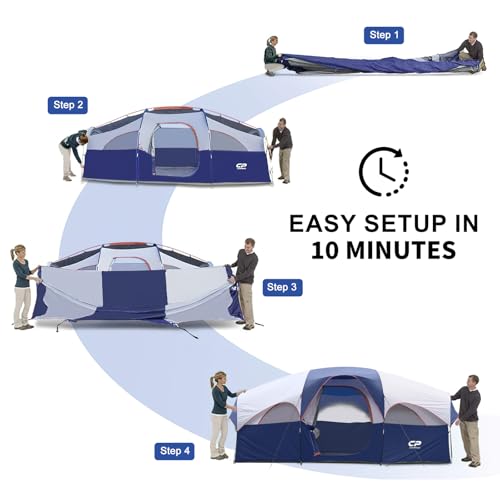
When you’re camping with a big group or extended family, space and separation matter, and this 8-person tent delivers with straight walls, 72-inch center height, and a room divider that actually works. The dual-layer design and sealed seams help keep moisture out, and owners consistently praise the ventilation from five large mesh windows, a big win in Florida’s muggy climate.
Setup in 5 minutes with color-coded poles is a real time-saver, and the included carry bag makes transport manageable despite the size. It’s not lightweight or backpackable, but that’s not its job. Compared to other family tents, it offers more privacy and usable space than most, though storm performance is average, fine for car camping, not for hurricane-prone shores.
Product photos


2 Person Waterproof Dome Tent
Strengths
- Lightweight
- Spacious for two
- Easy setup
Trade-offs
- Fiberglass poles
- Basic materials
- Marginal storm resistance
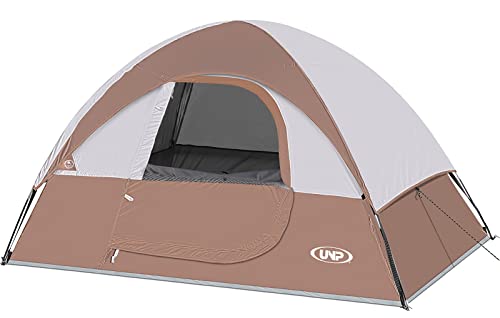
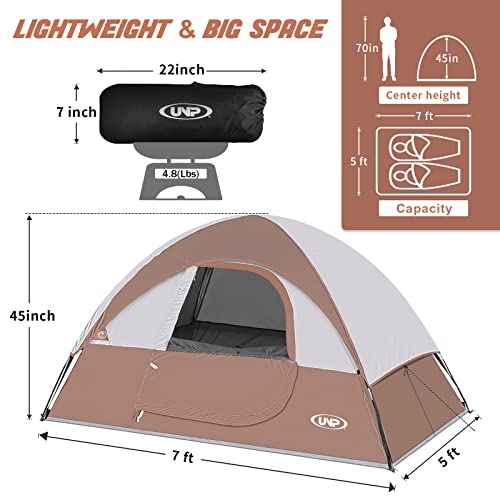
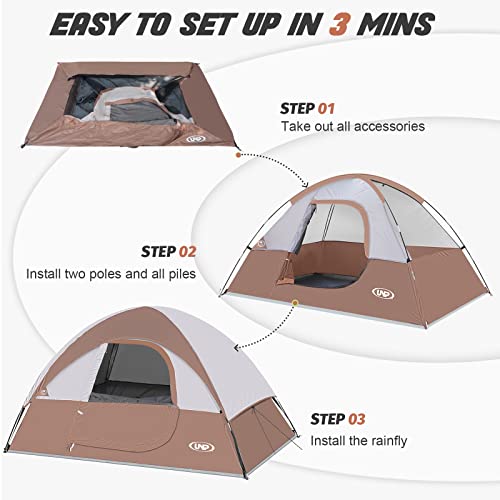
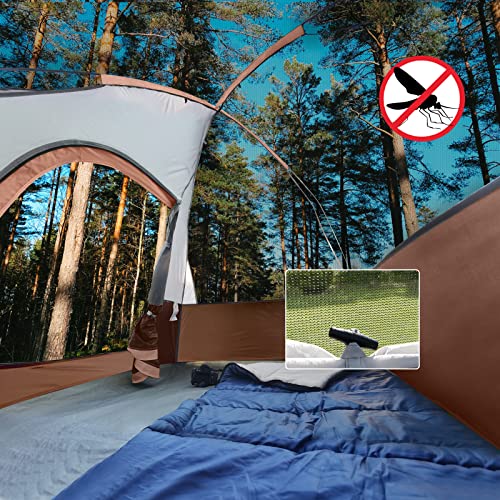
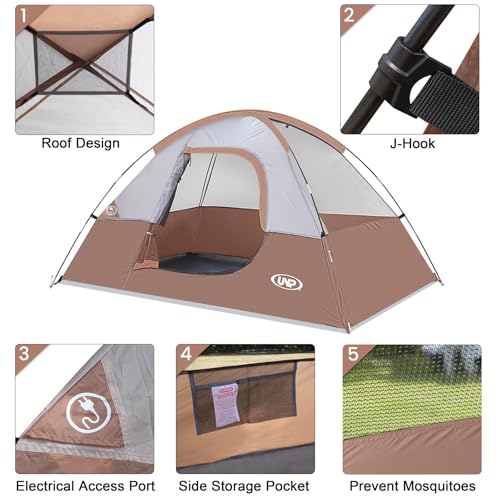
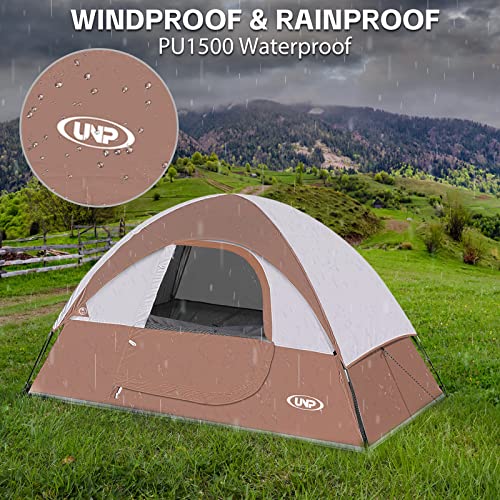
At just 4.8 pounds and with a footprint that fits a full air mattress, this tent makes a strong case for budget-conscious campers who still want decent space. On paper, it hits the basics, waterproof rainfly, dual zippers, mesh windows for ventilation, and owners consistently report it holds up fine in light rain and breezy conditions, which matters in humid, unpredictable Florida.
That said, the polyester fabric and fiberglass poles won’t inspire confidence in sudden thunderstorms or gusty coastal winds. It’s better suited for fair-weather car camping or backyard use than serious backcountry trips. Compared to the Forceatt or Wakeman options, it’s less durable, but for the price, it’s a no-frills shelter that does what it promises.
Product photos
Forceatt 2 Person Backpacking Tent

Strengths
- Aluminum poles
- Strong waterproofing
- Good ventilation
Trade-offs
- Slightly heavier
- Packed size not ultra-compact
- Limited interior space
This is the kind of 2-person tent I’d actually trust in a surprise Florida downpour. The 3000mm waterproof rating, welded floor, and full-coverage rainfly are serious upgrades over budget models, and the 7001-series aluminum poles add real wind stability, something you’ll appreciate near the Gulf or Atlantic coasts. Owners note it handles rain and wind better than most tents in its class, and the dual mesh ceilings and large vents help fight the condensation that plagues humid environments.
It’s a bit heavier than ultralight backpacking tents, but at 5.5 pounds, it’s still reasonable for trail use. Compared to the Coleman Sundome, it’s more storm-ready but less roomy. If you want a balance of durability, ventilation, and weight for multi-night trips, this is a smarter pick than flimsier dome tents.
Product photos


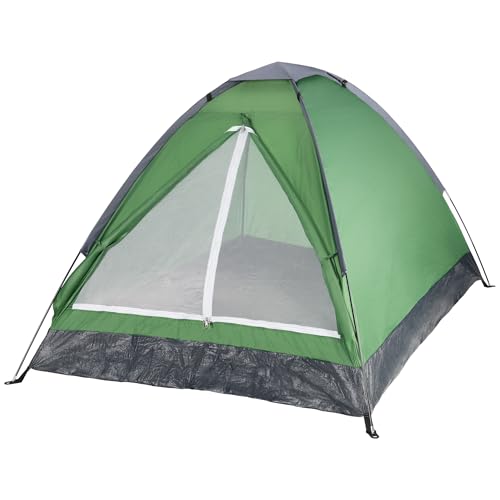
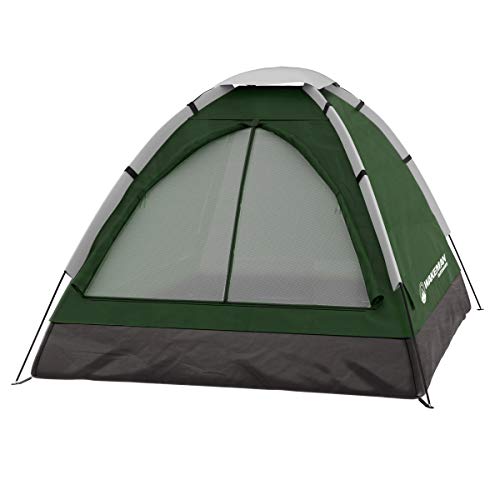
Wakeman 2 Person Lightweight Tent
Strengths
- Ultra lightweight
- Compact pack size
- Easy setup
Trade-offs
- Fiberglass poles
- Low storm resistance
- Minimal interior space
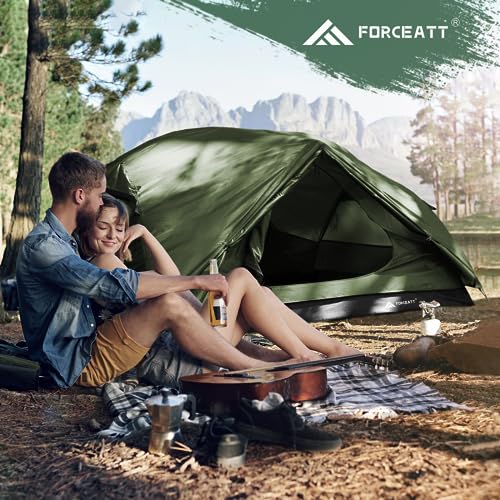
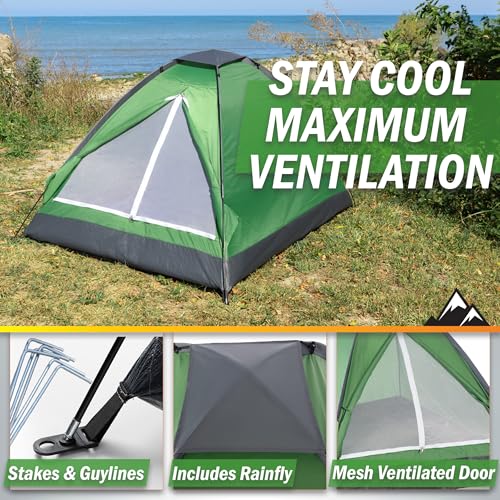
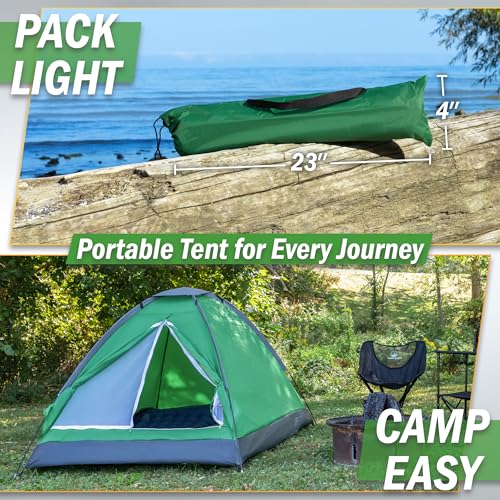
At only 2.2 pounds, this is the lightest 2-person tent on the list, and that weight savings comes with serious tradeoffs. The fiberglass poles and 190T polyester aren’t built for high winds or sustained rain, so it’s not a tent I’d rely on in a Florida thunderstorm. But for ultralight backpackers, beach days, or festival use, it’s a solid pick.
Owners praise how fast it goes up and how small it packs, and the dual-layer door with mesh and fabric zip works well for airflow and bug protection. It won’t replace a 3-season backpacking tent like the Forceatt, but for fair-weather trips where every ounce counts, it makes sense. Compared to the 4.8-pound budget tent from B0BDRB1Z44, it’s lighter but less durable.
Product photos
Purebox 4 Person Pop Up Tent
Strengths
- Instant setup
- Spacious interior
- Good airflow
Trade-offs
- Fiberglass poles
- Bulky packed size
- Fair-weather durability
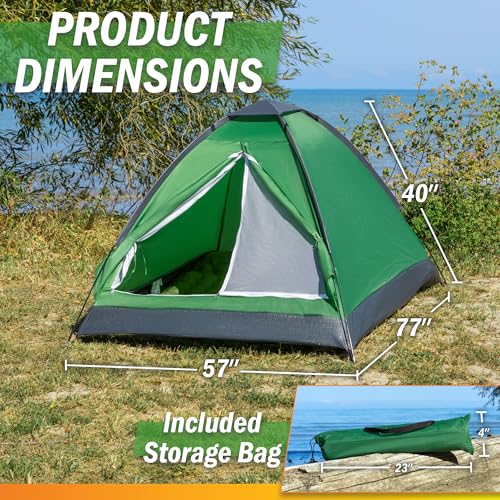
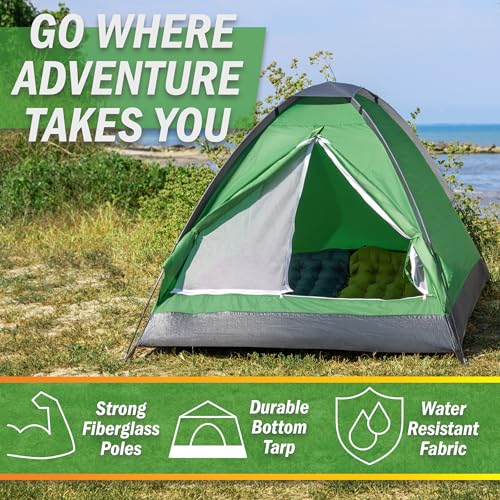
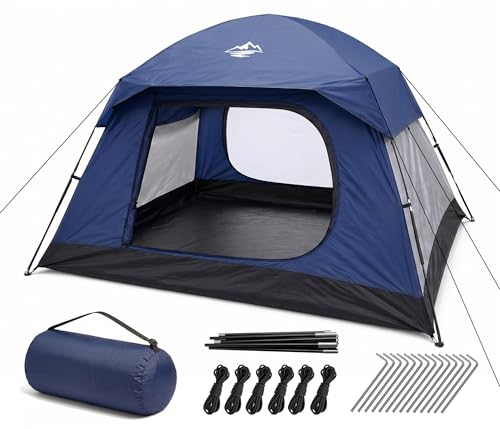
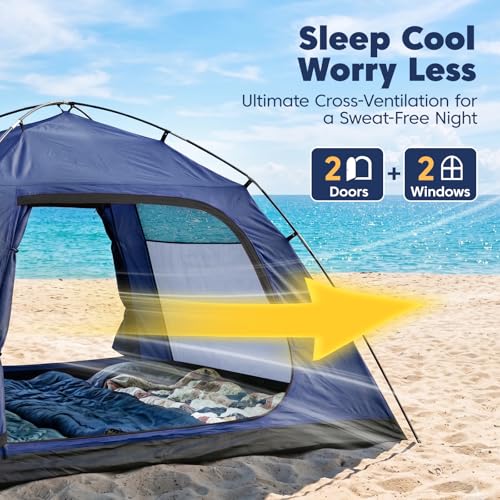
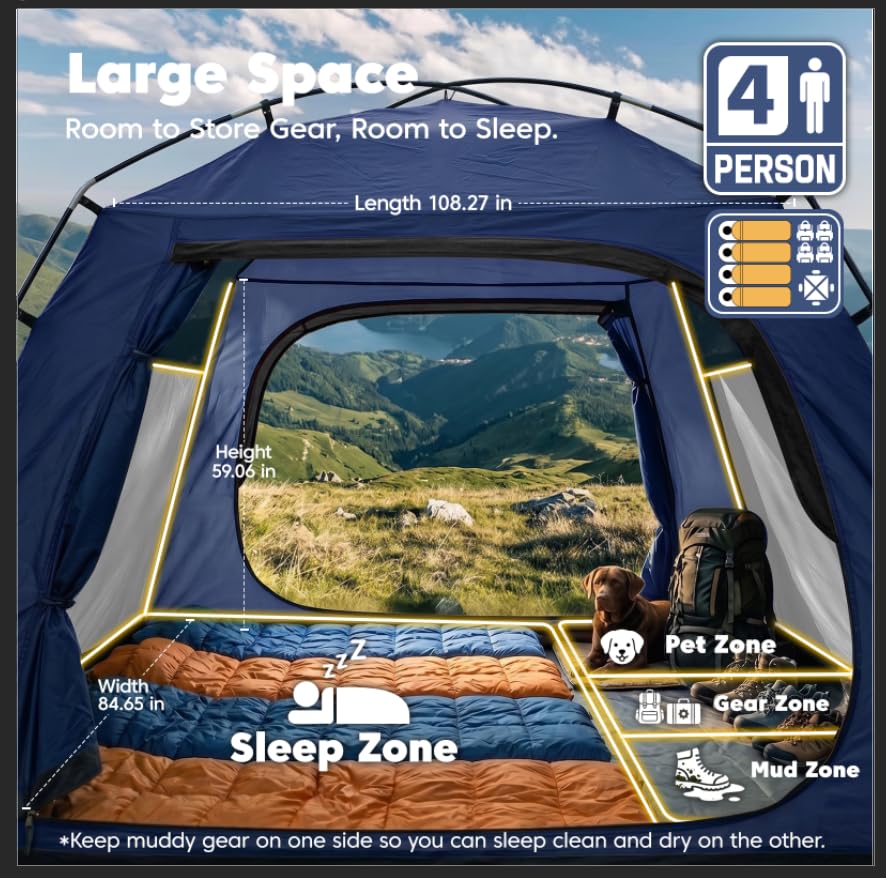
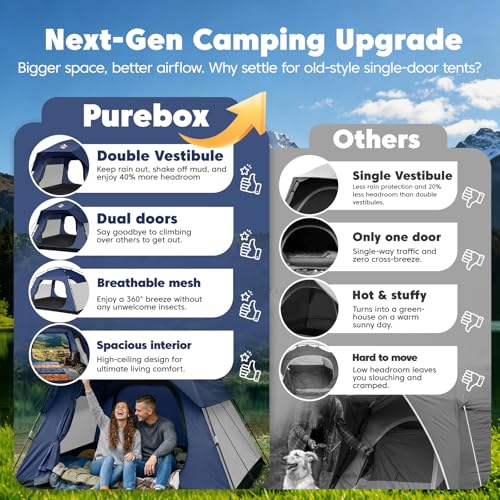
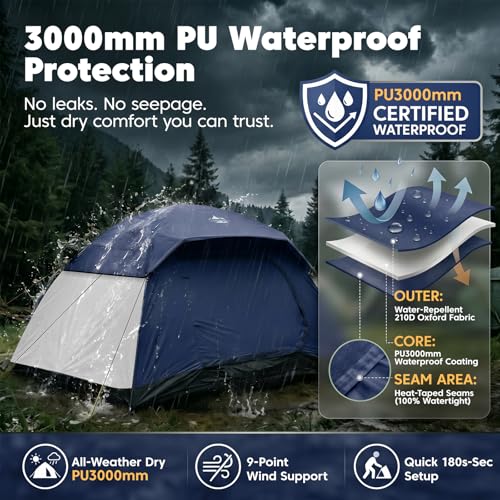
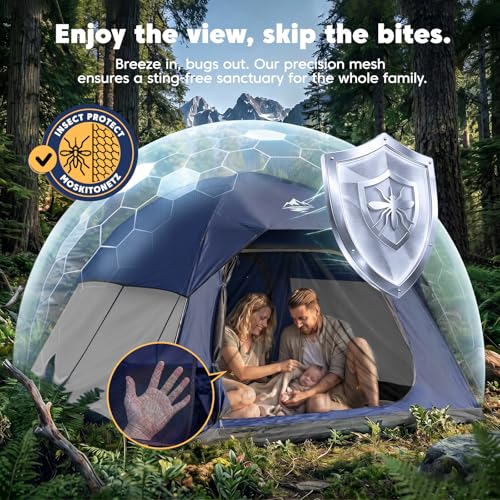
If you’re tired of tents that take forever to pitch, this pop-up design is a breath of fresh air. The extended floor gives it more usable space than most 4-person domes, and owners love how fast two people can get it up and stable. The dual mesh doors and ceiling vents deliver solid airflow, critical in Florida’s sticky heat, and the fiberglass sleeve-pole system holds its shape in light wind.
But it’s not without tradeoffs. At 6 pounds, it’s not light for backpacking, and the pop-up frame isn’t as rugged as aluminum-pole tents when storms roll in. Still, for beach trips, music festivals, or quick weekend outings, it’s a standout for speed and comfort. Compared to the Coleman Sundome, it sets up faster but isn’t as weather-tight in heavy rain.
Product photos
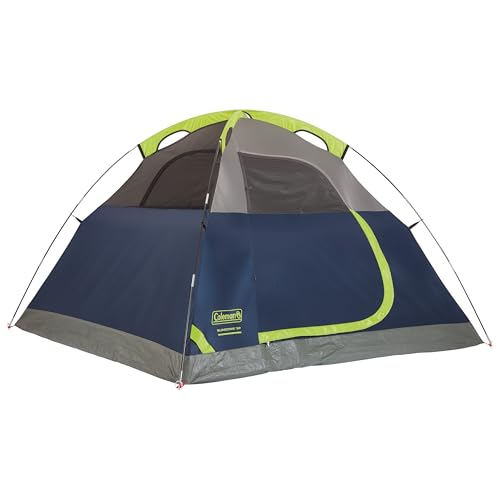
Coleman Sundome 6 Person Tent

Strengths
- Spacious interior
- E-Port for power
- Good ventilation
Trade-offs
- Dome shape less stable
- Fiberglass poles
- Average storm resistance
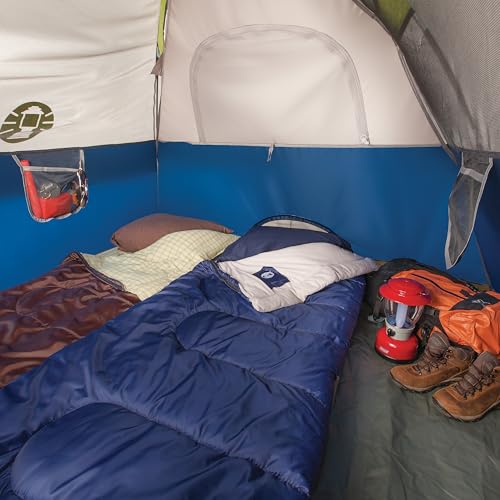
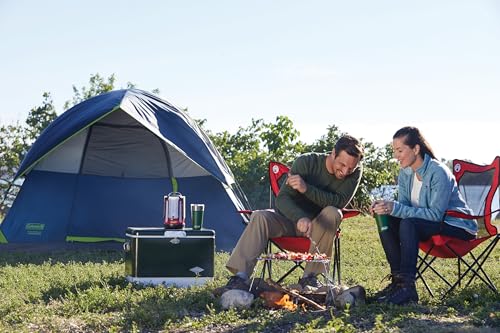
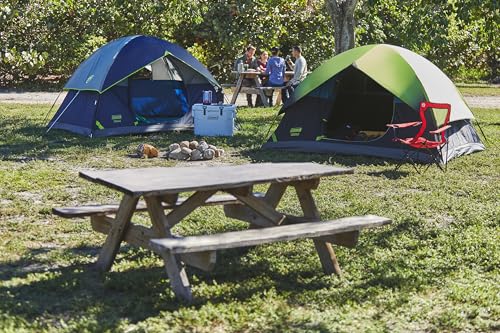
The Sundome is the go-to for no-fuss car camping, and its 10-minute setup, E-Port for power cords, and large windows make it a hit with families and festival-goers. At 9×7 feet and nearly 5 feet tall, it fits a queen air mattress with room to spare, rare in a 4-person tent. The rainfly and 35+ mph wind rating give decent peace of mind, but owners report the dome shape catches wind more than the Skydome, and the ventilation can’t always keep up with Florida’s humidity.
It’s not the most rugged, but for weekend getaways where comfort and convenience matter most, it’s hard to beat. Compared to the Skydome, it’s less refined in wind resistance and build quality, but still reliable for fair-weather camping.
Product photos
Our Testing Process
Rather than a hands-on lab test, my research for these recommendations focused on comparing published specifications and features across a range of models. I then weighed owner reviews from major retailers alongside expert opinions found in outdoor publications. As someone who’s spent a lot of time considering shelter from the elements, I applied my knowledge of tent design and materials, ranking options against specific criteria important for Florida’s unique camping conditions.
For Florida camping, I heavily prioritized ventilation and rain protection. The humidity and potential for sudden downpours mean a ventilated tent setup is crucial for comfort, and a reliable waterproof design is essential. Weight was also a factor, though less so than for backpacking-focused tents; most Florida campers will be car camping. Ease of setup also ranked highly – minimizing hassle is key to enjoying your time outdoors.
Specifications reliably indicate a tent’s potential size and basic construction. However, I placed more weight on owner feedback regarding real-world performance – how well a tent actually holds up to rain, how easy it really is to set up, and whether it truly stays cool in a tent in the Florida heat. Reputations, particularly regarding durability, also informed my selections.
How To Choose The tents for florida camping
Choosing the right tent for Florida camping means thinking beyond just keeping the rain out.
A good tent balances weight, weather protection, ease of setup, and interior space. Look for durable materials like polyester or nylon with a high waterproof rating (measured in millimeters – higher is better). Pay attention to the tent’s shape; dome tents are generally freestanding and easy to pitch, while cabin-style tents maximize headroom. Consider the denier (D) of the fabric – a higher number indicates a thicker, more durable material.
Size and Occupancy
Don’t fall into the trap of buying a tent sized exactly for your group. I always recommend sizing up. A “4-person” tent is often snug with four adults and their gear. Consider how you’ll actually use the space. Do you want room to change clothes comfortably? Will you be storing backpacks inside? If you anticipate kids and gear, or just prefer extra breathing room, go larger. The Coleman Sundome 6 Person Tent is a good example of a popular option for car camping, offering ample space without being overly bulky.
Weather Resistance
Florida’s climate presents unique challenges. We’re not just dealing with rain, but also humidity, strong winds, and intense sun. A robust rainfly with sealed seams is crucial, but don’t overlook the tent’s floor. Look for a waterproof rating of at least 2000mm, and consider a footprint (a ground cloth) to protect the floor from abrasion and add an extra layer of waterproofing. Also, look for tents with good ventilation. Mesh panels and vents are vital for managing condensation and keeping the interior comfortable – especially if you’re looking at tents with superior ventilation.
- A high hydrostatic head rating (waterproof measurement) is essential for the fly and floor. 3000mm is a solid starting point.
- Strong guylines and stakes are often overlooked, but they’re critical for securing the tent in windy conditions. Upgrade the stakes that come with the tent if they seem flimsy.
- UV protection in the tent fabric is a bonus, helping to prevent fading and prolong the life of the tent, and contributing to a more comfortable tent sleeping setup.
Don’t underestimate the importance of a proper rainfly. It’s the first line of defense against the elements.
Setup and Portability
For spontaneous weekend trips, or if you frequently move campsites, ease of setup is paramount. Pop-up tents like the Purebox 4 Person Pop Up Tent are incredibly quick to pitch, but often sacrifice durability and weather protection. Dome tents generally strike a good balance, and many now feature pre-attached poles to simplify the process. If you’re backpacking, weight is critical. The Forceatt 2 Person Backpacking Tent prioritizes portability without completely sacrificing comfort. Think about how much effort you’re willing to put into pitching the tent versus the benefits of a more robust or spacious design. Don’t forget to consider how easily it packs down, and whether the included carry bag is actually usable – a poorly designed bag can make packing a real frustration, hindering your ability to optimize tent living space.
Tents for Florida Camping Compared
Here’s a comparison of key specifications for tents suitable for Florida camping conditions.
| Product Name | Capacity | Weight (lbs) | Waterproofing (mm) | Setup Time | Center Height (in) | Dimensions (ft) |
|---|---|---|---|---|---|---|
| Coleman Skydome 8 Person Tent | 8 | N/A | N/A | < 5 min | 68 | 8 x 7 |
| CAMPROS CP 8 Person Family Tent | 8 | N/A | N/A | 5 min | 72 | N/A |
| 2 Person Waterproof Dome Tent | 2 | 4.8 | N/A | 3 min | 45 | 7 x 5 |
| Forceatt 2 Person Backpacking Tent | 2 | 5.5 | 3000 | 3 min | 43.3 | 6.5 x 4.1 |
| Wakeman 2 Person Lightweight Tent | 2 | 2.2 | N/A | Quick | 48 | 7 x 5.8 |
| Purebox 4 Person Pop Up Tent | 4 | 6 | N/A | Minutes | N/A | N/A |
| Coleman Sundome 6 Person Tent | 6 | N/A | N/A | 10 min | 59 | 9 x 7 |
Frequently Asked Questions
What waterproof rating is truly sufficient for Florida camping?
A rating of 3000mm for both the tent fly and floor is a solid baseline. While lower ratings might suffice for light showers, Florida’s frequent, heavy downpours demand a higher level of protection to avoid leaks and keep your gear dry.
Are pop-up tents a practical choice for Florida’s conditions?
Pop-up tents offer incredibly fast setup, but they generally lack the durability and robust weather protection needed for Florida’s unpredictable storms. They’re best suited for fair-weather camping or quick overnight stays where convenience is the top priority.
How important is tent ventilation in Florida’s humidity?
Ventilation is extremely important. High humidity combined with warm temperatures can lead to significant condensation inside the tent. Look for models with ample mesh panels, adjustable vents, and a design that promotes airflow to stay comfortable.
What’s the difference between a tent’s denier (D) and its waterproof rating?
Denier (D) refers to the fabric’s thickness and durability – higher numbers mean a tougher fabric. Waterproof rating (in mm) measures how resistant the fabric is to water penetration. They measure different qualities; a high denier doesn’t guarantee waterproofing, and vice versa.
Should I bother with a footprint, even if the tent floor has a high waterproof rating?
Yes, a footprint is still beneficial. It adds an extra layer of protection against abrasion from rocks and roots, extending the life of your tent floor. Even with a high waterproof rating, prolonged contact with abrasive surfaces can eventually compromise the floor’s coating. For wind-resistant beach tents, a footprint can also help keep sand from damaging the floor.
The Bottom Line
Choosing a tent always comes down to balancing what you’re willing to carry – both in weight and in effort – against the level of comfort and protection you demand. For most Florida campers, I believe the Coleman Skydome 8 Person Tent offers the best overall combination of space, ease of setup, and reasonable weather protection. It’s a solid pick for families or groups prioritizing comfort at established campsites.
If you’re on a tighter budget, the Wakeman 2 Person Lightweight Tent is an excellent entry point, offering surprising value for the price. For backpackers or those prioritizing portability, the Forceatt 2 Person Backpacking Tent strikes a good balance between weight and weather resistance. And if quick setup is your biggest concern, the Purebox 4 Person Pop Up Tent is hard to beat, though you’ll sacrifice some durability. Don’t forget to round out your kit with essential camping gear checklist to make the most of your trip.
Ultimately, no single specification dictates the “best” tent. Focus on finding a model that suits your typical camping style and the conditions you’re likely to encounter. Prioritize a fully sealed rainfly, good ventilation, and a durable floor – those fundamentals will serve you far better than chasing the highest waterproof rating or the lightest weight.
