
Tent Rental Guide: Costs, Types, and How to Book
This post contains affiliate links. As an Amazon Associate, we earn from qualifying purchases.
Yes, you can rent a tent for nearly any occasion, from a family camping trip to a large wedding. Rental companies handle delivery, setup, and takedown, eliminating the burdens of storage, maintenance, and liability that come with ownership.
Most people think renting is just for extravagant weddings. They miss the affordable, simple rentals perfect for a weekend in the woods or a small garden party. They also underestimate the hidden, ongoing costs of owning a tent, costs that make renting the smarter choice more often than you’d think.
I’ve learned this the hard way through both soggy camping mishaps and coordinating event logistics. This guide cuts through the noise with real 2026 price data, a clear rent-vs-buy breakdown, and the step-by-step process to ensure your rental goes smoothly.
Key Takeaways
- Renting is cheaper for one-time events and offers hassle-free convenience; buying only pays off for frequent campers with dedicated storage space.
- National averages are just a start: a standard 20×40 frame tent costs $500–$900, but your city and add-ons like flooring can double the price.
- The anchoring method is a safety deal-breaker. Tents on hard surfaces use weighted barrels, which often prohibit sidewalls due to wind hazards.
- Booking lead times are critical. While calling 811 (Dig Safe) is a 48-hour legal minimum, rental pros need 7–14 days to secure crew and inventory.
- Ownership’s hidden costs, storage, cleaning, repairs, storm liability, are all bundled into a single rental fee.
A temporary structure rental involves the lease of a tent, frame, and associated components for a defined period, typically including professional delivery, installation on a prepared site, and post-event removal. Final pricing depends on structure type, size, site conditions, installation complexity, accessory packages, and rental duration.
How much should I budget for a tent rental?
Forget round numbers. Your final cost is a puzzle of size, style, location, and accessories. A weekend rental for a six-person family tent might run $30-$75, while a fully dressed event tent can eclipse $3,000.
The 2026 Tent Rental Cost Report from the Tent Rental Finder Research Team provides the clearest benchmark. After surveying 1,599 companies across 50 U.S. cities, they found the national average for a 20×40 frame tent, including delivery, setup, and teardown, is $500 to $900.
But location drastically reshapes that range. New York City tops the list as the most expensive major market, with prices 53% above baseline at $650–$1,175. Meanwhile, Memphis, Tennessee, is the most affordable at $425–$775 for the same structure.
Tent style is your next major cost driver. Opting for a sleek sailcloth or engineering-intensive clear-span tent commands a 2–3x premium over a standard frame tent of the same footprint. You’re paying for aesthetics and advanced design.
| Tent Type & Size | Primary Use Case | National Average Price Range |
|---|---|---|
| 20′ x 40′ Frame Tent | Wedding reception, corporate event | $500 – $900 |
| 15′ x 15′ Frame Tent | Intimate backyard gathering | $225 – $400 |
| 6-Person Dome Tent | Weekend family camping | $30 – $75 per weekend |
| Sailcloth / Clear-Span | High-end wedding, gallery show | $1,200 – $2,700+ |
The real budget-buster? Add-ons. Sidewalls, flooring, lighting, and climate control can pile an extra 30–80% onto your base tent price. That $600 tent can quickly become a $1,000 line item.
TL;DR: Get a local quote. National averages are a guide, but your final bill is decided by your city, tent style, and chosen extras.
When does renting a tent make more sense than buying?
The YouTube pros at event rental companies nail the core trade-off: renting is the hassle-free choice. You pay one fee, and they handle the labor, transport, storage, cleaning, repairs, and liability. For a one-off event like a wedding, this is a non-negotiable advantage.
Buying a camping tent starts to make financial sense if you camp frequently, typically after 3-4 uses for a decent model. But that math ignores the hidden costs of ownership. You need space to store a bulky, often damp tent. You must clean it meticulously to prevent mildew (a death sentence for nylon). You become the in-house repair tech for snapped poles and torn seams.
I learned this with a Coleman Sundome 6. “Spacious” didn’t mean stormworthy. A sudden Adirondacks downpour revealed a leak in the single-layer door seam, soaking my sleeping bag. For my two annual trips, renting a storm-ready model from OutdoorsGeek would have been cheaper and saved my gear.
Common mistake: Comparing only the purchase price to the rental fee, you must factor in storage space, cleaning time, repair kits, and the risk of a total loss from storm damage or mildew. These soft costs make renting attractive for occasional users.
For large event tents, purchasing is rarely practical. A commercial 20×40 frame tent is a multi-thousand-dollar capital expense, requiring a truck for transport, a crew for installation, and warehouse space for storage. For nearly everyone, renting is the only viable path.
What types of tents are available for rent?
Your needs split the market into two distinct worlds: engineered event shelters and recreational camping tents. Confusing them leads to the wrong quote.
Event tents are temporary structures built for scale and safety, not the spacious car camping tents you take to a campground. Rental fleets are stocked with workhorses like the Anchor Industries FrameTec II or Heritage Classic series.
* Frame Tents: The versatile standard. A metal frame supports the canopy, allowing installation on any surface, grass, asphalt, concrete. No interior poles means clear, usable floor space.
* Pole Tents: The classic, elegant option. They use center poles and require deep staking into soft ground, limiting them to lawns but often at a lower cost.
* Clear-Span/Sailcloth Tents: The premium choice. Featuring high, vaulted ceilings with no internal poles and a sleek fabric profile, they define a high-end event but carry that 2-3x price multiplier.
Camping tent rentals are ideal for trying before you buy or for a single big trip. You’ll find everything from budget tents under $100 to large nine-person tents through outfitters like OutdoorsGeek or Arrive Outdoors.
| Rental Category | Ideal For | Key Consideration |
|---|---|---|
| Event Frame Tent | Parties on patios, driveways, or mixed surfaces | Less aesthetic “wow” than sailcloth |
| Event Pole Tent | Garden weddings, events on a soft lawn | Requires stakable ground, has interior poles |
| Camping Tent | Family vacations, gear testing | Gear may show wear; inspect thoroughly |
What’s the step-by-step process to rent a tent?

Don’t just call for a price. A smooth rental requires a plan. Follow this sequence to secure the right tent, installed safely and on budget.
1. Measure Your Space and Calculate Needs
Grab a tape measure. For events, calculate square footage. A 15×15 tent provides 225 square feet. Plan for 10 sq ft per person for a standing crowd, and 12-15 sq ft for a seated dinner with tables. Sketch a basic layout.
2. Contact Local Companies for Detailed Quotes
Provide your address, date, surface type (grass, concrete), and guest count. Ask if the quote includes delivery, setup, takedown, and damage waiver. This is also the time to discuss tent camping accessories like lighting or flooring.
Before you start: Failing to call 811 (Dig Safe) can result in hitting a gas or electrical line, causing evacuations, massive fines, and a canceled event. Skipping proper anchoring on hard surfaces risks the tent becoming a dangerous projectile in wind.
3. Verify Installation Requirements and Site Prep
This step prevents day-of disasters. Ask: “How will you anchor the tent on my surface?”
* On Grass: They’ll use stakes. You must call 811 to have utilities marked. The legal minimum is 48 hours, but companies strongly recommend 7–14 days’ notice.
* On Hard Surfaces: They’ll use ballast, typically 55-gallon plastic barrels filled on-site, each weighing over 400 lbs. Critically, as BZ Tent Rentals states, tents secured with water barrels cannot have sidewalls installed due to safety policies; sidewalls catch wind like a sail.
4. Review and Sign the Contract Carefully
Confirm setup/takedown times, weather policies, payment schedule, and damage liability definitions. Ensure your site is accessible for their truck.
5. Prepare Your Site for Installation
Clear the area. Move furniture, pots, and hoses. Mark sprinkler heads. A prepped site lets the crew work efficiently and avoids accidental damage to your property.
Which rental company is right for my event?
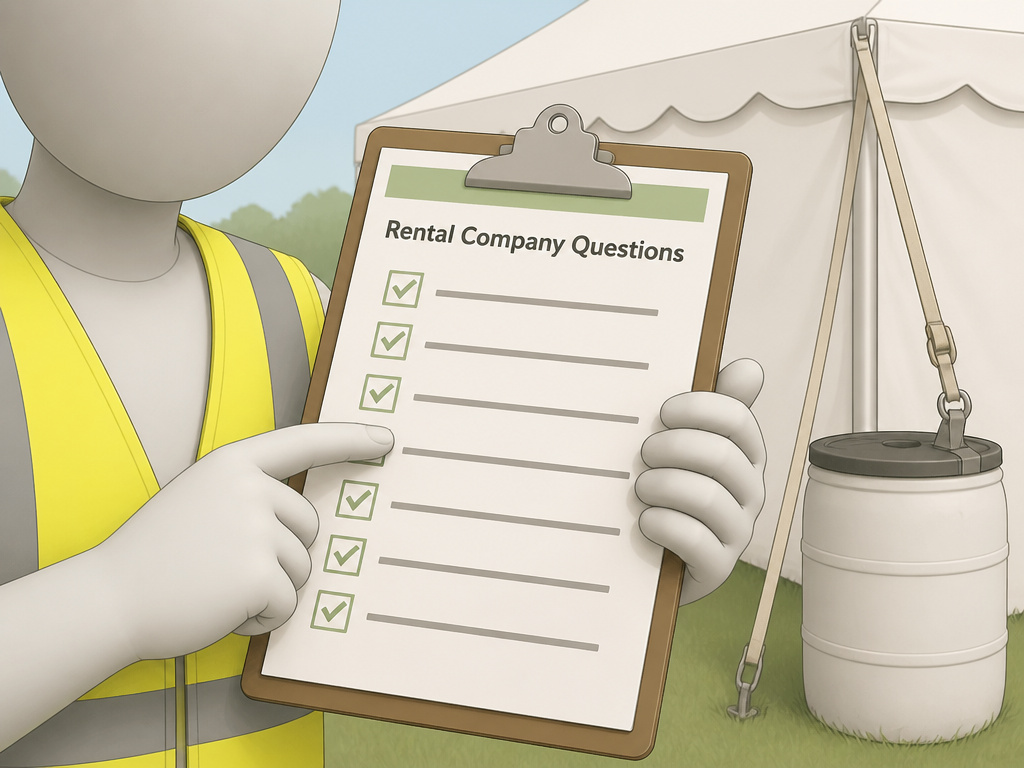
The lowest quote isn’t always the best value. These questions separate experienced pros from risky amateurs.
- “What’s your contingency plan if the site is unsafe on install day?” Weather can turn soil to mud. Pros have a backup, like switching to a frame tent with weighted barrels.
- “Does my quote include sidewalls, and are they allowed with my anchoring method?” Get this in writing. If you’re on barrels, sidewalls are often a safety violation.
- “What is your severe weather policy?” Reputable companies monitor forecasts and may lower sidewalls or add ballast. Know who makes the call to evacuate or dismantle.
- “Can I see your certificate of insurance?” Legitimate companies carry liability insurance. This protects you if the structure causes injury or property damage.
- “What is the scheduled takedown time?” If your event ends at 11 PM, a midnight teardown might not be welcome. Confirm the schedule upfront.
Where can I actually book a tent rental?

Your search path depends entirely on the tent type.
For event tents, start with local specialty rental companies. Search “event tent rental near me” or “party rental.” These firms have the expertise for complex installations. National aggregators like TentRentalFinder.com can also provide local quotes.
For camping tents, turn to outdoor-focused outlets.
* Outdoor Gear Rental Companies: OutdoorsGeek, Arrive Outdoors, or REI’s rental program (select locations) offer high-quality gear by the day or week.
* Local Outfitters: Shops near popular Michigan camping locations or other park hubs often rent equipment.
* Peer-to-Peer Platforms: Sites like FriendWithA allow individuals to rent their gear. Inspect it thoroughly upon pickup.
Common mistake: Waiting to book a camping tent for a holiday weekend. Popular models like stand-up height tents or durable canvas tents disappear weeks in advance. Book as soon as your dates are firm.
Frequently Asked Questions
Is it cheaper to rent or buy a tent?
For a single use, renting is almost always cheaper. For camping, buying may become cheaper after 3-4 uses, but only if you ignore the hidden costs of storage, cleaning, and repairs. For large event tents, renting is invariably more cost-effective.
How far in advance should I book?
For event tents during peak season (spring-fall), aim for 4-12 months. For camping tents on a holiday weekend, book at least a month out. Remember, even with a last-minute booking, the 811 call for staking requires a 48-hour minimum.
What size tent do I need for 50 guests?
For a standing cocktail party, a 20×20 tent (400 sq ft) is a tight fit. For a seated dinner, you’ll likely need a 30×30 (900 sq ft) or larger. Always provide your layout to the rental company for expert sizing.
Can I install a rented tent myself?
Almost never for event tents. Contracts mandate professional installation for safety and liability. For camping tents, some companies may allow it, but you assume full responsibility for any damage.
What happens in bad weather?
Frame tents handle mild to moderate weather. The rental contract will have a weather clause. In high winds, the company may instruct you to lower sidewalls or evacuate. They are not liable for “acts of God,” but a good company will help you secure the structure if possible.
The Bottom Line
Renting a tent is a strategic exchange: you trade money for expertise, labor, and profound peace of mind. For an event, the value is undeniable. For camping, it’s a brilliant way to test a mid-range tent under $200 or access a large shelter for a single trip without the storage headache.
Use the price data and probing questions here to get a complete, transparent quote. Then, you can focus on what matters, enjoying your celebration or your night under the stars, knowing the shelter overhead is professionally managed.
