
Learn How To Fold A Beach Tent With The Easy Taco Method
This post contains affiliate links. As an Amazon Associate, we earn from qualifying purchases.
To fold a beach tent, you collapse the frame by pushing all four corners to the center, fold the shelter in half like a taco, then roll or fold the taco into a tight circle that fits into its carry bag. The entire process hinges on keeping the fabric slack and following the frame’s natural collapse path.
Most people fight their tent because they pull when they should push. They yank on the fabric, strain the flexible poles, and hear that sickening plastic snap from the central hub. The tent jams half-open, and the rest of the beach day is spent wrestling a metal-and-nylon octopus.
This guide walks through the only method that works for modern pop-up beach shelters. We’ll cover the taco fold from the YouTube pros, the critical prep everyone skips, and what to do when your tent refuses to cooperate. You’ll also get the manufacturer specs that explain why forcing it always breaks the poles.
Key Takeaways
- Always fold your tent on a clean, dry surface. Sand and moisture trapped in the joints cause the most common failures.
- Collapse the frame by pushing the corners toward the center, never pull the fabric outward. The IAN 470682_2407 manual explicitly warns against assembly in strong wind; the same physics apply to folding.
- The “taco method” (fold in half, then roll) is the standard for a reason: it evenly distributes stress across all pole segments.
- Store your tent loosely in a cool, dry place. Storing it compressed in a hot car trunk warps the fiberglass poles within a single season.
- If the tent jams, stop. Unfold it completely, clear any debris from the central hub, and start the collapse sequence again.
Before You Start: The Non-Negotiable Prep
Folding a beach tent begins long before you touch the frame. The single biggest point of failure is debris in the mechanism.
Lay a towel, tarp, or the tent’s own carry bag on the ground. Shake the tent vigorously to dislodge sand. Wipe down any damp spots with a dry cloth. The IAN 470682_2407 manual states that storing the tent damp leads to mold, bad odors, and discoloration within weeks. It’s not just about smell, mildew weakens the fabric’s UV coating.
Check that all guy ropes are detached and stowed. A rope caught under a folding leg will twist the joint and potentially crack it. This is a wear part not covered under the standard 3-year warranty on models like the IAN 96793.
Before you start: Sand grains act like grinding paste inside the plastic hubs. Moisture left in the fabric promotes mold that weakens the material’s UPF coating. Both lead to a tent that fails structurally within a dozen uses.
The 5-Step Taco Method (With Pictures)
This sequence comes directly from video demonstrations by owners and pros. It works on the vast majority of dome and cabin-style pop-up beach shelters.
Step 1: Position and Collapse the Frame
Stand facing one side of the tent. Grab two opposite corners, say, the front left and rear right. Push them firmly toward the center of the tent. You will feel the flexible poles begin to buckle in a controlled way. Now grab the other two corners and push them inward. All four corners should meet in the middle.
If you hear creaking or feel sudden resistance, stop. You are likely pulling the fabric taut instead of letting the frame collapse. The LIVARNO home IAN445808_2307 manual warns that a tent erected too taut cannot adapt to changing conditions; the same principle applies here. The fabric must be slack.
Step 2: Create the Taco Fold
With all four corners gathered at the center, the tent will be a messy bundle. Smooth the fabric so it lies flat. Then, pick up one side and fold it over the other, just like closing a taco shell. You now have a long, semi-circular shape.
Step 3: Roll or Fold Into a Circle
Pick up the taco by one of its long edges. Fold that edge inward toward the center. Then, continue rolling or folding the rest of the material over itself. The goal is to form a tight, flat circle roughly the diameter of your carry bag. Do not twist the bundle.
Step 4: Guide, Don’t Force, Into the Bag
Place the folded circle into the palm of one hand. Use your other hand to open the carry bag wide. Gently guide the tent into the bag. If it doesn’t slide in easily, the bundle is too large or misshapen. Unfold it one step and try again.
Step 5: Secure and Store
Zip or tie the bag closed. Do not store it in a compressed state. The IAN 96793 manual specifies storing the article in a cool, dry, well-ventilated place away from frost. Your car trunk in summer violates all three conditions.
TL;DR: Push corners to the center, fold like a taco, roll into a circle, and guide it gently into the bag. Force breaks plastic hubs.
What Most Manuals Get Wrong (And One Thing They Nail)
Manufacturer instructions often include confusing diagrams with arrows pointing in ambiguous directions. They are commodity content, helpful for liability, terrible for real-world use.
However, the manuals nail the environmental warnings. These are non-commodity specifics you won’t find in generic blog posts.
The IAN 470682_2407 manual states, “Never under any circumstances assemble the product in a strong wind.” Folding under the same windy conditions is equally risky. The wind catches the loose fabric and over-stresses the joints.
All the sourced manuals. IAN 96793, LIVARNO home IAN445808_2307, and IAN 470682_2407, emphasize that the material is not permanently waterproof. Using it in the rain, then folding and storing it wet, is a guaranteed way to ruin the tent. The fabric’s UV protective coating (UPF 30 on the IAN 470682_2407, UPF 60 on the LIVARNO model) degrades rapidly when mildewed.
I trust the material specs in the manual, not the folding pictures. The UPF 60 rating on the LIVARNO model is a verified claim (UV STANDARD 801). The three-year warranty is real. But the diagram showing a perfectly symmetrical fold? That only happens in the photographer’s studio.
What To Do If Your Tent Won’t Fold
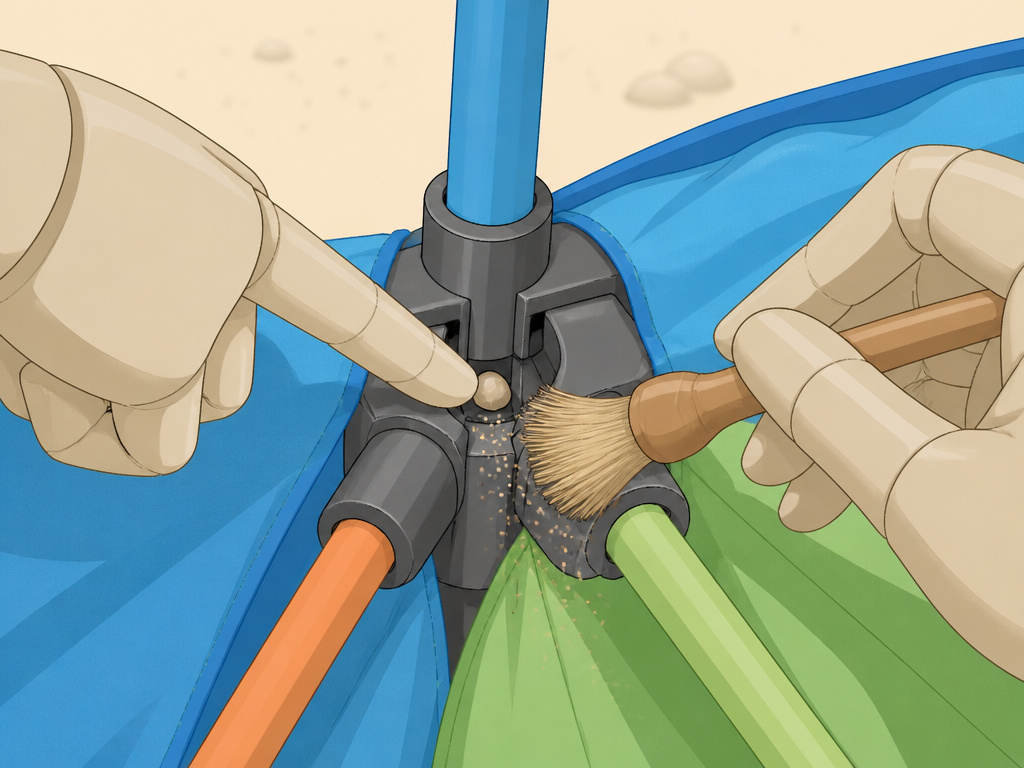
A jammed pop-up tent is a rite of passage. The fix is almost always the same.
First, stop forcing it. Place the tent back on the ground, fully opened. Inspect the central hub where all the poles meet. Look for sand, a pebble, or a twisted guy rope. Clear any obstruction.
Second, check the tension. Walk around the tent and push each wall inward slightly. If one side is dramatically tighter, it’s locking the frame. Loosen it by lifting the corner and shaking gently.
Third, restart the collapse sequence, but slower. Push one pair of corners, then the opposite pair. Listen for the soft click of each pole segment seating into its collapsed position. If you hear a grind or crack, stop immediately.
| Symptom | Likely Cause | Immediate Fix |
|---|---|---|
| One corner won’t collapse | Debris in joint or twisted guy rope | Open fully, clear hub, detach all ropes |
| Tent forms a dome, not flat | Fabric is too taut on one side | Lift and shake the stiff corner to redistribute tension |
| Loud crack during fold | Plastic hub fracture | Stop. The pole is likely broken. Folding further will shear it. |
| Bag won’t close over bundle | Folded circle is too thick or misshapen | Unroll one layer, re-fold focusing on a flatter profile |
TL;DR: A jammed tent means an obstruction, uneven tension, or user error. Never apply more force, it’s the cheapest component that will break.
How Wind and Rain Change Everything
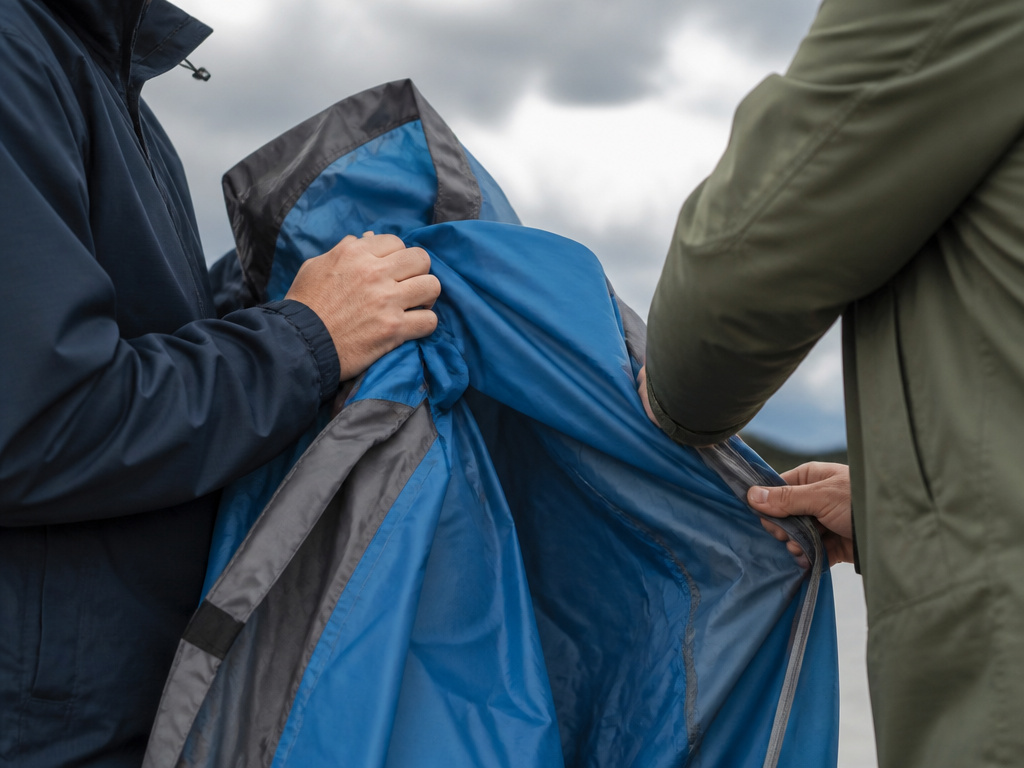
Folding a tent in ideal conditions is one skill. Doing it as a storm rolls in is another.
Wind is the enemy of the fold. It billows the fabric, making it impossible to get the slack needed for the taco method. If the wind is above 10-15 mph, your best move is to wait it out or recruit a helper. One person holds the fabric gathered while the other executes the corner pushes.
Rain demands a two-phase process. If the tent gets wet, you must dry it before storing it long-term. Shake off excess water, then fold it loosely using the standard method. When you get home, unfold it completely in a garage or shaded outdoor area and let it air dry. The IAN 470682_2407 manual notes that condensation forms in all synthetic products and recommends frequent airing.
Storing a wet tent, even loosely folded, guarantees mold. That moldy smell next season isn’t just unpleasant, it signals the fabric’s integrity is compromised.
Folding vs. Packing: A Critical Distinction
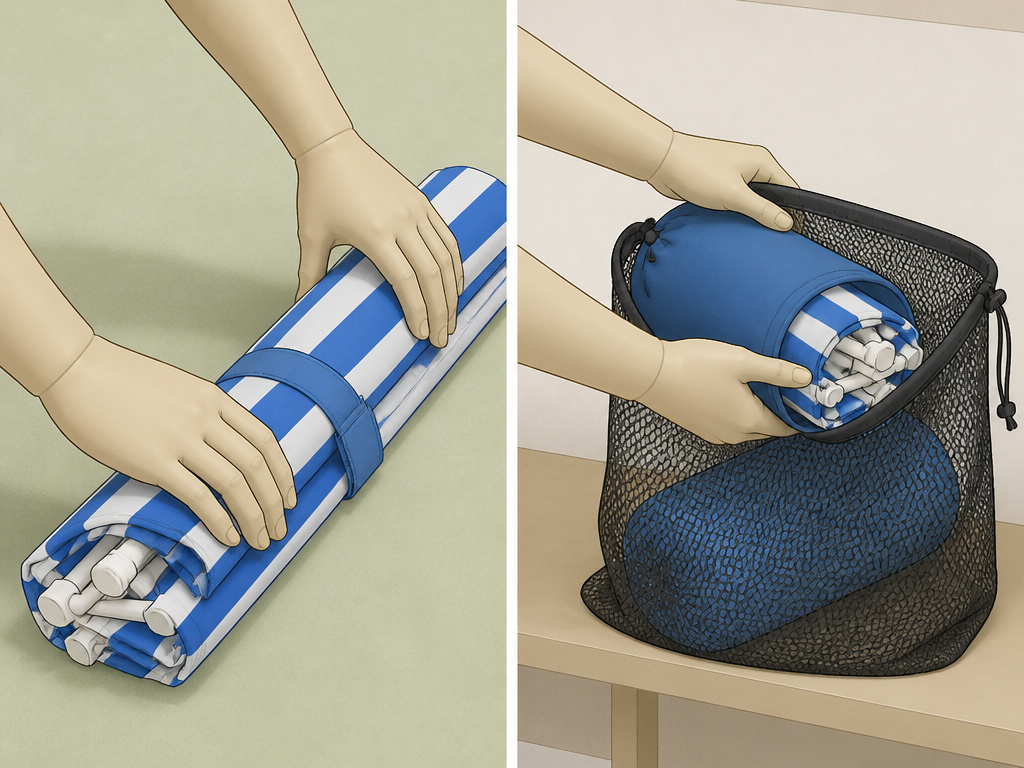
Folding is the mechanical process of collapsing the frame. Packing is how you store and transport it. Confusing the two ruins more tents than anything else.
A correctly folded tent should form a compliant bundle. You can bend it slightly to fit the bag. A correctly packed tent lives in that bag loosely, without constant pressure on the poles.
Never store your tent in the carry bag compressed under other gear. The constant pressure creates a “memory” in the fiberglass poles. After a month in a hot car, the tent will no longer spring open correctly. It will struggle to expand, putting extra strain on the hubs every time you use it.
Instead, store the bagged tent in a larger, breathable storage sack or simply on a shelf. This is especially important for durable canvas tents and heavier family shelters, but it applies to lightweight pop-up beach tents as well. The goal is to preserve the spring in the poles.
Choosing the Right Beach Tent for Easy Folding
Not all beach shelters fold the same. Your experience is dictated by the design.
Traditional pop-up tents with a central hub and flexible poles are designed for the taco method. They are the standard for a reason. Budget tents under $100 often use thinner pole materials and less robust hubs, they fold the same way but tolerate less error.
Sun shelters that use a rigid, pre-bent pole system (often called “instant canopies”) fold differently. They typically use a scissor mechanism that collapses into a long, flat shape. These don’t use the taco method. You unlock the joints and push the top down.
When selecting a tent, consider the folding mechanism as a key feature. A tent that fights you every time will get left in the garage. This is why investing in quality tents under $200 often pays off, better components mean smoother operation.
| Tent Type | Folding Method | Risk If Done Wrong | Best For |
|---|---|---|---|
| Central-Hub Pop-Up | Taco fold & roll | Cracked plastic hub, jammed frame | Beach days, quick setup, family camping gear |
| Instant Canopy (Scissor) | Collapse scissor joints | Bent rigid poles, pinched fabric | Tailgating, market stalls, larger groups |
| Inflatable Air-Beam Tent | Deflate & roll | Punctured air beam, leaky valve | Car camping tents where space isn’t limited |
| Traditional Pole & Sleeve | Disassemble poles | Snapped pole segments, torn sleeve seams | Backpacking, multi-day trips, durable camping shelters |
The One Storage Mistake That Ruins Poles
You folded it perfectly. You packed it gently. Then you threw it in the trunk and forgot about it for two months.
Summer heat in an enclosed car acts like an oven. It accelerates the aging of every component. The fiberglass poles soften slightly under sustained heat and pressure. They take on the curved shape of their confinement. Next time you go to open the tent, it will fight you. The poles have lost their designed spring tension.
The fix is storage discipline. When you get home from the beach, take the tent out of the car. If it’s a pop-up, consider storing it loosely under a bed or in a closet instead of in its tight bag. For larger stand-up tents or family camping tents, ensure they are completely dry before long-term storage in a cool, dry place.
Common mistake: Storing a pop-up tent tightly packed in a hot car trunk, the fiberglass poles warp under heat and pressure within weeks, and the tent will never open smoothly again.
This is also why your tent camping accessories, like mallet, peg puller, and repair kit, should live separately. Don’t leave them inside the tent bag where they can press against the poles.
Frequently Asked Questions
Why does my beach tent pop open when I try to fold it?
The tent is fighting you because the frame is under tension. You’re likely pulling the fabric outward, which tightens the entire structure. The solution is to push the corners toward the center, which releases that tension and allows the flexible poles to buckle in on themselves. Always push, never pull.
Can I fold a wet beach tent?
You can fold it temporarily to transport it home, but you must dry it completely before storing it. Fold it loosely using the standard method, then immediately unfold it in a well-ventilated area when you get home. Storing it damp causes mold and mildew, which destroys the fabric’s waterproof and UV coatings.
How do I fold a beach tent with one person?
The process is the same. The key is using your body weight. Kneel beside the tent, use one hand to push two corners toward the center, then shift your weight to push the other two corners. Use your knee to gently hold the first pair in place while you reach for the second.
My tent bag ripped. Can I use a different bag?
Yes, but the replacement bag must be at least as large as the original. A bag that’s too small forces you to over-compress the tent, which damages the poles. A simple large tote bag or even a pillowcase is better than a tight, ripped original bag.
Are all pop-up beach tents folded the same way?
Most dome-style pop-ups with a central hub use the taco method. However, always check your specific model’s manual. Some ultra-compact designs or those with a rigid frame (like some sun canopies) have different collapse mechanisms. The principle of “push, don’t pull” and “keep it clean and dry” remains universal.
The Bottom Line
Folding a beach tent isn’t a test of strength. It’s a test of patience and technique. The taco method works because it follows the natural collapse path of the flexible poles.
Remember the non-negotiables: a clean, dry surface, slack fabric, and a gentle hand. Respect the manufacturer’s environmental warnings about wind and rain. Most importantly, store your tent like the seasonal gear it is, loose, cool, and dry.
Master this five-minute drill and your shelter will last for seasons, ready for every beach day, backyard campout, or AllTrails adventure you throw at it. Fight it, and you’ll be shopping for a new one before summer’s end.
