
How to Fold a Shower Tent: The One-Move Method That Works
This post contains affiliate links. As an Amazon Associate, we earn from qualifying purchases.
To fold a pop-up shower tent, you must complete the twist. Clear it, push the roof down to flatten it, form a loose figure-eight, then rotate the halves in opposite directions until it snaps into a tight, stable circle. Skip the rotation and you’re left with a springy, uncooperative mess that won’t fit in its bag.
I’ve watched a perfectly good Companion Shower Tent get wrecked in a 15-mph gust because someone tried to fold it alone. The wind caught it, a pole hub cracked with a sound like a snapped chicken bone, and that was the end of that trip’s privacy. It’s not about strength. It’s about physics.
This isn’t another generic list. I’m Chloé, and I’ve folded these in mud, sand, and perfect evening calm. Here’s the real-world method that works, the brand-specific quirks the manuals hint at, and the stupid-simple mistakes that cost you a season’s worth of gear.
Key Takeaways
- The magic is in the opposite-direction twist. Push down to flatten, then rotate the lobes against each other. No twist, no compact circle.
- Wind demands a crew. The Companion Shower Tent manual explicitly states 2-3 people are needed for pack-up in windy conditions to avoid frame damage. I’ve seen the consequence.
- Dry it utterly. A “mostly dry” fold breeds mildew. I learned this the hard way after a damp pack-up in Wales left my tent smelling like a forgotten gym bag.
- Inspect the hubs. On cheaper models, the plastic pole intersections can twist out of alignment during collapse. Gently nudge them straight before forcing anything.
- Upgrade the strap. The included strap is often flimsy. A 24-inch Nite Ize Gear Tie or a ROADIE Strap from Rhino-Rack provides compression that won’t slip.
Why Does the Twist Make It All Work?
These tents pop open because of pre-curved, elastic poles under constant tension. Folding them is about releasing that stored energy completely. A straight downward collapse only gets you halfway. The poles are still stressed, fighting to spring back.
The twist is the release valve. It allows the poles to cross over and overlap, moving from an open, high-energy state to a closed, relaxed coil. This isn’t a hack. It’s the intended mechanical action.
A pop-up shower tent frame uses tensioned elastic poles. The twist-folding method facilitates pole crossover, transitioning the structure from a stressed, open dome to a relaxed, flat coil suitable for compact storage.
Forget the twist and you fight the design. The tent bulges, resists, and acts like a live animal in a sack. That struggle means you haven’t engaged the correct sequence.
TL;DR: The poles must cross. The twist makes them cross. Master this one motion.
What’s the Step-by-Step Folding Sequence?
Before you start: Folding in wind risks frame damage and personal injury as fabric becomes a sail. Ensure the tent is completely empty to avoid punctures from forgotten items. Never use knee-on-back pressure to force a fold, this cracks pole hubs.
Follow this on grass or a tarp. Concrete snags and abrades fabric.
- Empty and Level. Remove everything. I mean everything. A single tent peg left inside becomes a ramrod during the twist. I saw one punch a hole straight through a Rhino-Rack tent’s floor. Close all zippers. Position the tent so the roof is level. Uneven ground creates unbalanced tension from the start.
- Collapse the Dome. Stand facing a wall. Plant both hands flat on the roof’s center. Push down. Hard. The poles will groan and creak, a satisfying plastic crunch, as the roof kisses the ground. Don’t stop until it’s a flat disc.
- Find the Figure-Eight. Kneel beside the disc. Place one hand on your edge, the other on the far edge. Push down and slightly in. The tent will buckle into a loose oval or figure-eight. Let it find this shape.
- Execute the Critical Twist. Hands on each lobe. Now rotate them in opposite directions, right clockwise, left counter-clockwise. Steady pressure. After a quarter-turn, it will pop and snap into a tight, flat circle. That’s the sound of success.
- Secure and Store. Wrap a stout strap around the coil’s center. I trust a ROADIE Strap; the original often fails mid-transit. Guide the coil, frame-first, into the storage bag, then tuck fabric around it. If you’re fighting the zipper, repack.
Common mistake: Folding a damp or sandy tent, abrasive particles grind pole sleeves during the twist, causing premature fabric wear. The poles also feel stiff and resistant, leading to forced moves that break hubs.
What Do You Do When the Tent Resists?
Sometimes it fights back. Stop. Forcing it breaks things.
First, run this pre-flight check:
* Is it truly empty? Run your hand over the entire floor, twice.
* Are zippers fully shut? An open door flap pinned under a pole is a common snag.
* Is the surface flat? A slope puts unfair tension on one side of the frame.
If the figure-eight won’t form, inspect the plastic pole hubs. On budget models, they twist during collapse. Gently wiggle them back to neutral.
If the tent coils but springs open, your retaining strap is inadequate. The coil needs external compression. Upgrade it.
When to call for help: The wind is picking up. Stop. The Companion manual’s warning is based on real failure data. A gust can turn the tent into a sail, applying catastrophic torque to the frame. Wait for calm or enlist a friend. This principle of knowing when to pause is part of smart tent camping equipment management.
How Do Different Models Change the Process?
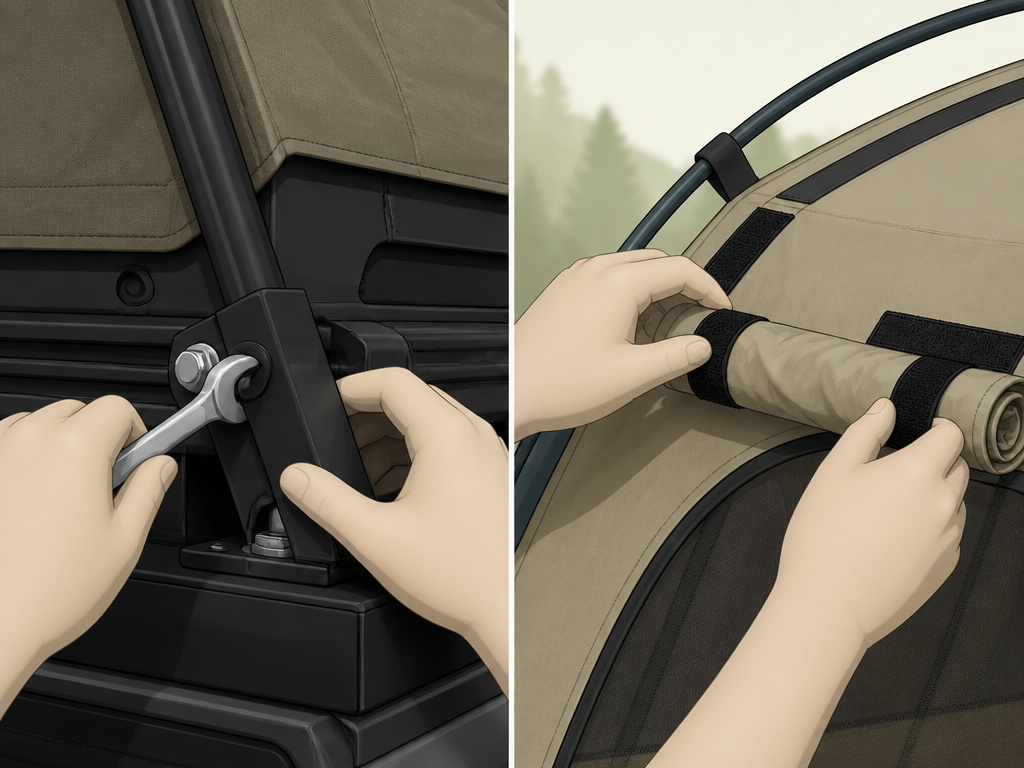
The core twist is universal, but hardware and mounting change the context. Knowing your model prevents pre-folding frustration.
| Model / Brand | Folding Nuance | Key Installation Fact |
|---|---|---|
| Companion Shower Tent | 2-3 person job in wind. Frame is robust but acts as a large sail. | Requires M6 bolts into an aluminum backing plate. OEM recommends professional install by a 4×4 fitter. |
| Rhino-Rack Shower Tent | Uses VELCRO® brand fasteners to secure rolled walls before the main fold. | Designed for Rhino-Rack platform integration. Check crossbar compatibility before purchase. |
| Generic Pop-Up Models | Often have thinner pole sleeves and lighter hubs. Be gentler during the twist. | Usually freestanding. No permanent installation, making them simpler but less stable in wind. |
Vehicle-mounted tents add complexity. You’re folding a structure anchored to your car. The manual’s pro-install advice isn’t a suggestion, improper mounting stresses the frame at its anchor points, and that stress shows up as binding during the fold.
For freestanding shelters, like many pop-up beach tents or smaller shower units, the process is physically simpler. The difference often lies in pole quality. Thicker fiberglass in premium models coils more predictably than thin steel.
What Gear Actually Helps (And What’s a Gimmick)?
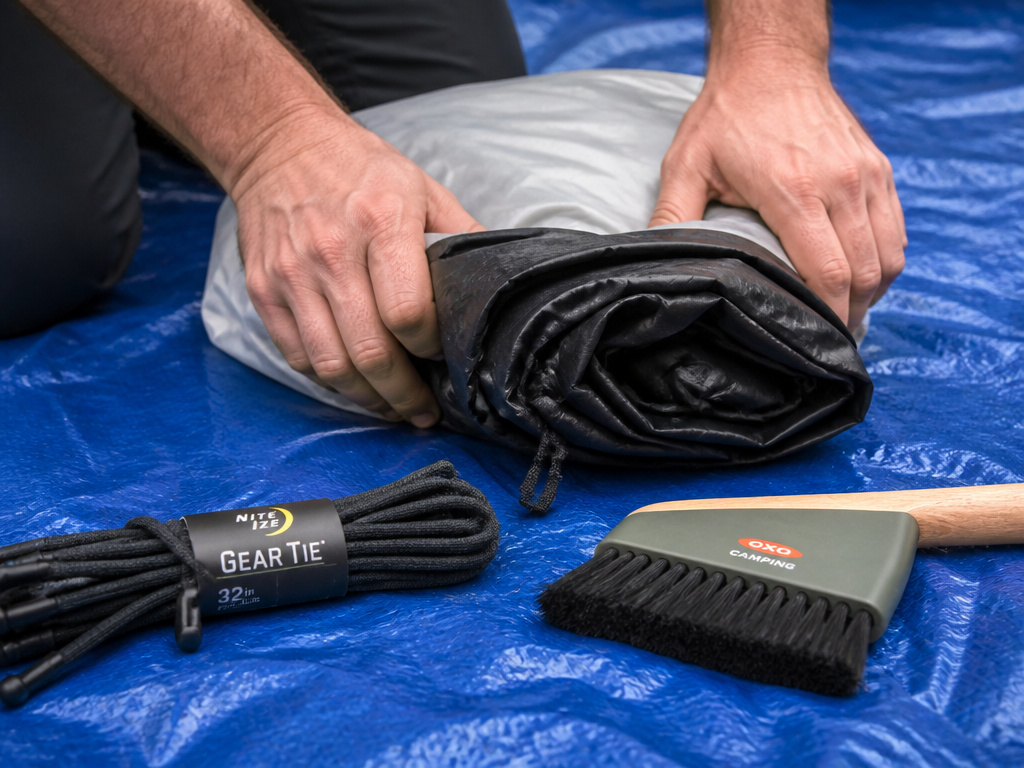
You need your hands and a clear space. But a few specific tools prevent damage and make life easier, fitting right into your kit of tent camping accessories.
- A Simple Tarp. Folding on dirt introduces grit that acts like sandpaper in the pole sleeves. A cheap blue tarp is perfect protection.
- A Nite Ize Gear Tie (24-inch). This replaces the flimsy original strap. Its rubberized coating grips and doesn’t slip. I haven’t had one fail.
- The OXO Camping Sweep Brush. I learned after my Companion mildewed that a proper clean is vital. This brush has stiff-but-gentle bristles that get sand out of sleeves without snagging the 75D polyester. A generic hardware store brush left tiny scratches on my tent’s coating.
What don’t you need? Knee-on-back pressure. Sitting on the tent. “Helping” hands that pull instead of twist. The tension is designed for leverage, not brute strength. This mindful approach to gear care extends to all your shelter investments, from budget tents under $100 to premium canvas tents.
A Quick Guide to Post-Fold Care
Folding gets it small. Packing and storage keep it safe for next time.
| Goal | Right Way | Wrong Way |
|---|---|---|
| Packing the Bag | Hold coil vertical, lower it frame-first into bag. Gently stuff fabric around it. | Tossing it in horizontally, creating a tangled wad that strains the zipper. |
| Long-Term Storage | Use a larger, breathable mesh bag (not the tight OEM sack) in a cool, dry closet. | Storing in a hot car trunk or attic, which degrades the poles’ elastic memory over seasons. |
| Pre-Trip Check | Unfold at home to air out, check for mildew, and ensure the coil memory is strong. | Discovering a moldy, stubborn tent at the campsite with no time to fix it. |
For long-term health, especially for tents under $200 where materials can be less robust, proper storage is as important as the fold itself.
Frequently Asked Questions
Why does my tent spring open as soon as I let go?
You missed the twist. You collapsed it into a figure-eight but didn’t rotate the lobes. The poles remain in high tension and rebound. Complete the opposite-direction rotation until you feel the definitive pop into a stable circle.
Can I fold a large shower tent by myself?
On a calm day, yes. The 5-step method is a solo operation. However, if there’s any wind, or your model is vehicle-mounted like the Companion, get help. That manual’s 2-3 person rule for windy pack-up exists because they’ve seen the repair claims.
How do I fold a tent that’s attached to my car?
The physical steps are identical, but your workspace is constrained. Be acutely aware of the fabric against your vehicle’s paint during the collapse and twist. Verify all mounting bolts are tight before starting, as the folding motion applies lateral stress to those points.
What’s different about folding a shower tent vs. a regular pop-up?
Mechanically, nothing. Both use the same spring-loaded frame design. Shower tents often have a waterproof floor and are heavier-duty. The collapse-figure-eight-twist technique is universal for all pop-up shelters, from simple beach tent models to full enclosures.
My circle is loose and wobbly. What’s wrong?
First, ensure you completed the full twist. A partial rotation leaves a weak coil. Second, check your strap. If it’s the original, it’s likely stretched. Replace it with a heavy-duty alternative like the Gear Tie. A tight strap provides the compression needed for a neat pack.
The Bottom Line
Folding a shower tent isn’t a puzzle. It’s a single, physical motion, the twist, that you must commit to. Clear the tent, crush it flat, let it buckle, then rotate. The pop into a circle is your reward.
Keep it dry. Upgrade the strap. And never, ever fight it in the wind. That’s how poles break. Treat it with this mechanical respect and it transforms from a frustrating contraption into a reliable piece of gear that sets up, and packs away, in under a minute. Now go enjoy that private outdoor rinse, confident you can stow it just as fast. For more on shelters that make life easier, explore our picks for stand-up tents or car camping tents designed for comfort.
