
Should You Put a Tarp Under Your Tent? A Real-World Guide
This post contains affiliate links. As an Amazon Associate, we earn from qualifying purchases.
Putting a tarp under your tent can protect its floor from abrasion and simplify cleanup, but only if it’s trimmed smaller than the tent’s footprint. An oversized tarp funnels rainwater underneath, guaranteeing a wet sleeping bag. The choice depends on your campsite terrain, your tolerance for extra weight, and whether you’d rather carry a repair patch.
I learned this lesson the hard way on the Oregon coast with my old Big Agnes Copper Spur HV UL2. I used a full 8×10 poly tarp. A midnight downpour turned the space between the tarp and tent into a water slide, leaving me on a damp sleeping pad. That mistake taught me more than any manual.
This isn’t about blindly following a rule. It’s about understanding the why, when that extra layer saves your trip and when it’s just dead weight in your pack. We’ll cover the critical sizing trick, the sandy-beach exception that flips the script, and how to decide if you’re better off with a patch kit.
Key Takeaways
- The cardinal rule: your ground cloth must be smaller than your tent floor. Any visible edge will channel rainwater directly under your sleeping pad.
- On sandy beaches, skip the under-tent tarp. Place it inside the tent instead to prevent trapped water from seeping upward.
- A branded footprint is a convenience, not a necessity. DIY options like Tyvek or a trimmed poly tarp offer similar protection for a fraction of the cost.
- The biggest benefit isn’t puncture protection, it’s keeping your packed tent clean. You can shake off a muddy tarp, but you have to wipe down a filthy tent floor.
- For ultralight backpackers, a small patch kit like Gear Aid’s Tenacious Tape can be a smarter weight-saving alternative to carrying a full footprint.
Why Bother With a Ground Cloth at All?
Forget dramatic punctures. The real, silent killer of tent floors is abrasion. That 30-denier nylon on your favorite backpacking tent can handle forest duff, but a weekend on Arizona’s granite dust will sandpaper the polyurethane coating thin, causing it to weep moisture over time. I saw this after my REI Quarter Dome SL’s floor lost its waterproofness after two seasons on rocky ground.
A ground cloth acts as a sacrificial layer. It takes the scuffing so your tent’s expensive floor doesn’t have to. But the win you’ll feel immediately is in cleanup. After a rainy weekend, you simply pull up the wet, dirty tarp. Your tent bag stays clean, and you avoid the dreaded post-trip wipe-down.
A ground tarp’s primary function is to preserve the tent floor’s waterproof coating from abrasive wear and to keep the packed tent clean. Puncture protection is a secondary benefit.
What’s the One Rule That Guarantees a Dry Floor?
Get the size wrong, and you engineer your own puddle. Here’s the physics: rain runs off your fly and hits the ground. If your tarp extends past the tent’s edge, that water runs onto the tarp. Trapped between two waterproof layers, it has only one path, under your tent.
The rule is non-negotiable: no part of your ground cloth should be visible once the tent is pitched. For a rectangular tent, that means measuring and cutting. For a generic tarp, it means folding the excess firmly underneath itself until it disappears.
| Tent Floor Size | Maximum Ground Cloth Size | Consequence of Oversizing |
|---|---|---|
| 7 ft x 5 ft | 6 ft 8 in x 4 ft 8 in | Channels water under the floor within 30 minutes of steady rain. |
| 8 ft x 6 ft | 7 ft 8 in x 5 ft 8 in | Creates a persistent damp patch directly under the sleeper’s torso. |
| 10 ft x 8 ft | 9 ft 8 in x 7 ft 8 in | Can fully float the tent on a layer of water during a heavy downpour. |
TL;DR: Trim or fold your ground cloth so it is at least 2-4 inches smaller than your tent floor on every side. Seeing blue plastic around the edges is a sure sign you’ll have a wet night.
When Does a Footprint Cause More Problems?
A footprint isn’t a universal good. In some scenarios, it actively works against you.
Sand camping is the classic exception. On a beach, water drains straight down. A waterproof tarp under the tent traps that water, creating a shallow pool. The fix is counterintuitive: place the tarp inside the tent. It contains sand and any moisture from wet gear without creating a bathtub effect.
Common mistake: Using a full tarp under a tent on sand, the trapped water has nowhere to drain and will seep up through the floor’s seams by morning, leaving you on a damp, sandy mattress.
The other reason to skip it is the ultralight philosophy. Some experienced backpackers, like the author cited on Backpacker.com, forego a footprint entirely. They accept a minimal puncture risk to save weight and money, opting instead for a small patch kit. For them, carrying 6-8 ounces on every trip is a bigger burden than the rare repair.
If mud in the vestibule is your main worry, don’t extend the main footprint. That creates a water-funneling lip. Use a separate small mat, like a piece of outdoor carpet or a car sunshade, just for that high-traffic area.
Should You Buy a Footprint or Make Your Own?
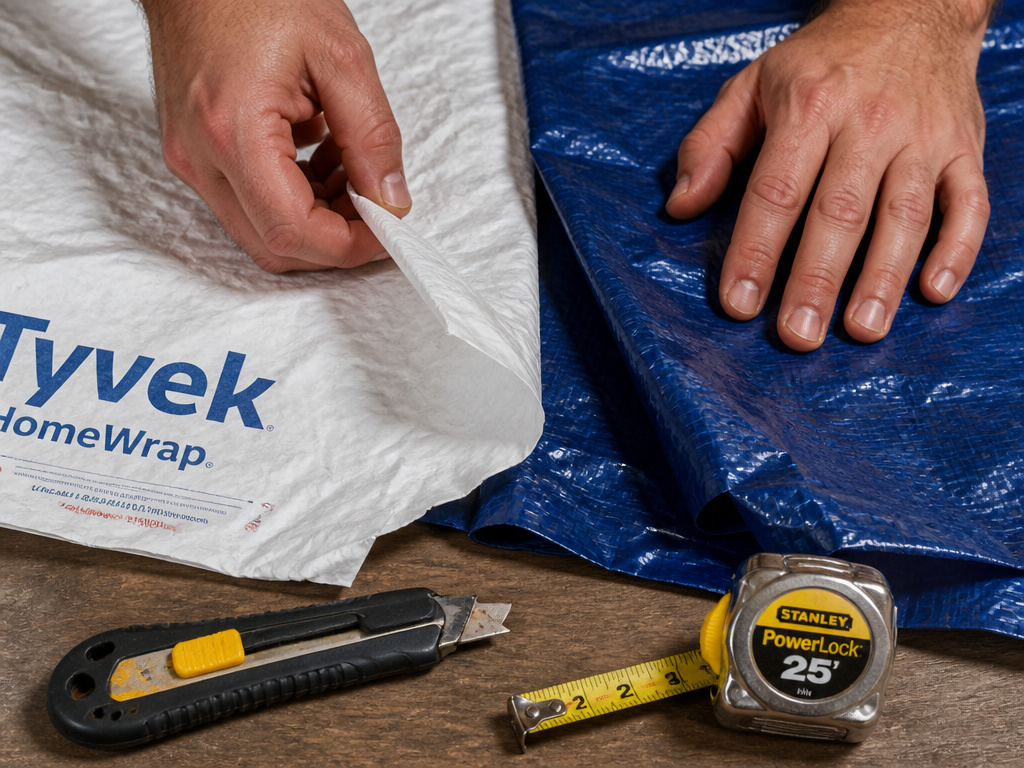
A branded footprint, like the MSR Ground Hugger or the Big Agnes-specific versions, offers perfect fit and lightweight convenience. It’s also often shockingly expensive. You can achieve 95% of the utility for under $20 with a little DIY spirit.
Your choice here often dictates your broader approach to tent camping gear. Car campers can afford bulk; backpackers must count every ounce.
| Material | Best For | Weight & Bulk | Key Trait | DIY Cost |
|---|---|---|---|---|
| Tyvek (1443R) | Backpacking, Weight-Conscious | Very light, packs tiny | Highly abrasion-resistant, noisy | ~$10 for scrap |
| 6-mil Poly Tarp | Car Camping, Base Camps | Heavy, bulky | Cheap, fully waterproof | ~$15 for sheet |
| Silnylon (e.g., Dutchware Membrane Silpoly) | Ultralight Backpacking | Extremely light | Requires seam sealing, less puncture-resistant | ~$30-$40 |
| Branded Footprint | Ultimate Convenience | Light, packs neat | Perfect fit, matched grommets | $50-$100 |
Tyvek is the backpacker’s secret. That crinkly white housewrap is nearly indestructible and weighs almost nothing. A 3’x6’ piece stuffed in my pack has saved my lightweight tarp tents from countless pine-cone fields. Pro-tip: run it through the washing machine (no soap!) once to soften the noise.
Poly tarps are the car-camping workhorse. Go for at least 6-mil thickness, the 3-mil versions are glorified garbage bags. Don’t just fold it; cut it to size with a utility knife for a clean, safe edge.
How Do You Install It Correctly (Without the Fuss)?
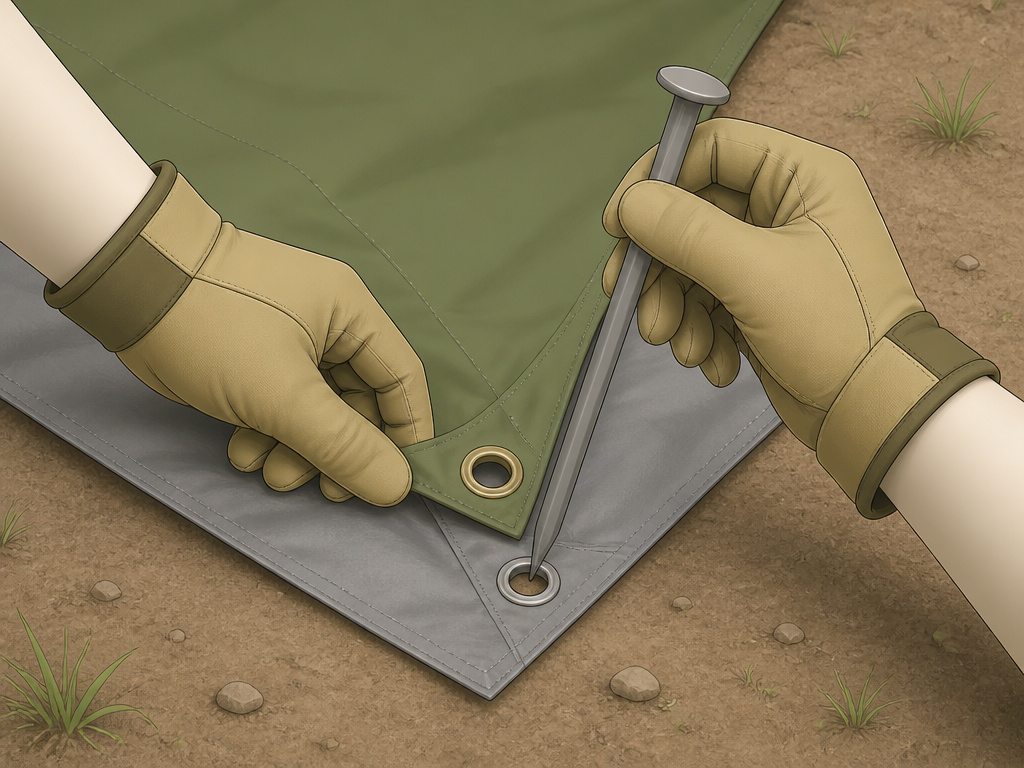
Before you start: An improperly installed ground cloth can lead to a wet sleeping bag and a miserable night. The key hazards are oversizing (funnels water) and poor site prep (defeats the purpose). Always clear your site and double-check your tarp size.
- Clear the site, properly. Get on your hands and knees. Feel for hidden granite nubs and snap that stray twig. A footprint guards against surprises, not the obvious bed of nails you chose.
- Lay the trimmed tarp flat. If it’s windy, place a few rocks or your pack on the corners. This is where a well-chosen piece of essential camping equipment like a sturdy pack acts as a multi-tool.
- Pitch the tent directly on top. Assemble your poles and clip the tent body onto the footprint. The tent fabric should completely obscure the ground cloth. If you see any of it, recenter the tent.
- Stake through aligned grommets (if present). This isn’t for stability, the tent’s weight does that, but it helps in high wind and perfects the alignment. This is one of those thoughtful tent camping tools that makes setup seamless.
- Pack them separately. When breaking camp, shake the dirty, wet tarp, fold it, and strap it outside your pack. Your main tent stays dry and clean inside.
Staking the tarp down by itself is unnecessary. The weight of a pitched tent, plus your gear, pins it firmly. I’ve never seen a properly sized ground cloth shift, even in the gusts that test my tents for high winds.
What Are the Cheaper Alternatives to a Footprint?
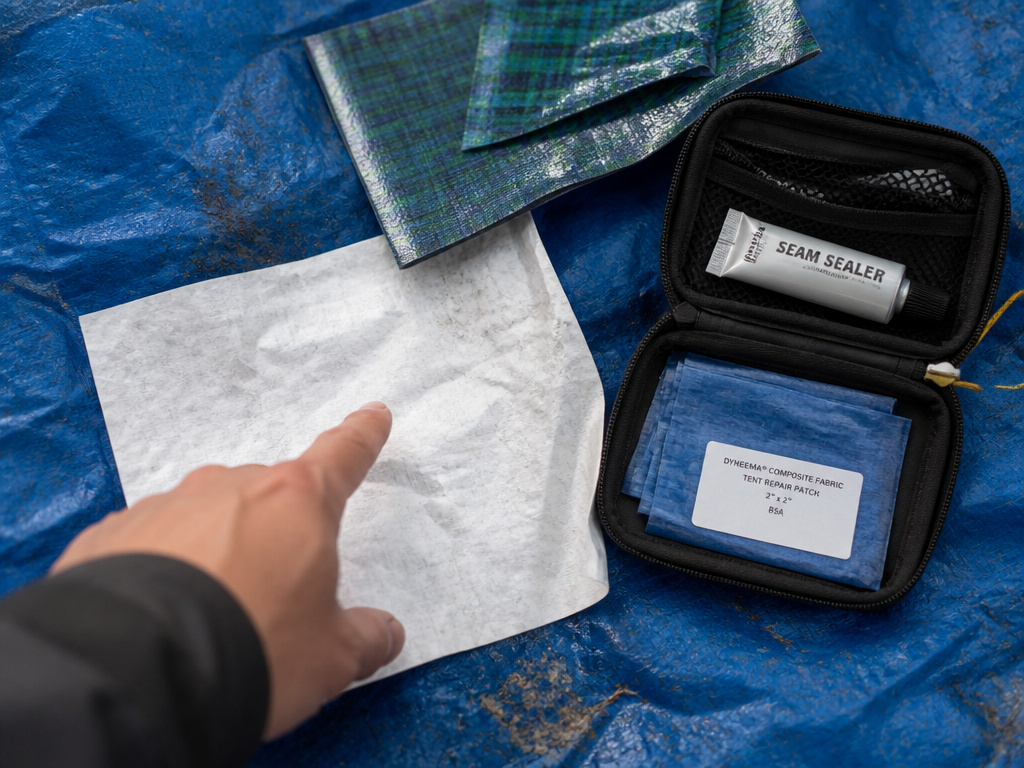
You don’t need a specialty purchase. Look in your garage or local hardware store first.
- A poly tarp, the classic blue beast from Harbor Freight. Bulky and sounds like a grocery bag in the wind, but for car camping? Indestructible. Cut it down.
- Tyvek. Ask a builder for a scrap of 1443R. Weighs nothing, packs to the size of a soda can, and somehow resists every pine cone I’ve thrown at it.
- An old vinyl tablecloth. The flannel-backed kind is surprisingly tough for casual trips and adds a touch of homey insulation.
- A dedicated patch kit. This is the true ultralight alternative. It swaps prevention for repair. It’s for the gram-counters who’ve weighed the risk and saved the ounces.
Look, here’s how I decide: if my car’s within 50 feet, I’m bringing the blue beast. If I’m carrying it on my back for miles, it’s Tyvek or nothing. And if I’m pushing for a sub-10-pound base weight, I’m weighing that patch kit against my fear of a rogue stick.
Frequently Asked Questions
Does a tarp under a tent make it warmer?
Yes, but marginally. It provides a thin insulating layer between you and the cold ground, which can help reduce conductive heat loss. The effect is small but noticeable on chilly nights, similar to the added comfort from a good sleeping pad.
What’s the best thing to put under a tent on concrete?
tarp is excellent on concrete or asphalt, primarily to prevent abrasive wear on the tent floor. The hard surface will grind down the waterproof coating over time. The tarp also provides that slight insulation and makes for a cleaner pack-up.
Can I use a footprint from a different brand?
You can, but sizing is critical. It must be smaller than your tent’s floor. A generic rectangular footprint might work for a rectangular tent, but it won’t match the shape of a tapered or geodesic tent, potentially leaving areas unprotected or creating those water-funneling edges.
Is a footprint necessary for a canvas tent?
While heavy-duty canvas tent models are incredibly durable, a ground cloth is still wise. It protects the floor from ground moisture and abrasive dirt, extending the life of the canvas and making cleanup much easier, which is valuable given their size and weight.
How do I keep my tent dry in heavy rain without a footprint?
Site selection is your first defense. Pitch your tent on a slight elevation so water runs away. Ensure your rain fly is taut and properly staked out. A well-designed tent with a high waterproof rating with a bathtub floor is your best piece of equipment in these conditions.
The Bottom Line
A ground cloth is less about armor and more about practicality. It’s insurance against abrasive wear and a ticket to a faster, cleaner pack-down. The entire system fails if you ignore the single most important directive: make it smaller than your tent.
Skip the expensive branded footprint unless perfect, effortless fit is worth a premium to you. A piece of Tyvek or a trimmed hardware-store tarp does the job admirably. And always remember the exception, on sand, the rules flip. Get that right, and you’ve mastered one of camping’s simple but vital skills, freeing you to focus on finding those perfect Michigan camping sites or simply enjoying the stars.
