
What Are Tents Made Of? The Real Specs That Matter
This post contains affiliate links. As an Amazon Associate, we earn from qualifying purchases.
Tents are made from woven nylon, polyester, or cotton canvas. The base fabric determines weight and feel, but the waterproof coating, polyurethane (PU) or silicone, and technical specs like hydrostatic head (HH) and tear strength (measured in Newtons) dictate if you stay dry and for how long.
I learned the hard way that a tent’s material tag is its biography. My Big Agnes Copper Spur HV UL2, left pitched for a month at a friend’s cabin near Telluride, transformed from a vibrant ‘Burnt Orange’ to a pale, brittle peach. The next spring on the Lost Coast Trail, a 25mph gust didn’t just stress a seam, it ripped a clean 8-inch tear along the ridgeline of the fly. A field repair with Tenacious Tape failed in the damp air, forcing a $250 replacement and a miserably soggy final night. That failure wasn’t about brand; it was about understanding the three numbers that define every shelter.
Key Takeaways
- Nylon is ultralight but degrades in UV light. Polyester is slightly heavier but UV-resistant, making it the default for car camping. Canvas is breathable and durable but heavy and prone to mildew if stored wet.
- The hydrostatic head (HH) rating is your waterproof guarantee. For reliable storm protection, look for a minimum of 3,000mm on the fly and 5,000mm+ on the floor.
- Tear strength, measured in Newtons (N), predicts durability. Per ISO 5912:2020, a quality 3-season tent outer should withstand at least 15-20N of force.
- The coating matters more than the base fabric. PU coatings are common but can delaminate. Silicone-impregnated fabrics (silnylon) are stronger and more waterproof but require specific sealants for repairs.
- Always check for ISO 5912:2020 or ASTM F3431 compliance on spec sheets. These standards verify a tent’s tear strength, waterproofing, and flammability have been tested to a global benchmark.
What Are the Core Tent Fabrics and Their Real-World Trade-Offs?
Walk through any campground and you’ll see three materials dominating the landscape. Each serves a different master, and choosing wrong means either carrying unnecessary weight or watching your shelter fail prematurely.
ISO 5912:2020, the international standard for camping tents, categorizes shelters by weight per sleeper. Category A (lightweight) tents weigh ≤2.5 kg per berth and often use thin nylon. Category B tents are heavier and typically use thicker polyester or canvas, with higher minimum performance thresholds for tear and breaking strength.
Nylon is the strength-to-weight champion. It’s the fabric of choice for most backpacking and ultralight tent fabrics because it packs small and can be incredibly strong for its weight. However, its Achilles’ heel is ultraviolet light. The fibers weaken and become brittle with prolonged exposure. That faded, crispy feeling on an old rainfly? That’s UV-degraded nylon, and its tear strength is mostly gone.
Polyester is the resilient workhorse. It’s marginally heavier than nylon at the same denier but possesses superior UV resistance. A polyester tent can bake in the sun for seasons without the catastrophic weakening that afflicts nylon. This makes it the default for family tent fabrics and festival shelters where longevity trumps shaving grams. The trade-off is less stretch, requiring a taut pitch to minimize noisy flapping.
Canvas, typically a treated cotton or blend, is the heavyweight breather. Modern cotton canvas material swells when wet to create a natural seal and offers unmatched breathability, drastically reducing condensation. It’s the material for heavy-duty winter shelters where you’ll spend days inside. The cost is immense weight, slow drying times, and a strict requirement for bone-dry storage to prevent mildew.
TL;DR: Pick nylon to save weight, polyester for sun-exposed longevity, and canvas for breathable, stationary comfort.
How Do Coatings and Treatments Actually Work?
The base fabric is the canvas; the coating is the masterpiece. This invisible layer determines whether you stay dry or wake up damp.
Most affordable tents use a polyurethane (PU) coating, a liquid laminate applied to the fabric’s interior. This coating creates the waterproof barrier, and its effectiveness is measured by the hydrostatic head (HH) rating. A 3,000mm HH rating is the entry point for reliable weather protection, which is why it’s a baseline for dedicated tents for heavy rainfall.
Siliconized nylon (silnylon) is a premium process where silicone is impregnated into the nylon fibers themselves. The result is a fabric that’s stronger, more waterproof, and more packable than PU-coated nylon. It has a distinctive slippery, slightly rubbery hand-feel. The catch? Repairs demand a silicone-specific sealant like McNett SilNet; standard PU sealants or tapes won’t bond properly.
Common mistake: Using a generic seam sealer on a silicone-coated tent. The repair will peel off within hours. For my silnylon Tarptent, I only use McNett SilNet Seam Sealer, it bonds on a molecular level where GE Silicone II just flakes away.
Some high-end shelters use a hybrid treatment: silicone on the outside for superior water beading and a PU coating on the inside for added waterproofing and easier factory seam taping. This combination, found in many storm-resistant tents, creates exceptional stormworthiness at a higher cost and weight.
What Do Denier, HH, and Tear Strength Really Mean?
Forget marketing fluff. The truth of a tent’s capability is locked in three technical specifications.
Denier (D) measures the linear density of the yarn. Think of it as thread thickness. A higher number means thicker, heavier, and generally more durable fabric.
* 10D-20D: Ultralight canopies (high risk of punctures).
* 30D-40D: Standard for 3-season backpacking tent bodies and flies.
* 70D-150D: Standard for tent floors and durable cabin tent construction.
Hydrostatic Head (HH) measures waterproofing. It’s the height of a water column (in mm) the fabric can support before water penetrates. Heavy rain exerts roughly 1,000-2,000mm of pressure.
| HH Rating (mm) | Protection Level | Best For |
|---|---|---|
| < 1,500 | Minimal | Sun shelters, fair-weather use only |
| 1,500 – 3,000 | Standard | Light rain, short summer showers |
| 3,000 – 5,000 | High | Reliable 3-season camping, sustained rain |
| 5,000+ | Very High | Waterproof tent models for severe weather, expedition use |
Tear Strength (measured in Newtons, N) is arguably the most critical spec. It’s the force required to propagate an existing rip, not start one. A high tear strength prevents a small snag from becoming a catastrophic failure. Per ISO 5912:2020, minimum tear resistance for a tent’s outer fabric ranges from 10N (lightweight) to 25N (heavy-duty).
How Are Tents Tested to International Standards?
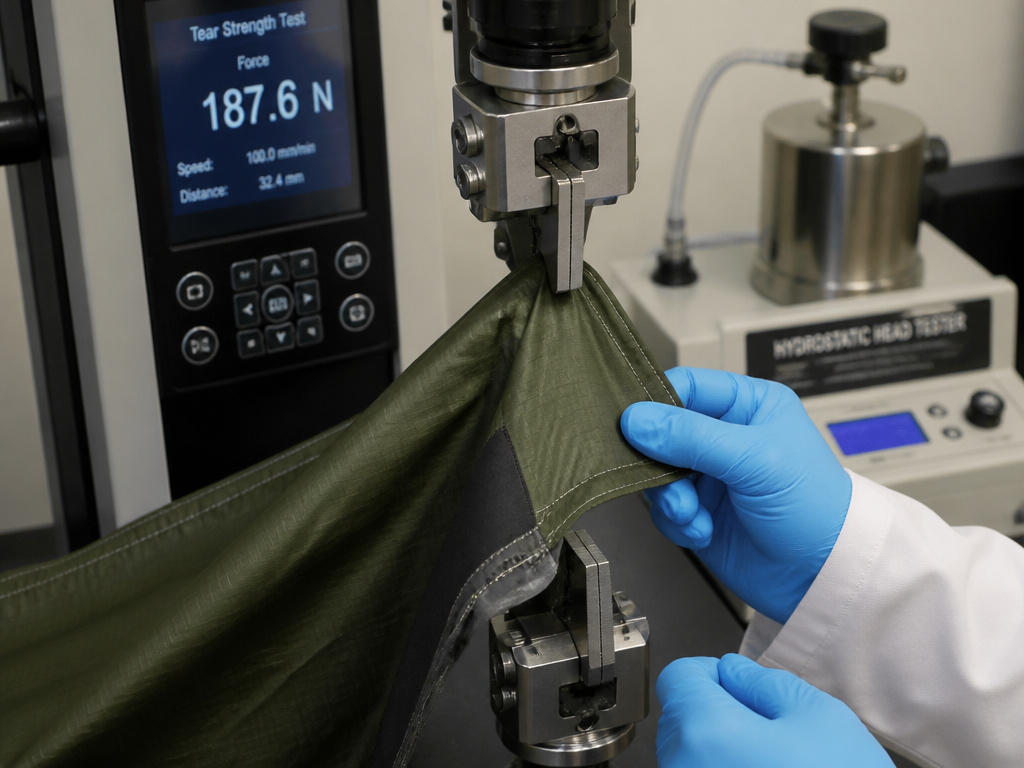
Manufacturers don’t just claim performance; reputable ones design to verifiable international standards. The two that matter are ISO 5912:2020 and ASTM F3431.
ISO 5912:2020 is the comprehensive global benchmark. It’s a battery of tests defining minimum performance for safety and durability. Key material tests include:
1. Tear & Breaking Strength: Specific Newton thresholds for outer fabric, inner fabric, and groundsheets.
2. Water Penetration Resistance: Measured in Pascals (Pa), correlating directly to HH ratings.
3. Dimensional Stability: Fabric must not shrink or stretch more than ±3% after simulated weathering.
4. Flammability: Materials must self-extinguish within an average of 6 seconds after a 10-second flame application.
The ASTM tent flammability standard, F3431, focuses specifically on fire safety. It mandates testing for flame spread and requires specific warning labels. Compliance with this standard is crucial for any tent used near a heat source. If a product spec sheet mentions neither ISO 5912 nor ASTM F3431, its performance claims are essentially unverified.
Military specifications, like the one for the USMC Combat Shelter, demand even more extreme durability, often using heavier deniers and reinforced constructions that far exceed civilian ISO minimums, explaining their substantial weight.
When Do Tent Materials Actually Fail?
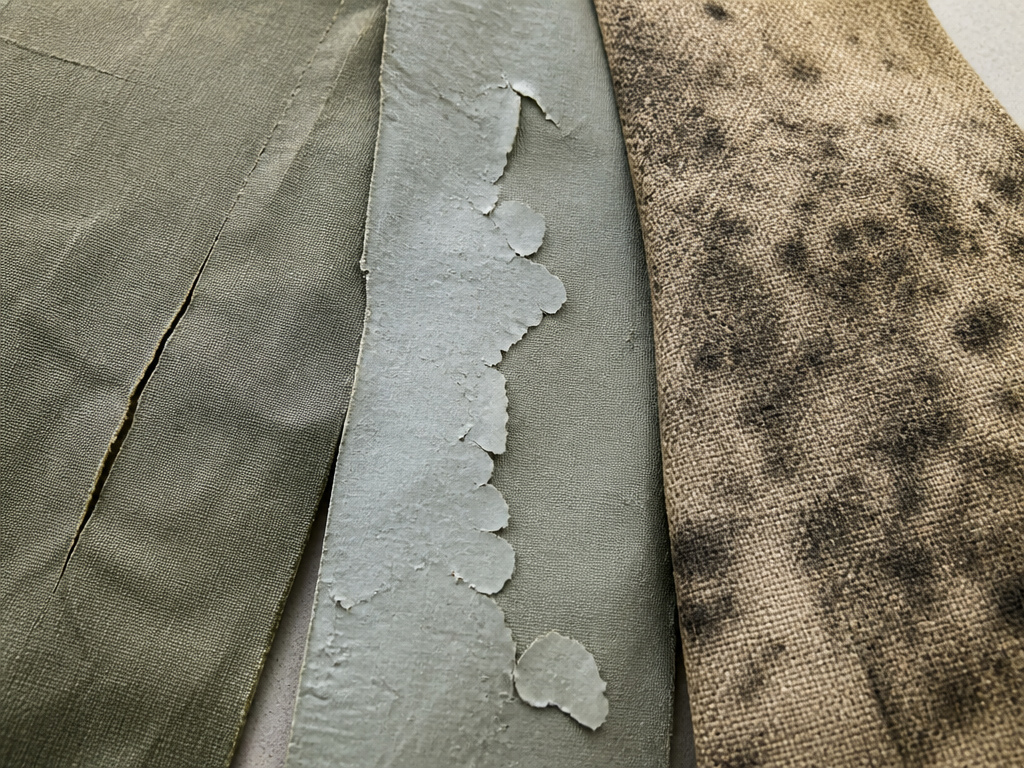
Every fabric has a failure mode. Recognizing the early signs can save a trip.
Nylon fails from UV degradation. The signs are visual and tactile: vibrant colors fade to a washed-out grey or pale peach. The fabric loses its suppleness, becoming stiff and crinkly. You might hear a faint cracking sound when folding it. At this stage, the material is brittle, and its tear strength is critically compromised.
Polyester fails from coating delamination. Look inside the rainfly or on the tent floor for a white, chalky, or sticky residue. In advanced cases, the PU coating peels off in rubbery sheets. Once delaminated, the fabric weeps moisture, you’ll get damp from the inside out, not from a visible hole.
Common mistake: Storing a tent slightly damp. In my first season guiding, I packed away a damp polyester festival tent for just two weeks. The resulting mildew bloom and coating delamination were irreversible. Always dry your tent completely, even if it means hanging it in your garage overnight.
Canvas fails from moisture and biological growth. Black or grey speckles (mildew) and a persistent musty smell are the warnings. If left unchecked, this progresses to rot, where the fabric becomes brittle and tears with minimal pressure.
TL;DR: Nylon gets brittle and fades. Polyester coating turns chalky and peels. Canvas gets musty and speckled.
Which Fabric Is Right for Your Camping Style?
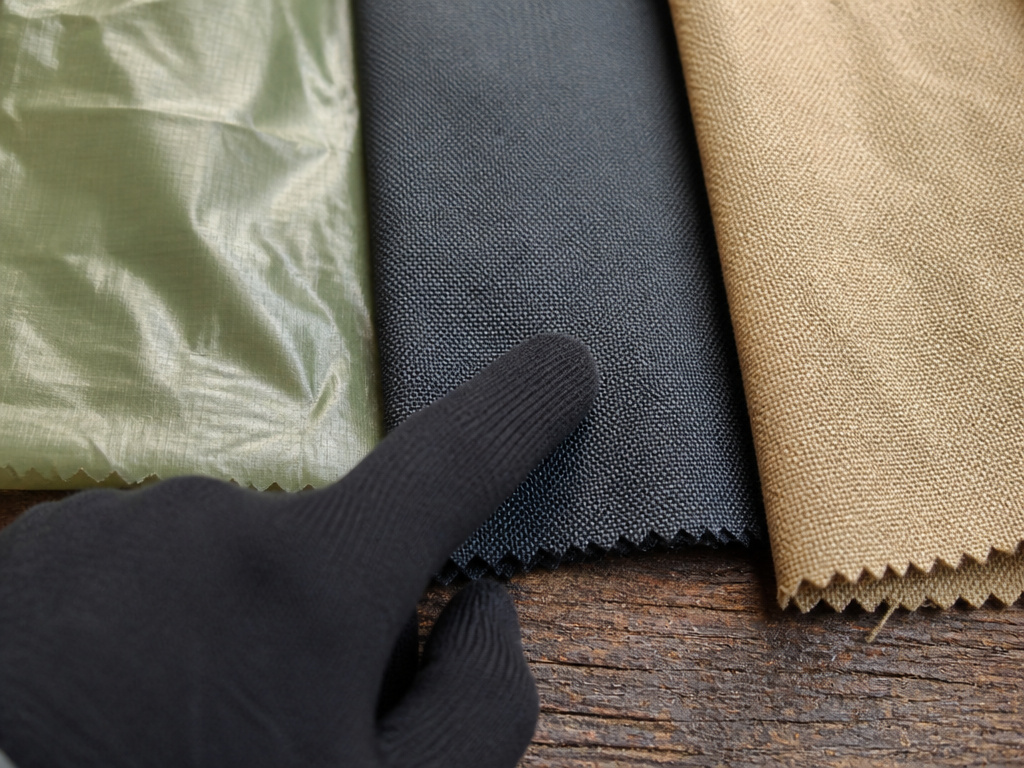
Staring at a soaked-through festival tent in 2018 taught me this: your camping style picks the fabric, not the other way around.
For Backpacking & Ultralight Hiking: Your currency is grams. Prioritize siliconized nylon (silnylon) or Dyneema Composite Fabric (DCF). Deniers are low (10D-30D), trading some durability for minimal weight. The real trade-off isn’t just weight vs. strength, but cost vs. lifespan. A 10D DCF tent (like the Zpacks Duplex) costs $700 and may last ~300 nights before pin-holing, while a 30D silnylon tent (like the Six Moon Designs Lunar Duo) costs $300 and can last ~500 nights but weighs 400g more.
For Car Camping & Family Trips: You need sun-beaten, kid-proof durability. Polyester is your default. Look for 68D to 150D fabrics with a robust PU coating and a 3,000mm+ HH rating. This is the standard for most durable canvas options and large cabin tents designed to stay pitched for a week.
For Basecamp & Overlanding: You want breathable, livable space. This is the domain of canvas. Its natural temperature stability and breathability eliminate condensation, making it ideal for canvas tents with stove jacks and multi-day stationary camps. Are you really going to haul a 40D polyester cabin tent up a mountain just because it was on sale?
For 4-Season & Mountaineering: The mandate is absolute storm resistance. Fabrics are heavier denier nylon or polyester (40D-75D) with HH ratings exceeding 5,000mm. These shelters often use dual coatings and are built around bomber pole structures like DAC’s NFL-8 series, which you’ll find on proven tents for extreme weather.
What About Poles, Mesh, and Floors?
A tent is a system. The best fabric can be let down by cheap components.
Pole Materials: Quality tents use aluminum alloy poles. The industry benchmark is DAC (Dongah Aluminum Corporation) press-fit poles, known for consistent strength and a high strength-to-weight ratio. You’ll find them on premium brands with excellent Marmot tent construction. Cheap tents use fiberglass poles, they’re heavier, less responsive, and prone to splintering.
Mesh Types: Ventilation comes from polyester or nylon no-see-um mesh. Polyester mesh is more common and durable. Nylon mesh is softer and more breathable but can sag when wet. Density matters: standard mesh has ~900 holes/sq in., while true no-see-um mesh exceeds 1,500.
Floor Materials: The floor takes the most abuse. It needs the highest denier and HH rating in the tent. A 70D floor with a 5,000mm HH rating is a good minimum for reliability. Many lightweight tarp tents and budget models skimp here (using 30D), making a footprint essential. For beach use, some beach tent fabrics use polyethylene plastic floors that are sand-proof but non-breathable.
Seams and Zippers: Unsealed seams are the number one leak point. Factory-applied tape is the gold standard. For zippers, look for YKK brand coils, plastic zippers are a universal red flag for cost-cutting.
Frequently Asked Questions
What is the most durable tent material for full-time use?
For a semi-permanent basecamp or frequent car camping, a treated cotton canvas is the most durable long-term investment. It resists UV degradation far better than nylon and doesn’t suffer from the coating delamination that eventually affects all PU-coated polyester tents.
Is a higher denier number always better?
Not at all. Higher denier means heavier, less packable fabric. The goal is to match the denier to the stress. A 10D fabric is perfect for a careful ultralight hiker’s canopy but disastrous for a family tent floor. A 40D silnylon can often outperform a 70D standard polyester in tear strength due to the silicone treatment.
Can you re-waterproof a delaminated tent?
You can restore water beading on a worn PU coating with a spray-on reproofer like Nikwax Tent & Gear SolarProof. However, once the coating is actively flaking off (delamination), the waterproof barrier is permanently compromised. Reproofing cannot re-adhere a delaminated coating.
How long does a typical tent fabric last?
With ideal care (always cleaned, completely dry, and stored loosely), a polyester family tent can last 5-10 years of seasonal use. A nylon backpacking tent, handled carefully, might last 3-7 years. A canvas tent, with annual re-treatment and perfect dry storage, can last decades. Sun and stored moisture are the primary killers.
Before You Go
Your tent’s material is a contract between you and the weather. The difference between a shelter and a soaked liability isn’t brand loyalty, it’s a hydrostatic head rating over 3,000mm. The gap between a tent that survives a gust and one that shreds is a tear strength spec you can find in the ISO 5912 standard.
Let your actual camping style make the core choice: nylon for the gram-counters, polyester for the sun-beaten family site, canvas for the breathable basecamp. But let the technical specs. HH, denier, and a verifiable standard like ISO 5912, make the final decision. If those numbers aren’t on the tag, you’re buying a marketing promise, not an engineered shelter.
