
How To Tie Guy Ropes To Tent
This post contains affiliate links. As an Amazon Associate, we earn from qualifying purchases.
To tie guy ropes to your tent, secure them to the tent’s loops using a Bowline knot and stake them into the ground at a 45-degree angle facing the pull of the rope. For adjustable tension, use a Taut-Line Hitch to easily tighten or loosen the ropes as needed. Further explanation and step-by-step guidance on these knots and techniques will be provided later in the article to help you achieve the best stability for your tent.
Essential Facts in 30 Seconds
- Secure guy ropes to tent loops at corners or mid-walls.
- Use a Bowline Knot for a secure, non-slipping loop.
- Stake ropes at a 45-degree angle away from the tent.
- Use a Taut-Line Hitch for adjustable tension.
- Check guy ropes regularly and keep them taut.
Understanding Guy Ropes and Their Purpose
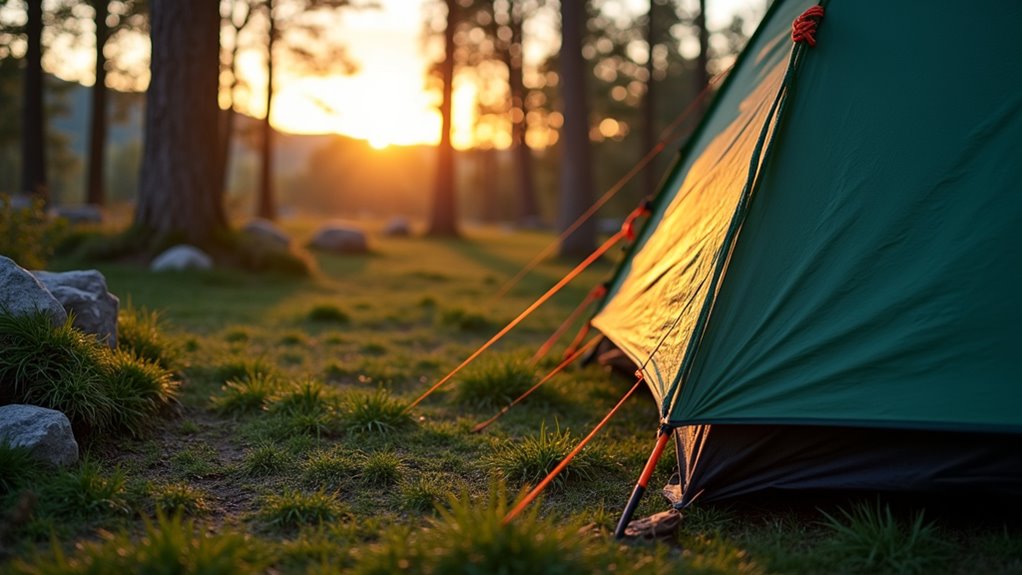
Guy ropes keep your tent strong and steady in all kinds of weather. They work with the poles to make the tent harder to move or fall. Using tough materials like Paracord 550 or Bank Line gives you ropes that last and hold tight. Tight guy ropes pull the tent fabric, stopping it from sagging or falling during storms. Additionally, adjusting tension using guylines is essential for maintaining stability in windy conditions.
Guy ropes stop the wind from making the tent flap a lot. This makes your stay more comfortable and helps the tent last longer. They also create space between the rainfly and tent walls. This space lets air flow, cutting down on moisture inside. The dry air keeps the tent cozy and fresh. Additionally, the importance of guy ropes is crucial for overall tent stability and safety during adverse weather conditions.
Always tie your guy ropes firmly to strong spots. This keeps your tent safe and steady if the weather turns bad.
Attaching Guy Ropes to Tent Loops
Attach guy ropes firmly to the tent loops. These loops usually sit at the corners or the middle of the tent walls. They hold the ropes tight and keep the tent steady. Properly staking a tent ensures that it stays securely in place against the elements.
Use these knots for best results:
| Knot Type | Description | Best Use |
|---|---|---|
| Bowline Knot | Makes a strong loop at rope end | Secure and does not slip |
| Two Half Hitches | Lets you change rope tightness | Easy to adjust after tying |
| Taut-Line Hitch | Changes tension near the stake | Perfect for fine tuning |
Feed the guy rope through the loop from below. Pull the rope tight little by little. This method holds your tent firm against wind and rain. Use knots that stay tight but untie quickly. This saves time during setup and takedown. Additionally, securing your tent with guy ropes is essential for a worry-free camping experience.
Proper Knot Usage for Guy Ropes
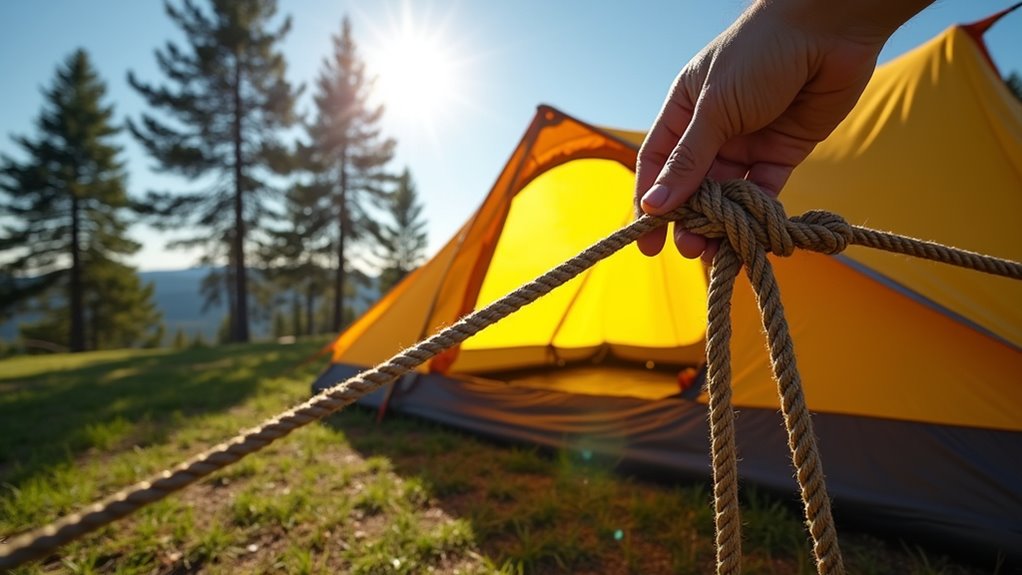
Using the right knots for guy ropes helps keep your tent steady and safe.
The Bowline knot makes a strong loop that stays secure and unties easily. It doesn’t move once tied.
The Two Half Hitches knot tightens when pulled, stopping the rope from slipping. This knot works well in windy weather.
The Taut-line Hitch lets you slide the rope to adjust tension. It holds tight when pulled hard.
The Midshipman’s Hitch is simple and quick to use for tightening ropes.
The McCarthy Hitch gives extra strength when you need to pull ropes very tight.
Each knot has a special job. Pick the one that fits your tent and weather needs best. Additionally, using proper peg placement enhances the effectiveness of your guy ropes and overall tent stability.
Stakes and Anchoring Techniques
Securing your tent well makes camping better and safer. Use the right stakes for your ground. Steel stakes work best on hard soil. Plastic stakes fit soft soil. Special sand or snow stakes hold well in loose ground, as properly secured tents enhance overall camping enjoyment and safety.
Push stakes in at a 45-degree angle, pointing away from the tent. Make sure stakes go deep enough to hold tight. Use a mallet to drive them in.
Tie guy ropes around trees, logs, or big rocks if stakes don’t hold. Pull on the ropes to test strength. Stakes should face the rope’s pull to stop slipping. Proper installation techniques, such as inserting pegs at a 45-degree angle, enhance the overall stability of your tent.
These steps keep your tent steady and protect you from wind or rain. Strong anchoring means a more comfortable camping trip.
Tensioning and Adjustments
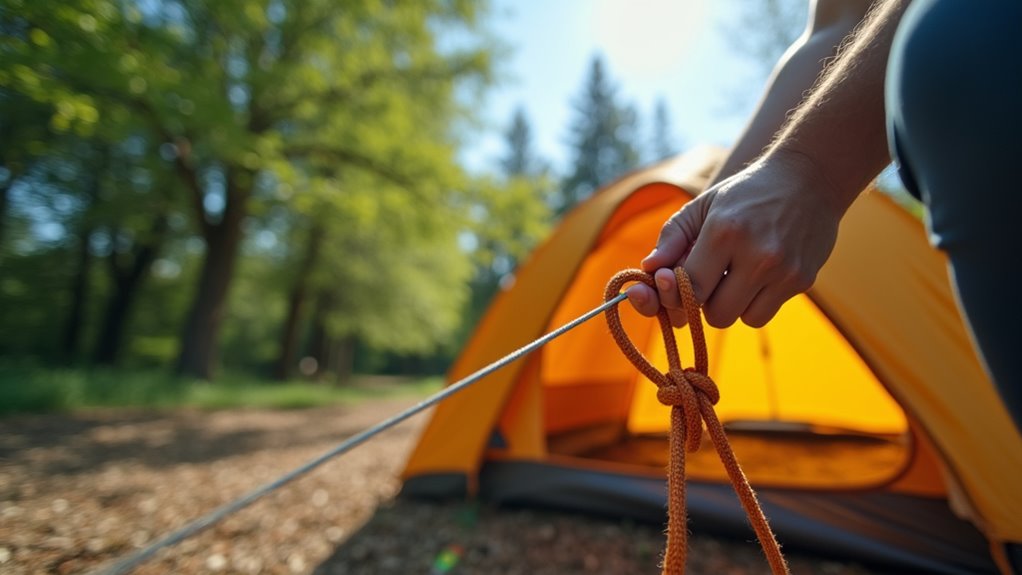
Secure your tent with strong stakes and good anchoring. Next, tighten the guy ropes well. Use a pulley tensioner for fast changes.
Try a taut line hitch; it lets you adjust tension easily while the rope holds weight. Keep the guy ropes straight and at right angles to the tent. Angled ropes lose strength.
Check ropes often, especially after wind or rain. Ropes can stretch with time. Use friction knots to tighten ropes without untying them completely. Mastering the tent knot enhances outdoor adventures by ensuring a secure setup.
Watch out for rope wear from rubbing at knots and tensioners. Use strong cords that resist wear and sunlight damage.
Keep ropes tight but don’t over-tighten. Too much pull can break the tent or ropes. Proper tension keeps the tent safe and steady.
Frequently Asked Questions
Can I Use Guy Ropes for Other Outdoor Setups?
Guy ropes work well for many outdoor setups. Use them to keep tents, awnings, and gazebos steady. They hold structures firm during wind and bad weather. This simple tool improves safety and comfort outdoors. Many campers trust guy ropes for strong, reliable support.
What Materials Are Best for Durable Guy Ropes?
Polyester makes great guy ropes. It resists UV rays and hardly absorbs water. Nylon feels soft and stretches well. Use thicker ropes for extra strength and better grip. Strong ropes keep tents and structures safe in tough weather. Durable materials save money and worry. Choose wisely for long-lasting support.
How Do I Prevent Tangling of Guy Ropes?
Prevent tangles in guy ropes by using strong knots. Use knots like the bowline or clove hitch for tight holds. Store each rope in its own clean, dry bag. Do not stuff bags with too many ropes. Coil ropes neatly every time you pack. This keeps ropes ready and easy to use. Tangled ropes waste time and cause frustration. Proper care can save hours during setup. Keep ropes dry to stop mold and damage. Clean ropes after use to remove dirt and grit. Good habits protect your gear and make work smoother.
Are There Alternatives to Using Tent Stakes?
Tent stakes are not the only way to keep your tent steady. Use heavy rocks or logs to hold down the corners. Sandbags also work well, especially on soft ground. Deadman anchors—burying objects like sticks or bags in the soil—can provide strong support. Platforms or solid structures nearby offer natural anchors. These methods keep your tent safe and stable without stakes. Try them for reliable support anywhere.
How Do I Maintain My Guy Ropes Over Time?
Keep your guy ropes strong by checking them often for damage. Clean them gently with mild soap and water. Let them dry completely before storing. Store ropes in a cool, dry place with good airflow. Avoid direct sunlight to prevent weakening. These steps help your ropes last longer and stay safe on trips. Regular care saves money and hassle. Trust these simple habits for reliable gear every time.
Conclusion
Tying guy ropes correctly keeps your tent steady in wind and rain. Use strong stakes like MSR Groundhog or REI Co-op Ultralight. Secure each rope tightly and check the tension often. Tight ropes stop your tent from shaking or falling. Good knots hold better—try the taut-line hitch or bowline. Properly set guy ropes protect your shelter and give you peace of mind. Ready for your next camping trip? This skill will keep you safe outdoors.
