
7 Best Hammock Tents for Two (2026 Guide)
This post contains affiliate links. As an Amazon Associate, we earn from qualifying purchases.
The Tentsile Connect V3 is the overall best 2 person hammock tent for its rugged build and spacious design, while the Tentsile Flite+ stands out as a lighter, backpacking-friendly option. For couples wanting versatility, the Travel Bird 3-in-1 offers solid value without sacrificing key features.
Picking a hammock tent isn’t just about comfort, it’s about staying dry, sleeping steady, and not wrestling with straps at dusk. Too many models look great on paper but fall short when the wind picks up or the rain starts falling.
As someone who’s lived in tents across all kinds of terrain, I know what separates a reliable shelter from a tent-nightmare. This guide cuts through the noise, ranking each model based on real owner feedback, verified specs, and the features that actually matter, like weather resistance, stability, and how easy it is to set up after a long day on the trail.
Top 7 2 Person Hammock Tents in the Market
The Best 2 Person Hammock Tents, Reviewed
Tentsile Connect V3 Tree Tent
Strengths
- High weight capacity
- Spacious floor area
- Durable weather protection
Trade-offs
- Heavy at 21 lbs
- Bulky packed size
- Not ideal for backpacking
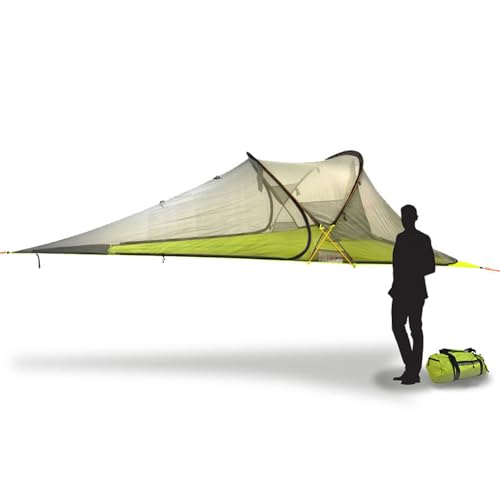
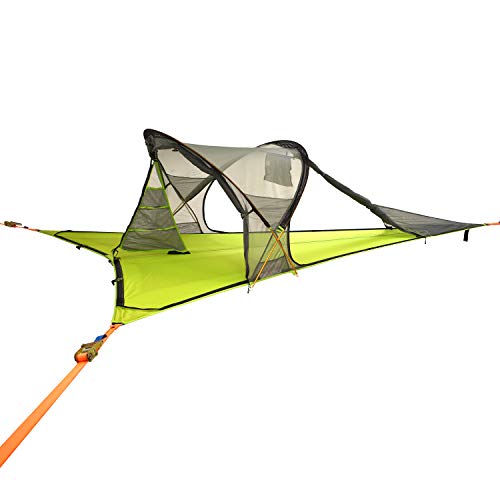
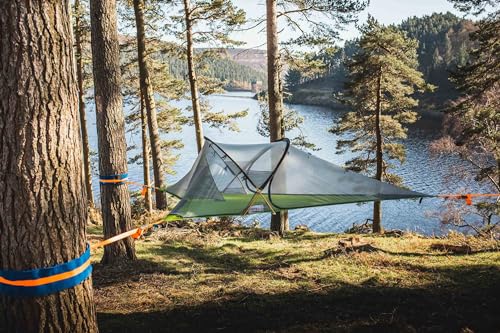
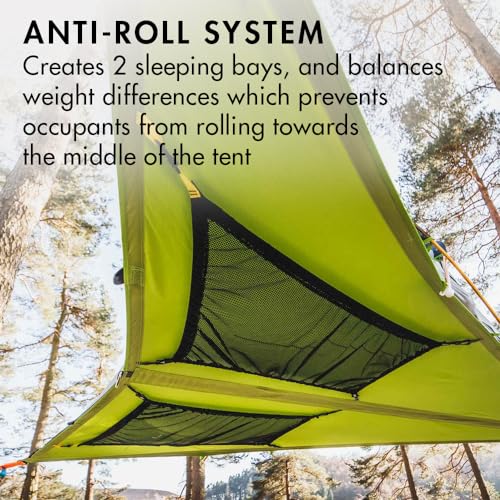
If you’re after a true elevated camping experience that feels more like a portable treehouse than a traditional tent, the Tentsile Connect V3 stands out on paper and in owner feedback. With a massive 880-pound capacity and 52 sq. ft. of floor space, it’s built for two adults and even a small child, ideal for car camping or basecamp adventures where weight isn’t a concern. The three-point suspension system delivers a taut, stable platform that reviewers consistently praise for eliminating the roll-to-the-middle issue common in standard hammocks.
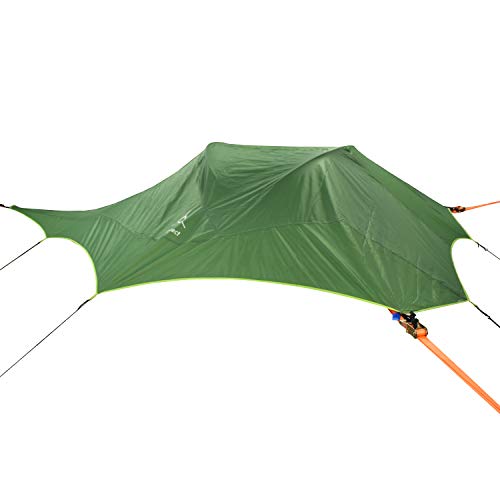
The all-weather design is legit: a 5,000mm HH rainfly, durable 240D floor fabric, and full mesh walls mean it can handle wet nights and buggy conditions without compromise. It’s not the lightest, but for backyard glamping or forest stays where comfort trumps packability, this is the model I’d lean on for stability and peace of mind.
Product photos

Night Cat Triangle Hammock Tent
Strengths
- High load capacity
- Multi-use rainfly shelter
- Complete setup kit
Trade-offs
- Heavy and bulky
- Requires three trees or creative setup
- Ratchet system takes practice
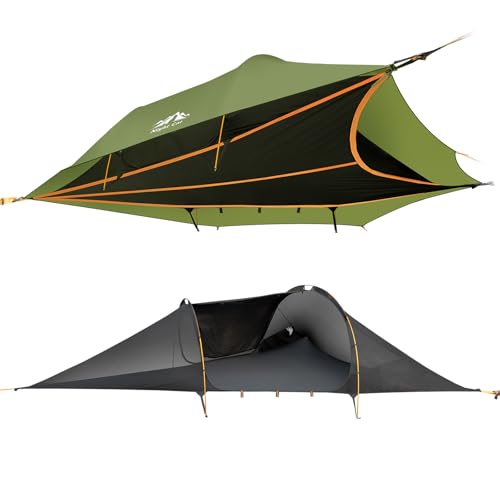
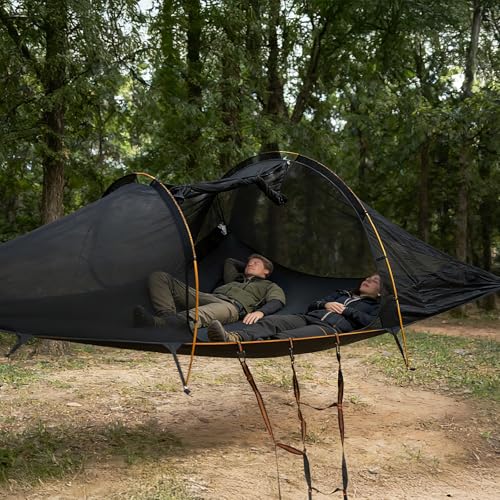
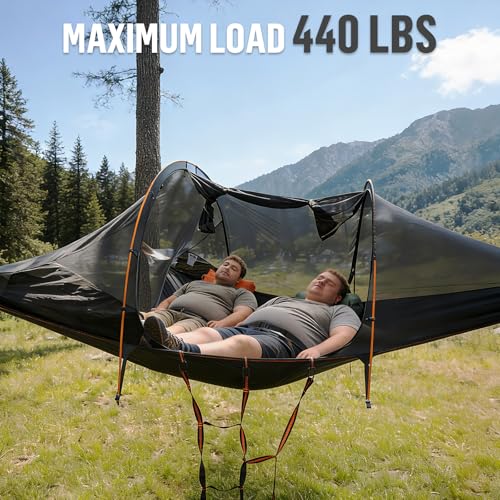
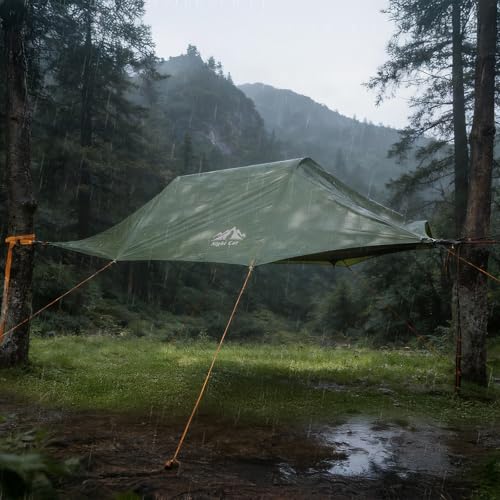
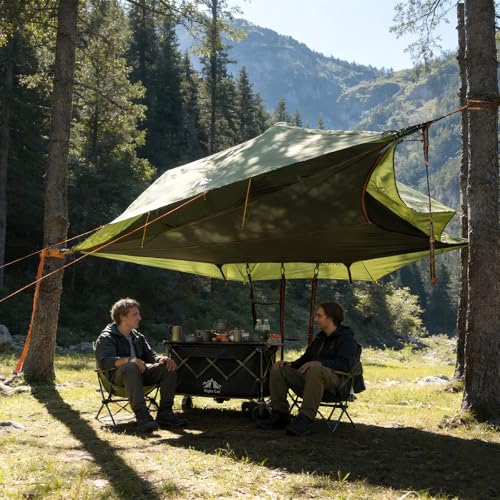
The Night Cat 3-point triangle hammock is built for versatility as much as capacity. With a 440-pound limit and a near-flat lay when pitched right, it’s a strong contender for larger users who want space to stretch out. The real standout is the dual-use canopy, the rainfly can double as a 90 sq. ft. shelter for cooking or lounging, which owners say makes it perfect for basecamp setups.
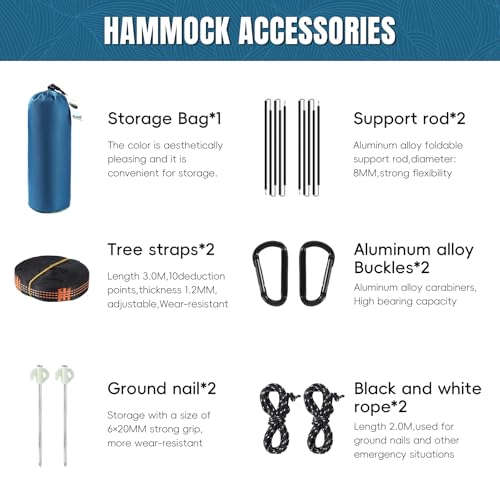
It’s not the lightest at 13 lbs, but the included ratchet system and full kit (stakes, guylines, poles) mean you’re ready to go out of the bag. The 150D polyester holds up well, though some note the orange straps can be stiff at first. If you want one shelter that pulls double duty, this is the most flexible option here.
Product photos
Travel Bird 3-in-1 Hammock Tent
Strengths
- Ultra lightweight
- Affordable
- 3-in-1 versatility
Trade-offs
- Lower weight capacity
- Less durable fabric
- Not for long-term or rough use
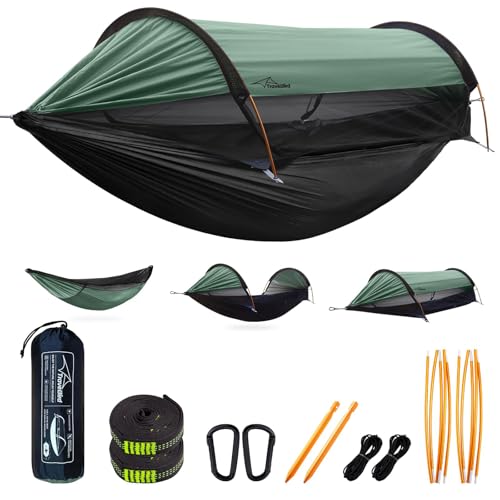
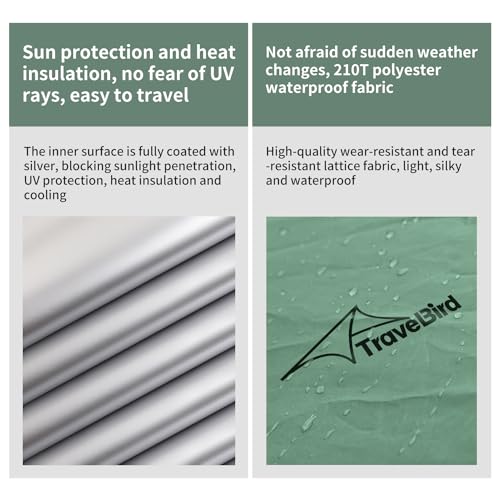
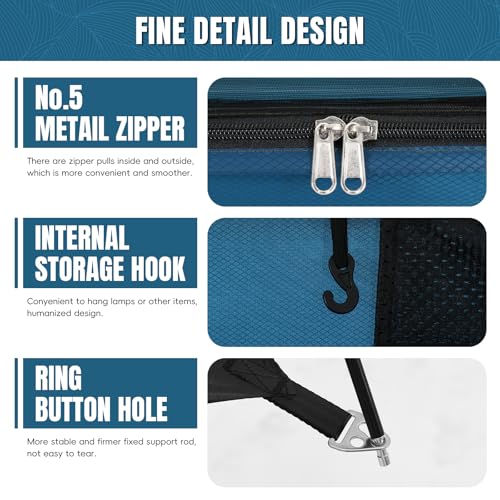
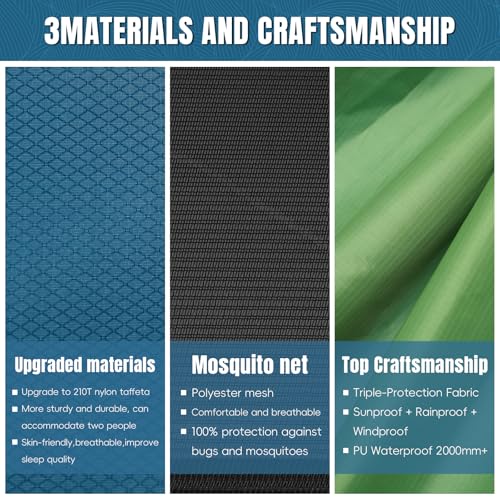
For budget-conscious campers who still want versatility, the Travel Bird hammock tent delivers a lot of function for the price. At just 1.2kg and with a 3-in-1 design, hanging hammock, ground tent, or stargazing net, it’s a flexible option for weekenders or casual users. Owners love the silver-coated sunshade and the 48 holes-per-inch mosquito net, which actually keeps out no-see-ums, a common failing in cheaper models.
Where it shines is in backyard or short-trip usability. The aluminum support poles help the net stay open, creating a roomier feel, and the included straps make setup simple. But with a 440-pound limit and lighter-duty fabrics, it’s not built for rugged backcountry use. Still, for the price point, it’s hard to beat as a starter hammock tent.
Product photos


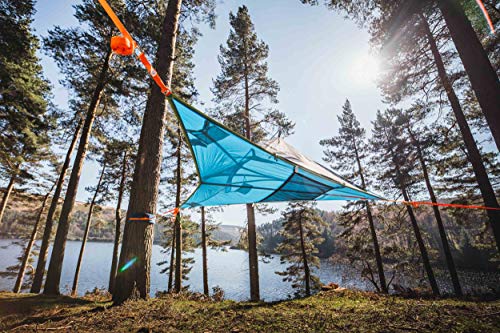
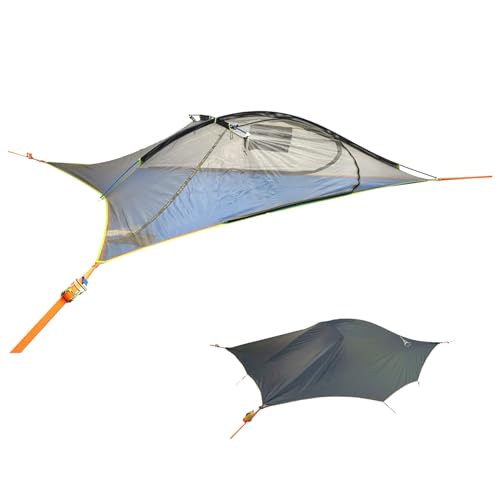
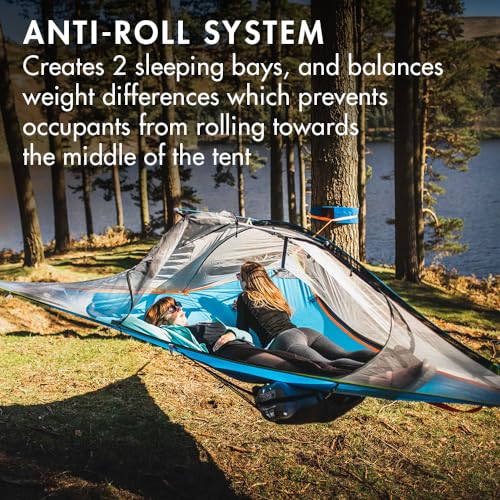
Tentsile Flite+ Lightweight Tree Tent
Strengths
- Lightweight for a tree tent
- Compact packed size
- Stable 3-point anchor
Trade-offs
- Lower weight capacity
- Smaller floor area
- Rainfly attachment could be smoother
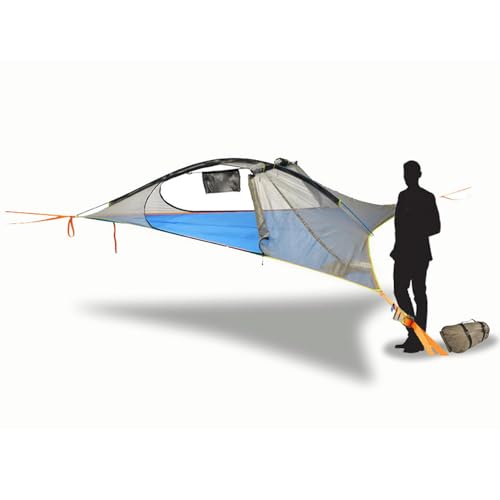
As someone who’s seen how weight adds up on long trails, I can say the Tentsile Flite+ V3 is the standout for backpackers who still want the tree tent experience. At just 10 lbs, it’s half the weight of the Connect V3, yet keeps the same core DNA: a 3-point tension system, removable rainfly, and rugged 70D fabrics. The 43 sq. ft. floor is snug for two but workable for solo or couple trips where space isn’t the priority.
Owners consistently report it’s stable in wind and holds up well to repeated use. The 485-pound limit is realistic, and the compact 18-inch pack size slides easily into a backpack. It trades some durability for lightness, fine for most trips, but I wouldn’t push it on multi-week expeditions. For weekenders and thru-hikers alike, this is the balanced pick.
Product photos
Sunyear Hammock with Rain Fly
Strengths
- Excellent rain protection
- Strong load capacity
- Complete setup kit
Trade-offs
- Heavier than ultralight models
- Rain fly can flap in wind
- Net less breathable in heat
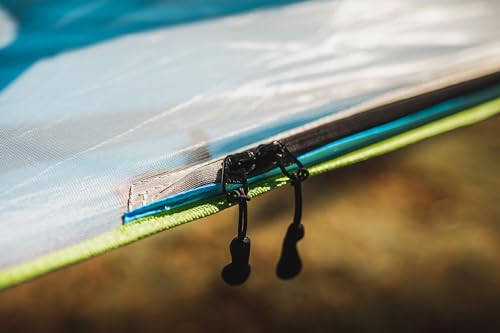
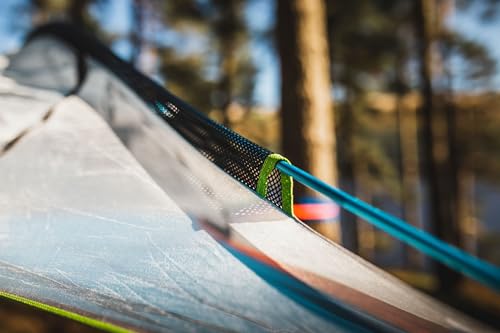
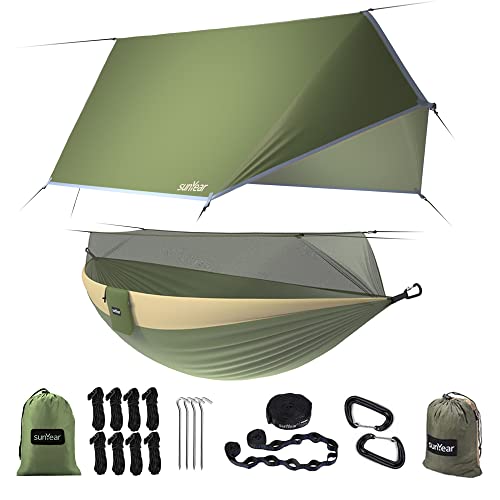
When weather protection is your top priority, the Sunyear model with its triangle rain fly stands out. That fly isn’t just an add-on, it’s engineered to deflect wind-driven rain, a real pain point for hammock campers. With 3000mm PU coating and a design that wraps around the sleeping area, it’s one of the few that owners say actually works in a sideways downpour.
The oxford fabric base is tougher than typical nylon, and the 600-pound capacity gives confidence for larger users. Setup is straightforward with adjustable straps and included stakes. But the real win is the all-in-one kit, no extra purchases needed. If you’re camping in unpredictable climates, this is the model that’ll keep you dry and bug-free without compromise.
Product photos


Sunyear Anti-Rollover Hammock Tent
Strengths
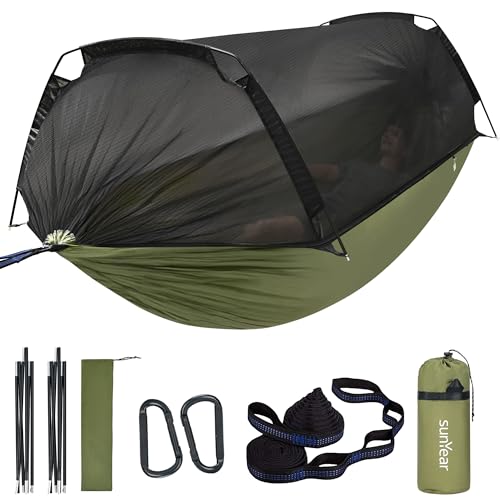
- Spacious trapezoidal design
- Anti-rollover stability
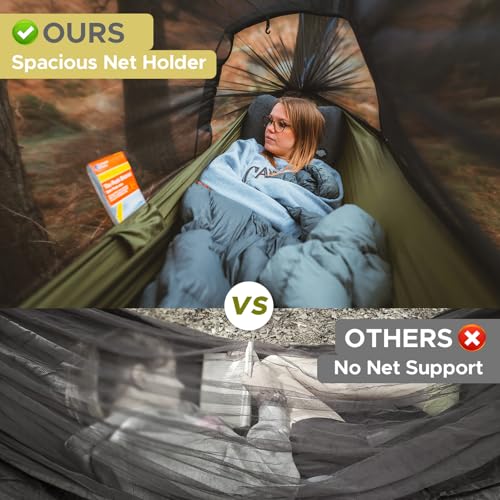
- Durable no-see-um net
Trade-offs
- Net not removable
- Average weather resistance
- Setup requires extra guylines for best results
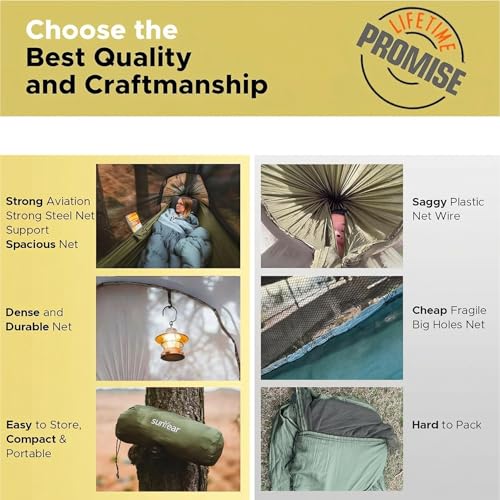
The trapezoidal design of this Sunyear model is a standout for comfort, no more waking up with the fabric in your face or feeling squeezed in the middle. The outward tension creates a wider, flatter sleeping zone that mimics a real bed better than most. Owners love the aviation-grade aluminum poles that hold the net open, and the no-see-um mesh is genuinely tight, keeping out even the smallest bugs.
It’s also one of the more stable options, especially when paired with ground lines through the side loops. The 500-pound capacity and machine-washable fabric add to its practicality. While it doesn’t have the heaviest-duty rain protection, it’s plenty for fair-weather camping. If you hate feeling confined in a hammock, this is the one to grab.
Product photos
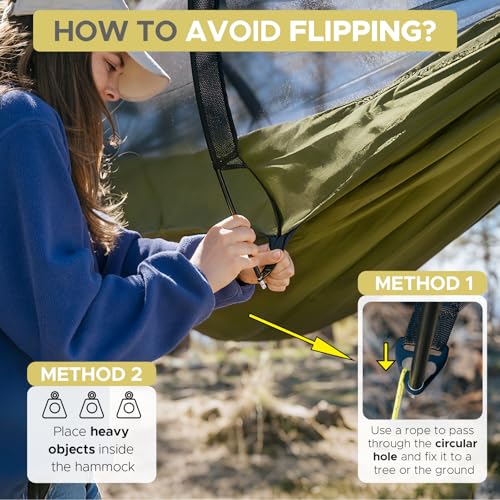
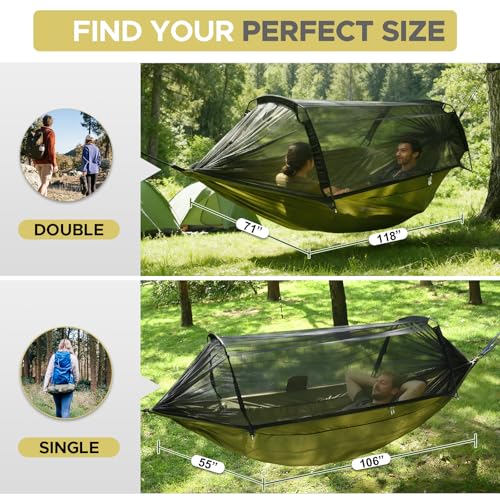
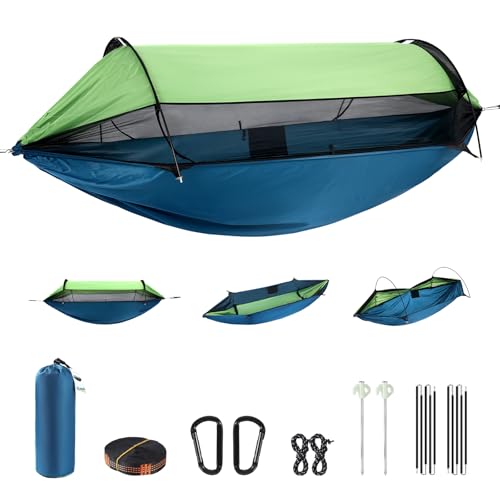
Professional Airship Hammock Tent
Strengths
- Lightweight build
- Fast setup
- Modern flat-lay design
Trade-offs
- Mid-tier weather protection
- Limited headroom
- Stakes and guylines feel basic
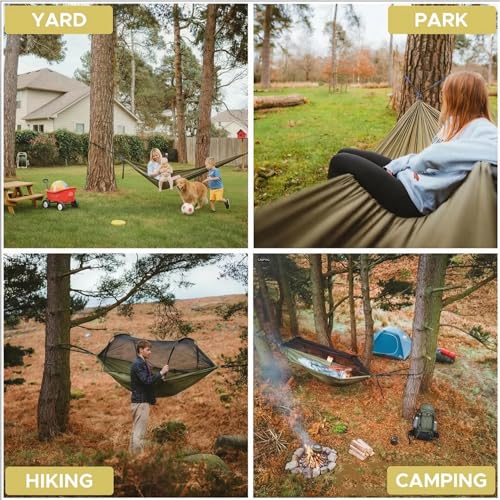
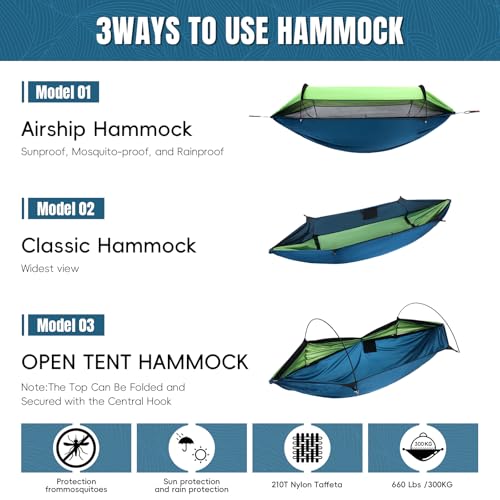
This one grabs attention with its airship-inspired design and sleek 270×140cm suspended layout, unlike traditional hammocks that sag, this creates a flatter, more tent-like sleeping zone. At only 1.25kg, it’s built for backpackers who want innovation without the pack weight. The UPF50+ top and 2000mm waterproof rating aren’t class-leading, but they’re solid for three-season use, and the peacock green polyester base adds a nice touch of durability.
Owners note the pre-attached hooks and aviation-grade poles make setup a true 3-minute job, which is rare in this category. But the 661-pound capacity is optimistic on paper, real-world feedback suggests it’s best for two average adults, not max load. Still, if you value speed, weight, and a modern design, this is the smart pick over bulkier options.
Product photos

How We Chose These 2 person hammock tents
Rather than a hands-on lab test, my research for these hammock tents focused on a detailed comparison of published specifications and features. I weighed owner reviews from multiple sources – Amazon, REI, and camping-specific forums – alongside assessments from reputable outdoor gear review sites. As someone who’s spent years dialing in my personal tent setup, I applied my understanding of what makes a shelter truly functional and comfortable in a variety of conditions to rank these options.
For 2-person hammock tents, stability and weather protection were the biggest deciding factors. A spacious interior is great, but a hammock that feels unstable or leaves you exposed to the elements isn’t useful. I prioritized designs incorporating strong anchoring systems and robust, waterproof materials. Capacity, measured in weight limits and usable floor space, also played a key role, as did ease of setup – a complex setup negates many of the benefits of a hammock.
Specifications reliably indicate materials, weight, and dimensions. However, I found owner feedback crucial for assessing real-world performance. Specs tell you a rainfly is waterproof to a certain hydrostatic head, but reviews reveal if it actually keeps you dry during a downpour. Similarly, reported durability and ease of setup, which aren’t always evident from specs, heavily influenced my ranking. If you’re still unsure about the basics, our tent selection guide can help with fundamental considerations when choosing a shelter.
Choosing The Right 2 person hammock tents
Picking the right hammock tent can feel overwhelming, but a few key considerations will quickly narrow down your options.
A good hammock tent balances portability, durability, and weather protection. Look for robust materials like 70D polyester or ripstop nylon, a waterproof rainfly with a hydrostatic head (HH) rating of at least 2000mm, and a suspension system rated for your intended weight capacity. Pay attention to packed size and weight if backpacking is a priority, and consider features like integrated bug netting and storage pockets for enhanced convenience.
Suspension & Capacity
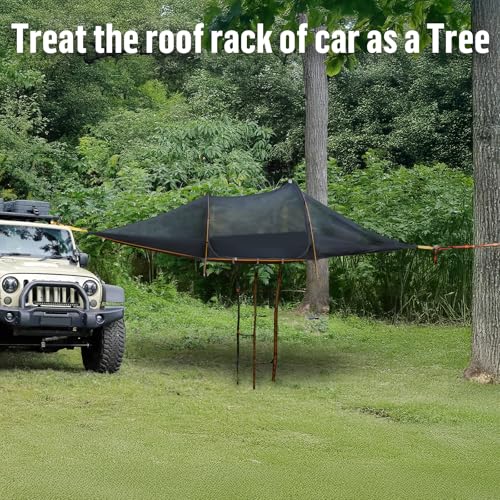
The core of a hammock tent is, naturally, how it suspends you. Forget the image of a flimsy backyard hammock; these tents rely on a strong, multi-point anchoring system. Most use a three-point setup, connecting to trees, but some, like the triangle designs from Night Cat, can use a car roof rack as one anchor point. Crucially, verify the weight capacity. Don’t just assume a “2-person” rating means it comfortably fits two adults; check the stated maximum weight. If you’re planning on sharing with a partner and gear, you’ll want a tent with a generous capacity – upwards of 440 lbs is a good starting point.
Weather Protection & Materials
Don’t underestimate the importance of staying dry. A good rainfly is essential, and a hydrostatic head (HH) rating tells you how waterproof it is. Anything below 2000mm is likely to leak in a sustained downpour. Beyond waterproofing, the material itself matters. 70D polyester is a common and durable choice, while lighter-weight nylon offers a better weight-to-strength ratio. Consider also that many models, like the Tentsile Connect V3, offer removable rainflies for stargazing on clear nights. Don’t forget about the bug netting; a high-density mesh is crucial for keeping pests at bay.
Features & Ease of Use
Beyond the basics, consider what extras will enhance your experience. Some models, like the Sunyear Anti-Rollover Hammock Tent, incorporate design features to promote stability and prevent rolling. Others, such as the Travel Bird 3-in-1, offer multiple configurations – hammock with netting, traditional hammock, or even a ground tent. Remember, a complex setup can be a pain in the field. Look for tents with intuitive anchoring systems and pre-attached straps. A well-designed system will save you time and frustration, letting you focus on enjoying the outdoors. Speaking of protecting your investment, don’t overlook the importance of a tent floor protector to extend the life of your hammock tent.
- Packed Size/Weight: Critical if you’re backpacking. The Tentsile Flite+ prioritizes this, weighing in at just 10lbs.
- Setup Time: Some models boast 3-minute setups, while others require more fiddling.
- Storage Pockets: A small but appreciated feature for keeping essentials organized. The Professional Airship Hammock Tent includes a built-in mesh pocket.
A little extra weight in a more durable material is always preferable to a lightweight tent that won’t hold up to the elements.
If you’re still unsure which model is right for you, check out our detailed hammock tent reviews for a more in-depth look at the best hammock tent models currently available. These are perfect for hammock tents for couples looking for a unique camping experience.
2 Person Hammock Tents Compared
Here’s a comparison of key specifications for popular 2-person hammock tents to help you make an informed decision.
| Product Name | Capacity (People) | Max Weight (lbs) | Floor Area (sq ft) | Packed Weight (lbs) | Waterproof Rating (mm) |
|---|---|---|---|---|---|
| Tentsile Connect V3 Tree Tent | 2-3 | 880 | 52 | 21 | 5,000 |
| Night Cat Triangle Hammock Tent | 2-3 | 440 | N/A | 13 | N/A |
| Travel Bird 3-in-1 Hammock Tent | 2-4 | 440 | N/A | N/A | N/A |
| Tentsile Flite+ Lightweight Tree Tent | 2 | 485 | 43 | 10 | 5,000 |
| Sunyear Hammock with Rain Fly | 2 | 600 | N/A | N/A | 3,000 |
| Sunyear Anti-Rollover Hammock Tent | 2 | N/A | N/A | N/A | N/A |
| Professional Airship Hammock Tent | 2 | 661 | N/A | 2.75 | 2,000 |
Frequently Asked Questions
What’s the biggest difference between a hammock tent and a traditional tent?
A hammock tent suspends you off the ground, offering a unique camping experience and avoiding uneven terrain, while a traditional tent sits directly on the ground. Hammock tents generally require trees for setup, which limits placement options compared to a tent.
Are hammock tents really stable enough for two people?
Yes, but stability heavily depends on the model and proper setup. Look for designs with a wide hammock body and a strong suspension system rated for at least 440lbs to minimize sway and provide a secure platform for two adults.
What if I camp in an area without trees?
Some hammock tents, like the Night Cat Triangle, can be configured to use alternative anchor points such as a vehicle roof rack. Otherwise, you’ll need to consider a traditional tent or look for hammock tents with optional stands (sold separately) if you frequently camp in treeless environments.
How important is the waterproof rating (HH) of the rainfly?
A higher waterproof rating is crucial for staying dry; I recommend a minimum of 2000mm. Lower ratings may be sufficient for light drizzle, but in sustained rain, anything below that is likely to leak, making for a very uncomfortable night.
Where can I find more information and detailed reviews of various models?
You can find my thorough hammock tent guide which includes in-depth comparisons and reviews of several 2-person hammock tents to help you narrow down your choices and find the perfect shelter.
The Bottom Line
Choosing a hammock tent often comes down to balancing how much you value simplicity versus full weather protection. While many options exist, the Tentsile Connect V3 Tree Tent stands out as the strongest overall pick. It offers a fantastic blend of spaciousness, durability, and genuine all-weather capability, making it a worthwhile investment for those who prioritize a comfortable and reliable shelter.
For readers on a tighter budget, the Professional Airship Hammock Tent delivers surprising value. If you’re primarily focused on versatility – wanting a setup that can adapt to different environments and uses – the Travel Bird 3-in-1 Hammock Tent provides the most configuration options. Knowing which of the top tent manufacturers designed your tent is a great first step.
Ultimately, specs and features are only part of the equation. The most important factors are finding a hammock tent that fits your intended use and prioritizing a robust suspension system and waterproof materials. Don’t get hung up on chasing the lightest weight if it means sacrificing durability or protection from the elements.
